
REVIEW · SUMO EXPERIENCES
Tokyo: Sumo Morning Practice Tour at Sumida City
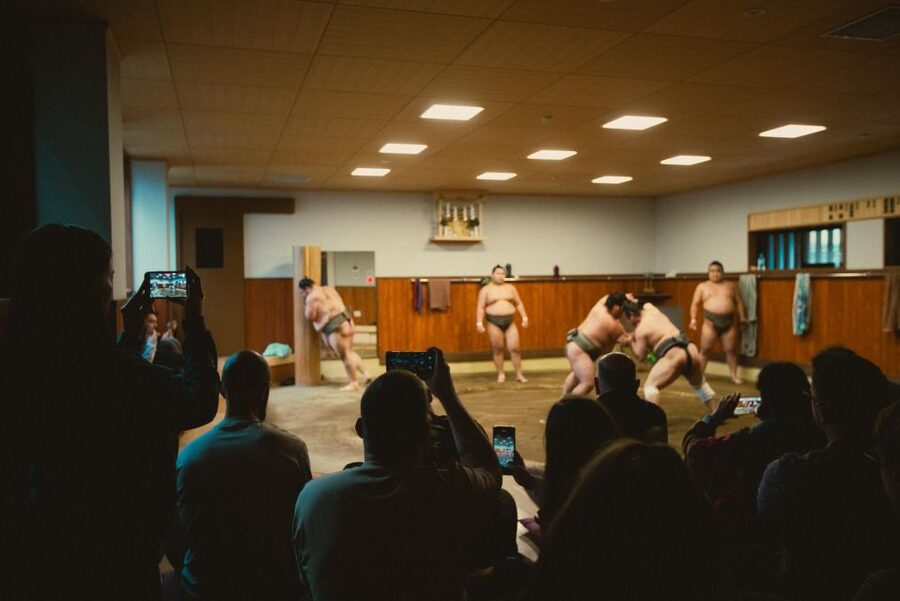
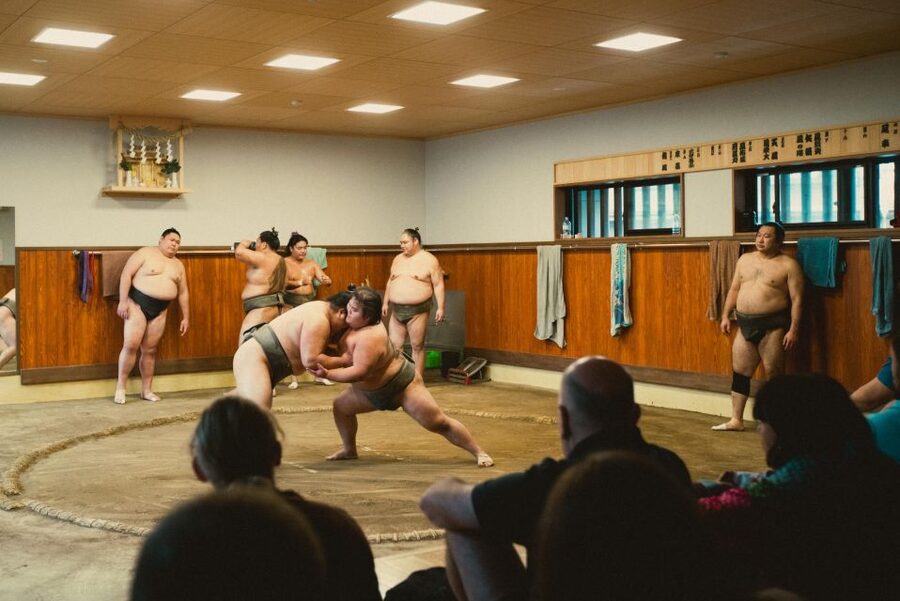
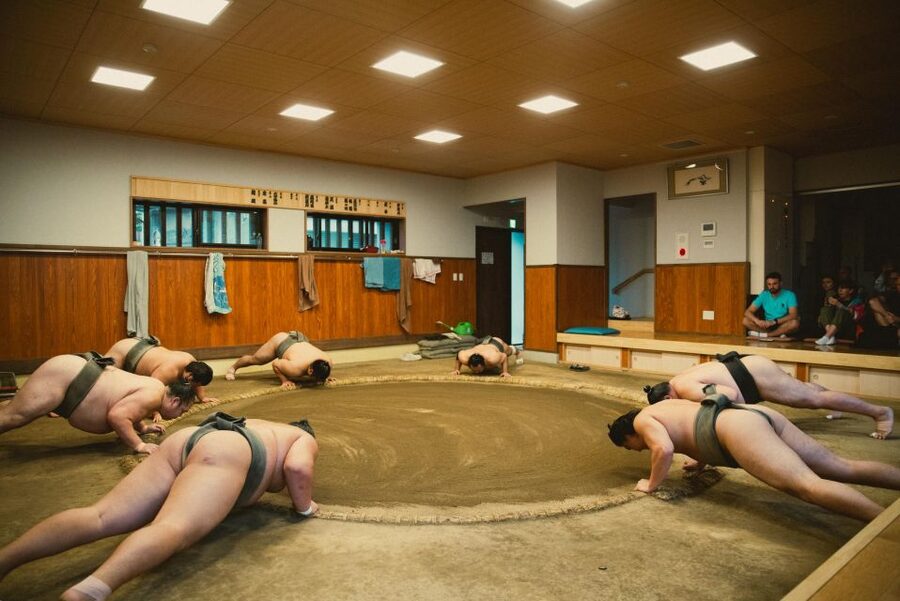
The striking part of this Tokyo morning is the closeness. You sit on the floor inside a real sumo stable, near the ring, while wrestlers train with startling force and control. This is practice, not a staged show, so you watch quietly and let the stable’s routine unfold.
I like the 90 minutes of close-up training and the chance to ask the stable master about a wrestler’s daily life. I also like the guides’ practical help: Yoko, Yukiko, Tadashi, Kiyomi, and others have been praised for explaining the rules and keeping the group organized. The main drawback is simple: you must sit cross-legged on the floor for about an hour and a half, with no chair and no toilet break.
In This Review
- Key points
- Why this sumo morning feels different from a match
- Meeting at Oshiage before the city wakes up
- Entering the stable and taking your place
- Ninety minutes of hard, repetitive training
- The stable master Q&A is the real bonus
- The walk back and the value of $116
- Who should book, and who should skip it
- Practical tips for a respectful visit
- Should you book this sumo practice tour?
- FAQ
- Where does the sumo tour meet?
- How long is the walk to the sumo stable?
- Can I use the restroom during sumo practice?
- Do I have to sit on the floor?
- Can I take photos or videos?
- Is the tour held throughout the year?
Key points
- Watch real morning practice: See trainees work through stretching, drills, and bouts from inside the stable.
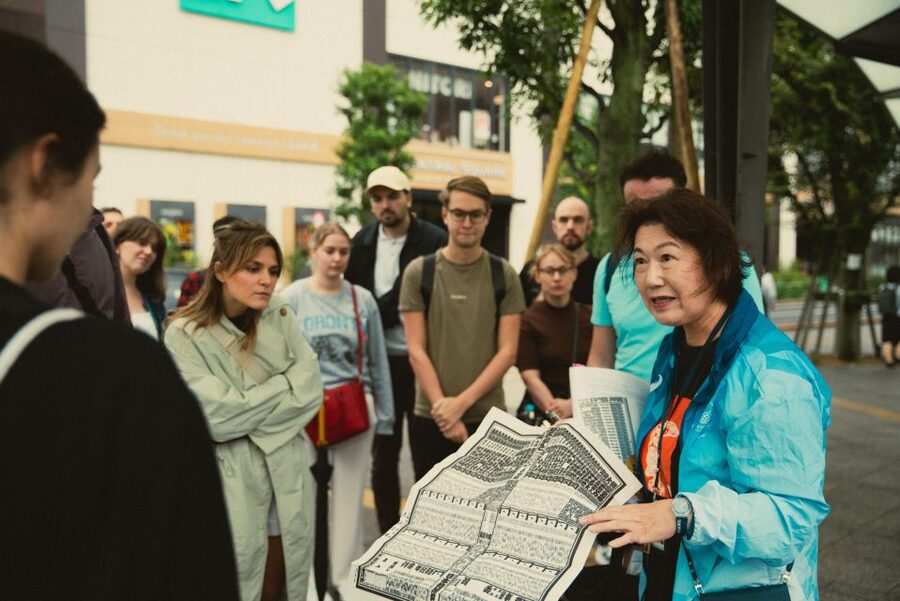
- Meet at Oshiage at 7:15 AM: The tour begins at 7:30 AM, followed by a 15 to 20 minute walk.
- Ask the stable master questions: The post-practice conversation adds context about training, tradition, and wrestlers’ lives.
- Expect strict etiquette: Stay silent, remove your shoes, avoid flash and shutter sounds, and do not enter the stable alone.
- Prepare for floor seating: There are no chairs, and the practice cannot be interrupted for restroom visits.
- Plan around tournament months: Morning practice tours are not held in March, July, or November.
Why this sumo morning feels different from a match
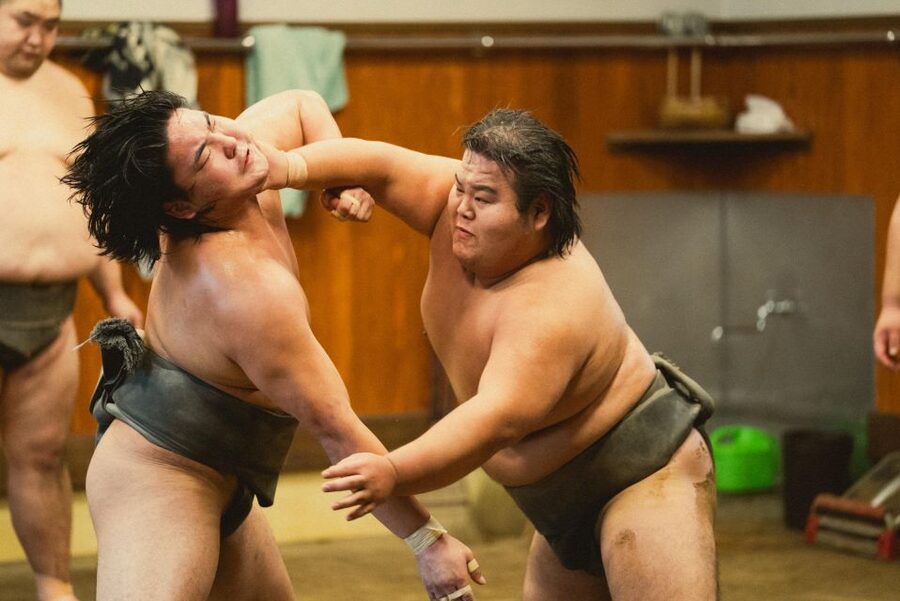
A professional sumo bout lasts only moments. Morning practice reveals the work behind those moments: repetition, balance, flexibility, ritual, and sheer physical effort. You may see wrestlers face one another in practice bouts, but the point is training, not entertaining an audience.
That distinction matters. The wrestlers are not performing for you. You are being allowed into a working space, and the correct attitude is quiet attention. The best part of the experience is often not one dramatic clash, but the rhythm of the session and the way the wrestlers prepare their bodies.
The size of these athletes can be startling at close range. So can their movement. Several people have remarked on the combination of strength and agility, especially when wrestlers stretch or work through one-on-one practice. Television gives you the spectacle. This visit gives you the effort behind it.
The English-speaking guide helps translate that effort into something you can understand. Guides including Yoko, Yukiko, Tadashi, Kiyomi, Yuriko, and Oku have received particularly warm praise for their friendliness, clear instructions, and ability to answer questions. Guide quality can vary by departure, but the strongest guides do more than lead you from the station. They explain why you should behave a certain way and help you read what is happening in the ring.
More Sumo Experiences in Tokyo
- Tokyo: Sumo Show and Dining Experience
★ 4.8 · 2,742 reviews - the SUMO show
★ 5.0 · 1,960 reviews - Tokyo Shinjuku Sumo Show & Experience with Photo
★ 5.0 · 1,750 reviews
Meeting at Oshiage before the city wakes up
You meet at 7:15 AM on the ground floor outside Exit A1 of Oshiage Station, also called Tokyo Skytree Mae Station. The tour itself starts at 7:30 AM. This early start is not decorative. Morning training takes place before the wrestlers’ day moves on, so you need to be ready for an early alarm.
The meeting point is useful if you are staying around Tokyo Skytree. From there, the group walks through the Skytree area and onward to the stable. Allow about 15 to 20 minutes for the walk from the meeting point to the practice location. In August, that walk can feel warm, and in rain your feet may get wet, so a small towel is a sensible addition.
Wear shoes that come off easily. You will remove them before entering the stable, and fussing with complicated footwear is not ideal when the group is trying to enter quietly. Use the restroom at the station before meeting the guide. You cannot leave for a toilet break during practice.
If you are late, message the provider. You may be given the stable’s address, but do not walk in on your own. Wait outside for the guide, never ring the doorbell, and do not disturb the wrestlers’ concentration. This is one of those situations where punctuality is part of good manners, not just good planning.
Entering the stable and taking your place
The stable is the heart of the experience, not a visitor center. You enter a working place where wrestlers train, eat, rest, and follow the traditions of their sport. The precise stable is treated as a private location, which helps protect the practice from unnecessary disruption.
You will sit on the floor, usually close to the ring. There are no chairs. The stated expectation is roughly 1.5 hours of sitting cross-legged, and you should take that seriously. Some people have found the position uncomfortable, and one member of a group needed a seat. The activity is not suitable for people with mobility impairments, and it is not a good pick if you cannot sit on the ground for an extended period.
Your view may not remain perfect throughout. Seating can be affected by other groups or visiting teams, and people have reported that some places offer a better sightline than others. Guides may rotate positions when possible, but this is not guaranteed. If you care about being directly in front, arrive on time and follow the guide’s seating instructions.
The stable’s rules are firm but reasonable:
- Watch silently and respectfully.
- Remove hats and sunglasses.
- Keep food, drinks, luggage, and large bags outside.
- Do not use flash photography.
- Photos and videos may be allowed without flash or shutter sounds.
- Do not post those images or videos on social media.
These restrictions may feel strict if you are used to sightseeing attractions. Here they protect the wrestlers’ focus and the privacy of the stable. I consider that a fair trade for being allowed inside.
Ninety minutes of hard, repetitive training
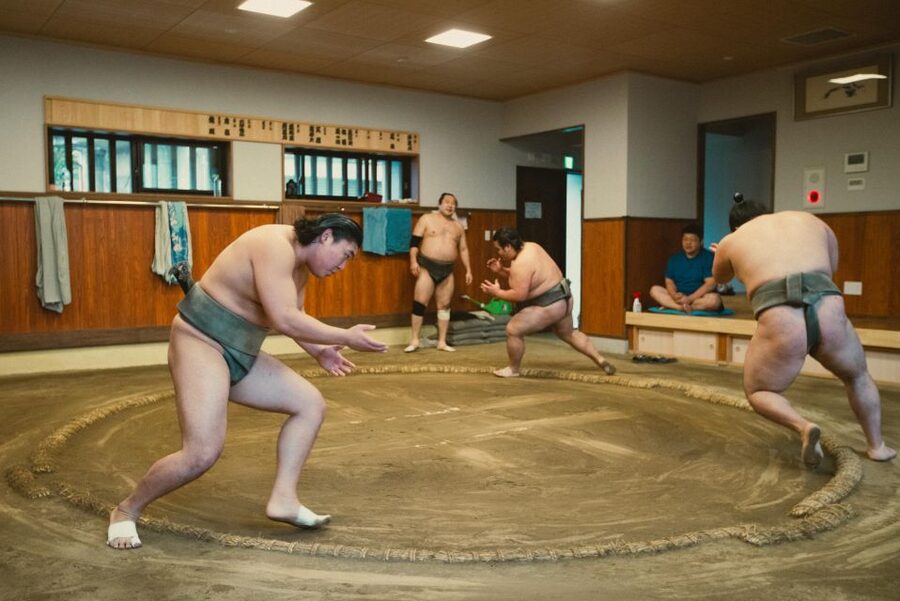
The practice usually forms the main part of the two-hour tour. Your guide may provide background on sumo’s history, rules, rituals, and connection with Japanese religion before or during the session. The amount of spoken explanation can vary. One person found the history section too light, while another guide was praised for explaining the cultural side clearly.
Do not expect constant narration. During the practice itself, silence is part of the experience. A good guide gives you enough information to understand what you see, then lets the training speak for itself. If your guide is speaking softly, especially at the station or from the back of the room, it may be hard to hear in a larger group.
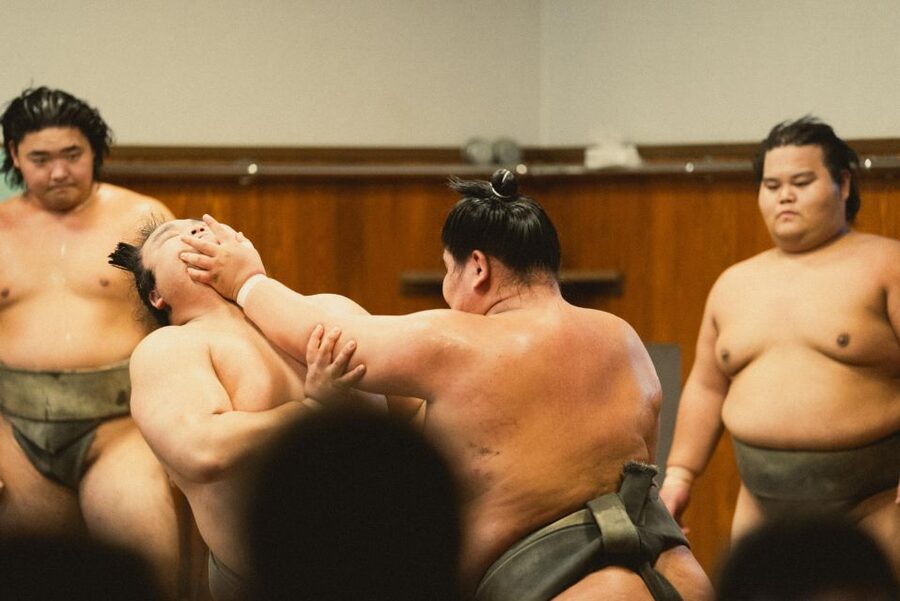
The practice can include stretching, warm-ups, strength work, technique drills, and bouts between wrestlers. The routine may not look exactly the same on every date. Training can be lighter around a major tournament, and you may not see as many intense bouts as you hoped. One early summer visit had less fighting because a May tournament was underway.
That is the risk of booking a practice tour rather than a tournament ticket. You do not control the lineup or the day’s training plan. You might see several wrestlers working hard, or you might find the session more focused on drills and preparation. Either way, you are seeing a side of sumo that a tournament seat cannot provide.
The setting also means you may notice small details that television hides: how wrestlers wait their turn, how they prepare before a bout, how much time goes into stretching, and how quickly a large body can shift direction. The practice is repetitive by design. That repetition is the lesson.
Same city, a completely different kind of day:
- Mt Fuji and Hakone 1-Day Bus Tour Return by Bullet Train
★ 5.0 · 26,383 reviews - 1-Day Tokyo Bus Tour
★ 5.0 · 14,250 reviews - Tokyo: TOKYO SKYTREE® Admission ticket
★ 4.5 · 11,192 reviews - Tokyo: teamLab Planets TOKYO Digital Art Museum Entry Ticket
★ 4.6 · 9,779 reviews
The stable master Q&A is the real bonus
After practice, there is usually time for questions with the stable master. This can last around 30 minutes, though the exact timing may vary. It is one of the strongest reasons to pay for a guided visit instead of trying to find information online.
You can ask about training, rules, the wrestlers’ daily routines, rank, food, tradition, or what you just watched. The stable master has also been praised for giving generous answers rather than rushing the group away. That conversation helps turn an impressive spectacle into a better understanding of sumo life.
The Q&A may be especially valuable if you are new to the sport. Sumo has its own vocabulary, hierarchy, and customs, and the guide can help you frame useful questions. You may even learn that one of the wrestlers you watched is well known within the sport.
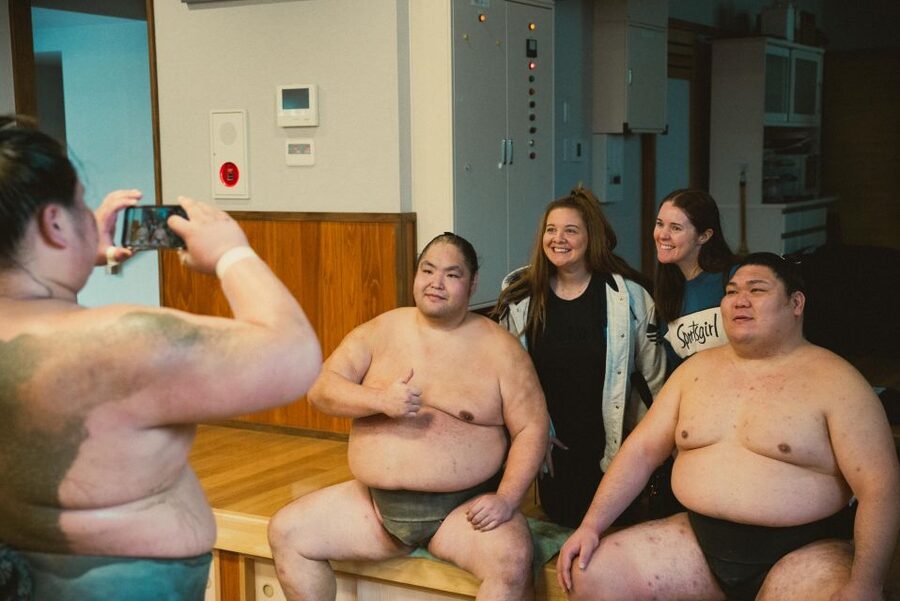
The order can differ. Some sessions offer a short photo opportunity after the questions, while others may handle pictures separately. A group photo with wrestlers is possible, not guaranteed, so treat it as a pleasant extra rather than the main reason to book.
The walk back and the value of $116
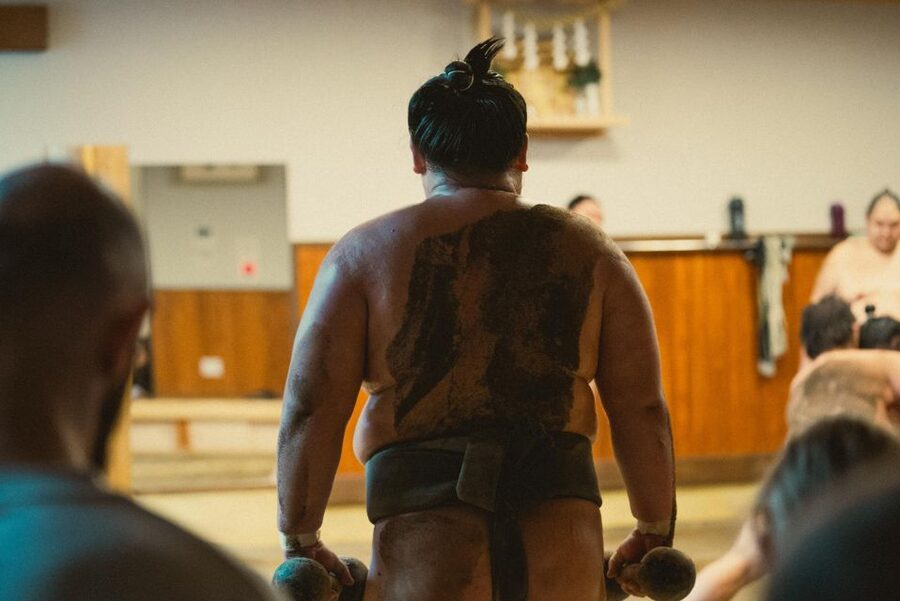
The experience costs $116 per person and lasts about two hours. That is not cheap for a short morning activity, especially when you add transport to Oshiage and the early wake-up. One person considered it slightly overpriced, and that criticism is fair if you judge it only by minutes of guided commentary.
I see the value differently, with one condition: you must care about access. The fee includes an English-speaking guide and entrance to the stable, a place you are unlikely to enter independently. You are paying for permission, cultural interpretation, coordination, and a rare look at a working sumo environment.
The price makes less sense if you mainly want a polished performance or a guaranteed photo. It makes more sense if you want to sit close to genuine training, follow strict local etiquette, and ask questions of the stable master. For a sumo enthusiast, the access is the product. For a casual visitor, the cost deserves more thought.
The tour returns to the original meeting point at 1-chōme-8-21 Oshiage. Since it ends in the Skytree area, you can pair it with Tokyo Skytree Town afterward, though the activity itself does not include food, drinks, hotel pickup, or hotel drop-off.
Who should book, and who should skip it
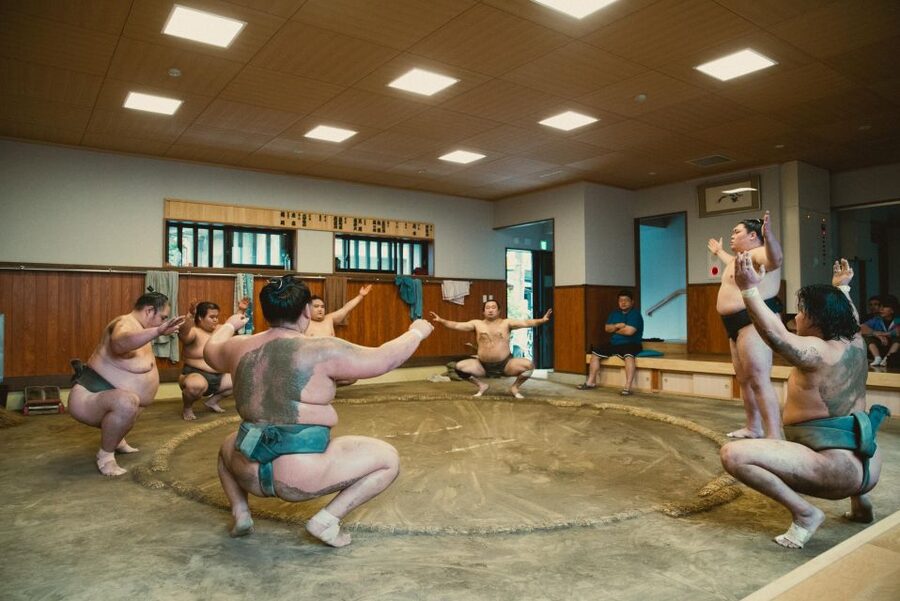
I would book this for adults, older children, and anyone curious about the daily work behind a traditional Japanese sport. The minimum age is six, but age alone does not determine suitability. A child must be able to watch quietly, stay seated, and avoid moving around. If a child becomes noisy or disruptive, the group may be asked to leave the stable.
This is also a strong choice for people who prefer a small cultural encounter over a large attraction. You do not just look at sumo from a distant seat. You see the athletes close enough to notice their physical control and the discipline of the room.
I would skip it if you have mobility limits, cannot sit on the floor for 1.5 hours, need regular restroom access, or dislike early starts. I would also avoid booking in March, July, or November, when grand tournaments take place outside Tokyo and these morning practice tours are not held.
The tour has free cancellation up to two days in advance, which gives you some flexibility. The schedule is usually known only one to two months ahead, so check availability around two months before your preferred date rather than planning far in advance.
Practical tips for a respectful visit
A few small preparations make a real difference:
- Arrive at Exit A1 by 7:15 AM, not at 7:30 AM.
- Use the restroom before the group leaves.
- Wear easy-to-remove shoes and comfortable clothing.
- Bring a small towel if rain is likely.
- Leave large bags, food, drinks, hats, and sunglasses behind.
- Keep your phone silent and disable camera shutter sounds.
- Follow the guide’s instructions about where to sit and when to take photos.
- Do not enter the stable alone if you miss the meeting point.
Bring curiosity, not a demand for spectacle. The practice may be powerful and intense, but it may also be quiet, repetitive, or lighter than expected because of the tournament calendar.
Should you book this sumo practice tour?
Book it if you want an up-close look at authentic training and can handle the physical rules. The best elements are the close seating, the disciplined atmosphere, and the chance to ask the stable master questions afterward. Strong guides such as Yoko, Yukiko, Tadashi, Kiyomi, and Yuriko can add a great deal by explaining what you are seeing.
Do not book it for guaranteed bouts, guaranteed wrestler photos, or a comfortable seated tour. You may have an imperfect view, a quieter training session, or a guide whose explanations are harder to hear in a large group.
For the right person, this is one of Tokyo’s more unusual mornings. You leave with more than a picture. You gain a clearer sense of the work, respect, and tradition that hold sumo together.
FAQ
Where does the sumo tour meet?
Meet at Tokyo Metro Oshiage, also called Skytree Mae Station, or Toei-Asakusa Line Oshiage Station, at Exit A1 on the ground floor. Meet at 7:15 AM for a 7:30 AM start.
How long is the walk to the sumo stable?
The walk from the meeting point to the stable takes about 15 to 20 minutes. Tokyo Skytree Town is part of the route area.
Can I use the restroom during sumo practice?
No. Use the restroom before joining the tour because you cannot go to the toilet during the practice.
Do I have to sit on the floor?
Yes. There are no chairs in the stable, and you should be prepared to sit cross-legged on the ground for approximately 1.5 hours.
Can I take photos or videos?
Photos and videos may be taken without flash or shutter sounds. You cannot upload the images or videos to social media platforms.
Is the tour held throughout the year?
No. Morning practice and tours are not held in March, July, or November because grand sumo tournaments take place outside Tokyo during those months.
More Morning in Tokyo
- Tokyo: Sumo Morning Practice Viewing Tour
★ 4.8 · 570 reviews - Tokyo: Sumo Morning Training Visit
★ 4.4 · 370 reviews - Tokyo Sumo Morning Practice Tour at Stable
★ 5.0 · 298 reviews - Tokyo Ryogoku Sumo Morning Practice + Photo Shoot with Wrestlers
★ 4.5 · 277 reviews
Just added around Tokyo
- Tokyo: Customizable Private Guided Walking Tour★ 4.5 · 129 reviews
- Private Harajuku Omotesando Architecture Tour★ 4.9 · 18 reviews
- Tokyo: Guided Helicopter Ride★ 4.9 · 24 reviews
- Tokyo: Guided Walking Tour of Tsukiji Market with Lunch★ 4.4 · 24 reviews
- Tokyo: Private Personalized Local Food Tour★ 4.5 · 101 reviews
- Tokyo GINZA: KONPARU Japanese Cabaret Show with Drink★ 4.8 · 38 reviews
- Tokyo: Guided Walking Tour of Tsukiji Market with Breakfast★ 4.4 · 134 reviews
- Tokyo: Gotokuji Cat Temple, Shinjuku Cat Cafe & 3D Cat Tour★ 4.9 · 38 reviews
Sumo Experiences, compared.
Sumo Show Experience with Chicken Hot Pot and a Photo
Read our review →
Tokyo Shinjuku Sumo Show & Experience with Photo
Read our review →
Sumo Show & Experience w/ Optional Kimono & Hot Pot
Read our review →
Authentic Sumo Experience in Tokyo: Enter the Sanctuary
Read our review →Browse the lists this tour appears in