
REVIEW · SUMO EXPERIENCES
Tokyo Ryogoku Sumo Morning Practice + Photo Shoot with Wrestlers
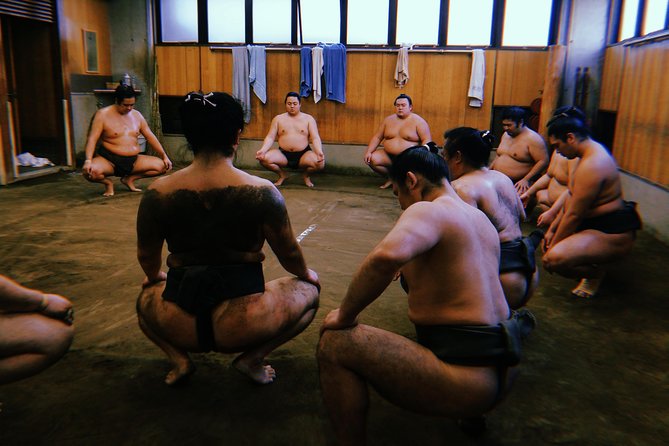
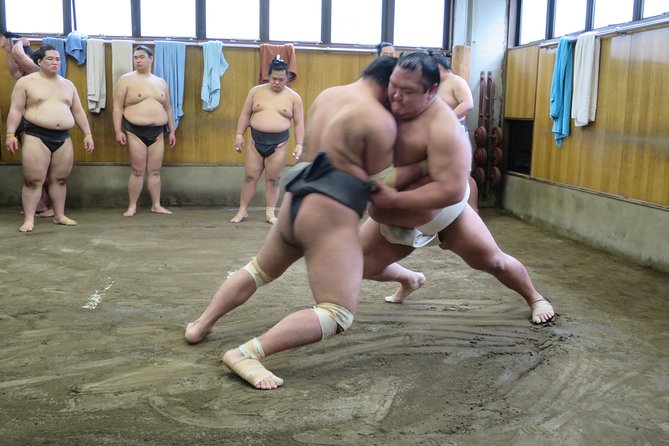
The best part of this Tokyo experience is the setting: you sit only a few feet from wrestlers doing real morning training, not a staged demonstration. You may see warm-ups, strength work, technique drills, and full bouts between stablemates. This is sumo as daily work, with sweat, silence, ritual, and serious concentration.
I like the close view and the small maximum group of seven. I also like the guides’ role when they do it well. Mayu, Masao, Ayaka, and Yumiko are praised for explaining the rules, rankings, stable life, and details you would miss on your own. The main drawback is that the session can feel quiet and lightly explained if your guide gives only a short introduction. You also sit on the floor, sometimes for more than an hour.
In This Review
- Key points before you book
- Why morning practice feels different from a sumo tournament
- Meeting at the right Ryogoku station
- The walk to the stable can change
- Inside the stable, silence is part of the experience
- What you may see during the 90-minute practice
- The photo opportunity depends on stable rules
- A short look at Ryogoku Kokugikan
- Is $98.16 a fair price?
- Who will enjoy this most
- How to make the morning go well
- Should you book the Ryogoku sumo practice tour?
- FAQ
- Where does the tour meet?
- What time does the tour start?
- Which Ryogoku station should I use?
- How long does the tour last?
- How long is the walk to the sumo stable?
- Can children join the tour?
- Can I take photographs during practice?
- Will I get a photo with a sumo wrestler?
- Do I need to sit on the floor?
- Can I cancel for a refund?
Key points before you book
- Real practice, not a performance: Watch wrestlers train for an upcoming tournament in an active sumo stable.
- Ryogoku access: Meet at the JR station, then walk roughly five to 30 minutes to the stable available that morning.
- Quiet observation required: Speaking, photography, and movement depend on the stable’s rules.
- Floor seating: Most stables use tatami mats and do not provide chairs.
- Photos are possible, not promised: The stable decides if you may photograph practice or pose with wrestlers afterward.
- Strict timing: Arrive early at the correct Ryogoku station. More than 15 minutes late means no entry, refund, or rescheduling.
Why morning practice feels different from a sumo tournament
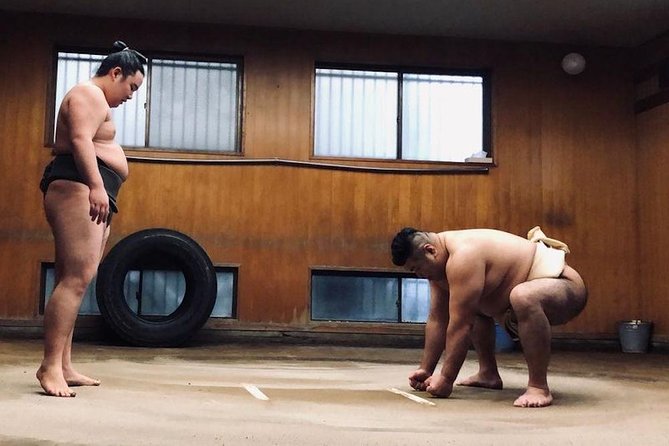
A tournament gives you spectacle: banners, formal bouts, a large crowd, and the excitement of a full arena. This two-hour experience gives you the working side of sumo. You see wrestlers repeat movements, test one another, and follow the stable’s routines without a public contest atmosphere.
That difference matters. During practice, the wrestlers are not there to entertain you. They are training. You may see long stretches of preparation followed by sudden, forceful bouts. A match can look brief, but the work around it shows the sport’s demands more clearly than a quick visit to the Ryogoku Kokugikan might.
You also see how close-range viewing changes your sense of scale. From a few feet away, the physical power is plain. So is the discipline. The room can be quiet while wrestlers work, and you may be asked to sit in one position and avoid distracting them.
This is one reason the experience works well for a serious sumo fan, but it also suits a first-time visitor who wants more context than a tournament ticket alone can provide. You should simply know that it is observation, not participation, and not a polished stage show.
More Sumo Experiences in Tokyo
- Tokyo: Sumo Show and Dining Experience
★ 4.8 · 2,742 reviews - the SUMO show
★ 5.0 · 1,960 reviews - Tokyo Shinjuku Sumo Show & Experience with Photo
★ 5.0 · 1,750 reviews
Meeting at the right Ryogoku station
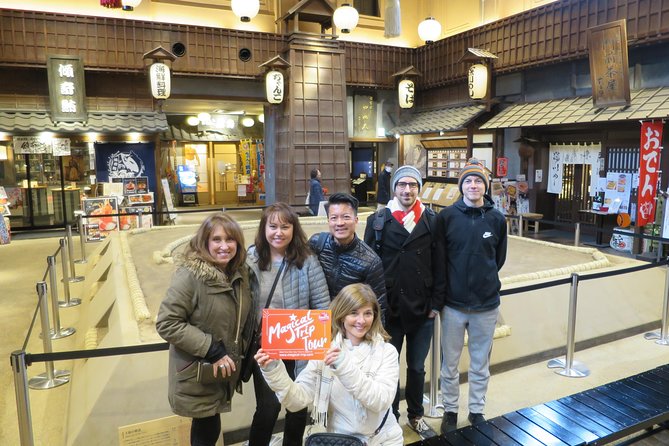
The tour begins at 8:00 a.m. at the East Exit of JR Ryogoku Station, beneath the elevated tracks near Re.Ra.Ku Ryōgoku Ekimae. Your guide holds a red or orange MagicalTrip board.
Tokyo has two Ryogoku stations, and this detail can make or break the morning. Do not go to Ryogoku Station on the Oedo Line. Use the JR station listed for the meeting point. I would arrive well before the start time, locate the East Exit, and allow extra time for the station area to sort itself out.
The meeting time is not a casual suggestion. The tour asks you to gather about 10 minutes before the stated start, and the group cannot wait more than 15 minutes after that meeting time. A late arrival can mean losing the entire booking with no refund or new date.
This strict rule makes sense once you reach the stable. Practice is private working time, and a late group entering the room would interrupt it. Still, it puts the responsibility firmly on you, so check the route the night before and avoid treating the 8:00 a.m. start like an open arrival window.
The walk to the stable can change
After introductions, the guide leads the group through Ryogoku to a sumo stable. The walk can take about five minutes, or as long as 30 minutes, depending on which stable is available that day.
That variable is important. You are not booking a visit to one fixed address. The morning schedule, tournament calendar, and wrestlers’ condition can affect which stable accepts the group. The operator may also ask you to change the date or time if the training schedule changes.
Ryogoku is the natural place for this outing. The district is closely tied to sumo, and the walk gives the guide a chance to explain what you are about to see. The quality of this opening varies with the guide and the setting. A thoughtful guide can cover stable rankings, the rules of sumo, the wrestler’s daily life, and what different drills mean. A rushed introduction outside the station, with traffic and people moving around, is less satisfying.
The group size is capped at seven, which helps once you are inside. If the overall booking is large, groups may be split and sent to different stables. You should understand that the exact stable and the precise length of practice are not guaranteed.
Inside the stable, silence is part of the experience
You enter with the guide and sit in the permitted tatami areas. Other parts of the stable are off-limits. Most stables do not offer chairs, so expect to sit on the floor for around an hour and 20 minutes, possibly longer.
This is not just a comfort issue. Floor seating can be hard on your knees, hips, or back, especially if the practice runs long. One session lasted close to two hours instead of the usual hour, and the tour itself may finish later than its two-hour estimate. If you need frequent movement or a chair, this is a serious consideration.
The stable may require masks, specific sitting positions, and quiet observation. You may not be allowed to use the toilet during practice, so go before leaving the station. The rule feels strict, but it protects a working environment that was not created for sightseeing.
Photography is also controlled by the stable. Some groups have been allowed to photograph the training, while others have been told to wait until practice ends or not to take pictures at all. The tour includes photos in its general offering, but that does not override the stable’s decision. Do not book this expecting a guaranteed action shot or a guaranteed portrait with a wrestler.
Same city, a completely different kind of day:
- Mt Fuji and Hakone 1-Day Bus Tour Return by Bullet Train
★ 5.0 · 26,383 reviews - 1-Day Tokyo Bus Tour
★ 5.0 · 14,250 reviews - Tokyo: TOKYO SKYTREE® Admission ticket
★ 4.5 · 11,192 reviews - Tokyo: teamLab Planets TOKYO Digital Art Museum Entry Ticket
★ 4.6 · 9,779 reviews
What you may see during the 90-minute practice
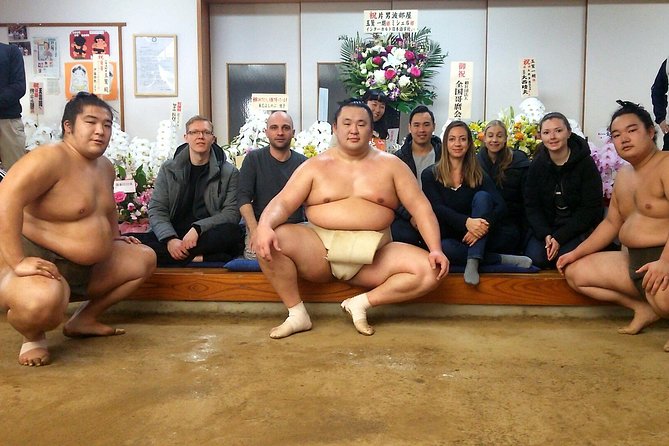
The practice can include warm-ups, repeated exercises, and bouts where wrestlers work on technique and strength. The most striking moments often come when the training shifts from routine movement to direct combat. You can see how much force is used, but also how controlled the work remains.
A guide may point out details such as hierarchy, stable structure, rules, and the way wrestlers prepare for tournaments. Some guides have added written notes during the practice, which can help when speaking is not allowed. You may also have a chance to ask questions after the session.
I would not expect a full lecture while the wrestlers train. The room must remain quiet, so the educational part depends on the briefing before practice and the conversation afterward. If you want a detailed explanation of sumo’s origins, ceremonies, rankings, and way of life, tell your guide what interests you when you meet. That gives the guide a clear chance to shape the information around your questions.
Seating is first come, first served because several tour companies may use the same stable. Arriving on time improves your position, but it does not guarantee the front row. Late groups may sit two or three rows back. Even from there, the practice can be compelling, but the close-up view is a major reason to follow the timing instructions carefully.
The photo opportunity depends on stable rules
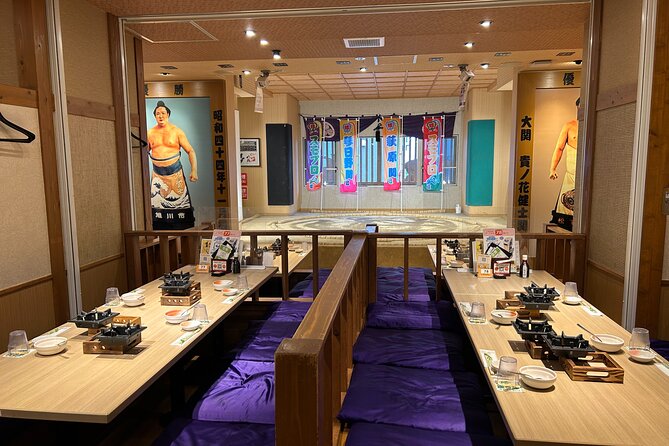
After practice, wrestlers may pose for photos with the group. Several versions of the experience have included friendly, talkative wrestlers and a posed photo at the end. The guide usually helps organize the moment and may take tour photos.
Treat this as a possible bonus, not the central promise. Each stable decides if photos of wrestlers are allowed and if photos with wrestlers are permitted. A change in schedule, an injury, or a stable’s own policy can end the practice early or cancel the photo opportunity.
That uncertainty is part of visiting an active stable rather than a museum exhibit. You gain access to real training, but you give up control over the schedule. If a portrait is essential to your plans, this experience carries some risk.
A short look at Ryogoku Kokugikan
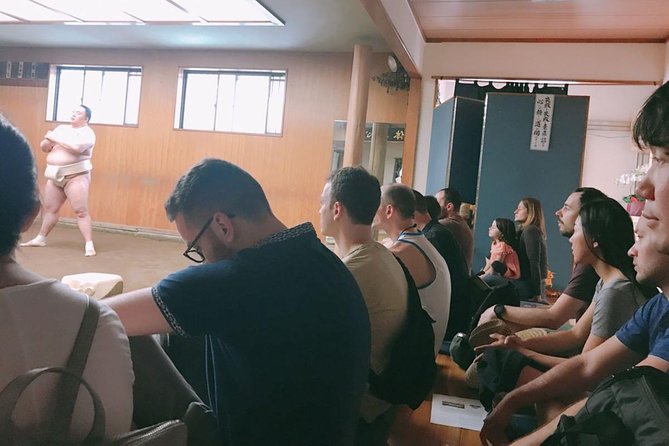
After the stable, the guide may take you through Ryogoku, the district known as Tokyo’s sumo town, with a brief stop near Ryogoku Kokugikan. This part lasts about 10 minutes and has no admission charge.
Do not expect a museum visit or a tour of the arena interior. The main event is the stable practice. The Kokugikan stop works as a small piece of local context, helping you connect the training room with Tokyo’s larger sumo world.
One possible extra stop has been Ekōin, a temple connected with memorial traditions. The exact route can vary, so I would treat any added walk as a welcome possibility rather than a promised feature. Make sure you understand when the tour is moving on. Clear instructions matter here, since the group returns to the station only after the short Ryogoku walk.
The activity ends back at the original meeting point. There is no lunch included, and there is no meal at the end as part of the stated program. One account describes hot pot food, but you should not count on that being included in this booking.
Is $98.16 a fair price?
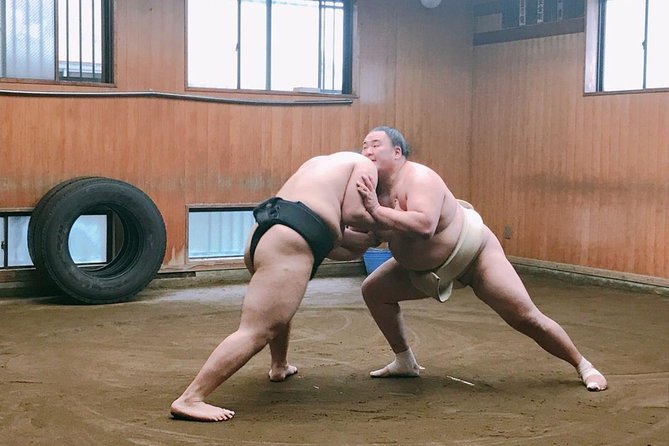
At $98.16 per person, this is not a cheap way to spend two hours in Tokyo. The value comes from access, not from the number of stops. You are paying for a local guide, the arrangement with a stable, the chance to watch active wrestlers at close range, and tour photos when permitted.
That can be a fair deal if you have tried and failed to arrange stable access yourself, or if sumo is high on your list. The setting is difficult to enter without local help, and the experience can show you a side of the sport that a tournament seat cannot.
The value is weaker if you want a long history lesson, a fixed schedule, guaranteed front-row seating, or a photo with a wrestler. The stable controls much of the visit, and the guide’s explanation can make a large difference. At this price, I would expect a clear briefing and good communication about the route, rules, and timing.
The maximum group of seven helps protect the experience from becoming a large crowd. Still, other tour groups may be present, and seating is first come, first served. You are paying for a rare type of access, not private use of the stable.
Who will enjoy this most
I would choose this for:
- A sumo fan who wants to see ordinary training rather than only tournament bouts
- A first-time visitor who wants a close look at Japanese sporting culture
- A solo participant who is comfortable sitting quietly for a long stretch
- Anyone willing to follow strict stable etiquette
- Visitors aged 12 and older who can handle floor seating
I would think twice if you are traveling with a child under 12, need accessible seating, dislike quiet observation, or want a flexible morning. Children younger than 12 cannot enter the stable, and the policy does not allow a refund when they are refused entry.
Summer requires extra care. Tokyo can be hot and humid, so bring water and wear a hat for the walk and time outdoors. The activity is not presented as fully weather-proof, and if it is canceled for poor weather, you are offered another date or a full refund.
The booking can also be canceled by the operator if the stable changes or cancels practice because of tournament scheduling or a wrestler’s condition. In that case, the booking is fully refunded. This is a useful protection, but it also confirms that your morning is subject to the stable’s needs.
How to make the morning go well
Arrive early, use the JR station, and find the guide’s red or orange board. Wear clothing that lets you sit comfortably on the floor, and use the toilet before entering the stable.
Keep your phone quiet and follow every instruction about masks, sitting, speaking, and photography. Do not assume that another group’s behavior gives you permission to copy it. Stable rules can differ from one visit to the next.
Ask questions before practice begins or after it ends. You may get more from the tour if you ask about the stable system, rankings, training routines, and the lives of the wrestlers rather than waiting for a running commentary during the session.
Finally, leave room in your schedule after the estimated finish. Practice can run long, and the walk back to Ryogoku station follows the stable visit.
Should you book the Ryogoku sumo practice tour?
Book it if you want rare close access to working sumo wrestlers and can accept quiet rules, floor seating, changing stable locations, and uncertain photography. The strongest version of the experience pairs you with a guide such as Masao, Mayu, Ayaka, or Yumiko, who can explain what your eyes are seeing.
Skip it if you need a guaranteed photo, a fixed timetable, a long formal history lesson, or comfortable seating. At $98.16, the tour earns its price through access rather than extras. For a sumo-minded visitor, that access can be the whole point.
FAQ
Where does the tour meet?
Meet at the East Exit of JR Ryogoku Station, beneath the elevated tracks near Re.Ra.Ku Ryōgoku Ekimae in Sumida City, Tokyo.
What time does the tour start?
The stated start time is 8:00 a.m. You should arrive about 10 minutes early because the group cannot wait for late arrivals.
Which Ryogoku station should I use?
Use Ryogoku JR Station East Exit. Do not go to Ryogoku Oedo Line Station, as it is a different station.
How long does the tour last?
The estimated duration is about two hours. The sumo practice can sometimes last longer than expected, so the tour may finish late.
How long is the walk to the sumo stable?
The walk can take about five to 30 minutes, depending on which stable is available that day.
Can children join the tour?
Only people aged 12 and older can enter the stable. Children under 12 are not allowed inside and will not receive a refund if they are denied entry.
Can I take photographs during practice?
Photography depends on the stable’s rules. The stable may allow photos during practice, allow them only afterward, or refuse photography altogether.
Will I get a photo with a sumo wrestler?
A posed photo may be possible after practice, but the stable decides if photos with wrestlers are allowed. It is not guaranteed.
Do I need to sit on the floor?
Yes, you may need to sit on a tatami floor because most stables do not provide chairs. You may also be unable to use the toilet during practice, so go before entering.
Can I cancel for a refund?
You can cancel at least 24 hours before the local start time for a full refund. Cancellations or changes made less than 24 hours before the start are not accepted. If the operator cancels because of poor weather or a stable schedule change, you are offered another date or a full refund.
More Morning in Tokyo
- Tokyo: Sumo Morning Practice Viewing Tour
★ 4.8 · 570 reviews - Tokyo: Sumo Morning Training Visit
★ 4.4 · 370 reviews - Tokyo: Sumo Morning Practice Tour at Sumida City
★ 4.8 · 308 reviews - Tokyo Sumo Morning Practice Tour at Stable
★ 5.0 · 298 reviews
Just added around Tokyo
- Tokyo: Customizable Private Guided Walking Tour★ 4.5 · 129 reviews
- Private Harajuku Omotesando Architecture Tour★ 4.9 · 18 reviews
- Tokyo: Guided Helicopter Ride★ 4.9 · 24 reviews
- Tokyo: Guided Walking Tour of Tsukiji Market with Lunch★ 4.4 · 24 reviews
- Tokyo: Private Personalized Local Food Tour★ 4.5 · 101 reviews
- Tokyo: Guided Walking Tour of Tsukiji Market with Breakfast★ 4.4 · 134 reviews
- Tokyo: Gotokuji Cat Temple, Shinjuku Cat Cafe & 3D Cat Tour★ 4.9 · 38 reviews
- Tokyo GINZA: KONPARU Japanese Cabaret Show with Drink★ 4.8 · 38 reviews
Sumo Experiences, compared.
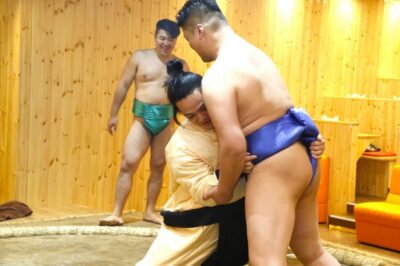
Sumo Show Experience with Chicken Hot Pot and a Photo
Read our review →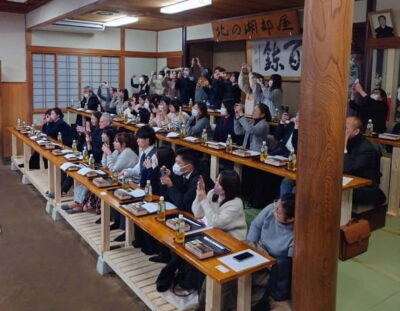
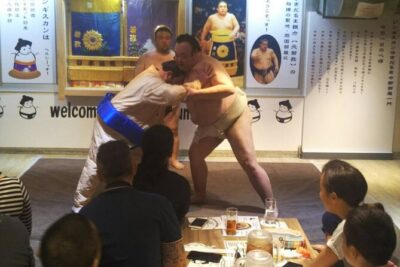
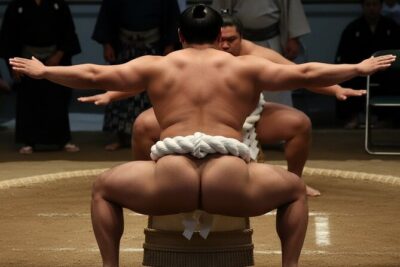
Tokyo Shinjuku Sumo Show & Experience with Photo
Read our review →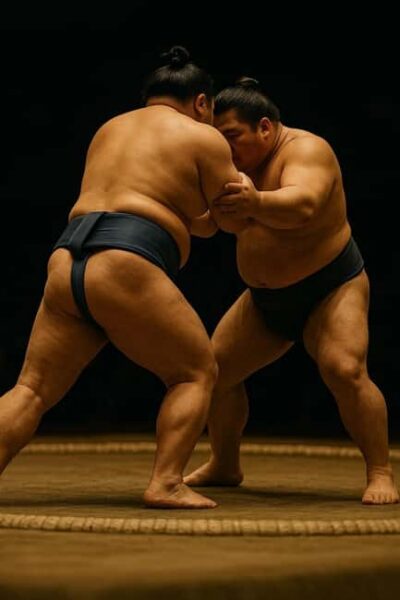
Sumo Show & Experience w/ Optional Kimono & Hot Pot
Read our review →
Authentic Sumo Experience in Tokyo: Enter the Sanctuary
Read our review →Browse the lists this tour appears in