REVIEW · KYOTO TOURS
Kyoto Early Bird English Tour: Gion & Higashiyama(Private opt)
Kyoto is at its most appealing before the crowds arrive, and this early morning walk through Gion and Higashiyama puts you on the old streets while the city is still quiet. You move from wooden machiya houses and shrine lanes to Kiyomizu-dera Temple, with an English-speaking guide explaining what you are seeing.
I like two things in particular: the route packs many of Kyoto’s famous sights into three hours, and the guide also takes professional photos during the tour. Guide Ikki Kataoka has earned special praise for his clear English, patience, detailed explanations, and eye for good pictures.
The main consideration is the walking. This is not a bus tour or a gentle ride between sights. You will spend the morning on foot, including uphill streets around Kiyomizu-dera, and the temple’s ¥500 admission fee is extra.
In This Review
- Key points to know before you book
- Why an early Gion walk works so well
- Gion and Hanamikoji Street: Kyoto’s old-town face
- Yasui-Konpiragu and the meaning of cutting ties
- Yasaka Pagoda and the old Higashiyama streets
- Kiyomizu-dera: the tour’s main attraction
- Yasaka Koshin-Do: color in a quiet temple stop
- Yasaka Shrine: ending near the heart of Kyoto
- The guide and the value of professional photos
- Is $64.01 a fair price?
- Timing, meeting point, and practical planning
- Who should book this Kyoto walking tour?
- Should you book it?
- FAQ
- How long does the Kyoto Early Bird English Tour last?
- Which sights are included?
- Is Kiyomizu-dera admission included?
- Is the tour private or shared?
- Who guides the tour?
- Are photographs included?
- Where does the tour start and finish?
- Can I cancel for a full refund?
Key points to know before you book
- Early start, quieter streets: A 7 a.m. departure can help you see Gion and Higashiyama before the day’s crowds build.
- Eight major stops: The route includes Gion, Hanamikoji Street, Yasui-Konpiragu, Yasaka Pagoda, Ninenzaka and Sannenzaka, Kiyomizu-dera, Yasaka Koshin-Do, and Yasaka Shrine.
- Guide-led and photo-friendly: Your English-speaking guide explains local landmarks and takes professional photos during the experience.
- Private or small-group choice: The tour is offered in formats designed to give you more flexibility than a large sightseeing group.
- Budget for one extra fee: Kiyomizu-dera admission costs ¥500 per person. Food and drinks are not included.
- Moderate fitness required: Expect around three hours of walking on historic streets, slopes, and temple approaches.
Why an early Gion walk works so well
Gion and Higashiyama are among Kyoto’s most photographed areas, but their appeal is easy to miss if you arrive at the busiest part of the day. The wooden houses, narrow lanes, and stone paving can feel much more atmospheric when shops are still opening and the streets are not packed with people.
The tour begins near the Statue of Izumo-no-Okuni in Kawaramachi, in Kyoto’s Higashiyama Ward. From there, you head into Gion and continue east toward the temple district. The route is compact on a map, but the stops give you plenty to look at, and the guide keeps you from spending time figuring out directions.
That matters in Kyoto. Gion and Higashiyama are easy enough to reach, but their streets can twist around shrines, shops, and temple grounds. A guide helps connect the buildings and rituals to the places you are standing in, rather than leaving you with a string of attractive photos and no context.
A few more Kyoto trips to weigh up
- Fushimi Inari Hidden Hiking Tour (Private Option Available)
★ 5.0 · 1,750 reviews - Private Kyoto Tour with a Local, Highlights & Hidden Gems, Personalised
★ 5.0 · 1,543 reviews - Kyoto 6hr Private Tour with Government-Licensed Guide
★ 5.0 · 1,369 reviews
Gion and Hanamikoji Street: Kyoto’s old-town face
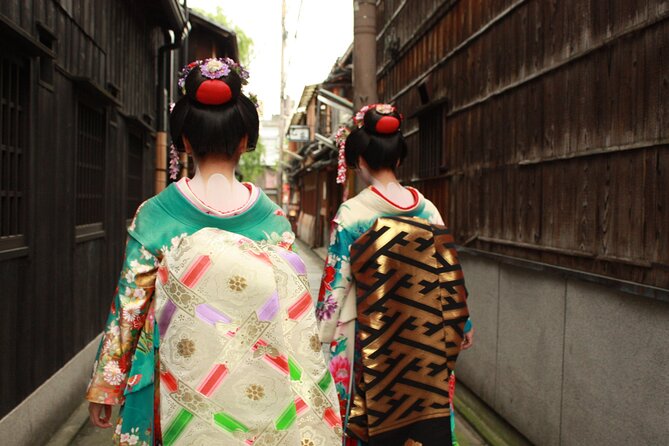
The first stop is Gion, Kyoto’s best-known geisha district. You can expect traditional wooden machiya houses, teahouses, and preserved streets that give this part of the city its old Kyoto character.
The stop in Gion is short, about 10 minutes, so think of it as an introduction rather than a full neighborhood tour. Your guide can help you notice the details that are easy to miss, especially the design of the wooden facades and the careful appearance of the lanes.
You then spend about 15 minutes on Hanamikoji Street, one of Gion’s most famous roads. This is the place associated with geisha and maiko, along with traditional teahouses and wooden buildings. You may have the chance to see a geisha or maiko, but the tour does not promise an encounter, so treat that as a possibility rather than the goal.
The early timing is useful here. Hanamikoji is a popular photography spot, and a quieter morning gives you more room to look at the street instead of simply moving with a crowd. Be respectful with photography and remember that this is a working neighborhood, not a stage set.
Yasui-Konpiragu and the meaning of cutting ties
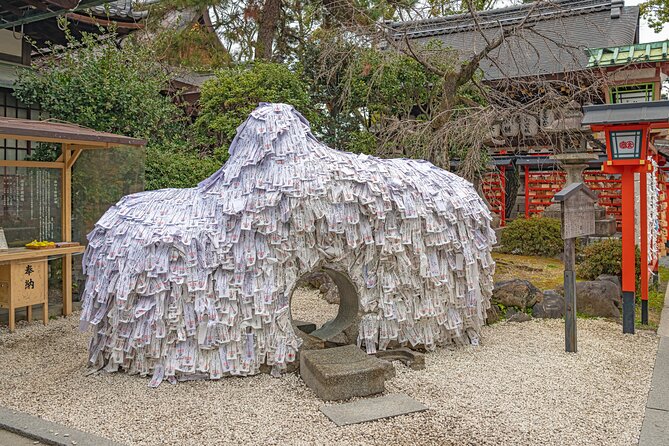
Yasui-Konpiragu offers a change of mood. This shrine is known for prayers to end harmful relationships and break negative ties, while also helping people form better connections.
You have about 15 minutes here. The attraction is not only the shrine itself, but the local belief attached to it. Your guide can explain how the site fits into Japanese religious practice and why people visit with very personal hopes.
For you, this stop adds meaning to the walk. Gion and Higashiyama can otherwise become a parade of pretty streets and famous buildings. At Yasui-Konpiragu, the focus turns toward the reasons people come to a shrine and the everyday role these places still play.
Yasaka Pagoda and the old Higashiyama streets
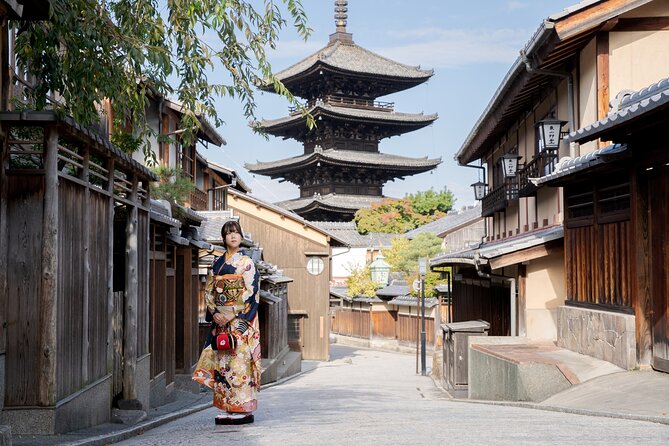
Next comes Yasakanoto, better known as Yasaka Pagoda, part of Hokanji Temple. The pagoda is one of the oldest wooden structures in Japan and one of the most recognizable sights in this part of Kyoto.
The scheduled stop is about 15 minutes. That is enough time to take in the pagoda’s scale and photograph it from the surrounding streets, though it is not a long temple visit. The structure is especially striking because it rises above the low wooden buildings around it.
From there, the route continues through Sannenzaka and Ninenzaka. These stone-paved streets are lined with souvenir shops, restaurants, and traditional wooden buildings. They are among the most charming walking areas in Kyoto, but they are also among the places most likely to become crowded later in the day.
The route allows about 15 minutes for this section, so you will not have much time to browse shops or stop for a meal. That is a fair trade if your priority is seeing the area with a guide and reaching Kiyomizu-dera efficiently. If you want a long shopping session, plan to return on your own.
Same city, a completely different kind of day:
- PERFECT KYOTO 1-Day Bus Tour
★ 5.0 · 13,518 reviews - Kyoto: Fushimi Inari, Kinkakuji, Bamboo Grove 1 Day Bus Tour
★ 4.8 · 4,316 reviews - Kyoto: Tea Ceremony in a Traditional Tea House in Kiyomizu
★ 4.9 · 3,519 reviews - Kyoto Geisha Walking Tour: Gion District & Hidden Gems
★ 4.7 · 3,273 reviews
Kiyomizu-dera: the tour’s main attraction
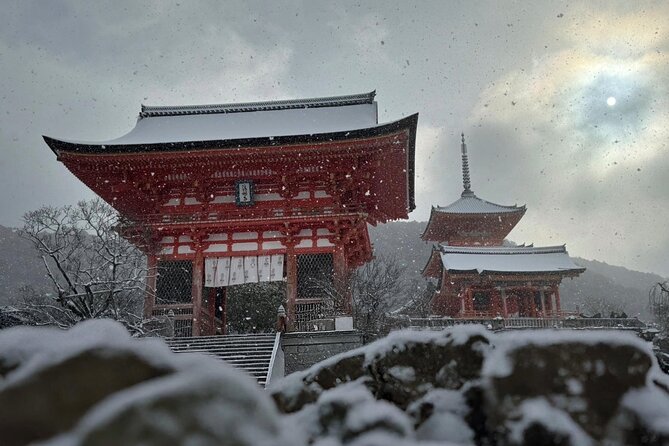
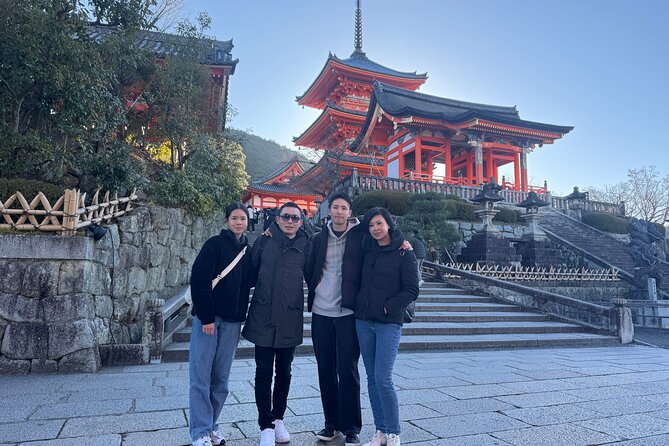
Kiyomizu-dera receives the longest stop, about one hour, and rightly so. It is the centerpiece of the route, with a hilltop setting and broad views over Kyoto City. Its long history and dramatic position make it one of Kyoto’s essential sights.
Admission is not included. Set aside ¥500 per person for entry. That small extra cost is easy to overlook when comparing tour prices, but it should be part of your budget.
An hour gives you time to do more than walk through the gate. You can take in the temple buildings, look out across the city, and listen as your guide explains the site. The exact pace will depend on the group and the guide, but this is the one stop where the schedule allows a proper visit rather than a quick photo break.
The approach is also the most demanding part of the walk. Higashiyama’s streets rise toward the temple, and you may be walking on uneven stone paving. Wear shoes you can comfortably use for three hours, and do not assume that an early start means a physically easy tour.
Kiyomizu-dera is popular for a reason, but the tradeoff is that it can feel crowded later in the day. An early visit gives you a better chance of enjoying the setting before the busiest period. It also leaves the rest of your day open for another Kyoto neighborhood, a meal, or a slower return through the streets.
Yasaka Koshin-Do: color in a quiet temple stop
Yasaka Koshin-Do is a small but visually distinctive stop on the route. The temple’s construction date is not known, and its colorful decorations contrast with the more restrained appearance found at many Japanese temples.
You have about 15 minutes here. This is a good pause after Kiyomizu-dera because it offers a different scale and mood. Rather than another huge complex, you get a memorable place with unusual color and a strong photographic appeal.
The stop also shows why a guide can improve this kind of walking tour. You might notice the bright decorations on your own, but a guide can explain why the site is included and place it within the wider Higashiyama area.
Yasaka Shrine: ending near the heart of Kyoto
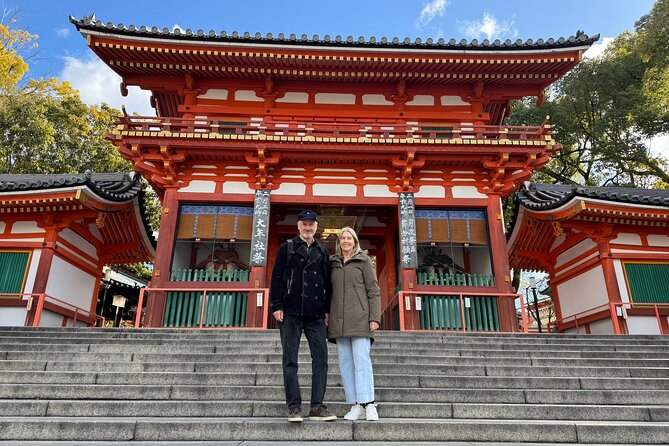
The final stop is Yasaka Shrine, with about 30 minutes to explore. It is the headquarters of roughly 2,300 related shrines across Japan and is connected with prosperity and protection.
The shrine gives the tour a strong finish. After the narrow lanes, pagoda, temple approaches, and Kiyomizu-dera views, you arrive at a major Shinto site with a broader public role. Your guide can help you understand the difference between the Buddhist temples on the route and this Shinto shrine.
The activity ends back at the original meeting point, so you do not finish in a completely different part of Kyoto. That is convenient for planning, especially if you have another reservation later. The supplied route describes Yasaka Shrine as the final destination, while the meeting information says the activity ends at the meeting point, so confirm the exact end procedure when you book.
The guide and the value of professional photos
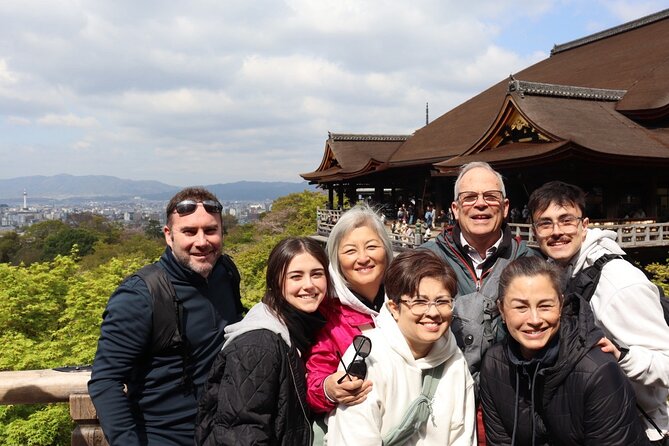
The guide is a major part of the experience. Ikki Kataoka is specifically associated with the tour, and the strongest praise centers on his detailed explanations, very good English, patience, and ability to make older participants feel comfortable.
That last point matters because the route is active. A guide who keeps a relaxed pace and explains things clearly can make a long walking morning feel far easier. It is also useful if you are not familiar with Japanese customs at shrines and temples.
Professional photos are included, and this is more than a minor extra. Gion and Higashiyama offer plenty of attractive backdrops, but it can be difficult to get good pictures of your whole group when you are traveling together. Having the guide take photos means you can focus on the walk instead of handing your phone to strangers.
The photo service should not be the only reason to book, since the tour’s real value is the route and commentary. Still, it adds practical value, particularly for couples, families, and small groups who want pictures together.
Is $64.01 a fair price?
At $64.01 per person, the tour is not the cheapest way to walk through Gion and Higashiyama. You could visit the public streets and shrines yourself for little or no admission cost, then pay only the ¥500 entrance fee at Kiyomizu-dera.
The price becomes easier to justify if you want three things: an organized route, English commentary, and professional photos. You are paying to avoid navigation work and to make better use of a short morning in Kyoto. The value is strongest for first-time visitors who want the major sights explained in one compact outing.
The private or small-group choice also affects the value. A private format can suit families or friends who want the guide’s attention and a more personal pace. A small group may be the better deal if you prefer company and want to keep the per-person cost down.
The tour is around three hours, and several stops are brief. You should not book it expecting a slow, detailed visit inside every location. You are getting a guided overview with a full hour at Kiyomizu-dera, not an all-day cultural program.
Timing, meeting point, and practical planning
The meeting point is the Statue of Izumo-no-Okuni at Kawaramachi, Higashiyama Ward, Kyoto. It is near public transportation, but you should still allow extra time to find the statue and reach the area before the start.
Late arrival is a serious issue. If you miss the meeting time, you cannot join the tour and will not receive a refund. For an early morning departure, check your route the night before and leave enough margin for finding the starting point.
The experience is designed as a walking tour, with moderate physical fitness required. Expect historic streets, temple paths, and uphill sections. Comfortable footwear is the most important thing to bring, along with water if you normally need it during a three-hour walk.
Food and drinks are not included. Since the schedule is tightly organized, do not count on a long breakfast stop during the tour. Eat beforehand, or plan a café visit after the walk.
Confirmation arrives at booking, and mobile tickets are supported. The activity also offers group discounts. Cancellation is free if you cancel at least 24 hours before the local start time. Changes or cancellations inside that window are not accepted.
The tour is often booked well ahead, with an average booking time of about 43 days in advance. That is worth noting if you want a particular morning or private format, especially during a busy Kyoto visit.
Who should book this Kyoto walking tour?
I would recommend it to a first-time Kyoto visitor who wants to see Gion and Higashiyama without spending half the morning studying a map. It also suits anyone who values a guide’s explanations and wants photographs of the group rather than another collection of solo shots.
Families and older participants may appreciate Ikki’s patient guiding style, though every participant should be ready for the walking and slopes. Couples and friends may find the private option useful for photos and a more personal outing.
You may want to skip it if you prefer to wander at your own pace, spend a long time shopping on Ninenzaka and Sannenzaka, or enter every temple and shrine in detail. The route moves steadily, and the main goal is to cover a lot of ground in a short period.
Should you book it?
Book this tour if you want an early, well-organized introduction to Kyoto’s classic eastern districts, especially with an English-speaking guide and photos included. The route is strong, the stops are well chosen, and Kiyomizu-dera receives enough time to feel like the morning’s main event.
Before paying, make sure you are comfortable with the early start, three hours on foot, and the extra ¥500 temple admission. If those points suit your plans, the tour offers a practical way to see Gion and Higashiyama with useful context instead of simply following the crowds.
FAQ
How long does the Kyoto Early Bird English Tour last?
The experience lasts approximately three hours.
Which sights are included?
The route includes Gion, Hanamikoji Street, Yasui-Konpiragu, Yasaka Pagoda, Sannenzaka and Ninenzaka, Kiyomizu-dera Temple, Yasaka Koshin-Do, and Yasaka Shrine.
Is Kiyomizu-dera admission included?
No. Admission costs ¥500 per person and is paid separately.
Is the tour private or shared?
The experience offers a choice between a private tour and a small-group tour. The additional information also describes the activity as private, so check the exact format selected at booking.
Who guides the tour?
Guide Ikki Kataoka is associated with the experience. The tour includes a passionate local English-speaking guide.
Are photographs included?
Yes. Professional photos are taken during the tour and are included.
Where does the tour start and finish?
The tour starts at the Statue of Izumo-no-Okuni in Kawaramachi, Higashiyama Ward, Kyoto. The activity information says it ends back at the meeting point.
Can I cancel for a full refund?
Yes. You can cancel at least 24 hours before the local start time for a full refund. Cancellations and changes made less than 24 hours before the start are not accepted.
Just added around Kyoto
- Private Guided Traditional Buddhist Cooking in Japan★ 5.0 · 16 reviews
- Kyoto: Gion Geisha District & Sake-in-Hand Walking Tour★ 5.0 · 37 reviews
- Your Private Vacation Photography Session In Kyoto★ 5.0 · 110 reviews
- Kyoto: Zen Meditation at a Private Temple with a Monk★ 5.0 · 25 reviews
- Traditional Japanese Washi Papermaking- Kyoto morning★ 5.0 · 77 reviews
- Kyoto Wagashi(Japanese sweets) Cooking Class near Fushimiinari★ 5.0 · 60 reviews
- Private Pewter Sake Cup Experience with a Kyoto Artisan★ 5.0 · 31 reviews
- Kyoto Private 6 hour Tour: English Speaking Driver Only, No Guide★ 5.0 · 88 reviews
Kyoto Tours, compared.
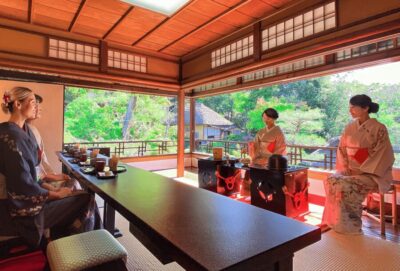
Tea Ceremony in a Traditional Tea House in Kiyomizu
Read our review →
Kyoto Geisha Walking Tour: Gion District & Hidden Gems
Read our review →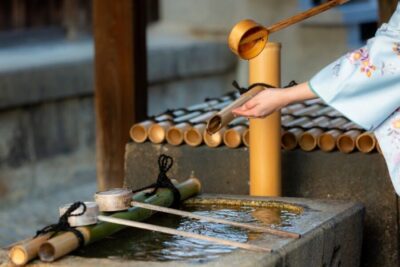

Gion Magical Night Walking Tour with Geisha Trivia
Read our review →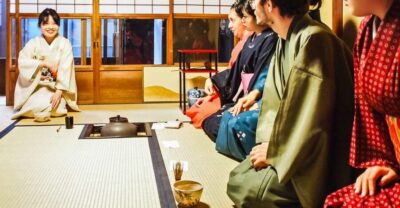

Gion Geisha District Walking Tour – Stories of Geisha
Read our review →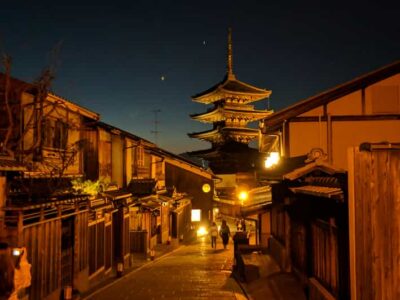
Best of Kyoto: Gion, Geisha, Pagodas & Cobblestones
Read our review →