
REVIEW · JAPANESE COOKING CLASSES
Japanese Katsu Curry Cooking Class–near YANAKA, Tokyo!
Japanese curry tastes familiar in Japan, but this class shows you what sits behind the boxed roux. You’ll toast and blend ingredients into a curry base, then fry tonkatsu until golden. I like that Yuki teaches a dish you can repeat at home, not just watch someone prepare. I also like the small maximum of six people, which keeps the lesson personal.
The class takes place in a quiet residential area near Yanaka, giving you a look at Tokyo’s old downtown side. The main consideration is the price, $111.67 per person, which is a serious lunch bill, though the hands-on instruction and full meal make it more than a simple restaurant visit.
In This Review
- Key points to know before booking
- Why making the roux from scratch matters
- Arriving near Yanaka at 10:00 a.m.
- 10:15 a.m. to 10:30 a.m.: Home cooking and Tokyo context
- 10:30 a.m. to 12:30 p.m.: Building the curry and frying tonkatsu
- The finished lunch: curry rice, tonkatsu, and vegetables
- What makes Yuki’s teaching useful at home
- Dietary requests and ingredient changes
- Is $111.67 a fair price?
- Who should book this cooking class?
- Timing, cancellation, and small practical points
- Should you book YUZU WASHOKU STUDIO?
- FAQ
- Where does the Japanese katsu curry cooking class meet?
- What time does the class start?
- How long does the cooking class last?
- What food will I prepare and eat?
- Is the tonkatsu always made with pork?
- Can the class accommodate special diets?
- What is included, and is hotel pickup available?
Key points to know before booking
- Curry roux from scratch: You will not rely on the familiar store-bought curry cubes.
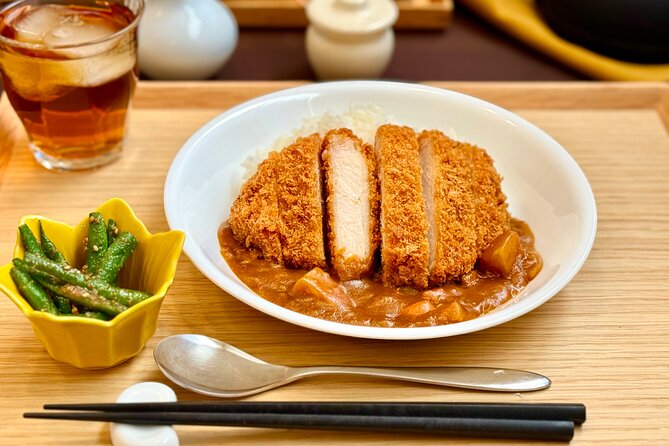
- Three-part meal: The class includes curry rice with tonkatsu, a seasonal vegetable side dish, and drinks.
- Small group setting: The maximum is six people, useful if you want room to ask questions.
- Home-style Tokyo setting: YUZU WASHOKU STUDIO is in a quiet residential neighborhood near Yanaka.
- Flexible dietary planning: Pork tonkatsu can be changed to chicken or tofu with advance notice.
- Useful take-home skills: Yuki explains ingredient substitutions so you can recreate the meal outside Japan.
Why making the roux from scratch matters
Japanese curry is often treated as a quick home meal, and boxed curry roux is a standard shortcut. That shortcut is convenient, but it leaves you with one fixed flavor. At YUZU WASHOKU STUDIO, Yuki teaches you how to build the roux yourself, so you can adjust the taste to suit your kitchen and your palate.
That is the heart of this class. You are not simply learning how to assemble curry from prepared products. You are learning the part that gives the sauce its character, then seeing how the finished sauce works with rice, tonkatsu, and vegetables.
I find this especially useful for anyone who already cooks at home. One participant who described having plenty of cooking experience still picked up several pointers for improving everyday technique. That says something important about the class: it is not aimed only at beginners who need every step explained.
You can ask about substitutions for ingredients sold in your own country, too. This matters because recreating Japanese recipes abroad can be harder than following them in Tokyo. A class recipe is only truly useful if you can make it again after the holiday.
More Japanese Cooking Classes in Tokyo
- Sushi Making Tokyo Roll and Authentic Japanese Sushi Class
★ 5.0 · 3,971 reviews - Tokyo: Roll and Authentic Sushi Making Class in Asakusa
★ 4.9 · 1,957 reviews - Tokyo: Sushi Making Class in a Happi Coat near a Famous Spot
★ 4.9 · 1,377 reviews
Arriving near Yanaka at 10:00 a.m.
The meeting point is YUZU WASHOKU STUDIO at 1-chōme-58-4 Nishinippori, Arakawa City, Tokyo 116-0013. The studio is near public transportation, but this is not a grand restaurant or a cooking school in a busy commercial building. It sits in a quiet residential neighborhood near Yanaka, part of Tokyo’s old downtown district.
That setting gives the class a different feel from a standard tourist activity. You are stepping into an everyday part of Tokyo, where the surroundings are residential and calm. The class description emphasizes the details of a Japanese kitchen and ordinary home cooking, so the location supports the lesson rather than distracting from it.
Plan to arrive ready to start at 10:00 a.m. Hotel pickup is not included, and the activity ends at the same meeting point. Since the studio is in a residential area, allow enough time to reach the address without rushing. Your mobile ticket provides the booking information, but you still need to make your own way there.
The small group limit is six people. That number is large enough for a social meal but small enough for hands-on work to feel practical. If you want a class where you can ask about frying, seasoning, or ingredient swaps, this is a better setup than a large demonstration.
10:15 a.m. to 10:30 a.m.: Home cooking and Tokyo context
After the 10:00 a.m. meeting time, the class begins with a short talk about Japanese home cooking and Tokyo. It lasts about 15 minutes, so the introduction should give you useful context without taking over the cooking time.
This opening is valuable because curry is not just a restaurant specialty in Japan. It is a familiar comfort food enjoyed by people of different ages. Understanding that everyday role helps place the dish in ordinary Japanese life rather than treating it as an exotic menu item.
The Tokyo guide portion also connects the studio to the surrounding area. You are near Yanaka, a part of the city known for its older, quieter character. The activity does not present itself as a sightseeing walk, so you should not book it expecting a full neighborhood tour. Instead, you get a short local introduction before settling into the kitchen.
Yuki’s style, based on the class details, is warm and home-oriented. She is the home chef leading the lesson, and her replies to past participants show an interest in helping people continue cooking Japanese food after returning home. One person even wanted to photograph her rice cooker, a small detail that hints at how the kitchen equipment and cooking habits may become part of the appeal.
10:30 a.m. to 12:30 p.m.: Building the curry and frying tonkatsu
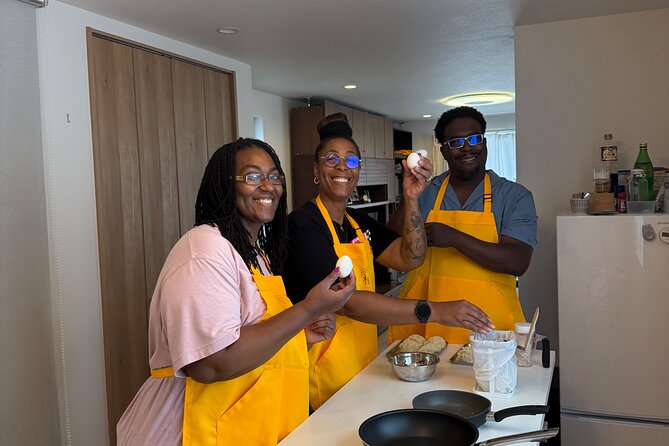
The main cooking period runs from 10:30 a.m. until about 12:30 p.m. The schedule lists 12:30 a.m., but the class is clearly a morning activity followed by lunch, so you should plan for a noon finish.
You begin with the curry. The lesson focuses on preparing a Japanese curry roux from scratch rather than opening a packet or dropping a block into a pot. That process gives you control over the finished flavor and teaches a technique you can adapt later.
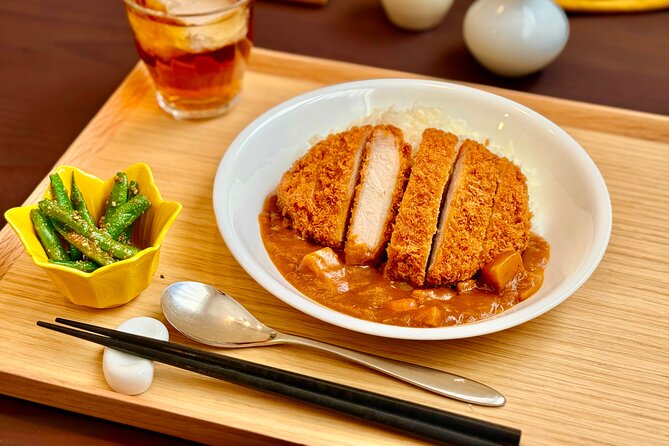
Yuki also covers how to fry tonkatsu, the breaded pork cutlet served with the curry. The goal is a crisp, golden exterior, which requires more care than simply putting a cutlet into hot oil. This is one of the class’s most useful skills because fried food can look simple while still producing disappointing results at home.
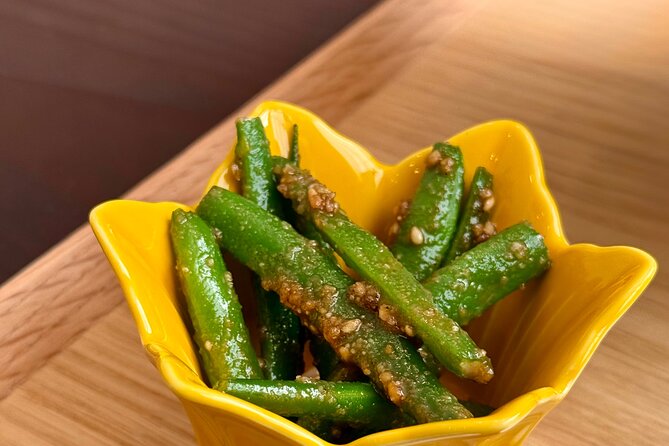
You will also prepare a seasonal vegetable side dish. The vegetables change during the year, so the exact dish is not fixed. That seasonal approach is a nice reminder that Japanese home cooking is flexible and tied to what is available, though it also means you cannot know the precise side dish before booking.
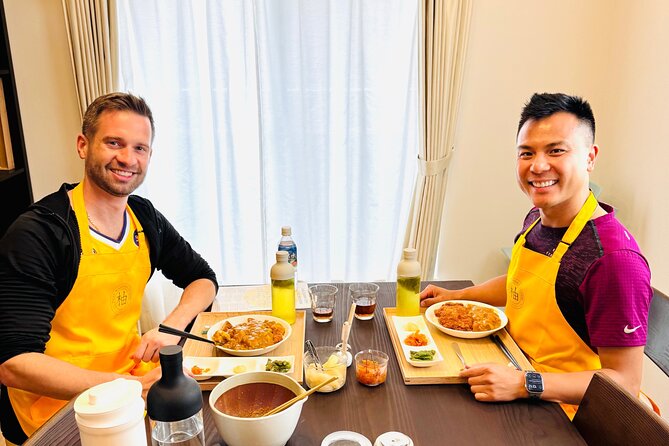
The class is interactive rather than a meal with a short cooking display. You should expect to take part in preparing the food, not only watch Yuki work. The available information does not specify every individual task or the exact ingredients, so you should not assume a particular menu beyond curry rice, tonkatsu, and the seasonal vegetable dish.
Same city, a completely different kind of day:
- Mt Fuji and Hakone 1-Day Bus Tour Return by Bullet Train
★ 5.0 · 26,383 reviews - 1-Day Tokyo Bus Tour
★ 5.0 · 14,250 reviews - Tokyo: TOKYO SKYTREE® Admission ticket
★ 4.5 · 11,192 reviews - Tokyo: teamLab Planets TOKYO Digital Art Museum Entry Ticket
★ 4.6 · 9,779 reviews
The finished lunch: curry rice, tonkatsu, and vegetables
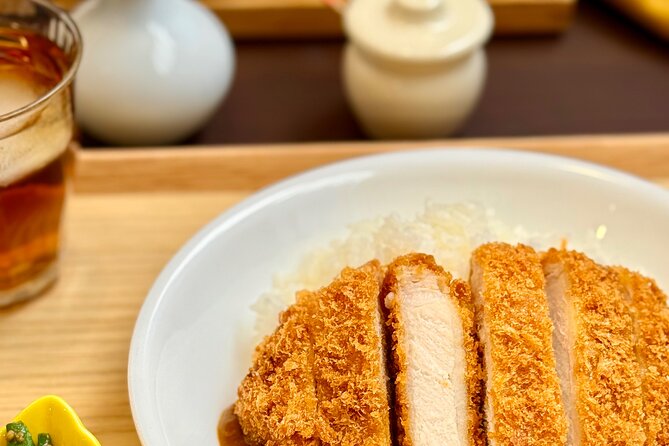
Once the cooking is complete, you sit down to eat the meal you helped prepare. The included lunch is Japanese curry rice with tonkatsu, a seasonal vegetable side dish, green tea, and water.
The combination makes sense as a teaching meal. The curry gives you the central sauce technique, the tonkatsu adds frying practice, and the vegetable dish introduces a lighter seasonal element. You are not learning one isolated recipe. You are putting together a complete Japanese-style lunch.
I like that the drinks are included, since green tea fits the meal and means you do not need to arrange another lunch afterward. The end time also leaves the rest of your afternoon open for Yanaka or another part of Tokyo.
Keep your expectations practical. This is a two-and-a-half-hour class with a small group, not a long multi-course culinary workshop. Its strength is focus. You spend the session on a popular Japanese comfort meal that you can plausibly make again.
What makes Yuki’s teaching useful at home
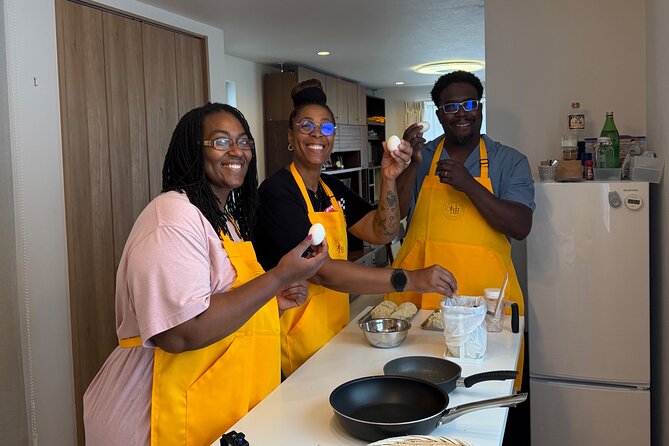
The strongest reason to choose this class is the attention to repeatability. Yuki provides simple recipes and explains how to replace ingredients with products available in your own country. That advice can be more useful than a complex recipe full of items you will struggle to find later.
The scratch-made roux also gives you room to adjust the meal. You can change the flavor to match your preferences instead of accepting the standard balance from a boxed product. For a home cook, that is a real benefit, particularly if you want to make a milder, stronger, or otherwise customized curry.
The class may suit confident cooks as well as beginners. A hands-on lesson can expose small technique problems that are easy to miss when cooking alone, especially with frying. At the same time, the simple recipes and home-style approach should keep the class approachable if Japanese cooking is new to you.
There is a pleasant personal touch in Yuki’s follow-up with past participants. She has encouraged people to try the dishes again at home, and at least one person did exactly that after returning from Japan. That is the right test for a cooking class: the lesson should stay useful after the apron comes off.
Dietary requests and ingredient changes
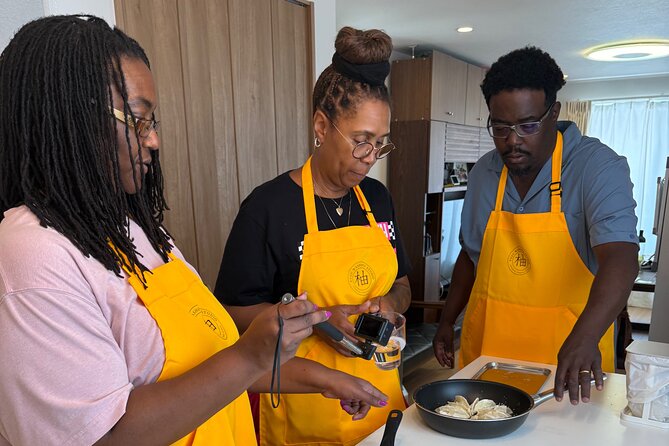
The standard tonkatsu is made with pork. If you prefer chicken or tofu, you can request a substitution in advance. Vegetarian, gluten-free, halal, and other dietary needs should also be shared when you reserve.
This advance notice matters. Do not wait until you arrive at the studio, since the menu and preparation need to be planned ahead. The supplied information confirms that vegetarian options are available, but it does not provide a detailed alternative menu, so ask about the exact replacement if your diet is strict.
The seasonal vegetable dish changes during the year. That is good for variety, but the class cannot promise one specific vegetable preparation. If you have allergies, give full details at booking, including ingredients you need to avoid.
Is $111.67 a fair price?
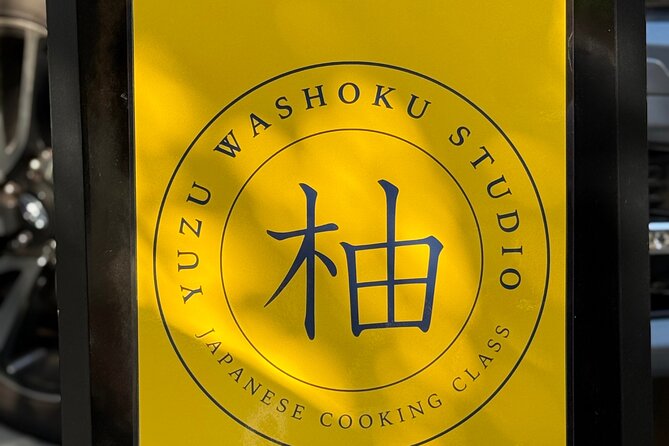
At $111.67 per person, this is not a cheap way to eat curry. You could find a restaurant meal for much less, and you should be clear about what you are paying for.
The value comes from the combination of instruction, participation, a full lunch, drinks, an apron, and a hand towel. You also get a small group capped at six people, a quiet local setting, and recipes designed for use outside Japan. If you only want to taste katsu curry, choose a restaurant. If you want to learn how to make it, the price is easier to justify.
The class is also scheduled for about two and a half hours. That gives you enough time to cook and eat without giving up an entire day of sightseeing. The morning timing works well for a day built around Yanaka, although the activity itself finishes back at the studio rather than continuing into a guided neighborhood tour.
It is best value for someone who will use the skills later. If you cook regularly, want to understand Japanese curry beyond the boxed roux, or are looking for a shared activity with a partner, the cost buys more than lunch. If your main goal is a low-cost meal, it will feel expensive.
Who should book this cooking class?
I would point this class toward couples, families, and small groups who want an active morning rather than another guided walk. The honeymoon couple who booked with Yuki described it as a 10 out of 10 experience, and the format suits a special trip because you share the work and then eat the result together.
It also fits solo participants who enjoy cooking and are comfortable joining a small group. The maximum of six should make it easier to speak with Yuki and follow the practical steps.
Home cooks may get the most from it. You will learn a scratch curry base, frying tips, a seasonal side dish, and ways to replace ingredients at home. Beginners can take the class for the friendly introduction, while experienced cooks may still pick up useful pointers.
You should think twice if you dislike pork and do not want chicken or tofu, have dietary needs you cannot communicate in advance, or prefer a fast meal with no participation. This is a cooking session, so the food comes after the preparation.
Timing, cancellation, and small practical points
The experience starts at 10:00 a.m. and ends at the meeting point around 12:30 p.m. Hotel pickup is not included. The class is near public transportation, and you receive confirmation when booking.
Free cancellation is available if you cancel at least 24 hours before the start time. Changes or cancellations within 24 hours are not accepted for a refund. The activity can also be canceled if poor weather affects the class or if the minimum number of participants is not reached. In those cases, you are offered another date or experience, or a full refund.
The activity uses a mobile ticket. An apron and hand towel are supplied, so you do not need to bring those. The most important preparation is giving Yuki your dietary details and any request for chicken or tofu instead of pork.
Should you book YUZU WASHOKU STUDIO?
Book this class if you want to understand Japanese curry as a home-cooked dish, not just order it in a restaurant. The scratch-made roux is the key feature, and the tonkatsu lesson adds a second practical skill. Yuki’s focus on ingredient substitutions also gives the class lasting value.
The price is high for lunch, but reasonable for a small, hands-on lesson with a complete meal and recipes you can use later. The quiet Yanaka-area setting adds local character without turning the morning into a long sightseeing program.
I would skip it only if you want the cheapest possible curry, cannot plan dietary requests in advance, or would rather spend your morning sightseeing. For everyone else, this is a focused, personal way to cook, eat, and take a useful piece of Japanese home life back to your own kitchen.
FAQ
Where does the Japanese katsu curry cooking class meet?
The class meets at YUZU WASHOKU STUDIO, 1-chōme-58-4 Nishinippori, Arakawa City, Tokyo 116-0013, Japan, near the Yanaka area.
What time does the class start?
The activity starts at 10:00 a.m.
How long does the cooking class last?
The experience lasts approximately two hours and 30 minutes, ending back at the meeting point around 12:30 p.m.
What food will I prepare and eat?
You will prepare Japanese curry roux from scratch, tonkatsu, and a seasonal vegetable side dish. The included meal is curry rice with tonkatsu, the vegetable dish, green tea, and water.
Is the tonkatsu always made with pork?
Tonkatsu is typically made with pork, but chicken or tofu can be requested instead. You must provide that request when making your reservation.
Can the class accommodate special diets?
Vegetarian, gluten-free, halal, allergy-related, and other dietary needs can be discussed if you notify YUZU WASHOKU STUDIO when booking.
What is included, and is hotel pickup available?
The class includes lunch, green tea, water, a rental apron, and a hand towel. Hotel pickup is not included.
More Workshops in Tokyo
- Tokyo Shinjuku Chopsticks Making Class
★ 5.0 · 1,763 reviews - Chopstick Making Workshop in Ginza
★ 4.8 · 1,366 reviews - Tokyo Sushi Making Class in Tsukiji with Professional Chef
★ 5.0 · 1,177 reviews - Matcha Making Class in Tokyo with Authentic Japanese Sweets Set
★ 5.0 · 744 reviews
More Cooking Classes in Tokyo
- Ramen & Gyoza Cooking Class in Tokyo with Local Supermarket Visit
★ 5.0 · 823 reviews - Tokyo: Easy Ramen Cooking Experience in Kabukicho, Shinjuku
★ 4.6 · 321 reviews - Ramen and Sushi Cooking Class with Sake Pairing Set in Tokyo
★ 5.0 · 291 reviews - Tokyo: Wagyu and 7 Japanese Dishes Cooking Class
★ 4.9 · 273 reviews
Just added around Tokyo
- Samurai Experience Mugai Ryu Iaido in Tokyo★ 5.0 · 40 reviews
- Private Sushi Making with a Sushi Master★ 5.0 · 102 reviews
- Retro Shibuya Food Tour★ 5.0 · 33 reviews
- Ride Through The Streets Of Shibuya and Sinjuku By Go Kart★ 5.0 · 86 reviews
- Tokyo Sumo Culture Tour with Chanko-Nabe Lunch in Ryogoku★ 5.0 · 26 reviews
- Cozy Tokyo Class: Ramen, Sushi, Sake Pairing & Cultural Exchange★ 5.0 · 74 reviews
- Tokyo Night Bike Tour: From Shibuya to Tokyo Tower via Roppongi★ 5.0 · 29 reviews
- Ride a rickshaw wearing a kimono in Asakusa! Enjoy authentic traditional culture!★ 5.0 · 14 reviews
Japanese Cooking Classes, compared.
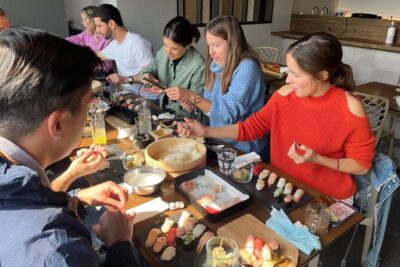
Sushi Making Tokyo Roll and Authentic Japanese Sushi Class
Read our review →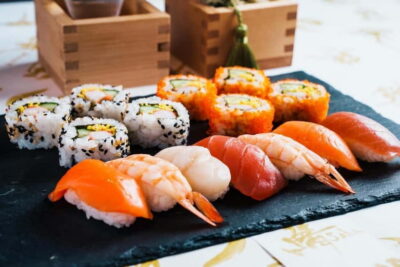
Roll and Authentic Sushi Making Class in Asakusa
Read our review →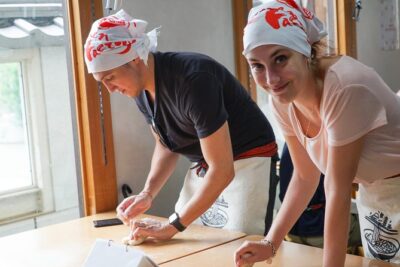
Ramen Cooking Class at Ramen Factory in Kyoto
Read our review →
Sushi Making Class in a Happi Coat near a Famous Spot
Read our review →
Sushi Making Osaka Roll and Authentic Japanese Sushi Class
Read our review →
Tokyo Sushi Making Class in Tsukiji with Professional Chef
Read our review →
Ramen & Gyoza Cooking Class in Tokyo with Local Supermarket Visit
Read our review →
Tsukiji Fish Market Guided Tour and Sushi Making with Pro Chef
Read our review →Browse the lists this tour appears in