
REVIEW · CYCLING TOURS
Tokyo Night Bike Tour: From Shibuya to Tokyo Tower via Roppongi
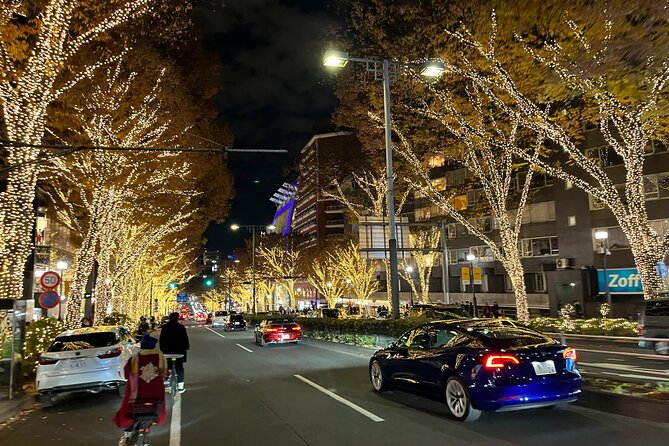
Tokyo looks different from a bicycle seat after 8 p.m. This two-hour ride links Tokyo Tower, Roppongi, Omotesando, and Meiji Jingu Gaien, then slips into quieter corners that trains do not reach. The city lights are the show, but the real treat is seeing how busy districts give way to calm streets within a few blocks.
I like the small six-person limit, since it should be easier to follow the guide and ask questions at crossings. I also like the practical design: bicycles and helmets are included, the ride starts near Yoyogi Station, and the cooler night air is a welcome break during Tokyo’s hot summer months.
The main catch is the pace. You need to cycle confidently at about 15 kilometers per hour, manage traffic lights and cross traffic, and handle crowded or tight spaces. This is not a gentle sightseeing ride for someone who rarely cycles.
In This Review
- Key points to know before booking
- Why Tokyo works so well by bicycle at night
- Starting near Yoyogi at 8 p.m.
- Tokyo Tower: the big opening view
- Meiji Jingu Gaien: room to breathe
- Omotesando: Tokyo style after sunset
- Roppongi Keyakizaka Dori and Roppongi
- Azabujuban and Nishiazabu: the neighborhood changes
- Aoyama Cemetery after dark
- What the guide adds to the ride
- Safety, pace, and who should book
- Is $56.01 good value?
- What to eat and bring
- Cancellation and weather details
- Should you book this Tokyo night ride?
- FAQ
- How long is the Tokyo Night Bike Tour?
- What time does the tour start?
- Where does the tour meet?
- Where does the tour finish?
- Are bicycles and helmets included?
- What height range suits the bicycles?
- How fast do I need to cycle?
- Is dinner included?
Key points to know before booking
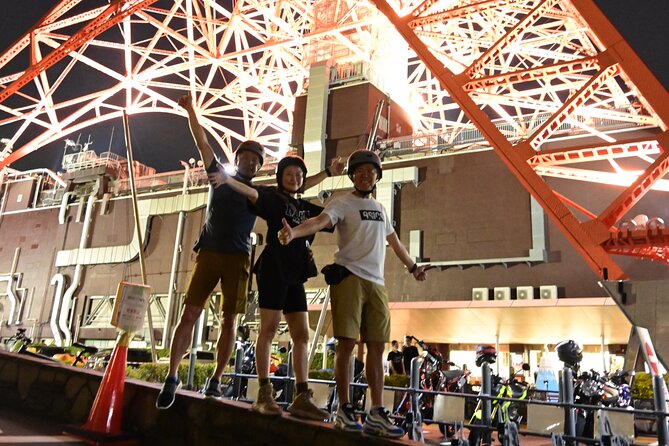
- Tokyo after dark: See illuminated districts, Tokyo Tower, Roppongi, and quiet streets with less daytime heat.
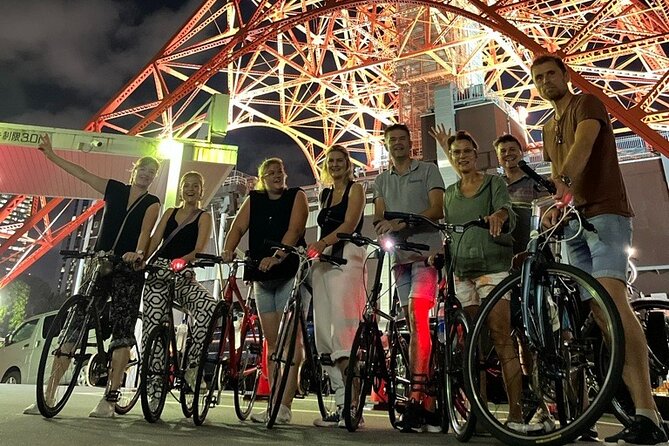
- Small group size: The maximum is six people, allowing for more direct help from the guide.
- Guides praised for safety: Taichi is frequently named for his calm leadership, English fluency, local insight, and photography.
- Eight varied stops: The route combines shopping streets, nightlife districts, a cemetery, a sports and park area, and residential streets.
- Bring food first: Dinner is not included, and the tour does not stop for a meal.
- Cycling ability matters: Bikes fit riders from 155 to 185 centimeters, and you must be comfortable riding at city pace.
Why Tokyo works so well by bicycle at night
Tokyo is easy to explore by rail, but trains give you a stop-and-start view. You descend into a station, ride beneath the city, and emerge several blocks away. A bicycle keeps the trip above ground, so you notice the changing mood from one neighborhood to the next.
This route is especially useful for seeing several districts in a short time. You can move from the lights around Roppongi to the broad avenues of Aoyama, then into quieter streets near the cemetery and Jingu Gaien. Those transitions are hard to appreciate from a train carriage.
The night timing also matters. Tokyo is still active at 8 p.m., but the air is cooler than during a summer afternoon. You get illuminated streets, restaurant districts, and skyline views without spending two hours walking in the heat.
I would not book this as a pure photo stop tour. You will be cycling between the stops, and the ride itself is a major part of the experience. The reward is a more connected view of central Tokyo, but you need to stay alert and keep moving with the group.
A few more Tokyo trips to weigh up
- Tokyo Guided Small-Group Biking Tour
★ 5.0 · 1,250 reviews - Tokyo Great Cycling Tour
★ 5.0 · 811 reviews - Tokyo Top Highlights 3h Guided E-bike Tour
★ 5.0 · 714 reviews
Starting near Yoyogi at 8 p.m.
The meeting point is Umayamichi Park at 5-chome-24-11 Sendagaya, Shibuya. It is about 10 minutes from Shinjuku Station and one minute from Yoyogi Station, making the start fairly simple to reach by public transport.
Allow a little extra time to find the park and settle in. The information provided does not specify a separate check-in procedure, so it is sensible to arrive early rather than rush in at the start time.
Your bicycle and helmet are included. The bikes are designed for riders between 155 and 185 centimeters tall. If you are outside that range, check with COG EXPLORER JAPAN before booking rather than hoping the fit will work.
The ride ends back at the same meeting point. That is convenient because you do not need to learn a new station or arrange a separate trip home after the tour.
Tokyo Tower: the big opening view
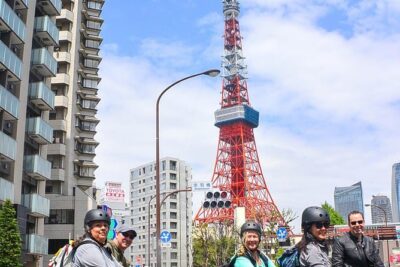
Tokyo Tower is the route’s most recognizable stop. Its orange structure becomes especially striking at night, framed by the city lights and surrounding buildings.
This is the point that gives first-time visitors an immediate sense of Tokyo’s scale. You are not simply looking at one tower from a distant observation deck. You are arriving on the street by bicycle, with the city moving around you.
The tour information does not promise entry to Tokyo Tower, so treat this as an exterior viewing stop. If you want an observation-deck visit, plan that separately.
Meiji Jingu Gaien: room to breathe
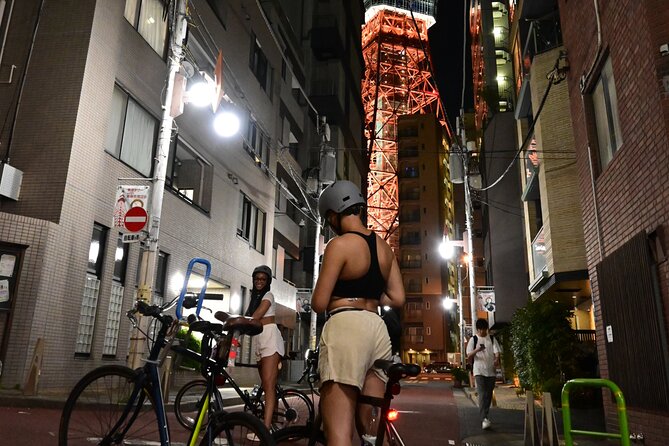
Meiji Jingu Gaien offers a change of pace after the tower. The area is known for broad, open surroundings and a calmer feel than Tokyo’s major shopping streets.
At night, this part of the ride gives you a break from commercial signs and dense traffic. It also shows why cycling is useful here. You can cover the distance between central districts without relying on a train route that may not stop close to the places you want to see.
The mood can vary by season and event schedule, but the route is designed to show a quieter side of central Tokyo. You should expect movement and brief stops, not a long guided walk through the area.
Same city, a completely different kind of day:
- Mt Fuji and Hakone 1-Day Bus Tour Return by Bullet Train
★ 5.0 · 26,383 reviews - 1-Day Tokyo Bus Tour
★ 5.0 · 14,250 reviews - Tokyo: TOKYO SKYTREE® Admission ticket
★ 4.5 · 11,192 reviews - Tokyo: teamLab Planets TOKYO Digital Art Museum Entry Ticket
★ 4.6 · 9,779 reviews
Omotesando: Tokyo style after sunset
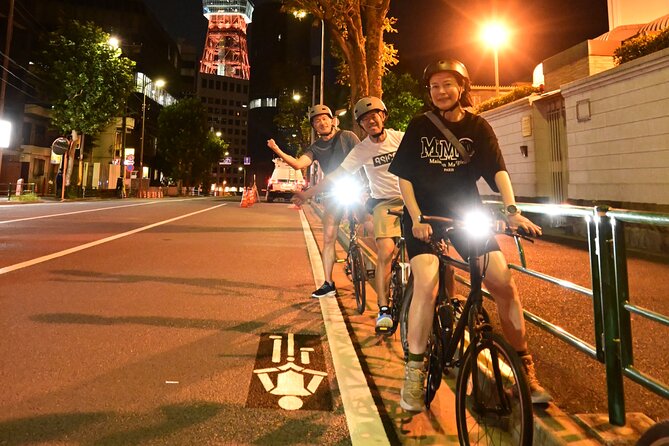
Omotesando is one of the city’s best-known shopping avenues. Its architecture, storefronts, and polished streets give you a different picture of Tokyo from the older alleys and restaurant lanes elsewhere on the route.
Cycling lets you take in the whole corridor without committing to a long walk. You can also see the contrast between the wide main road and the smaller streets branching off it.
This is a good section for city watching, but it may also be one of the busier parts of the ride. Stay close to the guide and be ready for pedestrians, cars, and cross traffic.
Roppongi Keyakizaka Dori and Roppongi
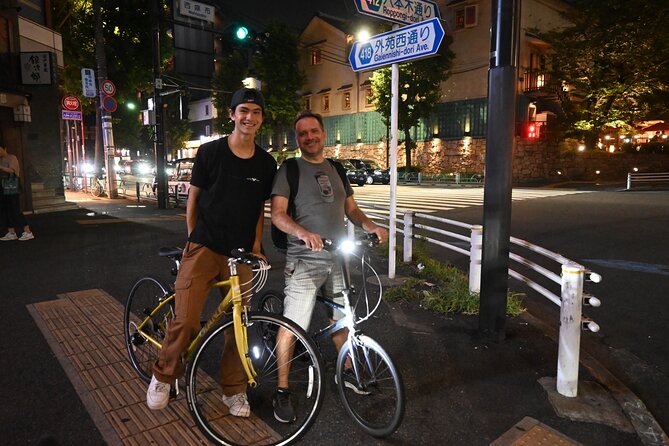
The route visits Roppongi Keyakizaka Dori and then Roppongi itself. These stops bring you into one of Tokyo’s best-known evening districts, with restaurants, bars, offices, and bright commercial streets.
Keyakizaka Dori is particularly appealing for night photography. The lighting and orderly street design give you a polished view of Tokyo, while the surrounding district supplies the energy.
Roppongi is also where the tour’s social side becomes more apparent. The route passes areas associated with nightlife and dining, including places frequented by well-known people, according to the tour description. Your guide can add local context that you would miss by simply cycling through alone.
Do not expect a bar crawl or dinner stop. The tour passes through nightlife districts, but the activity remains a bike tour. Eat beforehand, since dinner is not included and there is no scheduled meal break.
Azabujuban and Nishiazabu: the neighborhood changes
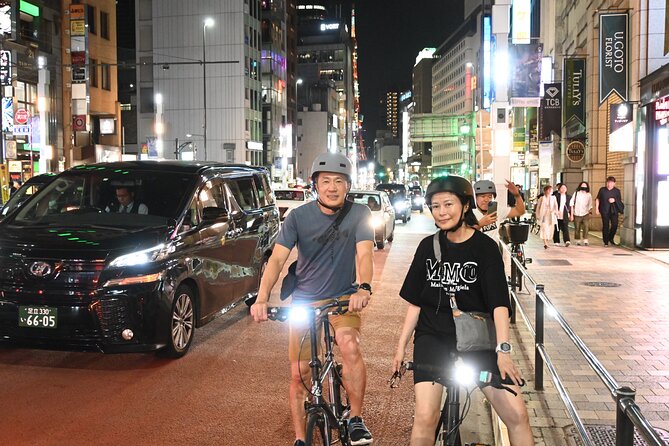
Azabujuban and Nishiazabu help widen the picture beyond Tokyo’s most famous signs. These districts are part of central Tokyo, but they offer a more local street rhythm than the major shopping avenues.
The value here is the transition. You see how Tokyo’s restaurant and nightlife areas connect with quieter blocks, smaller roads, and residential pockets. A train can take you between these districts, but it cannot show you the gradual change in street life.
The guide’s role matters most on sections like this. Taichi is repeatedly identified as a friendly, English-speaking guide who explains places along the way and keeps the ride organized. Ikeda is also named in the feedback, so guide assignment may vary.
Aoyama Cemetery after dark
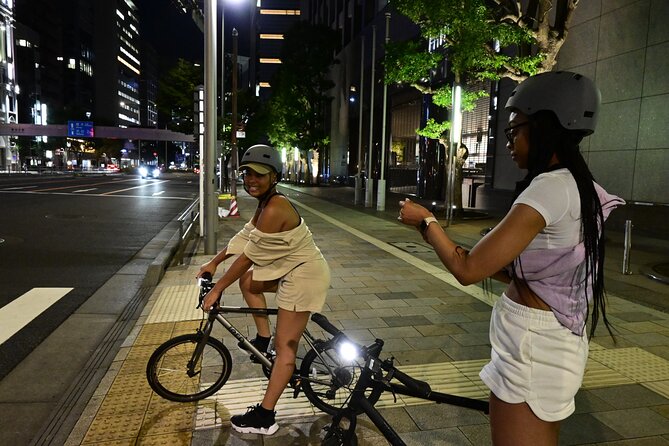
Aoyama Cemetery is the route’s most unusual stop. It is not a standard first-time Tokyo sight, which is exactly why it adds character to the ride.
At night, the cemetery offers a quiet pause from the illuminated streets. You get a strong contrast between Tokyo’s constant movement and a peaceful, open place in the middle of the city.
This is not a stop for everyone. If you dislike visiting cemeteries after dark, you may find this portion less appealing. For many people, though, it is a memorable reminder that Tokyo is not only towers, shops, and traffic.
The tour description also points to nearby areas around Akasaka and other less obvious streets. The route is built to show places that are not convenient to reach by public transport, and the cemetery is a clear example.
What the guide adds to the ride
A guide is useful here for more than navigation. Tokyo’s streets can look simple on a map but feel confusing once you are moving through traffic, alleys, and changing neighborhoods.
The strongest praise is directed at Taichi’s calm manner, local explanations, English communication, and attention to safety. Participants have also appreciated the cultural exchange and the way he points out places they might have missed alone.
Photography is another helpful touch. Taichi has been praised for taking pictures at good spots, which matters when you are traveling light and do not want to stop repeatedly to manage your phone.
The small group limit supports this style of guiding. With no more than six people, the guide can keep the ride together and give more personal attention than a large city cycling group.
That said, a guide cannot remove every risk from urban cycling. You remain responsible for controlling your bike, obeying signals, watching traffic, and keeping up at the stated speed.
Safety, pace, and who should book
The tour expects you to ride confidently on pavements, cross traffic lights, and pass through crowded or narrow spaces. The stated pace is approximately 15 kilometers per hour, described as a typical cycling speed.
That makes this a good choice for active visitors who already ride in cities or are comfortable handling a bicycle in unfamiliar surroundings. It may suit a family with an older teenager, as one outing included a 15-year-old grandson, but every member of your group must meet the cycling requirements.
It can also work well for solo participants. One solo woman specifically felt safe on the ride, and the small group format gives you a clear person to follow. Still, you should not book if you are nervous on a bicycle or uncomfortable riding near traffic.
The tour proceeds in light rain, but sudden weather changes can lead to cancellation. Since the activity requires good weather, keep some flexibility in your schedule if possible.
Is $56.01 good value?
At $56.01 per person, the price is reasonable if you want transport, equipment, route planning, and local guidance in one short outing. You receive a bicycle, helmet, and roughly two hours of guided cycling through several central districts.
The value is not in admission tickets, since no attraction entry is included. It comes from seeing a wide area efficiently and reaching streets that are awkward to connect by rail or on foot.
For a first visit, this can function as a useful orientation ride. You will not master Tokyo in two hours, but you can identify districts you may want to revisit during the rest of your stay.
The price is less attractive if you already have a bicycle and are comfortable navigating Tokyo alone. It is also less useful if you want a slow, stop-heavy tour with a full meal or long time at each sight.
Group discounts are available, and groups of four or more are asked to contact the organizer directly. The maximum group size is six, so confirm the arrangement before booking for a larger party.
What to eat and bring
Eat dinner before the 8 p.m. start. There is no dinner stop, and the ride is active enough that you may want more than a quick snack before setting out.
Bring water and a small snack if needed. The supplied information specifically allows you to bring a snack, but it does not describe storage space on the bicycles, so keep anything compact and easy to carry.
Wear clothing suitable for cycling and nighttime weather. The tour provides the bike and helmet, but not dinner or other personal items.
Cancellation and weather details
You can cancel up to 24 hours before the start time for a full refund. Changes or cancellations made less than 24 hours before the tour are not accepted for a refund.
If poor weather cancels the experience, you will be offered another date or a full refund. The tour can proceed in light rain, but sudden weather changes may still bring a cancellation.
Should you book this Tokyo night ride?
Book it if you want to cover several central neighborhoods in two hours, enjoy cycling, and prefer a guide-led route through both famous streets and quieter places. It is particularly useful early in your Tokyo stay, when you want a quick sense of how Shibuya, Roppongi, Aoyama, and nearby districts fit together.
I would also choose it for solo visitors, active couples, and families with confident teenage riders. Taichi’s friendly approach, the small group size, safety focus, and photo help add real value.
Skip it if you dislike city cycling, cannot comfortably maintain 15 kilometers per hour, or want a relaxed food-focused night. For the right rider, though, this is a smart way to see Tokyo after dark without spending the evening underground on trains.
FAQ
How long is the Tokyo Night Bike Tour?
The tour lasts approximately two hours.
What time does the tour start?
The tour starts at 8:00 p.m.
Where does the tour meet?
The meeting point is Umayamichi Park, 5-chome-24-11 Sendagaya, Shibuya, Tokyo 151-0051, Japan.
Where does the tour finish?
The activity ends back at the meeting point.
Are bicycles and helmets included?
Yes. The tour includes the use of a bicycle and helmet.
What height range suits the bicycles?
The bicycles are suitable for riders between 155 centimeters and 185 centimeters tall.
How fast do I need to cycle?
You are expected to ride confidently at approximately 15 kilometers per hour, including through crowded or tight spaces and across traffic lights.
Is dinner included?
No. The tour does not stop for dinner, so eat before the ride or bring a snack.
More Evening Experiences in Tokyo
- Tokyo Night Foodie Tour in Shinjuku – Seasonal Sushi, Wagyu Beef
★ 5.0 · 1,161 reviews - Tokyo: Daikoku JDM Car Meet & Night Car Culture Tour
★ 4.8 · 626 reviews - Tokyo After 5: Authentic Japanese Food & Drink Night Tour
★ 4.5 · 560 reviews - Tokyo: Samurai Entertainment Night Show in Kanda Shrine
★ 4.6 · 417 reviews
Just added around Tokyo
- Samurai Experience Mugai Ryu Iaido in Tokyo★ 5.0 · 40 reviews
- Private Sushi Making with a Sushi Master★ 5.0 · 102 reviews
- Retro Shibuya Food Tour★ 5.0 · 33 reviews
- Ride Through The Streets Of Shibuya and Sinjuku By Go Kart★ 5.0 · 86 reviews
- Tokyo Sumo Culture Tour with Chanko-Nabe Lunch in Ryogoku★ 5.0 · 26 reviews
- Cozy Tokyo Class: Ramen, Sushi, Sake Pairing & Cultural Exchange★ 5.0 · 74 reviews
- Ride a rickshaw wearing a kimono in Asakusa! Enjoy authentic traditional culture!★ 5.0 · 14 reviews
- Ramen Tasting – Mini Bowl Ramen Tour★ 5.0 · 127 reviews
Cycling Tours, compared.
3h Tokyo E-Bike Tour: Hidden Gems, and Local Life with guide
Read our review →
Arashiyama Bamboo Forest & Hidden Gems Bike Tour (Early Bird)
Read our review →
Hiroshima in a Nutshell: Morning Bike Adventure
Read our review →
5 Top Highlights of Kyoto Full Day Bike Tour (E-bike option)
Read our review →Browse the lists this tour appears in