
REVIEW · FOOD & DRINK
Ramen Tasting – Mini Bowl Ramen Tour
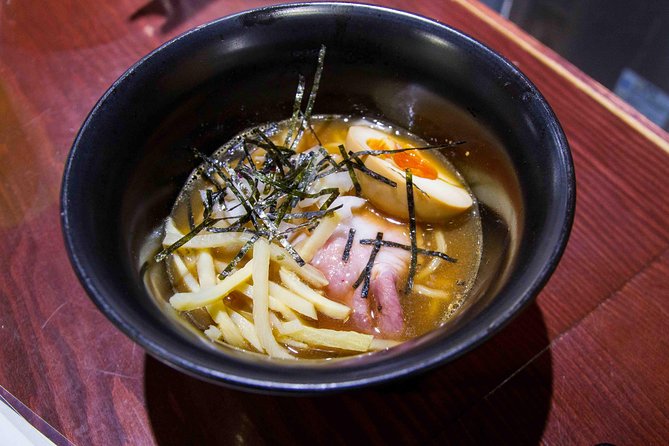
Tokyo ramen is not one dish. It is a whole field of flavors, from delicate shoyu to creamy tonkotsu and spicy fish-based bowls. This three-hour tour lets you try six mini bowls at three shops, so you can compare styles without committing to six full meals.
I especially like the small portions, which make unusual ramen less risky, and the way the tour links food with Tokyo neighborhoods. Guides such as Sahori, Brian, Bunga, and Makayla are praised for explaining both ramen and the city around it. The main drawback is simple: six bowls still add up, and the walking between stops calls for moderate fitness.
In This Review
- Key points to know
- Six small bowls that make Tokyo ramen easier to understand
- Starting near Shibuya Crossing
- Three neighborhoods, three different ramen stops
- What your guide adds between bowls
- How much food you actually get
- The value of paying $118.92
- Walking, timing, and the feel of the route
- Who will enjoy this tour most
- Useful booking and cancellation details
- Should you book the Tokyo ramen tasting tour?
- FAQ
- How long does the ramen tasting tour last?
- How many ramen bowls are included?
- How many restaurants does the tour visit?
- Does the tour include a drink?
- Is transportation included?
- Where does the tour begin?
- How many people can join the tour?
- Can I cancel for a full refund?
Key points to know
- Six bowls, three shops: Taste two mini servings at each stop, with each restaurant offering a different style.
- A walking food tour: The route visits three Tokyo areas known for ramen and begins around Shibuya Crossing.
- Guides make the difference: Sahori, Brian, Bunga, Makayla, Daisy, Manny, Julija, and Deep are among the guides named in guest feedback.
- Good for ramen beginners: You can sample styles you might not order on your own.
- Small group format: The tour is limited to 10 people, though some departures may feel much smaller.
- Budget for a full meal: Food tasting, six mini bowls, lunch, and one beverage are included in the listed price of $118.92 per person.
Six small bowls that make Tokyo ramen easier to understand
The clever idea here is portion control. Ordering ramen independently usually means choosing one large bowl and hoping you like it. On this tour, you get six smaller servings, each selected to show a different side of Japanese ramen.
That matters most if you are new to ramen. You may recognize pork broth or soy sauce, but the differences in soup base, noodles, toppings, and seasoning can be hard to grasp from a menu. Tasting several styles in one afternoon or evening gives you a useful frame of reference.
The servings are described as mini bowls, not spoonful samples. Several people found the total amount surprisingly filling, so arrive hungry. The portions are small enough to allow comparison, but six servings plus drinks can still become a serious meal.
The selection may include familiar styles such as tonkotsu and shoyu, along with less expected flavors such as spicy fish. Specific bowls can change, so you should think of the tour as a guided introduction rather than a fixed menu.
I like that approach. Ramen shops often specialize, and tasting at three different places shows how much the setting and house style matter. One stop may focus on a rich pork broth, while another offers a lighter or more unusual bowl. The contrast is the point.
A few more Tokyo trips to weigh up
- Tokyo: Shinjuku Food Tour (13 Dishes at 4 Local Eateries)
★ 5.0 · 6,603 reviews - Tokyo Tsukiji Fish Market Food and Culture Walking Tour
★ 5.0 · 3,184 reviews - Tokyo: Shinjuku Food Tour (15 Dishes and 4 Eateries)
★ 4.9 · 2,033 reviews
Starting near Shibuya Crossing
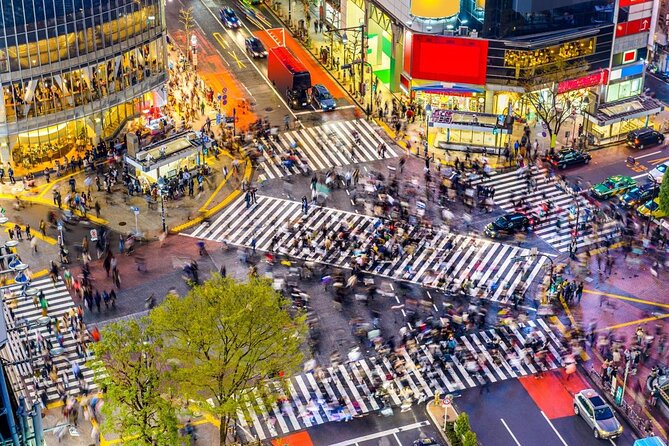
The stated meeting point includes Shibuya Crossing, the famous intersection where streams of people cross in every direction. You spend only a short time at the crossing itself, but it is a practical landmark and an easy way to begin in one of Tokyo’s most recognizable areas.
The more important part is getting oriented. Shibuya Station can be confusing, especially if you are carrying luggage, arriving after a long flight, or trying to find the correct exit. One guide, Bunga, was specifically praised for helping with station navigation. That kind of assistance can save more time than a formal city lecture.
Do not expect a long sightseeing stop at the crossing. The tour is built around ramen, not a full Shibuya tour. You will use the area as a starting point before moving through other ramen neighborhoods.
The meeting location also highlights one practical issue: transportation to and from the attractions is not included. You are responsible for reaching the start and making your way home afterward. The tour uses public transportation areas, but the ticket does not cover those fares.
Three neighborhoods, three different ramen stops
The route visits three Tokyo neighborhoods known for ramen. The supplied details identify Shibuya as the starting point, and several departures are described as Shinjuku ramen tours. The exact shops and route can vary, so I would not book this expecting a particular restaurant name or a guaranteed bowl.
That flexibility is useful. Tokyo’s ramen scene changes quickly, and a tour operator can choose shops that fit the day’s schedule. The three stops are award-winning ramen shops, and the goal is to show different specialties rather than repeat the same kind of bowl.
At each restaurant, you receive two mini bowls. This creates a clear rhythm: arrive, hear the explanation, taste two styles, discuss what you like, then walk to the next neighborhood.
The walking is part of the experience, but it is not just filler between meals. It gives your guide a chance to explain how ramen developed, how regional habits differ, and how changing tastes are shaping the dish. One person described the amount of walking as reasonable, while another simply advised coming prepared to walk a lot.
I would wear comfortable shoes and avoid scheduling a physically demanding activity immediately afterward. The tour lasts about three hours, but that time includes movement through Tokyo, standing in or near shops, and eating six portions. It is not a sit-down meal in one restaurant.
What your guide adds between bowls
The guide is the main reason to choose this tour instead of using a ramen list on your phone. The food is important, but the explanations turn separate bowls into a lesson.
The tour covers the history and future of Japanese ramen, along with the ingredients and customs that shape each style. You also learn how to eat ramen like a local. That can include practical guidance on tasting the broth, handling noodles, and understanding what makes one bowl different from another, though the exact presentation depends on your guide.
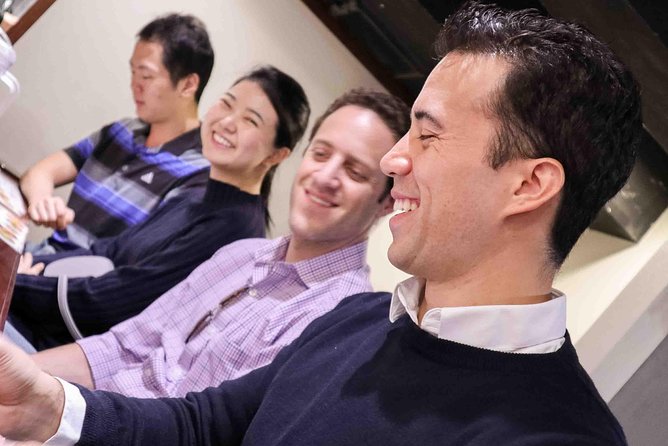
Several guides receive especially warm praise for their energy and personal approach. Sahori is repeatedly described as friendly, fluent in English, and eager to answer questions about both ramen and Tokyo. Brian is praised for explaining ingredients, styles, neighborhoods, and his own long connection with ramen. Bunga is noted for being entertaining and helpful, while Makayla is described as easy to spend time with and strong on ramen details.
Other named guides include Daisy, Manny, Julija, and Deep. The consistent theme is enthusiasm and conversation. If you ask questions, you should get more from the tour than a quick explanation followed by another bowl.
Group size is capped at 10 people. That is small enough for a more personal feel, and some departures have been intimate enough for a guide to adjust the conversation to a single family or pair. A larger group may feel less private, but the cap keeps it from becoming a large food march.
Same city, a completely different kind of day:
- Mt Fuji and Hakone 1-Day Bus Tour Return by Bullet Train
★ 5.0 · 26,383 reviews - 1-Day Tokyo Bus Tour
★ 5.0 · 14,250 reviews - Tokyo: TOKYO SKYTREE® Admission ticket
★ 4.5 · 11,192 reviews - Tokyo: teamLab Planets TOKYO Digital Art Museum Entry Ticket
★ 4.6 · 9,779 reviews
How much food you actually get
The phrase mini bowl can sound modest, but six servings make a substantial meal. One useful tip is to keep breakfast or lunch light before the tour. You do not need to arrive starving, but you should leave room.
The listed package includes lunch, six mini bowls, food tasting, and one beverage. Some people have described receiving two drinks on their departure, but the stated inclusion is one beverage, so I would treat that as the reliable expectation and confirm if drinks are important to you.
The portions work well for comparison. You can try a style outside your comfort zone without wasting a full bowl. That is especially helpful for spicy fish, strong pork broth, or any preparation you cannot easily judge from a Japanese menu.
Dietary needs have been handled without trouble on at least one departure, but the provided details do not spell out which substitutions are possible. If you have allergies or strict dietary limits, tell the operator before booking and ask exactly what can be changed. Do not assume every broth or topping can be adapted.
The value of paying $118.92
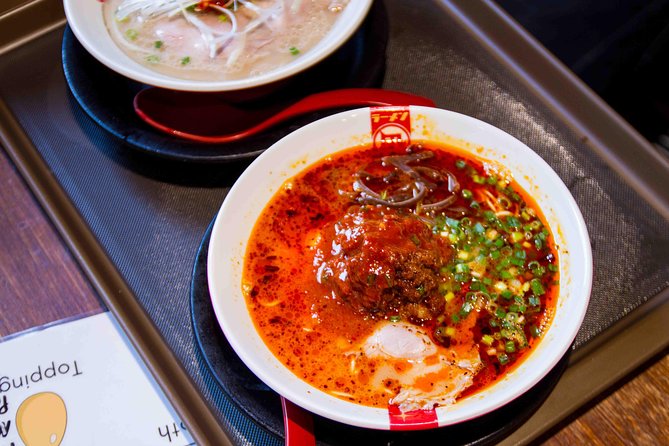
At $118.92 per person, this is not a cheap way to eat ramen. You are paying a sizable premium over finding one shop yourself. The fair question is not whether the noodles alone justify the price. It is whether the guided comparison and city orientation are worth the extra cost.
For me, the value is strongest in three cases. First, you are visiting Tokyo for a short time and want a focused introduction. Second, you are unsure how ramen styles differ and do not want to waste meals guessing. Third, you enjoy food tours where the guide explains local customs and history as you walk.
The price also covers six tastings at three award-winning shops, a local guide, lunch, and a beverage. You are not paying only for food. You are paying for planning, access to a sequence of restaurants, translation and ordering support, and the ability to sample far more styles than you could reasonably order alone.
Still, a confident ramen fan may find the cost harder to justify. If you already know the styles you like, can read menus comfortably, and enjoy choosing your own shops, you may prefer to spend the money on several independent meals.
The strong satisfaction score, 5.0 rating from 127 reviews, and 99 percent recommendation rate suggest the format is working well for its intended audience. I would read those numbers as a sign of reliable enjoyment, not a guarantee that every bowl will match your taste. Ramen is personal, and a rich broth that delights one person may feel too heavy to another.
Walking, timing, and the feel of the route
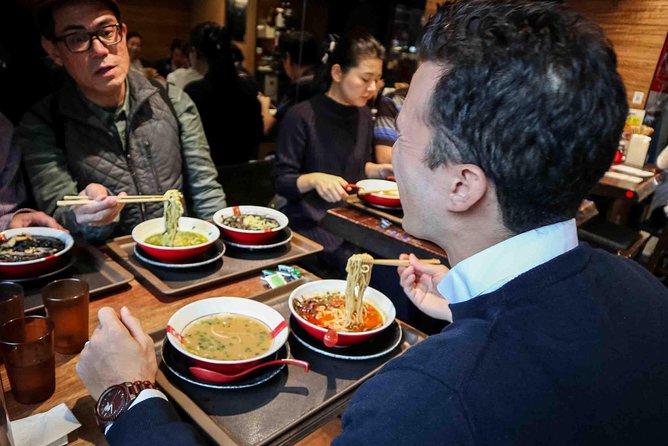
Three hours is a good length for this kind of outing. It gives you time to taste, ask questions, move between areas, and let the meal develop without turning the day into a marathon.
The walk between restaurants is useful, but you should account for it. The activity calls for a moderate physical fitness level, and the route may involve stations, sidewalks, standing, and moving through busy areas. The tour is not designed for someone seeking a completely seated experience.
Tokyo’s neighborhoods also give the meal some texture. You are not simply entering three anonymous restaurants. You move through parts of the city associated with ramen and get a sense of how food fits into daily urban life. One departure included a park stroll and cherry blossoms, though seasonal scenery should be treated as a bonus rather than part of the guaranteed program.
The experience can work during the day or evening depending on the departure you book. Several comments describe a night outing, while the inclusions call it lunch. Check the departure time and meal timing when selecting your date. The important point is that the route lasts about three hours and includes a full sequence of tastings.
Who will enjoy this tour most
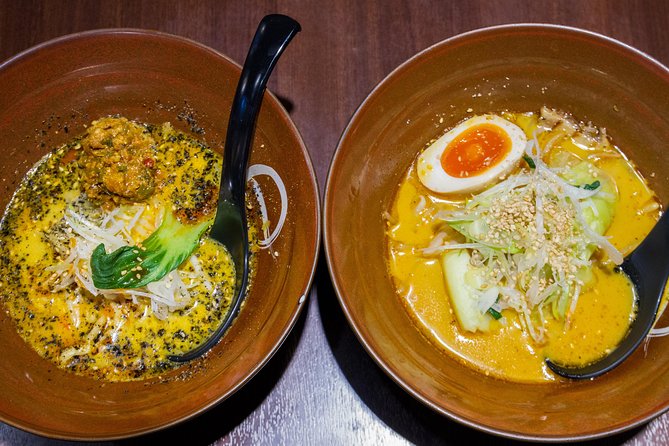
I would recommend this tour to first-time Tokyo visitors who want a guided food introduction without spending days researching restaurants. It also suits couples, families with older children or teens, and solo visitors who like meeting a small group around a shared meal.
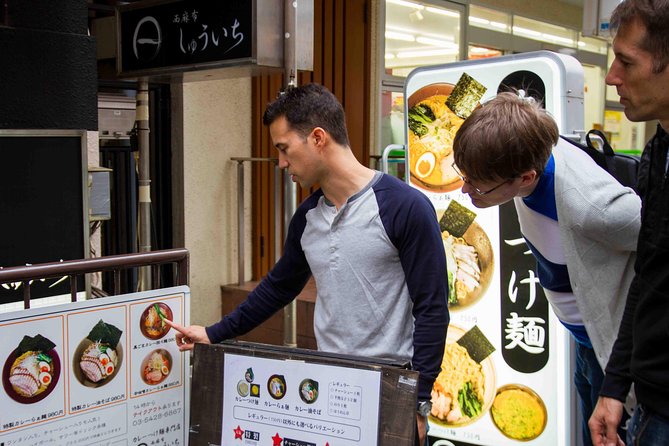
It is particularly useful for anyone who has looked at a ramen machine ticket menu and felt lost. You get a chance to ask what you are eating instead of guessing from photographs and kanji.
The format also suits adventurous eaters. Six mini bowls give you permission to try unusual flavors. If one is not your favorite, another stop is coming soon.
Families should note the amount of food and walking. Teens may enjoy the variety, but younger children may not want six tastings or several neighborhood transfers. People with limited mobility should ask the operator for route details before booking, since the activity calls for moderate fitness and does not include transportation.
Ramen specialists may prefer to explore alone. The tour gives you breadth, not unlimited choice. You will taste the selections chosen for the route rather than ordering any bowl you want from each restaurant.
Useful booking and cancellation details
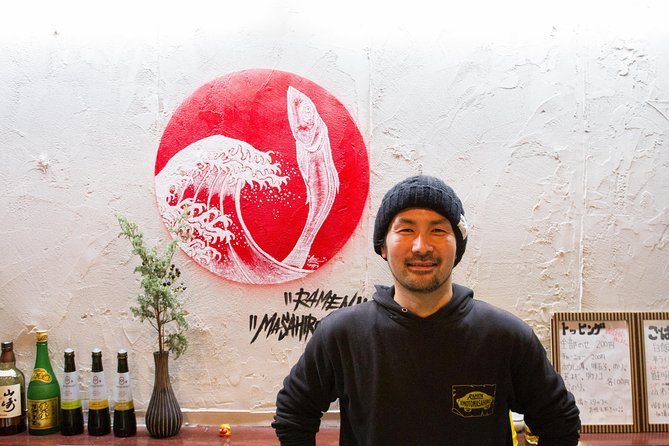
You receive confirmation when you book, and the ticket is mobile, so you do not need a printed voucher. The tour operates near public transportation, but getting to the meeting point and returning afterward is your responsibility.
The group maximum is 10 people. That is a useful limit if you value conversation and access to the guide, though the size of your actual departure is not stated.
Free cancellation is available up to 24 hours before the start time for a full refund. Cancellations or changes made less than 24 hours before the start time are not accepted for a refund, and cut-off times follow Tokyo local time.
Should you book the Tokyo ramen tasting tour?
Book it if you want an organized, friendly introduction to ramen and like the idea of comparing six styles in one outing. The strongest reasons are the small portions, three different shops, and guides who bring real enthusiasm to the food and the neighborhoods.
I would skip it if you want the lowest-cost ramen meal, dislike walking between restaurants, or prefer choosing every dish yourself. At $118.92, this is a premium food experience, but it makes sense for a short Tokyo visit, a ramen beginner, or anyone who wants context with the meal.
Come hungry, wear comfortable shoes, and keep an open mind about broth styles. If Sahori, Brian, Bunga, Makayla, Daisy, Manny, Julija, or Deep leads your departure, expect a guide who can add plenty of conversation to the tasting. For the right eater, this is an efficient and tasty way to get oriented to Tokyo ramen.
FAQ
How long does the ramen tasting tour last?
The tour lasts approximately three hours.
How many ramen bowls are included?
The experience includes six mini bowls of ramen, generally two small bowls at each of three restaurants.
How many restaurants does the tour visit?
You visit three award-winning ramen shops in three Tokyo neighborhoods known for ramen.
Does the tour include a drink?
Yes. The listed inclusions provide one beverage along with the six mini bowls and lunch.
Is transportation included?
No. Transportation to and from the attractions is not included. The route is near public transportation.
Where does the tour begin?
The itinerary identifies Shibuya Crossing as a stop and meeting area. Some departures are described as Shinjuku ramen tours, so check the details for your selected departure.
How many people can join the tour?
The maximum group size is 10 people.
Can I cancel for a full refund?
Yes. You can cancel at least 24 hours before the experience start time for a full refund. Cancellations or changes made less than 24 hours in advance are not accepted for a refund.
Just added around Tokyo
- Samurai Experience Mugai Ryu Iaido in Tokyo★ 5.0 · 40 reviews
- Private Sushi Making with a Sushi Master★ 5.0 · 102 reviews
- Tokyo Sumo Culture Tour with Chanko-Nabe Lunch in Ryogoku★ 5.0 · 26 reviews
- Retro Shibuya Food Tour★ 5.0 · 33 reviews
- Ride Through The Streets Of Shibuya and Sinjuku By Go Kart★ 5.0 · 86 reviews
- Cozy Tokyo Class: Ramen, Sushi, Sake Pairing & Cultural Exchange★ 5.0 · 74 reviews
- Tokyo Night Bike Tour: From Shibuya to Tokyo Tower via Roppongi★ 5.0 · 29 reviews
- Ride a rickshaw wearing a kimono in Asakusa! Enjoy authentic traditional culture!★ 5.0 · 14 reviews
Food & Drink, compared.
Shinjuku Food Tour (13 Dishes at 4 Local Eateries)
Read our review →
Tokyo Tsukiji Fish Market Food and Culture Walking Tour
Read our review →
Shinsekai Food Tour with 13-15 Dishes at 5 Eateries
Read our review →
Osaka Food Tour: 13 Dishes at 5 Local Eateries
Read our review →
Shinjuku Food Tour (15 Dishes and 4 Eateries)
Read our review →
Best of Shinjuku: Izakaya Food Tour (4 Stops, 14+ Tastings)
Read our review →
Kyoto Night Foodie Tour in Gion (9+ dishes + 6 Sake tastings)
Read our review →
Hungry Osaka Street Food Tour:15 Tastings & 3 Drinks with a Local
Read our review →Browse the lists this tour appears in