
REVIEW · KIMONO & CULTURE EXPERIENCES
Samurai Experience Mugai Ryu Iaido in Tokyo
Tokyo’s Mugai-ryu iaido lesson gives you a rare chance to handle a sword under the eye of Master Takeda Hougyoku, head of the International Iaido Organization Hougyoku-kai. In one focused hour, you change into hakama, learn safe sword movements, and watch a formal demonstration tied to a 340-year-old tradition.
I like the small maximum group of eight, since it gives Master Takeda and his English-speaking instructor room to correct your hands and posture. I also like the clear cultural focus: this is not a staged battle show, but a short introduction to a disciplined martial art. The main drawback is the price, $151.92 for about 60 minutes, so you should value personal instruction more than a long sightseeing outing.
In This Review
- Key points to know before booking
- What the one-hour Mugai-ryu lesson is really like
- Changing into hakama before the lesson
- Master Takeda’s introduction to iaido
- Learning to draw, hold, and sheath the mock katana
- The tameshigiri portion and what to expect
- Watching Mugai-ryu kata at the end
- Why the small group matters
- Location, timing, and practical planning
- Is $151.92 a fair price?
- Who should book this experience?
- Booking and cancellation details
- Should you book the Mugai-ryu iaido experience?
- FAQ
- Where does the Samurai Experience Mugai Ryu Iaido take place?
- How long does the experience last?
- Who teaches the iaido experience?
- Are real swords used?
- Is samurai clothing included?
- How many people can join the lesson?
- Can I cancel for a full refund?
Key points to know before booking
- Master Takeda Hougyoku leads the experience: He is described as the head of the International Iaido Organization Hougyoku-kai and the keeper of Mugai-ryu teaching scrolls.
- You wear rented hakama: Changing into traditional samurai clothing makes the lesson feel like a real practice session rather than a quick demonstration.
- The group is limited to eight people: This is useful when you need help with drawing, holding, or sheathing the sword.
- Only imitation katanas are used: The experience includes safety instruction and hands-on practice with mock swords.
- You watch formal iaido kata: The lesson ends with predetermined sword movements performed by a Mugai-ryu master.
- The meeting point is in Kuramae: You begin and end at 4-chōme-20-10 Kuramae, Taito City, near public transportation.
What the one-hour Mugai-ryu lesson is really like
This is a compact lesson, not a full martial arts course. In 60 minutes, you get a taste of the clothing, manners, basic handling, and formal movements that make iaido different from a sword-fighting show.
The name iaido refers to the art of drawing and using a sword in a controlled, deliberate way. Mugai-ryu is presented here as a practical martial art with a long lineage. You are not simply handed a prop and told to pose. The instructors explain how to hold the sword, how to draw it, how to sheath it, and how to move through basic patterns safely.
That distinction matters. The appeal is not speed or theatrical combat. It is the concentration required to make each movement precise. Even a short lesson can give you a better sense of the discipline behind the samurai image that appears throughout Japanese popular culture.
You should arrive ready to listen closely. With a small group, the instructor can give attention to each participant, but the hour still moves quickly. You will get an introduction rather than mastery.
More Kimono & Culture Experiences in Tokyo
- Tokyo: Samurai Ninja Museum Guided tour and Experience
★ 4.6 · 1,010 reviews - Tokyo: Samurai Sword & Archery Class from Samurai Descendant
★ 5.0 · 603 reviews - Best Samurai Experience in Tokyo
★ 5.0 · 458 reviews
Changing into hakama before the lesson
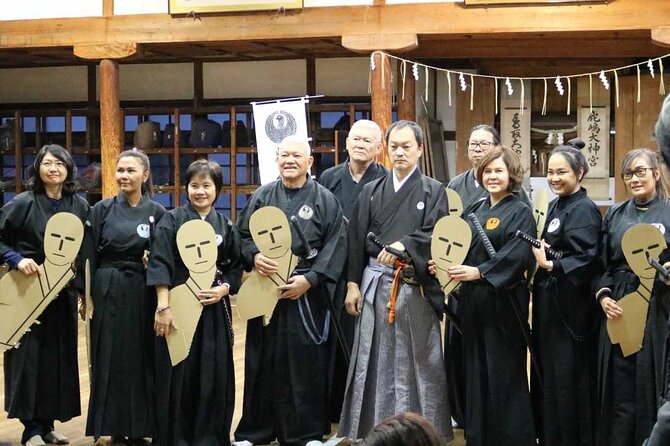
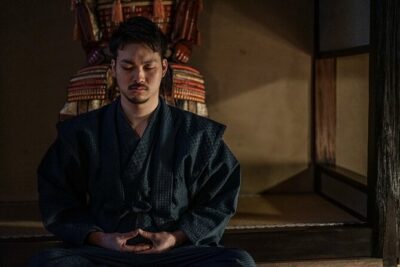
The session begins with a change of clothes. Rental hakama are included, so you do not need to arrange samurai clothing in advance. Hakama are the traditional pleated trousers associated with Japanese martial arts and formal practice.
This step is more than a costume change. It shifts the mood of the activity and gives you a physical connection to the art before you touch the sword. It also creates some of the best photo opportunities, which are allowed during the experience.
The practical point is time. Since the entire lesson lasts about an hour, changing clothes uses part of your appointment. Arrive at the meeting point on time and avoid treating the first few minutes as spare sightseeing time.
The available information does not specify changing-room arrangements or what clothing works best underneath the hakama. Wear something that allows comfortable movement and be prepared to follow the staff’s instructions.
Master Takeda’s introduction to iaido
After changing, Master Takeda and the instructor explain what iaido is and outline the flow of the session. This introduction helps place the physical exercises in context.
Master Takeda Hougyoku is described as the head of the International Iaido Organization Hougyoku-kai. He is also presented as the heir to ancient Mugai-ryu scrolls and as a teacher carrying on a tradition with roughly 340 years of history.
Those details give the class more weight than a generic sword-handling activity. You are learning from someone connected directly to the style’s teaching line, not just from an actor dressed as a samurai. The experience is especially appealing if you have already seen major Tokyo sights and want a closer look at a traditional practice.
The English-speaking instructor helps make the session workable for international visitors. Still, you should expect a hands-on lesson with demonstrations and explanations, not a long lecture on Japanese history.
Learning to draw, hold, and sheath the mock katana
The safety briefing is the foundation of the practical part. You learn how to handle the imitation katana, how to grip it, and how to keep the movement under control.
You also practice the basic sequence of drawing and sheathing the sword. These actions can look simple from a distance, but the point of iaido is controlled form. The instructor explains the flow and basic patterns before you attempt them.
The swords used are mock katanas, so you do not need to worry about handling a live blade. That makes the activity accessible to people with no martial arts background, and the tour information says most people can participate.
You should still take the safety briefing seriously. A mock sword can be awkward in inexperienced hands, and the lesson involves coordinated movement. Listen before you try to copy the demonstration, especially if you are taking photos or watching someone else in the group.
The group limit of eight is important here. In a large class, you might spend most of your time copying from the back. This format is designed to give Master Takeda and the instructor a better view of your technique.
Same city, a completely different kind of day:
- Mt Fuji and Hakone 1-Day Bus Tour Return by Bullet Train
★ 5.0 · 26,383 reviews - 1-Day Tokyo Bus Tour
★ 5.0 · 14,250 reviews - Tokyo: TOKYO SKYTREE® Admission ticket
★ 4.5 · 11,192 reviews - Tokyo: teamLab Planets TOKYO Digital Art Museum Entry Ticket
★ 4.6 · 9,779 reviews
The tameshigiri portion and what to expect
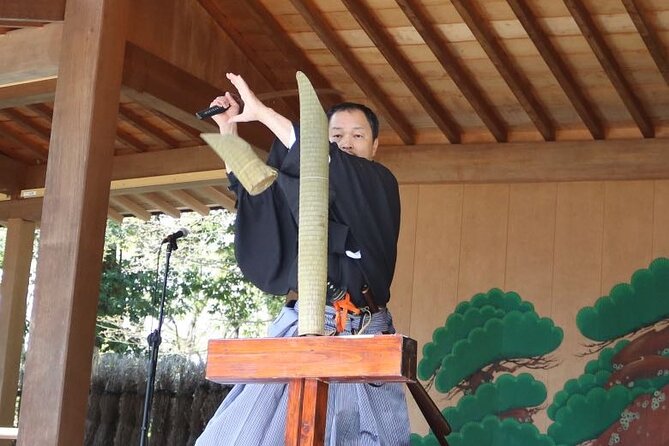
The lesson also includes tameshigiri. This term refers to the samurai practice of cutting a target with a sword. The activity description explains the concept as practicing how to cut something, while the safety information specifies that only imitation katanas are used.
Because the supplied details do not explain the exact target or the mechanics of this portion, you should not book it expecting a full live-blade cutting performance. Think of it as an introduction to a traditional sword-practice element within a controlled lesson.
The instructor’s safety guidance is especially important at this point. Follow the exact directions, keep your attention on the sword, and do not rush to make the movement look dramatic. The value comes from understanding the sequence and the discipline involved.
This part may be one of the most memorable for you because it connects the basic handling work with the practical side of Mugai-ryu. It also helps explain why the style is described as practical rather than purely ceremonial.
Watching Mugai-ryu kata at the end
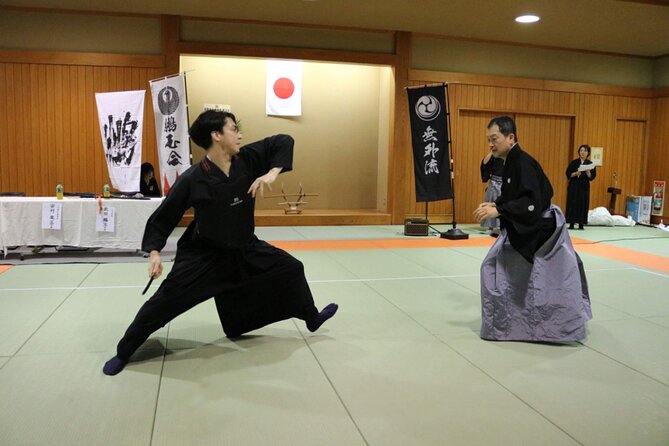
The final highlight is a demonstration of iaido kata. Kata are predetermined patterns of attack and defense, performed in a set form. Instead of an improvised duel, you watch a precise sequence built around timing, posture, drawing, movement, and sheathing.
Seeing the master perform after trying the basic actions yourself gives you useful perspective. You can recognize the same movements, but the difference in control becomes clear. The demonstration shows what the complete form looks like after years of practice.
This is where the lesson’s connection to traditional Japanese culture is strongest. You are not watching a historical reenactment with a scripted fight. You are seeing a living martial art presented by its senior teacher.
You will also have time for photographs during the experience. The hakama, practice sword, and formal setting make this a good choice if you want a personal image from Tokyo that is different from the usual shrine and skyline pictures. Be respectful about when you take photos, and follow the instructor’s directions during demonstrations.
Why the small group matters
The maximum group size is eight. That is small enough for a personal class, though it is not the same as a private lesson.
For a beginner, individual correction can make a large difference. You may need help with the direction of the blade, the position of your hands, or the order of drawing and sheathing. A teacher who can watch each participant has a better chance of correcting those details before they become habits.
The small format also keeps the experience focused. You are not waiting through a long line of people trying the same move. At the same time, the 60-minute length means the class cannot spend unlimited time with each person.
The setting should suit both first-time and repeat visitors to Tokyo. If you are visiting Japan for the first time, it adds a cultural activity beyond temples and shopping streets. If you have already covered the standard attractions, it offers a fresh reason to visit the Kuramae area.
Location, timing, and practical planning
The meeting point is 4-chōme-20-10 Kuramae, Taito City, Tokyo 111-0051. The location is near public transportation, and the activity ends at the same meeting point.
There is no hotel pickup or drop-off. You need to make your own way there and return afterward, so check the route before your appointment. Since changing clothes is part of the schedule, arriving late could reduce your practice time.
The mobile ticket is convenient for a Tokyo day of sightseeing. Keep the ticket accessible on your phone, and allow enough time to reach Kuramae without hurrying into the lesson.
The published duration is approximately one hour. That makes it easy to fit between other plans, but it also limits how much instruction you can receive. Avoid placing a distant reservation immediately afterward. The class may last only 60 minutes, but changing clothes and getting to and from the meeting point take additional time.
Is $151.92 a fair price?
At $151.92 per person, this is an expensive one-hour activity by ordinary Tokyo sightseeing standards. You are not paying for a full day, transport, a meal, or entry to several attractions.
You are paying for access to a specialist teacher, a small group, rented hakama, sword rental, an English-speaking instructor, and a guided introduction to Mugai-ryu iaido. The value improves if you care about direct instruction and the chance to practice under Master Takeda rather than simply watching a performance.
I would compare it with the cost of other hands-on cultural activities, not with a museum ticket. The lesson provides equipment and clothing, and the group size is limited to eight. Those details make the price easier to understand, even if the short duration still feels steep.
The experience has a published rating of 5 out of 5 from 40 reviews, with 100 percent recommending it. One especially praised aspect is the welcoming and professional attitude of the instructors, along with their desire to share the martial art and its long tradition. That fits the structure of the class, which gives you direct contact with the teachers rather than placing you in a large demonstration audience.
Who should book this experience?
I would recommend it to you if you want a cultural activity that asks you to participate, not just observe. It works well for solo visitors, couples, and small groups who enjoy learning a physical skill for an hour.
It is also a good match for anyone interested in samurai culture but tired of simplified sword shows. The session connects clothing, sword handling, formal patterns, and lineage in a compact format.
First-time visitors can book it, but it is particularly useful for repeat Tokyo visitors who have already seen the major historic sites. Kuramae also gives you a reason to visit a different part of the city, though the activity itself does not include a neighborhood tour.
You should think twice if you want a long class, a theatrical performance, or extensive historical storytelling. The lesson is short and concentrated. You will learn the basic flow and watch kata, but you will not become proficient in iaido in one visit.
Most people can participate, according to the activity information. Specific details about physical restrictions, seating, or adaptations are not provided, so contact the provider if you have concerns before booking.
Booking and cancellation details
Confirmation is sent within 48 hours of booking, subject to availability. The activity is generally booked about nine days ahead, so do not leave it until the last minute if meeting Master Takeda is central to your plans.
Free cancellation is available if you cancel at least 24 hours before the local start time. Cancellations or changes made inside that window are not accepted for a refund.
The experience is provided by Beauty of Japan. You receive the hakama rental, an English-speaking instructor, and Japanese sword rental. Transportation from hotels or tourist attractions is not included.
Should you book the Mugai-ryu iaido experience?
Book this if you want close instruction in a traditional Japanese martial art, you appreciate a small group, and you are comfortable paying a premium for a short but unusual activity. The chance to wear hakama, handle a mock katana, learn the basic sequence, and watch Master Takeda’s formal kata gives the hour a clear purpose.
Skip it if you are looking for a cheap attraction, a long cultural workshop, or a staged samurai battle. For the right person, this is a focused encounter with a 340-year-old sword tradition. For everyone else, the price may be hard to justify.
FAQ
Where does the Samurai Experience Mugai Ryu Iaido take place?
It begins and ends at 4-chōme-20-10 Kuramae, Taito City, Tokyo 111-0051, Japan.
How long does the experience last?
The lesson lasts approximately 60 minutes, including changing clothes, instruction, practice, and the iaido demonstration.
Who teaches the iaido experience?
Master Takeda Hougyoku leads the experience. He is identified as the head of the International Iaido Organization Hougyoku-kai. An English-speaking instructor also assists.
Are real swords used?
No. The safety information specifies that only imitation katanas are used during the experience.
Is samurai clothing included?
Yes. Rental hakama are included in the activity.
How many people can join the lesson?
The maximum group size is eight people.
Can I cancel for a full refund?
Yes, if you cancel at least 24 hours before the experience start time. Cancellations or changes made less than 24 hours before the start are not eligible for a refund.
Just added around Tokyo
- Private Sushi Making with a Sushi Master★ 5.0 · 102 reviews
- Retro Shibuya Food Tour★ 5.0 · 33 reviews
- Ride Through The Streets Of Shibuya and Sinjuku By Go Kart★ 5.0 · 86 reviews
- Tokyo Sumo Culture Tour with Chanko-Nabe Lunch in Ryogoku★ 5.0 · 26 reviews
- Cozy Tokyo Class: Ramen, Sushi, Sake Pairing & Cultural Exchange★ 5.0 · 74 reviews
- Tokyo Night Bike Tour: From Shibuya to Tokyo Tower via Roppongi★ 5.0 · 29 reviews
- Ride a rickshaw wearing a kimono in Asakusa! Enjoy authentic traditional culture!★ 5.0 · 14 reviews
- Ramen Tasting – Mini Bowl Ramen Tour★ 5.0 · 127 reviews
Kimono & Culture Experiences, compared.

Kyoto Geisha Walking Tour: Gion District & Hidden Gems
Read our review →
Gion Magical Night Walking Tour with Geisha Trivia
Read our review →
Gion Geisha District Walking Tour – Stories of Geisha
Read our review →
Best of Kyoto: Gion, Geisha, Pagodas & Cobblestones
Read our review →

Kyoto Gion Geisha District Walking Tour – The Stories of Geisha
Read our review →
Browse the lists this tour appears in