
REVIEW · TEMPLE & SHRINE TOURS
Inside of Fushimi Inari – exploring and lunch with locals
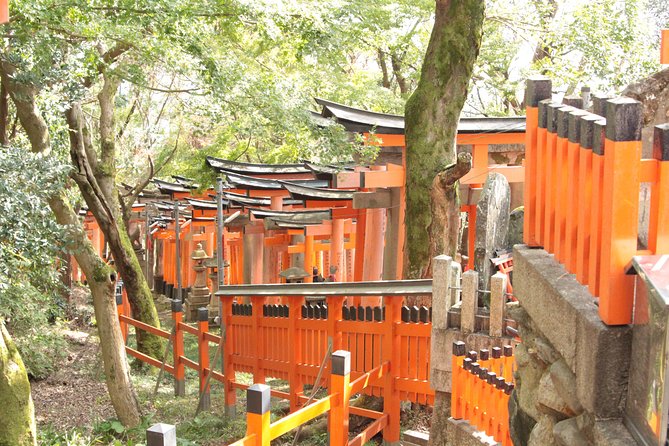
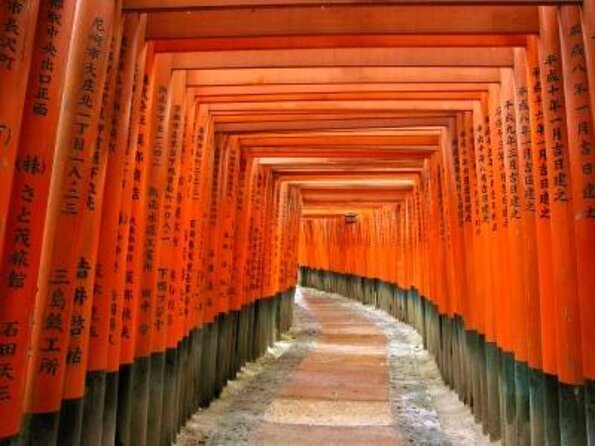
Most people visit Fushimi Inari Taisha for the famous tunnel of red torii gates, take a few photos, and turn back. This tour takes you farther, into the quiet forest routes, small worship sites, a bamboo grove, a waterfall, and a summit shrine 233 meters above sea level. You also get a local view of how the shrine works and finish with soba at a traditional restaurant.
I like the way the guides, including Ko, Go, Kenji, Taishi, and Yuya, bring the place to life without rushing you up the mountain. I also like the thoughtful stops: tea and a salted boiled egg at a mountain hut, plus less crowded photo spots on the way down. The main consideration is simple: this is a hike, with stairs and uphill sections, not a flat temple stroll.
In This Review
- Key Points to Know Before You Book
- Starting Under the Great Torii
- The Main Shrine and the Meaning of the Gates
- Bamboo, Cedar, Stones, and Water
- The 233-Meter Summit Walk
- Photographing Fushimi Inari Without the Worst Crowds
- Tea, a Boiled Egg, and a View Over Kyoto
- Soba, Inari Sushi, and a Traditional Restaurant
- What the $67 Price Really Buys
- Who Will Enjoy This Walk Most
- Practical Details That Matter
- Should You Book It?
- FAQ
- Where does the Fushimi Inari tour meet?
- Where does the tour finish?
- How close is the meeting point to Fushimi-Inari Station on the Keihan Line?
- How long does the experience last?
- Is the tour conducted in English?
- How large is the group?
- Is there hiking involved?
- What food is included?
- Are vegan and allergy-friendly options available?
- Are drinks at the lunch restaurant included?
- Can I cancel for a full refund?
- What should I wear and bring?
Key Points to Know Before You Book
- Go beyond the famous torii tunnel: Visit worship stones, a waterfall, bamboo and cedar paths, and a summit shrine that many short visits miss.
- A gentle but real hike: The summit route takes about 20 minutes uphill, with more walking and stairs during the three-hour shrine portion.
- Local access adds texture: The route can include a torii gate factory and an encounter with the person who carves the shrine gates.
- Tea, egg, and a Kyoto view: A mountain hut stop gives you a break, a simple Japanese snack, and a panorama over Kyoto.
- Lunch is part of the value: Soba noodles and Inari sushi are included, while drinks at the lunch restaurant cost extra.
- Small groups make questions easy: The group is limited to 10, and the tour runs in English for four hours.
Starting Under the Great Torii
The meeting point is the stone pillar at the first Great Torii Gate, directly across from the JR Inari Station exit. That is a practical location, since you do not need to hunt for a tucked-away shop or office. The same point is used at the end.
If you arrive via the Keihan Line, Fushimi-Inari Station is about a 10-minute walk away. Give yourself enough time to find the correct Great Torii, especially if the shrine approach is busy. The red gates begin almost at once, so it is easy to walk ahead before you have properly checked the meeting place.
The tour opens with the main shrine and an explanation of its customs, symbols, and connection to Inari worship. This matters because Fushimi Inari is not just a scenic staircase. It is an active Shinto shrine, and the fox figures, offerings, torii, and small worship areas make more sense when someone explains what you are seeing.
Your guide may be Ko, Go, Kenji, Taishi, Yuya, or another member of the English-speaking team. Their approach is informal and conversational. The small group limit of 10 gives you room to ask questions, stop for photographs, and keep a comfortable pace.
More Temple & Shrine Tours in Kyoto
- Kyoto: Fushimi Inari, Kinkakuji, Bamboo Grove 1 Day Bus Tour
★ 4.8 · 4,316 reviews - Kyoto: Tea Ceremony in a Traditional Tea House in Kiyomizu
★ 4.9 · 3,519 reviews - Kyoto: Tea Ceremony Ju-An at Jotokuji Temple
★ 4.9 · 3,207 reviews
The Main Shrine and the Meaning of the Gates
The first part takes you through the best-known shrine grounds and the thousands of red torii gates. Their color and repeated form create the image most people associate with Fushimi Inari, but the gates also have a practical religious meaning: individuals and businesses donate them as offerings.
The guides explain the background behind the gates and the wider customs of Shinto. That is one of the strongest reasons to book a guided walk here. Without context, the torii can seem like a long photo corridor. With an explanation, you begin to see the mountain as a chain of sacred places, not just a route lined with bright orange-red structures.
The main approach can be crowded, particularly at popular times. Your guide cannot remove the crowds from the shrine entrance, but the tour soon moves toward quieter paths and smaller sacred spots. That change in atmosphere is important. You get the famous view first, then a more peaceful side of Fushimi Inari.
Bamboo, Cedar, Stones, and Water
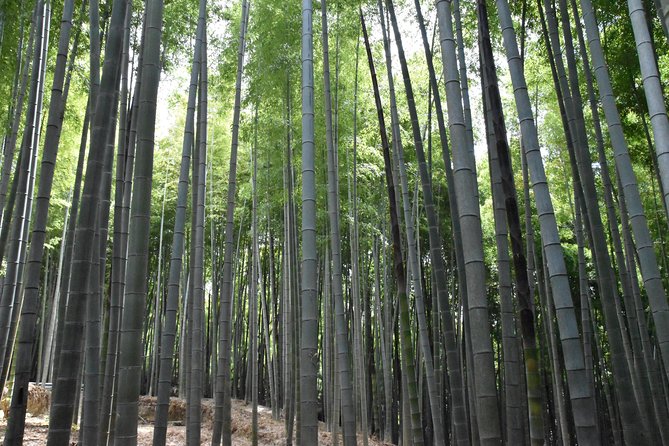
The walking route continues through a peaceful forest of bamboo and cedar. This section offers a welcome change from the dense flow around the main gates. The paths are organized, but they are not entirely effortless. Expect stairs, uphill stretches, and some downhill walking later in the tour.
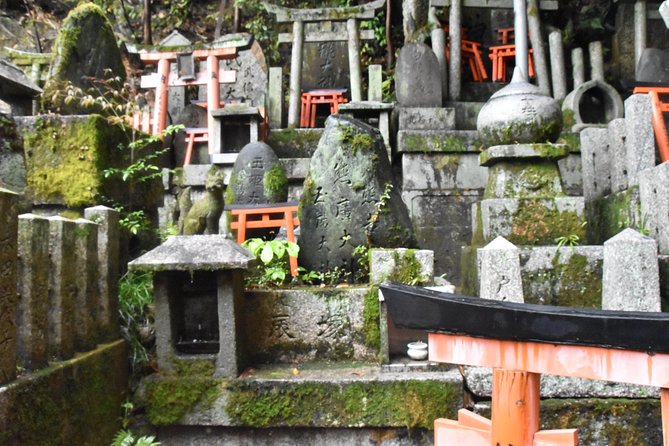
Along the route, you visit authentic holy spots, including worship stones and a waterfall. These places help explain why the mountain matters within the shrine complex. They also give you more variety than a simple walk beneath torii gates.
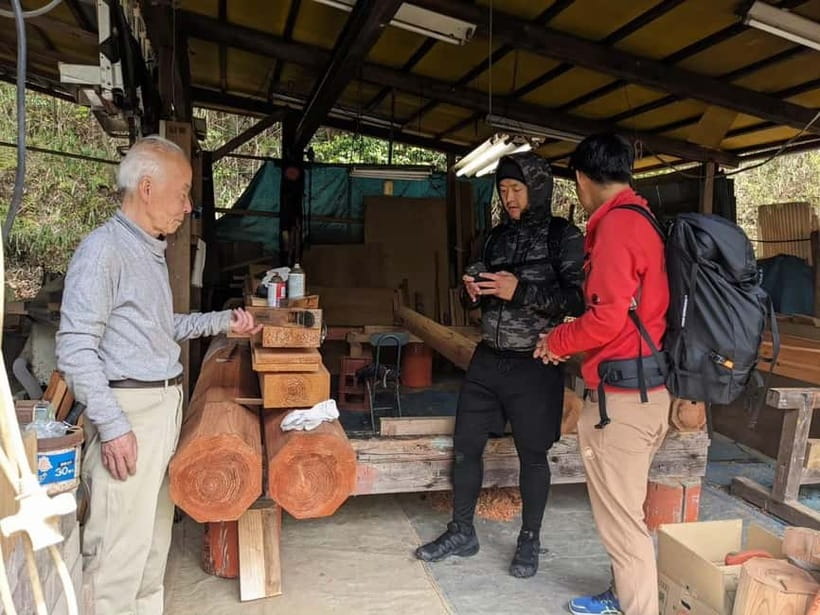
One appealing detail is the chance to see a local torii-making factory. A recent visit included watching a master carve torii columns, which added a human and practical side to the shrine experience. The gates are not anonymous decorations. They are made, maintained, donated, and tied to the work of people in the surrounding community.
The bamboo area is another highlight. It is not presented as Kyoto’s famous Arashiyama bamboo grove, and that is part of its appeal. Here, the bamboo is part of a longer shrine walk and can feel calmer than the city’s major photo stops. Your guide may also introduce you to local people along the way, giving the outing a more personal connection to the neighborhood.
The 233-Meter Summit Walk
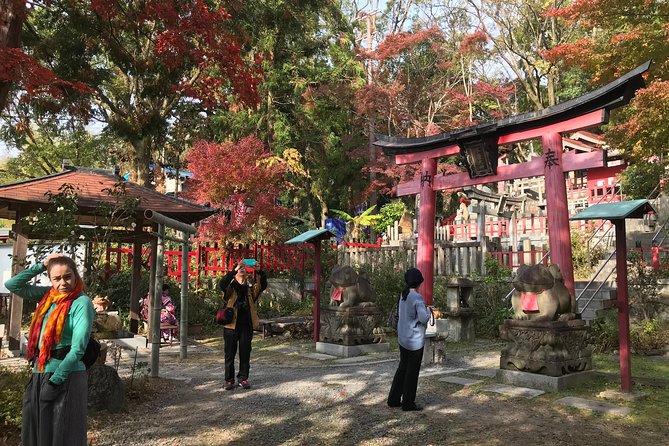
The route to the summit shrine is described as taking about 20 minutes, though your full timing depends on how quickly your group walks. The summit sits at 233 meters. That is not a major mountain climb, but the stairs make it more tiring than the number suggests.
I would call the effort easy to moderate for anyone used to ordinary walking, provided you are comfortable with steps. The guides allow breaks and do not treat the climb like a race. Still, do not book this expecting to remain on level ground. Comfortable walking shoes are essential, and a hands-free backpack is much more practical than a shoulder bag.
At the top, your guide shows you around the summit shrine and explains how it fits into the wider Fushimi Inari site. The reward is not only reaching the highest point. You also gain a sense of how the shrine continues beyond the crowded lower gates.
The schedule can shift according to the group’s pace. That is worth remembering if you have a tightly packed afternoon plan. Four hours is the stated duration, but a slower group may spend more time on breaks or photographs. Build a little breathing room around the tour.
Same city, a completely different kind of day:
- PERFECT KYOTO 1-Day Bus Tour
★ 5.0 · 13,518 reviews - Kyoto Geisha Walking Tour: Gion District & Hidden Gems
★ 4.7 · 3,273 reviews - Kyoto: Gion Magical Night Walking Tour with Geisha Trivia
★ 4.9 · 2,393 reviews - Kyoto: 45-Minute Tea Ceremony Lesson Experience
★ 4.3 · 2,378 reviews
Photographing Fushimi Inari Without the Worst Crowds
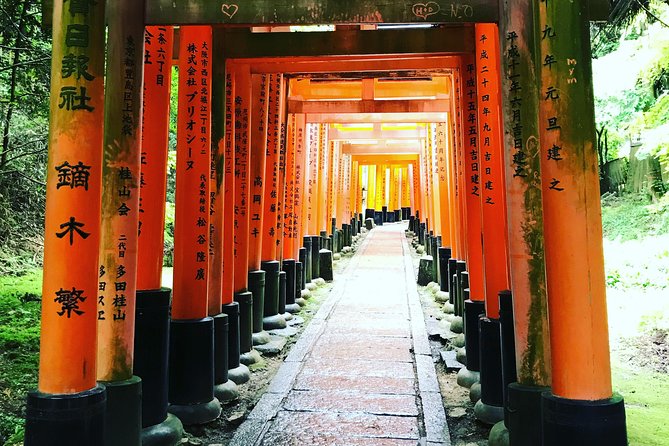
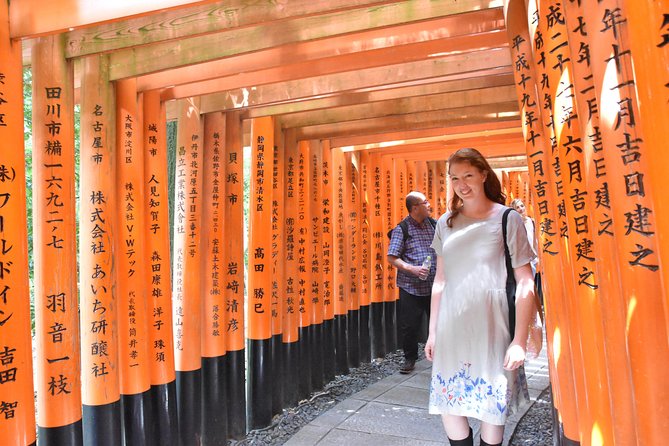
Photography is built into the walk, especially on the descent. Your guide points out places that are usually less crowded and gives you time to take pictures. This is a useful service at Fushimi Inari, where the most famous locations can fill with people holding phones and cameras.
The less crowded sections also produce more varied photographs. Instead of taking the same picture as everyone else beneath the central torii tunnel, you may photograph bamboo, cedar, stone worship points, forest paths, and smaller shrine details. The guide’s local knowledge helps you notice locations you might otherwise pass without understanding.
You should still bring your own camera or phone. The experience includes a photo-shooting portion, but the supplied information does not promise professional photography or edited images. Think of it as guided help finding good angles and quieter spots rather than a formal portrait session.
Tea, a Boiled Egg, and a View Over Kyoto
A break at a mountain hut includes Japanese hot tea and a boiled egg with salt. It is a modest snack, but it arrives at the right moment. After stairs and forest paths, a warm drink and something filling can make the rest of the walk much more pleasant.
Vegan options are available for this stop, and the tour also states that dietary restrictions and allergies can be accommodated. You should tell the provider in advance, especially if you need a vegan lunch rather than simply avoiding one snack.
The viewpoint offers a broad panorama of Kyoto city. The setting gives you a chance to pause and look back at the city after spending time among trees and shrine buildings. It is also one of the tour’s best rhythm changes: history and walking first, then a quiet drink, a simple food stop, and an open view.
Do not expect a long café visit. The overall schedule includes a short lunch period and a tea break, so the stop is designed as part of the walk rather than a leisurely restaurant break.
Soba, Inari Sushi, and a Traditional Restaurant
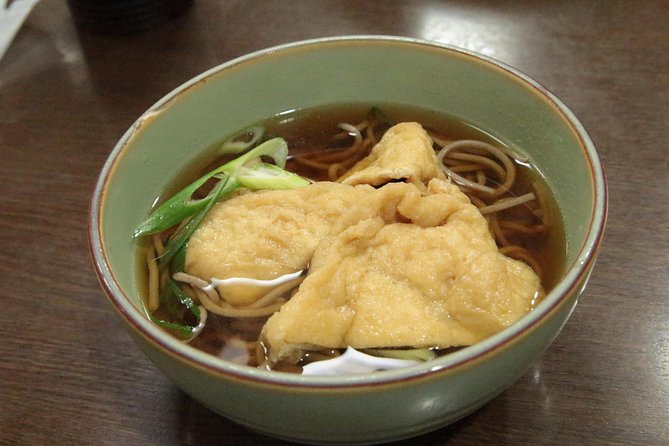
Lunch brings you to a local restaurant for Japanese noodle soba and fried sweet sushi called Inari sushi. The meal is included in the $67 price, which makes the tour more useful than a basic guided walk if you already planned to eat afterward.
Soba is a fitting meal after a shrine hike. It is familiar enough for first-time visitors, but still gives you a traditional Japanese food experience. Inari sushi connects neatly to Fushimi Inari as well, since the name refers to the shrine’s deity and the shrine is closely associated with foxes and offerings.
The lunch portion is listed as about 30 minutes. That is enough for a focused meal, but not a drawn-out restaurant experience. Drinks at the lunch restaurant are not included, so keep a little extra money available if you want something beyond the included food.
Vegan meals are possible, but advance notice is required. The same applies to allergies and other dietary restrictions. Do not wait until you sit down to mention them. Tell the provider when you reserve so the restaurant can prepare.
What the $67 Price Really Buys
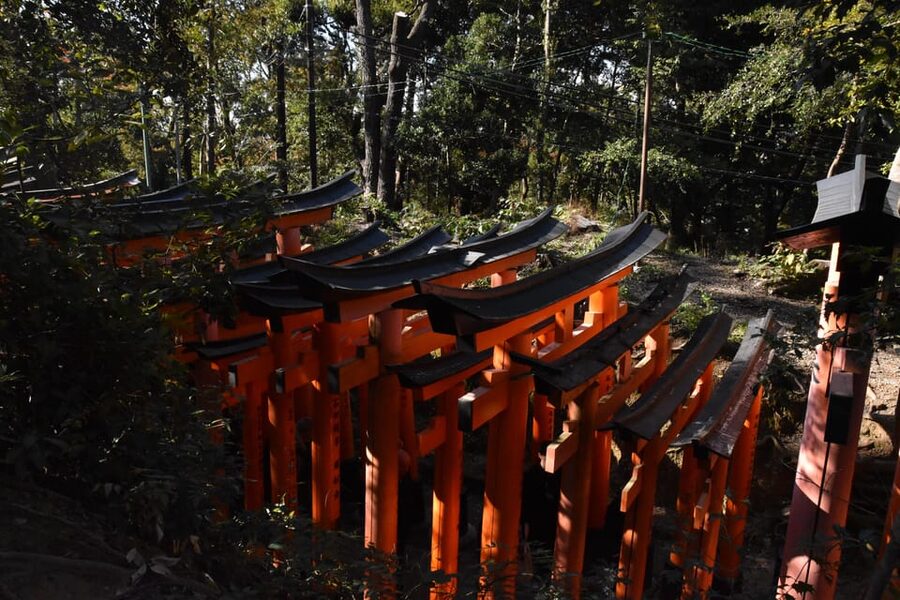
At $67 per person, this is not the cheapest way to walk through Fushimi Inari. You can enter the shrine grounds independently and follow the torii gates without paying a tour fee. If you only want a quick look at the famous entrance and the first section of gates, self-guiding is the better bargain.
The value changes if you want to understand the site and see more than the standard route. The fee covers four hours with an English-speaking local guide, a small group of no more than 10, the tea and boiled egg stop, the included soba and Inari sushi lunch, and help finding quieter paths and photo locations.
You are also paying for decisions made in advance. The guide handles the route, the cultural explanation, the timing, and the restaurant stop. At a complex site like Fushimi Inari, that can save you from spending your whole visit in the most crowded section.
The food alone does not justify the cost for everyone. The stronger value is the combination of local interpretation, less crowded walking, and an included meal. I would consider it good value for a first visit if you want a four-hour experience with structure. Independent hikers who enjoy finding their own way may prefer to save the money.
Who Will Enjoy This Walk Most
This experience suits you if Fushimi Inari is high on your Kyoto list and you want more than a quick photo. It is especially useful for first-time visitors who want an introduction to Shinto customs, shrine etiquette, torii donations, and the mountain’s smaller sacred places.
It also works well for people who enjoy food as part of a day out. The soba lunch, Inari sushi, tea, and boiled egg give the walk a clear local character. The chance to meet people connected with the area, including a torii maker, adds another layer that a standard sightseeing route does not provide.
The tour is a good fit for small families with older children, couples, solo visitors, and anyone who prefers asking questions as they walk. The group size is limited, and the pace includes breaks.
You should think twice if stairs are difficult for you or if you want a completely relaxed temple visit. The route goes up and down, and the schedule depends on the group’s walking speed. Comfortable clothes and shoes are not optional extras here. They are the sensible choice.
Practical Details That Matter
The duration is four hours, with availability depending on the starting time you select. The tour begins and ends at the Great Torii Gate, across from JR Inari Station. The language is English.
Food is included, including lunch, tea, a boiled egg, and Inari sushi. Drinks at the lunch restaurant are extra. Vegan options and other dietary accommodations are available when arranged in advance.
The activity offers free cancellation up to 24 hours before the start time for a full refund. You can also reserve now and pay later, which helps if your Kyoto schedule is still changing.
Wear shoes suitable for stairs and forest paths. A hands-free backpack keeps both arms available and makes the uphill sections easier. Since the route includes a summit, a waterfall, worship stones, a bamboo grove, and photo stops, you should plan to be active for most of the four hours.
Should You Book It?
Book this tour if you want to see Fushimi Inari as a living religious site and local mountain route, not only as a row of photogenic gates. The best reasons are the quiet bamboo and cedar paths, the explanations of Shinto and torii customs, the torii-making connection, the Kyoto viewpoint, and the included soba lunch.
Skip it if you only want a short visit, dislike stairs, or prefer setting your own pace without a guide. For everyone else, $67 is a fair price for a small-group outing that combines culture, walking, food, and access to corners of Fushimi Inari that are easy to miss on your own.
FAQ
Where does the Fushimi Inari tour meet?
The meeting point is the Great Torii Gate, at the stone pillar by the first gate across from the JR Inari Station exit.
Where does the tour finish?
The tour finishes at the same Great Torii Gate where it begins.
How close is the meeting point to Fushimi-Inari Station on the Keihan Line?
The meeting point is about a 10-minute walk from Fushimi-Inari Station on the Keihan Line.
How long does the experience last?
The stated duration is four hours.
Is the tour conducted in English?
Yes. The experience includes a live English-speaking guide.
How large is the group?
The group is limited to 10 participants.
Is there hiking involved?
Yes. The route includes uphill and downhill walking, stairs, forest paths, and a summit shrine at 233 meters. The summit route itself takes about 20 minutes.
What food is included?
Lunch includes Japanese soba noodles and fried sweet sushi called Inari sushi. The experience also includes Japanese hot tea and a salted boiled egg at a mountain hut.
Are vegan and allergy-friendly options available?
Yes. Vegan options and choices for allergies or other dietary restrictions are available, but you must tell the provider in advance.
Are drinks at the lunch restaurant included?
No. Drinks at the lunch restaurant are not included in the tour price.
Can I cancel for a full refund?
Yes. You can cancel up to 24 hours in advance for a full refund.
What should I wear and bring?
Wear comfortable clothing and walking shoes. A hands-free backpack is recommended because the route includes stairs and hiking.
More Lunch Experiences in Kyoto
- Bike Tour Exploring North Kyoto plus Lunch
★ 5.0 · 1,087 reviews - Osaka/Kyoto: Arashiyama, Nara & Fushimi Inari Shrine w/Lunch
★ 4.4 · 754 reviews - Kyoto Zen Meditation & Garden Tour at a Zen Temple with Lunch
★ 5.0 · 441 reviews - From Kyoto: Nara History Guided Half Day Bus Tour with Lunch
★ 4.8 · 114 reviews
Just added around Kyoto
- Taste of Nishiki Market Walking Food Tour with Local guide★ 5.0 · 17 reviews
- Kyoto: Sushi Making Class with Sushi Chef★ 4.8 · 64 reviews
- Kyoto: City Secrets eBike Tour★ 4.9 · 196 reviews
- Sacred Pathways: Discover the Philosopher’s Path of Kyoto★ 4.9 · 20 reviews
- Private Tour to Monkey Park and Arashiyama Highlights★ 5.0 · 22 reviews
- Private Nara Tour from Osaka – Meet at Your Hotel★ 5.0 · 22 reviews
- Private Sake Tasting in Central Kyoto with Sake Sommelier★ 5.0 · 13 reviews
- Kyoto : Private Custom Walking Tour With A Local Guide★ 4.6 · 144 reviews
Temple & Shrine Tours, compared.
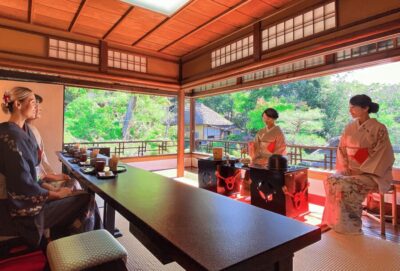
Tea Ceremony in a Traditional Tea House in Kiyomizu
Read our review →

Meiji Shrine, Asakusa, Skytree Bus Tour and Cruise
Read our review →
Asakusa Walking Tour with Sensoji Temple Visit
Read our review →
Kamakura & Enoshima Day Trip including Temple Tickets
Read our review →
Kyoto/Osaka: Nara, Fushimi Inari Taisha, Arashiyama Bus Tour
Read our review →
Nikko Toshogu Shrine and Kegon Waterfall Tour
Read our review →
Tokyo Panoramic 1 Day: Meiji Shrine, Asakusa, Odaiba and SKYTREE®
Read our review →Browse the lists this tour appears in