
REVIEW · WALKING TOURS
History of Hiroshima Group Walking Tour
Hiroshima is not a place to rush past with a few photographs. This two-hour walk links the city’s key memorials into one clear story, from the Gates of Peace to the Atomic Bomb Hypocenter. A guide with a Peace Studies background explains why the bomb was dropped, what happened to ordinary people, and how Hiroshima became a symbol of peace.
I like the route for two reasons: it covers a lot without requiring a full day, and it gives proper attention to people often left out of a quick visit, including children, mothers, and Korean victims. Guides such as Cva, Ali, Malek, Moe, and Shiva are described as warm, engaging, and able to handle questions. The main drawback is the pace. Two hours is enough for an introduction, not a complete study of Hiroshima’s museums and memorials.
In This Review
- Key points to know before you book
- Why this short Hiroshima walk is worth your time
- Starting at the Gates of Peace
- The Mother and Baby in the Storm statue
- The cenotaph and the names of the victims
- Hiroshima National Peace Memorial Hall
- The Rest House and its survival near Ground Zero
- The Children’s Peace Monument and Sadako’s cranes
- Remembering Korean victims and survivors
- The Peace Bell and the Atomic Bomb Dome
- Finishing at Hiroshima’s actual Ground Zero
- What the $32.84 price buys you
- Pace, group size, and practical planning
- Who should book this Hiroshima tour?
- Should you book it?
- FAQ
- How long does the Hiroshima walking tour last?
- How much does the tour cost?
- Where does the tour begin?
- Where does the tour finish?
- What sites are included in the walking route?
- Is food included?
- Can children join for free?
- How many people can join the group?
- What happens if I need to cancel?
Key points to know before you book
- The route covers nine important memorial stops: You see the Gates of Peace, the victims’ cenotaph, Peace Memorial Hall, Rest House, Children’s Peace Monument, Korean Victims Monument, Peace Bell, Atomic Bomb Dome, and Ground Zero.
- A Peace Studies background shapes the tour: The guide discusses both the bombing itself and Hiroshima’s change into a city focused on peace.
- The human stories receive real attention: Sadako and the paper cranes, mothers protecting children, and Korean victims are all part of the walk.
- Two hours works well for a short Hiroshima stay: You get an organized first look before deciding how much more time to spend in the museums.
- The group can reach 30 people: That keeps the price reasonable, though a larger group may make it harder to hear every explanation.
- The route ends at the actual hypocenter: You finish at the Hiroshima Atomic Bomb Hypocenter Monument rather than simply stopping at the better-known dome.
Why this short Hiroshima walk is worth your time
The Peace Memorial Park can feel confusing at first. Memorials are spread across a broad riverside area, and each one carries a different purpose. Without context, you may recognize the Atomic Bomb Dome but miss why the cenotaph is aligned with it, or walk past a smaller monument without knowing whose lives it remembers.
This tour solves that problem by giving you a route and a narrative. You move through the park on foot, stopping often enough to hear the story behind each place. The walk is not only about dates and military decisions. It also asks you to think about families, schoolchildren, forced laborers, survivors, and the city’s effort to turn terrible destruction into a message of peace.
I especially like the balance between major landmarks and lesser-known memorials. The Atomic Bomb Dome is the image most people associate with Hiroshima, but the Mother and Baby in the Storm statue and the Monument to Korean Victims help widen your view. They remind you that the bombing affected many communities and that the human cost cannot be reduced to one famous building.
The guide’s job matters here. A Peace Studies degree is a useful sign that the tour aims to explain the difficult issues rather than offer a simple sightseeing loop. Past guides named Ali, Cva, Malek, Moe, and Shiva have been described as friendly, clear, and able to answer questions. You may receive one of these guides, depending on the day, but the experience provider is listed as Ali.
More Walking Tours in Hiroshima
- Hiroshima Historical Walking Tour – Why A-Bomb was Dropped
★ 4.8 · 893 reviews - Hiroshima Peace (Heiwa) Walking Tour at World Heritage Sites
★ 5.0 · 872 reviews - Hiroshima City 4hr Private Walking Tour with Licensed Guide
★ 5.0 · 437 reviews
Starting at the Gates of Peace
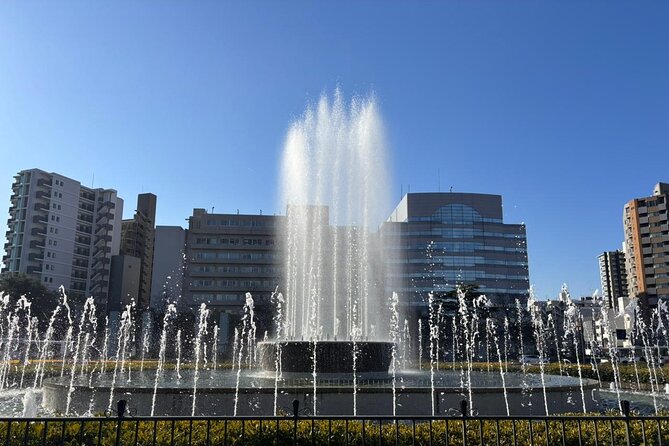
The meeting point is at Ristorante Mario, 4-11 Nakajimacho, in Hiroshima’s Naka Ward. The walk begins at the 10 Gates of Peace, where your guide sets out the basic story of the bombing and its effect on world history.
This opening is useful because Hiroshima raises questions that require context. Why was the city targeted? What was happening in Japan and the wider war? How did the bombing change the city and the world? The guide introduces those questions before you begin moving through the memorial park.
The Gates of Peace make a fitting opening because they frame the park’s message. The tour information notes that nine of the gates represent something specific, though the exact explanation may be given in person. Pay attention here, since this first stop sets up the ideas that return throughout the walk.
You spend about 20 minutes at this opening point. That is a good amount of time for orientation, but do not expect a full lecture on the Pacific War. The focus is the story of Hiroshima and the memorial park rather than a long military history lesson.
The Mother and Baby in the Storm statue
The Arashi no Naka no Boshi Statue, translated as Mother and Baby in the Storm, receives a short five-minute stop. It honors mothers who lost their lives while trying to save their children.
Five minutes may sound brief, but the statue’s purpose is direct. It shifts the scale of the story from governments and weapons to a parent trying to protect a child. That change in focus is one of the strongest parts of the route.
This is also a reminder that not every stop is meant to be a long presentation. Some memorials need only a few well-chosen words before you continue. If you want to study the monument closely or take time for personal reflection, you may need to return after the tour.
The cenotaph and the names of the victims
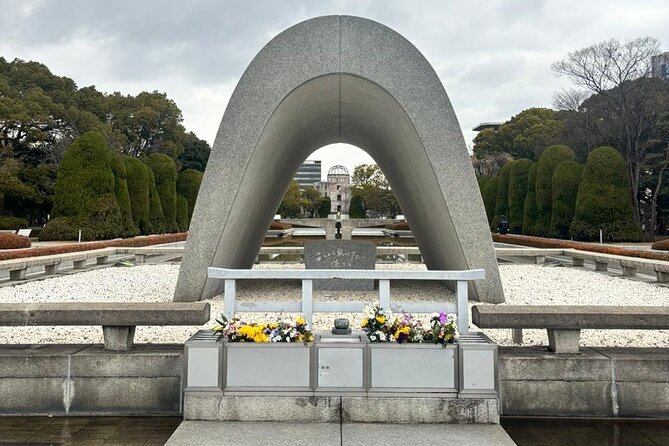
The Hiroshima Peace City Monument, commonly called the Cenotaph for the Atomic Bomb Victims, is allotted about 20 minutes. It contains the names of people who died in the bombing, making it one of the most important points for understanding the scale of the loss.
The guide can help you read the space as more than a famous photograph. The cenotaph is a place of remembrance, but it also connects the individual names to Hiroshima’s wider peace message. You are encouraged to slow down here and consider what a list of names means when the list is so long.
This stop may feel quiet and serious, even within a group walk. The tone of the guide matters, and the listed guides are praised for keeping the subject respectful while using gentle humor when appropriate. That humor should not be confused with making light of the tragedy. Used carefully, it can help a two-hour tour remain attentive rather than emotionally exhausting.
Same city, a completely different kind of day:
- Peaceful Hiroshima & Miyajima UNESCO 1 Day Bus Tour
★ 5.0 · 5,309 reviews - Hiroshima: Hiroshima and Miyajima UNESCO Sites 1-Day Tour
★ 4.9 · 2,330 reviews - Hiroshima / Miyajima Full-day Private Tour with Government Licensed Guide
★ 5.0 · 1,298 reviews - Hiroshima in a Nutshell: Morning Bike Adventure
★ 5.0 · 524 reviews
Hiroshima National Peace Memorial Hall
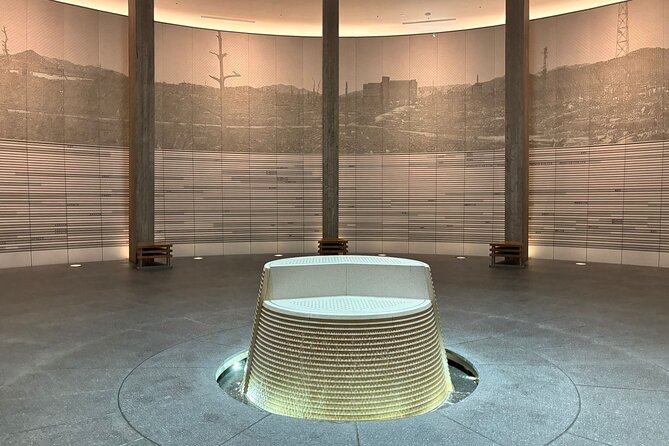
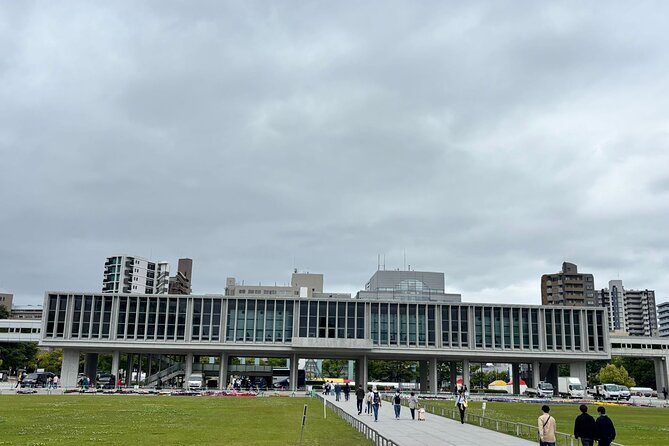
The Hiroshima National Peace Memorial Hall for the Atomic Bomb Victims gets about 20 minutes. Its purpose is to show the destruction of the city and to preserve the memory of those affected.
This stop adds structure to what you see outdoors. Monuments can be powerful, but they can also leave you with a vague sense of loss. The hall gives the guide a chance to explain the destruction more clearly and connect the physical park to the city that once occupied it.
The tour includes the exterior and the significance of the hall, but the information provided does not promise a full museum visit or extended time inside. If you want to read every display at length, plan to return on your own. The walk works best as a guided introduction, not as your only time with Hiroshima’s exhibitions.
The Rest House and its survival near Ground Zero
The Rest House of Hiroshima Peace Park is scheduled for about 15 minutes. The building is noted for its survival despite being only 170 meters from Ground Zero.
That distance gives the story a physical force. You are not simply hearing that the blast was immense. You are standing near a building that remained when much of the surrounding city was destroyed. The guide explains the structure’s importance and its place in the park’s memory.
This is one of the stops where a clear guide can make a major difference. The fact itself is striking, but the meaning depends on explanation. You will likely get a short account of the building’s survival rather than a long architectural tour.
The Children’s Peace Monument and Sadako’s cranes
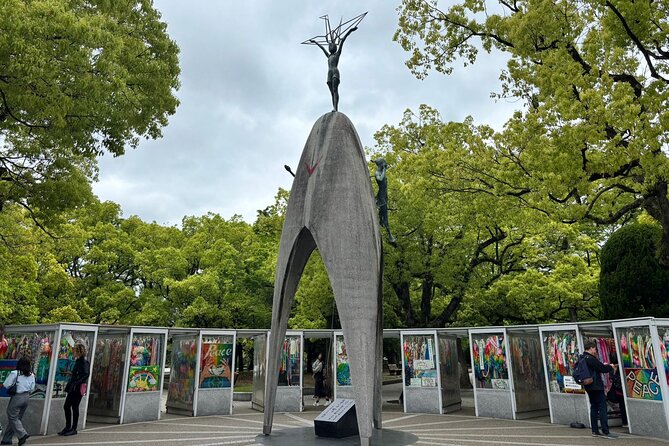
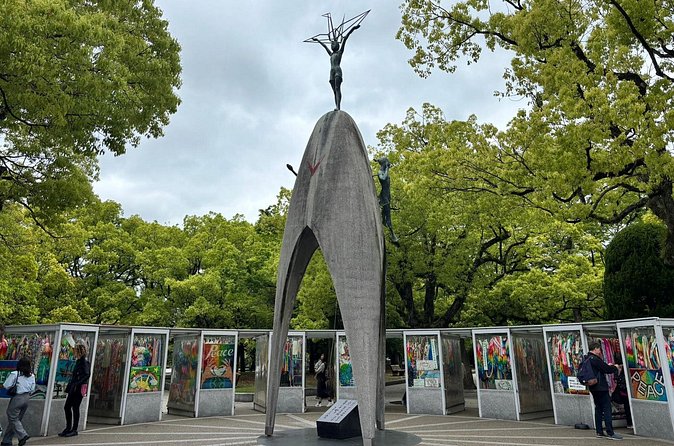
The Children’s Peace Monument receives about 10 minutes and is dedicated to Sadako and other children who died after the bombing. It also tells the story behind the paper crane, now a widely recognized symbol of peace.
This is perhaps the most accessible memorial for families and younger visitors. The paper crane gives a concrete way to understand a child’s life, illness, hope, and the continuing effort to remember children affected by war.
I like that the tour includes this stop rather than treating the park as a series of military or political sites. Hiroshima’s story is also a story of schoolchildren and families. The monument gives you a moment to think about how the bombing continued to affect people after the day itself.
The planned 10 minutes is enough for the guide to explain Sadako and the crane tradition. You may want more time to take in the monument, especially if you are traveling with children. You can return later, since the walk finishes in the same general memorial area.
Remembering Korean victims and survivors
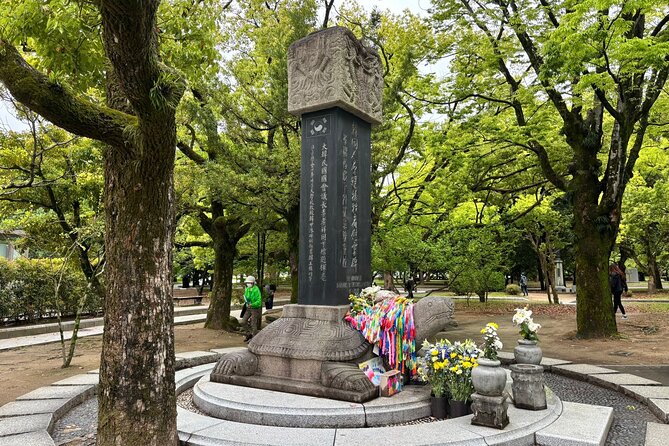
The Monument to Korean Victims and Survivors is a five-minute stop. Its inclusion is important because it points to Korean people who were in Hiroshima and were also affected by the bombing.
A short stop cannot explain every part of wartime Japan, colonial rule, forced labor, and the experiences of Korean survivors. Still, placing this monument on the route keeps the story from becoming too narrow. Hiroshima’s victims came from more than one background, and the memorial park includes voices that a quick independent walk might miss.
Listen for the guide’s explanation here, then consider returning if this subject matters especially to you. The walk gives you the essential significance, while a longer visit would be better for detailed study.
The Peace Bell and the Atomic Bomb Dome
The Peace Bell is a five-minute stop and carries a simple message. It represents peace, and the guide explains its role within the park.
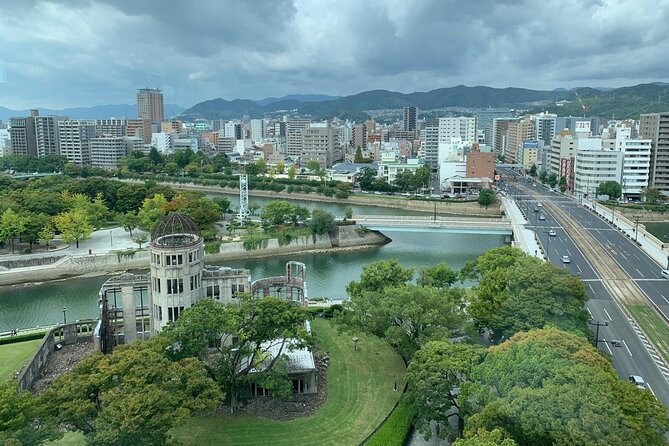
The next major point is the Atomic Bomb Dome, with about 15 minutes scheduled. The building survived the atomic bombing and remains one of Hiroshima’s most recognizable structures. Its damaged frame is powerful partly because it is so direct. You do not need much imagination to understand that this was once part of a working city.
The Dome is also where many independent visitors stop for a photograph and move on. A guide helps you place it in relation to the rest of the park and the bombing. You learn why this particular building survived while so much around it disappeared, as far as the tour’s time allows.
The Dome can be crowded, and a group of up to 30 people may need to gather carefully so everyone can hear. Stay close to the guide and avoid assuming that the final landmark is the end of the history. The route still has one of its most meaningful points ahead.
Finishing at Hiroshima’s actual Ground Zero
The walk ends at the Hiroshima Atomic Bomb Hypocenter Monument, at 1-5-25 Otemachi. This is the location identified as the atomic bomb’s hypocenter, or Ground Zero.
Ending here gives the route a strong shape. You begin with the city’s peace message, move through personal and public memorials, pass the surviving Dome, and finish at the point directly tied to the explosion. The final stop can feel more solemn than the famous landmarks because it is less about a building and more about location.
The tour information does not give a long stop time for the hypocenter, so expect the main explanation to be brief. If you want a quiet moment afterward, you can remain in the area once the guided portion ends.
What the $32.84 price buys you
At $32.84 per person, the value depends on how much context you want. All listed stops have no admission charge, so you are paying for the guide, route planning, interpretation, and the ability to ask questions rather than for entry tickets.
For a first visit with limited time, that can be a fair price. The guide connects nine sites in roughly two hours, and the Peace Studies background adds a useful academic frame without turning the walk into a formal class. Several guides, including Cva, Ali, Malek, Moe, and Shiva, are praised for clear English, warmth, and an engaging manner.
The value is weaker if you already know Hiroshima well or plan to spend several hours reading every museum display independently. This walk will not replace the Peace Memorial Museum or a longer personal visit. Think of it as a smart orientation that helps you understand what you are seeing.
Group discounts may lower the cost for some bookings. Two children aged 0 to 10 can join free of charge, which improves the price for a small family. Lunch and all food are excluded, so plan to eat before or after the walk.
Pace, group size, and practical planning
The listed duration is about two hours, with a maximum of 30 people. It is a walking tour through the memorial area, so wear shoes you can use comfortably for a steady park walk. The schedule is fairly full, with stops ranging from five to 20 minutes, leaving time for movement between them.
The large group limit is the main practical consideration. A group of 30 can make a guide harder to hear, especially near the Dome or other busy parts of the park. The positive side is a lower per-person cost and the chance to share questions without paying for a private tour.
The meeting point is near public transportation. The walk ends at the Hypocenter Monument, not back at Ristorante Mario, so keep that in mind when planning your next stop. A mobile ticket is available, and confirmation is provided when you book.
Free cancellation is available if you cancel at least 24 hours before the start time. Within 24 hours, no refund is provided. The tour requires good weather and a minimum number of participants. If poor weather or too few bookings cancel the experience, you are offered another date or experience, or a full refund.
Who should book this Hiroshima tour?
I would choose this walk if you have only a short time in Hiroshima, want a clear explanation of the memorial park, or prefer asking questions instead of reading every sign alone. It also suits families, since the Children’s Peace Monument and Sadako’s story give younger participants a clear point of connection.
It is a good fit if you want a human account rather than only a military timeline. The inclusion of mothers, children, and Korean victims gives the route more range than a simple Atomic Bomb Dome photo stop.
I would think twice if you dislike group walking tours, need a very slow pace, or want extended time inside the Peace Memorial Hall and other exhibitions. Two hours moves briskly, and the group may contain as many as 30 people.
Should you book it?
Book this tour if you want to understand Hiroshima’s memorial park in a focused two-hour walk. The route covers the essential sites, includes several memorials you might otherwise overlook, and ends at Ground Zero with a clear sense of how the pieces connect.
Skip it only if you already have a strong plan for exploring the park and prefer to set your own pace. For most first-time visitors, especially those with limited time, $32.84 is a reasonable price for a thoughtful introduction to Hiroshima’s past and its message of peace.
FAQ
How long does the Hiroshima walking tour last?
The tour lasts approximately two hours.
How much does the tour cost?
The listed price is $32.84 per person. Group discounts may be available.
Where does the tour begin?
The meeting point is Ristorante Mario, at 4-11 Nakajimacho, Naka Ward, Hiroshima, 730-0811, Japan.
Where does the tour finish?
The tour ends at the Hiroshima Atomic Bomb Hypocenter Monument, at 1-5-25 Otemachi, Naka Ward, Hiroshima, 730-0051, Japan.
What sites are included in the walking route?
The route includes the Gates of Peace, the Arashi no Naka no Boshi Statue, the Cenotaph for the Atomic Bomb Victims, Hiroshima National Peace Memorial Hall, the Rest House, Children’s Peace Monument, Monument to Korean Victims and Survivors, Peace Bell, Atomic Bomb Dome, and the Hypocenter area.
Is food included?
No. Lunch and all food are excluded from the tour price.
Can children join for free?
Two children aged 0 to 10 can join free of charge.
How many people can join the group?
The maximum group size is 30 travelers.
What happens if I need to cancel?
You can receive a full refund if you cancel at least 24 hours before the experience begins. Cancellations or changes made within 24 hours are not refunded or accepted. If poor weather or an insufficient number of participants cancels the tour, you are offered another date or experience, or a full refund.
More Historical Tours in Hiroshima
- Miyajima Half-day Trip Historical Walking Tour
★ 5.0 · 284 reviews - Hiroshima: History of Hiroshima Group Walking Tour
★ 4.8 · 266 reviews - Hiroshima: Peace Walking Tour of World Heritage Sites
★ 4.9 · 190 reviews - Hiroshima: Miyajima Half-day Historical Walking Tour
★ 4.7 · 100 reviews
Just added around Hiroshima
- The Peace Memorial to Miyajima : Icons of Peace and Beauty★ 4.5 · 31 reviews
- Private Full Day Hiroshima Tour★ 4.5 · 29 reviews
- Hiroshima & Miyajima All-Inclusive Tour w/Licensed guide Pancho★ 5.0 · 54 reviews
- Okunoshima Rabbit Island Cycling Tour with Local Guide★ 4.5 · 17 reviews
- Shore Excursion from Hiroshima Port : Private Tour in Hiroshima★ 5.0 · 17 reviews
- Hiroshima Saijo Sake Tasting Tour with visit to 7 Breweries★ 5.0 · 104 reviews
- Hiroshima Country Cycling: Explore Rural Life 1 HR from City★ 5.0 · 22 reviews
- Mitaki Peace Tour Beyond Central Hiroshima★ 5.0 · 18 reviews
Walking Tours, compared.

Kyoto Geisha Walking Tour: Gion District & Hidden Gems
Read our review →
Tokyo Tsukiji Fish Market Food and Culture Walking Tour
Read our review →
Gion Magical Night Walking Tour with Geisha Trivia
Read our review →
Imperial Palace and Shogun Historical Walking Tour
Read our review →
Gion Geisha District Walking Tour – Stories of Geisha
Read our review →
Asakusa Walking Tour with Sensoji Temple Visit
Read our review →
Kyoto Gion Geisha District Walking Tour – The Stories of Geisha
Read our review →Browse the lists this tour appears in