
REVIEW · KIMONO & CULTURE EXPERIENCES
Experience all of Japanese culture and Japanese food experience classes “origami, udon, Japanese food, green tea, calligraphy” in 4 hours
The best part of this Tokyo experience is that Japanese culture comes through your hands, not just through a guide’s talk. At Taka and Keiko’s home near Omori, you fold a crane, knead udon dough, prepare sushi and gyoza, share lunch, whisk matcha, and receive your name in calligraphy.
I like the small, private setting and the generous meal with free sake, beer, shochu, and soft drinks. I also like that the hosts, Taka and Keiko, treat the day as a personal welcome into Japanese home life rather than a quick cooking demonstration. The main consideration is pace: four hours is packed, and this is best for people who enjoy conversation and hands-on activities more than a fast sightseeing schedule.
In This Review
- Key points to know before booking
- A four-hour welcome into Japanese home life
- Folding a crane before lunch
- Making udon with your feet
- Preparing sushi, gyoza, and tempura
- Lunch is as social as it is practical
- Matcha and sweets after the meal
- A calligraphy souvenir with your name
- Who will enjoy this Omori experience most
- Practical details and overall value
- Should you book this Japanese food and culture class?
- FAQ
- Where does the experience meet?
- How far is the walk to the house?
- How long does the experience last?
- What activities are included?
- Is lunch included?
- Which drinks are included?
- Can vegetarians and vegans take part?
- Is the activity private?
- Is transportation included?
- Can I cancel for a full refund?
Key points to know before booking
- Meet Taka at JR Omori Station: The meeting point is the central exit at 10:30 am, followed by an eight-minute walk through a quiet neighborhood.
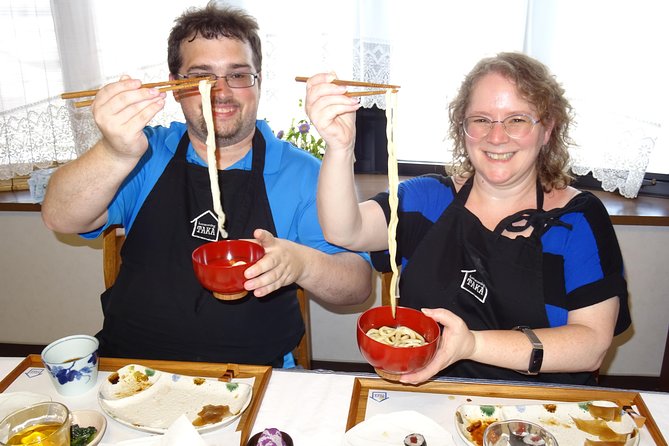
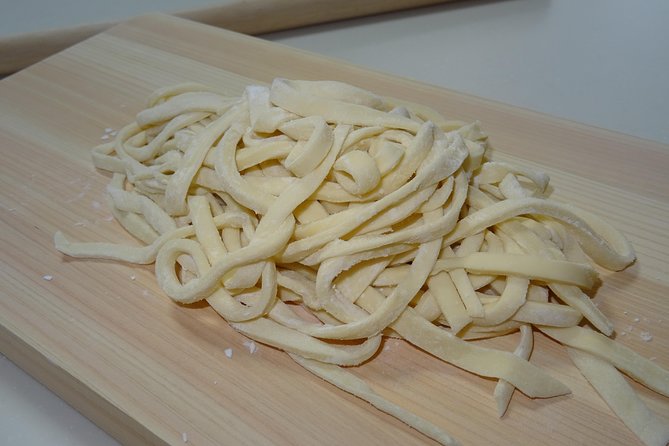
- Make udon from the beginning: You work with the ingredients and even step on the dough as part of the traditional preparation.
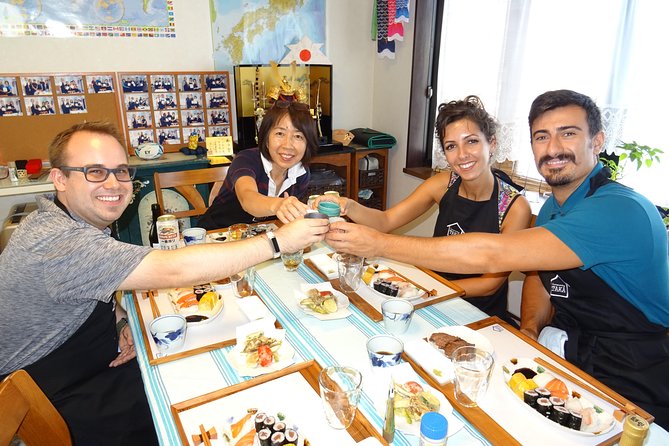
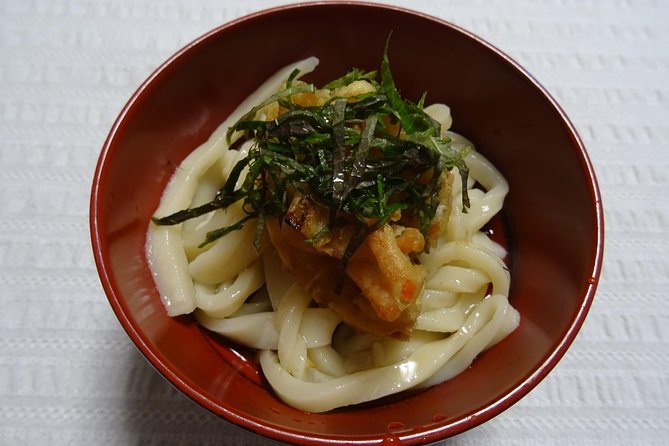
- Lunch is the heart of the class: Prepare sushi and gyoza, then eat them with tempura and Japanese small plates served by Keiko.
- Drinks are included: Sake, beer, shochu, and soft drinks are free during the meal.
- Finish with two Japanese arts: Whisk matcha with Japanese sweets, then take home colored paper with your name written in calligraphy.
- Vegetarian and vegan options are available: Different ingredients can be used for all dishes.
A four-hour welcome into Japanese home life
Many Tokyo food classes happen in a studio or restaurant kitchen. This one takes place at the home of Taka and Keiko, which changes the feel from the start. You are not simply watching someone prepare food. You are invited to take part in a household meal, learn a few creative traditions, and spend time talking with a local couple.
The experience begins at 10:30 am at the central exit of JR Omori Station. Look for a person carrying a bag with the homecoming TAKA logo. Taka then walks you to the house, about eight minutes away. The route passes a shrine and quiet residential streets, offering a brief change from Tokyo’s larger stations and commercial districts.
I like this short walk because it gives the morning a gentle beginning. It also helps you see Omori as a lived-in Tokyo neighborhood rather than just a place to change trains. The walk is part of the meeting instructions, so arrive at the station in time to find the central exit and the logo bag without rushing.
At the house, Taka explains the plan for the day. The order is generally origami, udon making, Japanese cooking and lunch, matcha, and calligraphy. The schedule sounds full, but the hosts leave room for conversation, which is central to the experience. You should not expect a silent, tightly timed cooking lesson.
The activity is private, meaning only your own group participates. That makes it easier to ask questions, work at a comfortable speed, and take part as a family. Several families have used the class as a way for children to engage with Japan through making things, especially the udon and origami portions.
More Kimono & Culture Experiences in Tokyo
- Tokyo: Samurai Ninja Museum Guided tour and Experience
★ 4.6 · 1,010 reviews - Tokyo: Samurai Sword & Archery Class from Samurai Descendant
★ 5.0 · 603 reviews - Best Samurai Experience in Tokyo
★ 5.0 · 458 reviews
Folding a crane before lunch
The first activity is origami, with a paper crane as the project. This is a simple but meaningful way to begin. You get a direct introduction to one of Japan’s best-known paper arts, and the finished crane gives you something small to keep or display.
Origami also works well for mixed-age groups. Children can take pride in completing the folds, while adults may find the activity more difficult than expected. Taka and Keiko guide you through the process rather than handing you a finished model, so patience matters.
This is not a long craft workshop. It is one part of a varied morning. If you want advanced origami instruction or a large collection of finished models, this will feel brief. If you want a friendly first contact with a familiar Japanese tradition, it fits the day nicely.
Making udon with your feet
The udon session is one of the more unusual parts of the class. You begin with the ingredients and work the dough yourself. A memorable step is placing the dough on the floor and stepping on it, a traditional method that helps develop the texture.
You can expect a more active process than simply stirring a bowl or cutting noodles from a prepared sheet. The pleasure is in seeing the dough change from raw ingredients into something you can cook and eat. It also gives you a practical sense of the effort behind fresh noodles.
The hosts include an element of surprise in this portion, so the exact presentation may not be entirely predictable. That is part of its charm, but it also means you should come ready to follow instructions rather than control every detail.
Families often find this section especially successful. Children can participate in a clear, physical task, and the result becomes part of the meal. If you have limited mobility, the stepping portion may require extra thought, since no accessibility details are provided. You can contact the provider before booking if this matters for your group.
Preparing sushi, gyoza, and tempura
After the udon, the food portion becomes the main event. You work with Taka and Keiko to prepare sushi and gyoza, with tempura also included in the meal. Keiko serves additional Japanese small plates, so lunch is more than the dishes you make yourself.
This structure is useful because it combines instruction with variety. Sushi shows you one side of Japanese food preparation, while gyoza involves shaping and filling. Tempura adds a cooked dish with a different technique. You are not spending four hours on one recipe, so the class suits you if you want a broad introduction to Japanese home cooking.
The ingredients and drinks are made in Japan, according to the experience details. That does not turn the class into a formal culinary course, but it does keep the focus on familiar local products and everyday Japanese food culture.
You should expect to prepare food together rather than receive a professional chef’s masterclass. Taka and Keiko’s role is part teacher, part host. They explain what you are doing, help you through the steps, and then sit down to eat and talk with you.
The meal is one of the strongest reasons to consider the price. At $92.50 per person, you receive lunch, a hands-on food class, several cultural activities, drinks, an apron for use during the cooking, and a calligraphy souvenir. In central Tokyo, a good meal and a separate paid activity can quickly cost a similar amount. Here, the value comes from having both in one personal setting.
The free drinks are worth noting. Sake, beer, shochu, and soft drinks are included, so you do not need to add a drink bill during lunch. You should still drink sensibly, since the day continues with tea and calligraphy after the meal.
Vegetarian and vegan participants can enjoy the dishes with different ingredients. Tell the provider your needs when booking so the meal can be prepared appropriately. The information confirms that both diets are accommodated, but it does not list the exact replacement ingredients.
Same city, a completely different kind of day:
- Mt Fuji and Hakone 1-Day Bus Tour Return by Bullet Train
★ 5.0 · 26,383 reviews - 1-Day Tokyo Bus Tour
★ 5.0 · 14,250 reviews - Tokyo: TOKYO SKYTREE® Admission ticket
★ 4.5 · 11,192 reviews - Tokyo: teamLab Planets TOKYO Digital Art Museum Entry Ticket
★ 4.6 · 9,779 reviews
Lunch is as social as it is practical
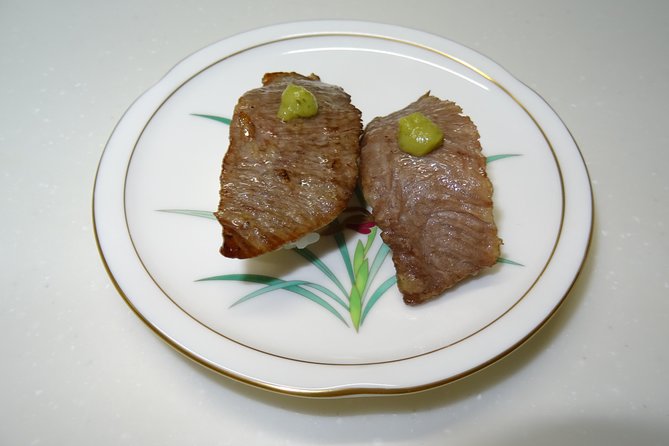
The cooking leads into a leisurely lunch at the house. This is where the experience differs most from a standard class. You sit down with Taka and Keiko, eat the food you helped prepare, and talk about Japan and daily life.
I like the unhurried meal because food traditions make more sense when you share them. You can ask about ingredients, table customs, and the dishes in front of you while eating them. The setting also gives children and adults space to talk with the hosts instead of moving immediately to the next attraction.
The personal tone is not for everyone. If you prefer to keep sightseeing tightly scheduled, four hours at a private home may feel like a large commitment. The experience is designed for connection, not for checking several Tokyo sights off a list.
Past participants have also used the class as a bridge between cultures. One family returned home and prepared the sushi they had learned to make, then sent photos to Taka and Keiko. That is a good sign of the class’s practical value: you may leave with recipes and techniques you can try again rather than only memories.
The hosts also encourage cultural exchange. You can share stories about your own country and ask questions about Japan. The class is especially rewarding if you enjoy meeting people and are willing to take part in conversation, even if your Japanese is limited.
Matcha and sweets after the meal
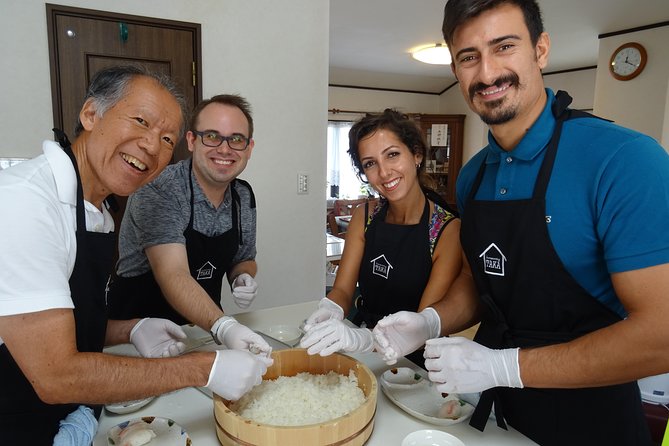
Once lunch is over, you make matcha together and taste it with local Japanese sweets. This is a calmer section after the cooking and meal. You get to see the basic preparation of matcha and experience the pairing of bitter tea with a sweet accompaniment.
The tea portion is an introduction, not a complete tea ceremony. The supplied details describe making and tasting matcha, but they do not promise a formal ceremony with a full set of traditional movements. Keep your expectations at that level and you are likely to find it a pleasant, hands-on finish to the food lesson.
The change in pace works well. You have already used your hands to fold paper, knead dough, shape food, and cook. Now you shift toward a quieter ritual that shows another side of Japanese culture.
A calligraphy souvenir with your name
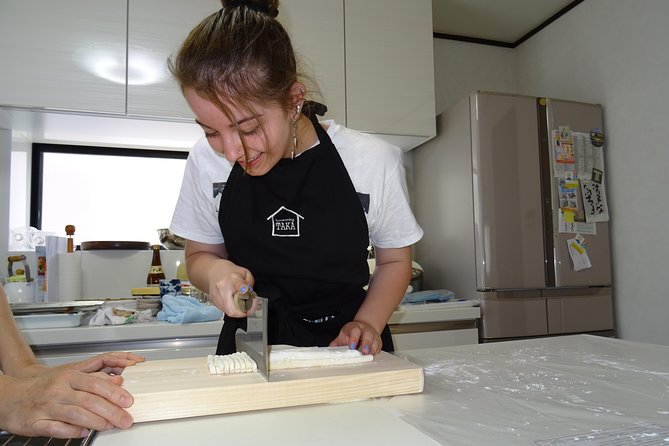
The final activity is calligraphy. Keiko writes your name on colored paper, which you can take home as a souvenir. This is a more personal keepsake than a generic postcard because it is made for you during the visit.
The calligraphy also brings the day back to the written arts after the food and tea. You do not need to produce a perfect character yourself to benefit from it. You get to watch the brushwork and leave with something tied to your own name and the people who hosted you.
Allow a little space in your luggage for the colored paper. It is light, but you will want to protect it from bending. The experience does not state that a protective tube or folder is provided, so bring a flat place to keep it if you plan to travel onward afterward.
At the end, Taka and Keiko accompany you back toward JR Omori Station. The farewell is part of their personal hosting style. You should expect the day to end at the original meeting point rather than at a separate Tokyo attraction.
Who will enjoy this Omori experience most
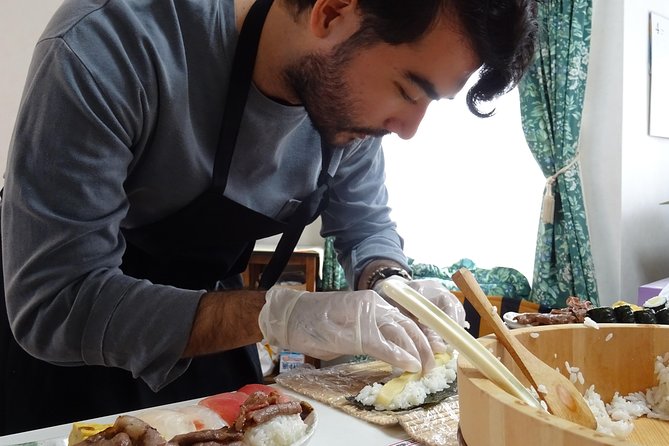
This class is a strong choice for families. Children can fold origami, step on udon dough, shape food, and take home a name card. The activity has enough variety to hold the attention of younger participants, and the hosts are used to welcoming different age groups.
It also suits couples, solo visitors, and anyone who wants a more personal day in Tokyo. A solo participant can still take part because the activity is built around conversation and shared work. Couples may particularly enjoy the meal and the chance to meet a local husband-and-wife team.
You should book it if you enjoy:
- Hands-on food preparation rather than only eating
- Small cultural activities with a local couple
- Long conversation over a meal
- Meeting people in a home setting
- Family activities that work across age groups
- Learning recipes you can try again at home
You may want a different activity if you want a professional restaurant kitchen, advanced culinary training, a formal tea ceremony, or a short one-hour class. This experience offers many introductions in one morning, not specialist instruction in one art.
The class is also a good pick early in a Tokyo visit. You can learn food ideas, neighborhood customs, and a little context for later meals. Since it is often booked about 107 days ahead, planning early makes sense, especially if you have fixed travel dates or need a vegetarian or vegan menu.
Practical details and overall value
The price is $92.50 per person. Included are lunch, alcoholic and nonalcoholic drinks, an apron, origami, and the calligraphy souvenir. There is no transfer service, so you must reach JR Omori Station yourself.
The meeting point is 1 Chome-6 Omorikita, Ota City, Tokyo, with a 10:30 am start. The activity ends back at the meeting point. It is near public transportation, but the instructions specifically ask you to meet at the central exit of JR Omori Station, so do not assume any station exit will work.
Confirmation is provided at booking, and free cancellation is available up to 24 hours before the start time for a full refund. Cancellations or changes made inside that 24-hour window are not accepted for a refund. Cutoff times use local Tokyo time.
The experience has a five-star rating from 105 reviews and a 100 percent recommendation rate. Those numbers alone should not make your decision, but they match the clear pattern of the activity: people value Taka and Keiko’s warmth, the food, the range of activities, and the feeling of leaving with new friends.
The strongest praise centers on hospitality. The hosts do not simply demonstrate sushi or hand over a recipe. They meet you at the station, walk you to their home, teach several activities, share a meal, and escort you back. That personal attention is the main product.
Should you book this Japanese food and culture class?
Book it if you want one meaningful half-day that brings together food, crafts, tea, and conversation. Taka and Keiko’s home setting gives the experience a human scale, while the udon, sushi, gyoza, tempura, matcha, and calligraphy keep the day varied.
I would recommend it most to families, couples, and solo visitors who value local contact over a packed sightseeing route. At $92.50, the combination of lunch, drinks, instruction, and a handmade souvenir is fair, especially because the class is private.
Skip it if you dislike eating in a home, want a formal specialist course, or have no room for a four-hour commitment. For everyone else, book well ahead, arrive at the correct Omori exit, and come ready to work, eat, talk, and leave with more than a recipe.
FAQ
Where does the experience meet?
You meet at the central exit of JR Omori Station in Tokyo at 10:30 am. Look for someone carrying a bag with the homecoming TAKA logo.
How far is the walk to the house?
The walk from JR Omori Station to the house takes about eight minutes. The route passes a shrine and quiet residential streets.
How long does the experience last?
The experience lasts approximately four hours.
What activities are included?
The program includes folding an origami crane, making udon noodles from scratch, preparing Japanese food such as sushi and gyoza, enjoying tempura and small plates, making matcha, tasting Japanese sweets, and receiving a calligraphy souvenir.
Is lunch included?
Yes. Lunch is included, along with drinks.
Which drinks are included?
Sake, beer, shochu, and soft drinks are included.
Can vegetarians and vegans take part?
Yes. Vegetarians and vegans can enjoy the dishes with different ingredients.
Is the activity private?
Yes. Only your group participates in the activity.
Is transportation included?
No. Transfers are not included. You must make your own way to the meeting point at JR Omori Station.
Can I cancel for a full refund?
Yes, if you cancel at least 24 hours before the experience start time. Cancellations or changes made less than 24 hours in advance are not accepted for a refund.
More Food & Drink in Tokyo
- Tokyo: Shinjuku Food Tour (13 Dishes at 4 Local Eateries)
★ 5.0 · 6,603 reviews - Tokyo Tsukiji Fish Market Food and Culture Walking Tour
★ 5.0 · 3,184 reviews - Tokyo: Shinjuku Food Tour (15 Dishes and 4 Eateries)
★ 4.9 · 2,033 reviews - Best of Shinjuku: Izakaya Food Tour (4 Stops, 14+ Tastings)
★ 5.0 · 1,863 reviews
More Dining Experiences in Tokyo
- Tokyo Bar Hopping Tour in Shinjuku (All-You-Can-Drink + Dinner)
★ 5.0 · 3,587 reviews - Tokyo: Sumo Show and Dining Experience
★ 4.8 · 2,742 reviews - Sumida River: Japanese Traditional Yakatabune Dinner Cruise
★ 4.6 · 779 reviews - Tokyo Bay Yakatabune Dinner/Day Cruise with Japan Show and Drinks
★ 4.5 · 473 reviews
Just added around Tokyo
- Private Memorable Tokyo Tour with English Speaking Driver★ 5.0 · 30 reviews
- Private Tokyo Custom Full-Day Tour by Chartered Vehicle★ 5.0 · 16 reviews
- Private Sightseeing to Mt Fuji and Hakone with English Driver★ 5.0 · 51 reviews
- Tokyo Photography Masterclass – Private Photography Lesson★ 5.0 · 25 reviews
- Private Mt. Fuji Day Trip from Tokyo with English-Speaking Driver★ 5.0 · 33 reviews
- 4 Day Tour – Mount. Fuji, Tokyo, Hakone, Kamakura and Yokohama★ 5.0 · 19 reviews
- Private Unforgettable Mt Fuji Tour with English Speaking Driver★ 5.0 · 142 reviews
- Private Tokyo Food Tour – A Journey Through Time Through Food★ 5.0 · 36 reviews
Kimono & Culture Experiences, compared.

Kyoto Geisha Walking Tour: Gion District & Hidden Gems
Read our review →
Gion Magical Night Walking Tour with Geisha Trivia
Read our review →
Gion Geisha District Walking Tour – Stories of Geisha
Read our review →
Best of Kyoto: Gion, Geisha, Pagodas & Cobblestones
Read our review →

Kyoto Gion Geisha District Walking Tour – The Stories of Geisha
Read our review →
Browse the lists this tour appears in