REVIEW · KYOTO TOURS
Concerts Played with Traditional Instruments in Kyoto
The unusual part of this Kyoto concert is the setting: a traditional Japanese home becomes the stage. You sit close to the koto and shamisen, hear how the instruments work, and listen to classical, modern, and original music without the distance of a large concert hall.
I like the clear introduction before the music and the chance to ask questions afterward. I also like the optional hands-on koto session, which lets you try a simple piece instead of only watching. The main consideration is the short 50-minute format, which offers a focused taste rather than a full evening of music.
In This Review
- Key points to know before booking
- A Kyoto concert inside a working home
- What happens during the 50-minute visit
- Why the koto and shamisen introduction matters
- The music: classical pieces and original work
- The optional hands-on koto session
- A close look at the home setting
- Is $39.63 a fair price?
- Timing, booking, and cancellation
- Who will enjoy this most?
- Should you book this Kyoto concert?
- FAQ
- Where does the concert take place?
- How long does the experience last?
- Which instruments are featured?
- What music will I hear?
- Is there an explanation before the music?
- Is there a question-and-answer session?
- Can I take photos?
- Can I play the koto?
- Is transportation included?
- What is the cancellation policy?
Key points to know before booking
- A home concert in Kyoto: Gen Home Saiin offers a more personal setting than a formal theater.
- Koto and shamisen explained: You learn about both instruments before the performance begins.
- Classical and newer music: The program may include Chidori no Kyoku, Rokudan no Shirabe, Kajimakura, modern works, and original compositions.
- Questions and photos afterward: The performance is followed by time with the musicians.
- Optional koto participation: An upgrade lets you try playing a simple piece yourself.
- Flexible scheduling: Several sessions are offered during the day, and cancellation is free up to 24 hours before the start time.
A Kyoto concert inside a working home
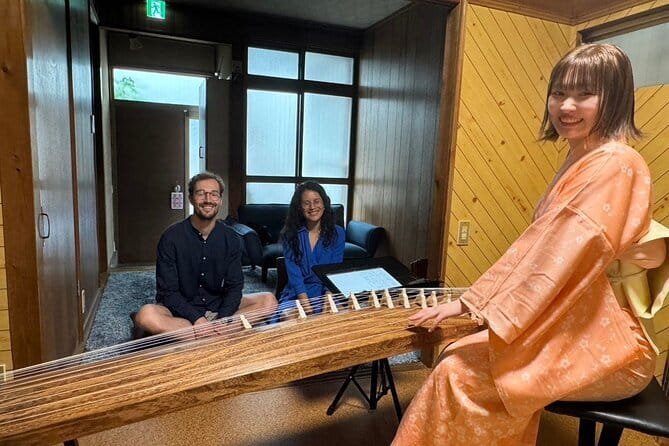
Many Kyoto music experiences place you in a hall, cultural center, or formal theater. This one takes a different route. At Gen Home Saiin, a traditional Japanese home is arranged for a small concert, giving the event a close, personal feel.
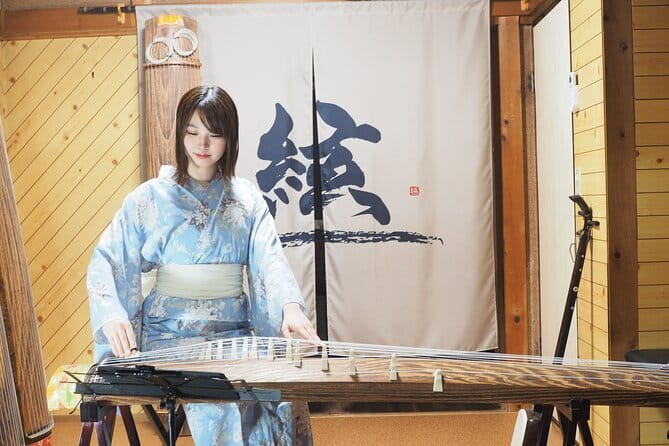
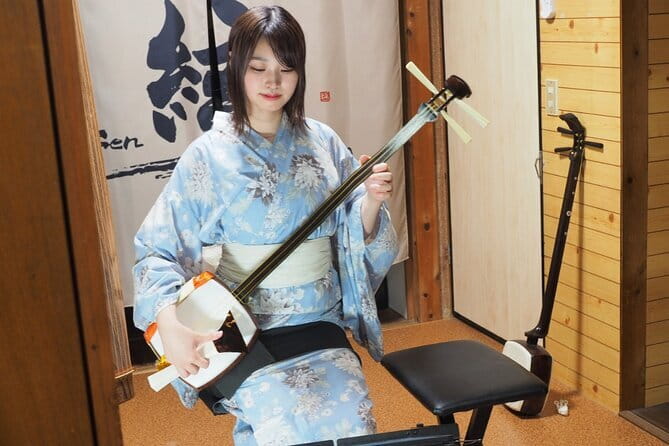
That setting matters. The koto is a long Japanese zither with strings stretched across a wooden body. The shamisen is a three-stringed instrument played with a large plectrum. In a big room, you may notice the sound first and the instruments second. Here, you get a better chance to see how the performers handle the strings and shape each note.
The format is designed for people who want context, not just a musical interlude. Before the concert, the musicians explain the koto and shamisen, giving you a basic framework for listening. You do not need to know Japanese music in advance. The introduction helps you notice differences in sound, playing style, and mood as the concert moves along.
The home setting also has a practical advantage. It makes the experience feel less like a performance you simply consume and more like a meeting with a musical tradition. That is a good fit if you have already visited Kyoto’s temples and gardens and want an evening activity with a stronger human connection.
A few more Kyoto trips to weigh up
- Kyoto: Traditional Concert at Townhouse or Bathhouse
★ 4.9 · 224 reviews - Kyoto: Japanese Koto & Shamisen Concert and Koto Class
★ 4.9 · 31 reviews
What happens during the 50-minute visit
The total experience lasts about 50 minutes, so the program stays compact. You can expect the visit to move through three main parts: an introduction, a live concert, and a closing period for questions and photos.
The opening explanation covers the koto and shamisen. This section is important because the instruments may be unfamiliar, even if you have heard them in films, festivals, or other Japanese cultural settings. Listening after the explanation gives you more to follow. You can connect the sound to the instrument and the performer’s technique.
The concert includes traditional pieces and newer material. Named works include Chidori no Kyoku, Rokudan no Shirabe, and Kajimakura. These pieces are associated with major figures in koto music such as Yoshizawa Kengyo, Yatsuhashi Kengyo, and Kikuoka Kengyo.
You may also hear modern and original compositions. That mix helps avoid a museum-like presentation of Japanese music. You get a sense of established forms, while newer works show that koto and shamisen performance is still developing.
One useful detail is that the music is not limited to a single mood. A piece such as Chidori no Kyoku can feel deeply emotional, while other works may give you a more measured or contemporary sound. If you are sensitive to music, allow yourself a quiet moment afterward. One published account describes being moved to tears by Chidori no Kyoku, which gives you a good idea of the emotional weight this piece can carry.
After the music, the session opens into a Q&A. This is where the experience becomes especially useful for curious listeners. You can ask about the instruments, the pieces, and the musicians’ approach. There is also time for photos, so you do not have to interrupt the performance to take pictures.
Why the koto and shamisen introduction matters
A short concert can easily leave you with a pleasant sound but little understanding of what you heard. The introduction helps prevent that. You learn the basic identity of the koto and shamisen before the performance, making the rest of the session easier to follow.
The koto has a long, horizontal shape and a string-based sound that can range from delicate to forceful. The shamisen has a different body and tone, with a sharper quality created by its three strings and plectrum. You may find that hearing them together makes their contrast clearer.
The explanations are given in English, according to the available information. That is a useful point for international visitors. You do not need to rely on a translation afterward to understand the basic story of the instruments or the structure of the visit.
I especially like experiences that explain what you are hearing without turning the whole event into a lecture. This program keeps the talk brief and places the music at the center. If you want a long academic discussion of Japanese music, this is not that. If you want enough background to listen with greater attention, the balance should suit you.
The music: classical pieces and original work
The named repertoire gives the concert a firm connection to Japanese musical tradition. Chidori no Kyoku, Rokudan no Shirabe, and Kajimakura are not simply background tunes chosen for atmosphere. They represent established works within the koto and shamisen tradition.
The program also includes modern and original pieces. That is one of its strongest features. You are not being shown a frozen version of the past. Instead, the concert places older compositions beside newer work, letting you hear how the instruments can serve different kinds of music.
The description connects the classical works with Yoshizawa Kengyo, Yatsuhashi Kengyo, and Kikuoka Kengyo. Those names may not mean much to you before the visit, and that is fine. The value is in hearing the pieces within a setting where someone can explain their background in plain terms.
You may recognize some melodies, but there is no promise that the program will match music you already know. The experience works best if you arrive ready to listen rather than expecting a familiar concert set. The 50-minute length also means the program can introduce several styles without asking you to commit an entire night.
Same city, a completely different kind of day:
- PERFECT KYOTO 1-Day Bus Tour
★ 5.0 · 13,518 reviews - Kyoto: Fushimi Inari, Kinkakuji, Bamboo Grove 1 Day Bus Tour
★ 4.8 · 4,316 reviews - Kyoto: Tea Ceremony in a Traditional Tea House in Kiyomizu
★ 4.9 · 3,519 reviews - Kyoto Geisha Walking Tour: Gion District & Hidden Gems
★ 4.7 · 3,273 reviews
The optional hands-on koto session

The main program includes the concert, instrument explanation, Q&A, and photos. An upgrade adds a hands-on koto session, where you try playing a simple piece.
I consider this upgrade worthwhile for families, first-time visitors, and anyone who learns better by doing. You gain a physical sense of the instrument that a demonstration cannot provide. Even a simple piece can show you how much control is needed to create a clean sound.
Keep your expectations in check. This is an introduction, not a full music lesson. You will not become a koto player in one short session. The point is to understand the instrument from the player’s side and leave with a more personal memory of the visit.
The hands-on option is also a good choice if you are comparing this concert with a standard performance. The basic concert gives you listening and conversation. The upgrade adds participation, which may make the experience more memorable without changing the overall time very much.
The supplied details do not state the exact length or price of the upgrade, so check those terms before paying. The base price is separate from any added participation option.
A close look at the home setting
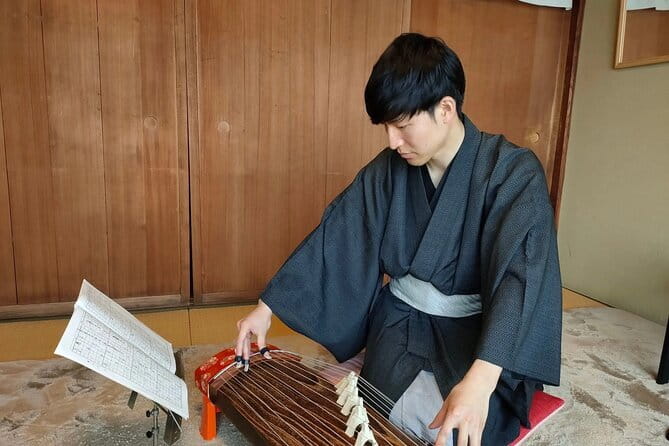
Gen Home Saiin is the only stated stop, and admission is included. You are not moving between several sights or spending time on a bus. That keeps the focus on the music and makes the visit easy to fit into a Kyoto day.
The location is near public transportation, but private transportation is not included. You will need to make your own way there. Since the experience takes place in a home, check the meeting instructions carefully after booking and allow time to find the entrance.
The home setting may appeal to you if you prefer smaller cultural activities. It may be less suitable if you want a grand stage, elaborate lighting, or a long formal concert. The atmosphere is likely to feel personal rather than theatrical, which is exactly the point.
Most people can participate, and the information says the activity is near public transportation. Specific accessibility details are not provided, so contact the provider if you have mobility needs or require particular seating arrangements.
Is $39.63 a fair price?
At $39.63 per person, this is not the cheapest way to spend 50 minutes in Kyoto. You can hear music in public spaces for less, and many temples offer free or low-cost cultural encounters.
The value comes from the combination of elements. You are paying for a live performance, explanations of two traditional instruments, access to a small home setting, a Q&A, and photo time. That is more useful than simply passing by a performance and hearing a few minutes without context.
The price also makes more sense if you are unlikely to seek out another koto and shamisen concert during your visit. Kyoto offers many cultural choices, but a small concert in someone’s home is a more specific experience than a general temple visit or stage show.
Coffee and tea are not included, so do not expect refreshments to be part of the cost. WiFi and facility fees are listed as included, though WiFi is not likely to be the reason you choose this activity. The real purchase is the music and the chance to speak with the performers.
For a couple or family, the optional koto experience may increase the total price. Decide based on how much you value participation. If you only want to listen, the base concert provides the essential program.
Timing, booking, and cancellation
The visit lasts about 50 minutes, and multiple sessions are available throughout the day. That flexibility helps you place it between sightseeing stops, a meal, or an evening reservation.
The activity is booked an average of 33 days in advance. That does not guarantee every session will sell out, but it suggests you should reserve ahead if your Kyoto dates are fixed. This is especially sensible if you need a particular time of day.
You receive confirmation at booking, and the ticket is mobile. Private transportation is not included, so plan your route separately.
Free cancellation is available if you cancel at least 24 hours before the start time. A cancellation made less than 24 hours ahead is not refundable, and changes within that period are not accepted. The cut-off follows Kyoto local time.
Who will enjoy this most?
I would recommend this for you if you want a short cultural activity with real explanation and live music. It is a good match for first-time visitors who have heard of the koto and shamisen but have never seen them performed up close.
It also suits music lovers who want more than a passive show. The Q&A gives you a chance to ask questions, while the optional koto session adds a practical element.
Families may appreciate the clear format and short duration. A 50-minute concert is easier to fit into a busy day than a long theater performance, and trying the instrument can give younger participants something concrete to remember.
Couples may like the intimate setting and emotional repertoire. The experience is also useful for solo visitors, since the Q&A creates a natural chance to connect with the musicians without needing to attend with a group.
I would think twice if you want a full-scale concert lasting several hours, a highly formal venue, or a program focused only on historical music. The home setting, mixed repertoire, and short length are central to the experience.
Should you book this Kyoto concert?
Book it if you want to hear traditional Japanese instruments in a personal setting and understand what you are hearing. The combination of koto, shamisen, English explanations, classical pieces, newer compositions, Q&A, and photos gives the visit more substance than a quick cultural demonstration.
The hands-on upgrade makes the choice stronger for families and curious beginners. If you only want a short performance, skip the upgrade and enjoy the core program.
At $39.63, the experience is fairly priced for a 50-minute concert with direct contact with professional musicians, though it is not a bargain activity. I would reserve ahead, choose a session that fits your route, and make this your focused music stop in Kyoto rather than trying to squeeze it between two rushed attractions.
FAQ
Where does the concert take place?
The concert takes place at Gen Home Saiin in Kyoto, inside a traditional Japanese home arranged as a performance space.
How long does the experience last?
The experience lasts approximately 50 minutes.
Which instruments are featured?
The concert features the koto and shamisen, with a brief introduction and explanation of both instruments.
What music will I hear?
The program includes classical pieces such as Chidori no Kyoku, Rokudan no Shirabe, and Kajimakura, along with modern and original compositions.
Is there an explanation before the music?
Yes. The experience includes a brief introduction to the koto and shamisen before the live performance.
Is there a question-and-answer session?
Yes. The concert is followed by a Q&A session with the professional musicians.
Can I take photos?
Yes. Photo-taking is available after the performance.
Can I play the koto?
An upgrade is available that lets you try playing a simple piece on the koto.
Is transportation included?
Private transportation is not included. The location is near public transportation, so you will need to arrange your own way there.
What is the cancellation policy?
You can cancel for a full refund up to 24 hours before the experience begins. Cancellations or changes made less than 24 hours before the start time are not accepted for a refund.
Just added around Kyoto
- Private Guided Traditional Buddhist Cooking in Japan★ 5.0 · 16 reviews
- Kyoto: Gion Geisha District & Sake-in-Hand Walking Tour★ 5.0 · 37 reviews
- Your Private Vacation Photography Session In Kyoto★ 5.0 · 110 reviews
- Kyoto: Zen Meditation at a Private Temple with a Monk★ 5.0 · 25 reviews
- Traditional Japanese Washi Papermaking- Kyoto morning★ 5.0 · 77 reviews
- Kyoto Wagashi(Japanese sweets) Cooking Class near Fushimiinari★ 5.0 · 60 reviews
- Private Pewter Sake Cup Experience with a Kyoto Artisan★ 5.0 · 31 reviews
- Private Cooking Class Udon in Kyoto Japan★ 5.0 · 23 reviews
Kyoto Tours, compared.
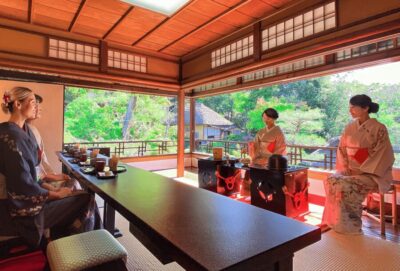
Tea Ceremony in a Traditional Tea House in Kiyomizu
Read our review →
Kyoto Geisha Walking Tour: Gion District & Hidden Gems
Read our review →

Gion Magical Night Walking Tour with Geisha Trivia
Read our review →

Gion Geisha District Walking Tour – Stories of Geisha
Read our review →
Best of Kyoto: Gion, Geisha, Pagodas & Cobblestones
Read our review →