
REVIEW · KIMONO & CULTURE EXPERIENCES
Calligraphy Workshop in Namba, Dotonbori
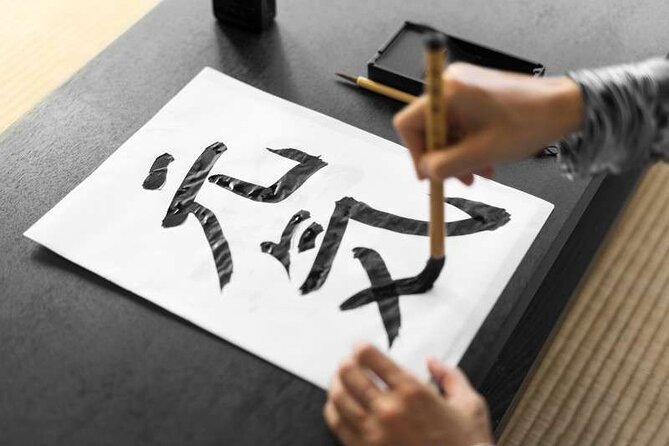
The best part of this Namba calligraphy workshop is that you do not simply copy attractive Japanese characters. You learn what shodo means, practice brush and ink technique, and write your own name in kanji or katakana. The finished piece gives you a personal souvenir rather than another shop-bought trinket.
I like the small maximum of six participants, which leaves room for patient instruction and questions. I also like the calm, focused pace: two hours gives you time to hear about Japanese culture, practice several times, and make a name card or luggage tag to take home.
The main consideration is the meeting point. It is near Namba’s major sights, but the class is inside a building, and one participant suggested clearer signage near the nail salon sign and elevator. Give yourself extra time to find the third-floor room.
In This Review
- Key points
- Why a name written in kanji makes a better souvenir
- Starting in Namba, close to Osaka’s best food streets
- The first lesson: what shodo is really about
- Practicing kanji with brush and ink
- Creating your handwritten name souvenir
- A peaceful two hours in the middle of Osaka
- How the $49.54 price compares with the experience
- Who will get the most from this class
- Planning the class around Dotonbori and Kuromon Market
- Should you book the Namba calligraphy workshop?
- FAQ
- How long does the calligraphy workshop last?
- Where does the activity begin and end?
- Is the workshop suitable for beginners?
- How many people can join the class?
- What will I make during the workshop?
- Can I cancel for a full refund?
Key points
- Write your own name in Japanese: Choose kanji or katakana and take home a personal handwritten keepsake.
- Small class size: The activity accepts a maximum of six people, making one-to-one help more likely.
- Instruction for complete beginners: The teacher explains brush handling and character strokes step by step.
- Cultural context included: You learn about shodo, kanji, and the meaning behind the writing, not just the motions.
- Useful Namba location: Dotonbori, Nihonbashi, and Kuromon Market are close enough to pair with the class.
- A quiet break in central Osaka: The workshop offers a focused two-hour pause from the noise and movement of downtown.
Why a name written in kanji makes a better souvenir
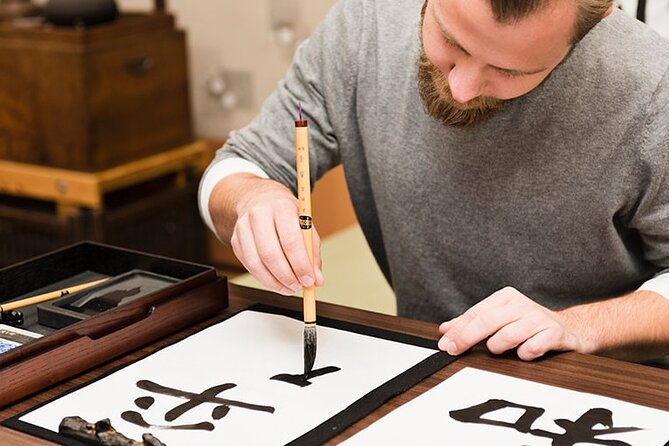
Many Japanese souvenirs are easy to buy but quickly blur together. A name you write yourself has a different weight. It records your trip in your own hand, even if the brushwork is uneven and the first few attempts look more like practice than art.
The class teaches you to write your name in Japanese using kanji or katakana. Kanji can carry meaning, while katakana is commonly used for foreign names. The important point is that you are not just tracing a decorative symbol. You get help understanding what you are writing and why the characters look the way they do.
The final piece may go on colored paper or a luggage tag. That makes the result easy to pack and display. It is also a good choice if you want something personal for a child, partner, parent, or friend at home.
More Kimono & Culture Experiences in Osaka
- Osaka: Sumo Show & Experience w/ Optional Kimono & Hot Pot
★ 4.5 · 609 reviews - Samurai Training Experience KENDO in Osaka
★ 5.0 · 515 reviews - OSAKA NIGHT FUSION Japanese Taiko Kabuki Samurai Dance Show
★ 4.8 · 155 reviews
Starting in Namba, close to Osaka’s best food streets
The meeting point is at Isku English Academy Japan, 3F, Takeda Building, 1-6-1 Nanbanaka, Naniwa Ward, Osaka 556-0011. The class begins and ends there, so you do not need to arrange a second pickup or find your way across the city afterward.
This is a practical location for a day in central Osaka. Dotonbori, Nihonbashi, and Kuromon Market are nearby, giving you several easy ways to build a half-day around the activity. You could eat at Kuromon Market before class, walk through Dotonbori afterward, or use the workshop as a quieter middle stop between sightseeing and dinner.
The address is near public transportation, but the exact room is less obvious than a street-front shop. Look for the building and allow a few spare minutes to locate the entrance and elevator. Since the class is on the third floor, arriving at the last moment could leave you rushed before the quiet work begins.
The first lesson: what shodo is really about
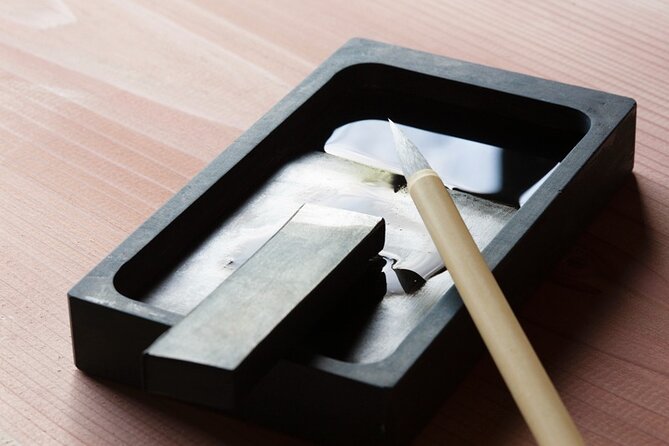
The workshop starts with an introduction to Japanese calligraphy and the place of shodo in Japanese culture. This matters because brush calligraphy is not simply handwriting with a different tool. The pressure, speed, order, and shape of each stroke affect the character.
You first get an explanation of the basic ideas and techniques before working on your own writing. The instructor then guides you through the process step by step. English-speaking support is available, and several sessions have included an instructor named Nao with an interpreter or class helper named Stephen or Stephan.
That language support is important for this activity. A calligraphy lesson can be frustrating if you only receive a quick demonstration and cannot ask why a stroke should begin or finish in a certain way. Here, the format is designed to make the cultural explanation part of the class, not an optional extra.
You should still expect a challenge. Brush control looks simple until you try to keep the ink, pressure, and direction under control at the same time. The class is friendly and patient, but it does not turn calligraphy into a five-minute photo opportunity.
Practicing kanji with brush and ink
After the introduction, you begin practicing. The teacher shows you how to approach the characters, then you repeat the strokes and receive corrections. This is where the small group limit makes a real difference. With no more than six people, the instructor can pay attention to individual technique instead of delivering one long demonstration to a crowd.
Families appear to be especially well suited to this section. Children aged nine and eleven have taken part successfully, and a family with four teenagers found the session both fun and more difficult than it looked. The class gives younger participants something active to do, but it also asks for concentration.
That mix works well. You are using your hands, listening closely, and learning a small piece of Japanese culture at the same time. The calm atmosphere also makes this a useful change of pace after busy streets, shopping arcades, and food markets.
If you have never used a calligraphy brush, do not expect a polished masterpiece on your first sheet. The value is in seeing how the writing develops. By the end, you may surprise yourself, but the class is not promising professional-level work in two hours.
Same city, a completely different kind of day:
- Osaka Go Karting Tour with Funny Costume
★ 5.0 · 2,658 reviews - Osaka Castle: Museum and Tower Entry Ticket
★ 4.5 · 2,380 reviews - Osaka: Shinsekai Food Tour with 13-15 Dishes at 5 Eateries
★ 4.8 · 2,204 reviews - Osaka Food Tour: 13 Dishes at 5 Local Eateries
★ 5.0 · 2,149 reviews
Creating your handwritten name souvenir
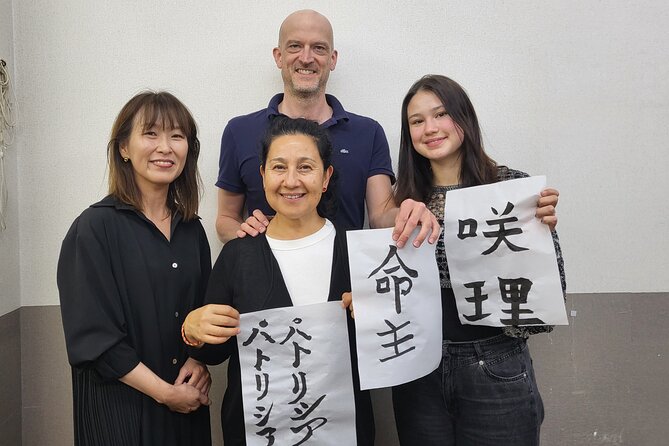
The personal name project is the heart of the workshop. Once you have practiced the characters and gained some control over the brush, you prepare your own name in Japanese. You can write it in kanji or katakana, with the instructor helping you understand the result.
This final stage gives the lesson a clear purpose. Instead of practicing random characters and leaving empty-handed, you produce something connected to your identity and your time in Osaka. The name can be placed on colored paper or a luggage tag, creating a small object you can carry home.
I would treat this as a keepsake, not a perfect art print. The character of the souvenir comes from the fact that you made it during a lesson. Slight variations in ink and brush pressure are part of the story. If you are traveling with children, writing each person’s name also gives the family a shared project without requiring everyone to produce identical work.
The instructor’s guidance is particularly useful here. Japanese names do not always translate neatly into kanji, so you will want help choosing an appropriate form and understanding its meaning. The class information specifically includes learning your name in kanji or katakana, but it does not promise a particular character choice in advance.
A peaceful two hours in the middle of Osaka
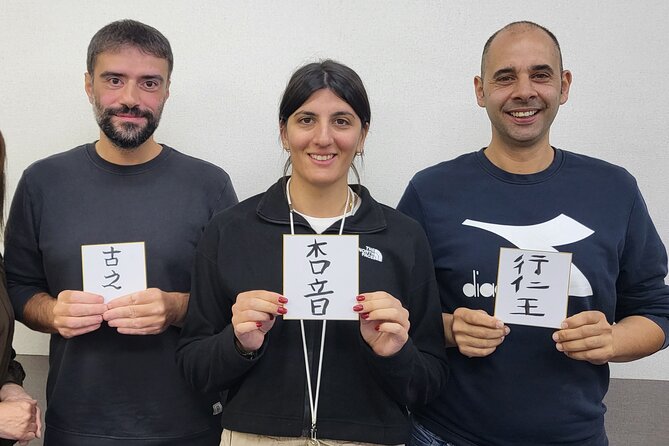
Namba is one of Osaka’s most energetic areas, yet the workshop itself is described as peaceful and relaxing. That contrast is part of its appeal. You can spend the morning among signs, restaurants, crowds, and market stalls, then sit down with ink and paper and focus on one stroke at a time.
The two-hour length feels useful rather than padded. You have enough time for cultural background, instruction, practice, and the final name piece. Several participants found the time passed quickly, which is a good sign for anyone worried that a traditional art lesson might feel slow.
Still, calligraphy asks you to concentrate. If you want a quick activity with constant movement, this may feel too quiet. If you enjoy making things, learning through repetition, or having a thoughtful break from sightseeing, the pace should suit you.
The class also works well near the end of a Japan trip. It offers a final chance to learn something hands-on and leaves you with a memory you can keep, rather than only photographs.
How the $49.54 price compares with the experience
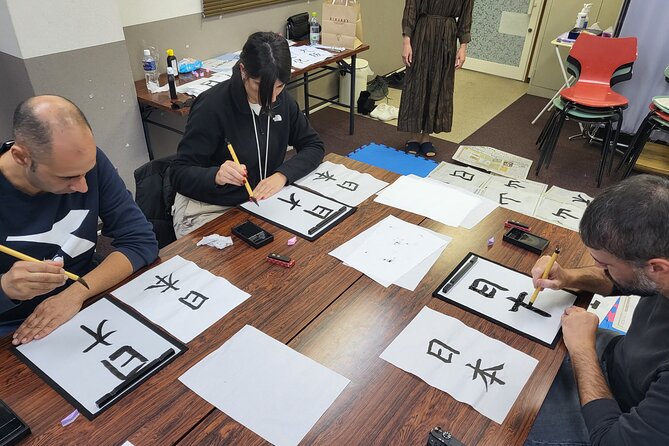
At $49.54 per person, this is not the cheapest short activity in Osaka. You are paying more than the cost of simply visiting a market or buying a calligraphy print. The better question is what you receive for the money.
The package includes about two hours of guided instruction, cultural explanation, practice with brush and ink, help with a Japanese name, and a handmade souvenir. The group cap of six is also meaningful. A private class would normally cost more, while a large demonstration would provide less individual attention.
For a family, the price adds up quickly, so compare it with what each person will actually use. Children and teenagers who enjoy hands-on activities are likely to get more from it than someone who only wants a quick souvenir. Adults interested in Japanese writing, language, or craft will probably find the personal instruction worthwhile.
I see the strongest value in the combination of teaching and finished piece. If you only want a name tag, you can buy one cheaply. If you want to understand the writing and make it yourself, the workshop offers a fair use of two hours in a central Osaka location.
Who will get the most from this class
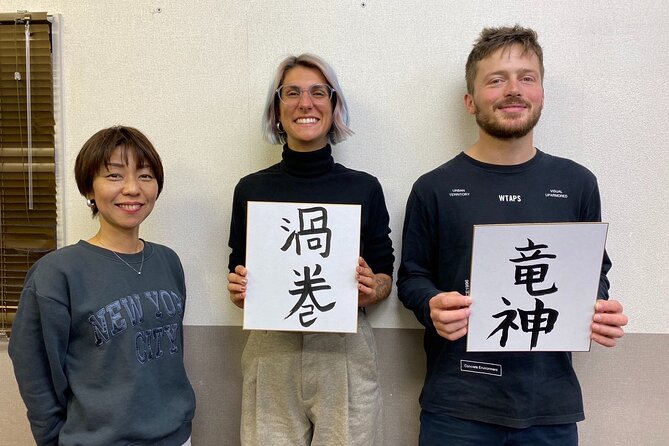
This experience fits first-time visitors who want a cultural activity without spending half a day outside Osaka. It is also a good match for families, couples, and solo participants who like small-group instruction.
You do not need previous calligraphy experience. The teaching is designed for beginners, and the instructor explains the process carefully. Several participants also found the English communication helpful, with an interpreter supporting the lesson.
I would recommend it to you if you like:
- Making a souvenir with your own hands
- Learning the meaning behind Japanese characters
- Small classes with room for questions
- Quiet activities that require concentration
- Pairing a class with Dotonbori, Nihonbashi, or Kuromon Market
You may want to choose another activity if you dislike sitting still, have no interest in writing, or want a broad sightseeing tour of Osaka. This is a focused workshop, not a general introduction to Namba.
Most people can participate, and the location is near public transportation. The supplied information does not give detailed accessibility specifications, so contact the provider if you need specific information about the third-floor room, elevator, or seating.
Planning the class around Dotonbori and Kuromon Market
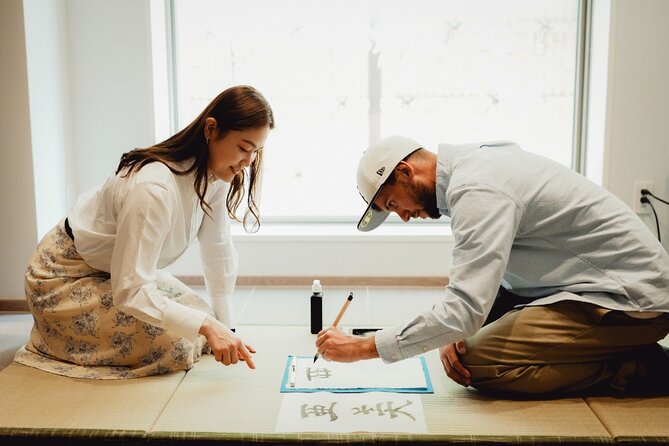
The class is easy to fit into a day because it returns to the same meeting point. Plan your surrounding activities by neighborhood rather than crossing Osaka before and after the lesson.
Kuromon Market is a natural choice before or after the workshop if you want food and a lively local shopping area. Nihonbashi adds another nearby stop, while Dotonbori is convenient for evening dining and neon-lit canal views. These places can be busy, so the calligraphy session gives your schedule a useful quiet center.
I would not schedule a long-distance train immediately after class. The activity is listed as approximately two hours, and you may want a few minutes for photographs, packing your artwork, and finding your way back to the station. The experience ends at the meeting point, with no separate drop-off.
Book ahead if your Osaka dates are fixed. The activity is booked on average 38 days in advance, and the small group limit means there are fewer places per session than at a large class. Confirmation is provided at booking, and the mobile ticket makes entry simple once you have found the building.
Free cancellation is available up to 24 hours before the local start time for a full refund. Changes or cancellations inside that 24-hour window are not accepted for a refund. If the minimum number is not reached and the class is canceled, you are offered another date or experience, or a full refund.
Should you book the Namba calligraphy workshop?
Book it if you want a personal Japanese souvenir and a real introduction to shodo, not just a quick demonstration. The small class, patient instruction, cultural explanation, and name-writing project give the two hours a clear purpose.
I would especially choose it for a family, a couple, or a solo visitor with an extra morning or afternoon in Osaka. Allow time to find the third-floor meeting room, and plan Dotonbori, Nihonbashi, or Kuromon Market nearby.
Skip it if your schedule is packed with major sights or if brush practice sounds like work rather than fun. For everyone else, the $49.54 cost is reasonable for guided instruction, a small group, and a keepsake that carries your own handwriting home from Japan.
FAQ
How long does the calligraphy workshop last?
The workshop lasts approximately two hours.
Where does the activity begin and end?
It begins and ends at Isku English Academy Japan, 3F, Takeda Building, 1-6-1 Nanbanaka, Naniwa Ward, Osaka 556-0011. The activity ends back at the meeting point.
Is the workshop suitable for beginners?
Yes. A Japanese calligraphy instructor provides detailed, step-by-step instruction, and previous experience is not required.
How many people can join the class?
The activity has a maximum of six participants.
What will I make during the workshop?
You will practice Japanese calligraphy and write your own name in kanji or katakana. The final name can be made on colored paper or a luggage tag as a handwritten souvenir.
Can I cancel for a full refund?
Yes. You can cancel at least 24 hours before the local start time for a full refund. Cancellations or changes made less than 24 hours before the start time are not refunded or accepted.
More Workshops in Osaka
- Sushi Making Osaka Roll and Authentic Japanese Sushi Class
★ 5.0 · 1,220 reviews - Matcha Making Class in Osaka with Authentic Japanese Sweets Set
★ 5.0 · 509 reviews - Osaka: Ramen and Gyoza Cooking Class in Dotonbori
★ 5.0 · 378 reviews - Osaka Sushi Making Class – Hands-On Nigiri & Rolls (Same-Day OK)
★ 5.0 · 352 reviews
Just added around Osaka
- Samurai dress-up and shows, plus Tea Ceremony & Calligraphy★ 5.0 · 27 reviews
- Kyoto & Nara Private customized tour with English speaking Guide★ 4.5 · 99 reviews
- Well-balanced BENTO (lunch box) Cooking Class★ 5.0 · 35 reviews
- Urban Canvas: Osaka Street Art Bike Tour★ 5.0 · 47 reviews
- OSAKA:Feel the Power! Learn Taiko Drum from Professionals★ 5.0 · 28 reviews
- Volleyball in Osaka & Kyoto with Locals!★ 5.0 · 21 reviews
- Three Types of Ramen Cooking Class in Osaka★ 5.0 · 119 reviews
- 1.5〜2 Hours Traditional Kintsugi Work Shop in Namba Osaka★ 5.0 · 75 reviews
Kimono & Culture Experiences, compared.

Kyoto Geisha Walking Tour: Gion District & Hidden Gems
Read our review →
Gion Magical Night Walking Tour with Geisha Trivia
Read our review →
Gion Geisha District Walking Tour – Stories of Geisha
Read our review →
Best of Kyoto: Gion, Geisha, Pagodas & Cobblestones
Read our review →
Kyoto Gion Geisha District Walking Tour – The Stories of Geisha
Read our review →
Browse the lists this tour appears in