
REVIEW · KIMONO & CULTURE EXPERIENCES
Samurai Training Experience KENDO in Osaka
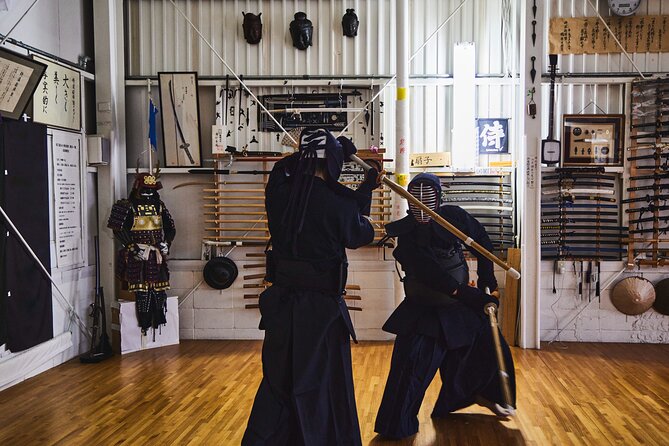
You do not just pose beside a samurai costume here. You step into a real dojo, put on a kendo uniform and protective armor, grip a bamboo sword, and learn enough technique to face a short match. The dojo also functions as a small museum, so the session connects the physical work with samurai objects and traditions.
I like the small class size, which gives Toshi and his assistant room to correct your stance and adjust the pace. I also like the practical finish: your photos and videos are sent digitally, so you leave with more than a sweaty memory and a blurry phone picture.
The main consideration is the price, $131.32 per person for about two hours. That is not a cheap activity, especially for a family, and kendo is physical once the armor and drills begin. Still, the instruction, equipment, private facilities, and personal attention make it a stronger value than a quick costume photo session.
In This Review
- Key points before you book
- Arriving at the Osaka dojo
- The opening lesson on samurai and Bushidō
- Changing into an authentic kendo uniform
- Learning stance, footwork, and basic strikes
- The armor session and supervised sparring
- Photos, videos, and the dojo museum
- What the $131.32 price delivers
- Who will enjoy this most
- Practical tips for a smoother session
- Should you book Samurai Training Experience KENDO in Osaka?
- FAQ
- Where does the kendo experience take place?
- How long does the experience last?
- What is the price?
- Do I need prior kendo experience?
- Is the experience conducted in English?
- Will I wear kendo armor?
- Are photos and videos included?
- Can young children participate?
Key points before you book
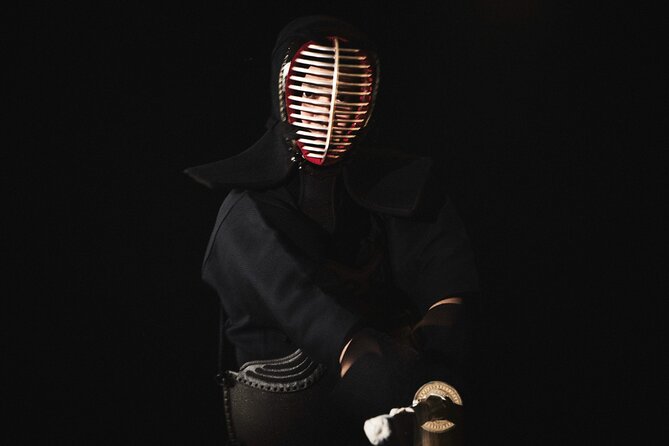
- Real dojo setting: Train in an operating kendo space with samurai artifacts and memorabilia.
- Hands-on instruction: Learn stance, footwork, strikes, combinations, and match manners with a bamboo shinai.
- Toshi and his teaching team: English instruction is supported by an assistant who explains samurai culture and helps guide beginners.
- Armor and photographs included: Dress in authentic kendo gear and receive digital photos and videos afterward.
- Small maximum group: The class accepts no more than 12 people, with smaller sessions possible.
- Family-friendly flexibility: Children aged 3 to 5 focus on wearing the uniform and armor safely and taking photos.
Arriving at the Osaka dojo
The meeting point is at 1-chōme-18-2 Honjōhigashi in Osaka’s Kita Ward. The activity begins and ends there, so you do not need to arrange a second pickup point or work out a return transfer after training.
The dojo is described as being in central Osaka and near public transportation. You should still allow time to find the entrance, particularly if you are moving through Osaka with children or carrying luggage. A mobile ticket is used, and booking confirmation arrives at the time of reservation.
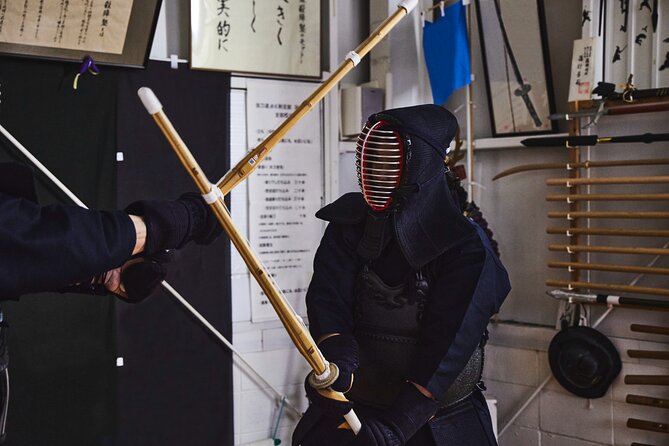
The first impression matters here. This is a clean, well-maintained training room rather than a theme-park set. Displays of samurai artifacts and memorabilia give you something to examine before and after class. They also help explain why kendo is more than theatrical swordplay.
The room has air conditioning and heating, which is useful because you may be wearing several layers of equipment while working hard. Changing rooms and showers are available. That last detail is easy to overlook when planning a two-hour activity, but it makes a real difference if you have sightseeing plans afterward.
More Kimono & Culture Experiences in Osaka
- Osaka: Sumo Show & Experience w/ Optional Kimono & Hot Pot
★ 4.5 · 609 reviews - OSAKA NIGHT FUSION Japanese Taiko Kabuki Samurai Dance Show
★ 4.8 · 155 reviews - Osaka: Samurai Training Experience KENDO in Osaka
★ 5.0 · 111 reviews
The opening lesson on samurai and Bushidō
The session begins with an introduction to kendo, samurai culture, and Bushidō. The history portion is brief enough to keep the class moving, but substantial enough to give the exercises a purpose.
Kendo developed from older Japanese fighting methods associated with the samurai. In this setting, the historical discussion is not separated from the physical lesson. Ideas such as discipline, respect, correct posture, and formal manners appear again when you begin training.
That context is one of the best reasons to choose this experience over a simple dress-up activity. You learn why participants bow, how they prepare themselves before practice, and why precision matters even when using a safe bamboo sword.
Toshi leads the training, with assistance from his wife, Kumiko. The supplied information also identifies an assistant or translator in some sessions, so the exact teaching arrangement may vary. The important point is that the activity is conducted in English and designed for people who have never studied kendo.
You can ask questions during the explanation, and the instructors work with beginners rather than assuming you already understand martial arts terminology. That makes the early part useful for families, solo participants, and couples arriving with different levels of interest.
Changing into an authentic kendo uniform
After the introduction, you change into kendo clothing and protective equipment. The uniform is not just a costume for the camera. It is part of the training, and wearing it helps you understand how the sport is practiced.
The protective armor gives the experience its dramatic turn. You move from listening to history to preparing for strikes, and the class starts to feel like a proper lesson. The equipment is provided, and changing rooms are available for getting ready without rushing.
The outfit can feel warm once you begin moving. That is where the air conditioning becomes valuable. If you are not used to physical activity in layered equipment, take water when it is offered and tell the instructors if you need the pace adjusted.
The teaching style is encouraging but not empty. You are expected to learn the correct manners and movements, yet beginners are not treated as if they should already know what they are doing. Families have used the session as a birthday activity, and children have taken to the final practice match with enthusiasm.
For children aged 3 to 5, the emphasis is different. They focus on putting on the uniform and armor safely and taking photographs. Do not book this expecting a full technical lesson for a preschool child.
Learning stance, footwork, and basic strikes
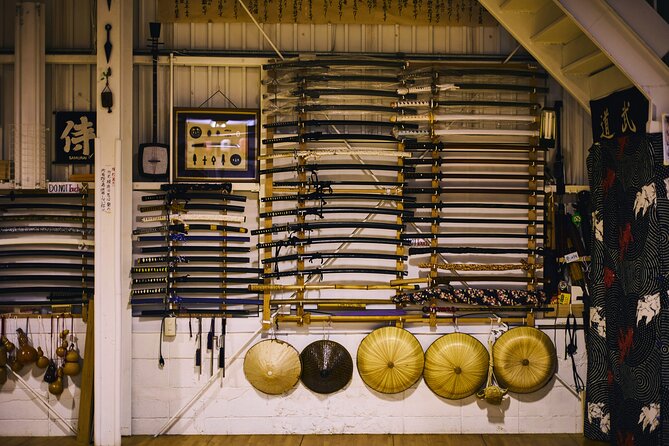
The instructional section covers the fundamentals of kendo. You learn how to stand, hold the shinai, move your feet, and make basic strikes. The class can also include combinations, counters, and other movements as your group progresses.
This is where the activity becomes a modest workout. You are not simply swinging a sword for photographs. Correct footwork and body position require concentration, and repeated strikes can leave you warm and tired.
I appreciate that the lesson builds in stages. Beginners first practice movements without the pressure of an opponent. Once the instructors see that you understand the basics, they can introduce more active drills and match-style practice.
The pace can be adjusted. If you want a relaxed cultural activity, you can focus on learning the form and traditions. If you enjoy martial arts and want more intensity, the instructors may make the exercises more demanding, as long as it remains safe and suitable for your ability.
Do not confuse a two-hour introduction with professional kendo training. You will not master the art in one visit. What you can gain is a clear first taste of its structure, etiquette, physical demands, and focused rhythm.
That distinction is useful when comparing this with a longer martial arts course. The value here is access and immediacy. You can try a difficult-to-access Japanese tradition during a short Osaka visit without committing to weeks of lessons.
Same city, a completely different kind of day:
- Osaka Go Karting Tour with Funny Costume
★ 5.0 · 2,658 reviews - Osaka Castle: Museum and Tower Entry Ticket
★ 4.5 · 2,380 reviews - Osaka: Shinsekai Food Tour with 13-15 Dishes at 5 Eateries
★ 4.8 · 2,204 reviews - Osaka Food Tour: 13 Dishes at 5 Local Eateries
★ 5.0 · 2,149 reviews
The armor session and supervised sparring
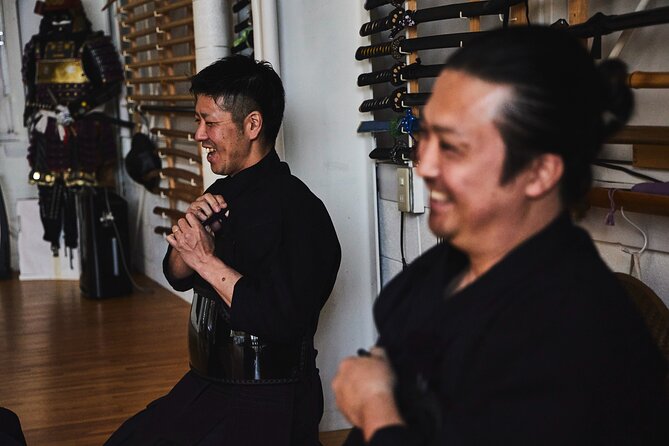
The most anticipated part is the match-style session. After learning the basic techniques, you face another participant under the instructors’ direction. Couples, friends, and siblings can practice against one another, which adds a playful edge to the class.
The bout is supervised, so the emphasis remains on safe movement and correct technique rather than simply hitting as hard as possible. You learn how to approach a duel properly, including the manners associated with kendo.
This section can be physical, but it does not have to become an all-out contest. Tell the instructors what you want from the experience. They can keep it gentle for a family group or make it more challenging for people with a strong interest in martial arts.
Some sessions finish with a chance to face Toshi himself. That is optional in spirit, but it can be a memorable way to understand the speed and control of an experienced practitioner. Do not expect to score an easy victory. The point is to feel the difference between a beginner who has just learned the basics and someone who has spent years refining them.
The activity is structured enough to keep the sparring safe, but you should still consider your own fitness and comfort. Anyone with an injury or concern about physical exertion should think carefully before booking. The supplied details say most people can participate, but that is not the same as promising a completely effortless class.
Photos, videos, and the dojo museum
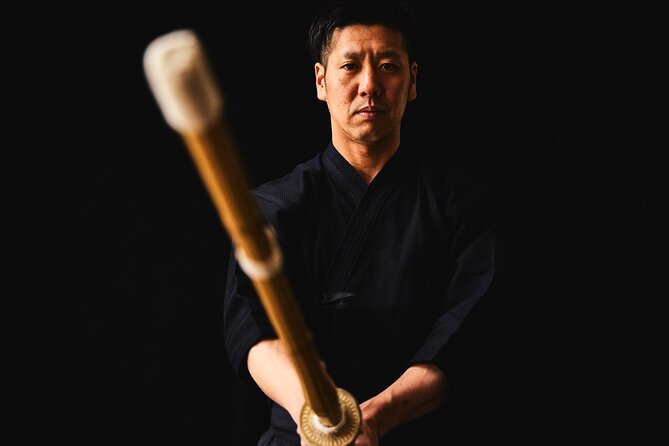
The photographic part is handled better than at many cultural activities because it follows the training rather than replacing it. Once you are dressed in the uniform and armor, you can pose in the dojo and take photographs with the equipment and displays around you.
The instructors also record parts of the practice and matches. Digital photos and videos are provided as a souvenir, and the material is sent afterward. Several participants received it within about 24 hours, though you should treat that as a useful indication rather than a guaranteed delivery time.
This is especially handy for families. A parent can watch the children train instead of trying to hold a phone throughout the session, and the final match can be captured without someone missing the action.
The museum displays add a quiet moment to an active experience. You can look at samurai-related objects and memorabilia while connecting the equipment in front of you with older Japanese martial traditions. It is not a large museum visit, and you should not book this for an extensive collection. Think of it as a dojo with a thoughtful cultural display.
What the $131.32 price delivers
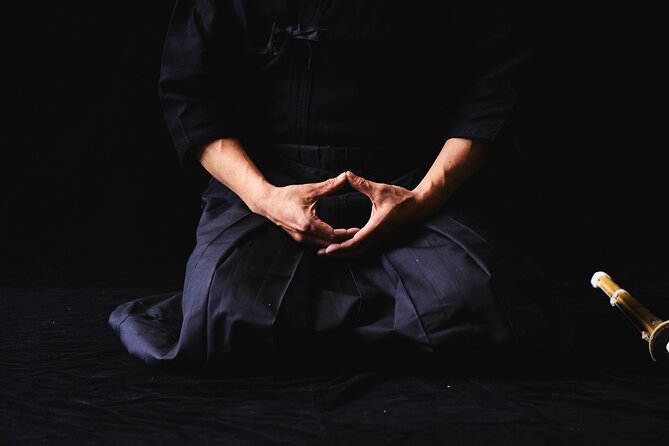
At $131.32 per person, this experience sits in the premium range for a two-hour Osaka activity. The cost is easier to justify if you place value on personal instruction, provided equipment, a real training venue, an English-supported lesson, and photos and videos afterward.
You are also paying for an activity that is difficult to reproduce independently. You could visit a museum for less, and you could take a costume photograph for less. You would not normally get a proper uniform, armor, guided technique lesson, supervised bout, samurai explanation, and digital recording in one short visit.
The value is strongest for people who want to take part rather than watch. Martial arts fans, history enthusiasts, families with older children, and couples looking for a shared activity will likely get more from it than someone seeking only a quick picture.
For a group of four, the total cost becomes significant. I would compare it with the price of other major Osaka activities and decide if the personal nature of the session matters to you. A small class can make the fee worthwhile, especially when the group is not full and you receive more direct feedback.
The free cancellation policy reduces some booking risk. You can cancel up to 24 hours before the start time for a full refund. Changes or cancellations inside that 24-hour window are not accepted for a refund, and the cut-off follows local Osaka time.
Who will enjoy this most
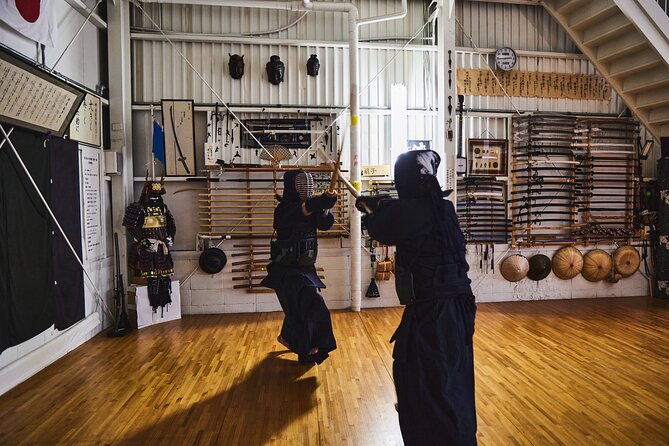
This is a good fit for first-time visitors who want a cultural activity with movement. You do not need prior kendo experience, and the English-language format removes much of the worry about following the lesson.
It also works well for families. Children who love samurai stories can wear the equipment, learn proper manners, and face a sibling or parent in a controlled match. For very young children, remember that ages 3 to 5 are limited to safe dressing and photographs rather than the full combat lesson.
Martial arts fans should find enough substance to make the session worthwhile. You will learn more than a staged sword routine, and you may have the chance to test yourself against the instructor. History buffs will appreciate the opening explanation and the dojo displays.
Solo participants should not feel they need to bring a partner. The class can operate with one participant, in which case you may receive one-on-one instruction. That can be a particularly good value for someone who wants close correction and has a strong personal interest in kendo.
It is less suitable if you dislike dressing up, physical activity, or structured etiquette. It is also not the best choice if you want a long academic lecture on samurai history. The history is there to frame the training, not to fill the entire two hours.
Practical tips for a smoother session
Wear comfortable clothing underneath the uniform and arrive ready to change. You will be moving, so avoid treating this like a formal museum visit.
Plan your day around the activity rather than squeezing it between two tight reservations. The class lasts about two hours, and changing, photographs, questions, and the final match all take time.
Keep your phone available for the mobile ticket, but do not plan to film the whole lesson yourself. The instructors take photos and videos, allowing you to concentrate on learning.
If you are visiting as a family, be honest about each person’s comfort level. The session can be relaxed or more physical, and the instructors can adjust it. Children may enjoy the armor and the match, but small children have a different program.
After training, you may want to use the shower before continuing around Osaka. Drinks and snacks have been provided at the end of some sessions, though these should be viewed as a pleasant extra rather than the main reason to book.
Should you book Samurai Training Experience KENDO in Osaka?
I would book this if you want a hands-on cultural experience and the price fits your Osaka budget. The real dojo, attentive instruction, armor, supervised sparring, museum displays, and digital keepsakes give the two hours a clear sense of purpose.
The strongest reason to go is the balance between tradition and participation. You hear about samurai values, then put your feet into the stance, learn the strikes, and test the result in a safe match. That makes the culture easier to understand than a passive display.
Skip it if you want a low-cost sightseeing stop, a long history seminar, or a completely gentle activity. For everyone else, especially families, solo visitors, couples, and martial arts fans, this is one of Osaka’s more distinctive ways to spend an afternoon.
FAQ
Where does the kendo experience take place?
It takes place at 1-chōme-18-2 Honjōhigashi, Kita Ward, Osaka, 531-0074, Japan. The activity ends back at the same meeting point.
How long does the experience last?
The session lasts approximately two hours.
What is the price?
The listed price is $131.32 per person.
Do I need prior kendo experience?
No. The activity is beginner-friendly and teaches basic kendo techniques in a single lesson.
Is the experience conducted in English?
Yes. The experience is conducted in English, with an assistant helping explain the lesson and samurai culture.
Will I wear kendo armor?
Yes. You change into an authentic kendo uniform and protective armor before practicing with a bamboo sword called a shinai.
Are photos and videos included?
Yes. Digital photos and videos of the experience are provided as a souvenir.
Can young children participate?
Children aged 3 to 5 focus on wearing the uniform and armor safely and taking photographs. Most travelers can participate, and the maximum group size is 12 people.
Just added around Osaka
- (Ticket Included) Explore Osaka Castle & Museum of History★ 4.8 · 21 reviews
- Hidden Osaka – Yukaku Red Light Tour & Culinary Adventure★ 4.8 · 96 reviews
- Osaka: Walking Tour and Top Highlights★ 4.8 · 104 reviews
- Osaka: Private Ceramic Painting Workshop★ 5.0 · 13 reviews
- Pickleball in Osaka, Kobe & Kyoto with Locals!★ 4.7 · 80 reviews
- Eat Like a Local in Osaka – Private Custom Street Food Tour★ 4.3 · 33 reviews
- Osaka:SUMO BEATS SHOWCASE: Taiko Drum and Wagyu burger!★ 4.2 · 37 reviews
- Kimono photoshoot-Includes 100 photo data★ 5.0 · 21 reviews
Kimono & Culture Experiences, compared.
Kyoto Geisha Walking Tour: Gion District & Hidden Gems
Read our review →
Gion Magical Night Walking Tour with Geisha Trivia
Read our review →
Gion Geisha District Walking Tour – Stories of Geisha
Read our review →
Best of Kyoto: Gion, Geisha, Pagodas & Cobblestones
Read our review →
Kyoto Gion Geisha District Walking Tour – The Stories of Geisha
Read our review →
Browse the lists this tour appears in