
REVIEW · KIMONO & CULTURE EXPERIENCES
Asakusa Calligraphy Workshop Craft Your Own Art in Tokyo
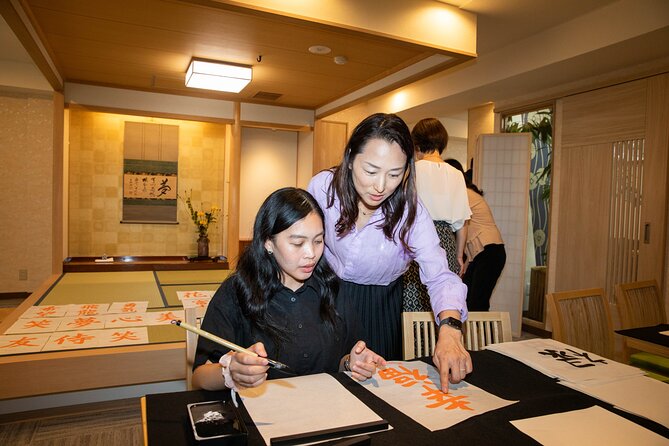
Japanese calligraphy is not just pretty writing. It is a careful study of pressure, rhythm, and restraint, and this 90-minute Asakusa workshop gives you time to try those ideas with real tools. You practice basic strokes, choose characters, and create artwork you can carry home.
I like the small maximum group of 10, since brush technique is hard to learn when an instructor cannot see your hand. I also like the mix of traditional brushes and a modern fude pen, which lets you compare classic brushwork with a tool that is easier to control.
The main drawback is the short schedule. One and a half hours is enough for an introduction and a finished keepsake, but not enough to develop polished calligraphy. Arrive early, too. If you miss part of the lesson, the instructor may need to shorten your session.
In This Review
- Key points to know before booking
- Why this Asakusa class is worth your time
- Meeting at the Tokyo Tourist Lounge
- Starting with brush grip and stroke order
- Choosing characters for your own artwork
- Comparing traditional brushes with a fude pen
- What you take home from the 90-minute session
- The value at $40 per person
- Instructor Mei and the importance of arriving on time
- Who will enjoy this calligraphy experience
- Booking, cancellation, and practical planning
- Should you book the Asakusa calligraphy workshop?
- FAQ
- How long does the calligraphy workshop last?
- How much does the experience cost?
- Where does the workshop meet?
- Where does the activity end?
- What does the class teach?
- Can I choose which characters to write?
- What is included in the price?
- Is bottled water included?
- How many people can join the class?
- Can most people take part?
- Is a mobile ticket available?
- Can I cancel for a full refund?
Key points to know before booking
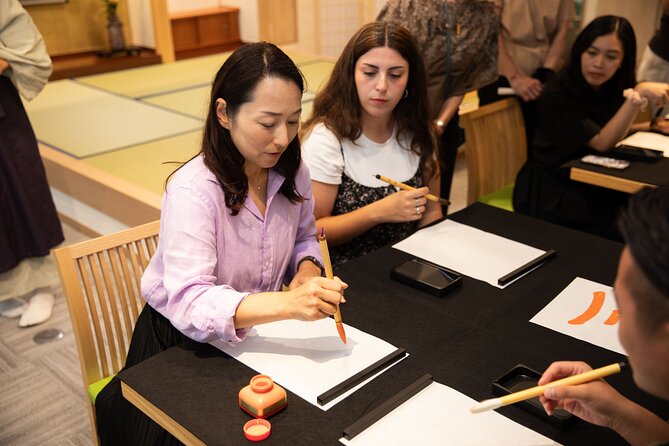
- Practice real brush technique: Learn grip, pressure, control, and stroke order instead of simply copying a finished character.
- Use two writing tools: Try traditional calligraphy brushes and a modern fude pen for a different feel and greater control.
- Choose your own characters: The class gives you room to make a personal piece rather than handing you one fixed design.
- Keep your finished work: Your calligraphy and special souvenirs give you a meaningful Tokyo memento.
- Meet in central Asakusa: The class begins and ends at the Tokyo Tourist Lounge near Kaminarimon.
- Expect personal help: Groups are capped at 10, and instructor Mei has shown patience with guests who arrive late.
Why this Asakusa class is worth your time
Asakusa is one of the best places in Tokyo for a traditional cultural activity. The district is known for its old temple quarter and the Kaminarimon area, so a calligraphy class fits the setting better than a generic craft session in a business district.
You do not need previous experience. The class starts with the basics, including how to hold the brush, how to guide it across the paper, and how stroke order affects the final character.
That last point matters. Japanese characters are not built by drawing random lines until the shape looks right. The order, direction, and pressure of each stroke help create the form. A skilled teacher can show you small hand movements that are difficult to pick up from a book or video.
I like this kind of workshop because the finished piece has a link to the process. You are not simply buying a souvenir with Japanese writing on it. You are learning how the marks are made, then producing your own version.
More Kimono & Culture Experiences in Tokyo
- Tokyo: Samurai Ninja Museum Guided tour and Experience
★ 4.6 · 1,010 reviews - Tokyo: Samurai Sword & Archery Class from Samurai Descendant
★ 5.0 · 603 reviews - Best Samurai Experience in Tokyo
★ 5.0 · 458 reviews
Meeting at the Tokyo Tourist Lounge
Your meeting point is the Tokyo Tourist Lounge Asakusa, at 5F, 2-18-15 Kaminarimon, Taito-ku, Tokyo 111-0034. The activity begins and ends at this same location.
The meeting point is near public transportation, which makes it practical to fit into a day of sightseeing. Still, allow time to find the building and reach the fifth floor. Asakusa can be busy around the major sights, and arriving at the last minute leaves little room for a wrong turn.
The experience includes entrance to the activity and use of the Tokyo Tourist Lounge service at no charge. Bottled water is not included, so bring your own if you want a drink during the session.
The mobile ticket is useful for a phone-based booking, but keep your confirmation easy to find. You will receive confirmation at the time of booking.
Starting with brush grip and stroke order
The opening part of the class focuses on control. You learn how to hold the brush and work through basic strokes before attempting a complete character.
For a beginner, this is the most useful part of the lesson. The brush responds differently depending on pressure, angle, and speed. Press too hard and the line may spread. Move too quickly and it may look thin or uneven. The aim is not perfect handwriting at once, but a feel for how the brush behaves.
Stroke order gives the practice structure. Instead of worrying about making a beautiful finished piece right away, you can focus on one movement at a time. The instructor can correct your hand position and show you how to repeat the technique at home.
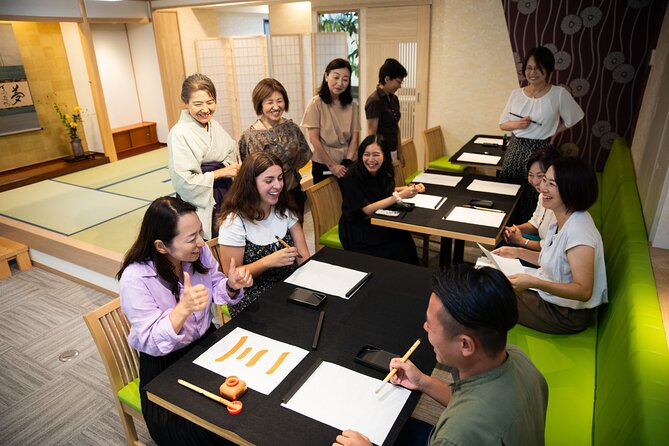
This is also where the small group limit earns its keep. With no more than 10 people, the instructor has a better chance to look at your work and offer individual guidance. It is still a group lesson, not a private class, so the amount of personal attention will depend on attendance and pace.
Choosing characters for your own artwork
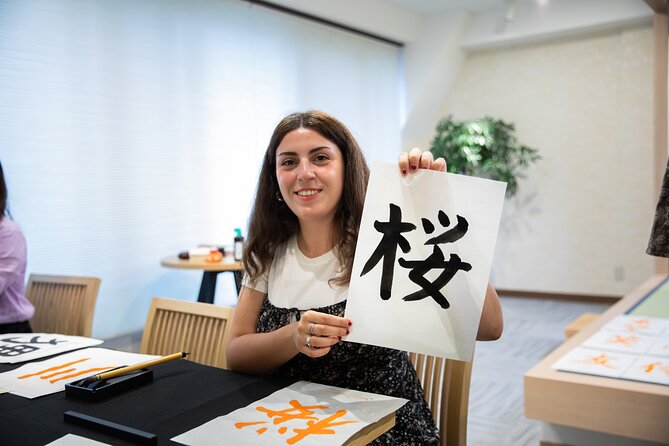
After the basic practice, you can choose from different characters to write. This gives the class a personal touch, since your final piece does not have to look exactly like everyone else’s.
The available choice is important for a souvenir. You might select a character because of its meaning, its shape, or simply because you like the way it looks. The supplied details do not specify a full character list or translation service, so ask the instructor about the meaning of any character you are considering before you commit it to your final work.
This stage also shows the difference between copying and creating. You are still following established calligraphy rules, but you have some control over the result. The final sheet reflects your choice and your hand, including the small imperfections that prove you made it yourself.
I would treat the first attempts as practice rather than throwaway failures. The class is designed to teach technique, and your early strokes help you understand what to change before creating the piece you want to keep.
Same city, a completely different kind of day:
- Mt Fuji and Hakone 1-Day Bus Tour Return by Bullet Train
★ 5.0 · 26,383 reviews - 1-Day Tokyo Bus Tour
★ 5.0 · 14,250 reviews - Tokyo: TOKYO SKYTREE® Admission ticket
★ 4.5 · 11,192 reviews - Tokyo: teamLab Planets TOKYO Digital Art Museum Entry Ticket
★ 4.6 · 9,779 reviews
Comparing traditional brushes with a fude pen
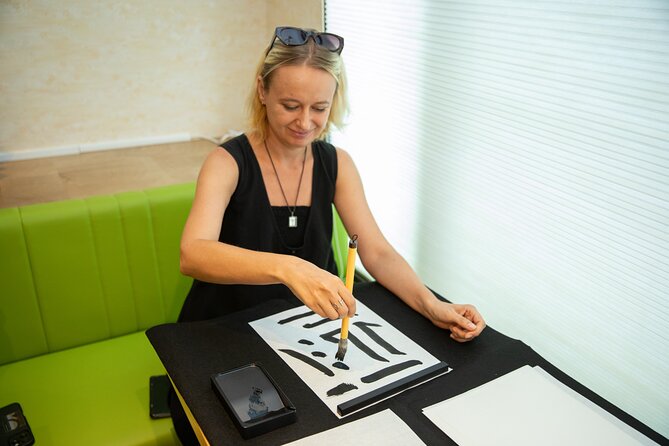
The workshop uses traditional brushes as well as a modern fude pen, also called a brush pen. This is one of the most practical parts of the experience.
A traditional brush gives you the classic feel of Japanese calligraphy. It responds to pressure and movement in a way that makes each stroke expressive. It can also be less forgiving for a first-time student, which is precisely why the instructor’s guidance is useful.
The fude pen offers more control. It is easier to handle and more convenient for home practice, especially if you do not want to keep a full calligraphy setup. You can see how the same basic ideas work with a modern tool.
I like the comparison because it keeps the class from being only a one-time performance. The brush offers the cultural experience, while the pen gives you a realistic way to continue practicing after you leave Tokyo.
The supplied information does not specify the exact materials you may take home beyond the calligraphy artwork and souvenirs. Ask the instructor which tools or practice materials are included if continuing at home is a major reason for your booking.
What you take home from the 90-minute session
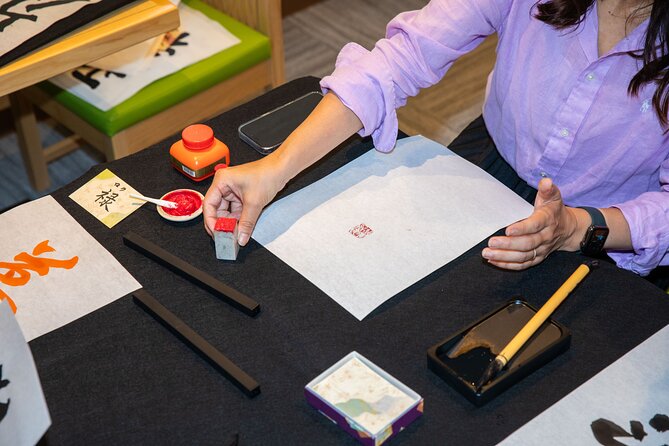
The key souvenir is your own calligraphy artwork. That makes this more personal than a standard purchased gift, and it is light enough to fit easily into most luggage.
You also receive special souvenirs as part of the experience. The details do not identify each item, so do not book expecting a particular product or type of packaging. The reliable takeaway is your finished calligraphy, along with the stated souvenirs.
The work may not look like professional calligraphy, and that is not a flaw. A first class is about learning the movement and making a piece with your own hand. If you want a flawless wall decoration, a shop-bought item may suit you better. If you want something tied to your time in Asakusa, this format has more meaning.
I would protect the artwork during the rest of your trip. The activity information does not state how it is packaged, so bring a folder or ask the instructor about safe transport if you plan to place it in checked luggage.
The value at $40 per person
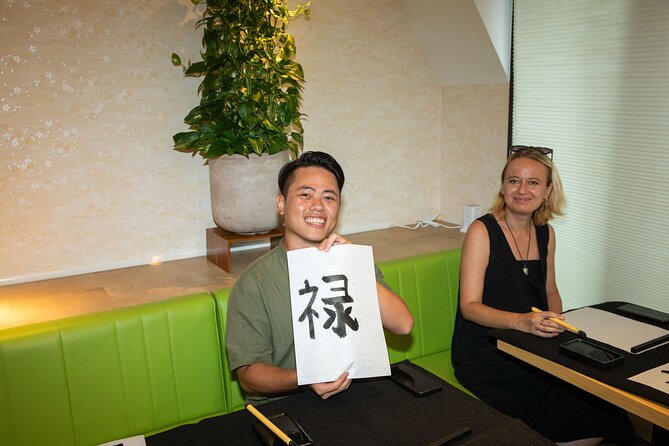
At $40 per person, this is priced as an accessible cultural workshop rather than a full-day guided activity. The session lasts about 1 hour and 30 minutes, includes instruction, entrance, souvenirs, and your finished work.
The value comes from direct teaching. You are paying for the chance to learn brush grip, pressure, and stroke order with an instructor watching the process. Those are the parts that online demonstrations cannot correct for your individual hand.
The group size also supports the price. A maximum of 10 people is not the same as a private lesson, but it is small enough to allow some access to the teacher. If the class reaches its maximum, you should expect shared instruction with individual help during practice.
This is a good buy if you want a focused activity between Asakusa sightseeing stops. It is less suitable if you expect an advanced course, a long lesson in Japanese language, or a professional-quality work of art.
The price does not include bottled water, though that is a minor cost in Tokyo. The main financial point is that the experience ends with something you made, not just a short demonstration.
Instructor Mei and the importance of arriving on time
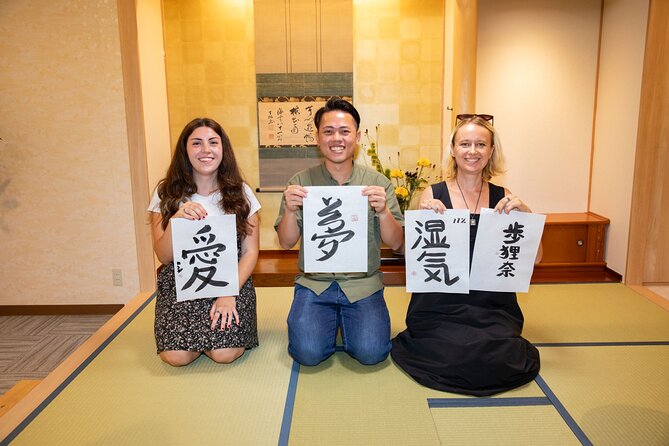
Instructor Mei is specifically associated with the class, and the experience depends on the quality of that one-on-one guidance. Her approach appears to include patience as well as technical instruction.
One guest arrived late after getting stuck in traffic. Mei waited and still provided a shortened session. That is a useful sign of flexibility, but it should not be treated as permission to arrive late. A shortened class means less time for practice and less time to create your final work.
Plan to reach the Tokyo Tourist Lounge before the starting time. Asakusa has several major landmarks, and a busy sightseeing area can make a simple meeting point take longer to reach than expected.
If an unavoidable delay occurs, contact the provider as soon as possible. The booking details do not promise a late start or a full replacement session.
Who will enjoy this calligraphy experience
This workshop suits first-time visitors who want a cultural activity with a clear result. It also works well for returning visitors who have already seen the major Asakusa sights and want to spend time making something.
Families and mixed-age groups may find the hands-on format appealing, though the supplied information does not state a minimum age. Most people can participate, but anyone with a specific mobility or hand concern should confirm details before booking.
It is a natural choice for people who like drawing, lettering, paper crafts, or small creative projects. You do not need to consider yourself artistic. The teacher begins with technique, and the class is built for beginners.
It is less suited to you if you want a quiet solo lesson with long periods of personal practice. A group of up to 10 creates a social class atmosphere. It is also not the right choice if you want a deep study of Japanese writing, calligraphy history, or advanced composition in one short visit.
Booking, cancellation, and practical planning
The experience offers free cancellation when you cancel at least 24 hours before the local start time. Canceling less than 24 hours ahead does not qualify for a refund, and changes made inside that window are not accepted.
That policy makes it smart to book once your Tokyo schedule is stable. Asakusa is easy to pair with other activities, but leave enough space around the class for transport and finding the fifth-floor meeting point.
The experience is recommended by 100 percent of its 54 ratings, with a five-star overall rating. That strong record points to a well-liked introduction, but it does not change the basic limits of the format: the class is short, group-based, and aimed at beginners.
Should you book the Asakusa calligraphy workshop?
Book it if you want to learn a simple Japanese art form, work directly with an instructor, and take home a piece made during your visit. The traditional brush, modern fude pen, choice of characters, and small group limit give the class more substance than a quick photo opportunity.
I would especially choose it for a free morning or afternoon in Asakusa when you want a calm activity between sightseeing stops. Arrive early and treat the first practice marks as part of the fun.
Skip it if your main goal is advanced calligraphy, a private lesson, or a guaranteed museum-quality finished piece. For everyone else, $40 buys a compact, hands-on introduction and a personal souvenir with a real connection to Tokyo.
FAQ
How long does the calligraphy workshop last?
The experience lasts approximately 1 hour and 30 minutes. The activity description also describes it as a 1 to 1.5 hour workshop.
How much does the experience cost?
The listed price is $40 per person.
Where does the workshop meet?
The meeting point is Tokyo Tourist Lounge Asakusa, located on the fifth floor at 2-18-15 Kaminarimon, Taito-ku, Tokyo 111-0034, Japan.
Where does the activity end?
The workshop ends back at the same meeting point.
What does the class teach?
You learn proper brush grip, brush control, basic calligraphy techniques, and stroke order. You also practice writing characters with traditional brushes and a modern fude pen.
Can I choose which characters to write?
Yes. The workshop allows you to choose from different characters to write.
What is included in the price?
Entrance to the activity, free use of the Tokyo Tourist Lounge service, and souvenirs are included. Your finished calligraphy artwork is also part of the experience.
Is bottled water included?
No. Bottled water is not included.
How many people can join the class?
The activity has a maximum of 10 participants.
Can most people take part?
Yes. The activity information states that most people can participate, and it is near public transportation.
Is a mobile ticket available?
Yes. The experience offers a mobile ticket.
Can I cancel for a full refund?
Yes, if you cancel at least 24 hours before the experience start time. Cancellations made less than 24 hours before the start time are not refunded.
More Workshops in Tokyo
- Sushi Making Tokyo Roll and Authentic Japanese Sushi Class
★ 5.0 · 3,971 reviews - Tokyo: Roll and Authentic Sushi Making Class in Asakusa
★ 4.9 · 1,957 reviews - Tokyo Shinjuku Chopsticks Making Class
★ 5.0 · 1,763 reviews - Tokyo: Sushi Making Class in a Happi Coat near a Famous Spot
★ 4.9 · 1,377 reviews
Just added around Tokyo
- Private Memorable Tokyo Tour with English Speaking Driver★ 5.0 · 30 reviews
- Private Tokyo Custom Full-Day Tour by Chartered Vehicle★ 5.0 · 16 reviews
- Private Sightseeing to Mt Fuji and Hakone with English Driver★ 5.0 · 51 reviews
- Tokyo Photography Masterclass – Private Photography Lesson★ 5.0 · 25 reviews
- Private Mt. Fuji Day Trip from Tokyo with English-Speaking Driver★ 5.0 · 33 reviews
- 4 Day Tour – Mount. Fuji, Tokyo, Hakone, Kamakura and Yokohama★ 5.0 · 19 reviews
- Private Unforgettable Mt Fuji Tour with English Speaking Driver★ 5.0 · 142 reviews
- Private Tokyo Food Tour – A Journey Through Time Through Food★ 5.0 · 36 reviews
Kimono & Culture Experiences, compared.

Kyoto Geisha Walking Tour: Gion District & Hidden Gems
Read our review →
Gion Magical Night Walking Tour with Geisha Trivia
Read our review →
Gion Geisha District Walking Tour – Stories of Geisha
Read our review →
Best of Kyoto: Gion, Geisha, Pagodas & Cobblestones
Read our review →
Kyoto Gion Geisha District Walking Tour – The Stories of Geisha
Read our review →
Browse the lists this tour appears in