REVIEW · SHOW
Traditional Japanese Music show & Experience Tour in Kyoto
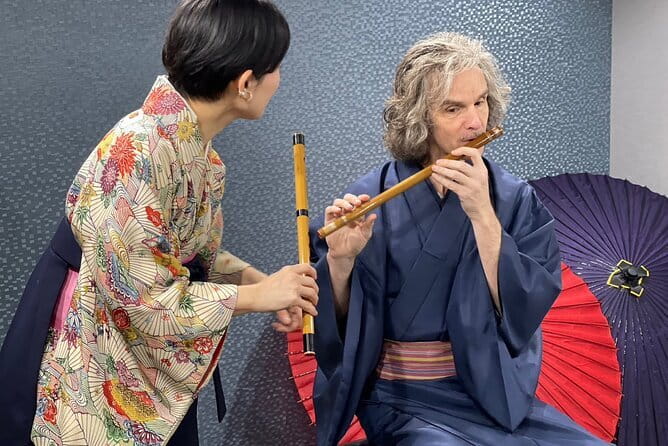
Kyoto has plenty of places where you can look at Japanese culture from a polite distance. This experience asks you to pick up the instruments yourself. You begin with a 25-minute live concert, then spend another 25 minutes trying shamisen, koto, wadaiko, and other instruments with help from the performers.
I like the clear format and the small group size, which is capped at 12 people. I also like the mix of serious music and good-natured participation. Even if your musical talent ends at pressing play on your phone, the patient instructors keep the hands-on part friendly. The main drawback is the short one-hour length, so this is an introduction, not a full lesson.
In This Review
- Key points to know before booking
- What this Kyoto music experience actually offers
- The first 25 minutes: a close-up Japanese music concert
- The next 25 minutes: pick up the instruments yourself
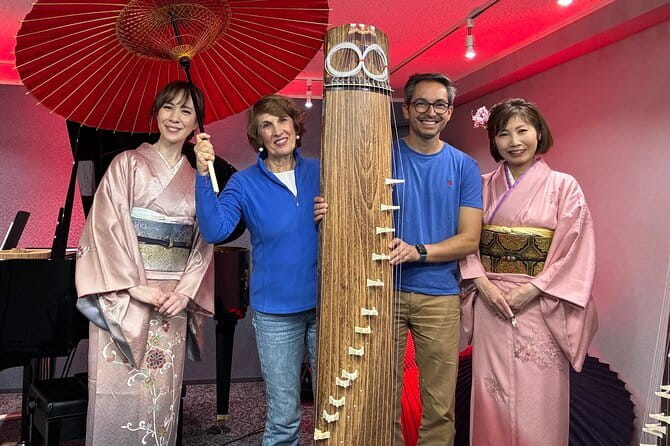
- The final 10 minutes: photos with the instruments and performers
- Shamisen, koto, and wadaiko: what makes the instruments interesting
- Why the small group size changes the experience
- Price, timing, and the real value at $46.24
- Who should book this one-hour session
- How to fit it into a Kyoto day
- Final verdict: a friendly first step into Japanese music
- FAQ
- How long does the traditional Japanese music experience last?
- What instruments can I try?
- Do I need previous musical experience?
- Where does the activity begin and end?
- What days and time is the experience available?
- Can I cancel for a full refund?
Key points to know before booking
- Watch before you play: A 25-minute concert gives you context before you handle the instruments.
- Try several Japanese instruments: Depending on the session, you may play shamisen, koto, wadaiko, and more.
- Small groups help: A maximum of 12 participants allows more room for individual guidance.
- The program changes: Concert content varies by day, so no two visits need to be exactly alike.
- Easy one-hour addition: The 11:00 am start fits neatly into a Kyoto sightseeing day.
- Good value for hands-on culture: At $46.24 per person, the price covers a performance, instrument practice, and photos.
What this Kyoto music experience actually offers
This is not simply a concert with a short explanation tacked onto the end. The appeal comes from the handoff between watching and doing. First, you see how the instruments sound in practiced hands. Then you get a chance to make some noise yourself.
That order matters. The shamisen, koto, and wadaiko can look simple at first glance, but each has its own technique and character. Seeing a skilled performance gives you a better sense of what the instruments are meant to do before you attempt them.
The session is held at 5F, 306 Higashidaimonjichō, in Kyoto’s Nakagyo Ward. The activity begins and ends at the same meeting point, which keeps the logistics simple. It also runs on Monday, Tuesday, Thursday, and Friday at 11:00 am. There is no listed session on Wednesday, Saturday, or Sunday, so check the day carefully when arranging your Kyoto plans.
A few more Kyoto trips to weigh up
- Kyoto Gion Cultural Walk & Geisha Show with Dining Options
★ 5.0 · 518 reviews - Kyoto Gion Cultural Walk & Geisha Show with Dining Options
★ 5.0 · 483 reviews - 1 Hour Geisha Show in Kyoto
★ 5.0 · 452 reviews
The first 25 minutes: a close-up Japanese music concert
The opening concert lasts about 25 minutes. This is the part where you can sit back and listen to the sound, rhythm, and contrast of Japanese instruments without worrying about what your own hands are doing.
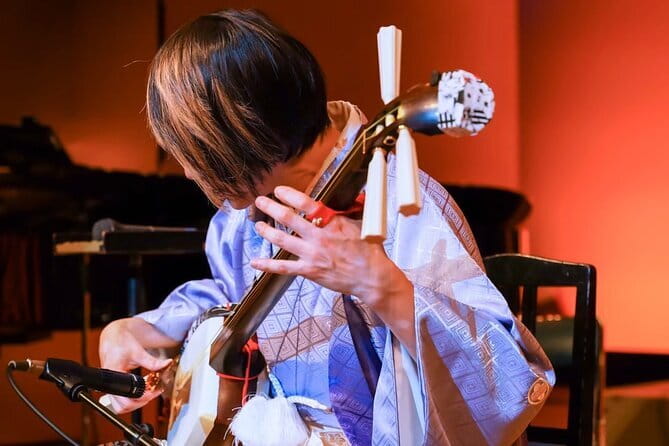
The program may include shamisen, a three-stringed Japanese lute; koto, a long zither often described in simple terms as a Japanese harp; and wadaiko, a Japanese drum. The exact concert content varies depending on the day. That gives the experience some freshness, though it also means you should not book expecting one fixed set list or a particular instrument combination every time.
One of the strongest parts of the format is the close setting. A large stage performance can give you scale and polish, but a small-group demonstration lets you pay attention to the physical work behind the music. You can watch how the performers handle the instruments, how rhythm is built, and how different sounds fit together.
The concert can also include singing and participation in some songs. That makes the opening more than a silent recital. You might be invited to join in a simple musical moment, but the supplied details do not promise a specific song or audience role on every date.
For a first introduction, 25 minutes is about right. It is long enough to hear several instruments and get a sense of the performers’ skill, but short enough to hold the attention of children and casual culture seekers. If you want a full evening concert, this will feel brief. If you are fitting music between temples, lunch, and shopping, the compact length is useful.
The next 25 minutes: pick up the instruments yourself
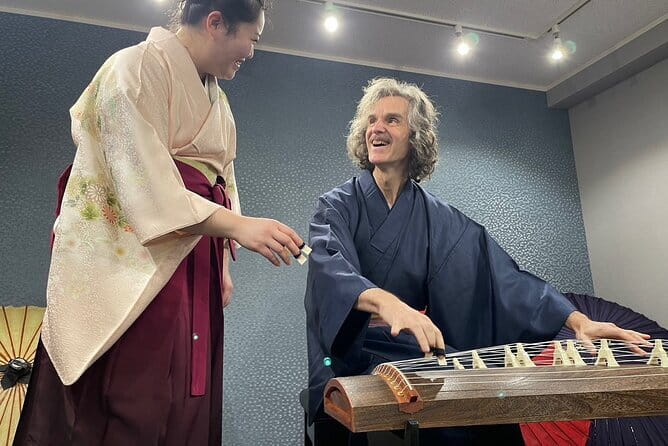
The hands-on section lasts another 25 minutes. You choose from the available instruments and receive guidance from the organizers. No previous experience is needed, which is important because these are not ordinary tourist props. They are real instruments with techniques that may feel unfamiliar at first.
You might try the shamisen, koto, wadaiko, or another instrument offered during your session. The information provided does not guarantee that every instrument will be available to every participant, so think of the list as a guide to the possibilities rather than a fixed menu.
This is where the experience earns its price. Watching a professional perform can be enjoyable, but trying even a few notes gives you a more practical sense of the instrument. The strings, drum surfaces, hand positions, and timing become less abstract when you have to manage them yourself.
You should also expect a little musical awkwardness. One participant described the playing as lopsided because the group was not especially musical, while also noting that the two organizers were patient. That is exactly the right expectation. You are not auditioning for a Japanese folk ensemble. You are trying something new in a setting designed to let beginners have a go.
The tone seems to allow mistakes. That matters for families, first-time visitors, and anyone who might otherwise avoid a hands-on activity out of embarrassment. The organizers can guide you through the basic action, but the session is too short to teach advanced technique or proper performance skills.
I would treat this section as a cultural encounter rather than a music class. You will likely leave with a better sense of how the instruments feel and sound, but not with enough training to play independently.
The final 10 minutes: photos with the instruments and performers
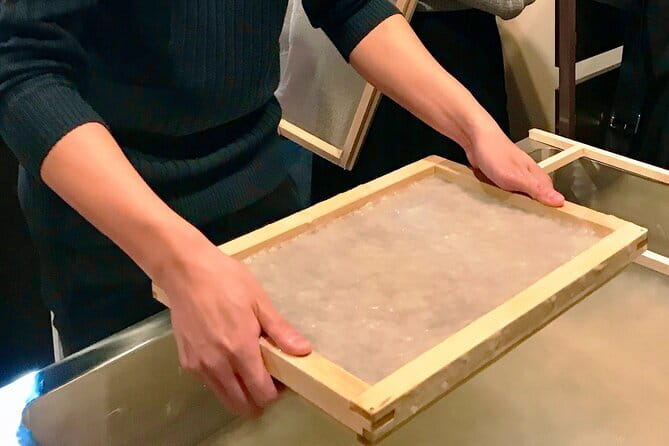
The last 10 minutes are set aside for photos. You can take pictures with the instruments and performers, giving the session a clear ending and a small souvenir of the experience.
This part may sound minor, but it works well after the hands-on practice. You have already seen the performance and tried the instruments, so the photos record a real activity rather than a quick pose beside something you never touched.
The time is limited to about 10 minutes, so do not expect a long personal photo shoot. If your group is full, you may need to share the time with other participants. Still, the maximum group size of 12 keeps this more manageable than a large theater-style event.
Same city, a completely different kind of day:
- PERFECT KYOTO 1-Day Bus Tour
★ 5.0 · 13,518 reviews - Kyoto: Fushimi Inari, Kinkakuji, Bamboo Grove 1 Day Bus Tour
★ 4.8 · 4,316 reviews - Kyoto: Tea Ceremony in a Traditional Tea House in Kiyomizu
★ 4.9 · 3,519 reviews - Kyoto Geisha Walking Tour: Gion District & Hidden Gems
★ 4.7 · 3,273 reviews
Shamisen, koto, and wadaiko: what makes the instruments interesting
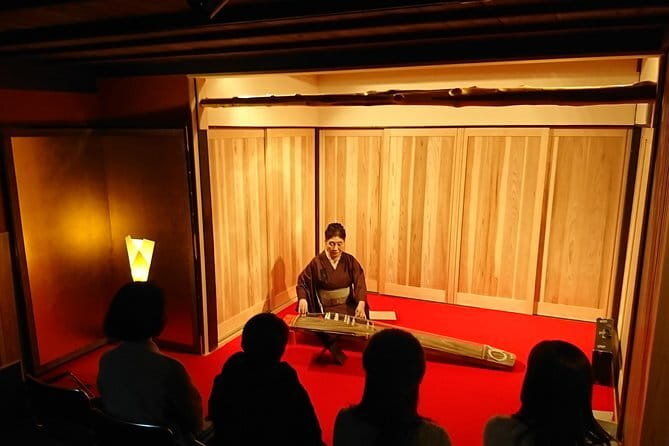
The instrument selection gives this short activity its cultural focus.
The shamisen is a Japanese lute with three strings. Its shape and playing method are distinctive, and its sound can seem sharper and more percussive than the music many first-time visitors associate with string instruments. Seeing it performed before trying it helps you notice the control needed to produce a clean sound.
The koto is a long stringed instrument that is often compared with a harp in basic descriptions. Its size and layout make it visually striking, while its sound offers a contrast to the shamisen. Even a brief attempt can show you that plucking the strings is only one part of the task. Hand position and timing matter too.
The wadaiko is a Japanese drum. It brings a more physical side to the session, with rhythm and movement taking center stage. If you are traveling with children, the drum may be an especially approachable starting point, though the activity does not promise that each participant will select a particular instrument.
The phrase and more is useful here. The program can include additional Japanese instruments, but the available choices are not specified in advance. If one particular instrument is essential to your decision, contact the provider before booking.
Why the small group size changes the experience
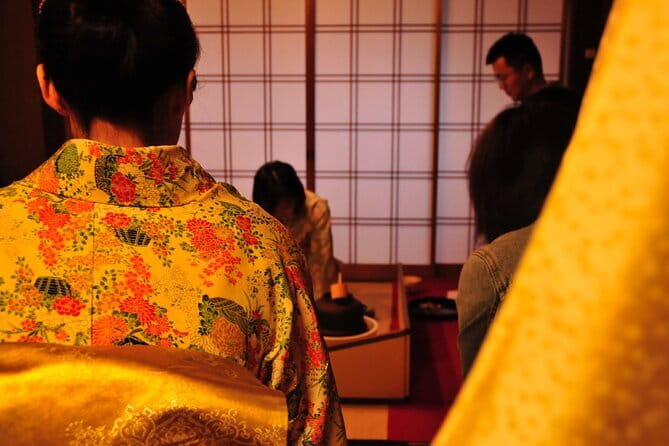
The maximum group size is 12 people. That is small enough to make a real difference during the playing portion. You are less likely to disappear into a crowd, and the organizers have more opportunity to correct your technique or answer a question.
The small format also makes the concert easier to follow. You can focus on what is happening instead of watching a distant stage. That close setting is especially valuable for anyone interested in the mechanics of traditional instruments, not just the finished sound.
There is a practical limit, though. Small group does not mean private. You will still share the performance, instruction, and photo time with the rest of the group. A minimum of two participants is required for the activity to operate, so the session is not guaranteed to run if that number is not met.
The available reviews give the instructors high marks for patience. That is worth emphasizing because beginner music activities can quickly become uncomfortable if the teaching is rushed. Here, the combination of a short lesson and a relaxed approach appears better suited to curiosity than perfection.
Price, timing, and the real value at $46.24
The price is $46.24 per person. For one hour, that is not the cheapest way to fill time in Kyoto. You are paying more than you would for a self-guided visit to a cultural site, and the activity does not include transportation.
Still, the comparison is not quite fair. The fee includes a live concert, access to an instrument for the practice portion, guidance from the organizers, and photos with the performers. You are getting both a show and an activity, rather than only watching from a seat.
I consider the price reasonable for visitors who want direct contact with Japanese music. It is particularly good value if you would otherwise book a separate cultural performance and a separate workshop. The short format also reduces the risk of spending half a day on an activity that turns out not to suit you.
The 11:00 am start is another advantage. You can use it as a morning cultural stop, then continue with lunch and afternoon sightseeing. Because the activity ends back at the meeting point, you do not need to arrange a separate pickup or figure out where the experience leaves you.
Private transportation is not included. The meeting point is near public transportation, but exact directions and station information are not provided here. Give yourself enough time to find the building and reach the fifth floor before the 11:00 start.
The activity has a mobile ticket, and confirmation is provided when you book. Most people can participate, and service animals are allowed. If you have a special request or a question about the instruments, contact Harmony in Japan Tour in advance.
Who should book this one-hour session
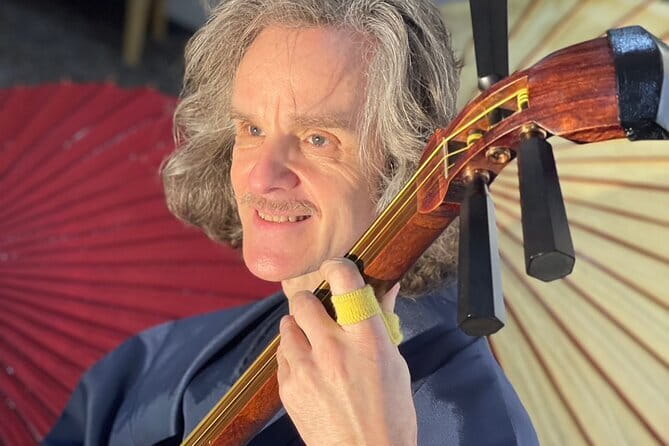
I would recommend this experience to you if you want more than photographs of Kyoto’s cultural sights but do not have time for a long workshop. It suits first-time visitors, families, couples, and solo participants who like to take part rather than only observe.
It is also a good choice for people who are curious about Japanese music but do not know where to begin. You do not need to arrive with musical training, and the instructors guide the practice section.
The activity may be less satisfying if you want a detailed lesson in one instrument. Twenty-five minutes of playing time is enough for a taste, not mastery. It may also disappoint you if you need a guaranteed performance featuring one specific instrument, since the concert content changes by day.
The format is well matched to a mixed group. A serious music enthusiast can watch technique closely, while a casual sightseer can enjoy the sound and have a brief turn playing. That range is part of the appeal, but it also means the session does not go very far into theory or historical explanation.
How to fit it into a Kyoto day
Plan this as a focused morning activity, not as the main event of your entire day. Arrive ready to listen for the first half, then leave room for a little trial and error during the instrument section.
Since the meeting point is in Nakagyo Ward and the tour returns there, you can continue your own plans afterward. The supplied information does not list nearby attractions or a recommended route, so use the address rather than assuming the exact walking time from your hotel.
Book at least a day ahead if your schedule may change. You can cancel for a full refund up to 24 hours before the start time. Changes or cancellations made inside that window are not accepted for a refund, and the local time in Kyoto controls the cutoff.
The experience also requires at least two participants. If the provider cancels because the minimum is not reached, you will be offered another date or experience, or a full refund.
Final verdict: a friendly first step into Japanese music
You should book this tour if you want a compact, hands-on introduction to Japanese musical culture. The strongest reasons are the close concert, the chance to play real instruments, the small group cap, and the patient approach to beginners.
At $46.24, it makes sense as a two-part cultural experience: watch skilled performers, then discover how difficult the instruments are to handle yourself. Just keep your expectations in proportion. You will not become a shamisen, koto, or wadaiko player in an hour, and the day’s exact concert content can change.
For a full concert or serious instruction, choose something longer. For a practical Kyoto activity that lets you listen, participate, and leave with a few photos, this is a sound choice.
FAQ
How long does the traditional Japanese music experience last?
The activity lasts about one hour. It includes a 25-minute concert, 25 minutes of trying traditional instruments, and 10 minutes for photos with the instruments and performers.
What instruments can I try?
The experience may include shamisen, koto, wadaiko, and other Japanese instruments. The exact selection can vary, and the concert content changes depending on the day.
Do I need previous musical experience?
No. Previous experience is not required, and the organizers provide guidance during the hands-on portion.
Where does the activity begin and end?
It begins at 5F, 306 Higashidaimonjichō, Nakagyo Ward, Kyoto, 604-8043, Japan. The activity ends back at the same meeting point.
What days and time is the experience available?
It starts at 11:00 am on Monday, Tuesday, Thursday, and Friday.
Can I cancel for a full refund?
Yes. You can cancel at least 24 hours before the start time for a full refund. Cancellations or changes made less than 24 hours before the start time are not refunded or accepted.
Just added around Kyoto
- Private Guided Traditional Buddhist Cooking in Japan★ 5.0 · 16 reviews
- Kyoto: Gion Geisha District & Sake-in-Hand Walking Tour★ 5.0 · 37 reviews
- Your Private Vacation Photography Session In Kyoto★ 5.0 · 110 reviews
- Kyoto: Zen Meditation at a Private Temple with a Monk★ 5.0 · 25 reviews
- Traditional Japanese Washi Papermaking- Kyoto morning★ 5.0 · 77 reviews
- Kyoto Wagashi(Japanese sweets) Cooking Class near Fushimiinari★ 5.0 · 60 reviews
- Private Pewter Sake Cup Experience with a Kyoto Artisan★ 5.0 · 31 reviews
- Kyoto Private 6 hour Tour: English Speaking Driver Only, No Guide★ 5.0 · 88 reviews
Show, compared.

Mt Fuji & Hakone Cruise, Drum Show Bullet Train 1 Day from Tokyo
Read our review →
Sumo Show Experience with Chicken Hot Pot and a Photo
Read our review →
Tokyo Shinjuku Sumo Show & Experience with Photo
Read our review →

Mt Fuji & Hakone Cruise, Drum Show Bus 1 Day from Tokyo
Read our review →