
REVIEW · TEA CEREMONY EXPERIENCES
Tokyo: Matcha Tasting and Making Experience
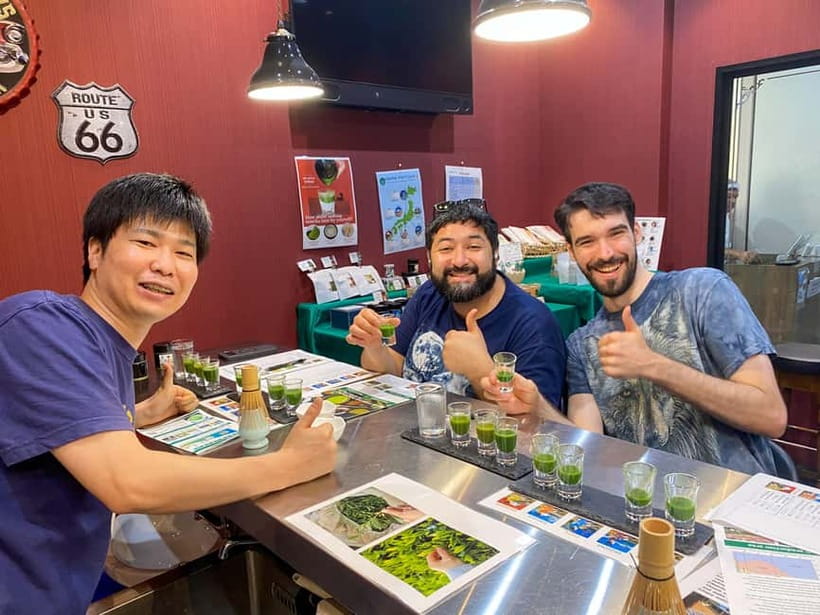
The best part of this Asakusa experience is the side-by-side tasting. You compare matcha from five Japanese production areas, notice differences in color, fragrance, and flavor, then pick a favorite and whisk your own bowl with bamboo. It turns a familiar green drink into something you can actually understand.
I like two things right away: the teacher, Chisei, spent six years growing tea in Kyoto, and the group is limited to five people. That makes room for detailed questions and a hands-on lesson instead of a quick demonstration. The main consideration is that the tasting details describe eight samples, while the experience summary says ten, so confirm the exact number when booking.
In This Review
- Key points at a glance
- Why this matcha class is worth your time in Tokyo
- Finding the cafe inside Henn na Hotel
- Welcome drink and the story behind matcha
- Comparing matcha from five Japanese regions
- Whisking your own bowl with bamboo
- Matcha lattes, hojicha, and sweets to finish
- What the five-person format changes
- Who should book this experience
- Price, timing, and booking value
- Should you book the Tokyo matcha tasting?
- FAQ
- Where does the matcha experience take place?
- How long does the class last?
- What language is the class taught in?
- How many people can join the group?
- How many types of matcha will I taste?
- What grades of tea are included?
- Can I make matcha myself?
- Are drinks and sweets included?
- Is transportation included?
Key points at a glance
- Five production areas in one sitting: Compare Japanese matcha by origin rather than treating all green powder as the same.
- A former Kyoto tea farmer leads the class: Chisei brings practical experience from six years of growing tea.
- You make your own usucha: Use a bamboo whisk and repeat the method at home.
- Small English-language group: The class is limited to five participants, which suits people who want to ask questions.
- More than a formal tea lesson: Matcha and hojicha lattes plus sweets give you a relaxed finish.
- A useful Asakusa rainy-day plan: The cafe is inside Henn na Hotel Asakusa Tawaramachi, near a FamilyMart on the first floor.
Why this matcha class is worth your time in Tokyo
Tokyo offers plenty of polished food experiences, but many leave you with a snack and a few photos. This class gives you a way to compare, taste, and prepare matcha yourself. I find that more useful, especially if you already drink matcha or want to bring a practical Japanese skill home.
The price is $63 per person for 90 minutes. That is not a bargain cafe stop, but it covers a guided lesson, several matcha samples, your own whisking practice, a welcome drink, lattes, and sweets. The small group also matters. With no more than five people, the instructor can explain what is in your cup and watch how you use the whisk.
This is not presented as a formal ceremony with elaborate etiquette. It is a class for general visitors who want to learn about Japanese tea. That makes it approachable, though people seeking a long traditional tea ceremony may find the format more educational and tasting-focused than ceremonial.
The class is taught in English. The guide’s background is a major part of its appeal. Chisei grew tea in Kyoto for six years, so the conversation can cover cultivation as well as drinking and preparation. Several comments about the class point to detailed explanations, practical skill, and a warm teaching style. Those are exactly the qualities that help when a subject can otherwise feel technical.
More Tea Ceremony Experiences in Tokyo
- Matcha Making Class in Tokyo with Authentic Japanese Sweets Set
★ 5.0 · 744 reviews - Tokyo: Traditional Tea Ceremony with a Tea Master
★ 5.0 · 528 reviews - Tokyo: Matcha Making Experience with Mochi Sweets in Asakusa
★ 4.9 · 388 reviews
Finding the cafe inside Henn na Hotel
The meeting point is easy to describe but worth noting before you leave. The cafe is on the second floor of Henn na Hotel Asakusa Tawaramachi. A FamilyMart is on the first floor, so enter the hotel and go upstairs rather than searching for a separate street-front tea shop.
Transportation is not included, and no transfer is provided. You need to make your own way to the hotel. Since the activity lasts only 90 minutes, arrive with enough time to find the building and reach the second floor without turning the start into a small Tokyo treasure hunt.
The hotel setting may feel less atmospheric than a traditional tea house. On the other hand, it gives you a clear indoor meeting point and a practical base in the Asakusa area. If your sightseeing day already includes Asakusa, this class can fit neatly between other stops.
Welcome drink and the story behind matcha
The session begins with a welcome drink while Chisei explains the history, definition, and production of matcha. This opening matters because matcha is often used as a catchall term for any bright green tea powder. The class sets out to explain what actually qualifies as matcha and why some products sold as matcha around the world do not fit that definition.
You learn about cultivation methods and the work behind the powder before tasting the samples. That context gives you something useful to listen for later. Instead of simply deciding that one cup tastes better, you can pay attention to color, fragrance, and flavor and connect those traits with the tea’s production area and grade.
The lesson is aimed at general visitors, so you do not need a background in tea. Chisei’s farming experience should be particularly helpful here. A farmer can explain the subject from the plant outward, rather than only describing the finished drink.
Comparing matcha from five Japanese regions
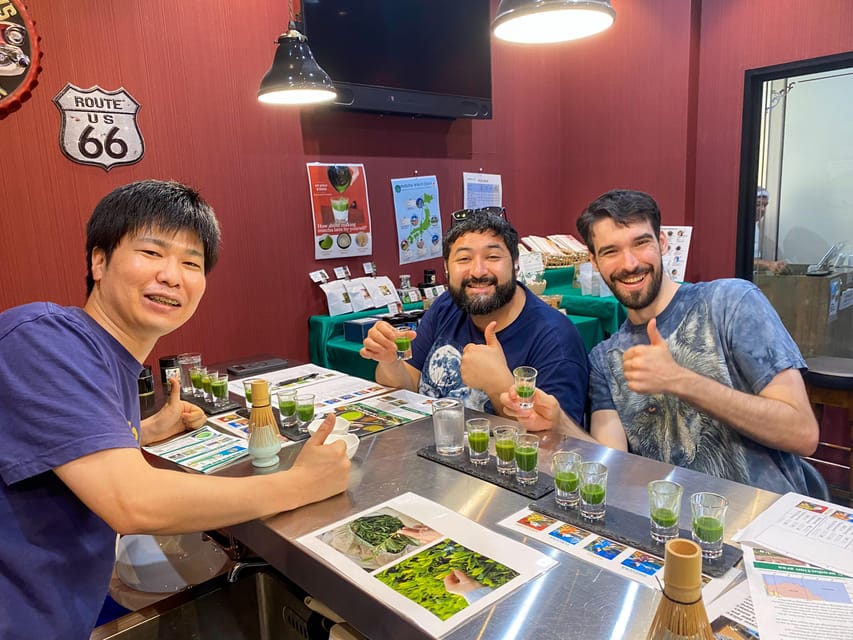
The tasting is the heart of the experience. Small portions are served from five representative production areas in Japan, allowing you to compare them at one time. The point is not to consume large bowls. It is to notice differences without becoming overwhelmed by caffeine or palate fatigue.
The supplied details give two numbers for the tasting. The summary says ten different types of matcha, while the step-by-step description says eight kinds from five areas. That detailed description identifies six as ceremonial grade and two as products that are not technically defined as matcha but are sold as matcha around the world. Ask for clarification if the exact sample count matters to you.
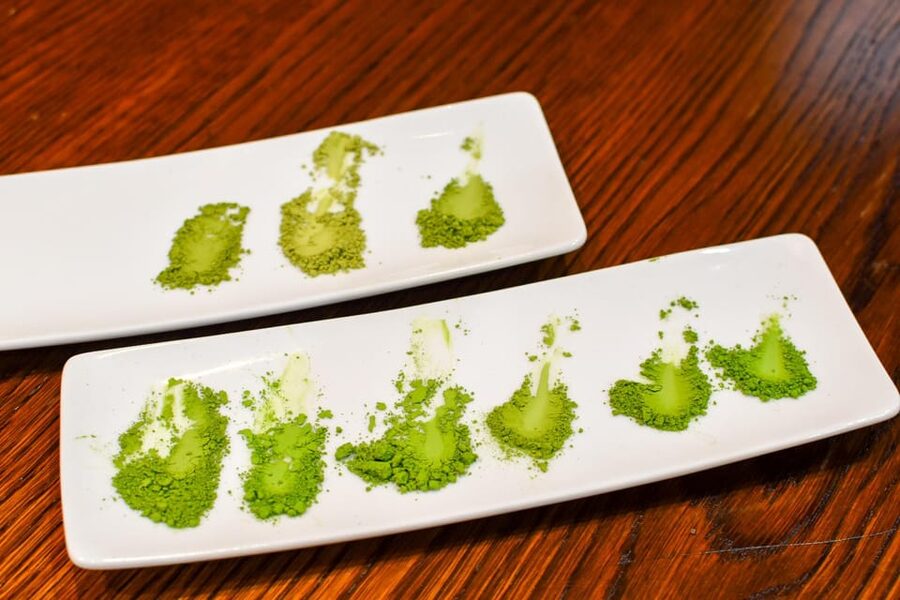
The tasting begins with the color. You look at the powder or prepared tea before drinking it, then consider the fragrance and taste. This simple order slows you down. Even if you are new to matcha, you have three clear things to compare rather than trying to judge everything at once.
The two non-matcha products can be useful in their own way. They show why labels can cause confusion and give you a point of contrast with the six ceremonial-grade samples. You are not just sampling expensive tea. You are learning how the word matcha is used, and where the real distinctions lie.
Do not expect every sample to suit your personal taste. That is part of the value. Some people prefer a certain origin, while others may respond more to the preparation or the balance with milk later in the class. You are encouraged to choose the sample you like best, not to find the answer the teacher wants.
Same city, a completely different kind of day:
- Mt Fuji and Hakone 1-Day Bus Tour Return by Bullet Train
★ 5.0 · 26,383 reviews - 1-Day Tokyo Bus Tour
★ 5.0 · 14,250 reviews - Tokyo: TOKYO SKYTREE® Admission ticket
★ 4.5 · 11,192 reviews - Tokyo: teamLab Planets TOKYO Digital Art Museum Entry Ticket
★ 4.6 · 9,779 reviews
Whisking your own bowl with bamboo
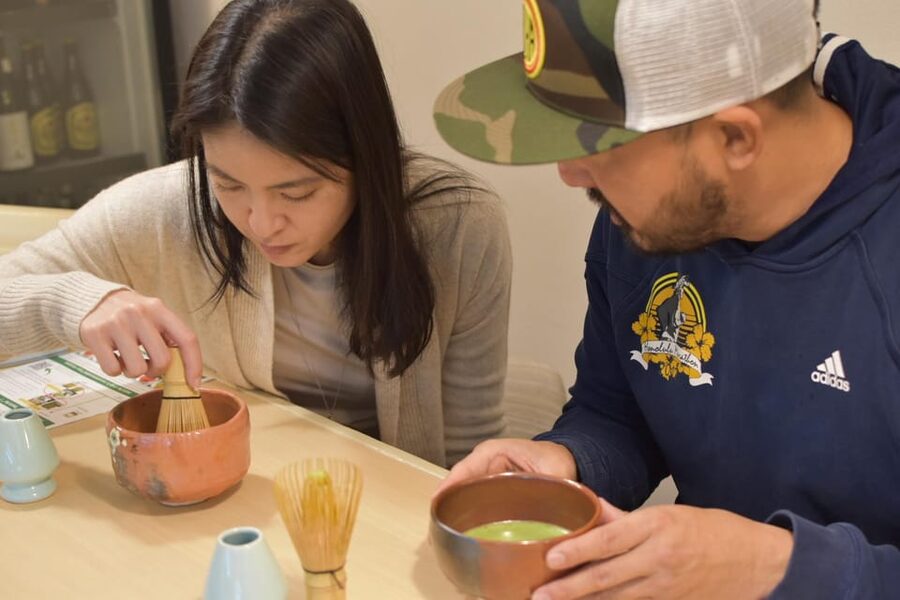
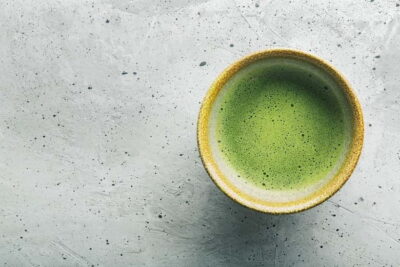
After the comparison, you select your preferred matcha and make it yourself. The final preparation is usucha, the thinner style of matcha commonly associated with a single bowl of whisked tea. You use a bamboo tea whisk and learn a method you can repeat at home.
This hands-on part turns the class from a tasting into a skill. Matcha preparation is not simply a matter of adding powder and stirring with a spoon. The bamboo whisk creates the texture, and practicing under guidance helps you understand how the drink should come together.
You do not need to buy special equipment before attending. The experience supplies the bamboo whisk for the lesson. The useful takeaway is that you leave knowing how to make matcha at home, although the supplied information does not specify whether the whisk is included as a souvenir, so do not assume you can take it with you.
I like this section because it gives you a clear reason to pay attention during the demonstration. You first taste the samples, then use your favorite in your own bowl. That makes the choice personal rather than abstract.
There is also a small limitation. A 90-minute class has to divide time among history, eight or possibly ten samples, preparation, and drinks. If you want a long, highly formal lesson on every movement of the tea ceremony, this will probably feel brisk. If you want an introduction you can use after your trip, the pace should work well.
Matcha lattes, hojicha, and sweets to finish
The class ends with a matcha latte, a hojicha latte, and matcha sweets. The latte matcha is an original blend designed to work well with milk, so this is not necessarily the same tea you used for the plain tasting.
That distinction is important. Ceremonial-grade matcha is often best understood without milk, while a latte needs enough character to remain present beside dairy. Tasting both styles helps you see why a tea chosen for whisking may not be the best choice for a cafe drink.
Hojicha gives you a roasted tea option beside the grassy flavor of matcha. The supplied details say you can drink both matcha latte and hojicha latte, along with matcha sweets. This relaxed finish may appeal to companions who are less interested in plain matcha but still want a Japanese tea experience.
The sweets also make the final portion feel more social than instructional. You have done the focused tasting and the practical whisking, then get time to enjoy familiar cafe-style flavors. Do not book this expecting a full meal. The information describes sweets and drinks, not lunch or a substantial food service.
What the five-person format changes
The class is limited to five participants. I would prioritize that detail when comparing this experience with larger Tokyo food tours. A small group gives you more time to ask why one sample differs from another, how tea is cultivated, and what went wrong if your bowl does not foam as expected.
It also makes the activity feel more like a lesson than a performance. Chisei can demonstrate the process and then let each person try it. The comments about the class repeatedly point to strong practical skill and clear explanations, with one participant describing the host’s knowledge as extensive and pleasantly delivered.
There is no need to bring a commercial purpose to the session. The class is intended for general visitors learning about Japanese tea, and commercial inquiries should be made before booking. For most people, that simply means come ready to learn, taste, and prepare tea for personal use.
The English instruction is another clear advantage. You can follow the explanation about farming, grading, and preparation without relying on translation. Still, the pace and content will suit someone who wants a friendly introduction, not a professional certification course.
Who should book this experience
I would recommend the class to several types of visitors:
- You drink matcha and want to understand how different Japanese samples compare.
- You enjoy food education more than a simple tasting at a cafe.
- You want a hands-on activity that does not require a full day.
- You are staying or sightseeing in Asakusa and need an indoor plan.
- You prefer small groups and English instruction.
- You want to learn a method you can repeat at home.
Families, couples, solo visitors, and small friend groups can all fit the format, since the group size is capped at five. The supplied information does not give a minimum age, child price, accessibility details, or dietary information, so ask before booking if any of those points affect your plans.
I would hesitate if your main goal is a traditional tea ceremony with formal clothing, historic architecture, or extended ritual. Nothing here promises those elements. This is a modern cafe-based class built around comparison, farming knowledge, whisking, and drinks.
Price, timing, and booking value
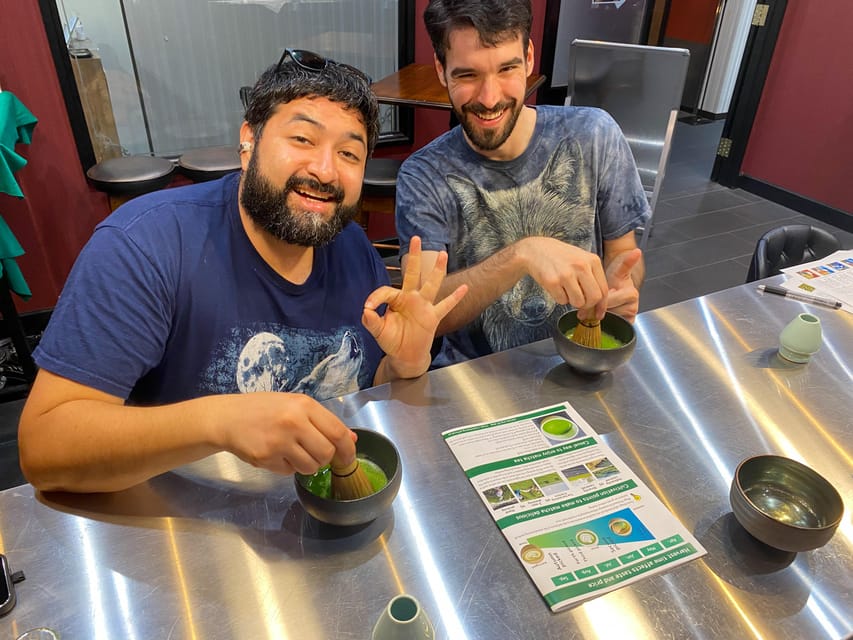
At $63, the class costs more than ordering a matcha latte and a sweet in Asakusa. The difference is the instruction and range of samples. You are paying for access to matcha from five production areas, a teacher with farming experience, guided comparison, hands-on preparation, and several drinks and sweets.
The 90-minute length keeps the commitment manageable. You can place it into a morning or afternoon without surrendering half a sightseeing day. Since starting times vary, check availability against your Asakusa plans rather than assuming a fixed schedule.
Free cancellation is available up to 24 hours before the start for a full refund. You can also reserve now and pay later, which helps if your Tokyo schedule is still shifting. Those terms are useful for a short trip, but check the booking conditions at the time you reserve.
The one practical question I would ask before paying is the sample count. The headline information says ten matcha types, while the detailed sequence says eight, including six ceremonial-grade samples and two products sold as matcha despite not being technically defined as matcha. The five production areas remain clear, but the total number should be confirmed if that is central to your decision.
Should you book the Tokyo matcha tasting?
Book it if you want more than a pretty green drink. The strongest reasons are Chisei’s six years of tea-farming experience in Kyoto, the five-region comparison, and the chance to whisk your own usucha with a bamboo tool. The small group and English instruction add real value.
Skip it if you want a formal ceremony, a full meal, or a long tea-school lesson. For most visitors who have 90 minutes in Asakusa and a genuine interest in Japanese tea, the $63 price is reasonable for the amount of guided tasting and practice involved. Just confirm whether your session includes eight or ten samples, then arrive at the second floor of Henn na Hotel ready to taste carefully.
FAQ
Where does the matcha experience take place?
It takes place at a cafe inside Henn na Hotel Asakusa Tawaramachi in Tokyo. Enter the hotel, note the FamilyMart on the first floor, and go to the second floor.
How long does the class last?
The experience lasts 90 minutes.
What language is the class taught in?
The instructor teaches the class in English.
How many people can join the group?
The group is limited to five participants.
How many types of matcha will I taste?
The experience summary says ten types, while the detailed activity description says eight kinds from five production areas. Confirm the exact number when booking.
What grades of tea are included?
The detailed tasting description says six samples are ceremonial grade. It also includes two products that are not technically defined as matcha but are sold as matcha around the world.
Can I make matcha myself?
Yes. You choose a favorite sample and prepare usucha using a bamboo tea whisk.
Are drinks and sweets included?
Yes. The experience includes a welcome drink, matcha latte, hojicha latte, and matcha sweets.
Is transportation included?
No. You are responsible for getting to the experience location.
More Food & Drink in Tokyo
- Tokyo: Shinjuku Food Tour (13 Dishes at 4 Local Eateries)
★ 5.0 · 6,603 reviews - Tokyo Tsukiji Fish Market Food and Culture Walking Tour
★ 5.0 · 3,184 reviews - Tokyo: Shinjuku Food Tour (15 Dishes and 4 Eateries)
★ 4.9 · 2,033 reviews - Best of Shinjuku: Izakaya Food Tour (4 Stops, 14+ Tastings)
★ 5.0 · 1,863 reviews
Just added around Tokyo
- Private Memorable Tokyo Tour with English Speaking Driver★ 5.0 · 30 reviews
- Private Tokyo Custom Full-Day Tour by Chartered Vehicle★ 5.0 · 16 reviews
- Private Sightseeing to Mt Fuji and Hakone with English Driver★ 5.0 · 51 reviews
- Tokyo Photography Masterclass – Private Photography Lesson★ 5.0 · 25 reviews
- Private Mt. Fuji Day Trip from Tokyo with English-Speaking Driver★ 5.0 · 33 reviews
- 4 Day Tour – Mount. Fuji, Tokyo, Hakone, Kamakura and Yokohama★ 5.0 · 19 reviews
- Private Unforgettable Mt Fuji Tour with English Speaking Driver★ 5.0 · 142 reviews
- Private Tokyo Food Tour – A Journey Through Time Through Food★ 5.0 · 36 reviews
Tea Ceremony Experiences, compared.

Tea Ceremony in a Traditional Tea House in Kiyomizu
Read our review →

World Heritage Kyoto & Nara Uji Authentic Matcha Experience
Read our review →
Browse the lists this tour appears in