
REVIEW · KIMONO & CULTURE EXPERIENCES
Samurai Training with Modern day Musashi in Kyoto
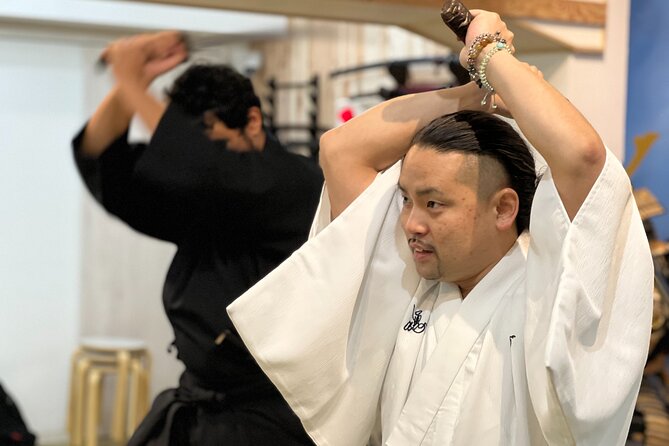
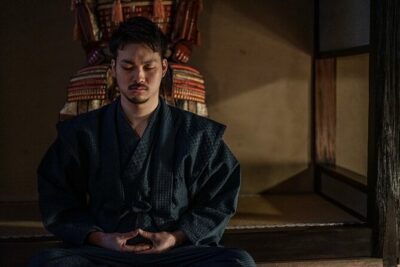
The best part of this Kyoto experience is that you train inside a working martial arts dojo, not a stage set built for quick photographs. Yushin Sensei leads the lesson with help from Jordan and English-speaking staff, giving you a taste of samurai etiquette, sword handling, and iaido practice.
I like two things in particular. First, you wear proper training clothes, including a dōgi, obi, and hakama, which makes the lesson feel like practice rather than dress-up. Second, the class includes careful instruction in drawing, sheathing, and wielding a katana, followed by a powerful two-sword display from the master.
The main point to know before booking is that mat cutting with a real katana is not currently offered. You still handle a real training sword and watch skilled demonstrations, but anyone expecting to slice targets should choose another activity.
In This Review
- Key points to know before you book
- Entering a working dojo in central Kyoto
- Changing into dōgi, obi, and hakama
- Learning what the samurai sword meant
- Handling a katana with safety first
- Practicing an actual kata
- Seeing Yushin Sensei perform with two swords
- What the $132.65 price buys you
- Who will enjoy this most
- Practical details for planning your Kyoto day
- How this compares with a staged samurai show
- Should you book Samurai Training in Kyoto?
- FAQ
- Where does the samurai training take place?
- How long does the experience last?
- What clothing do I wear?
- Is this held in a real dojo?
- Who teaches the class?
- Do I need previous sword or martial arts experience?
- Are real swords used?
- Is mat cutting included?
- What is the minimum age?
- Can I cancel for a refund?
Key points to know before you book
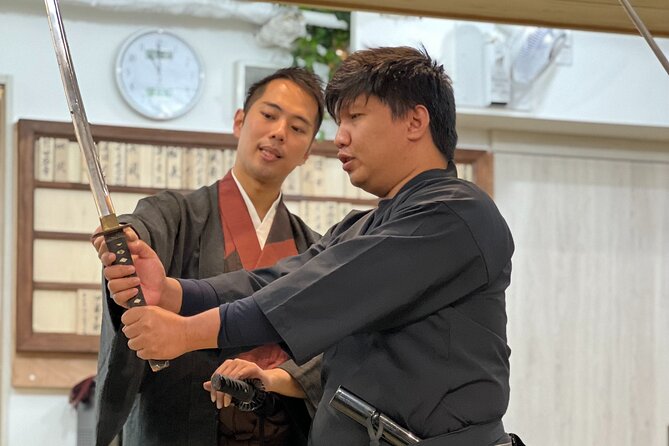
- Train in a real dojo: The central Kyoto venue is a functioning martial arts school, complete with a Shinto shrine and student name plaques.
- Learn a short iaido kata: You practice an actual sequence of movements, not just a staged sword pose.
- Meet Yushin Sensei: The master has more than 20 years of experience and gives the main demonstrations.
- Wear full training gear: Dōgi, obi, and hakama are supplied for the session.
- Watch a two-katana performance: The final demonstration is one of the most unusual parts of the class.
- Plan for about two hours: The advertised time is roughly 1 hour 45 minutes, but the session can run from 1.5 to 2 hours depending on group size.
Entering a working dojo in central Kyoto
This class takes place at Yushinkan International, at 452-4 Matsugaechō in Nakagyo Ward. The dojo is in the basement level of a central Kyoto building, close to public transportation.
That setting matters. You are not learning sword movements in a hotel room or posing beside a decorative armor display. You enter a place used for martial arts practice, with wooden name plaques for students and a Shinto shrine that helps set the tone. The room gives the session a clear sense of place before the first sword is even lifted.
You should allow a little time to find the entrance and get downstairs. The meeting point is in a busy central part of Kyoto, so it can fit neatly into a day that includes shopping, food, or sightseeing nearby. The activity both starts and ends at the dojo, with no transport between multiple sites.
The class is designed for small groups. The normal target is six participants, though the maximum is nine, and the group can be larger than six if several small parties are combined. That size is still far more useful than a large show. You can see the instructor, follow the movement, and receive corrections without waiting through a long line.
More Kimono & Culture Experiences in Kyoto
- Kyoto Geisha Walking Tour: Gion District & Hidden Gems
★ 4.7 · 3,273 reviews - Kyoto: Gion Magical Night Walking Tour with Geisha Trivia
★ 4.9 · 2,393 reviews - Kyoto: Gion Geisha District Walking Tour – Stories of Geisha
★ 4.7 · 2,187 reviews
Changing into dōgi, obi, and hakama
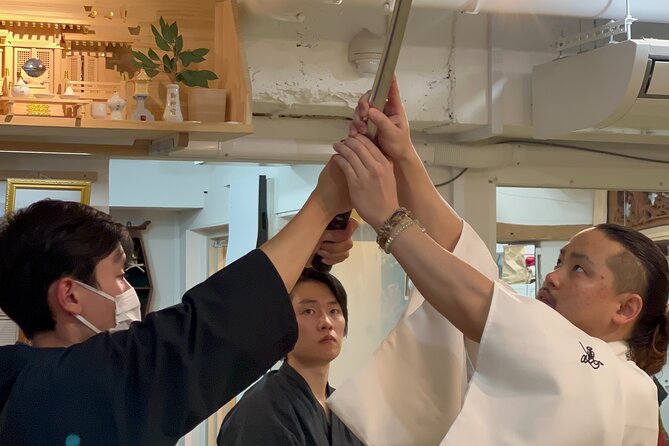
The first stage is getting dressed in samurai training gear. You wear a dōgi, tie an obi, and put on hakama. These clothes are not just a photo prop. They introduce you to the formal appearance and posture connected with Japanese sword practice.
The clothing also changes the mood of the class. A teenager who might be shy about joining a martial arts activity has a clear role from the start. Parents can take photographs, but the main purpose is to prepare for training.
Expect some movement while wearing the outfit. The activity calls for a moderate level of physical fitness, and you will stand, bend, walk through forms, and repeat sword motions. You do not need to be an experienced martial artist, but this is more active than a museum talk.
The minimum age is 12. That makes the session a good choice for families with older children and teenagers, especially if they enjoy Japanese culture, action films, martial arts, or hands-on lessons. Younger children cannot take part according to the stated age rule.
Learning what the samurai sword meant
Before you begin the practical work, the instructors explain samurai culture, swordsmanship, and the role of the sword. The lesson covers safety, basic etiquette, and the reasons behind the movements.
This background gives the physical practice more meaning. Drawing a sword is not treated as a theatrical flourish. You learn that the movement has a set order and that control matters as much as speed. Sheathing the sword is also taught as a deliberate action, rather than something to rush through after a photo.
Yushin Sensei leads the instruction, while Jordan and John help with explanations and individual guidance. English and Japanese are used during the activity, and the instructors are used to working with international participants. If you have questions about the sword, samurai customs, or the practice itself, this is a good point to ask them.
The historical portion is not a full academic course. You get a compact introduction during a session lasting less than two hours. Still, the mix of explanation and practice works well. You hear an idea, then put part of it into motion.
Handling a katana with safety first
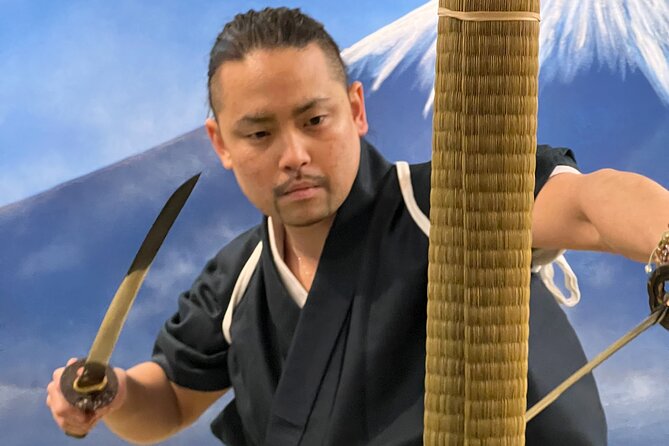
The practical lesson begins with basic sword handling. You learn how to draw, hold, move, and return the katana to its sheath. The instructors demonstrate each step and then have you repeat it.
The swords used for practice are iaito, training swords made for safe practice while retaining the feel and appearance of a katana. They are not the same as a sharpened blade. This distinction is important, especially for families and anyone booking because they expect to use a fully sharp sword.
Safety is treated as a central part of the lesson. You are taught how to control the blade, where to place your hands, and how to move without endangering people nearby. The instructors then watch your form and make corrections. That personal attention is one of the reasons the small class format is worth paying for.
Do not expect a combat lesson or a free-form sword fight. The emphasis is on controlled movements and traditional form. If you enjoy precision, posture, and learning a sequence one step at a time, you will likely get more from this than someone seeking an action performance.
Same city, a completely different kind of day:
- PERFECT KYOTO 1-Day Bus Tour
★ 5.0 · 13,518 reviews - Kyoto: Fushimi Inari, Kinkakuji, Bamboo Grove 1 Day Bus Tour
★ 4.8 · 4,316 reviews - Kyoto: Tea Ceremony in a Traditional Tea House in Kiyomizu
★ 4.9 · 3,519 reviews - Kyoto: Tea Ceremony Ju-An at Jotokuji Temple
★ 4.9 · 3,207 reviews
Practicing an actual kata
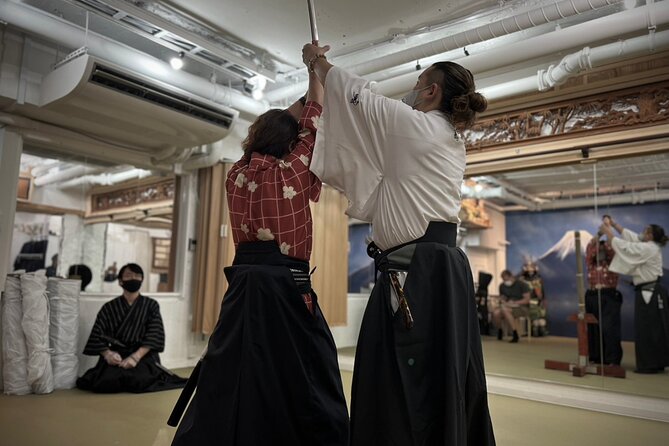
The main hands-on goal is learning a short kata, or formal sequence. In iaido, a kata links movements into a set pattern. You practice the draw, the cut-like motion, and the return to the sheath as connected actions.
This is where the class moves beyond costume and ceremony. You have to remember the order, keep your stance steady, and coordinate the sword with your body. The instructors correct small details, which helps you understand how much care goes into a movement that can look simple when performed by an expert.
The pace is active but not frantic. The session is packed with information, yet the available details indicate that instructors take time to answer questions and adjust form. Your exact practice time depends partly on the number of people in the class.
You can usually take photographs and video during parts of the lesson, subject to the instructors’ direction. This is useful because the kata is difficult to remember after one short class. A video also lets you see the contrast between your first attempts and the master’s polished performance.
Seeing Yushin Sensei perform with two swords
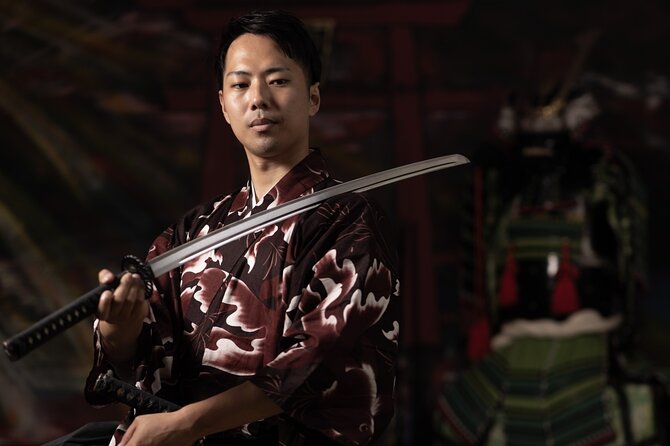
The demonstration is the showpiece, but it works because you have already learned the basics. After practicing your kata, you watch Yushin Sensei perform advanced katana movements, including a striking two-katana routine.
This is not something you can reproduce after a single class. The performance shows the control, timing, and balance that years of practice can produce. It also gives you a better sense of why the earlier safety instructions were so detailed.
There may also be demonstrations involving historical swords and explanations of the parts of a katana and how swords are made. The exact display can vary, but the activity includes a close look at the tools and traditions behind the practice.
One important update: mat cutting with a real katana is not currently part of the program. Some older descriptions of the activity may mention cutting, but you should book based on the current format: safe practice with iaito, sword education, a kata lesson, and live demonstrations. That change may disappoint you if target cutting is the main reason you are interested.
What the $132.65 price buys you
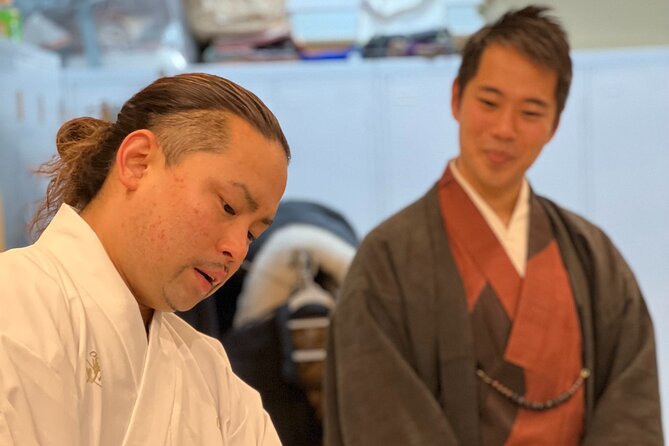
At $132.65 per person, this is not a cheap costume photo stop. The value depends on what you want from a samurai activity.
You are paying for nearly two hours in a real dojo, supplied training clothing, instruction from Yushin Sensei and his team, hands-on sword practice, historical context, and demonstrations. The small group structure also has practical value. You are not simply watching a performance from the back of a crowded room.
The cost is easier to justify if you care about martial arts or want a serious cultural activity during your Kyoto visit. It is also a strong family option for adults and children aged 12 or older who can follow safety instructions and stay engaged during a structured class.
I would think twice if you only want a quick photograph in samurai clothing. You can find less expensive costume activities, but they will not necessarily include a formal kata, sword handling instruction, or a master’s two-sword performance.
The class can last from 1.5 to 2 hours, with about 1 hour 45 minutes as the approximate duration. That is long enough to feel substantial without taking over your whole day. Build in extra time if you have a restaurant booking or a train to catch afterward.
Who will enjoy this most
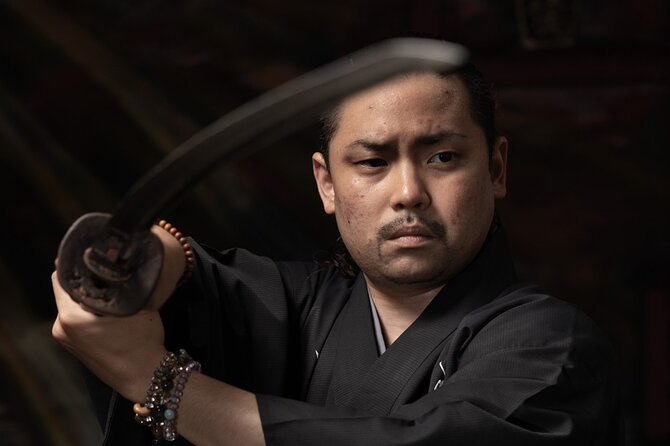
I would recommend this for families with teenagers, couples, martial arts students, and anyone who prefers learning by doing. People with karate or other martial arts experience may especially appreciate the attention to form and tradition.
It also suits first-time visitors who want something more grounded than a theatrical samurai show. You do not need prior sword experience. The class begins with the basics and explains how to handle the weapon safely.
You should have a moderate level of physical fitness. The activity involves standing and repeated movement, and formal clothing may feel warm or restrictive. If you have a physical limitation, the supplied information does not specify adaptations, so contact the provider before booking.
The minimum age is 12, and the maximum group size is nine. If you prefer a private lesson, this is not presented as a private experience. The class is small, but other parties may join.
Practical details for planning your Kyoto day
The venue is near public transportation, in Nakagyo Ward. Since the activity begins and ends at 452-4 Matsugaechō, you do not need to arrange a separate return transfer.
A mobile ticket is accepted, and confirmation is sent within 48 hours of booking, subject to availability. I would book ahead if your Kyoto dates are fixed, especially because the class is limited in size and has been booking regularly.
You can cancel for a full refund up to 24 hours before the start time. Cancellations or changes made within 24 hours are not refunded or accepted. The cut-off uses Kyoto local time, so check the exact start time before making other plans.
Wear something that allows comfortable movement underneath the training clothes. The supplied information does not list a dress code beyond the gear provided, but simple clothing makes changing easier.
How this compares with a staged samurai show
A staged show gives you polished entertainment with little effort. This class asks you to pay attention, remember instructions, and take part.
The reward is a better understanding of how controlled sword practice feels. You learn the etiquette behind the movements, handle an iaito, and receive corrections from instructors. The setting, shrine, student plaques, and training routine add context that a photo studio cannot provide.
The trade-off is that the class may feel slower to someone who wants constant spectacle. You will spend time learning safety and form before seeing the most dramatic demonstrations. That is the right order for a dojo, but it is not the format for everyone.
The lack of current mat cutting is another clear difference from some older versions of the activity. You should see this as a swordsmanship introduction, not a cutting workshop.
Should you book Samurai Training in Kyoto?
I would book this experience if you want a hands-on introduction to samurai sword practice in a genuine dojo. The strongest reasons are the real training setting, the chance to wear full gear, the short kata lesson, and the close instruction from Yushin Sensei, Jordan, and John.
The price is fair for a small, guided class with demonstrations, though it is high if your only goal is a costume photograph. Make sure everyone in your group is at least 12, comfortable with moderate physical activity, and willing to follow careful safety instructions.
Book it for the culture, discipline, and personal instruction. Do not book it expecting to cut mats with a sharpened sword. With that expectation set correctly, this is one of Kyoto’s more memorable ways to learn about samurai practice.
FAQ
Where does the samurai training take place?
The activity takes place at Yushinkan International, located at 452-4 Matsugaechō, Nakagyo Ward, Kyoto, 604-8034, Japan.
How long does the experience last?
The approximate duration is 1 hour 45 minutes. The full session can take about 1.5 to 2 hours, depending on the number of participants.
What clothing do I wear?
You dress in samurai training gear consisting of a dōgi, obi, and hakama.
Is this held in a real dojo?
Yes. The activity takes place in an actual martial arts dojo in central Kyoto, rather than a temporary tourist display.
Who teaches the class?
Yushin Sensei leads the training and demonstrations. Jordan and John also assist with instruction and communication.
Do I need previous sword or martial arts experience?
Previous experience is not listed as a requirement. The class teaches basic sword handling, including drawing, sheathing, wielding, and a short kata.
Are real swords used?
The training uses iaito, which are intended for safe practice while providing an authentic sword-training feel. Demonstrations may also include historical katana and explanations of their parts.
Is mat cutting included?
No. Mat cutting with a real katana is not currently offered.
What is the minimum age?
Participants must be at least 12 years old.
Can I cancel for a refund?
You can cancel at least 24 hours before the experience start time for a full refund. Cancellations and changes made less than 24 hours before the start time are not accepted or refunded.
Just added around Kyoto
- Taste of Nishiki Market Walking Food Tour with Local guide★ 5.0 · 17 reviews
- Kyoto: Sushi Making Class with Sushi Chef★ 4.8 · 64 reviews
- Kyoto: City Secrets eBike Tour★ 4.9 · 196 reviews
- Sacred Pathways: Discover the Philosopher’s Path of Kyoto★ 4.9 · 20 reviews
- Private Tour to Monkey Park and Arashiyama Highlights★ 5.0 · 22 reviews
- Private Nara Tour from Osaka – Meet at Your Hotel★ 5.0 · 22 reviews
- Private Sake Tasting in Central Kyoto with Sake Sommelier★ 5.0 · 13 reviews
- Kyoto : Private Custom Walking Tour With A Local Guide★ 4.6 · 144 reviews
Kimono & Culture Experiences, compared.
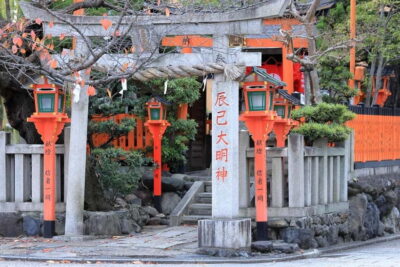
Kyoto Geisha Walking Tour: Gion District & Hidden Gems
Read our review →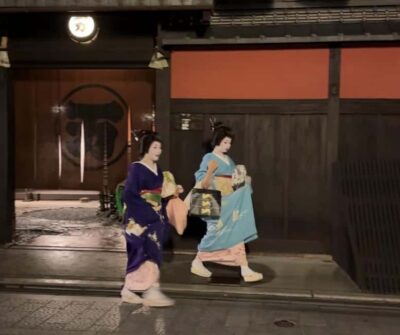
Gion Magical Night Walking Tour with Geisha Trivia
Read our review →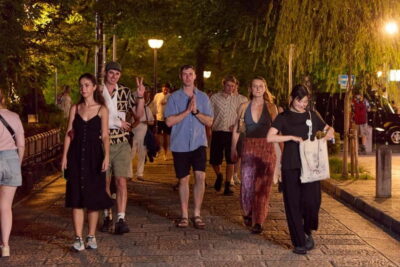
Gion Geisha District Walking Tour – Stories of Geisha
Read our review →
Best of Kyoto: Gion, Geisha, Pagodas & Cobblestones
Read our review →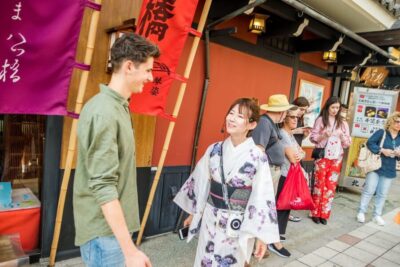
Kyoto Gion Geisha District Walking Tour – The Stories of Geisha
Read our review →
Browse the lists this tour appears in