
REVIEW · KIMONO & CULTURE EXPERIENCES
Samurai School in Kyoto: Samurai for a Day
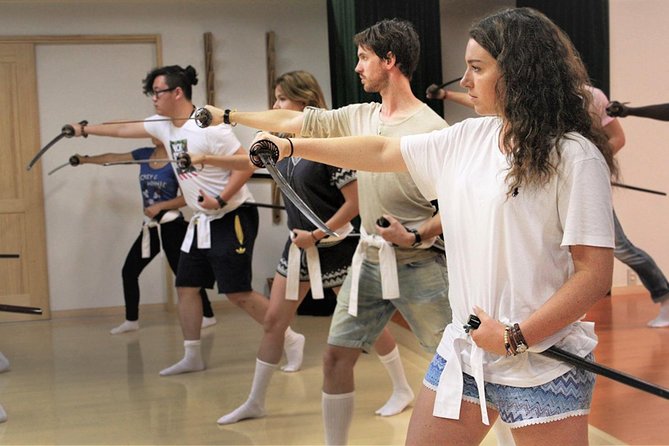
The most memorable part of this Kyoto activity is not simply holding a sword. You learn the formal bow, the careful motion of drawing and sheathing the blade, and the graceful kenbu movements that turn sword work into a stage art. Then you put on samurai clothing and pose for photos.
I like the hands-on teaching and the small maximum group of 10, which gives the instructor room to correct your stance. I also like the mix of history, movement, costume, and performance. The main drawback is timing: the show or introduction can take longer than expected, and some photo sessions feel rushed when another class is waiting.
In This Review
- Key points to know before booking
- What happens inside Kembu Kyoto Dojo
- Bow first, then learn the sword
- The costume session is fun, but allow enough time
- The performance can change the feel of the session
- The longer lesson is the better choice for serious learners
- Why the class works for families and teens
- What the price includes at $66.32
- Practical details that make the visit smoother
- Who will enjoy this most
- My verdict on the samurai school in Kyoto
- FAQ
- Where does the samurai class meet?
- How long does the experience last?
- Is the lesson taught in English?
- What do I receive after the lesson?
- Can children take part?
- What happens in the longer lesson?
Key points to know before booking
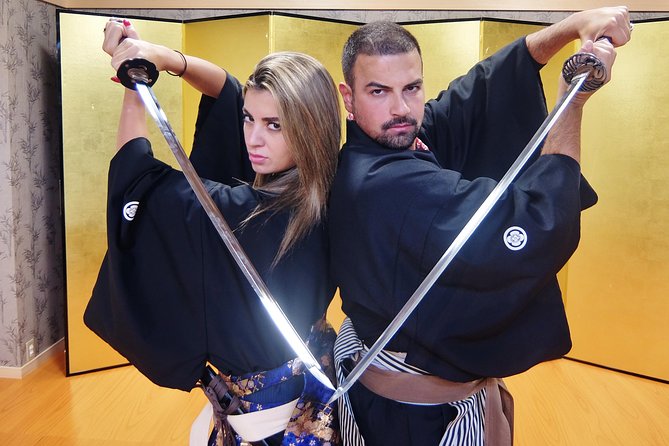
- A real practical lesson: You practice bowing, drawing, replacing, striking, and thrusting with a sword.
- Kenbu, not just sword play: The longer session adds stylized walking, folding-fan work, music, poetry, and choreography.
- Costume photos are included: You receive time in traditional samurai clothing, along with a certificate and tenugui towel.
- Small groups help: The class has a maximum of 10 people, though the room and pace can still vary by booking.
- Good for families and teens: The workshop keeps hands busy, but children aged 5 to 11 should ideally have some class or martial arts experience.
- Plan extra time: Some sessions run beyond the advertised 90 minutes, especially when a performance is part of the program.
What happens inside Kembu Kyoto Dojo
You meet at the Kembu Kyoto Dojo in Kyoto’s Higashiyama Ward, at 35 Sanchome, Kyoto 605-0005. The entrance instructions matter: go to the first basement floor using the stairs on the right side of the GOZAN building.
The venue is close to public transportation, but I would still leave time to find the building and make your way downstairs. The instructions ask you to arrive 10 to 3 minutes before the start, which is an awkwardly narrow phrase, so the sensible choice is to arrive about 10 minutes early.
Your instructor begins with a short three-minute film about samurai practices. It provides a quick frame for the lesson before you change clothes. This is useful if you know samurai mainly from movies or popular culture, since the class focuses on etiquette and stylized performance rather than battle theatrics.
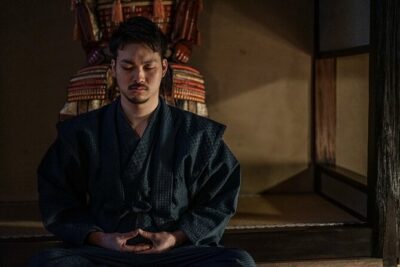
You then put on a samurai uniform with a white belt, Japanese-style socks, and a sword. The costume change is part of the fun, but wear clothing that allows you to move and makes changing easy. A single hoodie or tight clothing is specifically discouraged because it does not work well beneath or alongside the costume.
More Kimono & Culture Experiences in Kyoto
- Kyoto Geisha Walking Tour: Gion District & Hidden Gems
★ 4.7 · 3,273 reviews - Kyoto: Gion Magical Night Walking Tour with Geisha Trivia
★ 4.9 · 2,393 reviews - Kyoto: Gion Geisha District Walking Tour – Stories of Geisha
★ 4.7 · 2,187 reviews
Bow first, then learn the sword
The lesson starts with the bow. That may sound like a small detail, but it sets the tone for the class. Samurai technique here is built around control, posture, and ceremony, not wild swinging.
Next comes the sword. You learn how to draw it from its scabbard and return it safely. This is trickier than it appears, and the careful pace is a good thing. The instructor also shows you basic striking methods, along with thrusting and movements aimed at a potential opponent.
You should follow every safety instruction closely. The class involves real sword handling in a controlled setting, and the information provided asks participants to maintain a moderate level of physical fitness. You do not need to be a martial artist, but you should be comfortable standing, moving, and repeating choreographed actions.
The teaching is in English, which makes the sequence easier to follow. The strongest part of the experience is the clear progression from simple actions to a short routine. You are not left merely holding a sword for a photograph.
The costume session is fun, but allow enough time
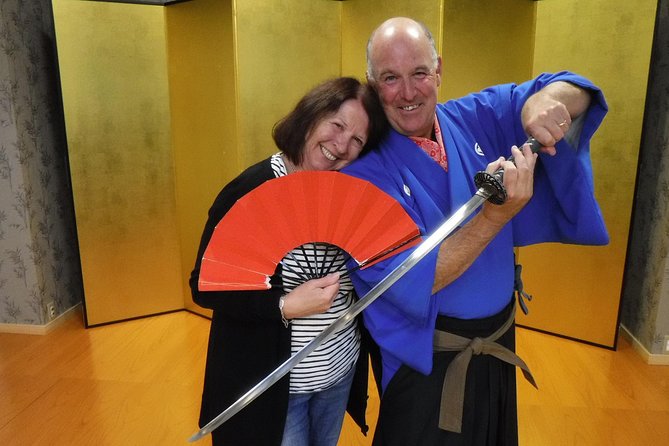
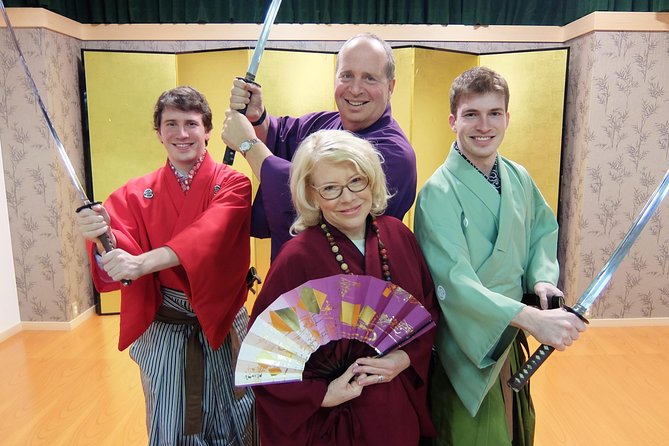
At some point during the training, you change into a more traditional samurai costume for photographs. This is the moment many families and couples will enjoy most. You can pose with the sword and create a record of the afternoon that feels more personal than a standard sightseeing snapshot.
Bring your own camera or phone if you want extra pictures, but keep your expectations realistic. The photo session may be brief, and one part of the class can feel hurried if another group is waiting to use the space. If good portraits matter to you, be ready before the camera comes out and decide quickly how you want to stand.
The costume is not just a prop. It helps you understand how posture, clothing, and sword placement work together in the art. Still, this is a short activity, not a full costume studio appointment, so the teaching receives priority.
You receive a lesson completion certificate and a tenugui towel, a traditional Japanese hand towel. They are modest souvenirs, but useful reminders of the experience and easy to pack.
The performance can change the feel of the session
A performance is part of the overall experience, though its place in the schedule can vary. In some sessions, you train and dress first, then watch the performers. That order works well because you can better appreciate the control and precision on stage after trying a few movements yourself.
The performance uses sword work, music, and poetry. It is more stylized than a simple demonstration, and it gives the class cultural context without requiring a long museum lecture. This is one reason the activity works well for people who want an introduction to samurai culture but do not want to spend an entire afternoon reading exhibit labels.
You should ask at the venue how the timing will run if your day is tightly planned. Some sessions include a longer show before the practical sword portion, and that can make the wait feel long, especially for young children. The show itself is often a highlight, but the order and length affect how the 90-minute visit feels.
The performance also explains why some sessions run slightly over. If you have dinner reservations, a train to catch, or another timed attraction, leave a buffer rather than scheduling the next activity immediately afterward.
Same city, a completely different kind of day:
- PERFECT KYOTO 1-Day Bus Tour
★ 5.0 · 13,518 reviews - Kyoto: Fushimi Inari, Kinkakuji, Bamboo Grove 1 Day Bus Tour
★ 4.8 · 4,316 reviews - Kyoto: Tea Ceremony in a Traditional Tea House in Kiyomizu
★ 4.9 · 3,519 reviews - Kyoto: Tea Ceremony Ju-An at Jotokuji Temple
★ 4.9 · 3,207 reviews
The longer lesson is the better choice for serious learners
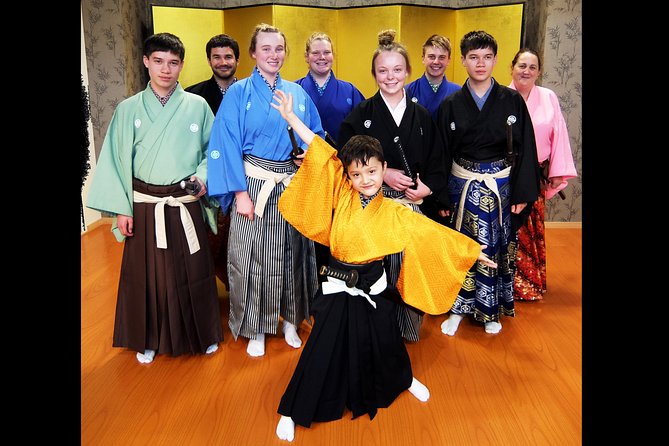
The standard session gives you an introduction to bowing, drawing and sheathing the sword, basic strikes, costume photographs, and the closing bow. It is enough to understand the fundamentals and enjoy the main novelty of the experience.
The longer option gives you more practice and a fuller lesson. You learn stylized walking and can add folding-fan movements. The class then builds toward kenbu choreography, performed with a sword on stage alongside music and a poem.
I would choose the longer lesson if you have a real interest in martial arts, Japanese performance, or learning a sequence properly. More time matters here because the sword movements are precise, and a few extra minutes of repetition can turn a confusing gesture into something you can perform with confidence.
The shorter option makes sense if you mainly want a family activity, costume photos, and a taste of sword technique. It also suits a packed Kyoto itinerary. Just remember that the performance may still affect the total time, depending on the schedule.
Why the class works for families and teens
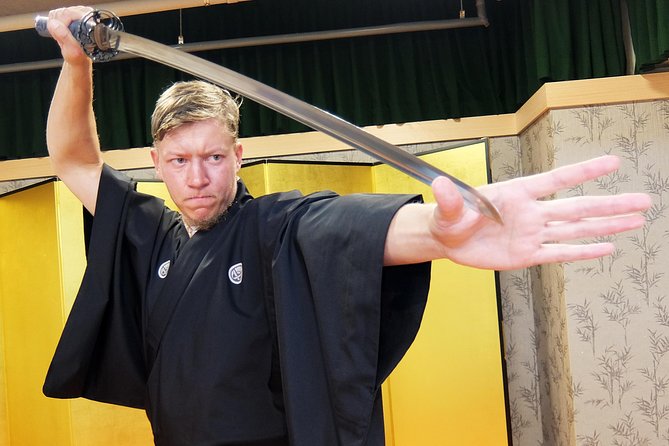
This is a strong choice for families with older children and teenagers. The lesson is active, visual, and broken into clear tasks. A 17-year-old who has little patience for museums can still learn something about samurai culture while doing rather than simply listening.
The group size is capped at 10, which helps keep the experience personal. Some sessions may be smaller, and a small group can make it easier to ask questions or receive corrections. One particularly useful feature is the instructor’s ability to adjust the lesson. If a participant is focused and wants more advanced work, the teaching can become more detailed.
Younger children need more care. Children aged 5 to 11 should ideally already attend a class or martial arts school, according to the activity guidance. That does not mean younger children cannot participate, but the strict attention to safety and form may be demanding for a child who struggles to follow instructions.
One piece of feedback points to a real issue: an instructor can be firm when children make repeated mistakes. I see that as a safety advantage during sword work, though it may feel less relaxed than a purely playful costume activity. Explain to children before arrival that this is a lesson first and dress-up second.
What the price includes at $66.32
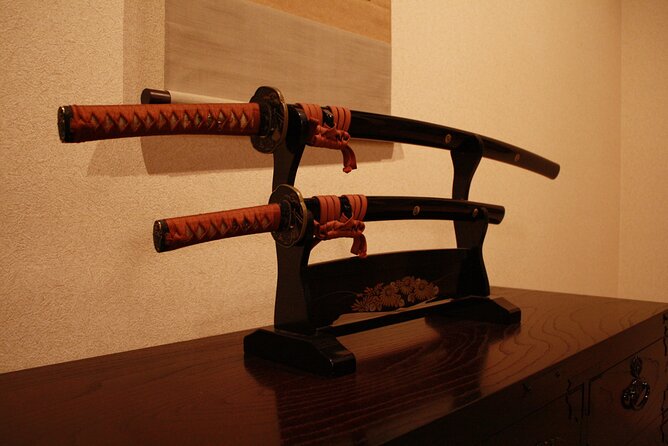
At $66.32 per person, this is not the cheapest way to spend 90 minutes in Kyoto. You are paying for a structured class, an English-speaking local instructor, costume use, a photo session, a certificate, and a tenugui towel. The value depends on how much you want to participate rather than watch.
For a couple or family, the price makes more sense if you treat the activity as both entertainment and cultural instruction. You get an experience that combines a short historical introduction, physical practice, a performance element, and souvenirs. A simple stage show might cost less, while a private martial arts lesson would likely offer more focused instruction but no family-wide spectacle.
The small-group limit also supports the price. You are not simply part of a large audience rotating through a photo station. Still, the class can feel less personal when several groups share the space, and the photo portion may be quick.
I would pay the price for the longer lesson if sword work is the main reason you are booking. If you mainly want pictures in costume, the standard session may offer better value, especially if your Kyoto schedule is full.
Practical details that make the visit smoother
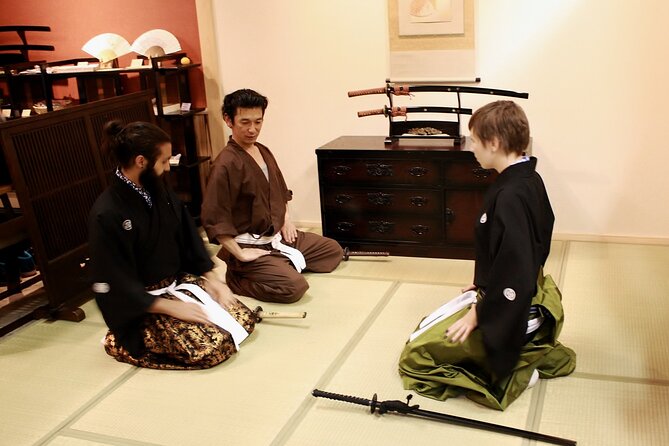
The activity lasts approximately one hour and 30 minutes, but allow extra time. One session can run over, and the performance may alter the schedule. The experience begins and ends at the dojo, with no hotel pickup or drop-off.
A mobile ticket is available, and confirmation arrives when you book. The activity has free cancellation up to 24 hours before the local start time. Changes or cancellations inside that window are not accepted, so keep the timing firm once you are within the final day.
Wear exercise-friendly clothing that allows leg and arm movement. Avoid arriving in only a bulky hoodie or tights, since the costume change is not designed around those clothes. Comfortable clothes also make the bowing, walking, and repeated sword movements easier.
The activity is near public transportation, but no food or drinks are included. Plan a snack or meal separately, particularly if you are bringing children.
Safety instructions are not optional decoration. Listen closely when the instructor explains how to hold, draw, and return the sword. The class is designed for beginners, but beginners still need to move with care.
Who will enjoy this most
I would recommend this for:
- Families with school-age children or teens who prefer active activities
- Couples looking for unusual Kyoto photographs
- Martial arts enthusiasts who want a short introduction to kenbu
- History buffs who enjoy learning through movement and demonstration
- Visitors seeking an indoor plan for a rainy day
- People who want a small cultural activity between temples and major sights
It is less suitable if you want a quiet lecture, a long private training session, or a polished professional photo shoot. It is also not the right pick if you need to finish at an exact minute.
The activity has a playful side, but it asks you to treat the sword and the instructor seriously. That balance is important. You can have fun, wear traditional clothing, and laugh with your family, but the class still expects attention and respect.
My verdict on the samurai school in Kyoto
This is a well-balanced Kyoto activity because it gives you more than a costume photograph. You learn the bow, sword handling, strikes, and the disciplined movements of kenbu, then see how those elements become a stage performance.
I especially like the patient English instruction, small group limit, and clear souvenir package. The certificate and towel are simple, but the lasting value comes from understanding how much control goes into movements that look effortless on stage.
Book it if you want an active cultural experience and can spare roughly two hours, including possible delays. Choose the longer session if the technique matters to you. Choose the standard option for a quick family introduction, and arrive ready to move, listen, and pose quickly when the camera comes out.
FAQ
Where does the samurai class meet?
The class meets at the Kembu Kyoto Dojo at 35 Sanchome, Higashiyama Ward, Kyoto 605-0005. On the day, go to the first basement floor using the stairs on the right side of the GOZAN building.
How long does the experience last?
The advertised duration is approximately one hour and 30 minutes. Some sessions may run longer, so leave extra time before your next activity.
Is the lesson taught in English?
Yes. An English-speaking local guide or instructor leads the experience.
What do I receive after the lesson?
The experience includes a photo shoot, a lesson completion certificate, and a tenugui towel, which is a traditional Japanese towel.
Can children take part?
Children can participate, but the guidance says children aged 5 to 11 should preferably attend some type of class or martial arts school. All participants must follow the instructor’s safety directions.
What happens in the longer lesson?
The longer option gives you additional practice with samurai movements. You can learn stylized walking and folding-fan movements, then work on kenbu choreography with a sword, poem, and music on stage.
Just added around Kyoto
- Private Guided Traditional Buddhist Cooking in Japan★ 5.0 · 16 reviews
- Kyoto: Gion Geisha District & Sake-in-Hand Walking Tour★ 5.0 · 37 reviews
- Your Private Vacation Photography Session In Kyoto★ 5.0 · 110 reviews
- Kyoto: Zen Meditation at a Private Temple with a Monk★ 5.0 · 25 reviews
- Traditional Japanese Washi Papermaking- Kyoto morning★ 5.0 · 77 reviews
- Kyoto Wagashi(Japanese sweets) Cooking Class near Fushimiinari★ 5.0 · 60 reviews
- Private Pewter Sake Cup Experience with a Kyoto Artisan★ 5.0 · 31 reviews
- Kyoto Private 6 hour Tour: English Speaking Driver Only, No Guide★ 5.0 · 88 reviews
Kimono & Culture Experiences, compared.

Kyoto Geisha Walking Tour: Gion District & Hidden Gems
Read our review →
Gion Magical Night Walking Tour with Geisha Trivia
Read our review →
Gion Geisha District Walking Tour – Stories of Geisha
Read our review →
Best of Kyoto: Gion, Geisha, Pagodas & Cobblestones
Read our review →
Kyoto Gion Geisha District Walking Tour – The Stories of Geisha
Read our review →
Browse the lists this tour appears in