
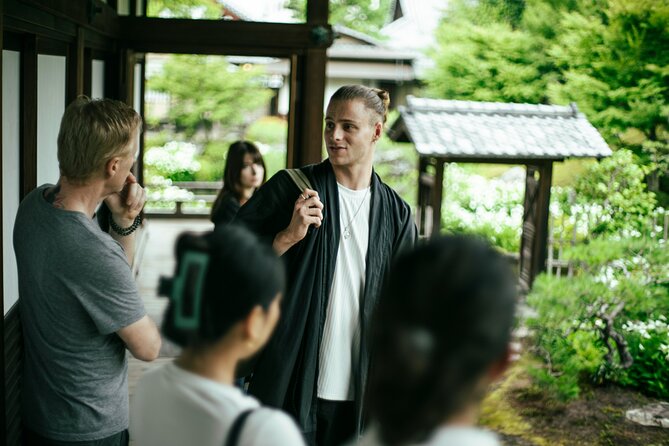
REVIEW · WALKING TOURS
Private Walking Tour in Gion and Higashiyama
Gion’s narrow lanes and old wooden teahouses give you Kyoto at its most atmospheric, but the district makes more sense when someone explains what you’re seeing. This private walk connects geisha culture with Buddhist temples, shrine customs, and the traditional streets of Higashiyama.
I like the personal format, since your guide can answer questions and adjust the conversation to your interests. I also like the efficient route, which takes in Kennin-ji, Hokan-ji, Ninenzaka, Maruyama Park, and Yasaka Shrine without asking you to plan the order yourself.
The main consideration is price: at $144.88 per person, this is a serious spend for a three-hour walk, especially for a solo visitor. You’re paying for private attention and local context, not admission-packed sightseeing.
In This Review
- Key points to know
- Starting beside the Kamo River in Gion
- Kennin-ji and Kyoto’s Zen tradition
- Hokan-ji and the famous Yasaka Pagoda
- Ninenzaka, where the walking becomes the attraction
- Maruyama Park in only ten minutes
- Finishing at Yasaka Shrine
- What the private format is really worth
- The guide can make or break the walk
- Who should book this Kyoto walk
- My call on the $144.88 price
- FAQ
- How long does the private walking tour last?
- Where does the tour begin?
- Where does the tour end?
- Is this a private activity?
- Which places are included?
- What is the cancellation policy?
Key points to know
- Private attention from start to finish: Only your group joins the activity, so the guide can focus on your questions and pace.
- A useful Gion-to-Higashiyama route: The walk links geisha streets, Zen temple grounds, old shopping lanes, a park, and a major shrine.
- Guide Dominic receives special praise: He is described as friendly, informative, responsive, and willing to go beyond the basic route.
- No admission fees are listed: The main value comes from interpretation, navigation, and saving you research time.
- The route ends at Yasaka Shrine: You finish near the shrine’s south main gate, about seven minutes on foot from the starting point.
- Best for first-time Kyoto visitors: You get a clear introduction to several central sights in one compact outing.
Starting beside the Kamo River in Gion
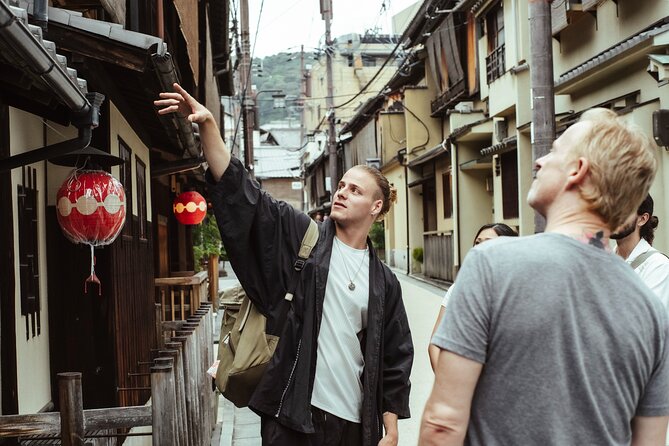
The tour begins at the Statue of Izumo-no-Okuni in Kawabatacho, in Kyoto’s Higashiyama Ward. This gives you a central meeting point near Gion and puts you close to the old streets that make the district so famous.
Your first hour focuses on Gion and its connection to the world of geisha. The subject can be confusing if you only encounter it through signs, costumes, or quick photographs. A guide can explain the difference between public appearances, traditional entertainment, teahouses, and the customs that shape daily life in the district.
I value this part because it gives you the social setting behind the scenery. Gion is not simply a pretty collection of wooden buildings. It is also a working neighborhood, and an informed guide can help you look with respect rather than treating every doorway as a photo opportunity.
The exact amount of walking through Gion will depend on your guide and the pace of your group. The schedule allows about an hour here, which is enough time for orientation and conversation without turning the entire tour into a lecture.
More Walking Tours in Kyoto
- Kyoto Geisha Walking Tour: Gion District & Hidden Gems
★ 4.7 · 3,273 reviews - Kyoto: Gion Magical Night Walking Tour with Geisha Trivia
★ 4.9 · 2,393 reviews - Kyoto: Gion Geisha District Walking Tour – Stories of Geisha
★ 4.7 · 2,187 reviews
Kennin-ji and Kyoto’s Zen tradition
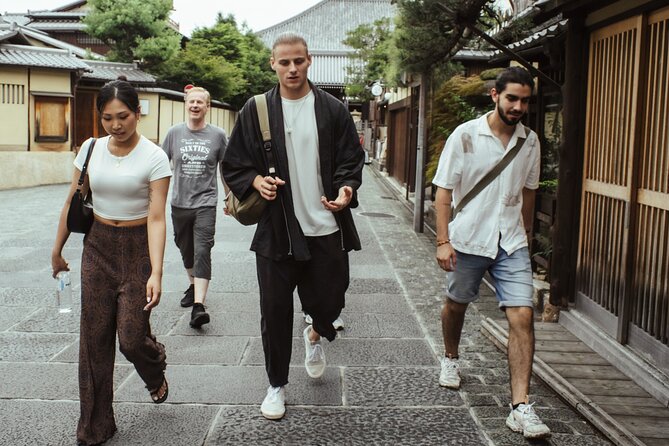
From Gion, the route includes Kennin-ji Temple, one of Kyoto’s oldest Zen temples. The planned stop lasts about 30 minutes, and admission is listed as free for this experience.
Kennin-ji gives the tour a change of mood. Gion is about streets, performance, and social tradition. Kennin-ji shifts the focus to Buddhism and the role of Zen in Japanese culture. You can expect an explanation of how Buddhist ideas came to Japan and how they influenced art, architecture, practice, and everyday customs.
Half an hour is a sensible amount of time if you want an introduction rather than a full temple study. It also means you should not expect to see every corner or spend a long period sitting quietly in the grounds. The benefit is that the temple fits neatly into a wider route through the district.
I would pay close attention here to the guide’s explanations rather than trying to rush through for photographs. This is one of the places where a private tour earns its keep. If you have questions about Zen, temple etiquette, or the difference between a temple and a shrine, you can ask them as they arise.
Hokan-ji and the famous Yasaka Pagoda
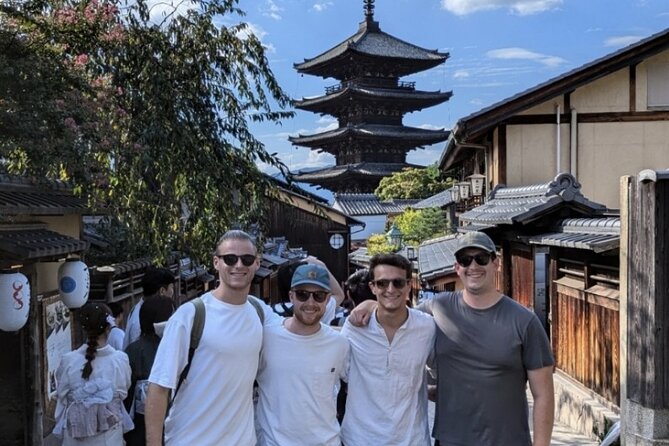
The next listed stop is Hokan-ji Temple, better known for its Yasaka Pagoda. The visit lasts around 20 minutes and includes time to explore the surrounding old town.
The pagoda is one of Higashiyama’s most recognizable sights, and the streets around it are part of the attraction. Narrow lanes, traditional shops, cafes, and teahouses create the classic Kyoto setting many people hope to see. This is also a section where the route can feel more focused on atmosphere than on a long indoor visit.
The short stop is useful for taking in the setting without losing too much time. At the same time, you should know that 20 minutes is brief. If you want a slow shop-by-shop browse or a long cafe break, you may need to return later on your own.
That is a recurring feature of this experience: the guide helps you see the main shape of Gion and Higashiyama, but the tour is not designed as an unhurried shopping walk. I see that as a fair trade for covering several important places in only three hours.
Ninenzaka, where the walking becomes the attraction
The route continues along Ninenzaka Path, a historic street through Higashiyama. Unlike a temple stop with a clear entrance and exit, Ninenzaka works best as a steady walk through the old town.
You’ll pass traditional shops, cafes, and teahouses as the street connects the sights. A guide can help you understand how these lanes fit into Kyoto’s older townscape and point out details you might skip when walking alone. The route also gives you a chance to pause and take in the buildings instead of moving from one formal landmark to the next.
Ninenzaka can be one of the most enjoyable parts for anyone who wants Kyoto beyond museum labels and grand monuments. It is also likely to be the most stop-and-start section, since the street invites photographs and browsing. If your group likes to shop, mention that early, since the schedule is fairly full.
You should wear comfortable shoes. That is plain advice, but it matters here because the experience is almost entirely on foot and the route links several districts and landmarks. The tour is suitable for most people, though anyone who finds extended walking difficult should consider the three-hour duration before booking.
Same city, a completely different kind of day:
- PERFECT KYOTO 1-Day Bus Tour
★ 5.0 · 13,518 reviews - Kyoto: Fushimi Inari, Kinkakuji, Bamboo Grove 1 Day Bus Tour
★ 4.8 · 4,316 reviews - Kyoto: Tea Ceremony in a Traditional Tea House in Kiyomizu
★ 4.9 · 3,519 reviews - Kyoto: Tea Ceremony Ju-An at Jotokuji Temple
★ 4.9 · 3,207 reviews
Maruyama Park in only ten minutes
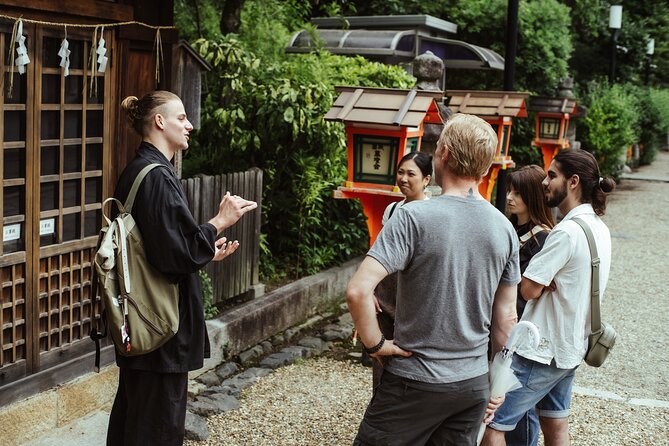
Maruyama Park receives about ten minutes on the route. It is known for cherry blossoms in spring and autumn leaves in fall, and it is surrounded by temples and other sights.
A ten-minute stop is enough for a quick look, a few photographs, and a seasonal orientation. It is not enough for a long park stroll or a detailed visit. Your guide can point out why the park matters in the flow of the district, but this should be treated as a short pause rather than a major destination.
The timing makes sense because Maruyama Park sits naturally between the Higashiyama streets and Yasaka Shrine. You get a breath of open space before the final shrine visit, without spending too much of the limited tour time away from the central historic lanes.
If seasonal scenery is your main reason for visiting the park, you may want to return independently. The tour gives you a useful introduction, but the schedule does not allow a leisurely exploration of the grounds.
Finishing at Yasaka Shrine
The final main stop is Yasaka Shrine, with about 30 minutes planned. This is a strong ending because the shrine brings together architecture, local worship, and everyday Japanese customs.
The visit includes traditional practices such as drawing omikuji, or fortune papers. Your guide can explain what you are seeing and how shrine customs differ from Buddhist temple practices. That distinction is particularly useful after Kennin-ji, since the route has placed both kinds of religious site within the same afternoon.
Yasaka Shrine is also a practical finishing point. The tour ends at the main gate on the south side, and you’ll be about seven minutes on foot from the starting point. You are not left at an obscure corner of the city, and the location makes it easy to continue exploring Gion afterward.
The shrine stop is long enough to give you a proper look, but it is still part of a compact walking tour. If you want extended time for prayers, fortune papers, photographs, or quiet observation, you may want to stay after the guide finishes.
What the private format is really worth
The listed price is $144.88 per person. That is high compared with joining a large group walk, but the comparison is not quite like-for-like. This is a private activity, so only your group participates, and the guide’s attention is not divided among strangers.
The value is strongest for two or more people who want a flexible conversation. You can ask about geisha culture, temple customs, Buddhism, Japanese traditions, or practical questions about the neighborhood without waiting for a large group to catch up.
It is also useful if you have limited time in Kyoto. Rather than researching the best order for Gion and Higashiyama, you follow a planned route that includes several of the area’s major sights. The guide handles navigation while you concentrate on the streets and buildings.
For a solo visitor, the cost is harder to justify. You still receive a private tour, but the per-person price does not benefit from sharing the guide’s time across a larger personal group. Group discounts are available, so check how the price changes for your party before deciding.
The tour includes no listed admission charges, which keeps the cost easier to understand. You are paying mainly for guidance, interpretation, personal attention, and the convenience of a ready-made route.
The guide can make or break the walk
One named guide connected with the experience is Dominic. The strongest praise focuses on his friendly manner, clear information, willingness to answer questions, and extra effort throughout the walk.
Those qualities matter more on a neighborhood tour than a simple list of dates and names. Gion and Higashiyama are full of details that can be missed or misunderstood. A guide who explains local customs while keeping the walk enjoyable gives the route more purpose than a basic point-to-point escort.
The experience has a five-star rating from 15 reviews, with 100 percent recommending it. That is a positive signal, though the sample is small. I would treat Dominic’s praise as a reason to feel encouraged, not as a guarantee that every departure will feel identical.
Since the booking is private, your own questions and interests should shape much of the experience. If you care most about photography, Buddhist practice, architecture, or geisha culture, tell the guide at the beginning. A private format has little value if you remain silent and simply follow the route.
Who should book this Kyoto walk
I would recommend this tour to a first-time Kyoto visitor who wants a clear introduction to Gion and Higashiyama in one morning or afternoon. It suits people who prefer conversation and context over rushing between attractions alone.
It is also a good match for couples, families, and small groups who appreciate not being tied to strangers. The guide can keep everyone together, answer questions from different ages, and explain customs at a level that fits your group.
You may want a different plan if you want extensive temple interiors, a long food stop, serious shopping time, or a slow photography session. The schedule covers many places, so some stops are necessarily short. The 10 minutes at Maruyama Park and 20 minutes at Hokan-ji are useful introductions, not full visits.
The activity is near public transportation, service animals are allowed, and most people can participate. Still, this is a walking route lasting about three hours, so comfortable footwear and a realistic view of your own walking ability are sensible.
Booking confirmation is normally sent at the time of booking. If you book within four hours of the start time, confirmation comes as soon as possible and depends on availability. Free cancellation is available up to 24 hours before the local start time. Inside that window, the payment is not refunded and changes are not accepted.
My call on the $144.88 price
Book this tour if you want the meaning behind the sights, not just a checklist of famous Kyoto addresses. The route is well shaped, the private format gives you room to ask questions, and the guide’s role is especially useful in Gion, where customs can be easy to misread.
Skip it if you already know the district well or prefer to wander slowly at your own pace. The price is not low, and the short stops may feel restrictive if you want to linger.
For a first visit with limited time, I think the private structure can justify the cost, especially for a small group using the available discount. You’ll finish with a practical understanding of Gion and Higashiyama, plus a clear sense of which streets, temples, or shrines deserve a longer return visit.
FAQ
How long does the private walking tour last?
The experience lasts approximately three hours.
Where does the tour begin?
The meeting point is the Statue of Izumo-no-Okuni in Kawabatacho, Higashiyama Ward, Kyoto.
Where does the tour end?
The tour ends at Yasaka Shrine, at the main gate on the south side. The endpoint is about seven minutes on foot from the starting point.
Is this a private activity?
Yes. Only your group participates in the tour.
Which places are included?
The route includes Gion, Kennin-ji Temple, Hokan-ji Temple and Yasaka Pagoda, Ninenzaka Path, Maruyama Park, and Yasaka Shrine.
What is the cancellation policy?
You can cancel up to 24 hours before the local start time for a full refund. Cancellations or changes made within 24 hours are not accepted and are not refunded.
Just added around Kyoto
- Private Guided Traditional Buddhist Cooking in Japan★ 5.0 · 16 reviews
- Kyoto: Gion Geisha District & Sake-in-Hand Walking Tour★ 5.0 · 37 reviews
- Your Private Vacation Photography Session In Kyoto★ 5.0 · 110 reviews
- Kyoto: Zen Meditation at a Private Temple with a Monk★ 5.0 · 25 reviews
- Traditional Japanese Washi Papermaking- Kyoto morning★ 5.0 · 77 reviews
- Kyoto Wagashi(Japanese sweets) Cooking Class near Fushimiinari★ 5.0 · 60 reviews
- Private Pewter Sake Cup Experience with a Kyoto Artisan★ 5.0 · 31 reviews
- Kyoto Private 6 hour Tour: English Speaking Driver Only, No Guide★ 5.0 · 88 reviews
Walking Tours, compared.

Kyoto Geisha Walking Tour: Gion District & Hidden Gems
Read our review →
Tokyo Tsukiji Fish Market Food and Culture Walking Tour
Read our review →
Gion Magical Night Walking Tour with Geisha Trivia
Read our review →
Imperial Palace and Shogun Historical Walking Tour
Read our review →
Gion Geisha District Walking Tour – Stories of Geisha
Read our review →
Asakusa Walking Tour with Sensoji Temple Visit
Read our review →
Kyoto Gion Geisha District Walking Tour – The Stories of Geisha
Read our review →Browse the lists this tour appears in