
REVIEW · KIMONO & CULTURE EXPERIENCES
Private Japanese Calligraphy in Kyoto – Learn Shodō with a Master
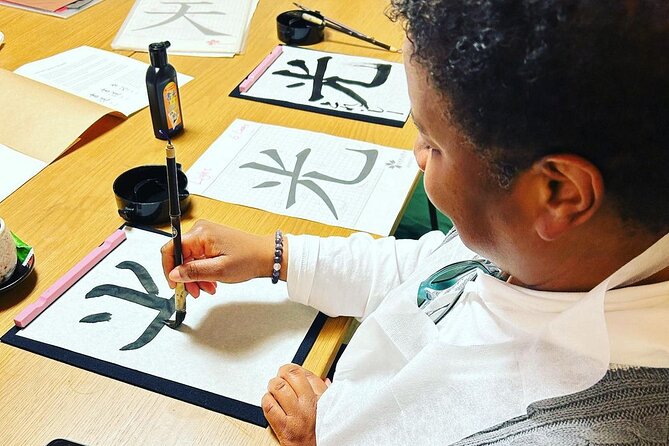
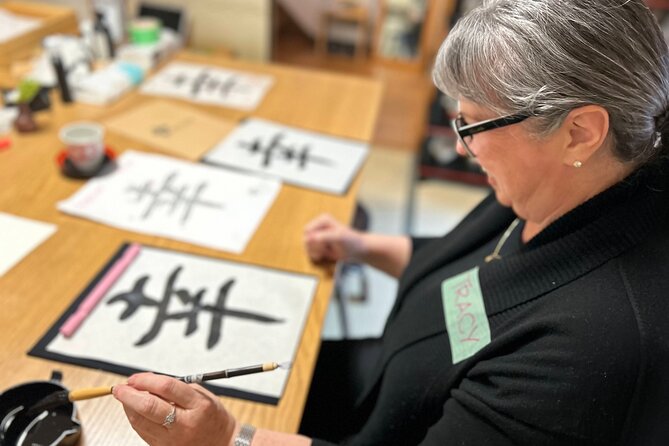
The special part of this Kyoto activity is its setting: you practice Shodō in a private Japanese home, not in a large workshop filled with strangers. Aya, who has practiced calligraphy for more than 55 years, guides you through brush control, kanji strokes, and the quiet focus behind the art. You leave with work made by your own hand.
I like the one-hour private format because Aya can correct your brush movements directly, and I like that the class gives you several pieces of practice work or finished art to take home. Tea, traditional sweets, photographs, and friendly conversation may also be part of the welcome, depending on the session.
The main caution is time. One hour passes quickly, especially if you want to write both a kanji character and your Japanese name. The home can also be tricky to find if you follow incorrect street-view images, so allow extra time and use the map pin carefully.
In This Review
- Key points before you book
- What this Kyoto calligraphy class is really like
- Meeting Aya near Nijo Castle
- The first brush movements
- Choosing a kanji character and writing your name
- A quiet tatami room and a personal welcome
- Why the private format is worth the price
- What the class does well, and where it falls short
- Who will enjoy this experience most
- How to make the most of your one hour
- Should you book this Kyoto calligraphy class?
- FAQ
- Where does the Japanese calligraphy class take place?
- How long does the calligraphy experience last?
- Is the class private?
- Is the class taught in English?
- Are calligraphy supplies included?
- Can I take my calligraphy home?
- Can children attend the class?
- What happens if I arrive late?
Key points before you book
- A true private lesson: Only your group takes part, so Aya can focus on your technique and questions.
- A home near Nijo Castle: The class takes place about 200 meters west of Nijo Castle in a tatami room.
- A teacher with decades of practice: Aya has more than 55 years of experience with Japanese calligraphy.
- Your own kanji keepsake: Choose a favorite character, practice it, and take home your artwork.
- Bring clean socks: Bare feet are not permitted on the tatami.
- Plan your arrival: More than 15 minutes late means the class may not be able to start, with no refund.
What this Kyoto calligraphy class is really like
Japanese calligraphy, or Shodō, is not simply decorative handwriting. The brush, ink, paper, and the movement of your arm all matter. A stroke can be bold, light, dry, wet, quick, or slow. Even a beginner quickly sees that the finished character depends as much on control and rhythm as on knowing the correct shape.
That makes this a useful cultural activity for a first visit to Kyoto. You are not just copying a symbol from a worksheet. You are being shown how Japanese students approach the brush, how each stroke is formed, and how concentration affects the result.
The class takes place at SAKURA Experience Japanese Culture Nijo Home, in the center of Kyoto. Aya teaches in English and Japanese, and her husband, Manabu, may help welcome you and manage practical details. The atmosphere is personal rather than formal. You enter a private home, remove your shoes, and sit in a tatami room prepared for the lesson.
That home setting is a large part of the appeal. Kyoto has plenty of polished cultural attractions, but this feels closer to being invited into someone’s everyday world. You get a glimpse of Japanese etiquette, the care given to a tatami room, and the calm pace that suits calligraphy.
More Kimono & Culture Experiences in Kyoto
- Kyoto Geisha Walking Tour: Gion District & Hidden Gems
★ 4.7 · 3,273 reviews - Kyoto: Gion Magical Night Walking Tour with Geisha Trivia
★ 4.9 · 2,393 reviews - Kyoto: Gion Geisha District Walking Tour – Stories of Geisha
★ 4.7 · 2,187 reviews
Meeting Aya near Nijo Castle
The meeting point is close to Nijo Castle, one of Kyoto’s best-known sights. The house is described as about 200 meters straight west from the front of the castle, though the address itself can be less intuitive for a first-time visitor: 660 Izumichō, Nakagyo Ward, Kyoto, 604-0015.
Give yourself extra time. The map pin is reported to be accurate, but street-view images may show a different location. If you rely only on storefront photos or visual clues while walking, you could end up searching the wrong street.
Use the exact map pin and any directions sent to you by the operator. If public transport or weather causes a delay, contact the provider as soon as possible. Kyoto’s grid can look simple on paper, but similar-looking streets can slow you down when you are trying to find a private residence.
The activity begins and ends at the same meeting point. Private transportation is not included, but the location is near public transportation. Since this is an appointment in a home rather than an attraction with a large reception desk, punctuality matters more than it would at a museum.
The first brush movements
After you settle into the room, Aya introduces the basic tools and the art of Shodō. The supplies are provided, including brushes, ink, paper, and other calligraphy equipment, so you do not need to arrive with any previous experience or buy anything beforehand.
The first stage is practice. You learn how to hold the brush, where to place pressure, and how to begin and finish a stroke. This is where the private format pays off. Aya can watch your hand closely and offer small corrections that would be easy to miss in a large group.
Do not expect instant perfection. The brush behaves differently from a pen, and the ink responds to pressure and speed. Some people find the physical movements surprisingly demanding, especially when trying to make a character look simple and balanced.
The activity is designed for beginners, so you are not expected to read Japanese. Aya helps you select a kanji character and explains its meaning. You then practice the form before creating a cleaner version to take home.
The educational side can vary in pace. Some sessions include a clear introduction to the background and development of calligraphy, while others move quickly toward hands-on practice. If the cultural context matters to you, ask questions as you go. Aya is happy to discuss calligraphy and Japanese culture, but the one-hour schedule leaves little room for a long lecture.
Choosing a kanji character and writing your name
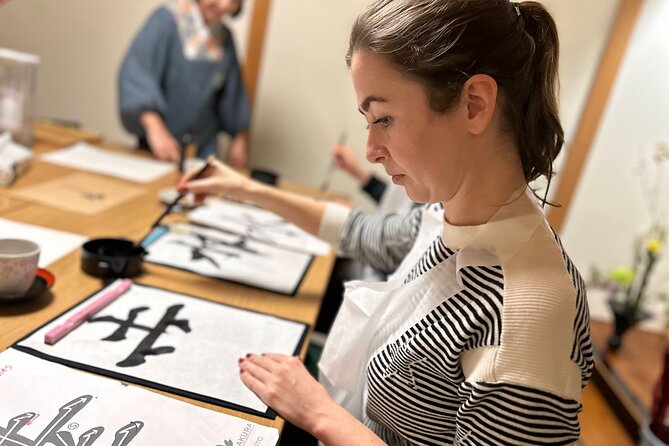
The most personal part of the class is choosing your character. You might select an idea connected to your trip, family, personal values, or a feeling you want to remember. Aya helps you understand how the character is written and guides you through its structure.
You can also write your name in Japanese. This sounds simple, but longer names take more time, especially if you want careful instruction rather than a quick transliteration. If writing your name is important, tell Aya early in the session instead of leaving it until the final minutes.
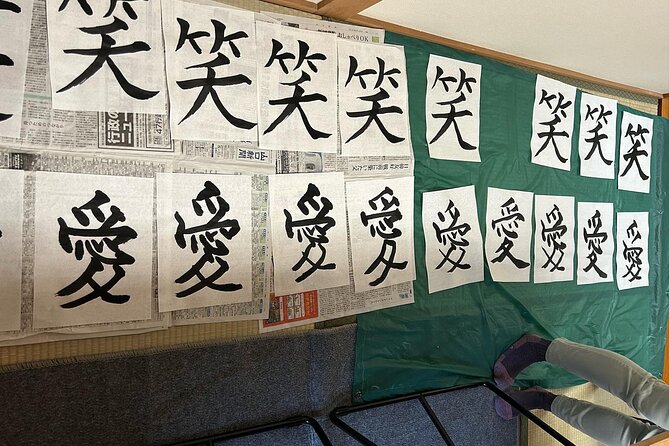
Some participants prefer to focus on one strong kanji and make several versions. Others want a collection of practice pieces, names, and finished characters. You have room to choose your priority, but you should not expect unlimited time.
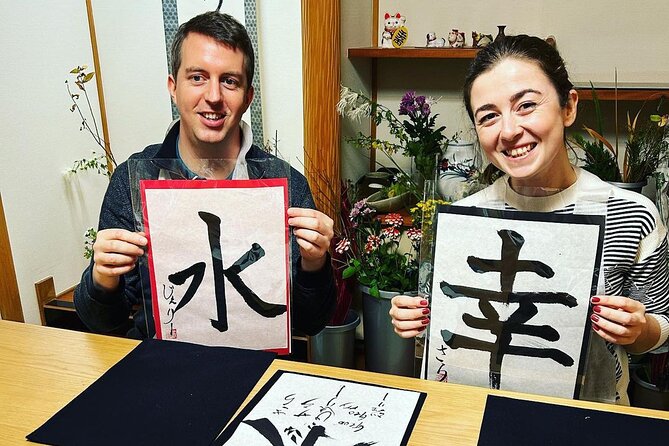
The art you take home is valuable because it records your own effort. It will not look like a master’s work, and that is the point. You can see the early attempts, the improved versions, and the final piece that reflects what you learned that day.
One useful distinction: a teacher’s original artwork is not automatically included. If you want one of Aya’s own pieces, it may be available for purchase, but the included souvenir is the work you create during the class.
Same city, a completely different kind of day:
- PERFECT KYOTO 1-Day Bus Tour
★ 5.0 · 13,518 reviews - Kyoto: Fushimi Inari, Kinkakuji, Bamboo Grove 1 Day Bus Tour
★ 4.8 · 4,316 reviews - Kyoto: Tea Ceremony in a Traditional Tea House in Kiyomizu
★ 4.9 · 3,519 reviews - Kyoto: Tea Ceremony Ju-An at Jotokuji Temple
★ 4.9 · 3,207 reviews
A quiet tatami room and a personal welcome
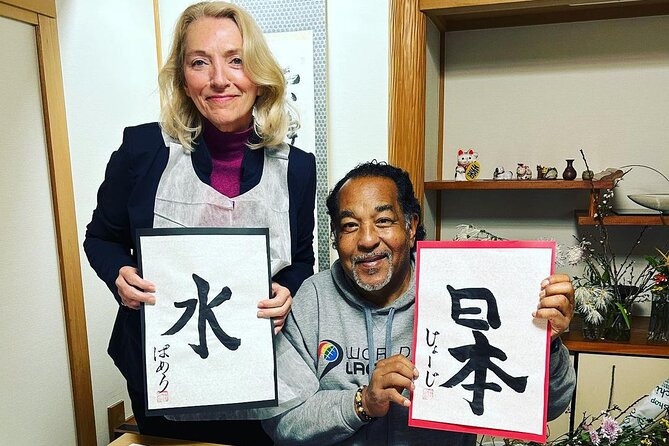
The physical setting gives the class a sense of occasion. You are asked to enter the tatami room wearing clean socks. Bare feet are considered impolite and are not permitted, so pack a pair if you are wearing sandals.
The room is described as calm and welcoming, with a studio area set up for the lesson. Some sessions include tea and traditional Japanese sweets. Aya and Manabu have also helped with photographs, directions, local suggestions, and practical matters such as arranging a taxi when rain made the return trip difficult.
These touches matter because a short class can otherwise feel like a quick craft stop. Conversation helps connect the brushwork with daily Japanese life. You can ask about the characters, the tools, or customs you have noticed elsewhere in Kyoto.
Still, keep your expectations in the right place. This is a compact introductory lesson, not a multi-day course in Japanese calligraphy. You get a meaningful introduction and hands-on practice, but not advanced training in composition, ink preparation, or the many styles of classical writing.
Why the private format is worth the price
The advertised price is $77.51 per person. That is not the cheapest one-hour activity in Kyoto, but the comparison should be made with other private cultural lessons, not with a museum admission or a casual souvenir workshop.
Your fee covers the private teacher’s time, all tools and paper, guidance in selecting and writing a kanji, and the work you produce. The one-on-one attention is the main value. If you are nervous about using a brush, Aya can slow down and encourage you. If you are already artistic, she can give more direct feedback on pressure and form.
The private arrangement is also useful for couples, families with older children, and small groups with different skill levels. Everyone can ask questions without waiting for a large class to move on.
Group discounts are available, which may improve the value for a small party. The activity is also a sensible rainy-day choice because it takes place indoors and offers something more memorable than another café stop.
The weak point is duration. At about one hour, the experience is short for the price if you measure value only by time. I think it works best as one part of a Kyoto day, perhaps before or after visiting Nijo Castle, rather than as the sole activity for an afternoon.
What the class does well, and where it falls short
The strongest part is Aya herself. She is described as patient, encouraging, warm, and attentive. Beginners receive plenty of reassurance, and hesitant participants are gently brought into the process. That matters because calligraphy can look effortless when demonstrated by an expert, but it feels much less simple when the brush is in your own hand.
The English support is another practical advantage. Aya teaches in English and Japanese, and clear communication is especially helpful when discussing the meaning of a kanji or the sound of a foreign name.
The personal keepsake is also well handled. You do not simply watch an expert perform. You produce several examples and can choose pieces to bring home. Some people have framed their work, given it to family members, or continued practicing after buying calligraphy supplies from a recommended shop.
The limitations are clear. One hour may feel rushed if your group is large, your name is long, or you want a lengthy explanation of calligraphy’s history. The experience is beginner-friendly, but it is not intended to satisfy someone seeking serious technical instruction.
There is also an age restriction. Children under 12 cannot be accommodated in the regular class, partly to preserve the quiet learning environment. Older children can enjoy it, especially if they are motivated, but you should not assume that a young child will be accepted simply because the activity is private.
Who will enjoy this experience most
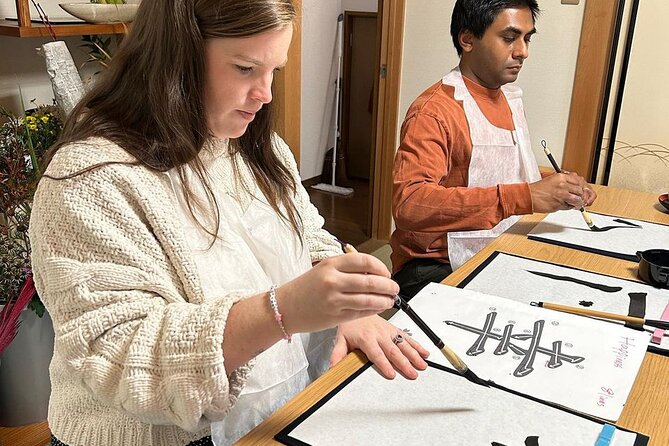
I would recommend this class to you if you want a personal souvenir with a story behind it. It suits people who enjoy making things, learning small cultural details, and meeting a local teacher in a home setting.
It is particularly good for:
- Couples seeking a calm activity between major Kyoto sights
- Solo visitors who want direct instruction and conversation
- Families with children aged 12 and older
- Small groups who can benefit from a private teacher
- Beginners who have never used a Japanese calligraphy brush
- Visitors looking for an indoor activity on a rainy day
You may want to skip it if you dislike sitting still, have no interest in creating art, or expect a long, formal study of Japanese writing. You should also choose a longer workshop if your main goal is advanced technique rather than a first experience.
How to make the most of your one hour
Decide before you arrive what matters most to you. If you want to write your name, prepare the spelling and tell Aya at the start. If you want one meaningful kanji, think about the idea you want it to express.
Arrive early enough to locate the home without rushing. A late arrival of more than 15 minutes can mean the session cannot begin, and the payment will not be refunded. This rule is strict because Aya has prepared the room and reserved the time for your private group.
Wear clean socks and comfortable clothing. You will be working with ink, so avoid bringing a favorite garment that you would hate to stain. The tools and paper are supplied, and a mobile ticket is accepted.
Ask questions during the lesson rather than waiting until the end. The class is short, and a little conversation about the character’s meaning or stroke order can make the finished piece much more special.
If photography is important to you, ask whether Aya can take pictures during your session. Photographs have been shared with participants in some classes, but you should treat this as a possible courtesy rather than a guaranteed part of the package.
Should you book this Kyoto calligraphy class?
Book it if you want a private, human-scale cultural experience near Nijo Castle, especially if the idea of making your own kanji art appeals to you. Aya’s long practice, patient teaching, and home studio give the activity more feeling than a quick souvenir demonstration.
The price is fair for a private lesson with supplies and a take-home keepsake, though the short schedule means you need to arrive prepared. Set your expectations at an enjoyable introduction, not a complete course.
My practical advice is simple: reserve ahead, use the precise map pin, bring socks, arrive early, and choose your priority before the brush touches the paper. Do that, and this can become one of the more personal memories in your Kyoto itinerary.
FAQ
Where does the Japanese calligraphy class take place?
The class takes place at SAKURA Experience Japanese Culture Nijo Home, at 660 Izumichō, Nakagyo Ward, Kyoto, 604-0015, Japan. It is about 200 meters west of Nijo Castle.
How long does the calligraphy experience last?
The class lasts approximately one hour.
Is the class private?
Yes. Only your group participates, so there are no other guests in the lesson.
Is the class taught in English?
Yes. The experience is offered in English and Japanese.
Are calligraphy supplies included?
Yes. Brush, ink, paper, and other calligraphy tools are provided for the lesson.
Can I take my calligraphy home?
Yes. You can take home the artwork you create during the class, including your chosen kanji and, when time allows, your name in Japanese.
Can children attend the class?
Children under 12 cannot be accommodated. Older children may participate, but the class is best suited to children who are motivated to practice quietly.
What happens if I arrive late?
If you arrive more than 15 minutes late, the class may not be able to start and no refund is offered. Contact the provider as soon as possible if public transport or weather causes a delay.
Just added around Kyoto
- Private Guided Traditional Buddhist Cooking in Japan★ 5.0 · 16 reviews
- Kyoto: Gion Geisha District & Sake-in-Hand Walking Tour★ 5.0 · 37 reviews
- Your Private Vacation Photography Session In Kyoto★ 5.0 · 110 reviews
- Kyoto: Zen Meditation at a Private Temple with a Monk★ 5.0 · 25 reviews
- Traditional Japanese Washi Papermaking- Kyoto morning★ 5.0 · 77 reviews
- Kyoto Wagashi(Japanese sweets) Cooking Class near Fushimiinari★ 5.0 · 60 reviews
- Private Pewter Sake Cup Experience with a Kyoto Artisan★ 5.0 · 31 reviews
- Kyoto Private 6 hour Tour: English Speaking Driver Only, No Guide★ 5.0 · 88 reviews
Kimono & Culture Experiences, compared.

Kyoto Geisha Walking Tour: Gion District & Hidden Gems
Read our review →
Gion Magical Night Walking Tour with Geisha Trivia
Read our review →
Gion Geisha District Walking Tour – Stories of Geisha
Read our review →
Best of Kyoto: Gion, Geisha, Pagodas & Cobblestones
Read our review →

Kyoto Gion Geisha District Walking Tour – The Stories of Geisha
Read our review →
Browse the lists this tour appears in