
REVIEW · WALKING TOURS
Osaka Walking Tour to Local Gems, Food & Culture
Osaka’s best introduction is not just a parade of neon signs. This walk moves from Amemura’s youth subculture to the quiet moss-covered statue at Hozen-ji, then on to Kuromon Market and the street where restaurant professionals shop for knives and kitchen tools. It gives you a quick look at how many different Osakas fit inside the city center.
I like the way the route mixes famous sights with places you could easily miss alone. I also like the small-group limit of 12, the licensed guides, and the useful food and shopping advice built into the walk. The main drawback is the pace: eight stops in two and a half hours means some places, especially Dotonbori and Nipponbashi, receive only a brief look.
In This Review
- Key points to know before you book
- Why this route gives you more than Osaka’s postcard sights
- Starting in Shinsaibashi and Horie Park
- Amemura shows Osaka’s youthful side
- Namba Hatch and the move toward central Namba
- A quick look at Dotonbori’s famous lights
- Hozen-ji offers a quiet pause near the crowds
- Kuromon Market is the main food opportunity
- Nipponbashi adds electronics and anime culture
- Dōguya-suji reveals Osaka’s food business
- What $25 buys you in practical terms
- Timing, weather, and what to bring
- Who should book this Osaka walk?
- Should you book the Osaka Walking Tour?
- FAQ
- How long does the Osaka walking tour last?
- Where does the tour start?
- Where does the tour end?
- What places are included on the route?
- Is food included in the tour price?
- How many people can join the tour?
- Can I cancel for a full refund?
Key points to know before you book
- The route links eight central Osaka stops, from Horie Park and Amemura to Kuromon Market and Dōguya-suji.
- Guides add local color, with Jay, Matt, Calvin, EJ, and others praised for humor, clear explanations, and practical advice.
- The tour costs $25 per person, a fair price for 150 minutes with a licensed guide and no separate admission fees.
- Kuromon Market is the main food stop, but snacks are not included, so bring a little cash or a payment card if you want to eat.
- The group can have up to 12 people, small enough for questions without promising a private tour.
- Wear comfortable shoes and prepare for weather, since the route is an outdoor city walk and can feel hot or wet.
Why this route gives you more than Osaka’s postcard sights
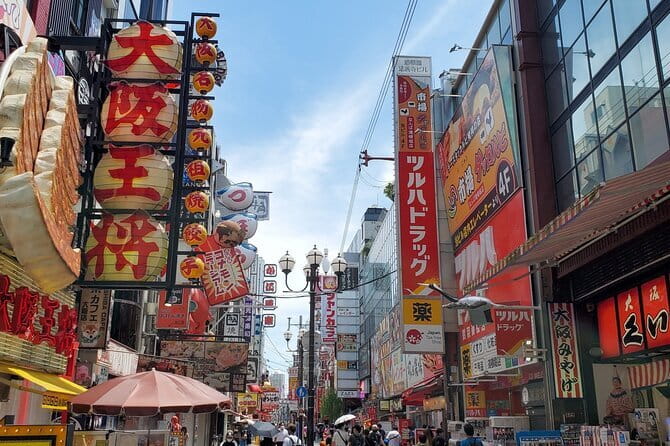
Dotonbori gets the photographs, but it does not explain the whole city. This route uses Dotonbori as one piece of a larger picture, connecting entertainment districts, old religious sites, food shopping, youth fashion, electronics, and professional kitchen supplies.
That mix is the tour’s real strength. You get the canal-side signs and famous food district, but you also see the less polished parts of central Osaka. Amemura shows a younger, trend-driven side of the city. Nipponbashi points toward electronics, anime, and otaku culture. Dōguya-suji reveals Osaka’s working food economy through knives, restaurant signs, cookware, and household tools.
The guides are another important part of the experience. Jay is repeatedly singled out for humor, local roots, cultural insight, and strong storytelling. Matt is described as friendly, organized, and useful for shopping and dining suggestions. Calvin is praised for being punctual, easy to communicate with, and good at answering questions. The provider also uses guides such as Jai and EJ.
You cannot select a particular guide with certainty unless the booking allows it, but the pattern is clear: this tour depends heavily on the person leading it. A good guide can turn a short walk into a useful first lesson in Osaka. The 4.9 rating from 103 reviews and 97 percent recommendation rate support that impression, though you should still expect the usual variation that comes with a rotating guide team.
More Walking Tours in Osaka
- Osaka Kickstart: Hotspots & Hidden Gems Tour
★ 5.0 · 1,306 reviews - Osaka: Hotspots & Hidden Gems Walking Tour Private or Group
★ 4.9 · 1,300 reviews - Osaka Local Foodie Walking Tour in Dotonbori and Shinsekai
★ 5.0 · 985 reviews
Starting in Shinsaibashi and Horie Park
The meeting point is Apple 心斎橋 Japan at 1-chōme-5 Nishishinsaibashi, a central location near public transportation. That makes the beginning practical if you are staying around Shinsaibashi, Namba, or another part of central Osaka.
The first listed stop is Horie Park, where you spend about 20 minutes. It offers a change of rhythm from Osaka’s shop-lined streets, with greenery, walking paths, and maintained garden areas. Do not expect a major landmark or a long park visit. Its value is as a calm opening to a route that soon becomes much busier.
This first stop may also help you get oriented. You begin with a simple walk through an urban neighborhood rather than being dropped straight into the loudest part of Dotonbori. The admission cost is free, as it is for every stop on the route.
Amemura shows Osaka’s youthful side
After Horie Park, the walk continues to America-mura, usually shortened to Amemura. You spend about 20 minutes here, enough to get a taste of the district without attempting to inspect every shop.
Amemura is known for its mix of clothing stores, cafes, restaurants, and youth culture. Its name reflects the area’s American influence, but the point is not that you have crossed into a small version of the United States. The district is distinctly Osaka, with local takes on fashion, music, design, and street culture.
This is one of the route’s more useful stops because it helps explain the city beyond temples and food. If you are interested in Japanese subcultures, ask the guide what is currently popular and which parts of the district are aimed at locals rather than short-term shoppers.
The stop is also a reminder to keep expectations sensible. Twenty minutes is enough for explanation and a look around, not a serious shopping session. If something catches your eye, make a note and return later.
Namba Hatch and the move toward central Namba

Namba Hatch is the next 20-minute stop. It is a live-events venue in the Namba area, used for concerts, performances, and other events, with capacity for about 1,200 people.
The supplied details do not promise entry to a performance or a guided tour inside the venue. Treat this as an area and city-life stop rather than a ticketed attraction. Your guide can place Namba Hatch within the wider entertainment district, showing how Osaka uses its central neighborhoods for music and evening activity.
This part of the walk is useful for first-time visitors because Namba can feel confusing. Streets, shopping arcades, restaurants, canal routes, and performance venues run into one another. A guide gives you a basic map in your head before you return on your own.
Same city, a completely different kind of day:
- Osaka Go Karting Tour with Funny Costume
★ 5.0 · 2,658 reviews - Osaka Castle: Museum and Tower Entry Ticket
★ 4.5 · 2,380 reviews - Osaka: Shinsekai Food Tour with 13-15 Dishes at 5 Eateries
★ 4.8 · 2,204 reviews - Osaka Food Tour: 13 Dishes at 5 Local Eateries
★ 5.0 · 2,149 reviews
A quick look at Dotonbori’s famous lights
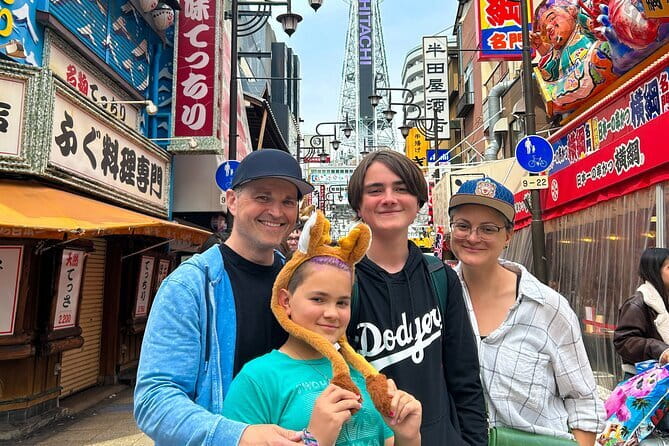
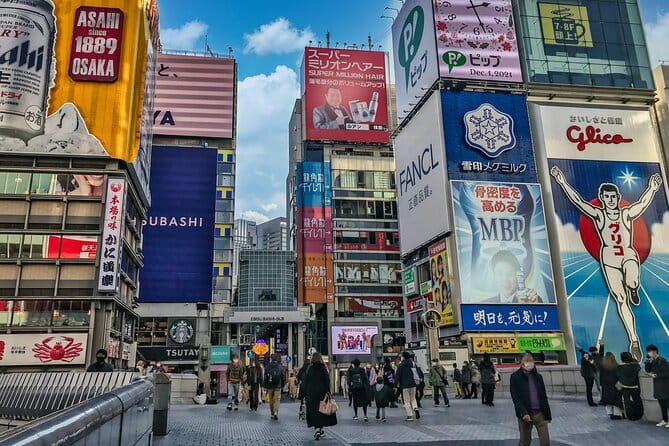
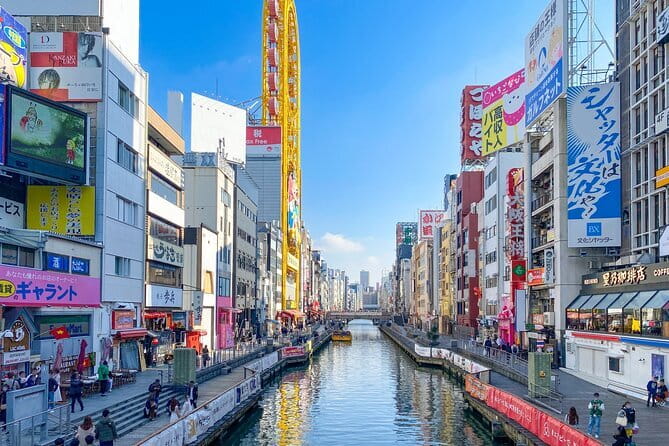
Dotonbori receives about 10 minutes, the shortest stop on the route. That may sound disappointing if you are hoping for a full food crawl or a long photo session, but it reflects the tour’s broader purpose.
You will see the famous canal-side entertainment district, known for neon signs, restaurants, and a lively street scene. This is where the classic Osaka images come from, and you will want your camera ready. Still, ten minutes is not enough to explore every lane, compare menus, or wait for a popular restaurant.
I see this short stop as a preview. The guide can point out the main area and explain why Dotonbori matters, then you can return later when you have time to eat. The tour does not include snacks, so do not arrive expecting a tasting program. Save room in your budget for a food stop after the walk, or use Kuromon Market as your chance to buy something along the way.
Hozen-ji offers a quiet pause near the crowds
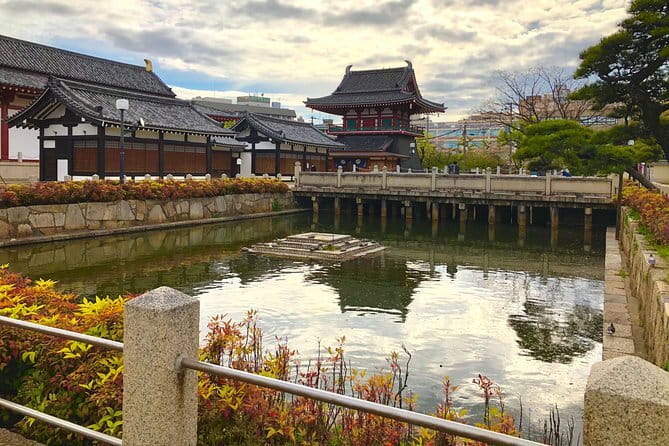
Hozen-ji Temple gives you 20 minutes and a sharp contrast with Dotonbori. Founded in 1637, the small Buddhist temple is known for its moss-covered statue of Fudō Myōō, a fierce Buddhist deity.
The temple’s location near one of Osaka’s busiest entertainment areas makes it especially memorable. You move from electric signs and restaurant fronts to a small, subdued religious site in only a few minutes. The moss on the statue is its defining feature, and your guide can explain the temple’s place in Osaka’s past and present.
This is the sort of stop that benefits from a guide. Alone, you might photograph the statue and move on without understanding why the site matters. The short visit will not satisfy anyone looking for a long temple tour, but it works well as a compact lesson in the city’s contrasts.
Kuromon Market is the main food opportunity
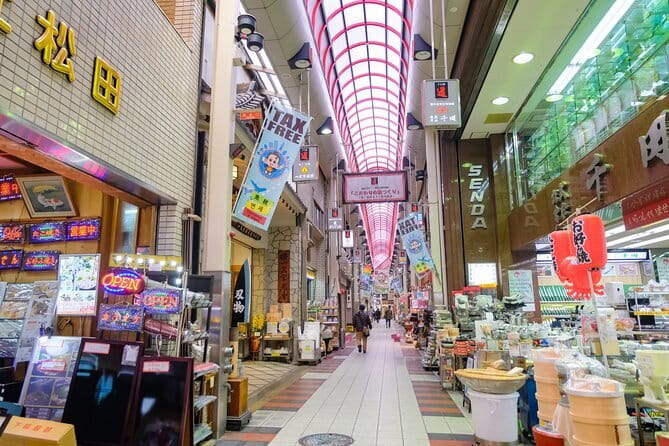
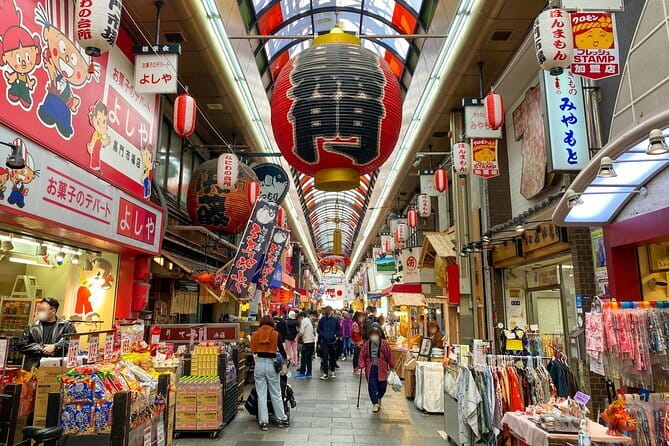
The route allows 30 minutes at Kuromon Ichiba Market, the longest stop. That tells you where the food focus lies.
Kuromon is known for seafood, produce, and local food items. It is a good place to ask your guide what looks worth trying, how to read the market atmosphere, and which foods fit your tastes. Several people who took this walk found the food suggestions useful, so I would treat the guide’s recommendations as one of the tour’s practical benefits.
The market is not a formal tasting experience. Snacks are not included, and the tour price covers the guide and fees rather than food purchases. If you want to sample something, you pay separately. Thirty minutes can pass quickly, especially if you stop to look at several stalls, so do not expect a leisurely market lunch.
There is also a practical issue here: markets can become crowded, and stopping for food while keeping up with a group takes attention. Tell the guide if you need a moment to buy something, and keep your belongings secure. The market is best approached as an introduction. You can return later if you find a stall you want to explore more carefully.
Nipponbashi adds electronics and anime culture
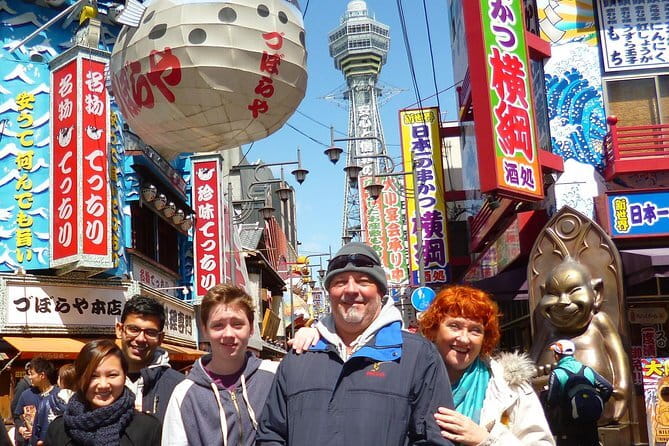
Nipponbashi receives about 10 minutes. The district is associated with electronics, anime, and otaku culture, making it a useful counterpoint to the traditional temple and market stops.
Again, the short timing matters. You are not getting a full shopping expedition or a detailed tour of every specialist store. Instead, you get a quick sense of the district and advice on what is currently popular. One guide, Jay, was particularly praised for explaining Japanese subcultures, which could make this section more engaging for anyone curious about modern Japanese popular culture.
If this is a major interest for you, note the location and plan a separate visit. The tour gives you orientation, not enough time for serious browsing.
Dōguya-suji reveals Osaka’s food business
The final major stop is Dōguya-suji, often called Kitchenware Street, with about 20 minutes. This is one of the most distinctive parts of the walk because it connects Osaka’s food reputation with the tools behind it.
The street is lined with shops selling kitchenware, restaurant supplies, knives, tools, and home goods. It is the sort of place that makes more sense when you understand who shops there. The route highlights it as the street where many local chefs buy knives, giving you a look at the practical side of Osaka’s cooking culture.
You do not need to be a professional cook to enjoy this stop. A good kitchen knife, unusual dish, plastic food display, or restaurant item can make a memorable purchase. Still, twenty minutes is short if you are serious about buying a knife. Ask questions about how to get back, and plan extra time later if you want to compare shops.
The tour ends at Namba Grand Kagetsu, at 11-6 Nanbasennichimae. This is a useful finishing point because you are left in the Namba area, close to more shopping, food, and entertainment. It also gives you a chance to continue exploring rather than ending far from the route’s main attractions.
What $25 buys you in practical terms
At $25 per person, this is inexpensive for a 150-minute guided walk in central Osaka. The price includes all fees and taxes and a licensed guide. There are no separate admission charges for the listed stops, so the main extra cost is anything you choose to eat or buy.
The value is not in getting inside paid attractions. It is in saving time, learning how the districts connect, and getting advice that can shape the rest of your stay. A guide may help you avoid wandering past the areas that interest you, especially in Namba, where several different districts blend together.
The low price also comes with limits. This is not a private walk, a food tasting tour, or a detailed museum-style lesson. The group can reach 12 people, and each stop has a fixed time. If you prefer to linger, shop slowly, or take many photographs, you may feel hurried.
I would book it early in your Osaka visit, especially on your first day or second day. The route gives you names, neighborhoods, and food ideas you can use later. One family with two teenagers found the format worked well for the whole group, and the short stops may suit families better than a long indoor lecture.
Timing, weather, and what to bring
Morning and afternoon departures are available, giving you some control over the rest of your day. Choose a time that leaves space before or after the tour for a proper meal, since snacks are not included.
Wear comfortable shoes. The route covers multiple districts on foot, and one guide specifically advised participants to do so. Osaka’s weather can also affect the experience. The walk goes ahead as an outdoor city tour, and a guide named Matt received praise for staying organized even in rain. Another account noted that Jay allowed pauses during hot weather.
Bring water, especially in warm months, and keep a small amount available for market food. A phone with the mobile ticket ready is useful, and the meeting point is close to public transit. Service animals are allowed, and most people can participate, but the provider does not promise a private pace or special arrangements beyond the stated details.
Free cancellation is available if you cancel at least 24 hours before the local start time. Changes or cancellations inside that window are not accepted for a refund.
Who should book this Osaka walk?
I would choose this tour if you want a first look at Osaka’s central districts without spending much money. It fits first-time visitors, families with older children or teenagers, solo visitors who want local context, and anyone who wants food and shopping ideas before making independent plans.
It is also a good match if you enjoy contrasts: a moss-covered temple near Dotonbori, youth fashion beside traditional food culture, and chef-grade knives near entertainment streets. The guides’ humor and personal anecdotes appear to be a major part of the experience, so this suits you if you like asking questions and learning through conversation.
I would skip it if your main goal is a long Kuromon Market meal, serious knife shopping, or a detailed visit inside each district. The route is broad rather than slow. It shows you where to return, but it cannot give every place the attention it deserves.
Should you book the Osaka Walking Tour?
For $25, I think this is a strong-value orientation walk. The mix of Amemura, Hozen-ji, Kuromon Market, Nipponbashi, and Dōguya-suji gives you a more useful picture of Osaka than a simple neon-sign route. The high rating, 97 percent recommendation rate, and repeated praise for guides such as Jay, Matt, and Calvin reinforce its appeal.
Book it near the start of your stay, wear good shoes, and keep extra money for food or shopping. Go in expecting a brisk introduction rather than a full meal tour or deep visit at every stop, and you should finish with a better sense of where to spend the rest of your time.
FAQ
How long does the Osaka walking tour last?
The tour lasts approximately 2 hours and 30 minutes.
Where does the tour start?
The meeting point is Apple 心斎橋 Japan at 1-chōme-5 Nishishinsaibashi, Chuo Ward, Osaka, near public transportation.
Where does the tour end?
The walk ends at Namba Grand Kagetsu, 11-6 Nanbasennichimae, Chuo Ward, Osaka.
What places are included on the route?
The route includes Horie Park, Amemura, Namba Hatch, Dotonbori, Hozen-ji Temple, Kuromon Market, Nipponbashi, and Dōguya-suji Kitchenware Street.
Is food included in the tour price?
No. Snacks are not included. The $25 price includes all fees and taxes and the licensed guide, but you pay separately for any food or shopping.
How many people can join the tour?
The tour has a maximum of 12 travelers.
Can I cancel for a full refund?
Yes, if you cancel at least 24 hours before the experience start time. Cancellations or changes made less than 24 hours before the start time are not accepted for a refund.
More Food in Osaka
- Absolute Osaka Food Tour
★ 5.0 · 309 reviews - Osaka: Kuromon Market Food Walking Tour (6 stops, 6 tastes)
★ 4.6 · 272 reviews - Osaka After Dark: Small-Group Night Food Tour (Max 6)
★ 4.5 · 245 reviews - Eat, Drink & Cycle: Osaka Foodie Bike Tour
★ 5.0 · 224 reviews
More Food & Drink in Osaka
- Hungry Osaka Street Food Tour:15 Tastings & 3 Drinks with a Local
★ 5.0 · 1,727 reviews - Hungry Osaka Street Food Tour: 15 Dishes & 3 Drinks
★ 4.9 · 694 reviews - Kuromon Market Food Walking Tour in Osaka (6 stops, 6 tastes)
★ 5.0 · 550 reviews - Osaka: Guided Food Tour with 12 Dishes at 4 Local Eateries
★ 5.0 · 533 reviews
Just added around Osaka
- Samurai dress-up and shows, plus Tea Ceremony & Calligraphy★ 5.0 · 27 reviews
- Kyoto & Nara Private customized tour with English speaking Guide★ 4.5 · 99 reviews
- Well-balanced BENTO (lunch box) Cooking Class★ 5.0 · 35 reviews
- Urban Canvas: Osaka Street Art Bike Tour★ 5.0 · 47 reviews
- OSAKA:Feel the Power! Learn Taiko Drum from Professionals★ 5.0 · 28 reviews
- Volleyball in Osaka & Kyoto with Locals!★ 5.0 · 21 reviews
- Umami Town Street Food Tour★ 5.0 · 120 reviews
- Three Types of Ramen Cooking Class in Osaka★ 5.0 · 119 reviews
Walking Tours, compared.

Kyoto Geisha Walking Tour: Gion District & Hidden Gems
Read our review →
Tokyo Tsukiji Fish Market Food and Culture Walking Tour
Read our review →
Gion Magical Night Walking Tour with Geisha Trivia
Read our review →
Imperial Palace and Shogun Historical Walking Tour
Read our review →
Gion Geisha District Walking Tour – Stories of Geisha
Read our review →
Asakusa Walking Tour with Sensoji Temple Visit
Read our review →
Kyoto Gion Geisha District Walking Tour – The Stories of Geisha
Read our review →Browse the lists this tour appears in