
REVIEW · GARDEN & PALACE TOURS
Nijo Castle and Imperial Palace Visit with Guide
Nijo Castle and Kyoto Imperial Palace tell two sides of Kyoto’s political story. One was built for the shogun, the military ruler of Japan. The other represents the emperor and the old imperial court. In just two and a half hours, this tour links those worlds with an English-speaking guide who explains the power shifts between them.
I like the included admissions and public transport, since you do not have to puzzle out the transfer between sites. I also like the personal scale: the experience is described as private for your party, with small groups under eight in the main details, though the stated maximum is 11. The main consideration is pace. You will walk through large grounds and historic buildings, so comfortable shoes matter.
In This Review
- Key points to know before booking
- Why these two sites belong together
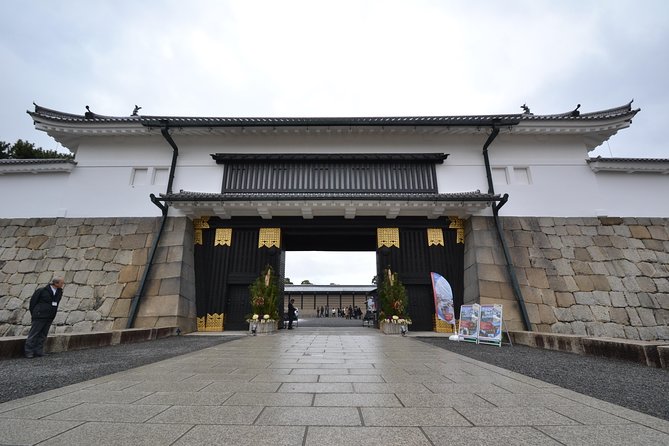
- Starting at Nijo Castle’s white gate
- What makes the castle visit worthwhile
- The public transport transfer to the palace
- Kyoto Imperial Palace and the return of imperial power
- Guide style, questions, and visual aids
- Is $79.18 a fair price?
- Timing, meeting point, and practical details
- Who should book this Kyoto history tour?
- Should you book it?
- FAQ
- How long does the tour last?
- What sites are included?
- Are entrance fees included?
- Is public transportation included?
- Where does the tour start?
- Where does the tour end?
- Can I choose a morning or afternoon departure?
- Is the tour private?
- What happens if the weather is poor or the palace is closed?
Key points to know before booking
- See the interior of Nijo Castle: The tour includes the castle buildings, not only the gardens and outer walls.
- Connect shogun and emperor history: Your guide explains the Tokugawa military government and the later return of power to Emperor Meiji.
- Use public transport with help: The transfer to Kyoto Imperial Palace is included, with your guide leading the way.
- Choose morning or afternoon: Two time slots make it easier to fit the visit around other Kyoto plans.
- Expect strong guide-led storytelling: Mia, Mie, Choko, and Mike are among the guides associated with this experience, with praise for clear English, humor, visual aids, and cultural context.
- Budget $79.18 per person: That price includes entrance fees and transport, making it most useful if you want historical explanation rather than a self-guided walk.
Why these two sites belong together
Kyoto can feel like a collection of beautiful places without an obvious storyline. This visit gives you one. Nijo Castle shows how the shogun held military and political power, while Kyoto Imperial Palace points to the emperor, the imperial family, and the court tradition that continued alongside the shogunate.
That contrast gives the tour more purpose than visiting either site alone. You are not just looking at old rooms and gardens. You are comparing two centers of authority and seeing how Japan moved from shogun rule toward imperial government.
The guide’s role matters here. Architecture can be impressive but hard to read without context. A good explanation helps you understand why certain buildings were built, who entered them, how meetings worked, and what symbols mattered.
The strongest guide feedback centers on Mia, whose approach is described as warm, funny, animated, and well informed. Mie is also praised for clear English and useful visual aids. Choko and Mike are named as friendly guides who could answer questions about both sites and Japanese culture. Since the assigned guide may vary, you should not book solely on the assumption that one particular person will lead your tour.
More Garden & Palace Tours in Kyoto
- Kyoto: Nijo-jo Castle and Ninomaru Palace Guided Tour
★ 4.7 · 1,020 reviews - Kyoto: Nijo Castle, Kiyomizu & Fushimi Inari Guided Tour
★ 4.7 · 700 reviews - Kyoto: Imperial Palace & Nijo Castle Guided Walking Tour
★ 4.7 · 453 reviews
Starting at Nijo Castle’s white gate
The meeting point is in front of Nijo Castle’s large white main gate at 541 Nijojocho, Nakagyo Ward. That is a useful arrangement because the gate is a clear landmark, and the tour does not ask you to search for a guide inside a busy station or hotel lobby.
Your first hour focuses on Nijo Castle. Admission is included, so you can move directly into the visit once the group has gathered. The castle is especially valuable for its interior, where you can see more than exterior walls and landscaped grounds.
The historical focus is the Tokugawa shogunate. Your guide explains the shogun’s role and the way military rulers controlled Japan during the Edo period. The castle becomes easier to understand when you know it was tied to government, meetings, status, and displays of authority.
Pay attention to the guide’s explanation of how shogun meetings took place and where they occurred. This is the sort of detail that is easy to miss when walking through rooms alone. The symbolism in the buildings and the relationship between different spaces also receive attention.
The castle visit is not only a history lecture. The best version of this tour appears to mix facts with stories about the people involved, simple visual aids, and answers to your questions. That balance helps if you are interested in Japanese politics but do not want a dense academic talk.
You should allow for steady walking. The full visit includes indoor spaces and grounds, and the next stop adds more walking. Comfortable shoes are a practical must.
What makes the castle visit worthwhile
Nijo Castle gives you a direct look at the shogun’s world. Its importance comes from the connection between the physical setting and the political system. A guide can point out details that help you see the castle as a working center of power, rather than simply an attractive historic site.
I especially like that the tour includes the castle interior. Some castle visits focus heavily on gardens, gates, and views. Here, you get the chance to understand the rooms and their use, which gives the first half of the experience more substance.
The drawback is time. One hour is enough for a guided introduction, but not enough for a slow, independent inspection of every corner. If you want extensive photography, long pauses, or a quiet garden visit, the group schedule may feel brisk.
The guide can also make the difference between a basic visit and a memorable one. Mia is repeatedly praised for making the shogun era accessible, adding humor without treating the site casually, and explaining historical figures in a personal way. Mie is praised for using visual material to clarify difficult points. These details suggest that the experience works best for people who enjoy learning through conversation.
The public transport transfer to the palace
After about an hour at Nijo Castle, you travel to Kyoto Imperial Palace by public transportation. The fare is included, and the guide accompanies you. This is a small but useful feature, especially if you are still getting used to Kyoto’s trains and buses.
The transfer also gives the two sites a natural connection. You leave the shogun’s castle and head toward the former imperial center. Instead of treating the palace as a separate sightseeing stop, the guide can continue the story while you move across the city.
Do not expect hotel pickup. You meet at Nijo Castle and finish at Kyoto Gyoen National Garden, in front of the Imperial Palace. You are responsible for reaching the first meeting point and making your own way onward after the tour.
The transport portion is included in the price, but the schedule still depends on public transit and group movement. Keep that in mind if you have a tightly timed reservation immediately after the tour.
Same city, a completely different kind of day:
- PERFECT KYOTO 1-Day Bus Tour
★ 5.0 · 13,518 reviews - Kyoto: Fushimi Inari, Kinkakuji, Bamboo Grove 1 Day Bus Tour
★ 4.8 · 4,316 reviews - Kyoto: Tea Ceremony in a Traditional Tea House in Kiyomizu
★ 4.9 · 3,519 reviews - Kyoto Geisha Walking Tour: Gion District & Hidden Gems
★ 4.7 · 3,273 reviews
Kyoto Imperial Palace and the return of imperial power
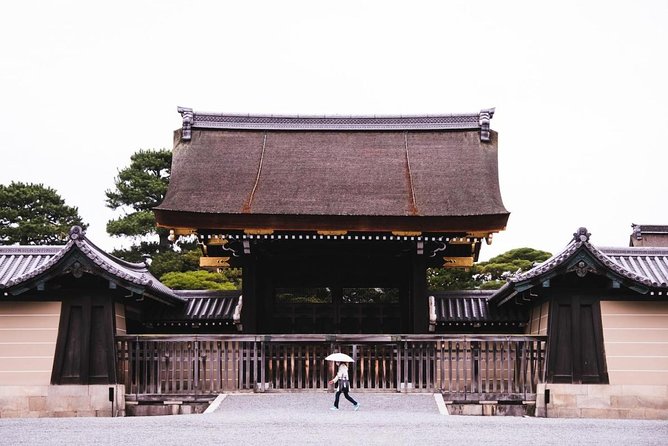
The second guided section lasts about one hour and takes place at Kyoto Imperial Palace. The surrounding Kyoto Gyoen National Garden adds open space and a calmer setting after the castle visit.
Here the focus shifts from military rule to the emperor and imperial family. Your guide explains Kyoto’s role as Japan’s ancient capital and the political changes that led to the transfer of power from the shogunate back to Emperor Meiji.
This is where the combined visit pays off. You can compare the shogun’s authority at Nijo Castle with the ceremonial and dynastic role of the imperial court. The guide may also explain details about the emperor’s family and descendants, subjects that can be difficult to place in context without help.
The palace grounds are beautiful, but their scale means you should be ready to walk. The tour gives you an organized introduction rather than unlimited time to explore every path. If gardens are your main interest, you may want to return to the area on your own, but the guided visit is useful for understanding what you are seeing.
One important practical warning comes from the tour’s conditions: the Imperial Palace can be closed for an event. In that case, you may still visit Nijo Castle, but the palace portion may not proceed as planned. This is not a reason to avoid the tour, but it is worth keeping in mind if the palace is the one site you most want to see.
Guide style, questions, and visual aids
The guide is the main reason to choose this experience over a self-guided visit. The strongest descriptions point to a style that is friendly, funny, and clear without burying you in dates.
Mia is associated with explanations of the Tokugawa shogunate, the transfer of power to Emperor Meiji, political symbolism, and the emperor’s family. She is also praised for restaurant recommendations and for answering specific questions rather than forcing the group through a fixed speech.
Mie is noted for clear English, warmth, humor, and visual aids. Choko is described as friendly and able to answer questions about Japanese history and culture. Mike is also named as an excellent guide for shogun and imperial history.
Names are spelled differently in the available information, including Mia, Mie, Miya, Choko, and Mike. That may reflect spelling differences or different guides. Your booking does not guarantee one named guide unless the operator confirms it.
The small-group format should make it easier to ask questions. The experience is presented as private for you and your party, yet the operating notes also describe a group of fewer than eight and a maximum of 11. If a completely exclusive tour is essential, confirm the exact group arrangement before paying.
Is $79.18 a fair price?
At $79.18 per person, the tour is not the cheapest way to enter either site. You are paying for more than admission. The price covers a professional English-speaking guide, entrance fees, and public transportation during the tour.
That can be good value if you want the political story explained as you go. Nijo Castle and Kyoto Imperial Palace are not difficult to visit independently, but the connection between them is less obvious without a guide. You also avoid handling the transport transfer yourself.
The value is strongest for first-time visitors, families, and anyone interested in the shogun era, the imperial family, or the shift from military rule to imperial government. The value is weaker if you prefer to read signs quietly, set your own pace, or spend long periods taking photographs.
The private or small-group format also affects the price. A guide who can respond to your questions is more useful than a large walking group where you hear only a general speech. If your party fills most of the group, the experience should still feel more personal than a major sightseeing coach tour.
Timing, meeting point, and practical details
You can choose a morning or afternoon departure. That flexibility is useful in Kyoto, where you may want an early visit to another temple or an evening meal in the Gion area.
Arrive at the front of Nijo Castle’s main gate with enough time to identify your guide. The start point is near public transportation, and the meeting location is considered easy to find. The tour ends in front of Kyoto Imperial Palace, not back at Nijo Castle.
Food and drinks are not included. Plan to eat before or after the tour rather than expecting a meal break during the two-and-a-half-hour visit.
Service animals are allowed, and most people can participate. The experience requires good weather, so poor conditions may lead to a different date or a full refund. Free cancellation is available if you cancel at least 24 hours before the start time. Cancellations or changes made later are not accepted for a refund.
Who should book this Kyoto history tour?
I would choose this tour if you want both sites but do not want to prepare a history lesson before arriving. It is particularly helpful if the terms shogun, emperor, Edo period, and Meiji restoration blur together. The guide can put those ideas in order while you are standing in the places where the events mattered.
Families may also like the light humor and visual aids. Younger visitors often connect more easily with political stories when the guide explains people, rivalries, and decisions instead of listing dates.
This is also a good fit for visitors with only a short stay in Kyoto. Two major historic sites are covered in one compact outing, and the included transport reduces planning work.
I would hesitate if you want a slow garden stroll or a flexible photography session. The two-hour-and-30-minute schedule has a clear rhythm, and both sites involve walking. You should also confirm the group format if the word private is important to you.
Should you book it?
Book this tour if you want Nijo Castle and Kyoto Imperial Palace to make historical sense, not simply appear as two attractive stops. The included admissions, guided transit, morning or afternoon choice, and small-group approach support the $79.18 price.
The best reason to book is the guide-led explanation of how shogun and emperor power differed, then changed over time. The main cautions are the walking, the fixed schedule, the possibility of a palace closure for an event, and the unclear distinction between private and small-group operation.
If those points suit your plans, this is a focused and useful way to visit two of Kyoto’s most important political sites.
FAQ
How long does the tour last?
The experience lasts approximately two hours and 30 minutes. About one hour is spent at Nijo Castle, followed by public transportation and about one hour at Kyoto Imperial Palace.
What sites are included?
The tour includes Nijo Castle and Kyoto Imperial Palace. It also includes the Kyoto Gyoen National Garden area beside the palace.
Are entrance fees included?
Yes. Admission fees for Nijo Castle and Kyoto Imperial Palace are included in the tour price.
Is public transportation included?
Yes. Public transportation from Nijo Castle to Kyoto Imperial Palace is included, and the guide accompanies you during the transfer.
Where does the tour start?
The meeting point is in front of the main gate of Nijo Castle at 541 Nijojocho, Nakagyo Ward, Kyoto, 604-8301, Japan.
Where does the tour end?
The tour ends in front of Kyoto Imperial Palace in Kyoto Gyoen National Garden.
Can I choose a morning or afternoon departure?
Yes. The tour offers a choice of morning or afternoon time slots.
Is the tour private?
The experience is described as private for your party, while the operating details also refer to a small group of fewer than eight and a maximum of 11 participants. Confirm the exact arrangement when booking if exclusivity matters to you.
What happens if the weather is poor or the palace is closed?
The experience requires good weather. If poor weather causes cancellation, you will be offered another date or a full refund. The Imperial Palace may also be closed for an event, while Nijo Castle can still be visited.
Just added around Kyoto
- Private Guided Traditional Buddhist Cooking in Japan★ 5.0 · 16 reviews
- Kyoto: Gion Geisha District & Sake-in-Hand Walking Tour★ 5.0 · 37 reviews
- Your Private Vacation Photography Session In Kyoto★ 5.0 · 110 reviews
- Kyoto: Zen Meditation at a Private Temple with a Monk★ 5.0 · 25 reviews
- Traditional Japanese Washi Papermaking- Kyoto morning★ 5.0 · 77 reviews
- Kyoto Wagashi(Japanese sweets) Cooking Class near Fushimiinari★ 5.0 · 60 reviews
- Private Pewter Sake Cup Experience with a Kyoto Artisan★ 5.0 · 31 reviews
- Kyoto Private 6 hour Tour: English Speaking Driver Only, No Guide★ 5.0 · 88 reviews
Garden & Palace Tours, compared.

Imperial Palace and Shogun Historical Walking Tour
Read our review →
Tokyo Castle & Imperial PalaceーShogun Walking Tour
Read our review →
Nijo-jo Castle and Ninomaru Palace Guided Tour
Read our review →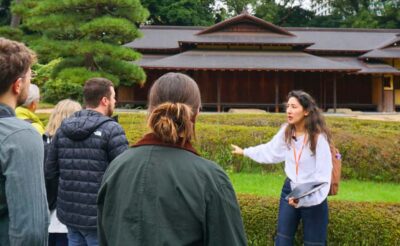

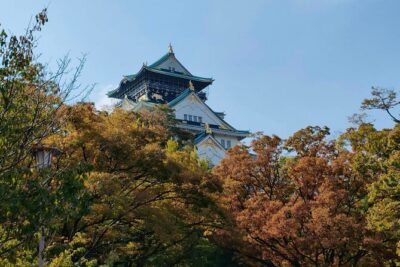
Ultimate Osaka Walking Tour: Castle, Dotonbori & Hidden Gems
Read our review →Tokyo Castle & Imperial PalaceーShogun Walking Tour
Read our review →Browse the lists this tour appears in