
REVIEW · TEA CEREMONY EXPERIENCES
Matcha Experience with of Japanese Tea Tasting in Tokyo
The most useful part of this Tokyo tea class is that it shows you how much variety hides behind the words Japanese green tea. Chisei, who farmed tea in Kyoto for six years, explains how growing and processing change the leaf, then lets you taste those differences side by side. You finish by whisking your own matcha.
I like the five-person limit, which keeps the class personal and leaves room for questions. I also like the homemade sweets from Rina, plus the unusual chance to eat tea leaves with ponzu, a detail that turns a tasting into a real lesson in how tea is used.
The main consideration is pace. In about 90 minutes, you taste a large number of teas, hear about cultivation and history, try matcha preparation, and sample lattes. If you prefer a slow, formal ceremony with long periods of quiet, this is more of a lively teaching session than a traditional performance.
In This Review
- Key points at a glance
- A tea class that goes beyond matcha
- Starting with a seasonal welcome drink
- Six green teas, six different personalities
- Japanese black tea and Rina’s homemade sweets
- Making ousucha with a bamboo whisk
- Matcha lattes and hojicha lattes
- What the $57.98 price buys you
- Location, timing, and practical details
- Who will enjoy this most
- Should you book the matcha experience?
- FAQ
- How long does the matcha experience last?
- How many people can join the class?
- Where does the experience meet?
- Where does the experience end?
- Which Japanese teas are included?
- Will I make my own matcha?
- Are matcha lattes included?
- Are snacks included?
- Is the experience suitable for general visitors?
- What is the cancellation policy?
Key points at a glance
- Former tea farmer as your guide: Chisei explains cultivation and processing from firsthand experience.
- Seven or more tea styles to compare: Expect sencha, kabuse-cha, gyokuro, deep-steamed sencha, genmaicha, hojicha, Japanese black tea, and matcha.
- A hands-on matcha lesson: You whisk ousucha with a bamboo chasen and learn a method you can repeat at home.
- Homemade sweets and tea leaves: Rina prepares sweets, and tea leaves may be served with ponzu.
- Small group setting: The class accepts no more than five people, so questions are part of the experience.
- Tokyo location near public transport: The meeting point is at Henn Na Hotel in Taito City, with the class ending where it begins.
A tea class that goes beyond matcha
Many visitors arrive in Japan knowing matcha as a bright green drink or a dessert flavor. This experience gives you a broader picture. Matcha is only one part of the session, and the tasting helps you understand how Japanese teas differ in shade, aroma, texture, sweetness, bitterness, and preparation.
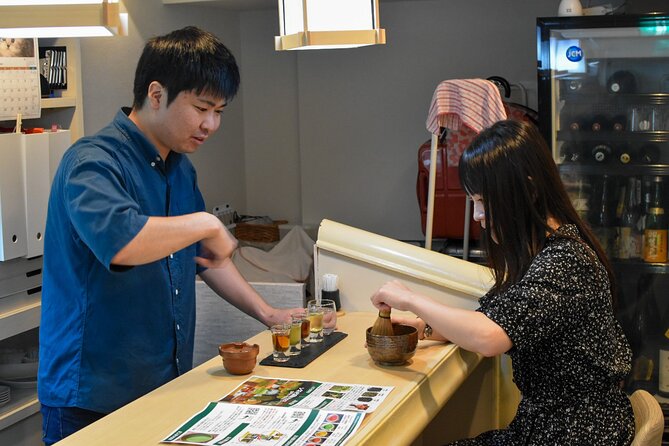
Chisei’s background matters here. He is not only explaining tea from a book. He grew tea in Kyoto for six years and uses diagrams and pictures to explain cultivation and processing. That makes the conversation useful for beginners, while people who already drink tea will find enough detail to keep things interesting.
I especially like the comparative format. A single cup can be hard to judge if you do not know what to look for. Tasting several types in one sitting gives you a working reference point. You begin to see why gyokuro costs more than ordinary sencha, why hojicha tastes so different from fresh green tea, and why deep steaming changes the cup.
The group limit of five is another real advantage. This is not a large demonstration where you sit quietly and watch a host move through a script. You can ask about farming, preparation, caffeine, flavor, or the tea you may want to buy for home.
More Tea Ceremony Experiences in Tokyo
- Matcha Making Class in Tokyo with Authentic Japanese Sweets Set
★ 5.0 · 744 reviews - Tokyo: Traditional Tea Ceremony with a Tea Master
★ 5.0 · 528 reviews - Tokyo: Matcha Making Experience with Mochi Sweets in Asakusa
★ 4.9 · 388 reviews
Starting with a seasonal welcome drink
The session begins with a seasonal welcome drink while Chisei introduces the teas you will taste. This first cup gives the class an easy start and lets you settle in before the more detailed comparisons begin.
The welcome drink may be cold, which is particularly welcome during Tokyo’s hot weather. One account specifically praised the refreshing arrival drink during a heat wave. Since the exact seasonal drink can change, you should treat it as an introduction rather than a fixed menu item.
This opening also sets up the central idea of the class: Japanese tea is not one single flavor. Chisei explains what you will taste and how the teas are made before you start comparing them. That preparation helps you pay attention to the color, scent, shape of the dry leaves, and taste in the cup.
Six green teas, six different personalities
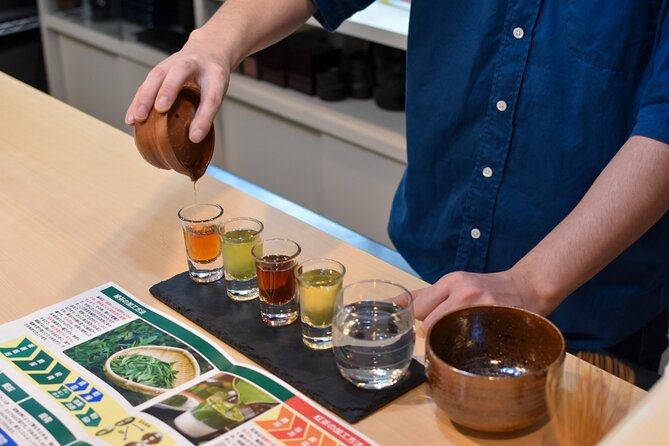
The core tasting compares six Japanese teas:
- Sencha
- Kabuse-cha
- Gyokuro
- Deep-steamed sencha
- Genmaicha, or brown rice tea
- Hojicha, or roasted green tea
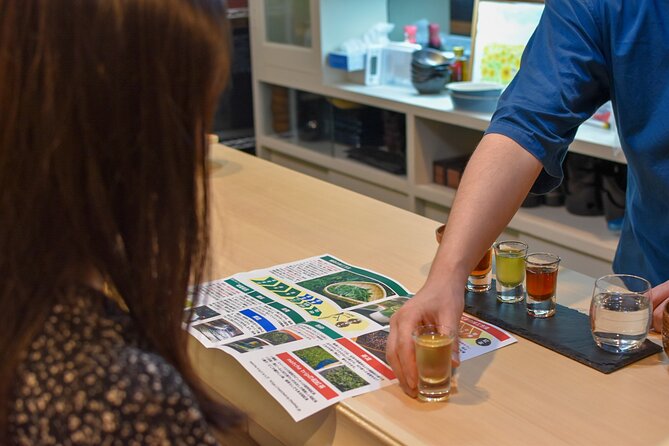
The order and preparation are designed to show how the leaf changes from one tea to another. You first look at the leaves, then Chisei prepares each tea in a way meant to bring out its best qualities. You are encouraged to notice the color, fragrance, and flavor rather than simply decide which cup is good or bad.
Sencha is the familiar reference point for many people. It gives you a useful baseline for comparing the teas that follow. Kabuse-cha, made from leaves shaded before harvest, offers another point of comparison in cultivation and flavor.
Gyokuro is one of the most distinctive teas in the lineup. It is also a good example of why farming methods matter. Shading the plants changes the leaf, and the resulting tea can feel more concentrated and savory than a standard cup of sencha.
Deep-steamed sencha adds another lesson. Longer steaming affects the leaf’s appearance and the character of the drink. Genmaicha brings roasted brown rice into the picture, adding a toasty note, while hojicha is roasted green tea with a warmer, less grassy profile.
You may also get to examine the leaves closely after brewing. That small step makes the process feel less abstract. Tea is no longer just liquid in a cup. You can see the leaf, connect it to the farming explanation, and taste the result.
Japanese black tea and Rina’s homemade sweets
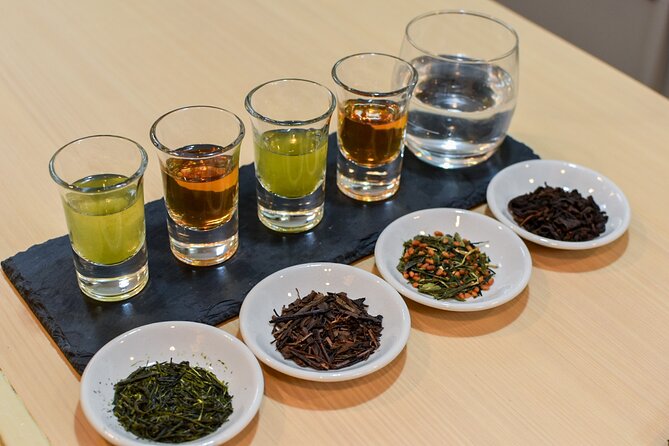
The class then moves to Japanese black tea, selected to work with homemade sweets made by Rina. This is a smart change of pace after several green teas. The black tea and sweets give your palate something familiar and comforting, while also showing that Japan produces more than green tea.
Rina’s sweets receive some of the warmest praise attached to this experience. They are made at home and served as a planned pairing, not as a packaged snack added at the last minute. The exact sweets can vary, so do not book expecting one specific pastry or cookie.
One unusual food detail is the chance to eat brewed tea leaves with ponzu. Tea leaves are normally discarded, but some can be enjoyed after brewing. This is the kind of small, unexpected lesson that makes the class memorable without turning it into a show.
If you have allergies, Chisei is described as asking proactively about them. Still, you should state your needs clearly when booking or at the start of the session. The available information confirms that the hosts ask about allergies, but it does not provide a complete ingredient list for the sweets.
Same city, a completely different kind of day:
- Mt Fuji and Hakone 1-Day Bus Tour Return by Bullet Train
★ 5.0 · 26,383 reviews - 1-Day Tokyo Bus Tour
★ 5.0 · 14,250 reviews - Tokyo: TOKYO SKYTREE® Admission ticket
★ 4.5 · 11,192 reviews - Tokyo: teamLab Planets TOKYO Digital Art Museum Entry Ticket
★ 4.6 · 9,779 reviews
Making ousucha with a bamboo whisk
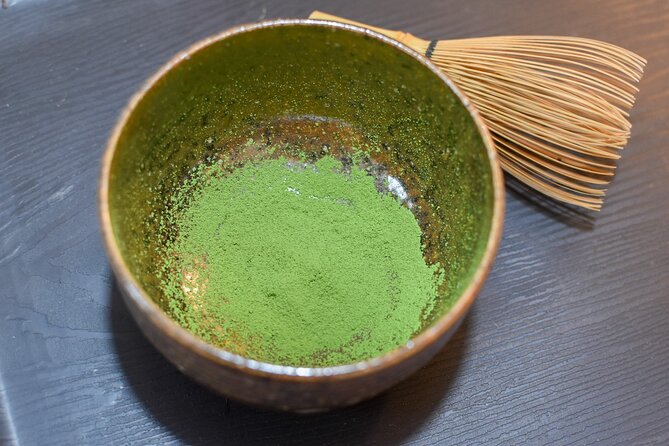
The hands-on section comes near the end, when you make ousucha, the thinner style of whisked matcha. Chisei shows you how to use a bamboo whisk, and you prepare your own bowl rather than only watching a demonstration.
This is not presented as a test of formal tea ceremony etiquette. The goal is to give you a practical understanding of how matcha is prepared and enjoyed. Once you learn the basic motion, you can continue making matcha at home with the right bowl, whisk, powder, and water.
That makes the class more useful than a quick photo opportunity. You get a technique you can repeat, plus a better idea of what to look for when you buy matcha. The experience also includes two types of matcha, so you can compare more than one version before or around the whisking lesson.
The class may not satisfy someone seeking a full ceremonial performance with strict ritual movements and a long explanation of etiquette. It is more direct and hands-on. For most first-time visitors, that is a strength because you spend less time watching and more time tasting and making tea.
Matcha lattes and hojicha lattes
The tasting is not limited to traditional preparations. You can also try matcha latte and hojicha latte options. The included details refer to three kinds of matcha latte and a hojicha latte, while the schedule specifically mentions enjoying both matcha latte and hojicha latte.
These drinks help explain why hojicha has become popular in modern cafes. Roasting gives it a nutty, toasty flavor that works well with milk. Matcha latte, by contrast, keeps the powdered tea’s earthy character while softening it with milk.
The latte portion is useful if you enjoy cafe drinks but are not sure you like straight green tea. It also makes the experience friendlier for mixed groups. A tea enthusiast can focus on gyokuro and sencha, while someone who prefers sweeter or milk-based drinks still has something to explore.
Because the session includes so many teas and variations, you should expect small tasting portions rather than full cafe-sized drinks. The value comes from comparison, not from leaving with several large beverages.
What the $57.98 price buys you
At $57.98 per person, this is not the cheapest way to drink tea in Tokyo. You could order matcha or hojicha at a cafe for far less. The fair comparison, though, is not a cafe visit. This is a small class with an expert guide, several tea styles, homemade food, and a hands-on preparation lesson.
I consider the price reasonable if you are curious about tea and want more than a pleasant drink. You are paying for context as much as for the tea itself. Chisei explains cultivation and processing, prepares the leaves carefully, answers questions, and helps you understand why the cups taste different.
The five-person maximum improves the value. In a large group, the teaching would be less personal and your questions might get lost. Here, you have a better chance to receive direct help with whisking and to ask about teas you might take home.
There is also a practical souvenir benefit. The hosts sell tea products, and some people buy matcha or gyokuro to continue the habit after returning home. You do not need to purchase anything, but the class gives you enough information to make a more informed choice if you do.
Location, timing, and practical details
The experience lasts about one hour and 30 minutes and begins and ends at the same meeting point:
matcha tripJapan
111-0042 Tokyo, Taito City, Kotobuki, 3-chome 19-8
Henn Na Hotel, 2F, Sports Bar Leaf
The location is near public transportation, but you should allow time to find the hotel and the second-floor meeting space. The venue name includes both English and Japanese details, so keep the full address available on your phone.
A mobile ticket is provided. Confirmation arrives when you book, and the activity accepts no more than five people. Service animals are allowed.
The class is designed for general visitors who want to learn about Japanese tea. If you are seeking a commercial consultation, wholesale conversation, or business meeting, this is not the right setting. Commercial inquiries should be made before booking.
Cancellation is free if you cancel at least 24 hours before the local start time. Cancellations or changes made within 24 hours are not refunded or accepted.
Who will enjoy this most
I would recommend this experience to several kinds of visitors:
- Tea beginners who want a clear introduction without needing prior study.
- Matcha fans who want to understand cultivation, compare different powders, and learn to whisk matcha.
- Food-minded visitors who enjoy homemade sweets and unusual pairings.
- Couples and small groups who prefer a personal class over a large tour.
- Visitors buying tea in Japan who want better guidance before choosing a souvenir.
- People who think they dislike green tea but are willing to compare roasted, shaded, steamed, and blended styles.
It also works well for a mixed group. You do not have to be a serious tea drinker. The Japanese black tea, sweets, matcha latte, and hojicha latte provide gentler entry points.
I would think twice if you want only a formal matcha ceremony, a quiet cultural performance, or a short tasting with no instruction. This session is busy with information and variety. The hosts encourage questions, and the experience feels more like a friendly workshop than a polished stage presentation.
Should you book the matcha experience?
Book it if you want to understand Japanese tea rather than simply photograph a bowl of matcha. Chisei’s former tea-farming experience gives the class a useful foundation, and Rina’s homemade sweets add warmth and flavor. The small group, broad tasting, and whisking lesson make the $57.98 easier to justify than a standard cafe stop.
The strongest reason to go is the comparison. Seven or more tea styles, two matchas, and latte options give you a much clearer sense of what you like. Just arrive ready for a fast, information-filled 90 minutes, and do not expect a full formal ceremony. For curious first-time tea drinkers and matcha fans, this is a thoughtful Tokyo activity with something practical to take home.
FAQ
How long does the matcha experience last?
The experience lasts approximately one hour and 30 minutes.
How many people can join the class?
The activity has a maximum of five participants.
Where does the experience meet?
It meets at matcha tripJapan in Henn Na Hotel, 2F Sports Bar Leaf, 3-chome 19-8 Kotobuki, Taito City, Tokyo 111-0042.
Where does the experience end?
The activity ends back at the meeting point.
Which Japanese teas are included?
The tasting includes sencha, kabuse-cha, gyokuro, deep-steamed sencha, genmaicha or brown rice tea, hojicha, Japanese black tea, and matcha.
Will I make my own matcha?
Yes. You make ousucha, or thin matcha, with a bamboo tea whisk.
Are matcha lattes included?
Yes. The experience includes matcha latte options and hojicha latte. The included details refer to three kinds of matcha latte and one hojicha latte.
Are snacks included?
Yes. Homemade sweets served with Japanese tea are included.
Is the experience suitable for general visitors?
Yes. It is designed as a class for general visitors who want to learn about Japanese tea.
What is the cancellation policy?
You can cancel for a full refund up to 24 hours before the experience start time. Cancellations or changes made less than 24 hours before the start time are not refunded or accepted.
More Food & Drink in Tokyo
- Tokyo: Shinjuku Food Tour (13 Dishes at 4 Local Eateries)
★ 5.0 · 6,603 reviews - Tokyo Tsukiji Fish Market Food and Culture Walking Tour
★ 5.0 · 3,184 reviews - Tokyo: Shinjuku Food Tour (15 Dishes and 4 Eateries)
★ 4.9 · 2,033 reviews - Best of Shinjuku: Izakaya Food Tour (4 Stops, 14+ Tastings)
★ 5.0 · 1,863 reviews
Just added around Tokyo
- Private Memorable Tokyo Tour with English Speaking Driver★ 5.0 · 30 reviews
- Private Tokyo Custom Full-Day Tour by Chartered Vehicle★ 5.0 · 16 reviews
- Private Sightseeing to Mt Fuji and Hakone with English Driver★ 5.0 · 51 reviews
- Tokyo Photography Masterclass – Private Photography Lesson★ 5.0 · 25 reviews
- Private Mt. Fuji Day Trip from Tokyo with English-Speaking Driver★ 5.0 · 33 reviews
- 4 Day Tour – Mount. Fuji, Tokyo, Hakone, Kamakura and Yokohama★ 5.0 · 19 reviews
- Private Unforgettable Mt Fuji Tour with English Speaking Driver★ 5.0 · 142 reviews
- Private Tokyo Food Tour – A Journey Through Time Through Food★ 5.0 · 36 reviews
Tea Ceremony Experiences, compared.
Tea Ceremony in a Traditional Tea House in Kiyomizu
Read our review →

World Heritage Kyoto & Nara Uji Authentic Matcha Experience
Read our review →
Browse the lists this tour appears in