
REVIEW · GARDEN & PALACE TOURS
Kyoto: Zen Garden, Zen Mind (Private)
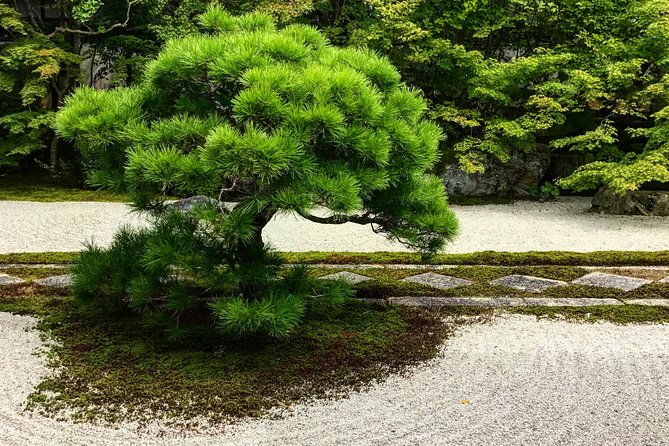
Kyoto’s Zen gardens can look simple at first: stones, gravel, moss, perhaps a few clipped shrubs. The trick is learning how to look at them. This private walking tour with Andrew, a garden designer with 15 years of experience, explains the choices behind those quiet scenes and connects them to Buddhism, Shinto traditions, Japanese history, and modern Kyoto life.
I like two things right away. You visit three temple sites in the Nanzen-ji area, and you do it on foot, which lets you move through the district at a calm pace. I also like the specialist guide. Andrew’s training in landscape architecture gives the tour a clear focus, while his interest in Zen philosophy adds meaning beyond plant names and garden layouts.
The main drawback is cost. At $380 per group of up to four, this is not a cheap add-on for a solo visitor or couple. You also pay the temple admission separately, a total of ¥1,600 per person, and the tour depends on suitable weather.
In This Review
- Key points before you book
- Why these gardens deserve a closer look
- Meeting Andrew near Keage Station
- Konchi-in: the first lesson in Zen garden design
- Tenjuan: a quieter pause within the temple complex
- Nanzen-ji: finishing at Kyoto’s head temple
- What Andrew adds that a guidebook cannot
- The real value of a $380 private tour
- Walking, timing, and what to bring
- Who will get the most from this Kyoto walk
- Should you book it?
- FAQ
- How long does the Kyoto Zen garden tour last?
- Which temples are included in the route?
- Who guides the experience?
- Is the tour private?
- Are temple entrance fees included in the $380 price?
- Where does the tour start and finish?
Key points before you book
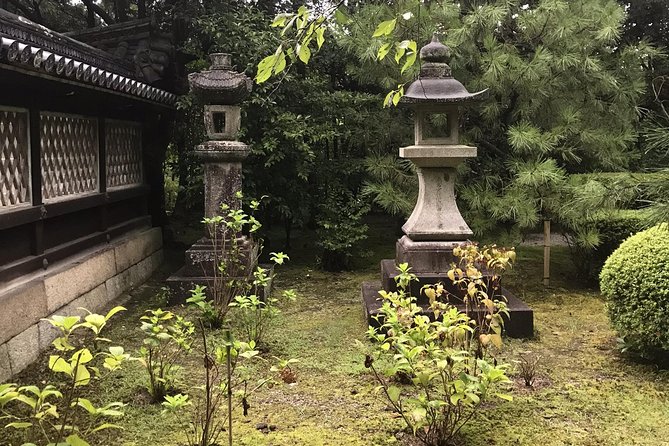
- Three temple gardens in about three and a half hours: The tour visits Konchi-in, Tenjuan, and Nanzen-ji, all connected with the Nanzen-ji Zen complex.
- A garden designer leads the walk: Andrew brings 15 years of professional experience and a master’s degree in landscape architecture.
- Private format: Only your own group takes part, so the discussion can suit your interests and questions.
- A lesson in seeing, not just sightseeing: The focus is on design principles, symbolism, Zen ideas, Shinto, Buddhism, and Japanese aesthetics.
- A practical walking route: It begins near Keage Station and ends in front of Nanzen-ji, with places that are easier to reach on foot than by car or bus.
- Strong fit for repeat Kyoto visitors: If you have already seen the headline temples, this gives familiar sights a more thoughtful reading.
Why these gardens deserve a closer look
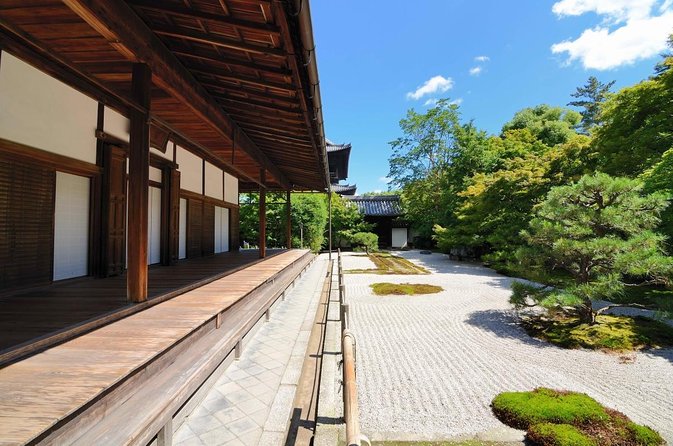
A Zen garden is not simply a pretty patch of gravel and rocks. Its arrangement can suggest mountains, water, islands, distance, emptiness, or a wider natural world. The garden may use very few elements, but those elements carry plenty of weight.
That is where a specialist guide earns his fee. Andrew explains how the parts work together, then links the visual choices to wider Japanese ideas. You are not asked to admire the garden in silence and guess what it means. You get a framework for noticing proportion, placement, texture, empty space, and the way a garden controls your view.
This approach suits you if you enjoy asking why a place looks the way it does. It is less useful if you want a fast checklist of famous buildings or a broad tour of all Kyoto’s major sights.
The subject also gives the outing a useful balance. You learn about garden construction and design, but the discussion does not stop there. Andrew’s explanations include Buddhism, Shinto practices, Japanese history, and aspects of present-day Kyoto. That makes the temples easier to understand as living religious places rather than museum displays.
More Garden & Palace Tours in Kyoto
- Kyoto: Nijo-jo Castle and Ninomaru Palace Guided Tour
★ 4.7 · 1,020 reviews - Kyoto: Nijo Castle, Kiyomizu & Fushimi Inari Guided Tour
★ 4.7 · 700 reviews - Kyoto: Imperial Palace & Nijo Castle Guided Walking Tour
★ 4.7 · 453 reviews
Meeting Andrew near Keage Station
The tour begins at Keage Station in Kyoto’s Higashiyama Ward. Starting near a train station is helpful, since you do not need to arrange a complicated taxi transfer to reach the meeting point.
From there, the route continues on foot. The walk matters because the Nanzen-ji area is best approached slowly. You can notice the change from ordinary city streets to temple grounds, and you avoid trying to force a large vehicle through narrow or unsuitable routes.
The tour lasts about three hours and 30 minutes. That gives roughly an hour at each of the three stops, though the guide can shape the discussion around your interests. Past participants have valued Andrew’s willingness to answer questions and adjust the conversation rather than simply recite a fixed script.
Wear comfortable shoes. The experience is a walking tour, not a seated garden lecture, and the weather policy is worth noting. If poor weather causes cancellation, you receive a choice of another date or a full refund.
Konchi-in: the first lesson in Zen garden design
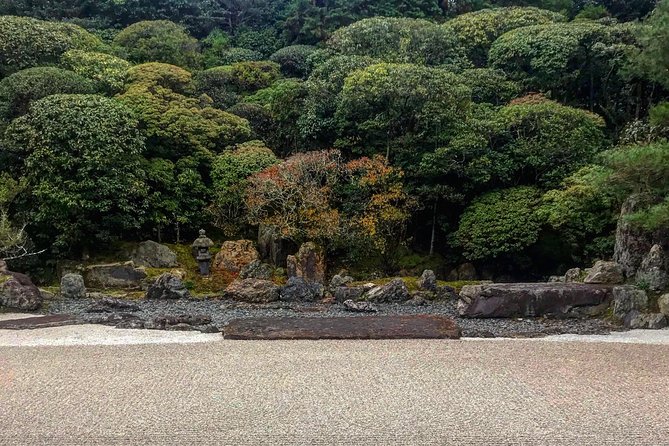
Konchi-in is a sub-temple of Nanzen-ji and the first listed stop. You receive about an hour here, with admission arranged as part of the route but paid separately from the tour price.
This is a strong place to begin because the garden gives Andrew plenty to explain. You can expect attention to the way rocks, gravel, plants, and open space are composed. Rather than treating the garden as decoration, the guide helps you see it as a designed statement.
The first stop also sets the tone for the whole experience. You begin with visual details, then move toward the ideas behind them. Questions about the role of emptiness, the use of natural forms, or the relationship between a garden and Buddhist practice fit naturally here.
A possible limitation is that the value depends on your attention span. If you prefer constant movement, an hour focused on one temple and its garden may feel slow. If you enjoy careful observation, that same hour can change the way you see every garden you visit afterward.
I would pay close attention to Andrew’s comparisons between different garden elements. The useful lesson is not only what you are looking at, but why one arrangement creates a particular sense of balance or distance.
Tenjuan: a quieter pause within the temple complex
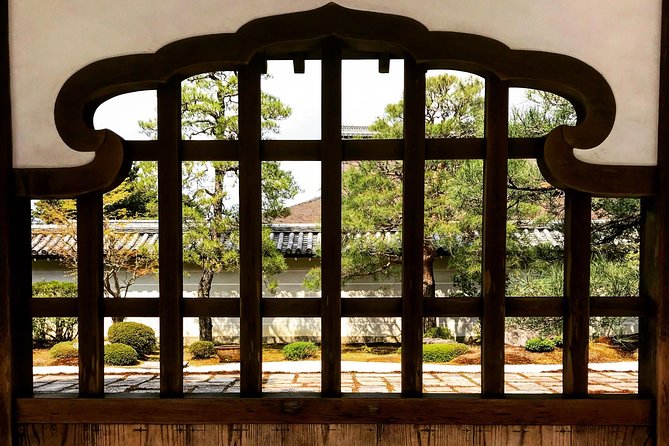
Tenjuan is another Nanzen-ji sub-temple and receives about an hour on the route. Its place in the schedule gives you a second setting in which to test the ideas introduced at Konchi-in.
That progression is one of the best features of the tour. You are not hearing a single explanation once and then moving on. You can compare how different temple gardens use similar principles, and you can ask Andrew to point out what changes from one site to the next.
The setting is also suited to the tour’s quieter mood. One past participant specifically appreciated the peaceful atmosphere and the chance to learn without heavy crowds. Conditions can vary, of course, but the itinerary is designed around temple gardens rather than Kyoto’s busiest photo stops.
Tenjuan is a good point to bring up broader questions. If you want to understand basic Shinto and Buddhist traditions, or how religious practices shape Japanese garden design, this is the time to ask. Andrew’s teaching style appears to combine facts with connections between religion, society, design, and daily life.
You should not expect a formal meditation session. The experience is an interpretive walking tour, with the gardens as its main subject. The word Zen here refers to the ideas and design traditions being discussed, not to a guided practice class.
Same city, a completely different kind of day:
- PERFECT KYOTO 1-Day Bus Tour
★ 5.0 · 13,518 reviews - Kyoto: Fushimi Inari, Kinkakuji, Bamboo Grove 1 Day Bus Tour
★ 4.8 · 4,316 reviews - Kyoto: Tea Ceremony in a Traditional Tea House in Kiyomizu
★ 4.9 · 3,519 reviews - Kyoto Geisha Walking Tour: Gion District & Hidden Gems
★ 4.7 · 3,273 reviews
Nanzen-ji: finishing at Kyoto’s head temple
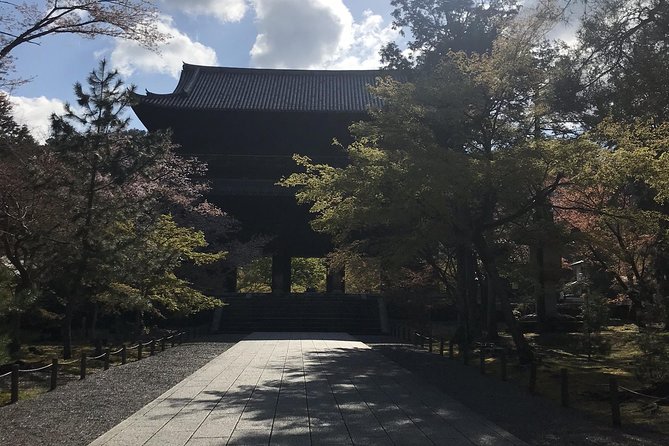
The final stop is Nanzen-ji, the head temple of the Nanzen-ji Zen Monastery. You spend about an hour here, and the tour ends in front of Nanzen-ji in Nanzenji Fukuchicho.
Ending at the main temple gives the outing a natural sense of scale. You have studied two sub-temples first, then arrive at the larger religious complex with a better grasp of what you are seeing. Andrew can bring the design discussion back to the wider role of Zen temples in Kyoto.
The final hour is also useful for tying the themes together. You may have started by asking why rocks are placed in a certain way. By the end, you can consider how a garden’s form relates to spiritual practice, Japanese aesthetics, historical change, and the character of Kyoto itself.
The endpoint is practical. You finish near Nanzen-ji rather than returning to Keage Station, which gives you flexibility for the rest of the day. The supplied information does not promise additional sightseeing after the tour, so plan your next stop independently.
What Andrew adds that a guidebook cannot
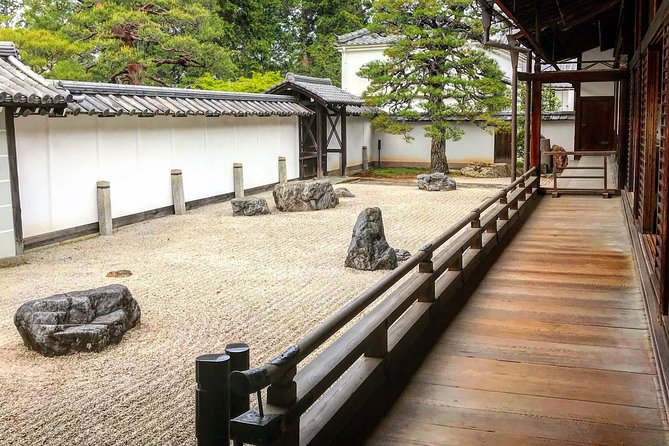
A guidebook can identify Konchi-in, Tenjuan, and Nanzen-ji. It can tell you when they were founded and list their main features. What it cannot easily do is watch what catches your eye, answer a question in the moment, and explain how several design choices relate to one another.
Andrew’s professional background is central to the experience. His master’s degree in landscape architecture and 15 years in the field give him a practical understanding of construction, composition, and plant design. His personal interest in philosophy and spirituality adds a second layer.
That combination is repeatedly reflected in the way the tour is described. The emphasis is not only on data. Andrew explains correlations, such as how garden choices relate to religion, social values, historical periods, and Japanese ideas of beauty.
His approach also appears flexible. One account describes him customizing the tour to suit particular interests and staying later to address questions. You should not treat that as a guaranteed extension, but it suggests that the private format is more than a group lecture delivered three times.
The private setup matters most if your group has a clear interest. A family might want simple explanations of Zen gardens. A design student could ask about composition and construction. A returning Kyoto visitor might focus on religion, history, or changes in contemporary life.
The real value of a $380 private tour

The price is $380 per group of up to four, not per person. For four people, the cost works out to $95 each before temple admission. For two people, it becomes $190 each, and for a solo visitor it is the full group price.
You also pay ¥1,600 per person for admission to the three temples. That additional cost should be included in your planning, since the tour price does not cover it.
Is it good value? I think the answer depends on how much you want from the visit. If you only need directions and a quick look at the gardens, it is expensive. You can enter temples on your own for much less and read a basic description beforehand.
If you want a specialist to explain design, Buddhism, Shinto, Japanese aesthetics, and local life in one connected walk, the price makes more sense. The value is in the interpretation, not in the number of sites. Three stops in three and a half hours is a focused program, not a race through Kyoto.
The cost is easier to justify for a group of three or four. It is also a sensible choice for people with limited time who want one carefully chosen Kyoto experience instead of several loosely connected visits.
Walking, timing, and what to bring
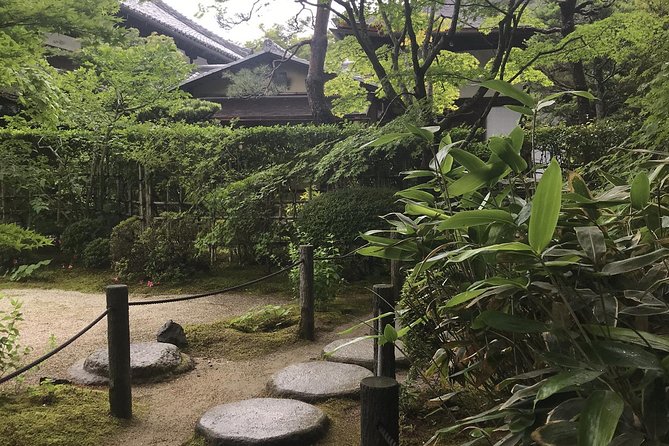
The route lasts about three and a half hours and takes place on foot. You should be comfortable walking between temple sites and standing while listening. The exact amount of walking is not specified, so anyone concerned about mobility should ask the provider before booking.
The tour is near public transportation, with Keage Station as the starting point. The finish is in front of Nanzen-ji, so you should think about the route as a one-way outing rather than a round trip.
Bring weather-appropriate clothing and shoes with good support. The experience requires good weather, and poor conditions can lead to a new date or a full refund. Free cancellation is available if you cancel at least 24 hours before the start time. Changes or cancellations within 24 hours are not refunded or accepted under the stated policy.
A mobile ticket makes entry and booking simple, but it does not remove the need to budget for the ¥1,600 temple fee. Confirmation arrives at booking, and most people can participate.
Who will get the most from this Kyoto walk
I would recommend this tour to you if gardens are more than photo stops. It is especially well suited to people interested in architecture, design, religion, Japanese culture, or the meaning of visual symbols.
It also works well for first-time visitors who want a strong foundation before seeing other temple gardens. Once you understand how to look at rocks, gravel, open space, and borrowed scenery, later visits become more rewarding.
Repeat visitors may get even more from it. You have already seen Kyoto’s famous sights, so a focused discussion can add depth without sending you to another crowded landmark.
Families and mixed-interest groups should think about the format. A private guide can adjust the discussion, but the core subject remains gardens and spirituality. If some members want shopping, food, or fast sightseeing, this may not be the best match.
The same applies to children. The supplied information says most people can participate, but it does not give a minimum age or child-specific format. Decide based on your group’s ability to enjoy a quiet, discussion-led walk.
Should you book it?
Book this tour if you want to understand why Kyoto’s Zen gardens look the way they do, not simply photograph them. Andrew’s garden design background, the private format, and the three connected temple stops create a thoughtful experience with a clear purpose.
Skip it if your budget is tight, you dislike walking, or you want a broad survey of Kyoto’s top attractions. The tour is narrow by design, and you pay both the group fee and separate temple admission.
For a group of four with a genuine interest in Japanese gardens, Zen, or religious culture, I think it is a strong use of half a day. You leave Nanzen-ji with more than a list of names. You leave with a better set of questions to ask whenever you meet a Japanese garden.
FAQ
How long does the Kyoto Zen garden tour last?
The tour lasts approximately three hours and 30 minutes.
Which temples are included in the route?
The route visits Konchi-in, Tenjuan, and Nanzen-ji. Konchi-in and Tenjuan are sub-temples of Nanzen-ji, while Nanzen-ji is the head temple of the Nanzen-ji Zen Monastery.
Who guides the experience?
Andrew leads the tour. He is a garden designer with 15 years of experience and a master’s degree in landscape architecture.
Is the tour private?
Yes. Only your own group takes part, with a maximum of four people per booking.
Are temple entrance fees included in the $380 price?
No. The total admission fee for the three temples is ¥1,600 per person and is paid separately.
Where does the tour start and finish?
The tour starts near Keage Station in Kyoto’s Higashiyama Ward. It finishes in front of Nanzen-ji in Nanzenji Fukuchicho.
Just added around Kyoto
- Private Guided Traditional Buddhist Cooking in Japan★ 5.0 · 16 reviews
- Kyoto: Gion Geisha District & Sake-in-Hand Walking Tour★ 5.0 · 37 reviews
- Your Private Vacation Photography Session In Kyoto★ 5.0 · 110 reviews
- Kyoto: Zen Meditation at a Private Temple with a Monk★ 5.0 · 25 reviews
- Traditional Japanese Washi Papermaking- Kyoto morning★ 5.0 · 77 reviews
- Kyoto Wagashi(Japanese sweets) Cooking Class near Fushimiinari★ 5.0 · 60 reviews
- Private Pewter Sake Cup Experience with a Kyoto Artisan★ 5.0 · 31 reviews
- Kyoto Private 6 hour Tour: English Speaking Driver Only, No Guide★ 5.0 · 88 reviews
Garden & Palace Tours, compared.

Imperial Palace and Shogun Historical Walking Tour
Read our review →
Tokyo Castle & Imperial PalaceーShogun Walking Tour
Read our review →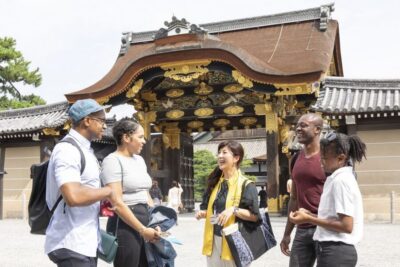
Nijo-jo Castle and Ninomaru Palace Guided Tour
Read our review →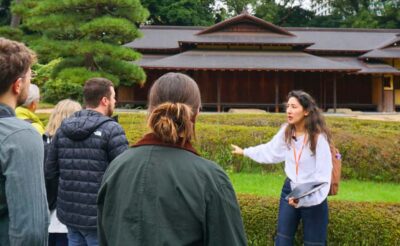

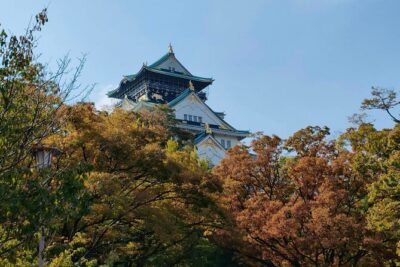
Ultimate Osaka Walking Tour: Castle, Dotonbori & Hidden Gems
Read our review →Tokyo Castle & Imperial PalaceーShogun Walking Tour
Read our review →Browse the lists this tour appears in