
REVIEW · TEA CEREMONY EXPERIENCES
Kyoto Tea Ceremony and Samurai Photo Session
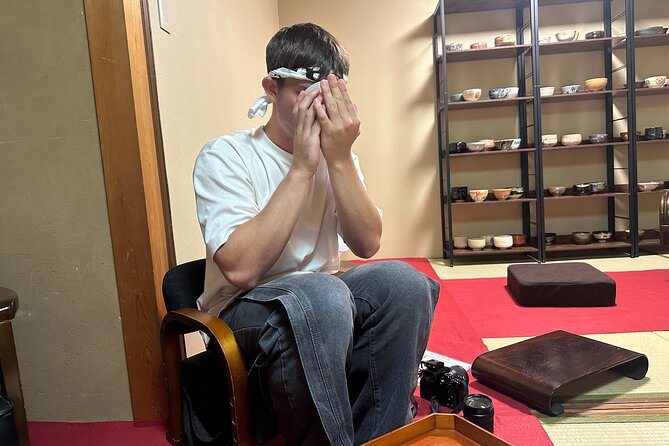
The best part of this Kyoto experience is that you do not just sit and watch. You make matcha yourself, learn why the ceremony values calm attention, then prepare a modern Kyoto-style matcha latte. Maya, the main instructor named in the experience details, brings a warm, funny teaching style and explains the customs clearly in English.
I like the setting in a 100-year-old machiya, where the traditional townhouse gives the lesson a sense of place. I also like the mix of old and new: seasonal wagashi and formal tea-making come first, followed by a latte you can recreate at home. The main consideration is time. The tea portion is described as about 50 minutes, while the full activity lasts roughly 1 hour 20 minutes, and the session may feel brief if you want a long, formal tea ceremony.
In This Review
- Key points to know before booking
- A short Kyoto lesson inside a 100-year-old machiya
- The opening explanation: history, mindfulness, and ceremony
- Watching the traditional matcha preparation
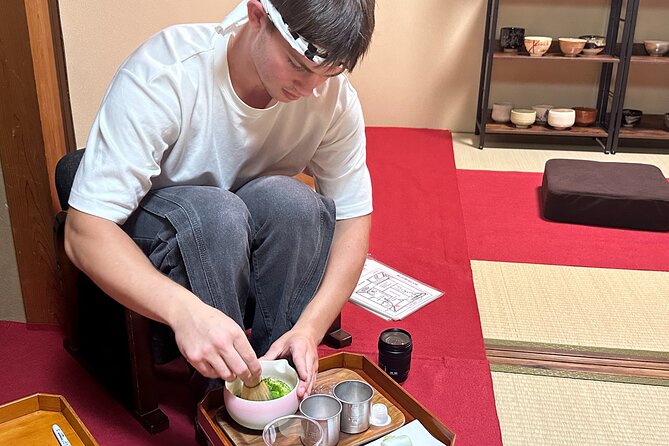
- Whisking your own bowl of matcha
- A modern Kyoto-style matcha latte
- Samurai armor and the final photos
- What the price means at $71.74
- Location and planning details
- Who will enjoy this experience most
- Should you book the Kyoto tea ceremony and samurai photo session?
- FAQ
- How long does the Kyoto tea ceremony and samurai photo session last?
- Where does the activity begin and end?
- Is the experience suitable for beginners?
- Is the session conducted in English?
- How many people can join the activity?
- Can I cancel for a full refund?
Key points to know before booking
- Make your own matcha: You take part in the whisking instead of only watching a demonstration.
- Learn from Maya: Her cheerful style, clear English, and humor help first-time participants follow the ritual.
- Taste seasonal wagashi: These traditional sweets provide the classic pairing for matcha.
- Prepare a matcha latte: The modern finale includes a recipe you can use at home.
- Wear samurai armor for photos: The session ends with a playful, memorable photo opportunity.
- Small-group setting: A maximum of 10 people keeps the lesson more personal than a large workshop.
A short Kyoto lesson inside a 100-year-old machiya
This is a compact cultural activity for people who want more than a quick cup of green tea but less than a full-day class. You meet at Samurai Gyoza Factory Kyoto, at 230-1 Kamimyōkakujichō in Nakagyo Ward. The activity ends at the same place, which keeps the plan simple.
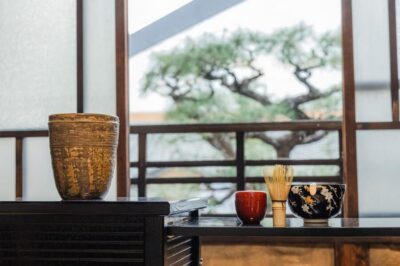
The setting matters. A machiya is a traditional Kyoto townhouse, and a 100-year-old building gives the tea lesson a fitting backdrop. You are not simply in a generic classroom learning how to use a bamboo whisk. The architecture helps connect the small actions of tea preparation with the older customs behind them.
The session is designed for beginners. You do not need prior knowledge of tea ceremony manners, and the class is explained in English. That makes it a good choice early in a Kyoto visit, when you may be curious about Japanese customs but unsure how formal or difficult the experience will be.
The group limit is 10 people. That is not an intimate private ceremony, but it is small enough for the instructor to demonstrate, correct basic technique, and keep the class moving. If your group is full, expect a shared activity rather than a quiet, one-on-one ritual.
More Kimono & Culture Experiences in Kyoto
- Kyoto Geisha Walking Tour: Gion District & Hidden Gems
★ 4.7 · 3,273 reviews - Kyoto: Gion Magical Night Walking Tour with Geisha Trivia
★ 4.9 · 2,393 reviews - Kyoto: Gion Geisha District Walking Tour – Stories of Geisha
★ 4.7 · 2,187 reviews
The opening explanation: history, mindfulness, and ceremony
Maya begins by explaining the history of the tea ceremony and the ideas behind it. The lesson includes mindfulness, or the practice of giving full attention to the moment, rather than rushing through the steps.
This background is useful because the ceremony can otherwise seem like a string of precise movements with no obvious reason. You learn that the details are part of a larger approach to hospitality, focus, and respect. Even if you are mainly interested in drinking matcha, this introduction gives the cup more meaning.
Maya’s teaching style is a practical strength. She is described as funny, friendly, patient, and encouraging, with strong English skills. That combination should help if you are worried about making a mistake in front of the group. The atmosphere is intended to be welcoming, not stiff.
Still, keep your expectations in check. This is an introductory experience, not a lengthy study of every rule of chanoyu, the formal Japanese tea ceremony. You get a useful cultural framework in a short period, but you will not become a tea master in one visit.
Watching the traditional matcha preparation
After the introduction, you watch Maya perform the ceremony in the traditional manner. This demonstration gives you a model for the movements before you try them yourself.
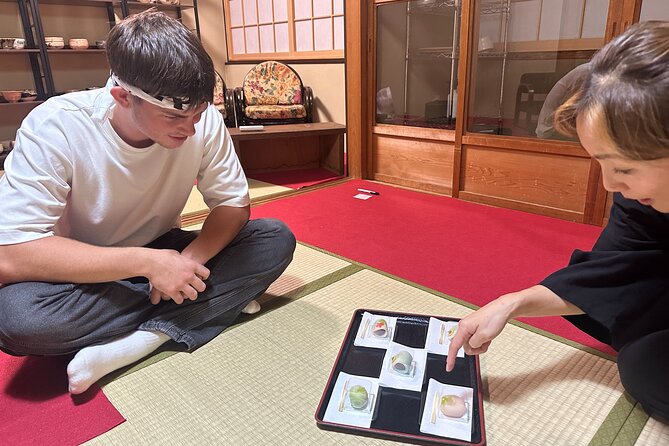
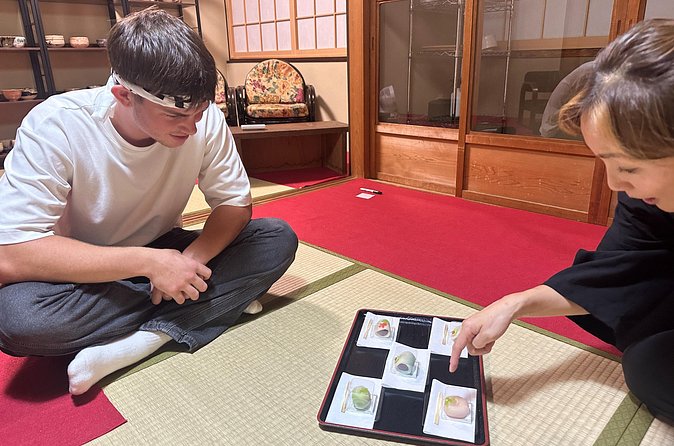
The value here is not only visual. The process shows how much care goes into a simple bowl of tea. The quality of the matcha is also emphasized in the experience, and the tea is served with seasonal wagashi, the small traditional sweets commonly paired with matcha.
Wagashi can be as important to the experience as the tea itself. The sweetness balances matcha’s grassy, sometimes bitter taste. If you have never had matcha prepared in this way, the sweet and tea pairing helps you understand why the two are served together.
This part may appeal most to people interested in Japanese food customs and craft. It is also accessible for families and first-time visitors because you can watch before participating. The ceremony is not presented as a museum display. You see the method, hear the reasons behind it, and then get a turn.
Whisking your own bowl of matcha
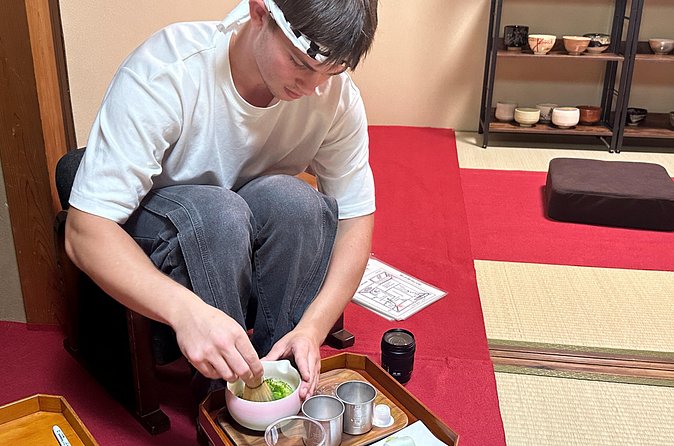
The hands-on portion is the heart of the class. You prepare your own matcha using the traditional method, with Maya explaining what to do and encouraging you to try.
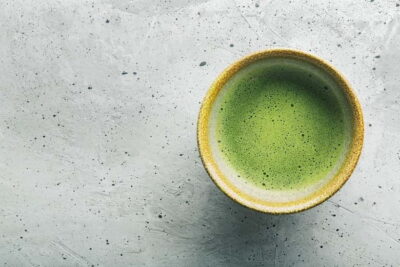
That active role makes the experience more memorable than a standard tasting. You feel the rhythm of the whisk, see the powder change in the water, and taste the result of your own work. Your first bowl may not look perfect, and that is part of the fun.
The instructor’s patience matters here. A careful teacher can make a beginner feel comfortable, especially when the group includes people with different levels of interest and coordination. The available feedback points to clear explanations and a supportive approach, which is exactly what you want in a short practical class.
The tea itself may be stronger and more vegetal than the sweetened green tea sold in many cafés. If you already enjoy unsweetened tea, you may appreciate the flavor more immediately. If matcha is new to you, the wagashi helps soften the first impression.
You should also treat this as a cultural activity, not a beverage stop. The point is learning how tea is prepared and why the ritual is structured as it is. The bowl you drink is part of the lesson.
More Tea Ceremony Experiences in Kyoto
- Kyoto: Tea Ceremony in a Traditional Tea House in Kiyomizu
★ 4.9 · 3,519 reviews - Kyoto: Tea Ceremony Ju-An at Jotokuji Temple
★ 4.9 · 3,207 reviews - Kyoto: 45-Minute Tea Ceremony Lesson Experience
★ 4.3 · 2,378 reviews - Kyoto: Table-Style Tea Ceremony at a Kyo-Machiya
★ 4.9 · 1,211 reviews
A modern Kyoto-style matcha latte
The class then shifts from tradition to a more familiar drink: a creamy matcha latte. This change of pace is one of the experience’s smartest features.
A formal tea ceremony can feel distant if every part is presented as something to observe but not repeat. The latte gives you a practical takeaway. You learn a recipe that can be made at home, and you get a second way to enjoy matcha after learning the traditional preparation.
The latte also suits people who find straight matcha too intense. It offers a smoother, more approachable finish without abandoning the central ingredient. For a mixed group, this means the tea enthusiast and the café-loving friend both have something to enjoy.
The modern recipe does not replace the ceremony. Instead, it shows how an old ingredient fits into present-day Japanese food culture. That balance gives the session a broader appeal than a strictly formal demonstration.
Allow time for the class to move from one part to the next. The stated tea portion lasts about 50 minutes, while the total activity is approximately 1 hour 20 minutes. The difference may include the photo session and transitions, but the supplied details do not provide a minute-by-minute schedule. If your day is tightly planned, allow the full stated duration rather than counting on only 50 minutes.
Samurai armor and the final photos
The final feature is the chance to wear authentic samurai armor and take photos. It is a playful ending after the quieter tea lesson, and it gives you a clear souvenir of the experience.
This is not a historical lecture about samurai warfare. Think of it as a photo session that lets you step into a recognizable part of Japan’s past for a few minutes. The armor makes the experience especially appealing for families, friends, and anyone who wants more than a food workshop.
There are plenty of photo opportunities, according to the experience details. You can expect this part to be less meditative and more lighthearted than the tea ceremony. That contrast works well, though it may not suit someone seeking an entirely solemn or traditional tea gathering.
The description calls the armor authentic, but it does not specify how many sets are available, how long each person wears them, or whether every participant gets individual portraits. If photos are your main reason for booking, check those details before paying. The activity promises the opportunity, but not a detailed photography package.
What the price means at $71.74
At $71.74 per person, this is not the cheapest way to drink matcha in Kyoto. You can find tea and sweets for far less. The price needs to be judged against what is included: instruction, participation, seasonal wagashi, two matcha preparations, a traditional townhouse setting, and samurai armor photos.
I think the value is strongest if you want a compact cultural lesson with several distinct parts. You are paying for a hosted activity, not only ingredients. The class gives you background, a traditional skill to try, a modern recipe, and a photo memory in one booking.
The value is weaker if you mainly want a long, formal ceremony with a quiet temple atmosphere. This experience is interactive and entertainment-friendly. The latte and armor session make it broader and more casual than a strictly ceremonial visit.
The small group also helps justify the price. With a maximum of 10 people, you should have a better chance to participate directly and ask questions than in a large commercial demonstration. The real benefit depends on the group size at your chosen time, since the maximum is not a guarantee that every session will be full or small.
Location and planning details
The meeting point is Samurai Gyoza Factory Kyoto, 230-1 Kamimyōkakujichō, Nakagyo Ward, Kyoto, 604-0025, Japan. The location is near public transportation, which makes it practical to fit into a day of sightseeing in central Kyoto.
You return to the same meeting point at the end. That is useful if you are carrying a day plan, meeting friends afterward, or staying in the same part of the city. It also removes the hassle of arranging a separate finish point.
The experience provides a mobile ticket, so you can keep confirmation on your phone. Booking confirmation is received at the time of booking. Since the activity is booked an average of 72 days in advance, popular dates may fill well ahead of a Kyoto visit. If your schedule is fixed, reserving early is sensible.
Free cancellation is available up to 24 hours before the start time for a full refund. Cancellations or changes made less than 24 hours before the start time are not accepted for a refund, and the cut-off follows Kyoto local time. Keep that in mind when planning around train trips, airport transfers, or other timed activities.
The operator is Japan food entertainment Ltd. No special accessibility information is provided, so you should ask the operator directly if you have mobility, seating, dietary, or other needs.
Who will enjoy this experience most
I would recommend this to you if you want a first introduction to Japanese tea ceremony without committing to a long formal program. The short format, English explanations, and hands-on steps make it easy to follow.
It also works well for:
- Friends looking for a shared activity with photos
- Families interested in Japanese food and tradition
- Matcha fans who want a recipe for home
- Visitors who prefer participation over passive sightseeing
- People who enjoy a mix of serious culture and playful fun
The class may be less suitable if you want extended silence, strict ceremony etiquette, or an in-depth study of tea-school practices. The samurai armor and matcha latte give the experience a lively, modern tone.
Maya’s personality is another reason to consider it. The feedback consistently describes her as kind, funny, patient, and clear in English. That matters because a good instructor can turn unfamiliar customs into something you feel comfortable trying.
Should you book the Kyoto tea ceremony and samurai photo session?
Book it if you want a well-paced, beginner-friendly introduction to matcha with several memorable extras. The strongest value is the combination of traditional preparation, seasonal wagashi, a make-your-own latte, and samurai armor photos in a historic machiya.
Before booking, decide what kind of tea experience you want. If you picture a lengthy, hushed ceremony in a temple setting, this may feel too compact and too playful. If you want to learn, taste, participate, and leave with a recipe and photos, the $71.74 price is reasonable.
I would schedule it on a day when you can keep some breathing room around the stated 1 hour 20 minutes. Bring a charged phone for the photo session, arrive at the specified meeting point, and reserve early if you need a particular date. For most first-time visitors, this offers a friendly and practical way to connect with Kyoto’s tea culture without making the experience intimidating.
FAQ
How long does the Kyoto tea ceremony and samurai photo session last?
The full activity lasts approximately 1 hour and 20 minutes. The tea ceremony portion is described as taking about 50 minutes, with the remaining time likely covering transitions and the samurai armor photos.
Where does the activity begin and end?
You meet at Samurai Gyoza Factory Kyoto, 230-1 Kamimyōkakujichō, Nakagyo Ward, Kyoto, 604-0025, Japan. The activity ends back at the same meeting point.
Is the experience suitable for beginners?
Yes. The activity is designed for beginners and includes explanations of tea ceremony history and instructions for making traditional matcha and a matcha latte.
Is the session conducted in English?
The instructor Maya is described as speaking English very well, and the tea ceremony, history, and preparation steps are explained in English.
How many people can join the activity?
The maximum group size is 10 people.
Can I cancel for a full refund?
Yes. You can cancel up to 24 hours before the experience start time for a full refund. Cancellations or changes made less than 24 hours before the start time are not accepted for a refund.
More Photography Sessions in Kyoto
- Kyoto: Maiko Makeover and Photoshoot Experience
★ 4.7 · 239 reviews - Kyoto: Private Photoshoot Service
★ 5.0 · 158 reviews - Your Private Vacation Photography Session In Kyoto
★ 5.0 · 110 reviews - Kyoto: Tea Ceremony with Kimono and Photoshoot
★ 4.9 · 90 reviews
Just added around Kyoto
- Private Guided Traditional Buddhist Cooking in Japan★ 5.0 · 16 reviews
- Kyoto: Gion Geisha District & Sake-in-Hand Walking Tour★ 5.0 · 37 reviews
- Your Private Vacation Photography Session In Kyoto★ 5.0 · 110 reviews
- Kyoto: Zen Meditation at a Private Temple with a Monk★ 5.0 · 25 reviews
- Traditional Japanese Washi Papermaking- Kyoto morning★ 5.0 · 77 reviews
- Kyoto Wagashi(Japanese sweets) Cooking Class near Fushimiinari★ 5.0 · 60 reviews
- Private Pewter Sake Cup Experience with a Kyoto Artisan★ 5.0 · 31 reviews
- Kyoto:Family-Friendly Kimono & Yukata Experience at WARGO★ 5.0 · 147 reviews
Tea Ceremony Experiences, compared.
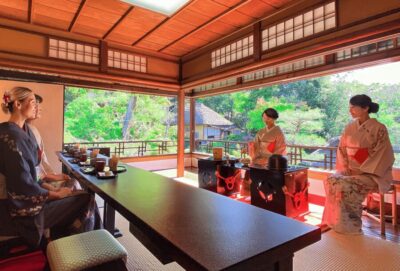
Tea Ceremony in a Traditional Tea House in Kiyomizu
Read our review →

World Heritage Kyoto & Nara Uji Authentic Matcha Experience
Read our review →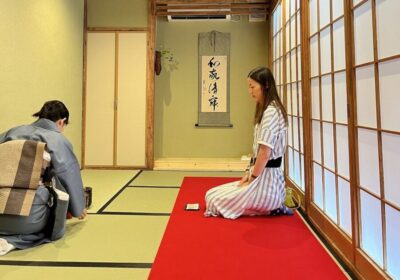
Browse the lists this tour appears in