
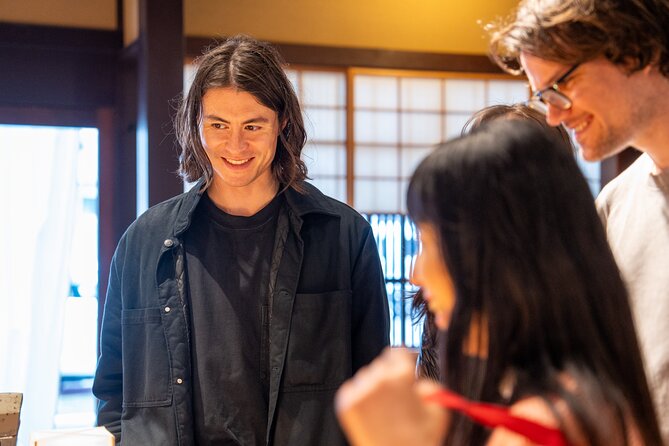
REVIEW · JAPANESE COOKING CLASSES
Kyoto Sushi Making Experience with a Professional Sushi Chef
Kyoto’s sushi culture becomes much easier to understand when a Taisho, or master sushi chef, shows you the work up close. You will watch his knife skills, shape nine nigiri pieces, make roll sushi, and eat your own results soon after. The class also includes tempura, sake pairings, sweets, and matcha.
I like the small group, capped at eight people, because you should get real attention rather than a quick demonstration from the back row. I also like the full cultural mix: this is not just a cooking lesson, but a meal with sushi, tempura, sake, Japanese sweets, and tea.
The main consideration is the price: $163.30 per person is a serious spend for a three-and-a-half-hour activity. It makes more sense if you value instruction and cultural context, not simply the amount of food on the plate.
In This Review
- Key points to know before booking
- Meeting the Taisho in a Kyoto sushi restaurant
- Starting with Kyoto sweets before the sushi
- Learning to shape nine nigiri pieces
- Tempura adds a cooked contrast
- Sake tasting with sushi pairing advice
- Matcha and sweets in a Kyoto-style garden
- What $163.30 buys you in Kyoto
- Timing, transport, and the shape of the afternoon
- Who will get the most from this experience
- Final call: book it for the full cultural package
- FAQ
- Where does the Kyoto sushi-making experience begin?
- What time does the experience start?
- How long does the experience last?
- Where does the activity end?
- How many people can join the experience?
- Is the experience available in English?
- What sushi will I make?
- Is tempura included?
- Are drinks and sake tastings included?
- Is matcha included?
- Are children allowed to join?
- How much does the experience cost?
- Can I cancel for a refund?
Key points to know before booking
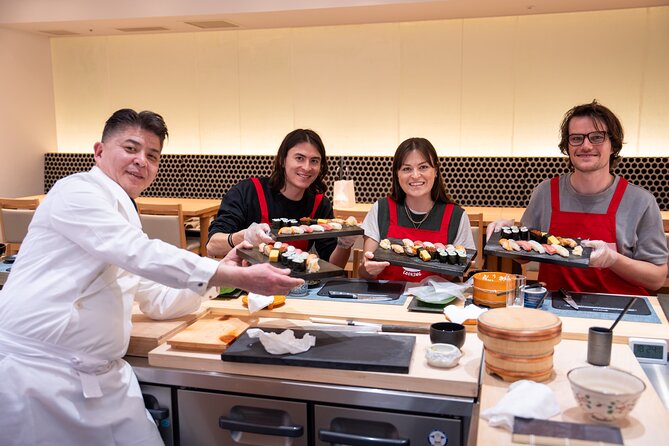
- Nine nigiri pieces and roll sushi: You will shape your own sushi under the chef’s guidance, while the Taisho handles the more difficult slicing.
- A professional chef leads the class: Watch precise knife work and learn how nigiri is formed in a working sushi restaurant.
- Sake is part of the meal: Two drinks and sake tastings are included, with advice on pairing sake with sushi.
- The experience starts with sweets: Your guide takes you to a local shop to choose traditional Japanese sweets for the final tea service.
- Matcha ends the afternoon: Whisk your own matcha in a peaceful Kyoto-style garden and eat the sweets you selected.
- Small and family-friendly: The group has a maximum of eight people, and children age four and older are welcome.
Meeting the Taisho in a Kyoto sushi restaurant
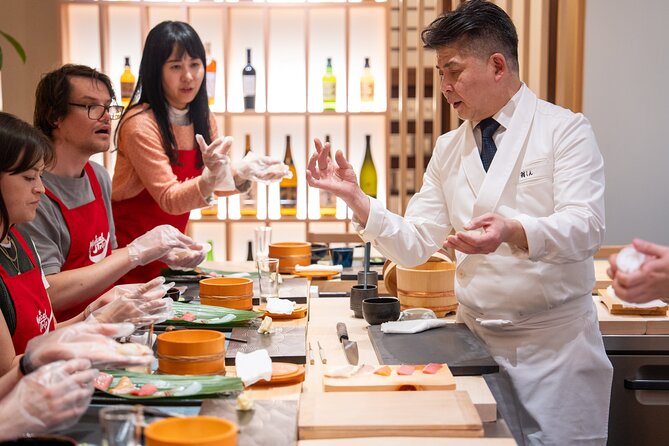
The central appeal here is access to a real sushi chef. Instead of learning from a general cooking instructor, you meet a Taisho, an experienced sushi professional who demonstrates the craft before asking you to try it yourself.
That distinction matters. Sushi can look simple on the plate, but the small movements are not simple at all. The chef’s knife work, hand position, rice shaping, and fish placement all affect the final bite. Watching those steps gives you a better sense of why good sushi costs more than a mound of rice with fish on top.
You will not be expected to manage every difficult part. The Taisho handles the slicing, so you can focus on rolling and shaping without worrying about sharp knives. That setup should suit beginners, families, and anyone who wants a hands-on activity without signing up for a demanding professional cooking class.
The English-speaking guide keeps the session moving and explains what is happening. Ayuri is one guide associated with this experience, and her warm, helpful style was specifically praised. You may not have Ayuri on your date, but the tour is designed to work without Japanese-language skills.
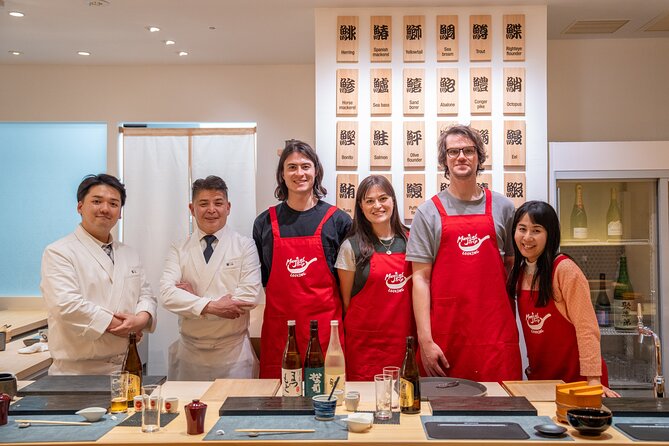
The group limit of eight is one of the strongest practical details. With sushi-making, you need to see the chef’s hands and have space to copy the technique. A tiny class also makes it easier to ask questions, get corrections, and avoid feeling rushed.
More Japanese Cooking Classes in Kyoto
- Ramen Cooking Class at Ramen Factory in Kyoto
★ 5.0 · 1,937 reviews - Sushi Making in Kyoto! Same-day bookings welcome!
★ 5.0 · 713 reviews - Kyoto: Ramen Cooking Class at a Ramen Factory with Souvenir
★ 4.9 · 532 reviews
Starting with Kyoto sweets before the sushi
Your afternoon begins at 3:30 pm at Diesel604, Banochō, in Kyoto’s Nakagyo Ward. The meeting point is near public transportation, though you should still allow time to find the exact location before the start.
The first stop is a local shop selling traditional Japanese sweets. A friendly expert helps you choose the sweets that will be served later with matcha. This is a small detail, but it gives the experience a pleasant arc: you make a choice at the beginning, then return to it at the end.
Japanese sweets are often designed to balance tea rather than act as a heavy dessert. Their colors, shapes, and textures can be subtle, and choosing them with guidance gives you a little more context than simply receiving a preselected sweet on a plate.
Do not expect this stop to be a long market visit or a broad food tour. It is one part of a tightly planned three-and-a-half-hour activity. Its value is the connection between Kyoto’s sweets, tea customs, and the meal that follows.
Learning to shape nine nigiri pieces
At the sushi restaurant, the Taisho first demonstrates the craft. You will see how the rice is handled and how the fish is placed to create nigiri. The demonstration is as important as the cooking itself because sushi technique depends on touch, speed, and proportion.
You then make your own sushi with the chef’s guidance. The included course features nine nigiri pieces and roll sushi. That gives you several chances to practice rather than limiting the activity to one token piece.
The roll sushi should feel like the more approachable task. It offers a clear process and a satisfying result, especially if you have never made sushi before. Nigiri is the more revealing exercise. Shaping rice so it holds together without becoming dense takes care, and the chef’s corrections help you see what your hands are doing.
The best part is that you eat the sushi you make on the spot. This keeps the lesson connected to the meal. You are not practicing a technique and then waiting for a separate restaurant course to arrive. Your work becomes part of the tasting.
The fish quality is worth noting. The available account of the experience praised the freshness of the fish, which is crucial in a sushi class. Fresh ingredients cannot fix poor technique, but they make the result much more rewarding while you learn.
You should keep your expectations realistic. This is a guided introduction, not a route to professional sushi-chef skills in one afternoon. You will leave with a better feel for the process and a memorable skill to demonstrate at home, but probably not with the ability to reproduce every detail of the Taisho’s work.
Tempura adds a cooked contrast
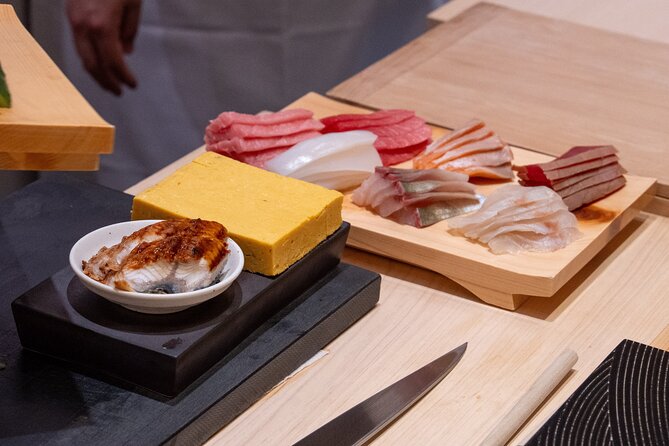
The sushi course is followed by tempura prepared by the chef. This changes the texture and temperature of the meal in a useful way. After cool, delicate sushi, hot tempura gives you a crisp, cooked contrast.
This is also where the chef’s role matters again. Tempura depends on timing and handling. If it sits too long, the coating loses its appeal. Having it prepared as part of the meal should make this more than a side dish added without thought.
The strongest food praise attached to this experience was directed at the tempura, described as the best so far in Japan by one family who took the class. That is a high personal judgment, not a guarantee for every palate, but it signals that the cooked portion is not an afterthought.
For families, the tempura may be especially useful. Children or cautious eaters may be less eager to try raw fish, while a hot cooked dish gives them another part of the meal to enjoy. Children age four and older are welcome, so this can work for a mixed-age group.
Same city, a completely different kind of day:
- PERFECT KYOTO 1-Day Bus Tour
★ 5.0 · 13,518 reviews - Kyoto: Fushimi Inari, Kinkakuji, Bamboo Grove 1 Day Bus Tour
★ 4.8 · 4,316 reviews - Kyoto: Tea Ceremony in a Traditional Tea House in Kiyomizu
★ 4.9 · 3,519 reviews - Kyoto Geisha Walking Tour: Gion District & Hidden Gems
★ 4.7 · 3,273 reviews
Sake tasting with sushi pairing advice
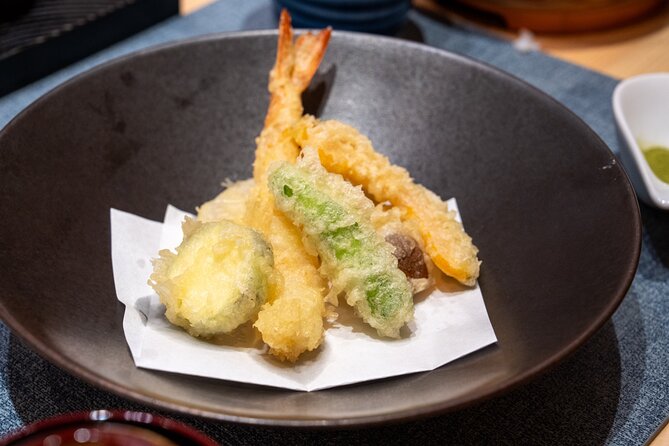
The experience includes two drinks and sake tastings. Rather than treating sake as just another beverage, the guide explains how different types pair with sushi.
That lesson adds value because sake can be confusing if you are new to it. The point is not simply to sample several glasses. You are encouraged to notice how the drink works with different flavors and textures in the meal.
Sake pairing is also a good bridge between the food and the wider dining culture. Sushi is often discussed as though the fish carries the whole experience, but rice, seasoning, temperature, and drink all affect how the meal tastes.
The details of the specific sake selections are not given, so you should not book this expecting a named brewery tour or an advanced tasting seminar. Think of it as a friendly introduction built into lunch or dinner, with enough explanation to make future restaurant choices less intimidating.
If you do not drink alcohol, check the arrangements before booking. The experience description specifies drinks and sake tastings, but it does not state what nonalcoholic alternatives are available.
Matcha and sweets in a Kyoto-style garden
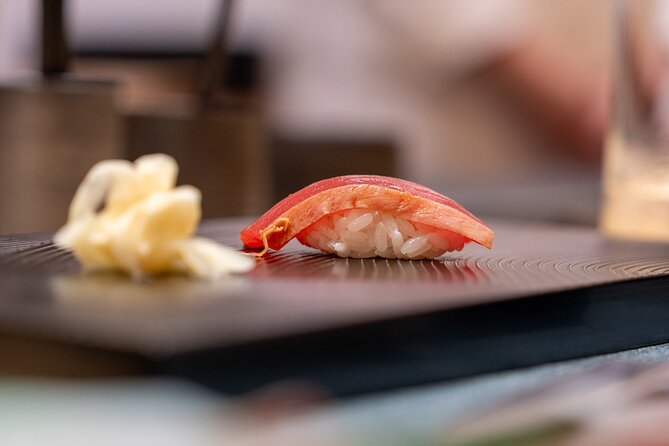
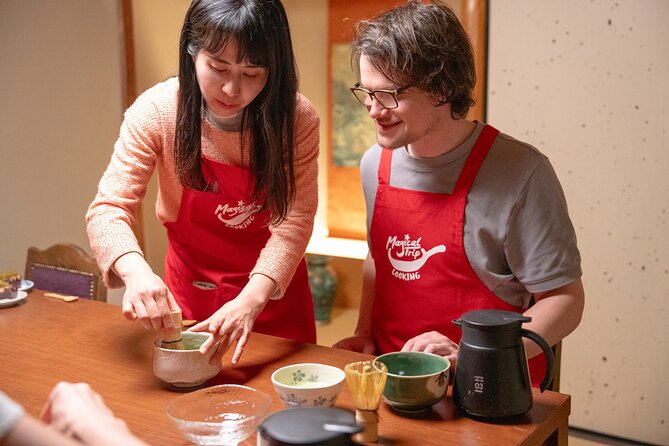
The final portion moves away from the restaurant and into a peaceful Kyoto-style garden. Here, your guide teaches you how to whisk matcha, which you enjoy with the traditional sweets selected at the beginning.
This ending works because it slows the pace. Sushi-making requires attention and hand movement. Sake tasting adds conversation. Matcha offers a quieter finish and lets you reflect on the meal without adding another large course.
Whisking matcha is hands-on, but it is also forgiving. You do not need Japanese skills to take part, and the English-speaking guide can explain the basic method. The activity gives you something practical to remember beyond the food: how tea is prepared and why a sweet is served alongside it.
The garden setting is a real plus, though you should view it as the closing setting for the tea experience rather than a separate garden tour. The supplied details do not identify the garden or promise a long visit, so this is not the right choice if your main goal is sightseeing in a famous Kyoto temple garden.
Still, as a final chapter to the afternoon, it gives the experience a more local and thoughtful feel. You begin by choosing sweets, then finish by eating them with matcha in a calm setting. That kind of structure makes the activity feel planned rather than like a series of unrelated tastings.
What $163.30 buys you in Kyoto
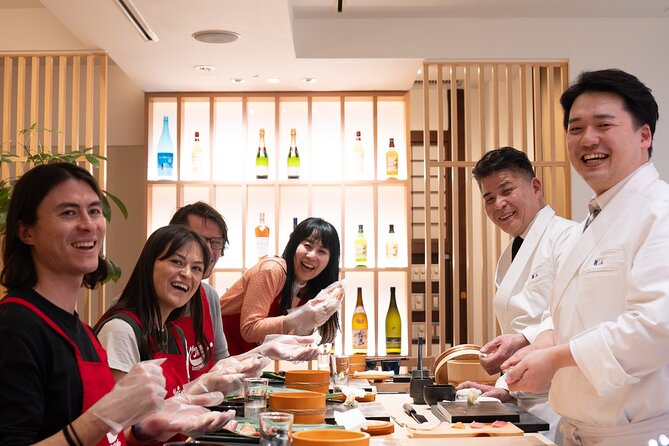
At $163.30 per person, this is not a bargain cooking class. You are paying for a professional chef, a small group, an English-speaking guide, sushi ingredients, nine nigiri pieces, roll sushi, a tempura set, two drinks, sake tastings, sweets, and the matcha activity.
The value depends on your priorities. If you only want the cheapest way to eat sushi, a restaurant meal will cost less. If you want a cooking class with a chef, a guided tasting, and several cultural activities in one booking, the price becomes easier to justify.
I would compare it with the cost of booking separate activities. A basic sushi class might cover the cooking but not include sake, tempura, a sweets shop, and matcha. Here, the three-and-a-half-hour schedule combines them into one afternoon.
The small group also matters. A maximum of eight people is much better suited to a technique-based class than a large bus-style activity. You are paying partly for access and attention, not just ingredients.
The price may feel high for children who eat little or for anyone who does not drink sake. Families should decide how much each person will actually use. Food-focused adults and curious solo visitors are likely to get more from the full package.
Timing, transport, and the shape of the afternoon
The class starts at 3:30 pm and lasts about three hours and thirty minutes. You should expect to finish around 7 pm, although the end time is approximate.
That timing can work well on a Kyoto sightseeing day. You have the morning and early afternoon for temples or neighborhoods, then move into a food-centered evening. It also means you should avoid booking another fixed activity immediately afterward.
The meeting point is Diesel604, Banochō, Nakagyo Ward, Kyoto, postal code 604-8172, Japan. The activity ends back at the meeting point. Since the start location is near public transportation, it should be practical to reach, but the exact station and route are not specified here. Use the mobile ticket and meeting-point details when planning your route.
The activity is offered with free cancellation up to 24 hours before the start time. Cancellations made less than 24 hours before the 3:30 pm start are not refunded, and late changes are not accepted. The cut-off follows Kyoto local time, so keep that in mind if you are booking from abroad.
Who will get the most from this experience
I would recommend this for first-time visitors who want a guided introduction to Japanese food without spending a full day in a classroom. You get sushi, tempura, sake, sweets, and matcha in one compact program.
It also suits solo visitors. A small group gives you a natural setting for conversation, and the hands-on format is less awkward than sitting alone through a long lecture.
Families can enjoy it too, especially with children who like making things. The minimum age is four, but young children may need help with the shaping and rolling. The chef handles the slicing, which removes one major worry for parents.
Food lovers should appreciate the access to a professional Taisho and the chance to ask about sushi technique. The class is also a good fit if you have always wanted to make sushi at home but need someone to show you the basic hand movements first.
I would hesitate to recommend it to a strict budget traveler, someone seeking a full restaurant dinner, or a visitor who wants a serious sake certification-style class. It is a guided cultural experience with food, not an unlimited meal or advanced culinary course.
Final call: book it for the full cultural package
Book this Kyoto sushi experience if you want more than a meal. The strongest reasons are the professional Taisho, the small eight-person limit, fresh fish, hands-on nigiri and roll sushi, and the unusual combination of sake pairing, sweets, and matcha.
The food praise is especially strong for the fresh fish and tempura, while the cultural sequence gives the afternoon a clear beginning and ending. Ayuri may be your guide, and the English support makes the class accessible even if you know no Japanese.
Skip it if $163.30 feels too steep for a three-and-a-half-hour activity or if your group will not use the sake and tea portions. For the right visitor, though, this is a well-rounded way to connect Kyoto’s sushi craft with its quieter sweets and matcha traditions.
FAQ
Where does the Kyoto sushi-making experience begin?
It begins at Diesel604, Banochō, Nakagyo Ward, Kyoto, 604-8172, Japan.
What time does the experience start?
The start time is 3:30 pm.
How long does the experience last?
It lasts approximately three hours and thirty minutes.
Where does the activity end?
The activity ends back at the meeting point.
How many people can join the experience?
The maximum group size is eight travelers.
Is the experience available in English?
Yes. An English-speaking guide is provided, and no Japanese skills are needed.
What sushi will I make?
You will make nine nigiri sushi pieces and roll sushi under the Taisho chef’s guidance.
Is tempura included?
Yes. A tempura set prepared by the chef is included.
Are drinks and sake tastings included?
Yes. The experience includes two drinks and sake tastings with pairing guidance.
Is matcha included?
Yes. You will learn to whisk matcha in a Kyoto-style garden and enjoy it with traditional Japanese sweets.
Are children allowed to join?
Yes. Families are welcome, and children age four and older may participate.
How much does the experience cost?
The listed price is $163.30 per person.
Can I cancel for a refund?
Yes. You can cancel up to 24 hours before the experience for a full refund. Cancellations made less than 24 hours before the start time are not refunded.
Just added around Kyoto
- Private Guided Traditional Buddhist Cooking in Japan★ 5.0 · 16 reviews
- Kyoto: Gion Geisha District & Sake-in-Hand Walking Tour★ 5.0 · 37 reviews
- Your Private Vacation Photography Session In Kyoto★ 5.0 · 110 reviews
- Kyoto: Zen Meditation at a Private Temple with a Monk★ 5.0 · 25 reviews
- Private Pewter Sake Cup Experience with a Kyoto Artisan★ 5.0 · 31 reviews
- Traditional Japanese Washi Papermaking- Kyoto morning★ 5.0 · 77 reviews
- Kyoto Wagashi(Japanese sweets) Cooking Class near Fushimiinari★ 5.0 · 60 reviews
- Kyoto Private 6 hour Tour: English Speaking Driver Only, No Guide★ 5.0 · 88 reviews
Japanese Cooking Classes, compared.
Sushi Making Tokyo Roll and Authentic Japanese Sushi Class
Read our review →
Roll and Authentic Sushi Making Class in Asakusa
Read our review →
Ramen Cooking Class at Ramen Factory in Kyoto
Read our review →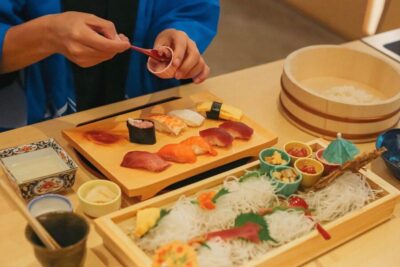
Sushi Making Class in a Happi Coat near a Famous Spot
Read our review →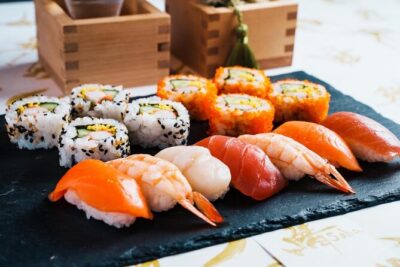
Sushi Making Osaka Roll and Authentic Japanese Sushi Class
Read our review →
Tokyo Sushi Making Class in Tsukiji with Professional Chef
Read our review →
Ramen & Gyoza Cooking Class in Tokyo with Local Supermarket Visit
Read our review →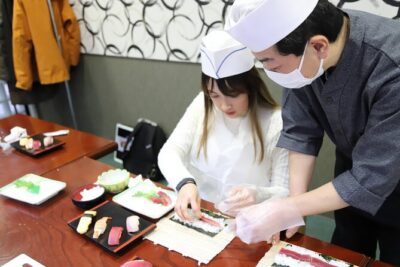
Tsukiji Fish Market Guided Tour and Sushi Making with Pro Chef
Read our review →Browse the lists this tour appears in