
REVIEW · KIMONO & CULTURE EXPERIENCES
Kyoto: Samurai Sword & Kimono Action Filming Experience
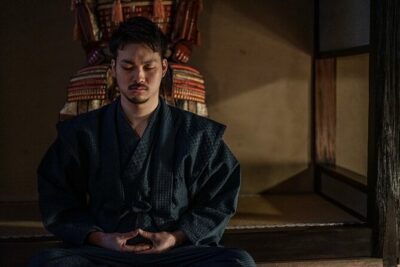
Kyoto’s Myokaku-ji Temple becomes your film set for 70 minutes, as Japanese swordplay instructors teach you choreographed moves, dress you in a kimono, and record a short samurai action scene. The swords are fake, but the setting and performance training give the activity more character than a simple costume photo.
I like the small six-person limit, which gives the instructors room to help each person with timing and form. I also like the finished footage, since you do not just watch a performance. You take part in one and download the photographs and video afterward.
The main consideration is physical: this is an active role-playing session, not a quiet temple visit. You should be comfortable moving in costume, and the experience is not suitable for children under five, pregnant women, people with back problems, or people with existing medical conditions.
In This Review
- Key points before you book
- Training with a sword inside Myokaku-ji
- Wearing the kimono before the action scene
- Watching professional chambara actors at work
- Filming your own samurai scene
- What makes the temple setting worthwhile
- The value of $127 for 70 minutes
- Who should book this experience
- Timing, language, and practical details
- Safety and comfort during swordplay
- Should you book the Kyoto samurai filming experience?
- FAQ
- Where does the samurai sword experience take place?
- How long does the activity last?
- Is the kimono rental included?
- Can I take photographs and videos?
- Is the activity available in English?
- Who should not take part?
Key points before you book
- Train inside Myokaku-ji Temple: The activity takes place at a historic temple connected with Sengoku-era warlords, including Oda Nobunaga.
- Learn two named sword cuts: Instruction includes makkogiri and kesagiri, taught as controlled performance movements.
- Work with screen actors: Kesuke Irie and Kazuya Naito are among the instructors, with experience in Japanese films and television dramas.
- Wear the kimono at no extra rental charge: Dressing is part of the experience, not an optional add-on.
- Film your own chambara scene: You can use your camera during the swordplay, and a photo download service is included.
- Expect a playful, physical class: The tone is friendly and funny, but you still need comfortable clothing and enough mobility for movement.
Training with a sword inside Myokaku-ji
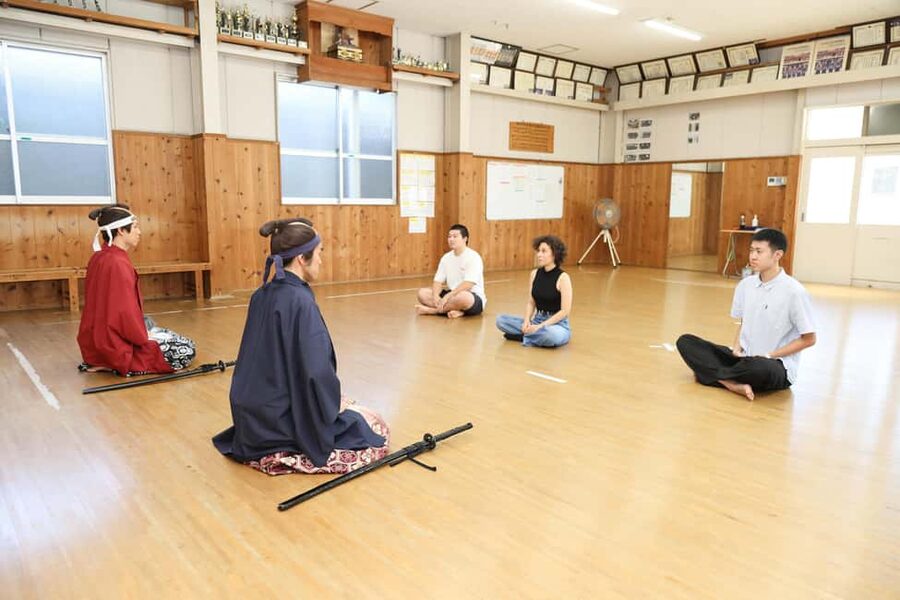
The meeting point is the Myokaku-ji Dojo, just to the left after you enter the main gate of Myokaku-ji Temple. That detail matters because the temple grounds may have more than one entrance or building, so head toward the dojo rather than wandering around looking for a general reception desk.
The setting does a lot of the work here. You are not learning sword choreography in a hotel conference room or a generic studio. You are practicing inside a historic temple associated with Sengoku warlords who stayed in the area, including Oda Nobunaga about 400 years ago.
I would keep your expectations clear. This is an entertainment experience built around chambara, the stylized sword fighting seen in Japanese period films. You are not receiving formal instruction for real combat, and the activity uses a fake sword. The appeal is learning controlled movements, expression, and timing well enough to perform for a camera.
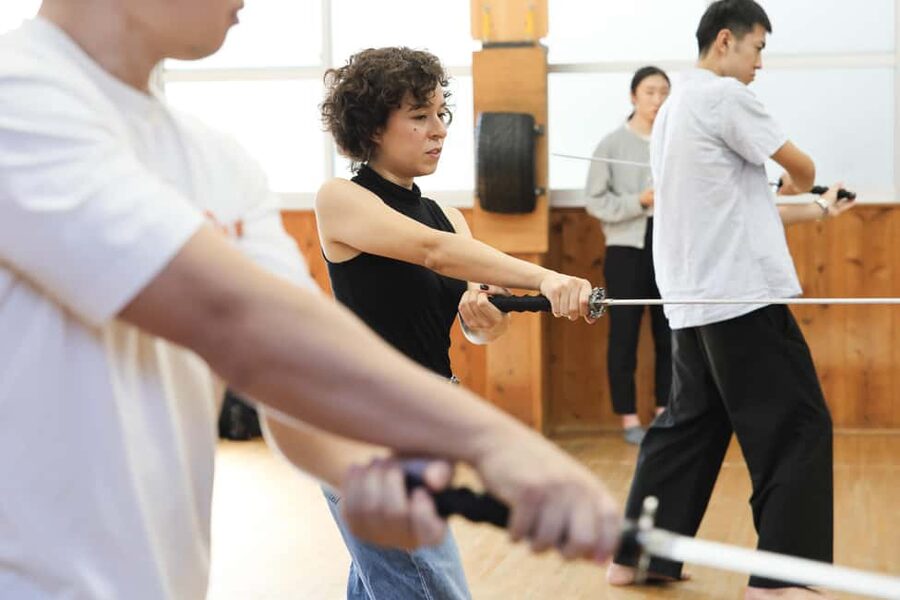
The instructors begin with the basics of holding and wielding the sword. You learn how to position your hands, control the blade, and make the movement look purposeful. The named techniques include makkogiri and kesagiri, which give the lesson a satisfying sense of structure rather than reducing it to random swinging.
For you, the key is to follow the rhythm instead of trying to look powerful. Sword scenes work because of timing and clean movement. The teachers guide you through the actions, and the small group means you should have a reasonable chance to correct your stance before filming begins.
More Kimono & Culture Experiences in Kyoto
- Kyoto Geisha Walking Tour: Gion District & Hidden Gems
★ 4.7 · 3,273 reviews - Kyoto: Gion Magical Night Walking Tour with Geisha Trivia
★ 4.9 · 2,393 reviews - Kyoto: Gion Geisha District Walking Tour – Stories of Geisha
★ 4.7 · 2,187 reviews
Wearing the kimono before the action scene
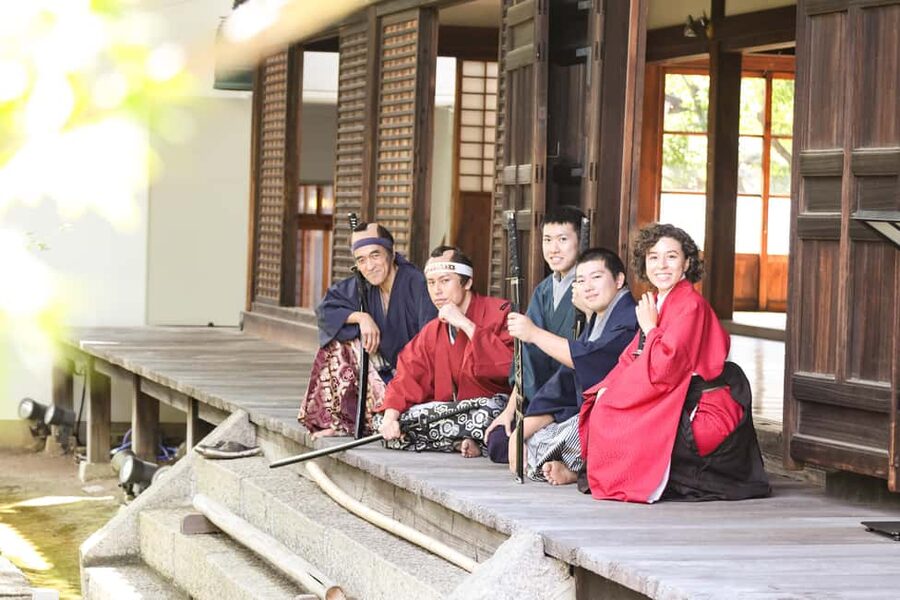
The rental kimono is included in the $127 price, so you do not need to pay an extra costume fee. Dressing in traditional clothing changes the mood of the activity and gives the final footage a stronger period-drama look.
The kimono is not just a backdrop for photographs. It becomes part of the role-playing. Once you are dressed, even simple sword movements feel more connected to the setting. You also get to learn something about the traditional art of kimono dressing rather than simply pulling on a costume over ordinary clothes.
Wear comfortable clothing underneath. The activity specifically calls for clothes suitable for physical activity, and a kimono can make movement less casual than it is in everyday clothing. Avoid arriving in anything that restricts your legs, back, or shoulders.
You should also accept that this is a fun costume session, not a formal cultural lesson in every aspect of kimono use. The clothing helps you enter the period-drama world, but the main purpose remains swordplay and filming.
Watching professional chambara actors at work
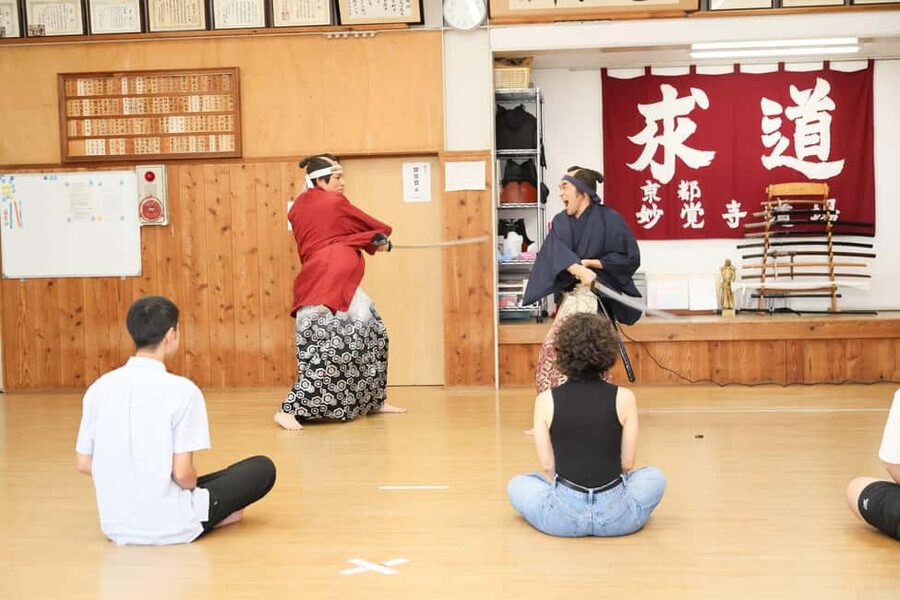
Before you perform, you watch a chambara demonstration by the instructors. This is one of the most useful parts of the session because it shows you the difference between simply holding a sword and presenting a convincing action sequence.
The instructors are professional actors in period dramas. Kesuke Irie and Kazuya Naito are specifically identified as performers who have appeared in Japanese films and television shows. Their experience matters most when they demonstrate posture, timing, facial expression, and the clean pauses that make choreographed fighting readable on screen.
I like this structure. You first see the polished version, then learn the smaller pieces yourself. It gives you something specific to copy. It also helps explain why your final scene may look better than you expect, even if you have no acting or martial arts background.
The tone appears to be light and encouraging. You can expect jokes, patience, and plenty of help, but you still need to take part rather than watch passively. The most successful approach is to commit to the bit. If you perform timidly, the footage may feel flat. If you play along with the theatrical style, the result should be more entertaining.
Filming your own samurai scene
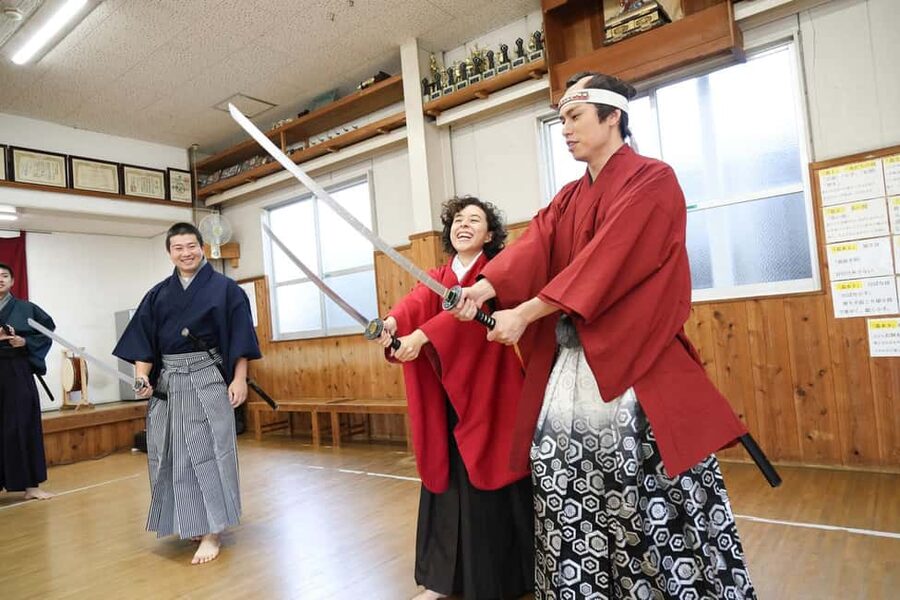
After the instruction and demonstration, you perform the sword techniques in a choreographed filming session. This is the payoff. You are no longer practicing individual cuts in isolation. You are using them as part of a short action scene.
You are welcome to record the swordplay with your own camera. Bring a phone or camera that is ready to use, and make sure the person handling it knows how to start and stop recording. Photography and video recording with your camera are included, along with a photo download service.
The activity does not promise a full edited movie or a specific final running time for the footage, so I would think of it as a memorable action clip rather than a professional production. Still, that is enough to make a good travel souvenir. You get something more personal than a posed photograph because you are performing the scene yourself.
The instructors handle the choreography and guidance. Your job is to remember the sequence, keep your movements controlled, and give the camera enough energy. Do not worry about being perfect. Several of the most appealing parts of this experience come from the comedy of ordinary people trying to act like trained samurai.
The swordplay session ends after this filming portion. That distinction is useful: you should not expect a long temple tour, a full martial arts course, or an open-ended practice period. The experience is compact and built around the progression from costume to instruction to performance.
Same city, a completely different kind of day:
- PERFECT KYOTO 1-Day Bus Tour
★ 5.0 · 13,518 reviews - Kyoto: Fushimi Inari, Kinkakuji, Bamboo Grove 1 Day Bus Tour
★ 4.8 · 4,316 reviews - Kyoto: Tea Ceremony in a Traditional Tea House in Kiyomizu
★ 4.9 · 3,519 reviews - Kyoto: Tea Ceremony Ju-An at Jotokuji Temple
★ 4.9 · 3,207 reviews
What makes the temple setting worthwhile
Myokaku-ji gives the session a sense of place that a modern studio could not match. You are entering a functioning historic religious site, then using its dojo setting for a carefully staged period-drama activity.
The temple connection to Sengoku figures, including Oda Nobunaga, adds context without turning the experience into a history lecture. You can appreciate the setting as a link to Japan’s warrior past while remembering that the activity itself is modern entertainment inspired by that past.
I especially like the contrast. Kyoto is full of temples where you are expected to walk quietly and observe. Here, you are invited to put on a kimono, hold a sword, and perform. That change of pace can be welcome after several formal sightseeing stops.
You should still show respect for the temple. Smoking, alcohol, and drugs are not allowed. Follow the instructors’ directions about where to stand, when to move, and when photography is appropriate. The fact that the activity is playful does not make the religious setting casual.
The value of $127 for 70 minutes
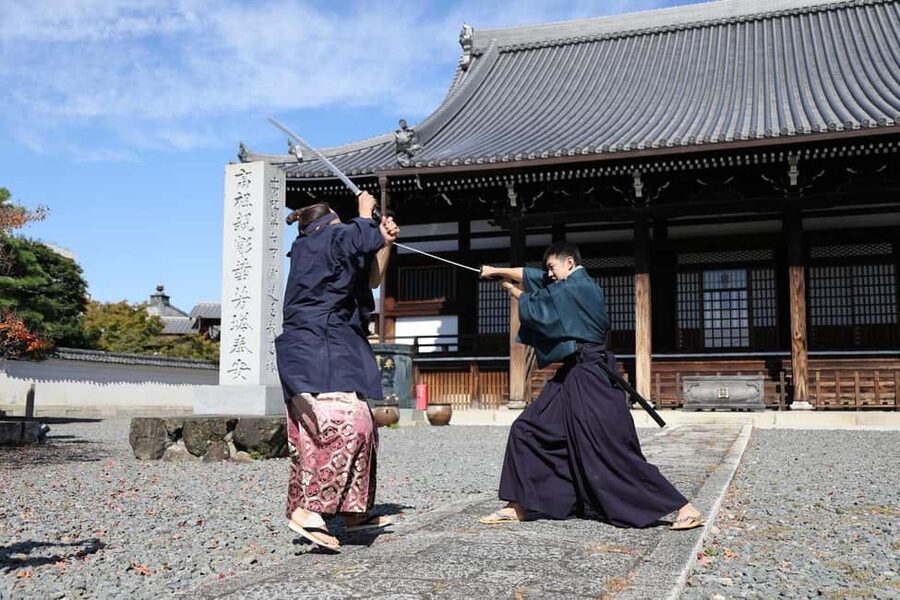
At $127 per person, this is not a cheap way to fill an hour. The value comes from the combination of several paid elements: the kimono rental, instruction, professional performance, access to the dojo setting, your filming session, photo downloads, and the attention of a small group.
I would compare it with the cost of separate costume rental, a staged photo session, and an entertainment performance. You are getting all three ideas in one booking, though none of them lasts very long on its own. The 70-minute duration keeps the activity easy to fit into a Kyoto day, but it also means you should not expect a full-day cultural workshop.
The group limit of six improves the value. Sword choreography becomes less satisfying if you are lost in a crowd, especially when the instructor needs to watch your hands and footwork. A small session should feel more personal and gives you a better chance to appear clearly in the footage.
The experience is strongest for people who want a story to take home. If you only want to see a professional samurai performance, you may find the price high for the amount of viewing time. If you want to dress up, learn a few moves, and appear in an action scene, the package makes more sense.
Who should book this experience
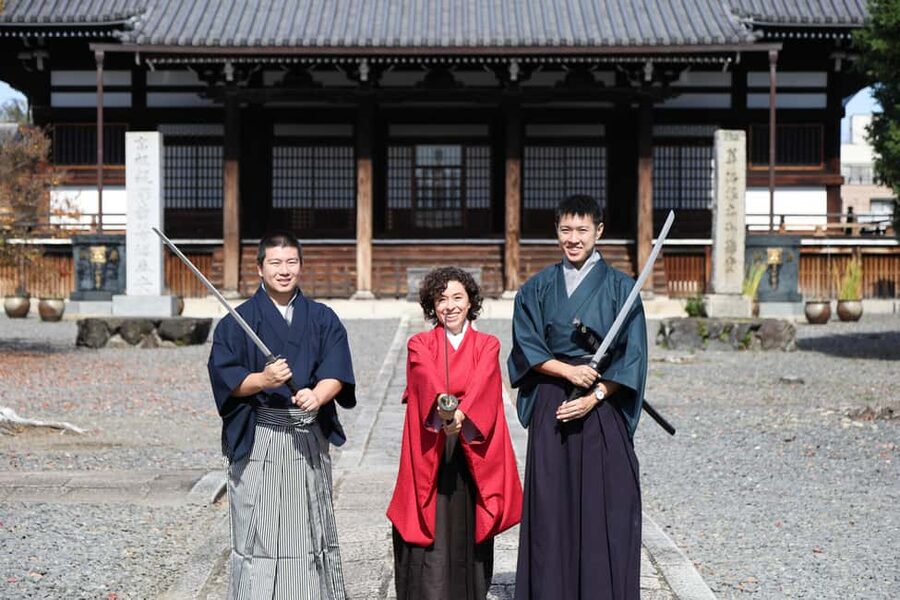
I would recommend it for adults, teenagers, couples, families with older children, and solo visitors who enjoy theatrical activities. It is especially good for anyone who has wanted a samurai experience but does not want a demanding martial arts class.
The activity also suits people who enjoy taking photos and video. You can bring your own camera, and the finished material gives you a record that friends and family can see later. If you are shy about performing, know that the instructors’ job is to make the scene work, but you still need to participate in the role-play.
It can work well for a parent and teenage child. The activity has enough structure to keep younger participants focused, and the filming provides a clear goal. Children under five are not allowed, and the physical nature makes it a poor fit for anyone who cannot move comfortably.
I would skip it if your priority is a serious study of Japanese martial arts, a long temple tour, or an unstructured cultural visit. The sword moves are choreographed for performance, and the whole session is designed to be fun, visual, and easy to remember.
Timing, language, and practical details
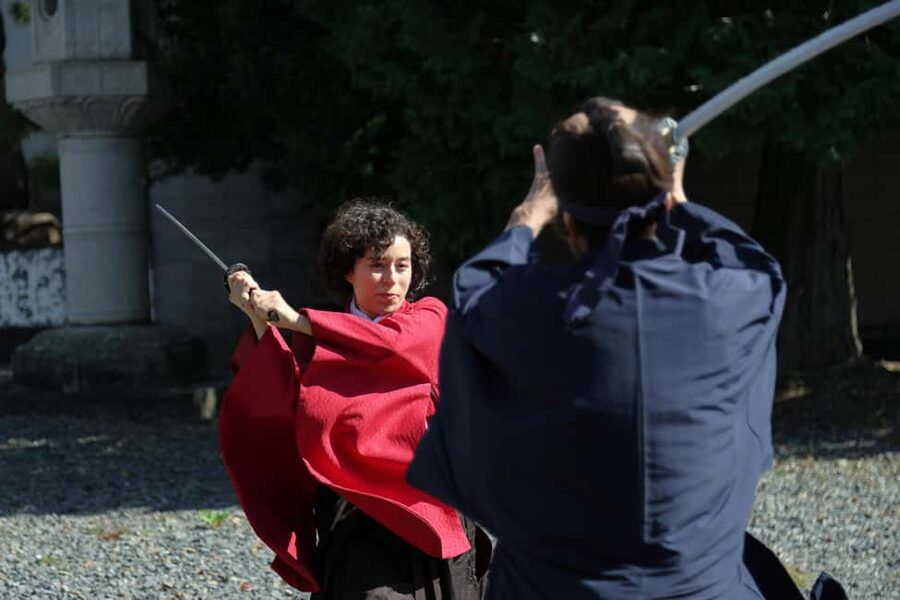
The activity lasts 70 minutes, with starting times available according to the date you choose. That makes it simple to place before or after other Kyoto plans, but leave enough time to reach Myokaku-ji Temple and find the dojo at the left side after entering the main gate.
Japanese and English are available. English instruction is important here because sword movements depend on timing and clear safety directions. The instructors explain how to hold and use the prop sword, then guide you through the choreographed sequence.
The group is limited to six participants. A separate entrance allows you to skip the line, although you still need to gather at the specified dojo meeting point.
Transportation to and from Myokaku-ji is not included, and meals are not included. Plan your own route and food around the 70-minute session. Bring a camera, wear comfortable clothes, and avoid clothing that makes physical movement difficult.
You can cancel up to 24 hours before the activity for a full refund. A reserve-now, pay-later option is also available, which helps if your Kyoto schedule is still changing.
Safety and comfort during swordplay
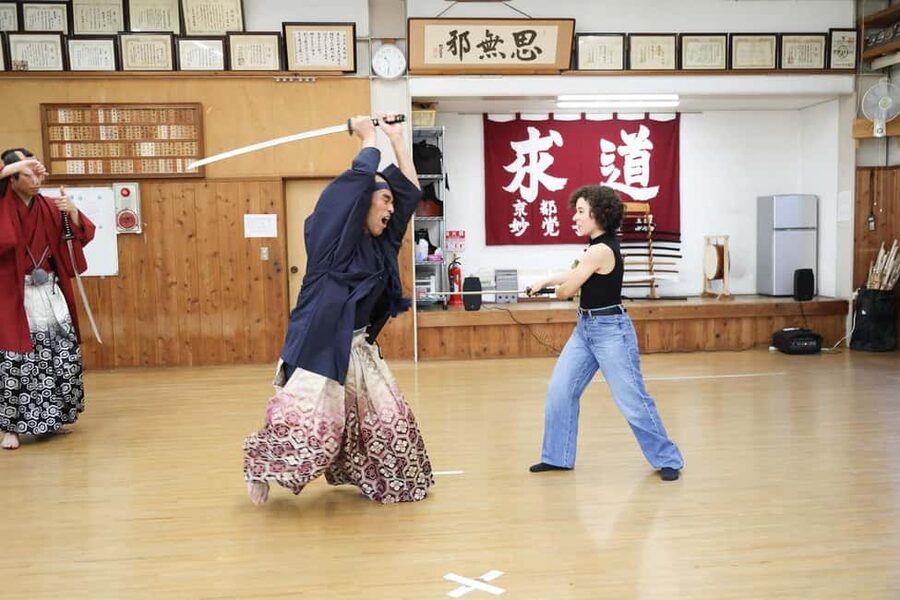
The swords are fake, but the movements still need care. Listen closely when the instructors explain spacing, grip, and timing. A prop can cause a problem if it is swung carelessly, especially in a small dojo.
The activity includes indemnity insurance specified by the provider, but that does not remove the need to follow directions. Comfortable clothes are required because the class includes movement, costume dressing, and choreographed action.
This experience is not suitable for pregnant women, people with back problems, people with pre-existing medical conditions, children under five, or people over 95. Those restrictions are worth taking seriously because the session is active and may involve repeated sword movements and changes in position.
If you have any doubt about your ability to participate, choose a quieter temple or cultural activity instead. The fun comes from performing with confidence, not from pushing through pain or discomfort.
Should you book the Kyoto samurai filming experience?
Book it if you want a short, playful Kyoto activity with a real sense of place. The strongest features are the temple dojo, the professional screen actors, the included kimono, the six-person group, and the chance to leave with your own action footage.
At $127, it is best viewed as a combined costume, acting, and cultural entertainment experience rather than a bargain attraction. The 70 minutes pass quickly, and the sword training is choreographed rather than a serious combat course.
For a memorable trip souvenir, I think it earns its price. Bring a camera, wear comfortable clothes, and be willing to act a little silly. If you do that, you get more than a lesson: you get a samurai role, a temple setting, and a short scene you can show at home.
FAQ
Where does the samurai sword experience take place?
It takes place at Myokaku-ji Temple in Kyoto. After entering the main gate, go to the Myokaku-ji Dojo on the left.
How long does the activity last?
The experience lasts 70 minutes.
Is the kimono rental included?
Yes. A rental kimono is included in the activity price, along with the kimono dressing experience.
Can I take photographs and videos?
Yes. You are welcome to use your own camera during the experience. Photography and video recording with your camera are included, and a photo download service is provided.
Is the activity available in English?
Yes. The instructors offer the experience in Japanese and English.
Who should not take part?
The activity is not suitable for children under five, pregnant women, people with back problems, people with pre-existing medical conditions, or people over 95.
Just added around Kyoto
- Taste of Nishiki Market Walking Food Tour with Local guide★ 5.0 · 17 reviews
- Kyoto: Sushi Making Class with Sushi Chef★ 4.8 · 64 reviews
- Kyoto: City Secrets eBike Tour★ 4.9 · 196 reviews
- Sacred Pathways: Discover the Philosopher’s Path of Kyoto★ 4.9 · 20 reviews
- Private Tour to Monkey Park and Arashiyama Highlights★ 5.0 · 22 reviews
- Private Nara Tour from Osaka – Meet at Your Hotel★ 5.0 · 22 reviews
- Private Sake Tasting in Central Kyoto with Sake Sommelier★ 5.0 · 13 reviews
- Kyoto : Private Custom Walking Tour With A Local Guide★ 4.6 · 144 reviews
Kimono & Culture Experiences, compared.
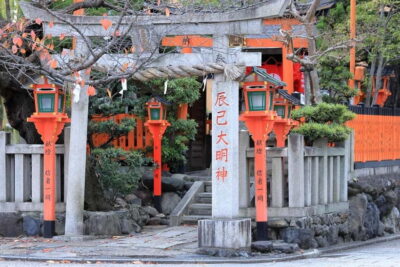
Kyoto Geisha Walking Tour: Gion District & Hidden Gems
Read our review →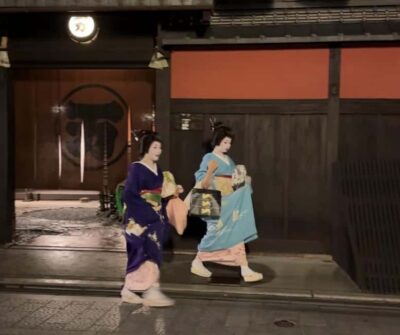
Gion Magical Night Walking Tour with Geisha Trivia
Read our review →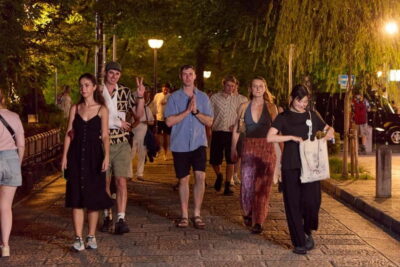
Gion Geisha District Walking Tour – Stories of Geisha
Read our review →
Best of Kyoto: Gion, Geisha, Pagodas & Cobblestones
Read our review →
Kyoto Gion Geisha District Walking Tour – The Stories of Geisha
Read our review →
Browse the lists this tour appears in