
REVIEW · WALKING TOURS
Kyoto Sagano Insider: Rickshaw and Walking Tour
Arashiyama’s bamboo forest is lovely, but walking through its busiest section can feel like joining a slow-moving parade. This private rickshaw tour gives you a seat, a local driver, and a faster way through the grove, then slows down for old houses, temple lanes, and a traditional machiya visit. The rickshaw is private, so you are not sharing it with strangers.
I especially like the mix of riding and walking. You get the fun, old-fashioned transport plus time to explore places a rickshaw cannot reach. I also like the guide-led photo stops. Guides such as Takumi, Atsu, Shota, Yoshii, and Yuya have been praised for clear explanations, friendly conversation, and taking good pictures with guests’ own cameras.
The main consideration is the price: $228.62 per person is a serious Kyoto expense, especially for a short rickshaw ride combined with free sightseeing. Temple admission is extra, and the route includes walking up and down a slope, so this is best for visitors who value personal guiding and convenience more than saving money.
In This Review
- Key points to know before booking
- Why the private rickshaw works well in Arashiyama
- Starting near Tenryuji and finding your bearings
- Through the bamboo forest by rickshaw
- Inside a Kyoto machiya at Sagatoriimotocho
- Otagi Nenbutsu-ji and its handmade figures
- Old cottages, shrines, and Arashiyama’s side streets
- The guides make the difference
- What the $228.62 price buys you
- Who should book this experience
- Booking, timing, and cancellation
- Should you book the Kyoto Sagano Insider tour?
- FAQ
- How long does the Kyoto Sagano Insider tour last?
- Is the rickshaw private?
- Where does the tour start and finish?
- Is hotel pickup included?
- Does the tour enter the bamboo forest?
- Is admission to Otagi Nenbutsu-ji included?
- What languages are available?
- Can children ride the rickshaw?
Key points to know before booking
- Private 74-centimeter-wide rickshaw seats: Each rickshaw fits up to two adults side by side, with children’s lap-seating rules applying.
- A faster route through Arashiyama: The rickshaw passes through the bamboo forest and stops at selected photo spots.
- A real machiya visit: You go inside a traditional Kyoto-style townhouse at Sagatoriimotocho Nami Preservation Hall.
- Otagi Nenbutsu-ji adds something unusual: The temple is known for its handmade figurines, but admission is not included.
- English and Japanese are fluent options: Chinese, Korean, and Spanish guides may be available at a conversational level.
- The tour returns to its starting point: Hotel pickup is not included, and other drop-off points may cost extra.
Why the private rickshaw works well in Arashiyama
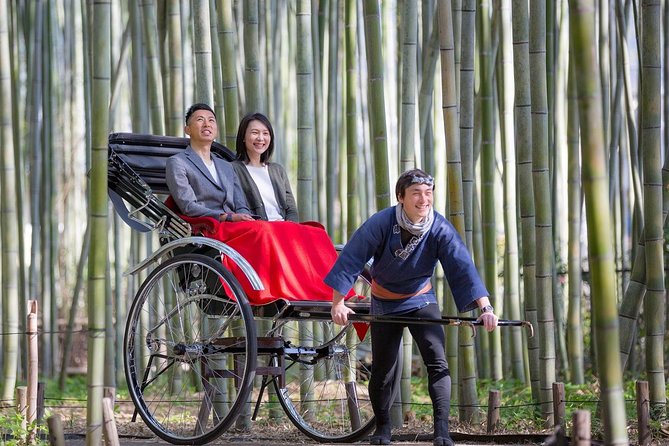
The clever part of this experience is not simply riding in a rickshaw. It is using the rickshaw to connect several scattered sights without asking you to spend the whole morning walking between them.
Arashiyama’s bamboo forest is one of Kyoto’s best-known sights. It is also easy to lose time there. The rickshaw gives you a moving view through the grove and lets the driver handle the route while your guide explains what you are seeing. You can stop for photographs instead of trying to balance a phone while walking through a crowded path.
This does not mean you avoid walking altogether. You can get off the rickshaw and walk into a part of the bamboo forest that the vehicle cannot enter. That section is optional, which is useful if you want more time among the bamboo or need to conserve energy.
The rickshaw itself is private for your group. That matters at this price. You can ask questions, adjust the pace of conversation, and take photographs without sharing the ride with another booking. The seats are 74 centimeters wide and designed for up to two adults side by side, so two adults should expect a close, compact seat rather than generous personal space.
More Walking Tours in Kyoto
- Kyoto Geisha Walking Tour: Gion District & Hidden Gems
★ 4.7 · 3,273 reviews - Kyoto: Gion Magical Night Walking Tour with Geisha Trivia
★ 4.9 · 2,393 reviews - Kyoto: Gion Geisha District Walking Tour – Stories of Geisha
★ 4.7 · 2,187 reviews
Starting near Tenryuji and finding your bearings
The meeting point is at 1-1 Sagatenryuji Susukinobabacho in Arashiyama. The tour ends back at the same rickshaw stand, which makes the day easier to plan. You do not need to arrange a separate ride back from a distant neighborhood.
The selected start time is not automatically guaranteed. The operator confirms the time by email within 24 hours of booking, so check your messages before building a tight Kyoto schedule around it. The tour is near public transportation, but hotel pickup is not included.
The route begins around one of Arashiyama’s iconic sights before moving into the older streets. Your guide provides background as you pass historical buildings, traditional homes, and side roads. This is a better setup than simply riding to the bamboo grove, taking pictures, and leaving without understanding the area around it.
Through the bamboo forest by rickshaw
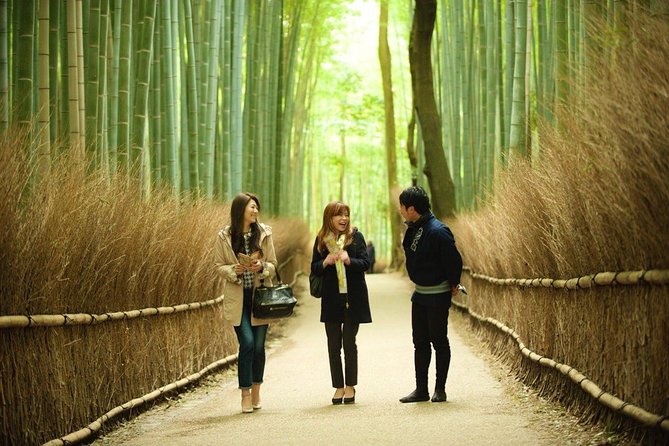
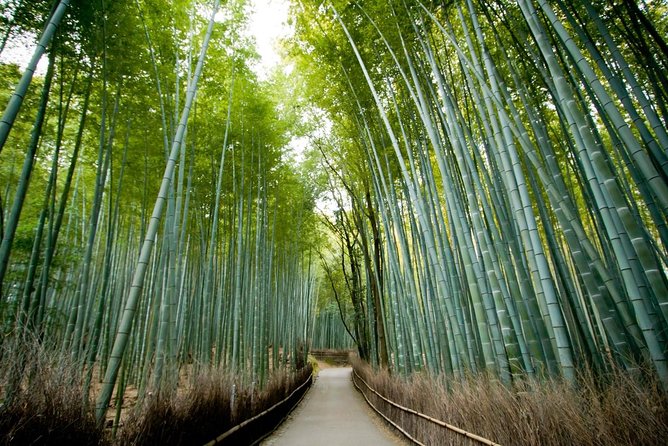
The bamboo portion is the visual centerpiece. Tall bamboo rises on both sides of the path, and the rickshaw gives you a higher, more relaxed viewpoint than walking in a line of people. Your driver navigates while you look around, listen, and prepare for the next stop.
Photo stops are built into the experience. Guides have been praised for choosing attractive angles and taking pictures with visitors’ phones or cameras. That small service can be surprisingly valuable. Couples often discover that the person holding the camera is missing from every important photograph, while a guide can capture both people with the rickshaw and bamboo behind them.
The ride also gives you a practical advantage. You cover the forest and nearby roads without using all your energy before the walking section. If your priority is a quiet, extended bamboo-forest walk, this tour may not be ideal because the ride focuses on moving through the area. If your priority is seeing several parts of Arashiyama in one organized outing, the vehicle earns its place.
Cold weather or rain may affect your comfort. The rickshaw operates year-round, and guides can adapt the ride to the season, but you still need suitable clothing. The open-sided design gives you a direct view, not an enclosed cabin.
Inside a Kyoto machiya at Sagatoriimotocho
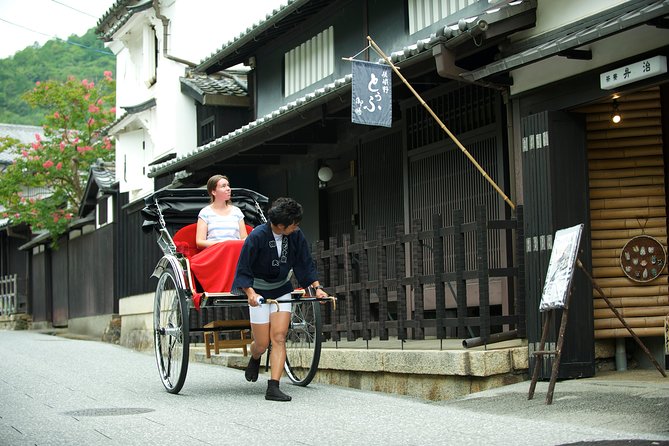
One of the strongest parts of the route is the visit to Kyoto City Sagatoriimotocho Nami Preservation Hall. You spend about 20 minutes inside a traditional Kyoto-style machiya house, with no admission charge listed for this stop.
A machiya is more than an old-looking wooden building. It represents the narrow urban homes and workspaces that shaped Kyoto’s older neighborhoods. Seeing one from inside helps you understand the difference between a preserved townhouse and a modern reconstruction made only for photographs.
The visit is brief, so do not expect a long museum tour. Its value comes from contrast. After the open air of the bamboo grove, you step into a domestic space and get a sense of how older Kyoto streets were organized. Your guide supplies the context, which makes the stop more useful than simply passing a row of wooden facades.
Same city, a completely different kind of day:
- PERFECT KYOTO 1-Day Bus Tour
★ 5.0 · 13,518 reviews - Kyoto: Fushimi Inari, Kinkakuji, Bamboo Grove 1 Day Bus Tour
★ 4.8 · 4,316 reviews - Kyoto: Tea Ceremony in a Traditional Tea House in Kiyomizu
★ 4.9 · 3,519 reviews - Kyoto: Tea Ceremony Ju-An at Jotokuji Temple
★ 4.9 · 3,207 reviews
Otagi Nenbutsu-ji and its handmade figures
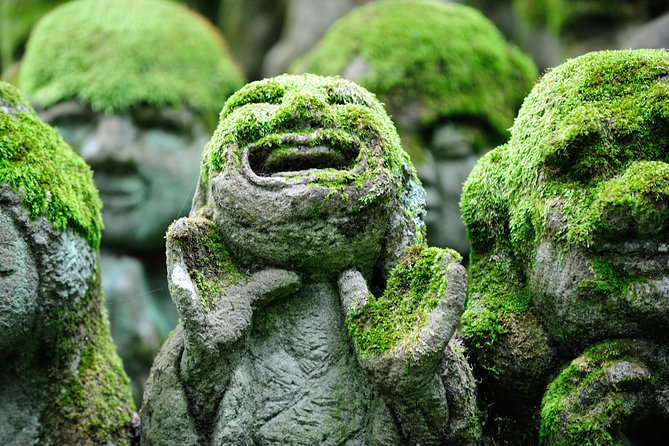
The tour continues to Otagi Nenbutsu-ji Temple, where you have about 30 minutes to enter and look around. Admission is not included, so carry money for the temple ticket.
This temple is a welcome change from Kyoto’s more polished, formal sights. Its grounds are filled with quirky handmade stone figures, each with a different expression and character. The figures give the visit a playful edge and make the temple particularly memorable for families and anyone who has already seen several of Kyoto’s more restrained temples.
Thirty minutes is enough for a focused visit, but it is not a leisurely temple exploration. You will want to use the time for the figures, photographs, and a quick look around rather than expecting a long period of quiet reflection. The route also includes slopes, so wear shoes that handle uphill and downhill walking comfortably.
Because admission fees are separate, the final cost is not limited to the advertised tour price. That is not unusual for Kyoto, but it is worth adding to your budget before booking.
Old cottages, shrines, and Arashiyama’s side streets
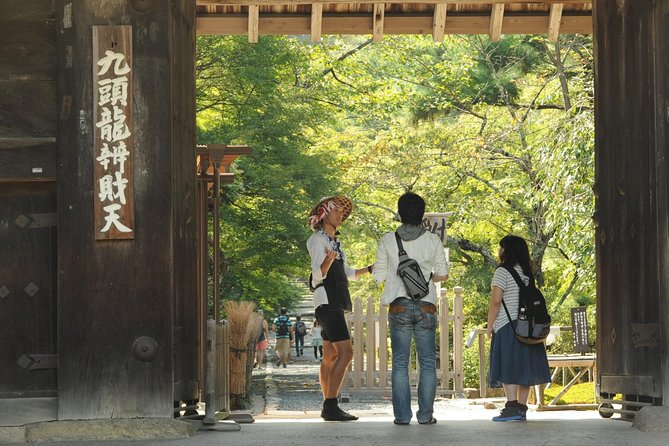
The route is not limited to the bamboo grove. Along the way, the rickshaw passes an old traditional cottage with a thatched roof, once the home of one of Japan’s famous haiku poets. The information supplied for the tour does not identify the poet, but the stop adds a literary note to the route and shows a type of rural-looking building that feels different from central Kyoto.
You also pass a Shinto shrine set within the bamboo grove. It is the kind of detail that is easy to miss when you are focused only on the main bamboo path. Your guide can explain the local setting as the rickshaw moves between the major sights.
The walking portions take you through typical Arashiyama townhouses, residential neighborhoods, and side streets. This is where the experience feels more personal. You are not just checking off a famous grove. You are seeing how the tourist district connects with older local streets.
The preserved district includes an old pilgrim path lined with wooden townhouses. You will not find this exact feel in downtown Kyoto, where the streets and sights are more urban. The route’s slower walking sections let you notice rooflines, entrances, materials, and the way old buildings sit along the road.
The guides make the difference
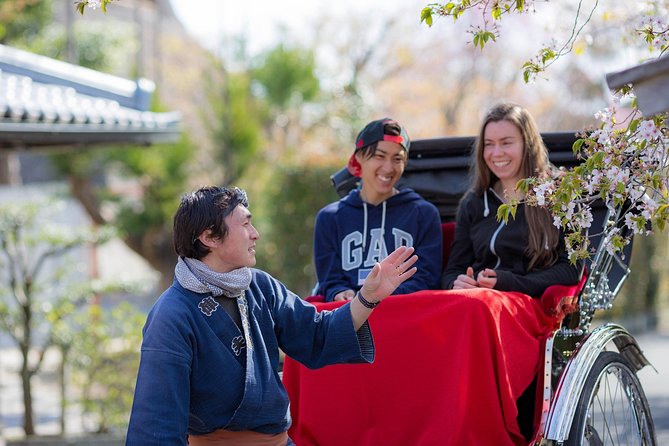
The guide is central to the value of this tour. A rickshaw ride without good narration is pleasant but limited. With a guide, the buildings, shrines, lanes, and forest become part of a connected story.
English and Japanese guides are fluent options. Chinese, Korean, and Spanish guides may be available at a conversational level, depending on scheduling. You should not assume a specific guide or language until it is confirmed.
Several guide names appear in the tour’s feedback, including Takumi, Atsu, Yappo, Aki, Yuya, Yoshii, Shota, Syo, Hirasa, Keita, and Katsuki. Takumi was praised for strong English, charm, and useful explanations. Atsu was noted for patient guiding and photography. Shota helped guests stay comfortable in cold weather while explaining the sights, and Yoshii was described as friendly and well informed.
These details point to a pattern worth noting: the best part of the service is not speed. It is the combination of safe driving, conversation, local explanation, and photography. Your assigned guide may be someone else, but the operator’s team has a clear role beyond simply pulling the vehicle.
What the $228.62 price buys you
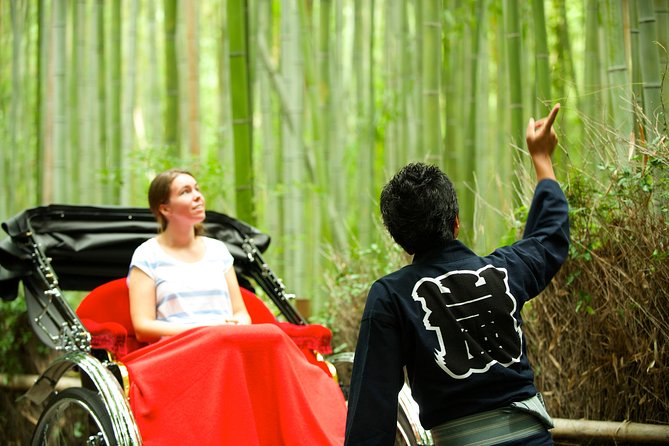
At $228.62 per person, this is not a budget way to see Arashiyama. You are paying for a private rickshaw, a dedicated guide, route planning, photo assistance, and the time saved by moving between sights efficiently.
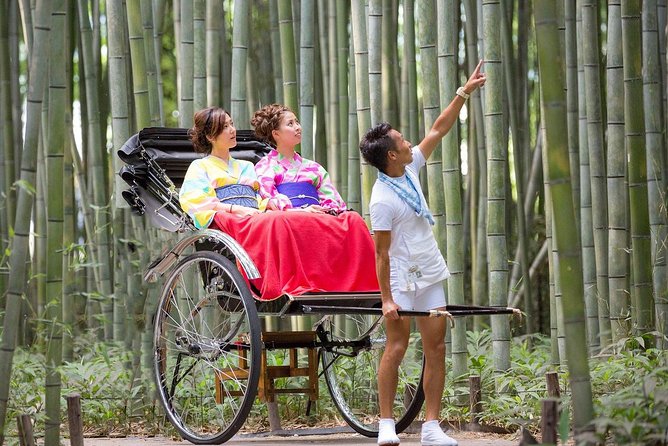
The value is strongest for two people who want a special outing and would otherwise hire a private guide or arrange separate transport. It also works well for a couple wearing rented kimono. The rickshaw, bamboo, and traditional streets make a natural setting for photographs, and your guide can take pictures without asking a stranger for help.
The value is weaker if you are comfortable walking, already know Arashiyama, or mainly want a quick ride. Shorter rickshaw options exist in the wider area, and a public visit to the bamboo forest costs far less. This longer combination adds the machiya, Otagi Nenbutsu-ji, old lanes, and guiding, but you should want those parts too.
Group discounts may be available, which could improve the price for a larger booking. Still, the rickshaw has a limited seat width and capacity, so confirm how your party will be arranged. Children aged six and older need their own seat and pay the adult price. Children five and under can ride free on an adult’s lap, with one child per adult and a maximum of two adults and two lap-seated children per rickshaw. If a five-year-old uses one of the two seats, that child must be booked as an adult.
Who should book this experience
I would choose this tour if you want a polished first look at Arashiyama without spending the whole day walking. It is especially suitable for couples, families with older children, first-time Kyoto visitors, and anyone who values photographs and personal explanations.
It is also a good fit if you are wearing kimono. The ride reduces the amount of walking in traditional clothing, while the photo stops give you a reason to dress for the occasion.
I would think twice if you dislike fixed routes, want long periods at each temple, or are watching every yen. The three-hour-ten-minute duration gives you variety, not total freedom. You will see several places, but none receives the kind of time you might give it on an independent visit.
The slopes matter too. Most people can participate, but the walking route goes up and down, and the rickshaw seat is compact. If mobility is a concern, ask the operator about the route before paying.
Booking, timing, and cancellation
The tour is commonly booked about 23 days ahead, so reserve early if you have a narrow Kyoto schedule. Confirmation normally arrives at booking, but reservations made within one day of departure are confirmed as soon as possible and depend on availability.
Free cancellation is available until 24 hours before the start time for a full refund. Cancellations or changes inside that window are not accepted for a refund, and the cutoff follows local Kyoto time.
The activity normally finishes at the original meeting point. A different finish may involve an extra drop-off charge paid on the day, so do not assume the rickshaw will take you to your hotel or next sight.
Should you book the Kyoto Sagano Insider tour?
Book it if you want more than a bamboo-forest photograph. The private rickshaw, machiya interior, unusual temple figures, old pilgrim path, and guide-led photo stops create a well-rounded look at Arashiyama.
Skip it if the price feels out of proportion to your interests. You can visit the bamboo forest and many nearby streets independently for much less, and admission to Otagi Nenbutsu-ji is extra.
For a first visit, a special celebration, or a kimono day, I think the private format makes the expense easier to justify. For independent repeat visitors, the tour is less essential. Its best use is as a convenient, personal introduction to Arashiyama, with just enough history and neighborhood detail to keep the ride from feeling like a simple photo shuttle.
FAQ
How long does the Kyoto Sagano Insider tour last?
The experience lasts approximately 3 hours and 10 minutes.
Is the rickshaw private?
Yes. This is a private activity, and only your group participates. You do not share the rickshaw with another booking.
Where does the tour start and finish?
It starts at 1-1 Sagatenryuji Susukinobabacho, Ukyo Ward, Kyoto, 616-8385, Japan, and ends back at the meeting point.
Is hotel pickup included?
No. Hotel pickup is not included.
Does the tour enter the bamboo forest?
Yes. The rickshaw passes through the bamboo forest and stops for photographs. You may also get off and walk through a section that the rickshaw cannot access.
Is admission to Otagi Nenbutsu-ji included?
No. Admission to temples and gardens is not included, including Otagi Nenbutsu-ji.
What languages are available?
English and Japanese guides are fluent. Chinese, Korean, and Spanish guides may be available at a conversational level, depending on availability.
Can children ride the rickshaw?
Children aged six and older need a seat and pay the adult price. Children five and under can ride free on an adult’s lap, with one child per adult. A five-year-old using a regular seat must be booked as an adult.
Just added around Kyoto
- Private Guided Traditional Buddhist Cooking in Japan★ 5.0 · 16 reviews
- Kyoto: Gion Geisha District & Sake-in-Hand Walking Tour★ 5.0 · 37 reviews
- Your Private Vacation Photography Session In Kyoto★ 5.0 · 110 reviews
- Kyoto: Zen Meditation at a Private Temple with a Monk★ 5.0 · 25 reviews
- Traditional Japanese Washi Papermaking- Kyoto morning★ 5.0 · 77 reviews
- Kyoto Wagashi(Japanese sweets) Cooking Class near Fushimiinari★ 5.0 · 60 reviews
- Private Pewter Sake Cup Experience with a Kyoto Artisan★ 5.0 · 31 reviews
- Kyoto Private 6 hour Tour: English Speaking Driver Only, No Guide★ 5.0 · 88 reviews
Walking Tours, compared.
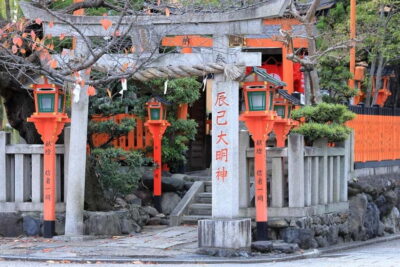
Kyoto Geisha Walking Tour: Gion District & Hidden Gems
Read our review →
Tokyo Tsukiji Fish Market Food and Culture Walking Tour
Read our review →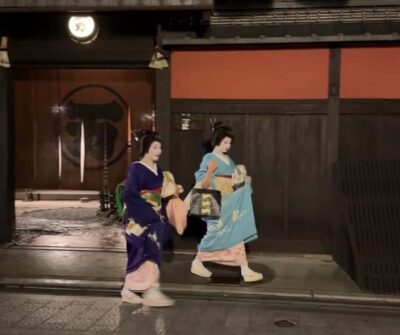
Gion Magical Night Walking Tour with Geisha Trivia
Read our review →
Imperial Palace and Shogun Historical Walking Tour
Read our review →
Gion Geisha District Walking Tour – Stories of Geisha
Read our review →
Asakusa Walking Tour with Sensoji Temple Visit
Read our review →
Kyoto Gion Geisha District Walking Tour – The Stories of Geisha
Read our review →Browse the lists this tour appears in