
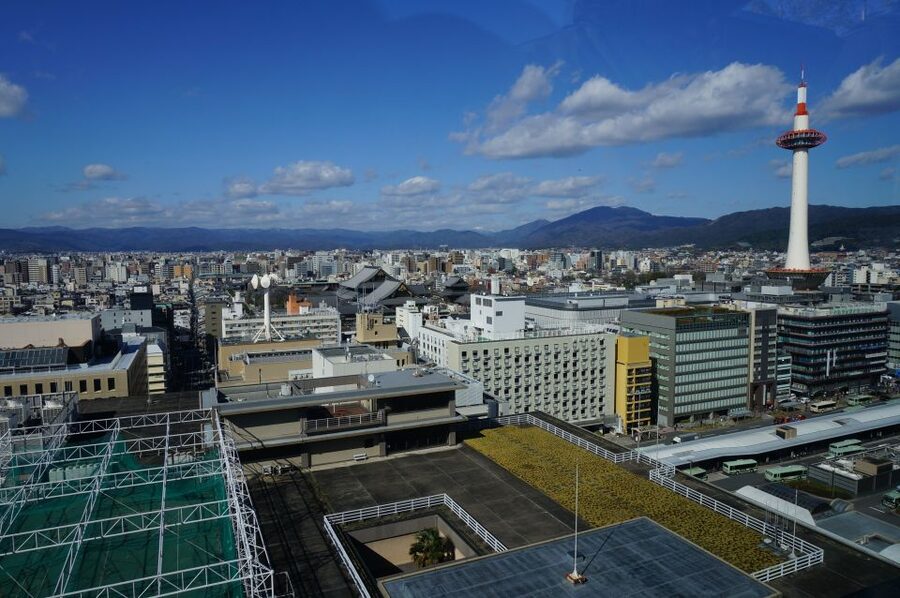
REVIEW · WALKING TOURS
Kyoto: Private Walking Tour with a Local
Kyoto is easier to understand when someone helps you connect the dots. This private walk gives you a local companion instead of a fixed script, so your time can center on temples, food, shopping, street culture, transport, or simple orientation. Guides such as Maha, Nicolo, Agustin, and Toan have helped visitors shape practical, personal days in the city.
I like the one-to-one format, which lets you set the pace and ask the questions that matter to you. I also like the useful local help: guides have pointed people toward quieter temples, favorite cafés, good restaurants, markets, antique shops, and the best way to use Kyoto’s buses and trains.
The main consideration is that this is a walking tour, not a fully packaged sightseeing excursion. At $82 per person, the value depends on how much you use the guide’s local advice and planning skills. Entrance fees, meals, and any transport are extra, and a loosely defined route may not suit you if you want a fixed list of famous sights.
In This Review
- Key points to know before booking
- A private walk that changes with your interests
- Starting near Kawaramachi or your central hotel
- What the walking route can include
- Why the local conversation matters
- A useful choice for your first day in Kyoto
- Walking, transport, and the real cost
- Families and wheelchair users
- Languages and guide style
- Who should book this Kyoto experience
- Should you book the private Kyoto walk?
- FAQ
- How long does the private Kyoto walking tour last?
- Where can the tour begin?
- What languages does the guide speak?
- Are entrance fees and transportation included?
- Can children join the tour?
- Is the tour suitable for wheelchair users?
Key points to know before booking
- Your route is made for you: Tell the guide what interests you, then shape the walk around the time available.
- Private means flexible: You get a private group rather than sharing the guide with strangers.
- Local advice is the main product: Expect help with food, cafés, shopping, neighborhoods, customs, and public transport.
- Quiet places are possible: Past routes have included less-visited temples and shrines away from Kyoto’s busiest paths.
- Allow for extra costs: Attractions, meals, drinks, taxis, buses, and trains are not included in the $82 price.
- It works for different needs: Children, wheelchair users, and families with babies have been accommodated, but you should explain your needs in advance.
A private walk that changes with your interests
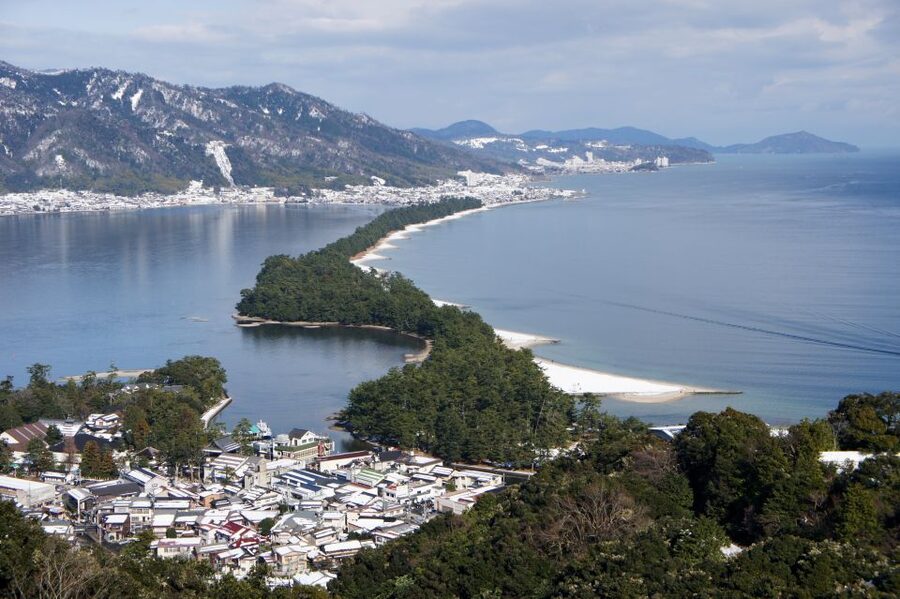
This experience is best understood as a personal introduction to Kyoto, not as a standard tour with a memorized speech. You meet a Lokafyer, or local guide, and spend three to six hours walking through the city together.
Before setting out, you can explain what you want from the day. Perhaps you need a first-day orientation. Perhaps you have already seen Fushimi Inari and Kiyomizu-dera and want something quieter. You might care more about Japanese food, cafés, street art, local shopping, temples, or getting around by bus.
That flexibility matters in Kyoto. The city has famous sights spread across a wide area, and a list of ten places can look manageable on a map while proving tiring in practice. A private guide can help you decide what fits into the time, what is close together, and what should wait for another day.
You should not expect every guide to offer the same route. The experience depends on the person assigned to you, your interests, the weather, opening times, and the pace you choose. That variety is part of the appeal, but it also means you need to communicate clearly before and during the walk.
More Walking Tours in Kyoto
- Kyoto Geisha Walking Tour: Gion District & Hidden Gems
★ 4.7 · 3,273 reviews - Kyoto: Gion Magical Night Walking Tour with Geisha Trivia
★ 4.9 · 2,393 reviews - Kyoto: Gion Geisha District Walking Tour – Stories of Geisha
★ 4.7 · 2,187 reviews
Starting near Kawaramachi or your central hotel
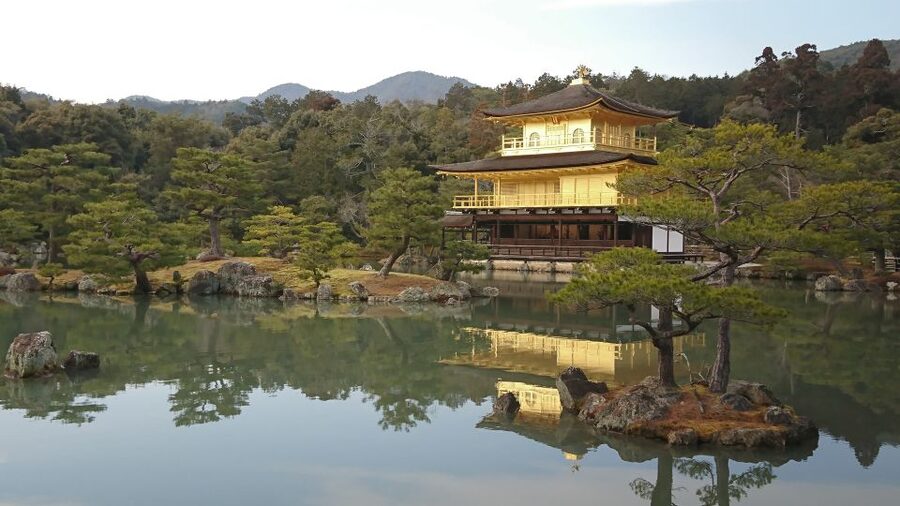
The published meeting choices include MACCHA HOUSE Kyoto Kawaramachi and the Kyoto City Office for Gender Equality. You can also begin at your hotel lobby or outside your Airbnb if it is a centrally located landmark or intersection within Kyoto’s city center.
The Kawaramachi area is a practical starting point. It puts you near shopping streets, restaurants, the Kamo River, and several central neighborhoods. From there, your guide can help you get oriented before heading toward the places that suit your plans.
Hotel pickup makes the first meeting easier, especially if you have just arrived or are traveling with children. Still, confirm the exact meeting point and make sure your accommodation fits the central-city requirement. The guide can help with meeting directions, but you should not assume pickup from a distant suburb or a location outside the stated area.
One useful detail from past outings is the help with finding the meeting place and using trains. If Kyoto’s station signs and bus routes feel like a maze, tell your guide at the start. Learning the system early can save time for the rest of your stay.
What the walking route can include
The route has no guaranteed set of stops. You receive a photo stop, sightseeing, scenic views, and guided walking, but the real content comes from your conversation with the guide.
You might visit a temple or shrine, stroll through a market, stop at a café, or walk through a neighborhood that most short group tours skip. One past route included Fushimi Inari Shrine, Higashi Honganji Temple, and Nishiki Market, along with the hike to the top of Fushimi Inari. That combination shows how much ground a focused guide can cover, though the exact amount depends on your pace.
Another route included a quieter temple outside the main tourist path during Kyoto’s autumn color season. That kind of adjustment can be valuable when the famous sites are crowded. You may not get the most famous photo in town, but you can gain a calmer setting and a better sense of how local neighborhoods fit around the major monuments.
The guides can also help with interests that are less common on a standard sightseeing schedule. One guide followed up with information about a museum exhibition and an antique shop for a visitor interested in Japanese netsuke. If you collect, study, or simply care about a particular subject, share it before the walk rather than hoping it comes up by chance.
Food is another strong reason to book this format. A past guide took a group to a favorite restaurant in a riverside village, where they ate sashimi. Other guides have suggested cafés and food spots that became useful during the rest of the stay. Your guide can offer ideas, but meals remain your responsibility and restaurant availability is not guaranteed.
Why the local conversation matters
Kyoto can be beautiful without explanation, but context changes what you notice. A guide can point out customs, explain how to behave at a shrine or temple, and connect a street or building to daily life in the city.
I especially like this format for questions that do not fit neatly into a tour script. You can ask where to eat near your hotel, how to distinguish a shrine from a temple, how to use a bus, what kind of souvenir is worth buying, or which area suits an evening walk.
Past guides have also helped with ordinary tasks. One assisted a visitor in a supermarket, while another helped plan transport and accompanied a visitor to a first attraction. Those are small services, but they can make a first day in Kyoto much less stressful.
The social side is important, too. Guides including Nicolo, Maha, Agustin, Toan, Iago, and Cristobal have been praised for being friendly, patient, accommodating, and easy to spend time with. That does not mean every guide will have the same personality, but the strongest part of this experience is clearly the human connection.
You should think of the guide as a local companion with planning skills, not as an official historian at every stop. Some guides may have extensive cultural and historical knowledge, while others may shine more at practical advice and conversation. If formal history is your top priority, ask about that when arranging the tour.
Same city, a completely different kind of day:
- PERFECT KYOTO 1-Day Bus Tour
★ 5.0 · 13,518 reviews - Kyoto: Fushimi Inari, Kinkakuji, Bamboo Grove 1 Day Bus Tour
★ 4.8 · 4,316 reviews - Kyoto: Tea Ceremony in a Traditional Tea House in Kiyomizu
★ 4.9 · 3,519 reviews - Kyoto: Tea Ceremony Ju-An at Jotokuji Temple
★ 4.9 · 3,207 reviews
A useful choice for your first day in Kyoto
For a first visit, I would use this tour early in the trip. Three hours can give you a basic sense of the central city, while a longer booking can combine orientation with selected sights.
A guide can show you how Kyoto’s neighborhoods connect, explain which train or bus to take, and suggest places for later meals or walks. That advice can pay off for several days, not just during the tour itself.
Do not expect to see all of Kyoto in one outing. The city’s major areas are widely separated, and walking between them can take time. If you want Fushimi Inari, Nishiki Market, a temple, shopping, and a distant scenic area in the same morning, you may need public transport or a taxi, both at your own cost.
For a return visit, the private format may be even more useful. You can skip the standard highlights and ask for a neighborhood walk, a food-focused route, local shopping, street art, or places connected to a specific interest.
Walking, transport, and the real cost
The listed price is $82 per person for a private three-to-six-hour walk. That is not the cheapest way to see Kyoto, especially if you are traveling alone. For two or more people, the price can make more sense because you are paying for a private guide rather than separate seats on a large group excursion.
The value comes from customization. If the guide saves you from getting lost, helps you avoid a poor restaurant choice, explains the transport system, and shapes a route around your priorities, the cost can be worthwhile. If you only want a standard introduction to famous monuments, a fixed group tour may give you more predictable sightseeing for less money.
The fee does not include entrance tickets, food, drinks, personal purchases, or transport around the city. You may choose to take a bus, train, or taxi during the walk, but you pay those costs yourself. If you want a private car included, advise the provider in advance rather than assuming it comes with the walking tour.
Wear comfortable shoes. Kyoto’s streets, temple grounds, and market areas can require several hours on foot, and a guide may cover substantial ground if you ask to see several districts. You can also set a slower pace, but say so clearly.
Families and wheelchair users
This tour can suit families because the guide can adjust the pace and focus. Children under three can join free, and children from three to twelve receive a 50 percent discount.
A past guide prepared a route for a wheelchair user with limited mobility, and another was praised for being thoughtful with a five-month-old baby. Those examples are encouraging, but they do not mean every street, temple, shrine, or route will be equally easy.
Tell the provider about mobility needs, stroller use, rest breaks, and the places you hope to visit. The private format gives you more control than a large group, but Kyoto’s older streets and religious sites may still have steps, uneven surfaces, or access limits.
The activity is listed as wheelchair accessible. Even so, discuss the exact route before the day if accessibility is essential. A custom plan works best when the guide knows your limits in advance.
Languages and guide style
Guiding is available in English, Spanish, and German. Several past guides have worked well with international visitors, and one helped a teenager practice French during the outing, though French is not listed as a guiding language.
The guide names associated with past bookings include Maha, Nicolo, Agustin, Toan, Cristobal, Iago, Ahmed, Jason, and Ricardo. You should not assume you can choose one of these people, but the range suggests that the experience is built around individual local companions rather than one permanent guide.
If you want a serious history lesson, say that when you request your time. If you prefer food, shopping, local customs, or transport help, say that instead. The clearer you are, the more useful the route is likely to become.
Who should book this Kyoto experience
I would recommend it to a first-time visitor who wants to get oriented quickly, especially someone who feels unsure about Kyoto’s transport system or neighborhood layout.
It also fits repeat visitors who have already seen the major temples and want a different angle. Food lovers, shoppers, families, solo visitors, and people with a specific interest such as antiques can all get more from a private conversation than from a fixed group route.
It is less suitable if you want guaranteed entry to specific attractions, a formal lecture at every site, or an all-inclusive price. You must pay for admissions and transport, and the final route depends on your discussion with the guide.
The tour also suits people who enjoy travel through conversation. If you prefer to move quietly from one famous sight to the next without much planning, you may not use the main benefit of the experience.
Should you book the private Kyoto walk?
Book it if you want a flexible first look at Kyoto, personal food and neighborhood advice, or help building a sensible route around your interests. The strongest value lies in the guide’s time, local suggestions, and ability to adjust the day.
Choose the full six hours if you want several districts or need a slower pace. Choose three hours for orientation, transport help, and a focused introduction. Bring comfortable shoes, keep extra money available for transport and admissions, and tell the guide exactly what you hope to see.
At $82 per person, this is a practical splurge rather than a bargain tour. For a private group that wants to turn a confusing first day into a useful, friendly introduction, it can be money well spent.
FAQ
How long does the private Kyoto walking tour last?
The tour lasts between three and six hours. Starting times are available according to the booking calendar, and you can request a specific time.
Where can the tour begin?
You can meet at MACCHA HOUSE Kyoto Kawaramachi or the Kyoto City Office for Gender Equality. Pickup can also begin at your hotel lobby or outside your Airbnb if it is a centrally located landmark or intersection within Kyoto city center.
What languages does the guide speak?
Guiding is available in English, Spanish, and German.
Are entrance fees and transportation included?
No. Attraction tickets, meals, drinks, personal expenses, and transportation around the city are not included. You may use public transportation or a taxi during the walk at your own expense.
Can children join the tour?
Yes. Children under three years old can join free of charge. Children from three to twelve receive a 50 percent discount.
Is the tour suitable for wheelchair users?
The activity is listed as wheelchair accessible. Tell the provider about your mobility needs in advance so the route can be planned appropriately.
Just added around Kyoto
- Taste of Nishiki Market Walking Food Tour with Local guide★ 5.0 · 17 reviews
- Kyoto: Sushi Making Class with Sushi Chef★ 4.8 · 64 reviews
- Kyoto: City Secrets eBike Tour★ 4.9 · 196 reviews
- Sacred Pathways: Discover the Philosopher’s Path of Kyoto★ 4.9 · 20 reviews
- Private Tour to Monkey Park and Arashiyama Highlights★ 5.0 · 22 reviews
- Private Nara Tour from Osaka – Meet at Your Hotel★ 5.0 · 22 reviews
- Private Sake Tasting in Central Kyoto with Sake Sommelier★ 5.0 · 13 reviews
- Kyoto : Private Custom Walking Tour With A Local Guide★ 4.6 · 144 reviews
Walking Tours, compared.
Kyoto Geisha Walking Tour: Gion District & Hidden Gems
Read our review →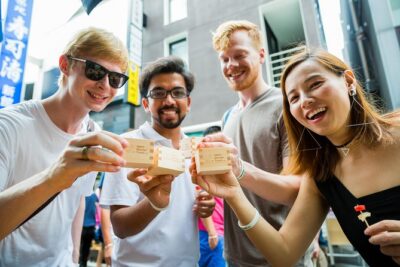
Tokyo Tsukiji Fish Market Food and Culture Walking Tour
Read our review →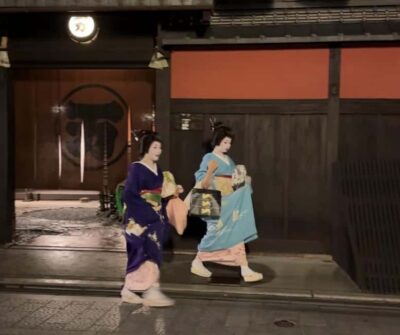
Gion Magical Night Walking Tour with Geisha Trivia
Read our review →
Imperial Palace and Shogun Historical Walking Tour
Read our review →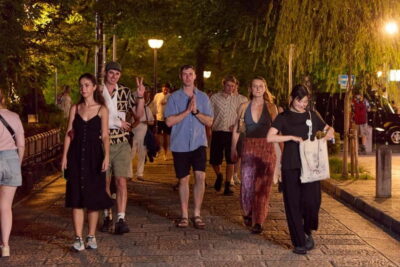
Gion Geisha District Walking Tour – Stories of Geisha
Read our review →
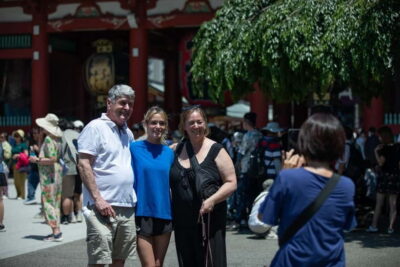
Asakusa Walking Tour with Sensoji Temple Visit
Read our review →
Kyoto Gion Geisha District Walking Tour – The Stories of Geisha
Read our review →Browse the lists this tour appears in