
REVIEW · KIMONO & CULTURE EXPERIENCES
Kyoto Portrait Tour with Kimono
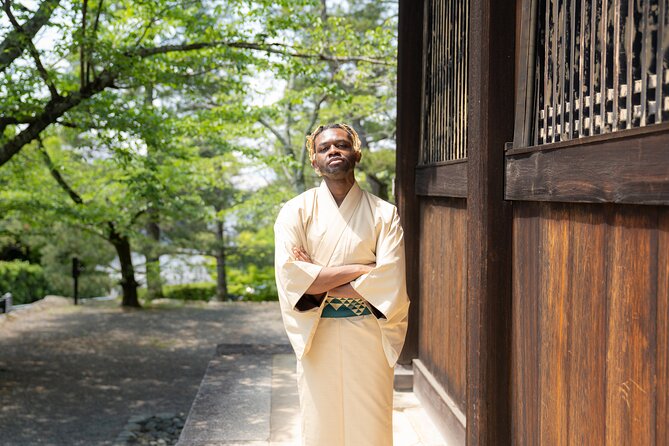
Kyoto’s best souvenir may be a portrait of you in a kimono, framed by shrine gates, stone lanes, and Yasaka Pagoda. This 90-minute walking photo tour takes you through Gion and nearby Higashiyama with a local photographer who handles posing, timing, and the camera while you enjoy the scenery.
I like the small maximum group of six, which gives the photographer room to work with each person. I also like the mix of famous places and quieter lanes, plus the choice of a morning or afternoon session. The main catch is simple: kimono rental is not included, so you must arrange your outfit separately and allow enough time to reach the meeting point.
In This Review
- Key points at a glance
- Why this Kyoto photo walk works
- Yasaka Shrine gives you a traditional opening
- Maruyama Park adds gardens and seasonal color
- Chion-in Temple supplies the grandest backdrop
- Ishibe Alley feels more intimate
- Nene-no-Michi keeps the walk scenic
- Yasaka Pagoda finishes the portrait route
- Kimono planning matters more than the price suggests
- Morning or afternoon, choose for your photographs
- What the photographer adds
- Who should book this experience
- Should you book the Kyoto kimono portrait tour?
- FAQ
- How long does the Kyoto Portrait Tour with Kimono last?
- Where does the tour start?
- Where does the tour finish?
- Is a kimono included in the price?
- Which places are included in the walking route?
- Can I choose a morning or afternoon session?
- How many people can join one booking?
- Are edited photographs included?
- Can I cancel for a full refund?
Key points at a glance
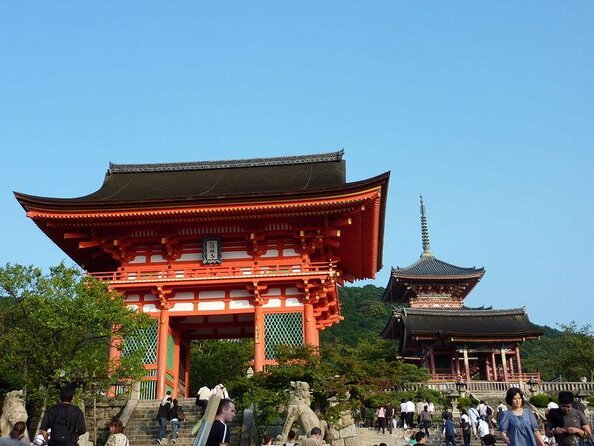
- Six Kyoto stops in 90 minutes: Yasaka Shrine, Maruyama Park, Chion-in Temple, Ishibe Alley, Nene-no-Michi, and Yasaka Pagoda.
- Local photographers guide the session: Past bookings have included Yuta, Takuma, Mina, Soma, Cocoro, and Andy Yu Lei.
- Morning or afternoon timing: Choose the light and schedule that work best for your day.
- Kimono rental is separate: You can select a kimono shop yourself, but the photography price does not cover the outfit.
- Edited photographs are included: The service provides professional editing after the shoot.
- A scenic one-way walk: You start at Yasaka Shrine and finish near Yasaka Pagoda, with local tips for the surrounding area.
Why this Kyoto photo walk works
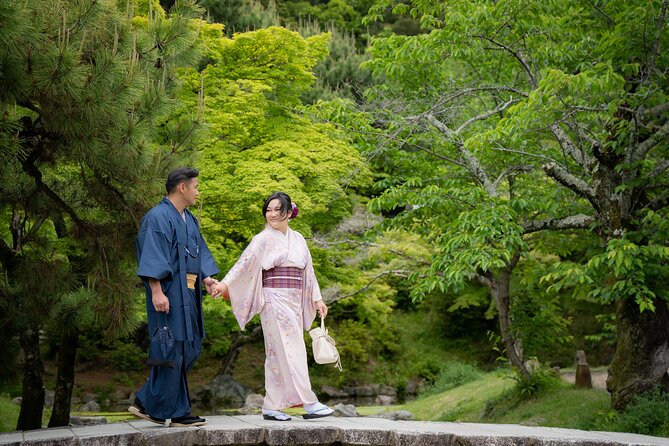
A portrait session can be awkward when you are the one holding the phone. In a kimono, with unfamiliar poses and busy streets around you, getting a good photograph takes more than pointing a camera and pressing the shutter. This experience solves that problem by pairing you with a photographer who can guide your posture, wait for a clear view, and choose useful angles.
The walk also gives the session a natural rhythm. You are not standing in one studio for an hour. You move through shrines, a park, temple grounds, old lanes, and a pagoda-lined street. That variety gives you several backdrops and makes the photographs feel connected to Kyoto.
I especially like the local guidance. Yuta has helped people with posing and offered suggestions for other places to visit. Soma has been praised for knowing quieter photo locations and for explaining small details about the area. Cocoro has guided people around Gion while sharing local information and taking more than 60 photographs on one occasion.
Photographers have also adjusted to real-world problems. Takuma worked quickly for a group facing a tight train schedule, while another photographer patiently accommodated a late arrival. That flexibility matters, although you should still arrive on time because the session is short.
More Kimono & Culture Experiences in Kyoto
- Kyoto Geisha Walking Tour: Gion District & Hidden Gems
★ 4.7 · 3,273 reviews - Kyoto: Gion Magical Night Walking Tour with Geisha Trivia
★ 4.9 · 2,393 reviews - Kyoto: Gion Geisha District Walking Tour – Stories of Geisha
★ 4.7 · 2,187 reviews
Yasaka Shrine gives you a traditional opening
The meeting point is the Yasaka Jinja Nishiromon Gate, also called the Western Tower Gate, at 625 Gionmachi Kitagawa. This is a practical place to begin because Yasaka Shrine immediately supplies the traditional Kyoto setting most people want from a kimono portrait.
You can expect about 20 minutes here. The shrine offers strong visual cues: gates, wooden structures, and a distinctly traditional atmosphere. Your photographer can take individual portraits, group photographs, and simple walking shots rather than relying on one repeated pose.
This first stop is also useful for settling your nerves. If you have never had a professional portrait taken, the opening minutes can feel unfamiliar. Photographers such as Takuma, Yuta, and Cocoro have been described as friendly and patient, with clear help on posing. That kind of direction is more valuable than fancy equipment when you are unsure what to do with your hands.
Because Yasaka Shrine is a well-known site, it may not feel private. Your photographer may need to wait for people to move before taking a clean photograph. Yuta has done exactly that, but the pace can vary with conditions on the day.
Maruyama Park adds gardens and seasonal color
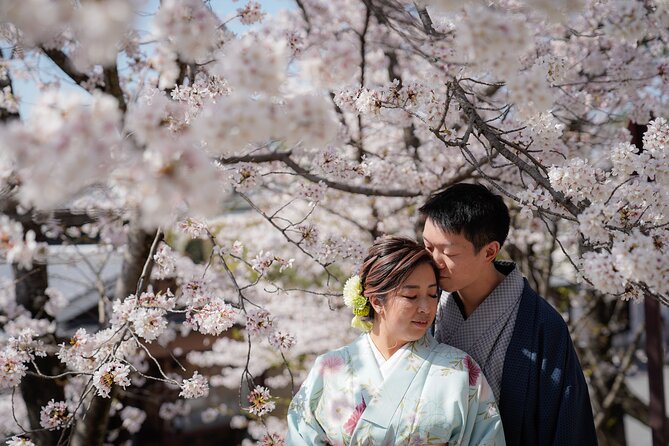
From Yasaka Shrine, the route continues into Maruyama Park for roughly 20 minutes. It is Kyoto’s oldest park and includes traditional garden scenery, making it a useful change from shrine architecture.
This section should work well for softer portraits. You may find greenery, paths, and garden details that give your photographs a less formal feel. In early April, the cherry trees begin to bloom, while autumn brings red leaves. Those seasonal periods can create especially attractive backgrounds, though they are also popular times to visit.
The park is one of the places where a photographer’s timing matters. Soma has been praised for finding attractive spots with fewer people and for making crowded scenes appear calmer in photographs. That does not mean the park will be empty. It means a good photographer can select the angle, wait for a gap, and frame you carefully.
You will spend about 20 minutes here, so do not expect an extended garden visit. The purpose is to collect several useful portraits before continuing through Higashiyama.
Chion-in Temple supplies the grandest backdrop
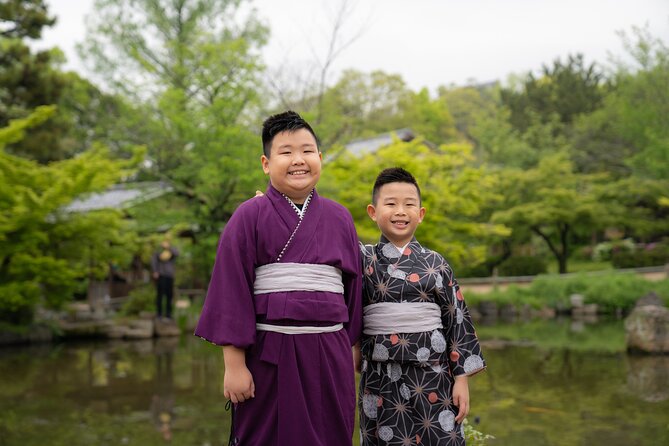
Chion-in Temple is the most imposing stop on the route. Its Sanmon Gate is 24 meters high and 50 meters wide, and it is described as the largest wooden temple gate in Japan. You will have about 20 minutes to take photographs and hear some history.
The scale of the gate helps your images feel unmistakably Japanese. A full-body portrait in front of the entrance can show the sweep of your kimono, while closer photographs can use the wooden details behind you. The site also gives the walking portion some substance. You are not simply moving from one photo point to another, you are seeing one of Kyoto’s major religious landmarks.
Keep in mind that temple grounds are active public places. You may need to share the space with other people and follow any local rules about where photographs can be taken. The supplied details do not promise temple admission, special access, or a private area, so think of this as an outdoor portrait stop rather than a private temple session.
Same city, a completely different kind of day:
- PERFECT KYOTO 1-Day Bus Tour
★ 5.0 · 13,518 reviews - Kyoto: Fushimi Inari, Kinkakuji, Bamboo Grove 1 Day Bus Tour
★ 4.8 · 4,316 reviews - Kyoto: Tea Ceremony in a Traditional Tea House in Kiyomizu
★ 4.9 · 3,519 reviews - Kyoto: Tea Ceremony Ju-An at Jotokuji Temple
★ 4.9 · 3,207 reviews
Ishibe Alley feels more intimate
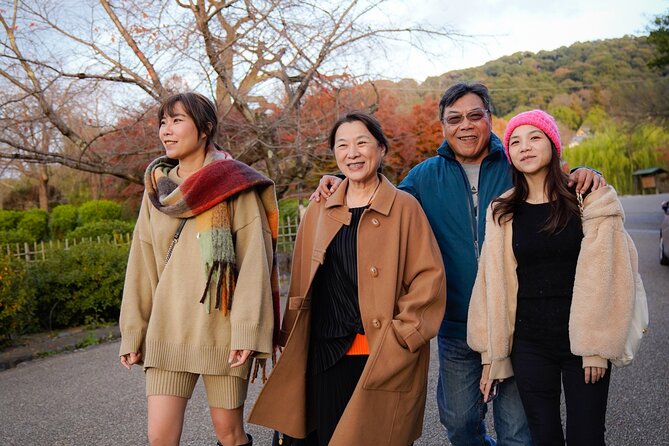
Ishibe Alley is a short stop, about 10 minutes, but it may be one of the most atmospheric parts of the walk. The narrow lane is lined with traditional architecture and offers the old Kyoto mood that broad temple entrances cannot provide.
This is a good place for walking photographs and closer portraits. The stone lane and wooden buildings can make the images feel less posed, especially if your photographer has you move slowly rather than stand in one spot.
The route information marks admission as not included at this stop. No separate admission charge is stated, so you should simply treat this as a public-area visit with no included ticket. The lane is also narrow, which can limit how long the photographer can hold a position if other people need to pass.
Nene-no-Michi keeps the walk scenic
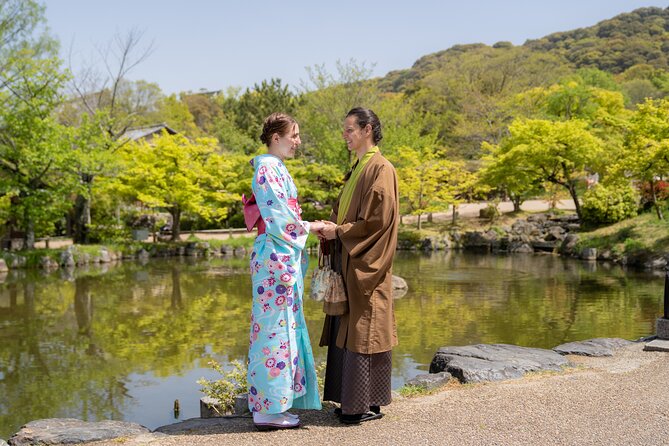
Nene-no-Michi is a flagstone walkway near Kodaiji. You will spend around 10 minutes here, taking photographs while enjoying the atmosphere of one of Higashiyama’s popular walking streets.
The setting changes again. Instead of a shrine gate or enclosed park, you get a long stone path that works well for photographs showing movement and traditional streetscape. Autumn can bring red leaves, and the nearby Kodaiji area adds to the sense that you are walking through an older part of Kyoto.
This street is popular, so do not expect a silent lane. The value here is the setting and the chance to capture several poses along a short route. Your photographer’s choice of timing and angle will affect the final result more than the length of the stop.
Yasaka Pagoda finishes the portrait route
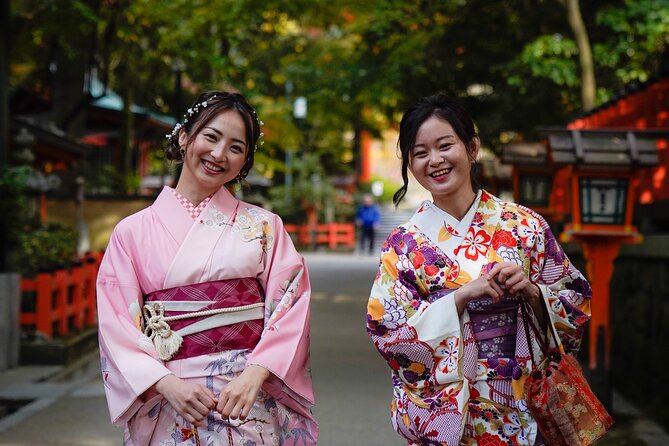
The final stop is Yasakanoto, better known as Yasaka Pagoda. The tour ends in front of Hokan-ji Temple, at the pagoda, after about 10 minutes of photography.
The five-story pagoda is one of Kyoto’s most recognizable sights. It gives you a strong closing image and a clear sense of place. A photograph with the pagoda behind you can serve as the visual centerpiece of the finished set.
The end point is useful for planning the rest of your day. The photographer finishes with travel tips around the area, and you are already near Higashiyama sights. The walk does not return you to Yasaka Shrine, so remember that this is a one-way route.
Kimono planning matters more than the price suggests
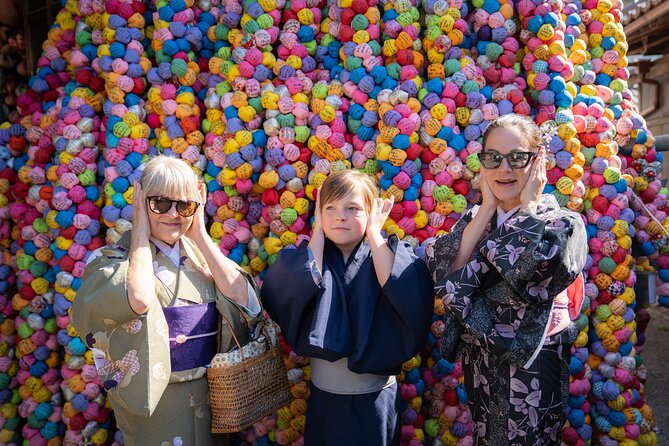
The listed price is $85.87 per person. For a 90-minute session, that is reasonable if you want professionally edited photographs and personal help with posing rather than casual snapshots from a companion.
The value improves for solo visitors and couples. A solo person does not need to ask strangers to take photographs, and a couple can get images of both people together without handing a phone to someone passing by. A group of up to six can share the experience, although each additional person means the photographer must divide the available time.
The price does not include a kimono. You can choose one from your preferred rental store, which gives you control over style and budget. It also creates the main planning issue. You need to arrange the rental yourself, leave time for dressing, and arrive at the Western Tower Gate ready to walk.
Make the rental arrangement clear before booking. Some poor feedback appears to come from confusion about the photography company and the kimono rental service being separate businesses. This tour provides the photographer and edited photographs, not the outfit.
Morning or afternoon, choose for your photographs
You can select a morning or afternoon session. That choice lets you consider both your schedule and the type of light you want.
Morning may suit you if you want to start early and continue sightseeing afterward. Afternoon may work better if your kimono rental appointment is later or if you prefer a different quality of light. The supplied information does not promise a specific sunset time, special lighting setup, or guaranteed low crowds, so treat the time choice as a useful option rather than a promise of a particular look.
Kyoto’s famous streets can be crowded, especially during cherry blossom and autumn color periods. A skilled photographer can wait for openings and frame people out, but no portrait session can control a public street completely. If uncluttered photographs matter most to you, ask the provider about the quieter time available before you commit.
What the photographer adds
The strongest part of this experience is the human direction. Yuta has helped with poses and waited for people to clear the frame. Takuma has been described as warm, patient, and able to keep a rushed group moving. Mina has handled the shoot professionally and remained responsive after the session. Cocoro has been praised for punctuality, local guidance, and delivering more than 60 images.
Those details point to the kind of service you should expect: a guided portrait walk rather than a silent camera session. You can suggest places you particularly want to use, and photographers have shown a willingness to include personal requests.
The guides also bring different strengths. Soma has been praised for English ability, local suggestions, and finding attractive angles in crowded Kyoto. Andy Yu Lei has helped people with poses and included scenic locations across the area. Your assigned photographer may differ, so do not assume every booking will have the same personality or exact shooting style.
The edited images are included, which is important. A photograph straight from the camera is not always finished. Editing can improve color, contrast, and presentation, though the precise number of final images and delivery schedule are not stated.
Who should book this experience
I would choose this tour if you want polished Kyoto photographs but do not want to organize a full private shoot. It suits solo visitors, couples, families, and small groups who want both portraits and a short walk through Gion and Higashiyama.
It is also a good fit if you enjoy local explanation along with your photographs. The photographers provide historical and neighborhood details, and several have offered suggestions for other places to visit or eat.
You may want something else if you need a long, unhurried session, a kimono included in the price, a private temple entry, or a fixed number of delivered photographs. The schedule is compact, and six stops in 90 minutes means the pace is brisk.
Most people can participate, the meeting point is near public transportation, and service animals are allowed. Free cancellation is available up to 24 hours before the local start time. Changes or cancellations inside that window are not accepted for a refund.
Should you book the Kyoto kimono portrait tour?
Book it if your main goal is to bring home professional photographs set in Kyoto’s traditional streets, not simply to visit each site at length. The strongest reasons are the small group limit, the scenic one-way route, the posing help, and the included editing.
Before paying, arrange your kimono separately and confirm the meeting details with the photographer. If you have a train to catch, tell the guide in advance. If you are visiting during blossom or autumn color season, choose your time carefully and expect public places to be busy.
For a solo visit, a couple’s trip, or a special first day in Kyoto, this offers a practical way to get images you would be unlikely to create on your own. Just treat it as a short guided photo walk, not a full kimono rental package or a slow temple tour.
FAQ
How long does the Kyoto Portrait Tour with Kimono last?
The experience lasts approximately 1 hour and 30 minutes.
Where does the tour start?
It starts at the Yasaka Jinja Nishiromon Gate, also called the Western Tower Gate, at 625 Gionmachi Kitagawa in Kyoto’s Higashiyama Ward.
Where does the tour finish?
It finishes in front of Yasaka Pagoda at Hokan-ji Temple. The photographer also provides travel tips around the area at the end.
Is a kimono included in the price?
No. The kimono is not included. You can choose a kimono from your preferred rental store and must arrange that separately.
Which places are included in the walking route?
The route includes Yasaka Shrine, Maruyama Park, Chion-in Temple, Ishibe Alley, Nene-no-Michi, and Yasaka Pagoda.
Can I choose a morning or afternoon session?
Yes. The experience offers morning and afternoon session options so you can choose your preferred time of day.
How many people can join one booking?
The maximum group size is six people.
Are edited photographs included?
Yes. Professional edited photographs and a guide are included.
Can I cancel for a full refund?
Yes, if you cancel at least 24 hours before the experience start time. Cancellations or changes made less than 24 hours before the start are not eligible for a refund.
Just added around Kyoto
- Private Guided Traditional Buddhist Cooking in Japan★ 5.0 · 16 reviews
- Kyoto: Gion Geisha District & Sake-in-Hand Walking Tour★ 5.0 · 37 reviews
- Your Private Vacation Photography Session In Kyoto★ 5.0 · 110 reviews
- Kyoto: Zen Meditation at a Private Temple with a Monk★ 5.0 · 25 reviews
- Traditional Japanese Washi Papermaking- Kyoto morning★ 5.0 · 77 reviews
- Kyoto Wagashi(Japanese sweets) Cooking Class near Fushimiinari★ 5.0 · 60 reviews
- Private Pewter Sake Cup Experience with a Kyoto Artisan★ 5.0 · 31 reviews
- Kyoto Private 6 hour Tour: English Speaking Driver Only, No Guide★ 5.0 · 88 reviews
Kimono & Culture Experiences, compared.

Kyoto Geisha Walking Tour: Gion District & Hidden Gems
Read our review →
Gion Magical Night Walking Tour with Geisha Trivia
Read our review →
Gion Geisha District Walking Tour – Stories of Geisha
Read our review →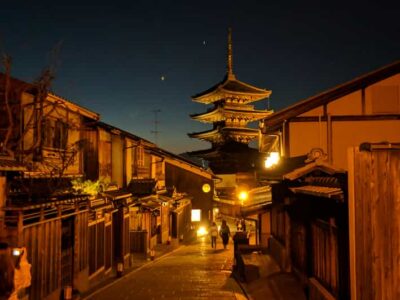
Best of Kyoto: Gion, Geisha, Pagodas & Cobblestones
Read our review →
Kyoto Gion Geisha District Walking Tour – The Stories of Geisha
Read our review →
Browse the lists this tour appears in