
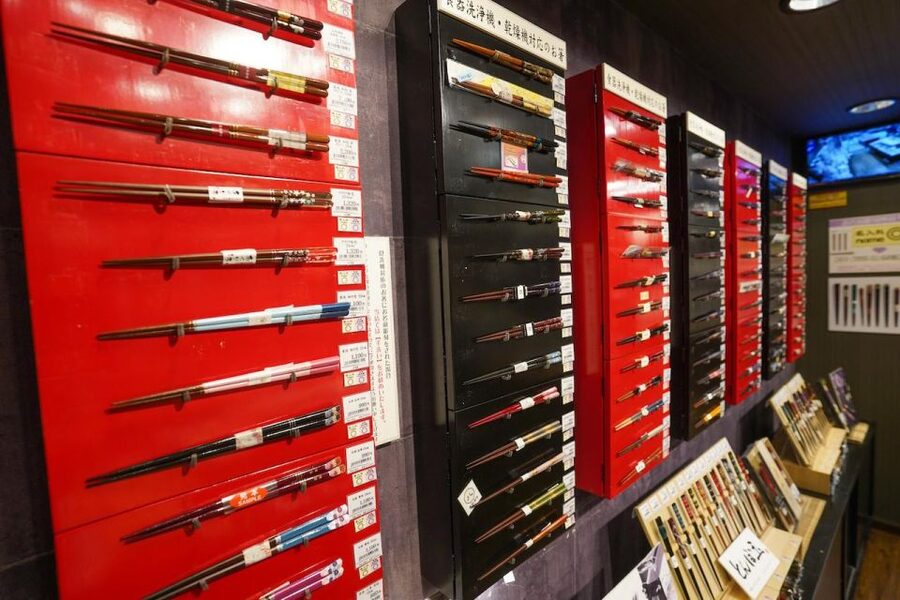
REVIEW · FOOD MARKET TOURS
Kyoto: Nishiki Market Brunch Walking Tour-7 Tastings+Brunch
Nishiki Market is the star here, but the best part may be arriving before the crowds. You walk from Gion Shijo through Pontocho in the cool morning air, stop at a local shrine, then spend more than two hours eating your way along Kyoto’s Kitchen.
I like the small group limit of seven, which matters in a narrow market lane, and I like that the guide does more than point at food. Guides such as Chie, Yutaka, Hikaru, and Yuki have helped visitors understand shrine customs, Kyoto’s food traditions, and what to order next. The main drawback is the food policy: this tour cannot accommodate vegan or gluten-free requests, and allergy-free meals cannot be promised.
In This Review
- Key points at a glance
- Why this Kyoto food walk works so well in the morning
- From Shijo-ohashi Bridge to Pontocho’s quiet lanes
- Nishiki-Tenmangu Shrine adds culture before the food
- Nishiki Market: two hours of food and local context
- The seven tastings are only part of the meal
- Your guide makes the difference
- Is $66 a fair price?
- Who should book this experience?
- Practical details before you reserve
- Should you book the Nishiki Market brunch walk?
- FAQ
- Where does the Nishiki Market brunch tour meet?
- Where does the tour finish?
- How long does the experience last?
- How many people can join the tour?
- What food is included?
- Is the tour conducted in English?
- Can the tour accommodate vegan or gluten-free diets?
- Can the tour guarantee allergy-free food?
- Is the tour suitable for wheelchair users or strollers?
Key points at a glance
- Morning access to Nishiki Market: Start early, before the market becomes harder to navigate.
- Seven food tastings plus brunch: Expect snacks, sweets, savory dishes, and a proper restaurant meal.
- A useful Kyoto orientation: The route links Gion, Pontocho, Shijo-ohashi Bridge, Nishiki-Tenmangu Shrine, and Nishiki Market.
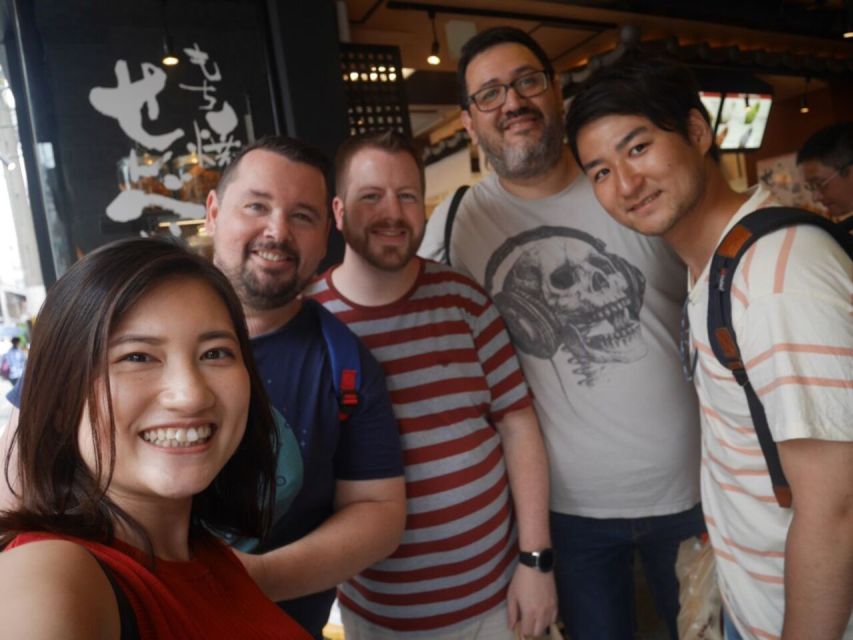
- A real local guide: English-speaking guides explain food, customs, shrine rituals, and neighborhood stories.
- Small groups only: With no more than seven participants, it is easier to hear the guide and stay together.
- Bring cash and wear good walking shoes: Extra food and drinks are not included, and some streets and sites are not suitable for wheelchairs or strollers.
Why this Kyoto food walk works so well in the morning
This three-hour experience gives you a gentle introduction to central Kyoto without trying to cram in every famous sight. You meet outside Exit 5 at Gion Shijo Station, where your MagicalTrip guide holds a sign. From there, the route heads across Shijo-ohashi Bridge and into the older lanes around Pontocho.
The timing changes the mood of the city. Gion and Pontocho are associated with evening dining and entertainment, but in the morning they are quiet and restrained. You get a chance to look at the lanes and traditional buildings without the nighttime crowds or restaurant traffic.
I especially like this as an early-trip activity. A good guide can help you get your bearings, explain how Kyoto’s neighborhoods fit together, and offer useful suggestions for later meals and sightseeing. Several guides have also taken group photos during the walk, which is a nice extra if you are traveling with family or friends.
The walk is not a strenuous hike, but you will be on your feet for three hours. The market portion lasts about two hours and 15 minutes, so this is best for anyone comfortable walking, standing, sampling food, and moving through a narrow shopping street.
More food market tours in Japan:
- Tokyo: Shinjuku Food Tour (13 Dishes at 4 Local Eateries)
★ 5.0 · 6,603 reviews - Tokyo Tsukiji Fish Market Food and Culture Walking Tour
★ 5.0 · 3,184 reviews - Osaka: Shinsekai Food Tour with 13-15 Dishes at 5 Eateries
★ 4.8 · 2,204 reviews
From Shijo-ohashi Bridge to Pontocho’s quiet lanes
The first stop is Shijo-ohashi Bridge, visited for about five minutes. It gives the tour a clear starting point and places you near the Kamo River, one of Kyoto’s familiar city landmarks. The bridge itself is brief, but it helps connect the station meeting point with the historic districts ahead.
Next comes Pontocho, where you spend about 15 minutes. This narrow alley is well known for traditional restaurants and evening dining, but the morning atmosphere is the attraction here. Your guide explains the area and points out details that are easy to miss if you simply walk through on your own.
Guides have been praised for explaining the history of the geisha districts and for answering questions about Kyoto life. The quality of this part depends heavily on the individual guide, but the experience has featured personable English speakers including Yutaka, Nori, Chie, Yuma, and Hikaru.
One useful point: despite the tour description’s reference to Gion, the route does not take you along the famous Gion street itself. You start near Gion Shijo and walk through nearby historic areas, so book this for a broader neighborhood stroll rather than a focused visit to Hanamikoji Street.
Nishiki-Tenmangu Shrine adds culture before the food
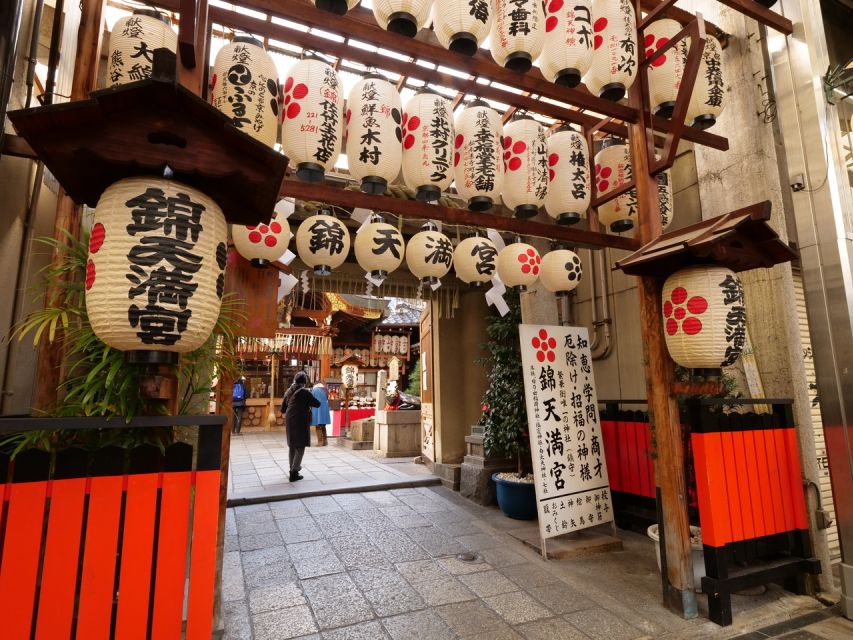
Before reaching the market, you visit Nishiki-Tenmangu Shrine for about 15 minutes. This is a welcome pause in a food-focused morning. The shrine is loved by local residents, and it gives your guide a chance to explain Japanese religious customs and the difference between a shrine and a temple.
The practical value is that you do not just look at the buildings. Guides have explained how to pray properly and how to recognize the basic features of Kyoto’s religious sites. That kind of context makes the rest of your sightseeing easier, especially if this is your first visit to Japan.
The shrine stop also gives the tour some balance. Without it, the morning would be a straight snack crawl. Here, you get a little history, a little neighborhood context, and a calmer moment before entering Nishiki Market.
Some areas on the route are not suitable for wheelchairs or strollers. If mobility is a concern, this is not the right tour. The walking route and market setting require you to manage uneven or confined areas without the help of a fully accessible path.
Nishiki Market: two hours of food and local context
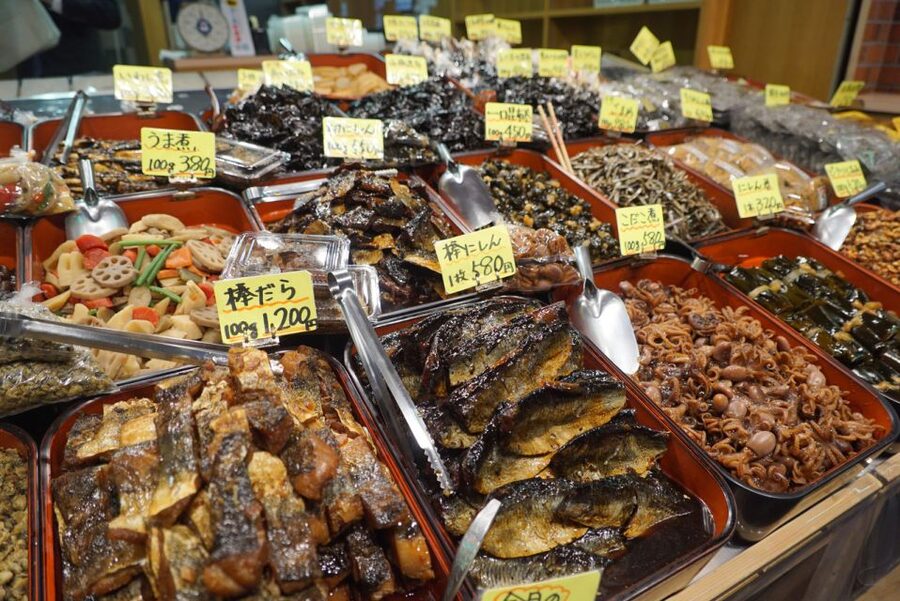
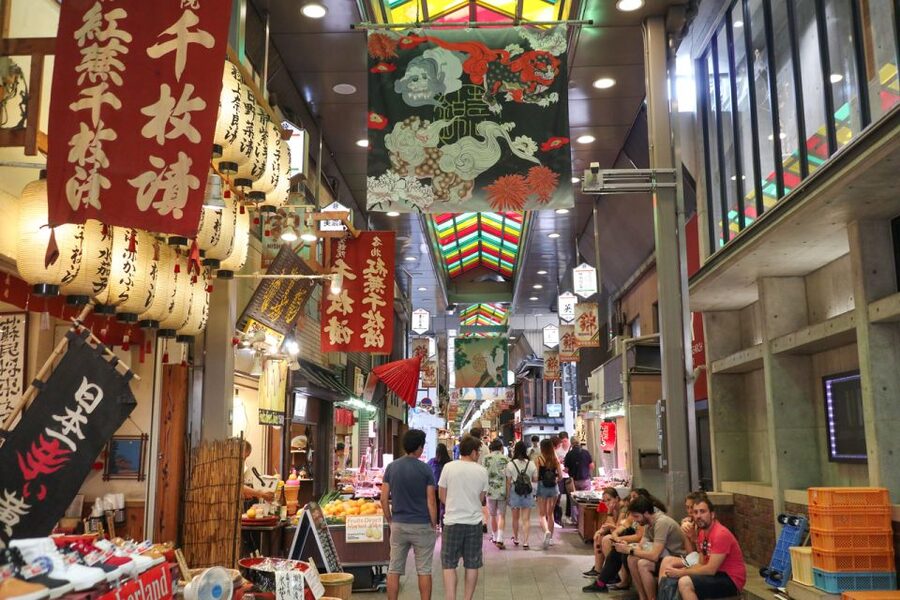
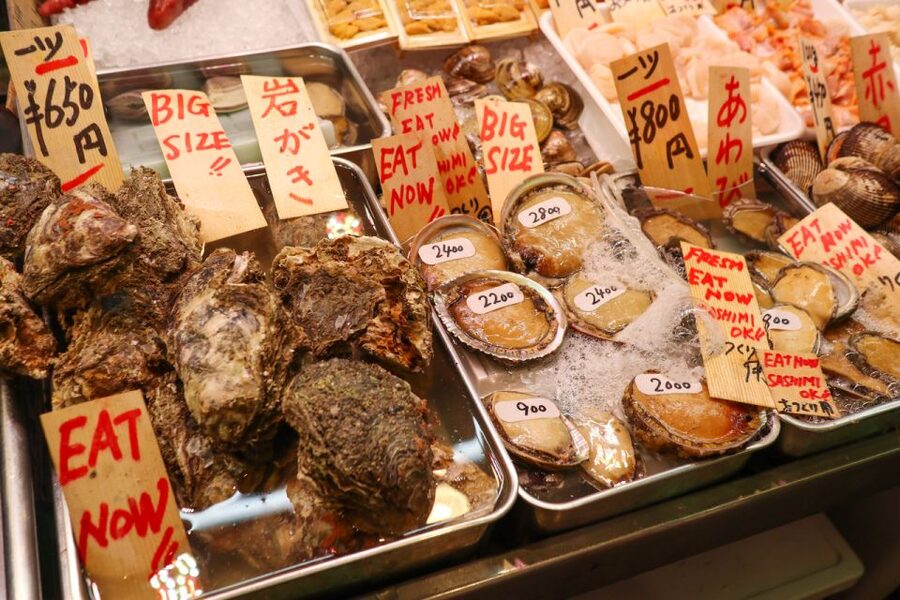
Nishiki Market has more than 400 years of history and is widely known as the Kitchen of Kyoto. The name makes sense once you see the mix of food stalls, specialty shops, household goods, soaps, honey, seafood, sweets, and souvenirs packed into one long covered lane.
The market is not a huge maze. It is mainly one long row of shops, with a mix of food and retail businesses. That is good news if you want an introduction without getting lost, but it also means the lane can feel tight when busy.
This is where the small group matters. A maximum of seven people gives you a better chance of staying with the guide and hearing explanations at each stop. Larger groups would be awkward in front of shop counters, especially when everyone is tasting food or stopping to take photos.
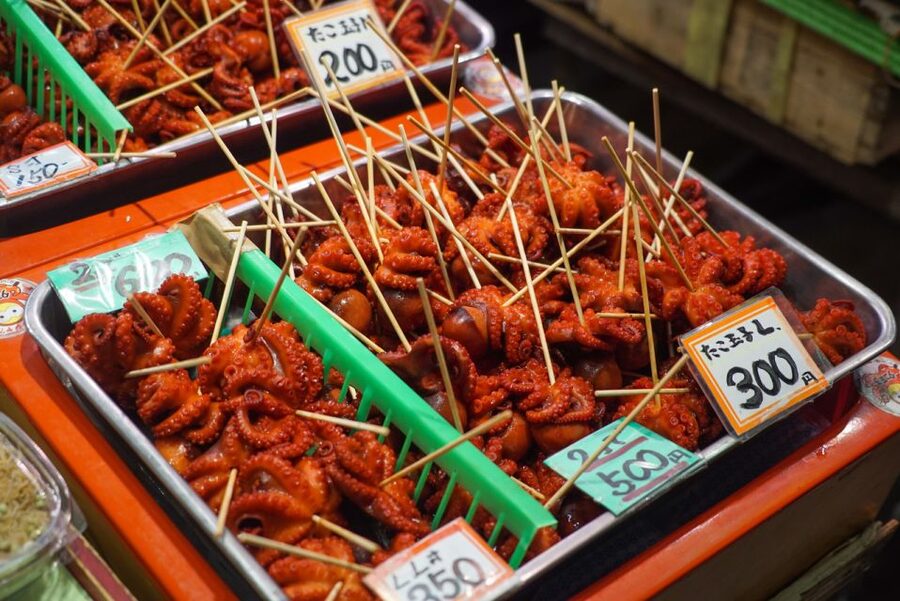
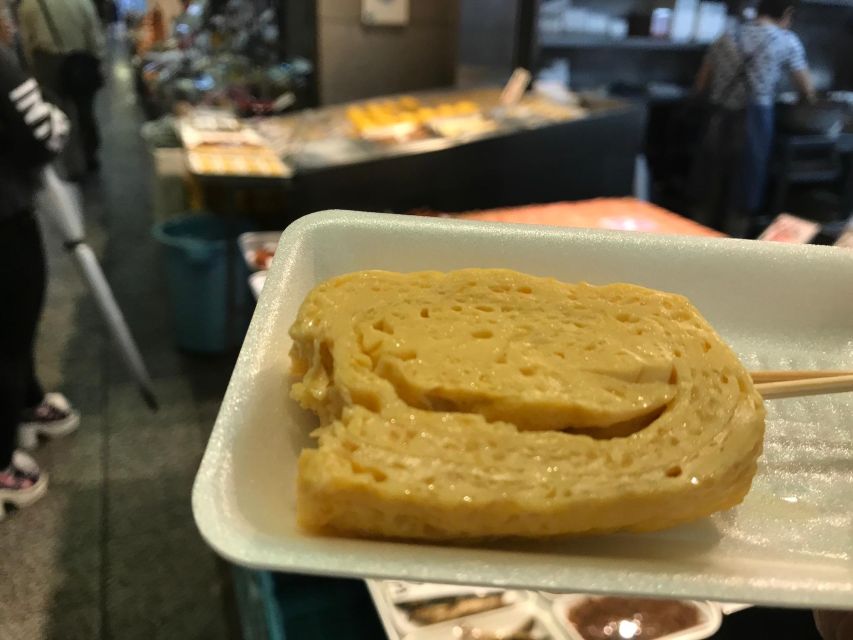
Your guide selects seven tastings. The exact choices can vary, but the experience is built around trying several Kyoto and Japanese specialties rather than ordering one large meal. You might receive small savory bites, sweets, seafood, snacks, or other market foods selected by the guide. Some guides have also included sake tastings.
The value is not just the amount of food. A market can be confusing when labels are unfamiliar and portions are sold for immediate eating. Your guide helps explain what you are trying, how it fits local food customs, and which items may be worth buying later.
This is also the point where you can ask questions. Guides have explained the background of particular foods, suggested other places to eat, and adjusted the pace around the interests of the group. If something catches your eye, it is worth asking about it, though substitutions are not guaranteed at every stop.
You should bring cash. Additional food and drinks are not included, and you may want to buy something for later. Since the market includes many retail shops, leave room in your budget for food gifts or specialty items if they appeal to you.
More walking tours in Japan:
- Kyoto Geisha Walking Tour: Gion District & Hidden Gems
★ 4.7 · 3,273 reviews - Kyoto: Gion Magical Night Walking Tour with Geisha Trivia
★ 4.9 · 2,393 reviews - Tokyo: Imperial Palace and Shogun Historical Walking Tour
★ 5.0 · 2,251 reviews - Kyoto: Gion Geisha District Walking Tour – Stories of Geisha
★ 4.7 · 2,187 reviews
The seven tastings are only part of the meal
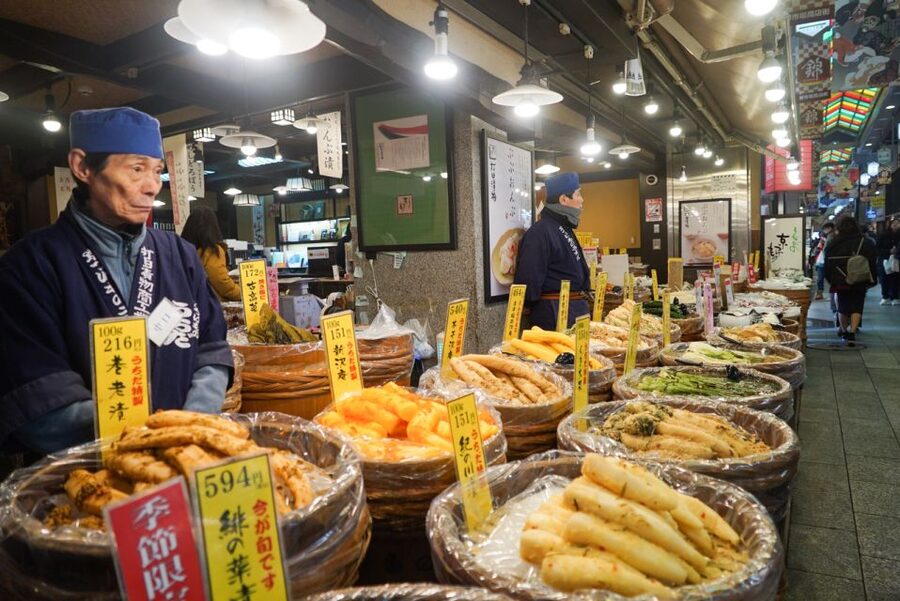
The tour title promises seven kinds of tastings plus brunch, and that distinction matters. The tastings are small portions spread through the market. They give you variety, but they are not meant to replace the final sit-down meal.
The brunch takes place at a restaurant and is included in the price. Depending on the stop, the menu can include several choices, and past tours have featured traditional Kyoto meals such as yuba. Yuba is tofu skin, a Kyoto specialty, and it gives the meal a more local character than a standard Western-style breakfast.
Some people may call this a late breakfast, while others will experience it as lunch. Either way, do not eat a full meal before meeting the guide. The morning includes enough sampling that arriving hungry makes sense.
I like this format because it solves two common problems with market visits. You do not have to guess which stalls are worth your money, and you do not have to choose between sampling several things and saving room for lunch. The guide handles the food route, then you sit down for a proper meal.
There is one important limit. Vegan and gluten-free requests cannot be accommodated. The operator also cannot guarantee allergy-free food because the dishes are prepared in kitchens it does not control. Tell the operator about allergies or dietary needs at least one day in advance, but understand that substitutions may not be possible at every stop.
The tour information says even some dietary requests may be handled with effort at different stops, but you should not book this expecting a fully customized food plan. If avoiding gluten or animal products is essential, choose another activity.
Your guide makes the difference
The route is easy to follow, but the guide is what turns it from a simple market visit into a useful cultural walk. English-speaking guides have been praised for clear explanations, warmth, humor, and patience.
Chie has been particularly good at bringing Kyoto history into the walk, explaining food and culture, and taking plenty of photos. Yutaka has offered local context, restaurant suggestions, and help with onward plans. Hikaru has been praised for explaining food customs and making the morning easy to talk through.
Other named guides include Reiko, Takaya, Yuma, Aki, Nori, Aina, Woohee, Yuki, Nobu, Eri, Peco, Yuna, and Yukari. The guide assigned to your date will vary, so you should not book solely to meet a specific person.
The strongest guide behavior is practical. A good leader keeps the group together in the market, checks that everyone understands the food, answers questions without rushing, and adjusts the route when possible. Several guides have also helped with photos and offered suggestions for what to eat or see after the tour.
Because the group is capped at seven, the experience can feel nearly private when fewer people book. That is not guaranteed, but the format gives you a better chance of having a conversation instead of standing behind a crowd while the guide speaks.
Is $66 a fair price?
At $66 per person, the cost is higher than simply wandering through Nishiki Market and buying a few snacks. That comparison misses what you are paying for.
The price includes three hours with a certified local guide, seven tastings, a restaurant brunch, and photos taken during the tour. You are also paying for food selection, translation, neighborhood background, and help navigating a market where many products may be unfamiliar.
The value is strongest if you want to try several foods but do not feel confident choosing on your own. It is also useful for a first morning in Kyoto, when a local guide can give you ideas for the rest of your stay.
The value is weaker if you already know Nishiki Market well, speak Japanese, or prefer to stop freely at any shop. The fixed route and included tastings mean less flexibility than exploring independently. You will still pay for extra food and drinks, so keep some cash handy.
A three-hour food walk is also a good use of limited time. You see several central areas, visit a shrine, and finish at Nishiki Market rather than spending half a day figuring out the market alone.
Who should book this experience?
I would recommend this tour to first-time visitors who want a friendly introduction to Kyoto food and central neighborhoods. It also suits families with older children and teenagers, especially those who enjoy trying unusual snacks and asking questions.
It works well for couples and small groups who want more context than a self-guided market visit can provide. Food-focused visitors will appreciate the variety, while culture-minded visitors will value the shrine and Pontocho explanations.
It is less suitable for anyone wanting a fast sightseeing checklist. The pace is relaxed, with time to talk, sample, and look around. It is also not suitable for wheelchair users, people using strollers on the route, or people with gluten intolerance.
Summer in Kyoto can be extremely hot, with reported highs around 40°C, while winter can fall to about -5°C. Dress for the forecast, carry water as appropriate, and wear shoes you can comfortably use for a three-hour walk.
Practical details before you reserve
Meet your guide outside Exit 5 of Gion Shijo Station. Look for the MagicalTrip sign, and arrive ready to walk.
The tour is conducted in English and is limited to seven participants. It ends at Nishiki Market, which is useful if you want to keep shopping, continue eating, or explore nearby central Kyoto afterward.
The activity offers free cancellation up to 24 hours before departure and a reserve-now, pay-later option. Check the available starting times when choosing your date, since the morning schedule is central to the experience.
Bring cash for anything beyond the included tastings and brunch. Tell the operator about allergies or dietary needs at least one day ahead, but do not rely on the tour for allergy-free, vegan, or gluten-free food.
Should you book the Nishiki Market brunch walk?
Book it if you want seven guided tastings, a proper Kyoto meal, and useful neighborhood context in one compact morning. The early timing, small group, and strong guide interaction make it more helpful than simply arriving at Nishiki Market and buying random snacks.
Skip it if you need strict dietary control, full wheelchair access, or complete freedom to choose every stop. For everyone else, $66 is a reasonable price for a food-led introduction to Gion, Pontocho, Nishiki-Tenmangu Shrine, and Nishiki Market, especially near the start of a Kyoto stay.
FAQ
Where does the Nishiki Market brunch tour meet?
Meet your guide outside Exit 5 at Gion Shijo Station. The guide will be holding a sign saying MagicalTrip.
Where does the tour finish?
The tour finishes at Nishiki Market.
How long does the experience last?
The tour lasts three hours. The Nishiki Market portion takes about two hours and 15 minutes.
How many people can join the tour?
The group is limited to seven participants.
What food is included?
The tour includes brunch at a restaurant and seven kinds of tastings. Additional food and drinks are not included.
Is the tour conducted in English?
Yes. The tour includes a live English-speaking guide.
Can the tour accommodate vegan or gluten-free diets?
No. Vegan and gluten-free requests cannot be accommodated for this tour.
Can the tour guarantee allergy-free food?
No. The food is prepared in kitchens that do not belong to MagicalTrip, so allergy-free meals cannot be guaranteed. Tell the operator about allergies at least one day before the tour.
Is the tour suitable for wheelchair users or strollers?
No. Parts of the itinerary are not accessible by wheelchair or stroller, and the experience is not suitable for wheelchair users.
More Shopping Tours in Japan
- Tokyo: Tsukiji Fish Market Food and Culture Walking Tour
★ 4.7 · 757 reviews - Tsukiji Fish Market: Street Food & Culture Walking Tour
★ 5.0 · 669 reviews - Tsukiji Fish Market Small-Group Food Walking Tour
★ 5.0 · 621 reviews - Kuromon Market Food Walking Tour in Osaka (6 stops, 6 tastes)
★ 5.0 · 550 reviews
More Markets in Japan
- Tokyo: Tsukiji Fish Market Food and Walking tour
★ 5.0 · 1,724 reviews - Tokyo: Tsukiji Fish Market Guided Walking Tour
★ 4.9 · 1,397 reviews - Nishiki Market Brunch Walking Tour (7 Tastings + Brunch)
★ 5.0 · 1,355 reviews - Tsukiji Fish Market Guided Tour and Sushi Making with Pro Chef
★ 5.0 · 775 reviews
Just added around Japan
- Private Harajuku Omotesando Architecture Tour★ 4.9 · 18 reviews
- Tokyo: Customizable Private Guided Walking Tour★ 4.5 · 129 reviews
- Tokyo: Guided Helicopter Ride★ 4.9 · 24 reviews
- Tokyo: Guided Walking Tour of Tsukiji Market with Lunch★ 4.4 · 24 reviews
- Tokyo: Private Personalized Local Food Tour★ 4.5 · 101 reviews
- Tokyo GINZA: KONPARU Japanese Cabaret Show with Drink★ 4.8 · 38 reviews
- Tokyo: Guided Walking Tour of Tsukiji Market with Breakfast★ 4.4 · 134 reviews
- Tokyo: Gotokuji Cat Temple, Shinjuku Cat Cafe & 3D Cat Tour★ 4.9 · 38 reviews
Food Market Tours, compared.
Shinjuku Food Tour (13 Dishes at 4 Local Eateries)
Read our review →
Tokyo Tsukiji Fish Market Food and Culture Walking Tour
Read our review →
Shinsekai Food Tour with 13-15 Dishes at 5 Eateries
Read our review →
Osaka Food Tour: 13 Dishes at 5 Local Eateries
Read our review →
Shinjuku Food Tour (15 Dishes and 4 Eateries)
Read our review →
Best of Shinjuku: Izakaya Food Tour (4 Stops, 14+ Tastings)
Read our review →
Hungry Osaka Street Food Tour:15 Tastings & 3 Drinks with a Local
Read our review →
Browse the lists this tour appears in