
REVIEW · GARDEN & PALACE TOURS
Kyoto: Nijo Castle and Kyoto Imperial Palace Guided Tour
Nijo Castle gives you the clearest look at how shogun power worked, while Kyoto Imperial Palace shows a quieter, more refined side of Japan’s past. I like the contrast between the castle’s grand interiors and the palace’s gardens, and I like having a guide such as Goku, Kayo, Taku, or Nene explain the politics behind what you see.
I also like the small group of no more than nine, which leaves room for questions and personal tips. The main drawback is that the Imperial Palace portion may feel limited if you expect extensive access inside the buildings. Much of that visit is outdoors, and one confirmed experience included only exterior views.
In This Review
- Key points to know before you book
- Why Nijo Castle makes a strong starting point
- Reading the political story behind the buildings
- Kyoto Imperial Palace and its seasonal gardens
- The walk between the two landmarks
- The guides make the biggest difference
- Is $63 a fair price?
- Who will enjoy this tour most?
- Booking details that affect your day
- Should you book the Nijo Castle and Imperial Palace tour?
- FAQ
- How long is the Kyoto Nijo Castle and Imperial Palace tour?
- Where does the tour meet?
- What does the $63 price include?
- How large is the group?
- Which languages are available?
- Will I be able to enter the Imperial Palace buildings?
- What should I bring and wear?
- Can I cancel or pay later?
Key points to know before you book
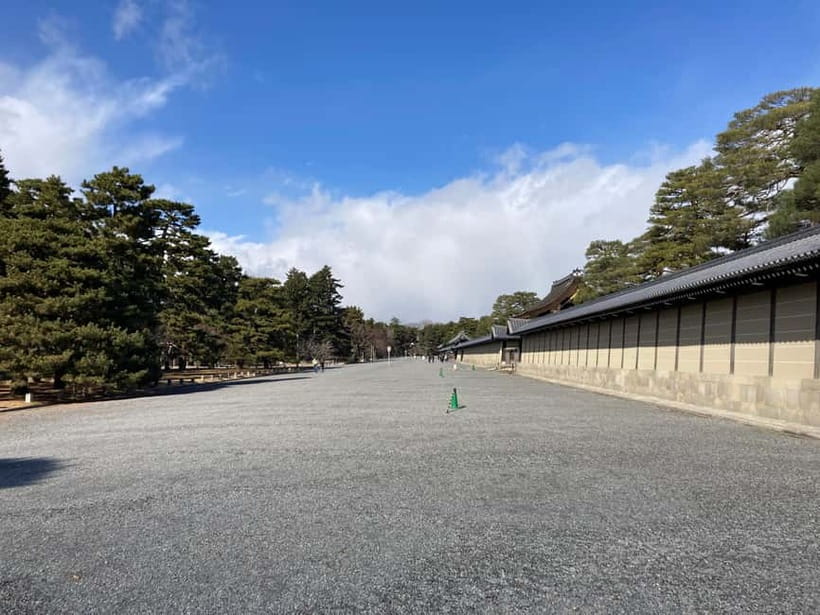
- See two very different seats of power: Nijo Castle presents the authority of the shoguns, while the Imperial Palace reflects the world of Japan’s emperors.
- Expect a history-focused walk: Guides explain politics, architecture, Japanese culture, and the changing relationship between shoguns and emperors.
- The guide can shape the experience: Goku, Kayo, Taku, and Nene have all led highly praised tours, with particular strength in answering questions and adjusting the pace.
- The Imperial Palace is mainly an outdoor visit: Gardens, gates, grounds, and exterior architecture are central to the experience.
- Allow three hours and some walking: The tour includes a walk between the palace and Nijo Castle, plus Kyoto streets, townhouses, and a cherry-blossom spot.
- Dress with care: Shorts are not allowed, and the tour is not suitable for pregnant women.
Why Nijo Castle makes a strong starting point
Nijo Castle is not simply an old building to photograph. It was built by Tokugawa Ieyasu, the founder of the Tokugawa shogunate, and its design was meant to communicate rank and control. Your guide helps you read those details instead of passing through them as decoration.
Inside Ninomaru Palace, lavish rooms and carefully worked details show the formal world of the shogunate. The architecture reflects authority through scale, arrangement, and ceremony. I find this more useful than hearing a string of dates, because you begin to understand how a political system could be expressed through rooms and movement.
Admission includes Nijo Castle, Ninomaru Palace, and the Art Gallery. That matters at $63 per person, since you are paying for both the guide and the principal admission tickets rather than arranging each part separately.
The castle can feel powerful and calm at the same time. One moment you are looking at formal spaces linked to political control, and the next you are in quieter garden surroundings. This contrast gives the first half of the tour a good rhythm.
Your guide may focus heavily on the events surrounding shoguns and emperors, or spend more time on architecture and Japanese customs. Goku, in particular, has been praised for handling detailed historical questions, including sensitive questions about Japan’s relationship with the United States after World War II. That kind of open conversation is valuable if you want more than a prepared speech.
More Garden & Palace Tours in Kyoto
- Kyoto: Nijo-jo Castle and Ninomaru Palace Guided Tour
★ 4.7 · 1,020 reviews - Kyoto: Nijo Castle, Kiyomizu & Fushimi Inari Guided Tour
★ 4.7 · 700 reviews - Kyoto: Imperial Palace & Nijo Castle Guided Walking Tour
★ 4.7 · 453 reviews
Reading the political story behind the buildings
The best reason to take this tour is the connection between the two sites. Nijo Castle and Kyoto Imperial Palace are not random stops placed on the same morning. Together, they let you compare two forms of authority that shaped Japan.
At the castle, the emphasis is the shogunate and its military government. At the palace, the focus shifts toward the emperor, court tradition, ceremony, and refined aesthetics. Your guide explains the political climate of the period, helping you understand why these places looked and functioned so differently.
I would pay attention to the guide’s comparisons. Taku has been especially well liked for moving between history, art, politics, and architecture without losing the thread. Kayo has also been praised for explaining both sites clearly while adding useful context about Japan in general.
The small group makes this kind of discussion easier. With a maximum of nine participants, you can ask why a building was designed in a certain way or how the shoguns and emperors related to one another. In a large group, those questions often disappear. Here, they can become the most memorable part of the morning.
Kyoto Imperial Palace and its seasonal gardens
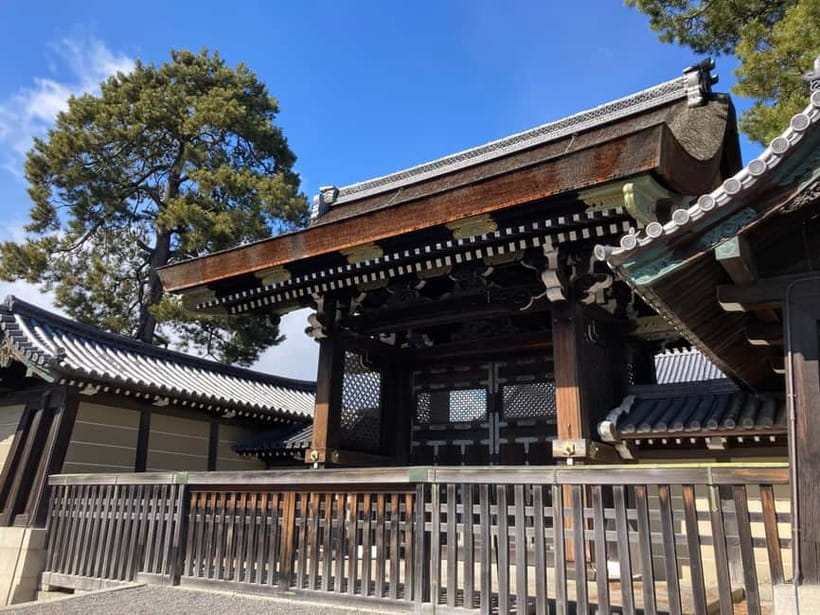
The Imperial Palace offers a different mood from Nijo Castle. Its grounds and gardens are designed around seasonal beauty, with an emphasis on proportion, quiet views, and the refined traditions of the imperial court.
The garden visit is especially appealing in spring, when flowering trees add color to the grounds. One participant specifically found the palace gardens beautiful during the spring season. If you visit at another time of year, the atmosphere will change, but the tour’s focus remains the same: how Japanese gardens frame nature and the passing seasons.
You should set your expectations correctly. The palace portion is not presented as a full indoor tour of every building. Much of the experience takes place outside, and one account found the visit less satisfying because only exterior views were available.
That is not necessarily a flaw if you enjoy gardens, gates, courtyards, and architecture viewed from the grounds. It is a drawback if your main goal is to walk through richly decorated imperial interiors. I would choose this tour for the overall historical setting, not for extensive indoor palace access.
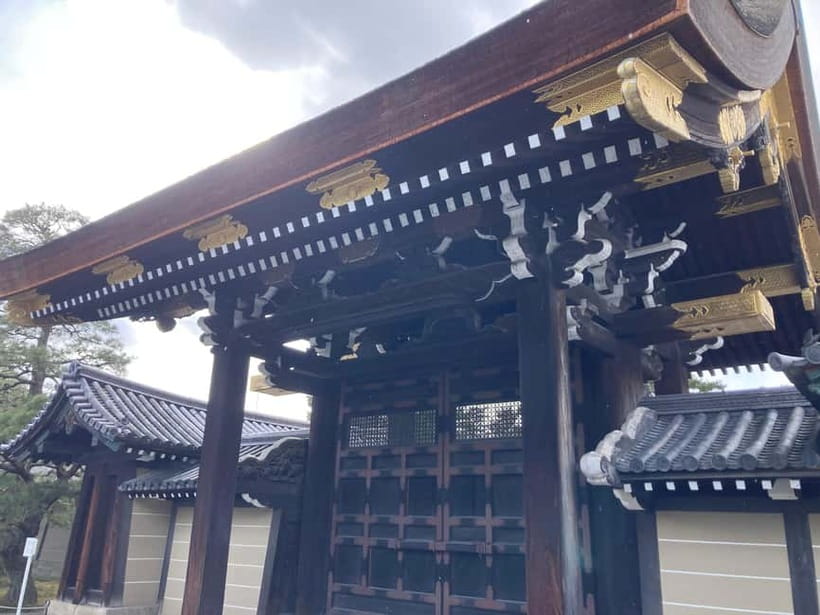
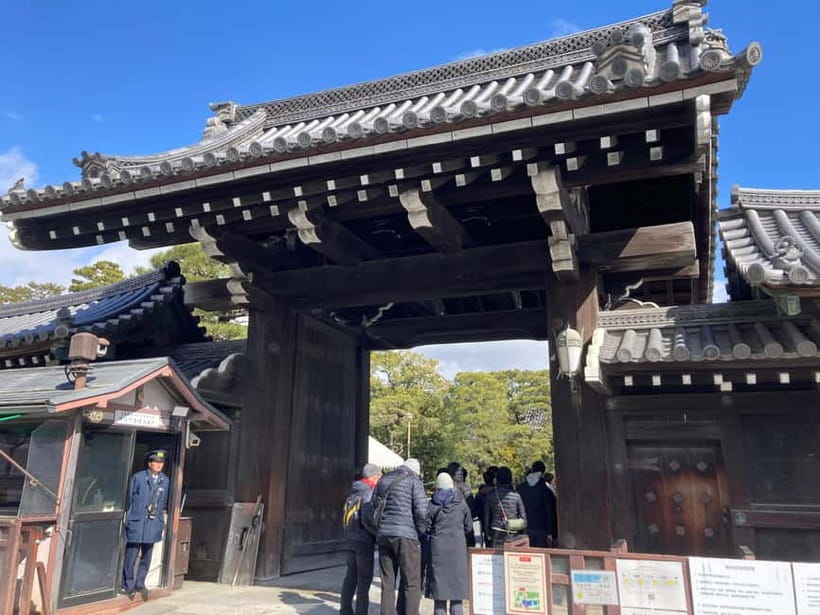
The meeting point is the Nakadachiuri Gate of the Kyoto Imperial Palace. The tour begins there, so you do not start at Nijo Castle. The operator says it will contact you in advance with a description of the guide’s appearance and clothing, which is useful at a large site with several gates.
The walk between the two landmarks
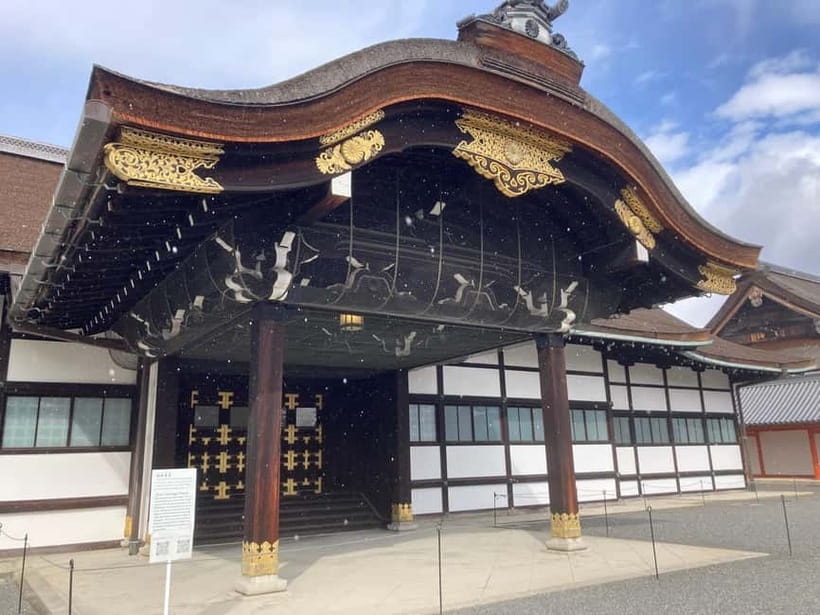
The transfer between the Imperial Palace and Nijo Castle is part of the experience rather than dead time. The walk takes about 20 minutes, according to one detailed account, and the guide continues the discussion along the way.
This gives you a chance to see ordinary Kyoto streets between major historic sites. You might pass traditional Kyoto townhouses and a spot known for cherry blossoms. Those smaller details help connect grand political history with the city people actually lived in.
I like this section because it prevents the tour from feeling like two isolated museum visits. The guide can compare western and Japanese culture, answer questions, point out local details, and offer suggestions for the rest of your stay. Taku has been particularly helpful to solo visitors, including taking photographs and sharing ramen suggestions near a hotel.
The walk also means you should wear comfortable shoes. The experience is described as a walking tour, and the three-hour schedule includes time outdoors at both major sites. The exact pace can vary with the guide, group, weather, and number of questions.
Same city, a completely different kind of day:
- PERFECT KYOTO 1-Day Bus Tour
★ 5.0 · 13,518 reviews - Kyoto: Fushimi Inari, Kinkakuji, Bamboo Grove 1 Day Bus Tour
★ 4.8 · 4,316 reviews - Kyoto: Tea Ceremony in a Traditional Tea House in Kiyomizu
★ 4.9 · 3,519 reviews - Kyoto Geisha Walking Tour: Gion District & Hidden Gems
★ 4.7 · 3,273 reviews
The guides make the biggest difference
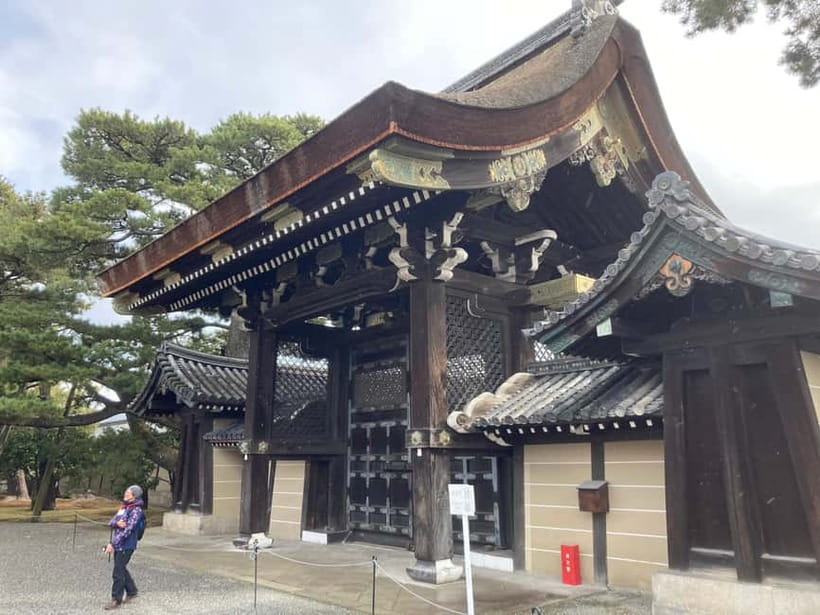
The strongest part of this experience is the human element. The guides named in the available information include Goku, Kayo, Taku, and Nene, with additional language options in French, Spanish, Japanese, Portuguese, and Russian.
Goku has received especially strong praise for his command of Japanese history, clear English, energy, patience, and ability to answer difficult questions. He has also adjusted tours for families who wanted a history-heavy visit and kept teenagers interested. That combination is useful because not everyone in a group wants the same level of detail.
Kayo has been described as warm, funny, informative, and able to make three hours pass quickly. Taku is a good fit if you like a broad discussion that moves from political history to architecture and cultural comparison. Nene has been praised for her kindness, clear explanations, and flexibility, including stepping in when another guide became ill.
Of course, guide assignment is not guaranteed. The quality of the tour can depend on who leads it, but the pattern here is encouraging. The guides are not simply pointing out buildings. They are expected to explain why the sites matter and respond to the interests of the group.
The multilingual option is another practical advantage. If you book in English, you can expect the guide to explain the sites in English, but French, Spanish, Japanese, Portuguese, and Russian are also listed as available languages. Check the selected language and time when booking.
Is $63 a fair price?
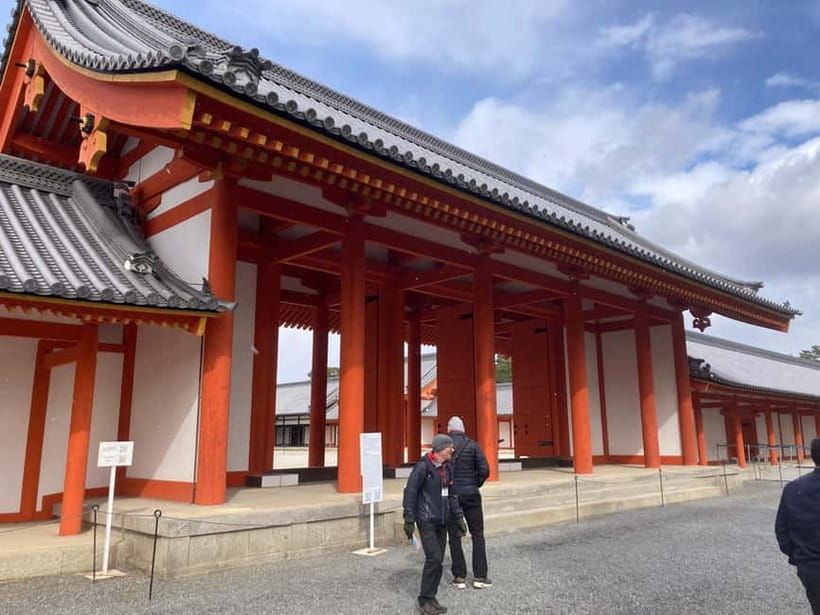
At $63 per person, this is not the cheapest way to see Kyoto’s historic sites. You are paying a premium over walking around on your own, but the value depends on how much context you want.
The price includes admission to Nijo Castle, Ninomaru Palace, and the Art Gallery, plus a professional guide and the walking experience. You also get a structured visit to two important places in three hours, rather than spending time figuring out directions, ticket details, and the connection between the sites.
I think the price is reasonable for someone who wants history explained in real time. It is particularly worthwhile if you are visiting Kyoto for a short stay, have limited background on the shogunate and imperial court, or enjoy asking questions.
It is less compelling if you prefer to move slowly, take photographs without interruption, or read at your own pace. You may also want a different arrangement if your priority is entering as many palace buildings as possible. The Imperial Palace section leans toward grounds and exteriors.
The 4.6 rating from 98 reviews suggests a strong overall response, but I would still focus on the tour’s actual shape rather than the number alone: two sites, a 20-minute walk between them, a small group, and a guide-led historical explanation.
Who will enjoy this tour most?
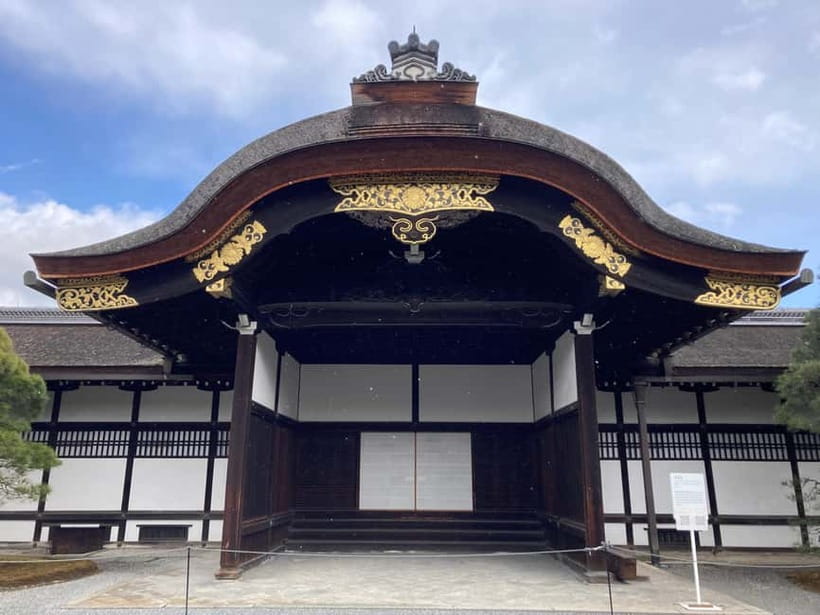
I would recommend it to first-time Kyoto visitors who want a clear introduction to the city’s political and cultural past. The side-by-side comparison makes the history easier to follow than visiting either site without context.
It also suits families with older children and teenagers. One guide successfully adjusted the balance for a family that wanted detailed history while keeping two teenagers engaged. The mix of outdoor movement, architecture, stories, and gardens gives younger participants more variety than a long indoor lecture.
Solo visitors can benefit from the small group and the practical help with photographs. Couples and friends who like to ask questions will also get more from the format than people who want silence and complete independence.
I would be more cautious if you are pregnant, since the experience is specifically not suitable for pregnant women. I would also reconsider it if you dislike walking, cannot dress without shorts, or want a fully indoor palace tour.
Bring a camera and some cash. The listed requirements are simple, but the camera is worthwhile for the castle details, palace grounds, gardens, townhouses, and seasonal scenery.
Booking details that affect your day
The activity lasts three hours, with starting times depending on availability. The group is limited to nine participants, though a particularly quiet departure could be smaller. One solo participant had a private-feeling experience when no one else joined at that time.
The meeting point is the Nakadachiuri Gate of Kyoto Imperial Palace. Pay attention to the gate name, since arriving at the wrong entrance could cost you time. The guide’s clothing and appearance will be sent in advance to help you identify the right person.
You can cancel up to 24 hours before the tour for a full refund. A reserve-now, pay-later option is also available, useful if your Kyoto plans are still shifting.
The tour is offered in English, French, Spanish, Japanese, Portuguese, and Russian. Select the language carefully, and remember that the guide’s personal style may shape how much time goes to politics, art, architecture, photography, or local suggestions.
Should you book the Nijo Castle and Imperial Palace tour?
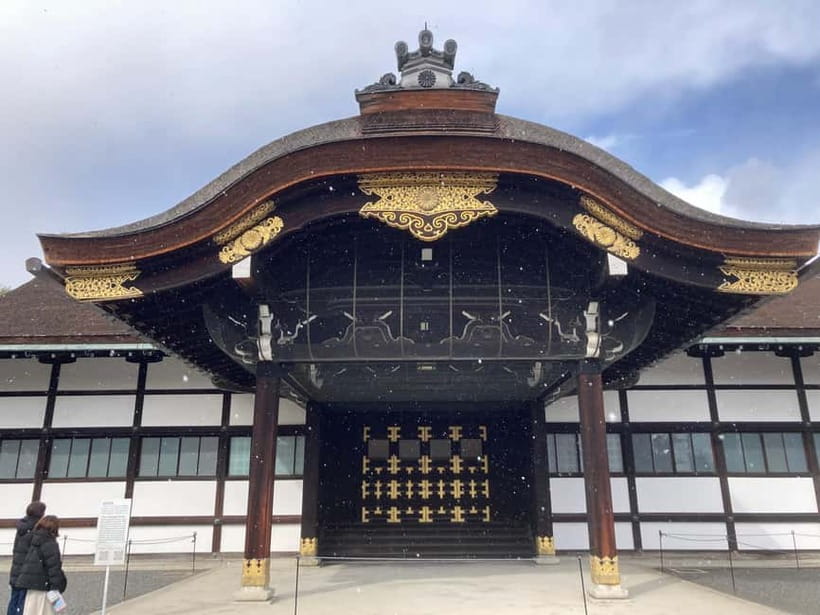
Book it if you want the two landmarks explained as parts of one story. Nijo Castle gives you the shogun’s political world, while the Imperial Palace offers imperial tradition, gardens, and seasonal beauty. The walk between them adds a useful look at Kyoto beyond its headline sights.
I would book this experience for a history-minded visitor, a first-time visitor with only one free morning, or anyone who prefers an informed local guide to a self-guided route. Goku, Kayo, Taku, and Nene appear particularly strong at making the information clear, personal, and adaptable.
Skip it if you mainly want unrestricted photography, a slow independent visit, or extensive access inside the Imperial Palace. For everyone else, $63 buys a well-shaped introduction to two major Kyoto sites, with the strongest value coming from the guide’s explanations rather than the buildings alone.
FAQ
How long is the Kyoto Nijo Castle and Imperial Palace tour?
The tour lasts three hours. It includes both landmarks, a walking section between them, and Kyoto streets with traditional townhouses and a cherry-blossom spot.
Where does the tour meet?
The meeting point is the Nakadachiuri Gate of Kyoto Imperial Palace. You will receive information in advance describing what the guide looks like and what the guide will be wearing.
What does the $63 price include?
The price includes a professional tour guide, admission to Nijo Castle, Ninomaru Palace, and the Art Gallery, plus the guided walking experience.
How large is the group?
This is a small-group tour limited to nine participants. A departure may be smaller, and one solo participant joined a tour that had no other participants at the time.
Which languages are available?
The listed tour languages are English, French, Spanish, Japanese, Portuguese, and Russian.
Will I be able to enter the Imperial Palace buildings?
The information provided emphasizes the palace grounds, gardens, and exterior architecture. One account specifically found that only the exteriors were available, so you should not book this expecting extensive indoor access.
What should I bring and wear?
Bring a camera and cash. Shorts are not allowed, so choose longer clothing for the tour.
Can I cancel or pay later?
You can cancel up to 24 hours in advance for a full refund. A reserve-now, pay-later option is also available.
Just added around Kyoto
- Taste of Nishiki Market Walking Food Tour with Local guide★ 5.0 · 17 reviews
- Kyoto: Sushi Making Class with Sushi Chef★ 4.8 · 64 reviews
- Kyoto: City Secrets eBike Tour★ 4.9 · 196 reviews
- Sacred Pathways: Discover the Philosopher’s Path of Kyoto★ 4.9 · 20 reviews
- Private Tour to Monkey Park and Arashiyama Highlights★ 5.0 · 22 reviews
- Private Nara Tour from Osaka – Meet at Your Hotel★ 5.0 · 22 reviews
- Private Sake Tasting in Central Kyoto with Sake Sommelier★ 5.0 · 13 reviews
- Kyoto : Private Custom Walking Tour With A Local Guide★ 4.6 · 144 reviews
Garden & Palace Tours, compared.

Imperial Palace and Shogun Historical Walking Tour
Read our review →
Tokyo Castle & Imperial PalaceーShogun Walking Tour
Read our review →
Nijo-jo Castle and Ninomaru Palace Guided Tour
Read our review →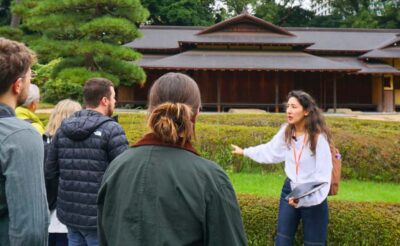

Ultimate Osaka Walking Tour: Castle, Dotonbori & Hidden Gems
Read our review →Tokyo Castle & Imperial PalaceーShogun Walking Tour
Read our review →Browse the lists this tour appears in