
REVIEW · SHOW
Kyoto: Meet-and-Greet, Maiko Show and Experience
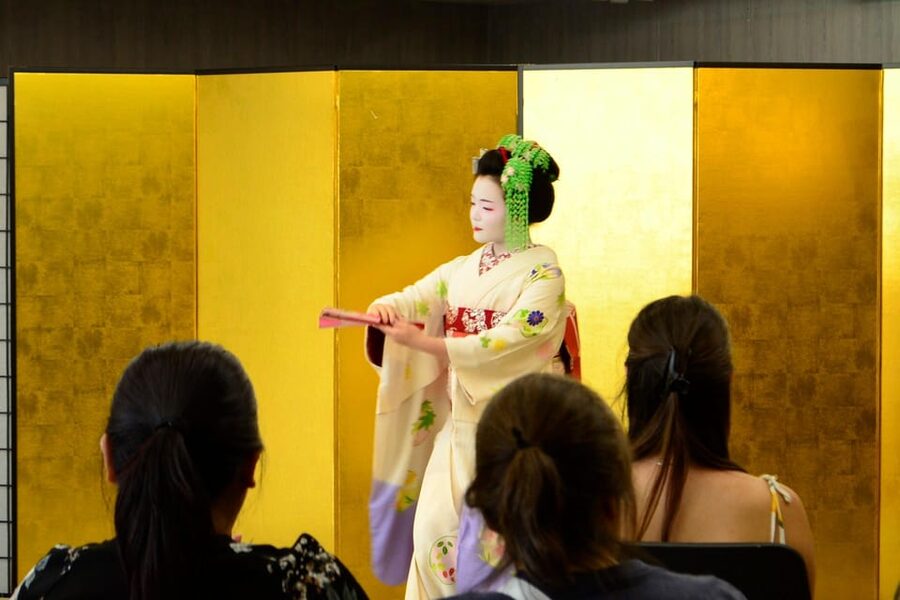
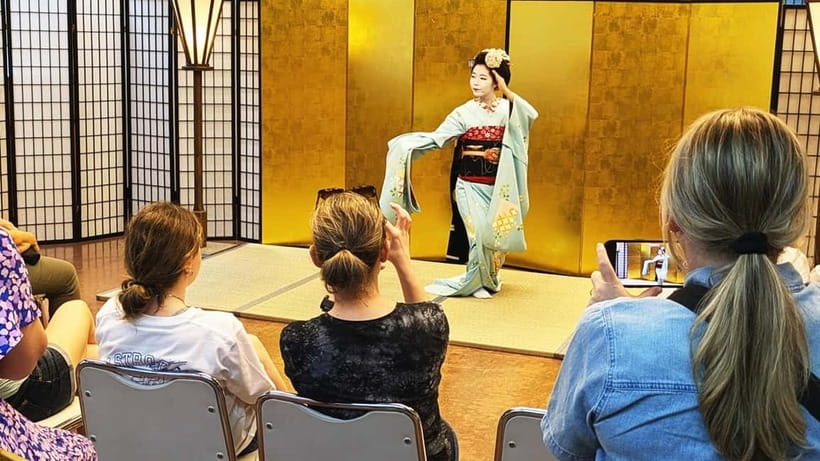
A young maiko takes the stage, performs two graceful dances, then speaks with the audience through an English-speaking host. You see the costume, makeup, gestures, and formal movements at close range, but the real value comes after the dancing, when you can ask about her training and life.
I like the small capacity of 30 people, which gives the Q&A some real give and take. I also like the respectful format: a scheduled cultural presentation in the Kyoto Handicraft Center, not a hunt through Gion for a private glimpse. The drawback is simple: the dances last only 8 to 10 minutes, so anyone expecting a full evening performance may find the $44 price a little high.
In This Review
- Key points to know
- What this maiko experience really offers
- Arriving at the Kyoto Handicraft Center
- The opening introduction and stage entrance
- Two traditional dances in close view
- Understanding the costume and the training
- The Q&A is the heart of the visit
- The 10 to 15-minute photo session
- Is $44 a fair price?
- Who should book this activity?
- Timing, seating, and practical planning
- Should you book the Kyoto maiko show?
- FAQ
- How long does the Kyoto maiko experience last?
- How much does the experience cost?
- Where does the event take place?
- Is the event conducted in English?
- How many people can attend?
- Can I take photographs?
- Is a professional photographer included?
- Are meals and transportation included?
- Can children attend?
- Can I cancel or pay later?
Key points to know
- Two dances, only 8 to 10 minutes total: The performance is beautiful but brief, with more time given to explanation and questions.
- English interpretation throughout: Staff explain the maiko tradition, her clothing, and her training, then translate audience questions and answers.
- A small group of up to 30 people: Everyone has a seat, and the format allows for personal questions without becoming a private appointment.
- Photos are part of the experience: You may take pictures during the event and have a commemorative photo with the maiko using your own phone or camera.
- Held inside the Kyoto Handicraft Center: The setting is easy to combine with browsing Japanese crafts, though the room can feel more functional than theatrical.
- Good value for a short cultural introduction: At $44, the activity suits first-time visitors who want context and interaction more than a long stage show.
What this maiko experience really offers
This is a short cultural presentation, not a full geisha dinner or an evening at a Kyoto teahouse. In 45 minutes, you receive a guided introduction to the world of the maiko, watch two dances, ask questions, and take a photo.
That clear format is its strength. You do not need to know where to go in Gion or hope to spot a maiko walking between appointments. You arrive at a set time, take a seat, and meet one in a planned setting where an English-speaking host can explain what you are seeing.
The activity also avoids a common problem with costume-focused cultural shows: the clothing is not treated as the whole story. You learn that a maiko is a young apprentice geisha, also called a geiko in Kyoto, training in dance, music, tea ceremony, conversation, social manners, and hospitality.
The distinction matters. The ornate kimono, white makeup, red and black accents, and elaborate hair ornaments are eye-catching, but they represent years of disciplined training rather than a simple theatrical costume.
A few more Kyoto trips to weigh up
- Kyoto Gion Cultural Walk & Geisha Show with Dining Options
★ 5.0 · 518 reviews - Kyoto Gion Cultural Walk & Geisha Show with Dining Options
★ 5.0 · 483 reviews - 1 Hour Geisha Show in Kyoto
★ 5.0 · 452 reviews
Arriving at the Kyoto Handicraft Center
The meeting point is the Kyoto Handicraft Center’s West Building. Enter on the first floor, take the elevator to the second floor, and look for the MEET MAIKO welcome sign.
Reception opens 30 minutes before showtime. I would arrive at least 10 minutes early, especially if you are crossing Kyoto by bus. City buses can be crowded, and taxis are hard to catch during high season, so a late afternoon departure from another part of town may take longer than your map suggests.
The building gives you something useful to do before or after the presentation. The Kyoto Handicraft Center sells Japanese goods, including locally made crafts, paintings, dolls, and other souvenirs. One particularly worthwhile feature is the display of museum-level pieces in cabinets marked not for sale. You can browse these without turning the visit into a shopping trip.
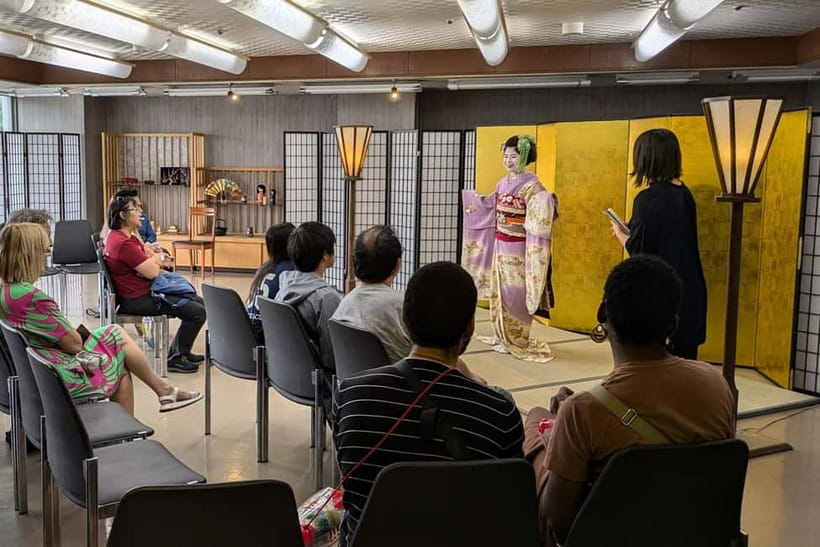
The room itself is practical rather than richly decorated. Some participants have found the venue a little corporate or sterile, and that is fair. You are not sitting in a candlelit teahouse. You are in a meeting room within a handicraft store, which makes the location convenient but limits the atmosphere.
The opening introduction and stage entrance
The show begins with an introduction before the maiko enters. The English-speaking host sets the scene and invites her to the stage, giving you a basic framework before the dancing starts.
This opening is important because many first-time visitors arrive with a vague picture of geisha culture shaped by films, photographs, or street sightings. The host explains the difference between maiko and geiko and describes the path of training that a maiko follows.
The language is English, and the interpreter is central to the event. Mina has handled the interpretation for some sessions, and participants have particularly valued the clear explanations and gentle moderation. The performer can then speak naturally, while the host bridges the language gap.
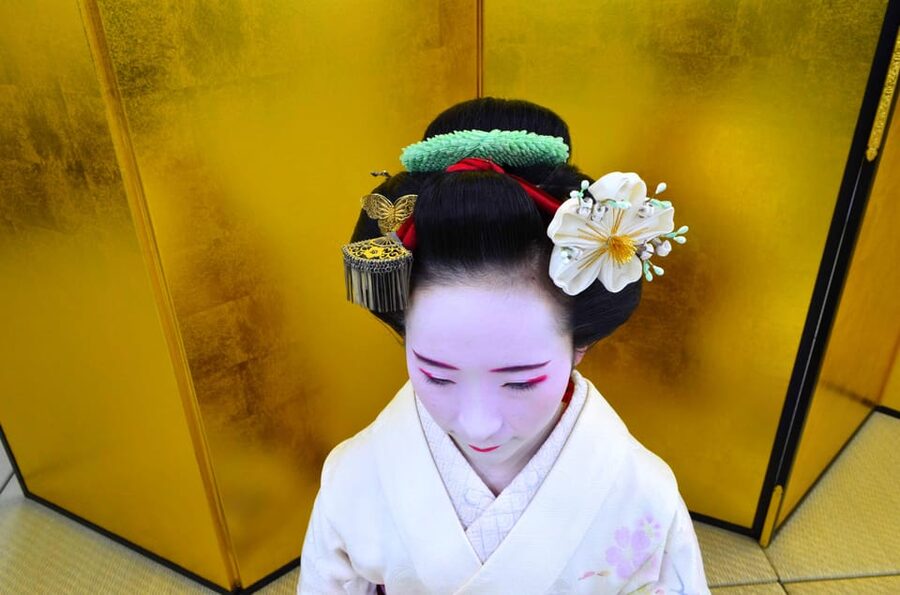
You will also hear about the maiko’s attire. The hairstyle, hairpieces, kimono, makeup, and accessories are not random decorations. They help identify the maiko stage of her training and create the formal appearance you associate with Kyoto’s traditional entertainment culture.
Two traditional dances in close view
The maiko performs two traditional dances, lasting about 8 to 10 minutes altogether. The dances are short, so watch the details rather than waiting for a long production.
The appeal is the control of movement. A small turn, a pause, the handling of a sleeve, or the placement of a fan can carry as much weight as a large gesture. From the seated audience, you are close enough to see the ornate clothing and the deliberate choreography without needing binoculars.
The performance is not presented as a large theatrical show with elaborate scenery, lighting, or a long musical program. If you want an extended dance recital, this activity will feel limited. The short format is better understood as an introduction that uses dance to open a conversation about maiko training.
I like that balance. You get a genuine look at the performance style, then have time to ask what the dance means, how the training works, or what daily life is like. Still, some people may prefer the full 10 to 15 minutes of photo time to be replaced by another dance.
Photography is allowed during the event. Keep your camera ready, but do not let the screen become the whole experience. The quiet movements are easiest to appreciate when you watch them directly.
Same city, a completely different kind of day:
- PERFECT KYOTO 1-Day Bus Tour
★ 5.0 · 13,518 reviews - Kyoto: Fushimi Inari, Kinkakuji, Bamboo Grove 1 Day Bus Tour
★ 4.8 · 4,316 reviews - Kyoto: Tea Ceremony in a Traditional Tea House in Kiyomizu
★ 4.9 · 3,519 reviews - Kyoto Geisha Walking Tour: Gion District & Hidden Gems
★ 4.7 · 3,273 reviews
Understanding the costume and the training
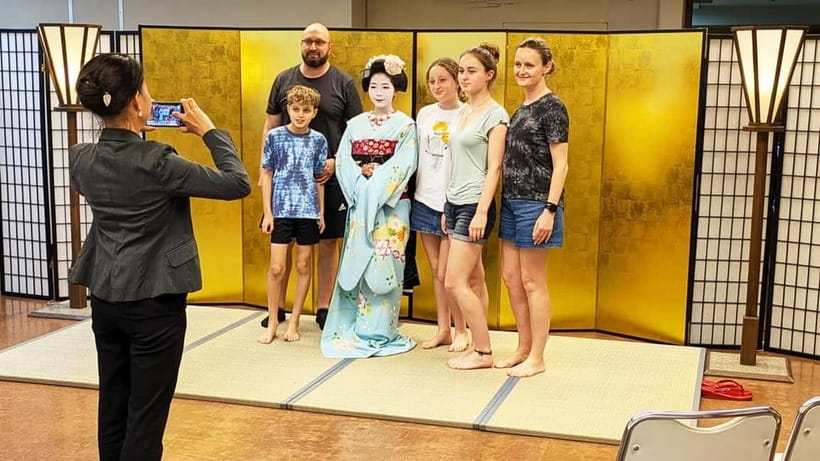
After the dances, the host explains the maiko’s appearance and background in more detail. This is where the presentation becomes more useful than a quick photograph in the street.
A maiko spends years studying traditional Japanese arts. Dance and music are part of the work, as are tea ceremony, conversation, etiquette, and hospitality. Her role is not only to perform. She is also training to entertain people in teahouses and banquet halls while developing her own style before becoming a geiko.
The explanation gives you a better way to look at the clothing. The kimono is intricate and formal, the hairstyle is built around distinctive hair ornaments, and the makeup uses white face paint with red and black details. These elements create the familiar maiko appearance, but the show places them alongside the demanding artistic training behind it.
The performer’s age can make the discussion especially striking. Some sessions feature a maiko who is 18, and questions about choosing this path often lead to thoughtful discussion. The host keeps the exchange polite and helps explain the tradition in modern terms.
That conversation can also raise questions about youth, work, and personal choice. The format works best when the audience asks with curiosity rather than treating the maiko as a character in a fantasy. You are meeting a young professional in training, not a fictional figure.
The Q&A is the heart of the visit
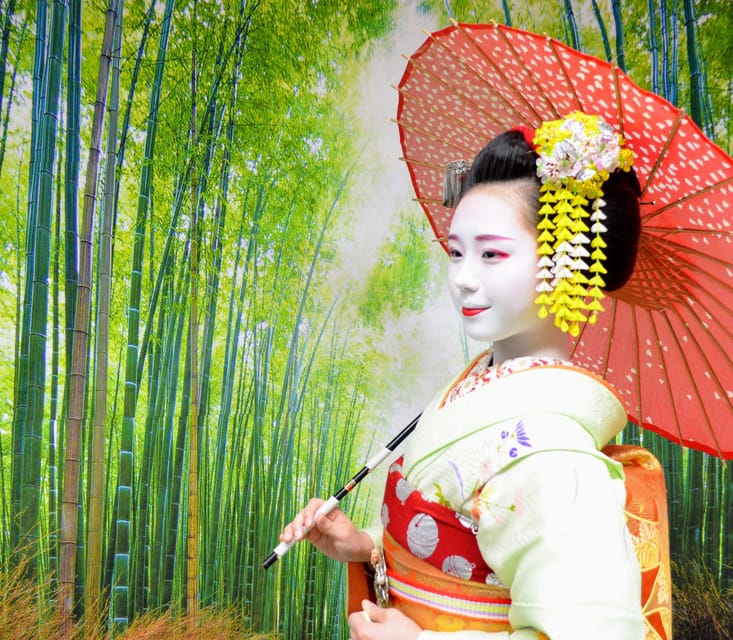
The question period is often the most valuable part of the 45 minutes. You can ask the maiko questions through the interpreter, and the small group helps keep the conversation manageable.
Good questions might focus on her training, her dances, her clothing, her route toward becoming a geiko, or her experience of learning traditional arts. You may also ask about subjects introduced by the host. Since this is a shared session, you should listen to other people’s questions too. They often cover points you had not considered.
The format is not private. Up to 30 participants may attend, and the host must keep the show moving so everyone has a chance to participate. That means answers may be shorter than you hope, and a long question from one person can reduce time for others.
The translation is handled in both directions. The host explains the questions in Japanese and brings the answers back into English. A strong interpreter makes a major difference here, and the presentation has benefited from hosts who explain carefully without taking attention away from the maiko.
Some people find the schedule a little tight when the audience has many questions. I would prepare one or two concise questions rather than trying to start a long conversation. You can get more from the time, and other participants can take part as well.
The 10 to 15-minute photo session
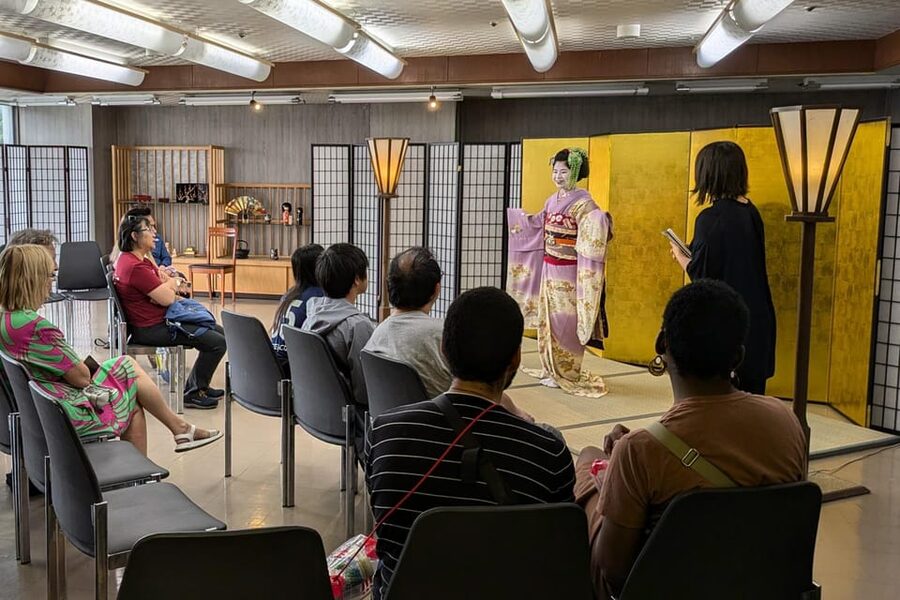
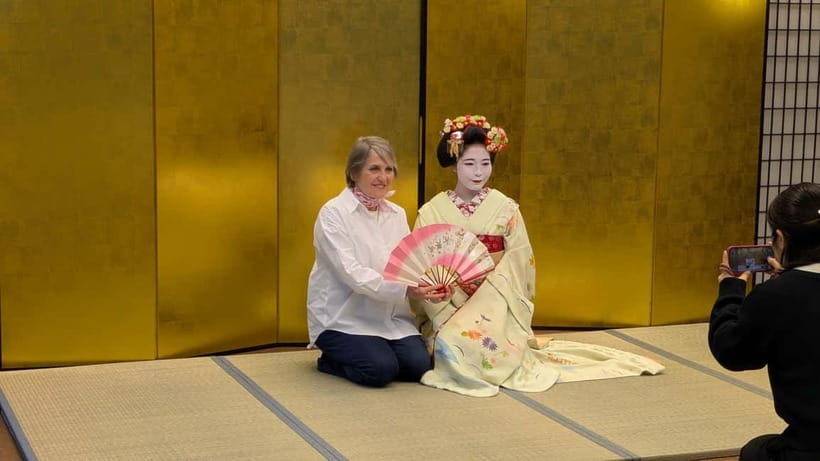
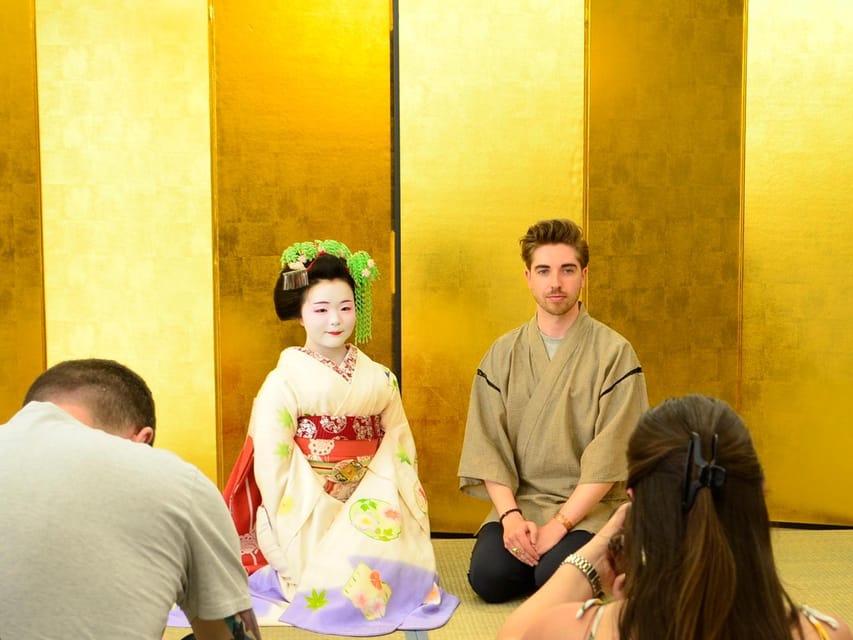
The final portion sets aside about 10 to 15 minutes for photographs. You may use your own camera or smartphone, and the staff help arrange a commemorative picture with the maiko.
This is not a professional photo shoot. A photographer is not included, so bring a phone or camera and be ready to hand it to a companion or another participant when needed. The staff organize the process so each person or group can take a picture without creating a long delay.
The photo has value because it records the meeting, not just the costume. You have already watched the dances and heard about the training, so the picture serves as a reminder of the wider cultural introduction.
The downside is that not everyone will value this section equally. If you would rather see another dance, 10 to 15 minutes of posed photographs may feel long. If you are visiting Kyoto with children or relatives who want a clear souvenir, the photo session gives the event a friendly finish.
Is $44 a fair price?
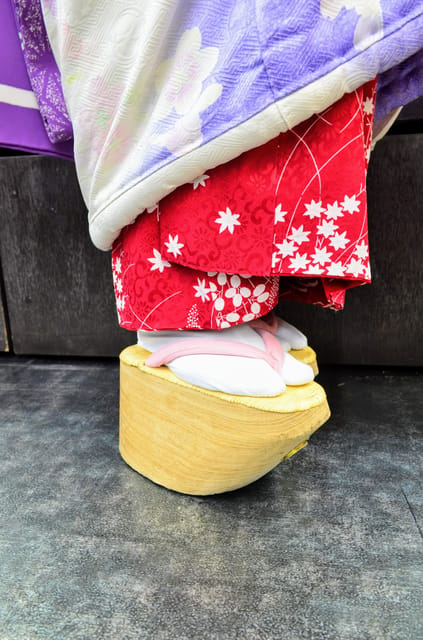
At $44 per person, this is not the cheapest short activity in Kyoto. You are paying for a scheduled performance, English interpretation, a question session, seating, and a photo opportunity, not for a meal or transportation.
The value depends on what you want. If you mainly want to watch traditional dance, the short performance may leave you wishing for more. If you want an accessible explanation and a chance to ask about maiko life, the price is easier to justify.
I see this as a useful middle ground between a quick street sighting and a much more expensive private cultural appointment. The group is limited to 30, everyone can sit, and the interpreter makes the material available to English speakers.
The small souvenir gift adds a modest extra touch, but it should not be the reason you book. The main value is the explanation and interaction. You can also shop for Japanese goods in the center after the show, but purchases are separate.
Who should book this activity?
I would recommend it to first-time visitors who want a respectful introduction to Kyoto’s maiko tradition. It is also a good choice for families, since children aged 0 to 2 may attend free if they do not need their own seats, and all participants are seated.
The activity suits you if you enjoy asking questions, learning how traditions work, and seeing a performance at close range. It is especially useful if your schedule does not include a traditional evening entertainment program.
You may want to skip it if your priority is a long dance performance, an atmospheric historic setting, or a private encounter. The room is functional, the event is shared with other people, and the performance itself is over quickly.
Children can attend, but parents should remember that this is a quiet presentation. One difficult session was disrupted by children shouting, and the disturbance affected the room. A calm child who can sit through a short show should be fine, but the format is not designed as a play area.
Timing, seating, and practical planning
The listed duration is 45 minutes, though some sessions may feel closer to an hour once the introduction, questions, and photos are included. Plan your surrounding schedule with a little space rather than booking a tight restaurant reservation immediately afterward.
Seats are free seating, but everyone can be seated. Arriving before the start gives you a better chance to settle in calmly and avoid entering during the dance. Late arrivals can still enter, but arriving late means interrupting a quiet performance and missing part of the introduction.
The activity is wheelchair accessible. Transportation is not included, and there is no local guide, meal, or drink. You are responsible for reaching the Kyoto Handicraft Center.
Free cancellation is available up to 24 hours before the start time, and you can reserve now and pay later. Those options help if your Kyoto plans are still moving, but you should still check the starting time and allow extra road time.
Should you book the Kyoto maiko show?
Book this experience if you want a short, well-explained meeting with a maiko, especially if the Q&A matters as much to you as the dancing. The performance gives you a beautiful first look, while the interpreter and discussion explain the work behind it.
Do not book it expecting a full evening of geisha entertainment. The dances are brief, the setting is more shop-based than traditional, and the $44 price asks you to value the conversation and photo as well as the stage time.
For many Kyoto itineraries, I think it earns a place because it is easy to understand, easy to reach, and considerate in its approach. Arrive early, prepare a thoughtful question, bring your own camera, and leave time to browse the handicraft displays afterward.
FAQ
How long does the Kyoto maiko experience last?
The scheduled duration is 45 minutes. The program includes an introduction, two dances lasting about 8 to 10 minutes total, a Q&A, and a 10 to 15-minute photo session.
How much does the experience cost?
The price is $44 per person.
Where does the event take place?
It takes place at the Kyoto Handicraft Center in the West Building. On the first floor, take the elevator to the second floor and look for the MEET MAIKO welcome sign.
Is the event conducted in English?
Yes. English-speaking staff provide the introduction and interpretation during the Q&A.
How many people can attend?
The capacity is 30 people. This is a shared activity, not a private plan.
Can I take photographs?
Yes. Photography is allowed during the event, and you can take a commemorative photo with the maiko using your own camera or smartphone.
Is a professional photographer included?
No. A photographer is not included, so bring your own camera or phone.
Are meals and transportation included?
No. Transportation, shuttle service, meals, drinks, and a local guide are not included.
Can children attend?
Yes. Children aged 0 to 2 can join free if they do not occupy separate seats. All participants can be seated.
Can I cancel or pay later?
You can cancel up to 24 hours in advance for a full refund. Reserve now and pay later is also available.
Just added around Kyoto
- Taste of Nishiki Market Walking Food Tour with Local guide★ 5.0 · 17 reviews
- Kyoto: Sushi Making Class with Sushi Chef★ 4.8 · 64 reviews
- Kyoto: City Secrets eBike Tour★ 4.9 · 196 reviews
- Sacred Pathways: Discover the Philosopher’s Path of Kyoto★ 4.9 · 20 reviews
- Private Tour to Monkey Park and Arashiyama Highlights★ 5.0 · 22 reviews
- Private Nara Tour from Osaka – Meet at Your Hotel★ 5.0 · 22 reviews
- Private Sake Tasting in Central Kyoto with Sake Sommelier★ 5.0 · 13 reviews
- Kyoto : Private Custom Walking Tour With A Local Guide★ 4.6 · 144 reviews
Show, compared.

Mt Fuji & Hakone Cruise, Drum Show Bullet Train 1 Day from Tokyo
Read our review →
Sumo Show Experience with Chicken Hot Pot and a Photo
Read our review →
Tokyo Shinjuku Sumo Show & Experience with Photo
Read our review →

Mt Fuji & Hakone Cruise, Drum Show Bus 1 Day from Tokyo
Read our review →
Browse the lists this tour appears in