
REVIEW · TEMPLE & SHRINE TOURS
Kyoto Magical Night English Tour: Gion & Fushimi Inari Shrine
Fushimi Inari’s red torii gates take on a different mood after sunset, when the forest paths feel quieter and the city lights begin to glow. This walking tour pairs that famous shrine with Gion’s old lanes, Yasaka Pagoda, Ninenzaka, and several smaller religious sites in one well-packed evening.
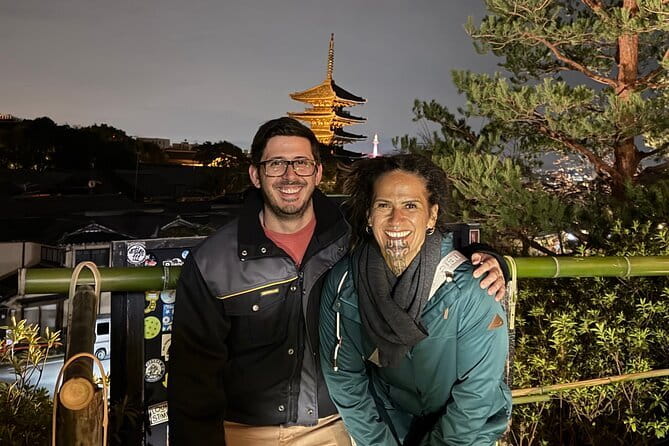
I like the personal guiding, especially the way guides such as Ikki, Yui, Yuki, and Mariko explain shrine customs instead of simply pointing out buildings. I also like the photo service, since guides take pictures throughout the walk and can send a generous batch afterward.
The main thing to consider is the pace. You cover a lot in two and a half hours, use public transportation, and spend most of the time on foot. The route suits people with moderate fitness, but it may feel brisk if you need frequent breaks.
In This Review
- Key Points to Know Before You Book
- Why Kyoto Looks Better After Sunset
- Fushimi Inari and the First Hour Beneath the Torii Gates
- Hanamikoji Street and Gion’s Wooden Lanes
- Yasui-Konpiragu and the Relationship Stone
- Yasaka Pagoda and the Slopes of Higashiyama
- Nene-no-Michi and the Quieter Side of Gion
- Yasaka Shrine and the Return to Kawabatacho
- The Guides Make the Difference
- Photos, Pace, and Physical Demands
- Is $26.43 a Good Value?
- Who Should Book This Kyoto Night Walk?
- Should You Book It?
- FAQ
- How long does the Kyoto Magical Night English Tour last?
- Where does the tour begin?
- Where does the tour end?
- Is this a private tour?
- Is public transportation included?
- Are admission fees included?
- Are food and drinks included?
- Can I cancel for a full refund?
Key Points to Know Before You Book
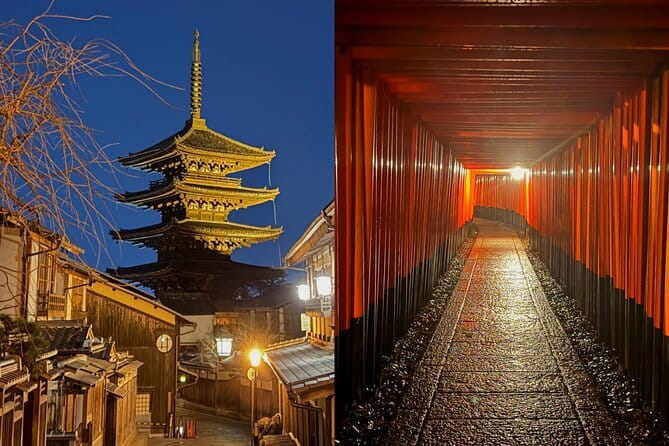
- Fushimi Inari after dark: Walk beneath the famous torii gates with fewer daytime crowds and a cooler, quieter atmosphere.
- Seven connected Higashiyama sights: The route links Gion, Yasui-Konpiragu, Yasaka Pagoda, Ninenzaka, Nene-no-Michi, and Yasaka Shrine.
- Private group format: Only your group participates, so the guide can adjust explanations and conversation to your interests.
- Local guidance beyond sightseeing: Guides help with shrine etiquette, public transportation questions, restaurant ideas, and other Kyoto plans.
- Professional photos included: Your guide takes pictures during the walk and sends them after the tour.
- Good value at $26.43: Admission to the shrines and temples is included, though public transportation costs ¥480 per person and food is extra.
Why Kyoto Looks Better After Sunset
Kyoto can feel crowded during the day, especially around Fushimi Inari and the narrow streets of Gion. An evening visit changes the experience. The torii gates glow against the dark forest, while the old wooden buildings of Gion take on a softer, more reflective character.
This is not a late-night food tour or a nightlife outing. It is a cultural walk through religious sites and preserved streets. You get a broad first look at Kyoto, with a guide explaining the difference between Shinto shrines and Buddhist temples, the meaning of local customs, and the stories connected to the places you see.
The route is also useful early in your Kyoto stay. Several people found that the walk helped them get their bearings and gave them ideas for the rest of their visit. That practical value matters. A good first-evening tour can help you understand how Kyoto fits together before you begin exploring on your own.
The tour begins at the Statue of Izumo-no-Okuni in Kawabatacho, in Kyoto’s Higashiyama Ward. It ends back at the same meeting point. You use public transportation during the experience, so budget ¥480 per person for that fare in addition to the tour price.
More Temple & Shrine Tours in Kyoto
- Kyoto: Fushimi Inari, Kinkakuji, Bamboo Grove 1 Day Bus Tour
★ 4.8 · 4,316 reviews - Kyoto: Tea Ceremony in a Traditional Tea House in Kiyomizu
★ 4.9 · 3,519 reviews - Kyoto: Tea Ceremony Ju-An at Jotokuji Temple
★ 4.9 · 3,207 reviews
Fushimi Inari and the First Hour Beneath the Torii Gates
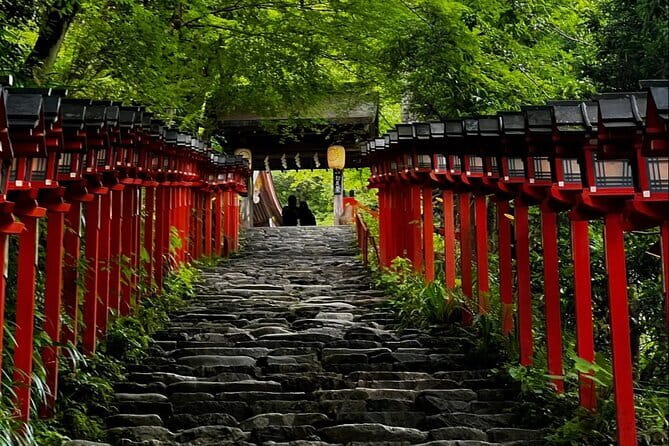
Fushimi Inari-taisha is the evening’s most recognizable stop. The shrine is dedicated to Inari, associated with rice and prosperity, and its thousands of red-orange torii gates create long corridors through the wooded slopes of Mount Inari.
You spend about an hour here. That is enough time to see the main shrine area and walk through part of the torii route, though it is not enough for a full climb around the mountain. This distinction is important. If your dream is to hike all the way to the summit, you need a separate visit and much more time.
The guide adds value here by showing you how to pay your respects properly. You can ask questions about Shinto beliefs, the fox figures associated with Inari, and the reasons people make offerings or wishes at the shrine. One particularly useful detail from the tour experience is the suggestion to carry a few coins if you want to make a wish at one of the shrines.
At night, the gates can feel mysterious and still. Lighting conditions also make this the most challenging place for photography, but guides make an effort to take clear family and couple portraits along the way. Bring a phone or camera if you want your own record, but the included guide photos are a welcome extra.
Hanamikoji Street and Gion’s Wooden Lanes
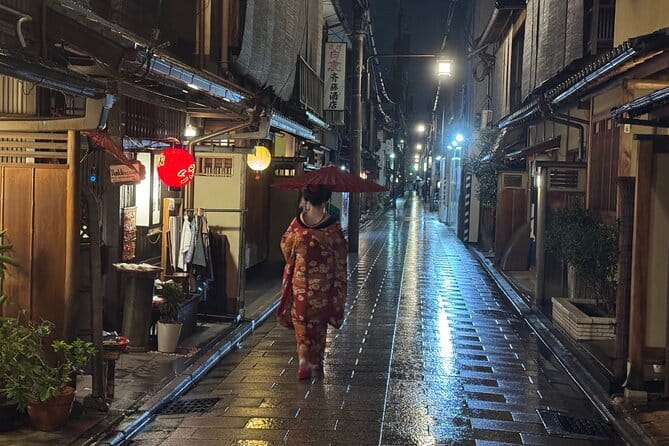
After Fushimi Inari, the tour moves toward Gion and Hanamikoji Street. Hanamikoji is lined with traditional wooden machiya houses and teahouses, and it is one of Kyoto’s best-known places for seeing the visual character of the old city.
The listed time here is about ten minutes, so think of this as a focused introduction rather than a long neighborhood walk. You may have the chance to see geisha or maiko, but this is never something a tour can promise. The right approach is to enjoy the architecture and atmosphere without treating local residents as photo subjects.
Your guide can explain the role of Gion as a geisha district and point out details you could easily miss on your own. The narrow streets, dark wood, tiled roofs, and soft evening light make this part of the walk especially photogenic.
Gion is also a place where good behavior matters. Keep your voice down, do not block lanes, and ask before photographing people. The guide’s presence helps you understand the area as a living neighborhood, not a stage set.
Yasui-Konpiragu and the Relationship Stone
Yasui-Konpiragu is a small shrine with a very specific purpose. People visit to break unwanted relationships or harmful ties and to seek better connections. Its best-known feature is a large stone covered by a narrow opening.
The custom involves writing a wish, passing through the opening, and then passing back. The tour gives you around ten minutes here, enough to hear the story and try the ritual if you want to participate.
This stop adds variety to the evening. Fushimi Inari and Yasaka Shrine are major religious sites, while Yasui-Konpiragu feels more personal and direct. It also gives the guide a natural opening to explain how Japanese religious practice often blends formal ritual, local belief, and everyday hopes.
You do not need to take part. You can simply watch, listen, and decide. That makes this a pleasant stop for people who enjoy cultural customs but prefer not to perform every ritual themselves.
Same city, a completely different kind of day:
- PERFECT KYOTO 1-Day Bus Tour
★ 5.0 · 13,518 reviews - Kyoto Geisha Walking Tour: Gion District & Hidden Gems
★ 4.7 · 3,273 reviews - Kyoto: Gion Magical Night Walking Tour with Geisha Trivia
★ 4.9 · 2,393 reviews - Kyoto: 45-Minute Tea Ceremony Lesson Experience
★ 4.3 · 2,378 reviews
Yasaka Pagoda and the Slopes of Higashiyama
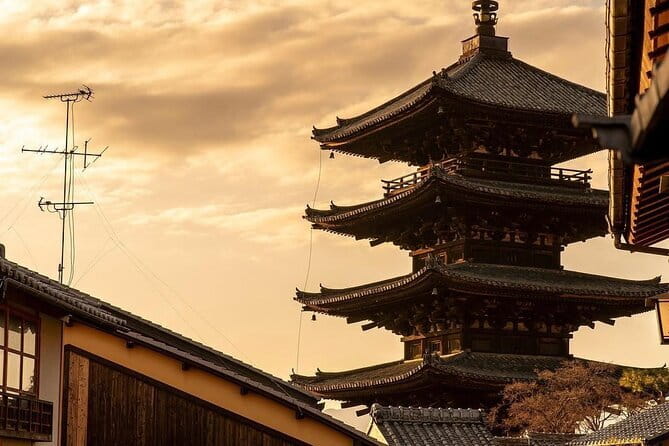
Yasaka Pagoda, also called Hokanji Temple, is one of Kyoto’s most familiar sights. Its tall wooden form rises above the surrounding streets, creating a strong visual marker in the Higashiyama district.
The tour allows about fifteen minutes here. That is enough for photos and an explanation of the pagoda’s place in Kyoto, but it is not a full temple visit. Admission is included for the sites covered by the experience, although the short schedule means you should not expect extended time inside every building.
The route then continues through Sannenzaka and Ninenzaka, two stone-paved streets lined with shops, restaurants, and traditional wooden buildings. These lanes can be crowded during the day. At night, the quieter mood makes it easier to appreciate the old architecture.
There is a practical warning attached to these streets: the stone paving and slopes require care. Wear shoes with good support, especially if your knees or balance are not perfect. One guide adjusted the route and offered extra care for an older participant, but you should still judge the walk by your own comfort.
The shops may be closing by the time you arrive, so do not book this tour mainly for shopping. The value here is the setting, the explanations, and the chance to see the streets without the full daytime crush.
Nene-no-Michi and the Quieter Side of Gion
Nene-no-Michi is a peaceful path named after Nene, the wife of a powerful Japanese shogun. It passes historic temples and traditional streets and offers a calmer stretch after the busier parts of Higashiyama.
About fifteen minutes are set aside for this section. The short visit works because the path is primarily about walking and atmosphere. Your guide may point out lanes and corners that are easy to miss if you stick only to the main roads.
I especially like this part for people who want a sense of old Kyoto without a long lecture. You walk, look, and ask questions as the route unfolds. Guides have also taken groups through quiet alleys with very few people, which can provide some of the evening’s best photographs.
The walk is not designed as a strenuous mountain hike, but the total route still adds up. You move between several districts, climb and descend gently in places, and use public transportation. Comfortable footwear is more important than dressing up for the evening.
Yasaka Shrine and the Return to Kawabatacho
Yasaka Shrine is the final major stop. It is the headquarters of roughly 2,300 related shrines across Japan and is associated with prosperity and protection. Its location at the edge of Gion makes it a natural ending point for a tour through the district.
You spend about fifteen minutes here. The guide can explain how the shrine fits into Kyoto’s religious life and revisit the basic difference between Shinto shrines and Buddhist temples. You also have another chance to practice respectful shrine behavior and take nighttime photos.
From Yasaka Shrine, the activity ends back at the original meeting point. That return is worth noting when planning your evening. You are not dropped at a restaurant, hotel, or different Kyoto neighborhood. If you plan dinner afterward, allow time to get there from the meeting point.
Several guides have gone beyond the official route by offering restaurant suggestions or helping with practical questions. One guide even helped a group get seated at a recommended yakiniku restaurant. That kind of help can be valuable, but restaurant assistance is not a formal inclusion, so treat it as a welcome possibility rather than part of the package.
The Guides Make the Difference

The strongest part of this experience is the guide. The named guides praised most often are Ikki, Yui, Yuki, Mariko, and Joi. You may not be able to request a particular person, but the guiding style is clear: friendly, conversational, and focused on making Kyoto easier to understand.
Ikki receives especially strong praise for his preparation and personal attention. He has used laminated visual charts, answered questions about language and transit, adjusted the route for physical needs, and shared advice for the rest of a Kyoto stay. Yui is noted for smooth navigation and useful recommendations, while Mariko is described as energetic, quick-moving, and skilled at taking nighttime photos.
The private format helps. Only your group participates, so you can ask about the things that interest you instead of listening to a fixed speech meant for strangers. Families may appreciate the flexibility, since one guide made a point of answering children’s questions and keeping four children engaged during a two-and-a-half-hour walk.
Still, private does not mean leisurely. You cover eight stops in roughly 150 minutes, including transit and walking between sights. If you want long periods at each shrine, this may feel rushed. If you want a guided overview with lots of variety, the timing works well.
Photos, Pace, and Physical Demands
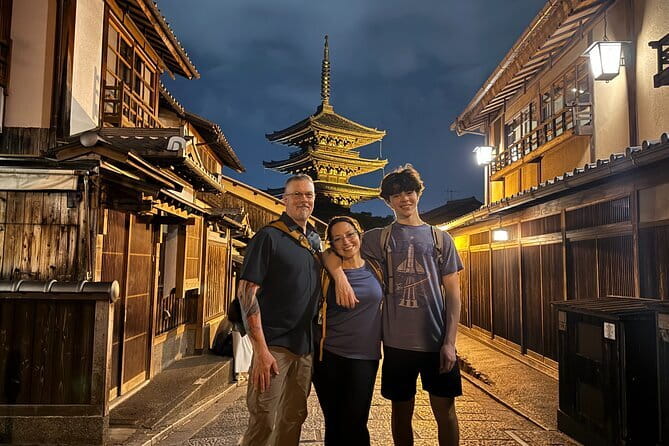
Professional photos are included, and this is more useful than it may sound. Night photography is difficult, especially under torii gates and in dimly lit lanes. Having the guide take pictures means you do not have to rely only on quick phone snapshots or ask strangers to photograph your group.
The quantity can be generous. One group received more than 40 photos and short videos within about an hour after the tour. That is not a guaranteed number, but it shows the care some guides put into this part of the service.
The walking pace varies by guide, and one guide was specifically described as walking fast. Tell your guide at the start if you need a slower pace or regular pauses. The experience calls for moderate physical fitness, and the stone streets of Ninenzaka and Sannenzaka can be tiring.
An 89-year-old participant completed the experience with attentive help, and another group included older family members who needed frequent breaks. These examples suggest that the guide may be flexible, but they do not remove the need for honest self-assessment. The company describes this as a walking experience, not an accessible sightseeing transfer.
Rain does not automatically spoil the evening. One participant found that wet weather added to the atmosphere. Still, bring suitable rain protection and shoes with a firm grip. Food and drinks are not included, so carry water if you need it.
Is $26.43 a Good Value?
At $26.43 per person, the price is modest for a private English-language walk that includes admission fees and professional photos. The included sites do not generally require costly entry tickets, so the bigger value comes from the guide’s time, cultural explanations, navigation, and photography.
You also need to add ¥480 per person for public transportation. Food and drinks cost extra. Even with that added fare, the tour can be a good deal for a first evening in Kyoto, particularly if you want a local introduction without paying for a long private tour.
Group discounts may improve the price for larger parties. Since only your group participates, families and couples get more opportunity to ask questions and adjust the conversation. The price is less compelling if you already know Kyoto well, dislike brisk walking, or want extended time at each shrine.
Free cancellation is available if you cancel at least 24 hours before the start time. Late cancellation and changes within 24 hours are not refunded or accepted. Also, arriving late means you cannot join and will not receive a refund, so plan extra time to reach the meeting point.
Who Should Book This Kyoto Night Walk?
I would choose this tour for a first visit, a first evening, or a family that wants cultural context without spending half a day inside museums. It is also a strong fit if you want to see Fushimi Inari and Gion but would rather avoid tackling the route alone at night.
You will get the most from it if you enjoy asking questions, learning basic shrine etiquette, and walking through historic neighborhoods. Couples and small families should appreciate the private format, while larger groups can benefit from the group discount and shared photos.
I would hesitate if you want a slow, deeply focused visit to Fushimi Inari, a full geisha performance, or a food-centered evening. This tour gives you a quick, well-connected introduction to several Kyoto highlights. It does not provide long temple visits, guaranteed geisha sightings, or included meals.
Should You Book It?
Book it if you want an efficient introduction to Kyoto’s religious customs, Gion’s old streets, and Fushimi Inari’s torii gates, all with a local English-speaking guide. The strongest reasons are the private format, practical advice, flexible conversation, and included photos.
Skip it if your priority is a relaxed pace or a single-site visit. For most first-time visitors who can manage a couple of hours on foot, this is a well-priced way to begin understanding Kyoto after dark.
FAQ
How long does the Kyoto Magical Night English Tour last?
The experience lasts approximately two hours and 30 minutes.
Where does the tour begin?
The meeting point is the Statue of Izumo-no-Okuni in Kawabatacho, Higashiyama Ward, Kyoto.
Where does the tour end?
The activity ends back at the original meeting point.
Is this a private tour?
Yes. Only your group participates in the activity.
Is public transportation included?
No. Public transportation costs ¥480 per person and is not included in the tour price.
Are admission fees included?
Yes. Admission fees for the temples and shrines covered by the activity are included.
Are food and drinks included?
No. Food and drinks are not included.
Can I cancel for a full refund?
Yes, if you cancel at least 24 hours before the experience start time. Cancellations and changes made less than 24 hours in advance are not refunded or accepted.
More Evening Experiences in Kyoto
- Night Walk in Gion: Kyoto’s Geisha District
★ 4.5 · 2,003 reviews - Kyoto Night Foodie Tour in Gion (9+ dishes + 6 Sake tastings)
★ 5.0 · 1,762 reviews - Kyoto Gion Night Walk & Geisha District Guided Tour
★ 5.0 · 786 reviews - Kyoto Ghost Tour: Dark Tales, Urban Legends, Bamboo Forest Night
★ 5.0 · 625 reviews
Just added around Kyoto
- Private Guided Traditional Buddhist Cooking in Japan★ 5.0 · 16 reviews
- Kyoto: Gion Geisha District & Sake-in-Hand Walking Tour★ 5.0 · 37 reviews
- Kyoto: Zen Meditation at a Private Temple with a Monk★ 5.0 · 25 reviews
- Your Private Vacation Photography Session In Kyoto★ 5.0 · 110 reviews
- Traditional Japanese Washi Papermaking- Kyoto morning★ 5.0 · 77 reviews
- Kyoto Wagashi(Japanese sweets) Cooking Class near Fushimiinari★ 5.0 · 60 reviews
- Private Pewter Sake Cup Experience with a Kyoto Artisan★ 5.0 · 31 reviews
- Kyoto Private 6 hour Tour: English Speaking Driver Only, No Guide★ 5.0 · 88 reviews
Temple & Shrine Tours, compared.
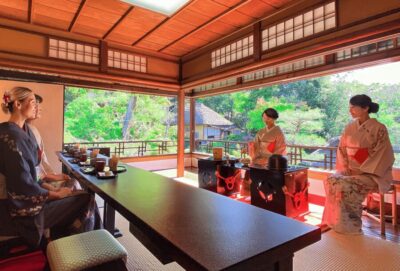
Tea Ceremony in a Traditional Tea House in Kiyomizu
Read our review →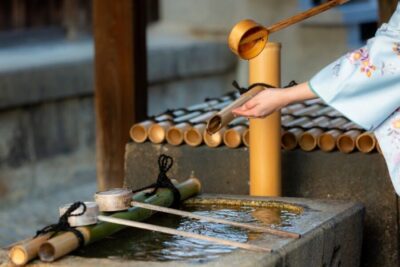
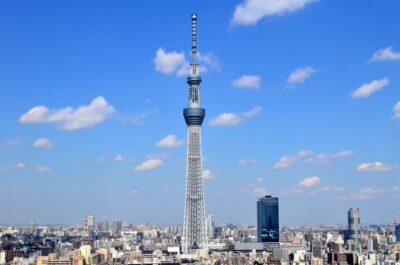
Meiji Shrine, Asakusa, Skytree Bus Tour and Cruise
Read our review →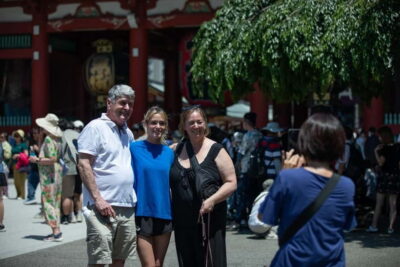
Asakusa Walking Tour with Sensoji Temple Visit
Read our review →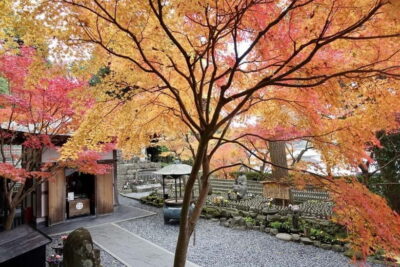
Kamakura & Enoshima Day Trip including Temple Tickets
Read our review →
Kyoto/Osaka: Nara, Fushimi Inari Taisha, Arashiyama Bus Tour
Read our review →
Nikko Toshogu Shrine and Kegon Waterfall Tour
Read our review →
Tokyo Panoramic 1 Day: Meiji Shrine, Asakusa, Odaiba and SKYTREE®
Read our review →Browse the lists this tour appears in