
REVIEW · KIMONO & CULTURE EXPERIENCES
Kyoto: Kendo Samurai Experience Tour
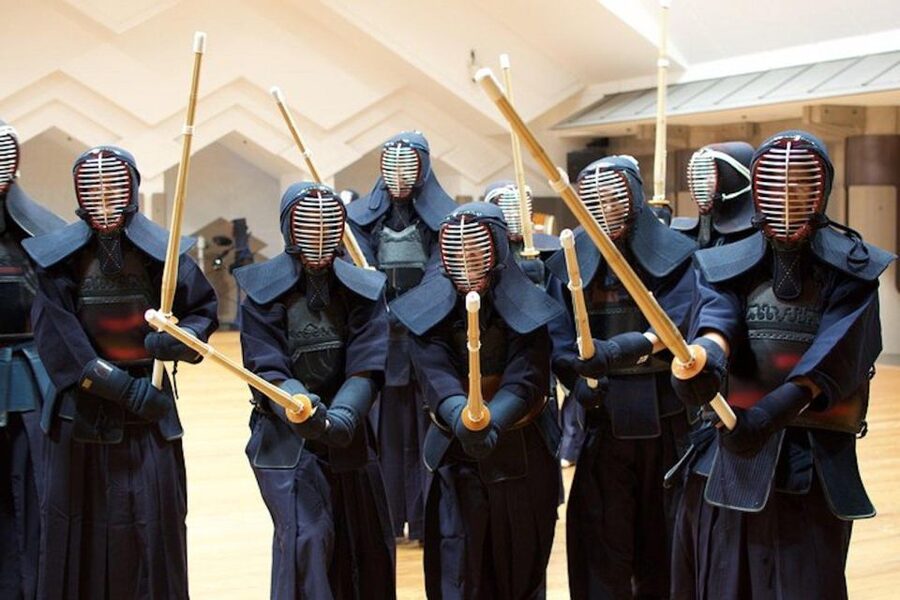
A bamboo sword cracks against armor, feet slide across the dojo floor, and suddenly your Kyoto sightseeing day has become a proper kendo lesson. This is not a staged samurai show. You learn the basics, put on full kendo armor, and face a controlled beginner match under an experienced instructor.
I like the way the class treats kendo as more than sword swinging. Etiquette, posture, movement, and self-control are part of the lesson. I also like the chance for small-group or private-style instruction. Several bookings have had only two people, which gives the teacher plenty of time to correct technique.
The main drawback is location. JR Hanazono Station is about 15 minutes from Kyoto Station on the Sagano Line, but it is not in central Kyoto. You also need to share your height and gender in advance so the dojo can prepare suitable equipment, and this is a physical activity rather than a gentle cultural demonstration.
In This Review
- Key points before you book
- What kendo really means in this Kyoto class
- Meeting Hayashi-sensei at JR Hanazono Station
- The first lesson: etiquette, posture, and movement
- Putting on the armor
- The controlled match at the end
- Why the two-hour format works
- Is $116 a fair price?
- Who will enjoy this most?
- Practical details that can make the day easier
- Should you book the Kyoto Kendo Samurai Experience?
- FAQ
- Where does the kendo experience meet?
- How far is JR Hanazono Station from Kyoto Station?
- How long does the activity last?
- Is the class suitable for complete beginners?
- Do I wear full kendo armor?
- What languages are available?
- What should I provide before booking?
- Is food included?
- Can I cancel for a refund?
Key points before you book
- A real beginner kendo lesson: You practice basic movements and strikes, not just pose for photographs.
- Full armor for the final match: The equipment makes the experience feel much closer to a genuine training session.
- Taught by experienced instructors: Hayashi-sensei is praised for clear demonstrations, patience, and good humor.
- Etiquette matters: You learn how respect, focus, and dojo behavior fit into Japanese swordsmanship.
- A useful two-hour commitment: The session is long enough for instruction, practice, and a supervised bout without taking your whole day.
- Easy rail access, but not central Kyoto: Meet at the north exit of JR Hanazono Station, roughly 15 minutes from Kyoto Station.
What kendo really means in this Kyoto class
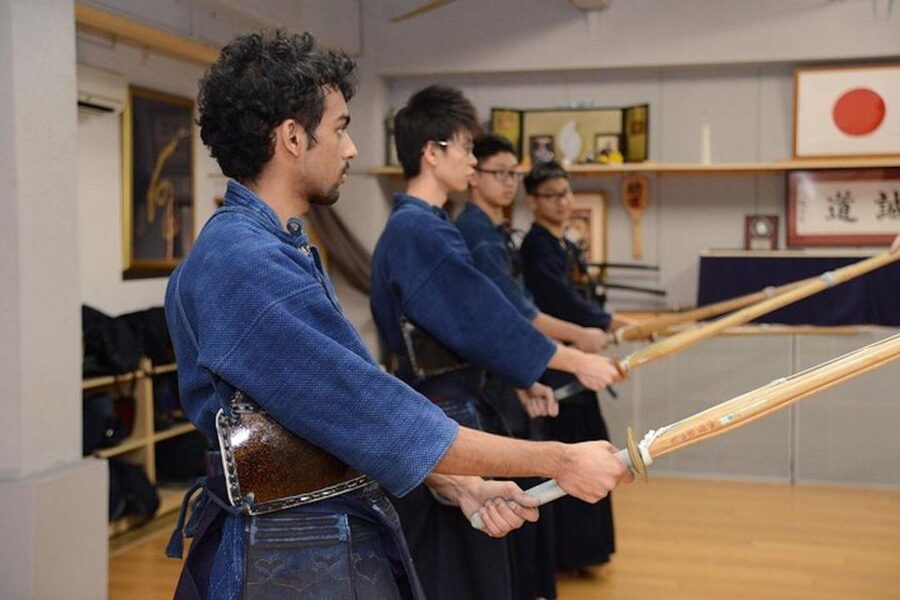
The word samurai helps explain the appeal, but you should know what you are actually booking. Kendo is a modern Japanese martial art based on swordsmanship. You use a bamboo practice sword, known as a shinai, and protective armor rather than a sharp blade.
That distinction matters. This is not a theatrical sword fight and not an open combat session where beginners are left to guess what to do. The class uses real kendo training methods, but the instructor keeps the practice safe and controlled.
The session combines physical work with manners and concentration. You learn how to stand, move, hold the shinai, and perform strikes according to kendo rules. Even the opening stages have a formal quality, which gives the activity more cultural value than simply putting on armor for a photograph.
I like this balance. You get the visual excitement of samurai equipment, but you also see why kendo is tied to discipline and mental control. The bamboo sword is only one part of the lesson.
More Kimono & Culture Experiences in Kyoto
- Kyoto Geisha Walking Tour: Gion District & Hidden Gems
★ 4.7 · 3,273 reviews - Kyoto: Gion Magical Night Walking Tour with Geisha Trivia
★ 4.9 · 2,393 reviews - Kyoto: Gion Geisha District Walking Tour – Stories of Geisha
★ 4.7 · 2,187 reviews
Meeting Hayashi-sensei at JR Hanazono Station
Your meeting point is the north exit of JR Hanazono Station, written locally as JR 花園駅北口. From Kyoto Station, take the JR Sagano Line. The ride takes about 15 minutes, making the dojo reachable without a complicated transfer.
Still, check the route before you book. Hanazono is outside the central sightseeing core, and one person specifically found the distance greater than expected. Build in enough time to find the correct exit and arrive ready for a prompt start.
The instructor team includes Hayashi-sensei, who has been singled out for clear demonstrations, patience, and a friendly sense of humor. The school’s kendo background goes back more than 40 years, and the lead instructor is described as a 7th Dan master. That level of experience matters in a beginner class because good instruction is less about showing off and more about breaking movements into steps you can follow.
English and Japanese are available. Do not expect every explanation to be a long English lecture, though. The class relies heavily on demonstrations, which can work very well for martial arts. One participant found that Hayashi-sensei’s movements were clear enough to follow despite limited Japanese. English guidance or translation support may be available depending on the session.
The first lesson: etiquette, posture, and movement
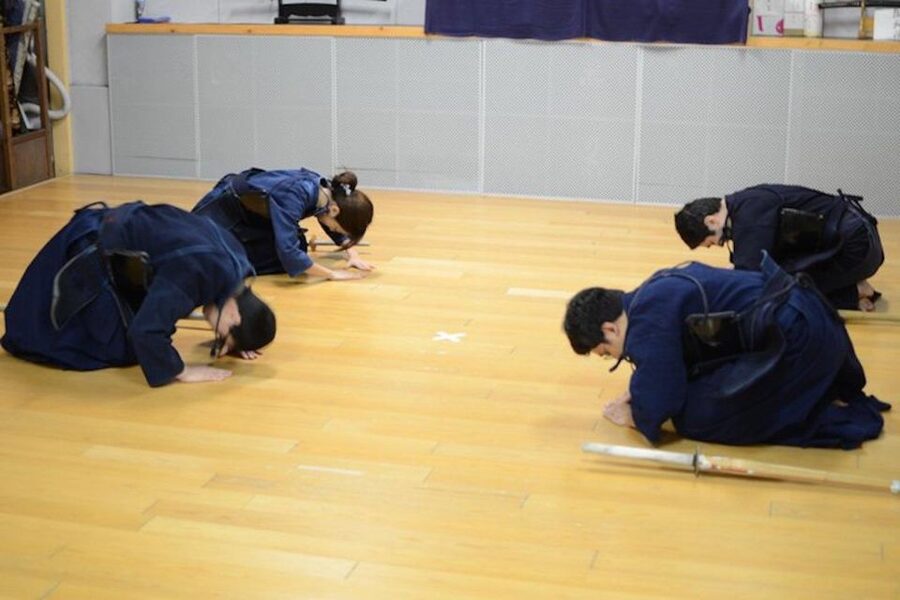
The class begins with the fundamentals. You learn how to behave in the dojo, how to hold the shinai, and how to move with control. This may sound modest compared with the promise of a sword fight, but it is the section that gives the later match meaning.
Kendo has a formal rhythm. You are not simply rushing forward and tapping another person with a stick. Foot placement, distance, timing, and proper form all matter. The instructor guides you through basic exercises before asking you to put the pieces together.
Expect to work. Several people found the training challenging and described it as a real workout. That is useful to know if you are planning kendo between a temple visit and a restaurant reservation. Wear comfortable clothes beneath the rental armor, and avoid assuming that the session will be mostly seated instruction.
The teacher adjusts the pace for beginners. The class is designed so you can learn the basic rules and movements even without previous martial arts experience. You may feel awkward at first, which is normal. Kendo asks you to coordinate your hands, feet, posture, and voice at the same time.
That awkward stage is part of the value. You quickly see that Japanese swordsmanship is not just about force. It rewards attention and repeated practice.
Putting on the armor
The most memorable transition comes when you put on the kendo equipment. The provider supplies rental armor and gear, plus mineral water and a kendo towel to take home.
The armor changes the mood of the class. Until this point, you are learning movements in ordinary clothes. Once the protective equipment is on, the practice feels more serious and more physical. You hear the bamboo sword strike the armor, and you begin to understand how a formal match differs from a casual demonstration.
Tell the provider everyone’s genders and heights before the session. This is not busywork. The dojo uses that information to prepare the right equipment and sizes, and proper fit makes the experience safer and more comfortable.
The supplied details do not promise a specific changing-room arrangement, so pack simply and follow the instructor’s directions on the day. The dojo itself has been described as neat and clean, which is exactly what you want when handling shared protective equipment.
Same city, a completely different kind of day:
- PERFECT KYOTO 1-Day Bus Tour
★ 5.0 · 13,518 reviews - Kyoto: Fushimi Inari, Kinkakuji, Bamboo Grove 1 Day Bus Tour
★ 4.8 · 4,316 reviews - Kyoto: Tea Ceremony in a Traditional Tea House in Kiyomizu
★ 4.9 · 3,519 reviews - Kyoto: Tea Ceremony Ju-An at Jotokuji Temple
★ 4.9 · 3,207 reviews
The controlled match at the end
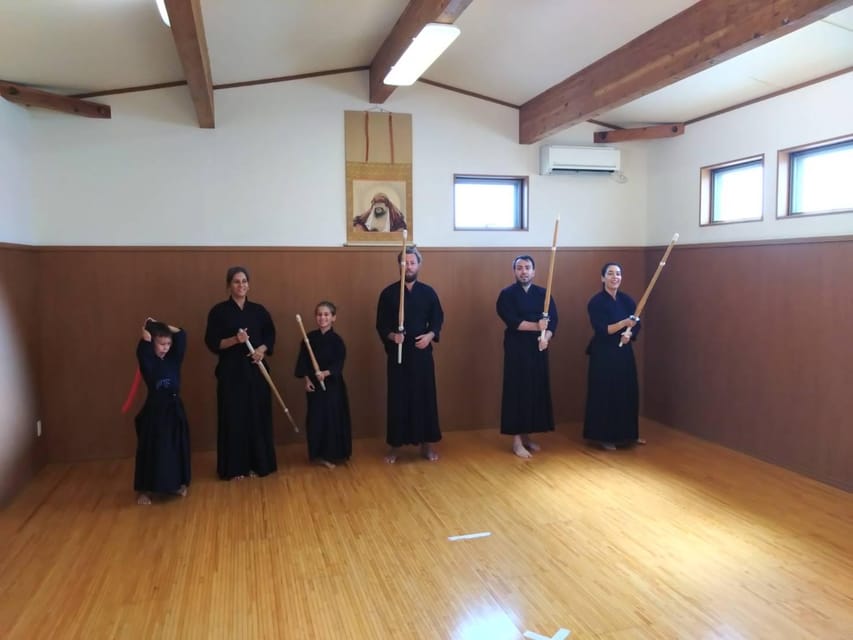
The final bout is the payoff. After learning basic exercises, movement, and rules, you practice in full armor with the bamboo swords. The instructor guides the action as a safe, controlled introduction rather than letting beginners swing without structure.
This part has worked especially well for families. Fathers and sons have faced one another, as have brothers, turning the lesson into a friendly contest. The humor comes naturally when family pride meets unfamiliar footwork, but the class remains focused on proper technique.
Do not confuse this with a full competitive kendo tournament. You are receiving an introduction, not being tested as an experienced practitioner. The match gives you a taste of the pressure, timing, and concentration involved, while the teacher keeps the activity within a beginner-friendly framework.
I see this as one of the strongest reasons to book. Many cultural activities let you watch or copy a short movement. Here, you practice long enough to understand the difference between knowing a strike in theory and performing it while another person is moving toward you.
Why the two-hour format works
Two hours is a sensible length. A shorter session might leave you with only a costume fitting and a few swings. A much longer class could be tiring for first-timers, especially once the armor and repeated exercises begin to take effect.
The time allows the class to build in stages:
- You meet the instructor and learn dojo etiquette.
- You practice stance, movement, and basic techniques.
- You learn the rules and use the equipment.
- You put on full armor.
- You take part in a supervised practice match.
The exact balance can vary with the group. If only two people attend, you may receive close, almost private tuition. If the class is fuller, the instructor’s demonstrations and group exercises will carry more of the lesson.
The activity is offered at different starting times, so check availability against your Kyoto plans. I would not place it immediately before a formal dinner if you dislike arriving warm and tired. It fits well on a day when you can leave room for a physical cultural activity rather than rushing from one landmark to another.
Is $116 a fair price?
At $116 per person, this is not a cheap add-on. You are paying for two hours of instruction, professional guidance, rental armor and equipment, water, and the towel. The important question is not simply the number. It is how much actual instruction you receive.
The price makes more sense if you value genuine participation. You are not paying only for access to a costume or a quick photograph. You learn basic kendo movements, hear about rules and etiquette, and take part in a supervised match.
Small attendance can improve the value considerably. A father and son who were the only two participants received private-style attention, while the instructor made the lesson clear and enjoyable. Of course, you cannot count on having the dojo to yourself, but the possibility is worth noting.
The experience is less attractive if you want a broad samurai history talk, a theatrical performance, or a low-effort cultural activity. The supplied information focuses on practical training, not a long museum-style explanation of historical weapons.
Who will enjoy this most?
I would recommend the class to people who want to do something active in Kyoto and are curious about Japanese martial arts. It suits families, couples, friends, and solo participants who do not mind learning in front of an instructor.
It is particularly good for:
- Parents and children who enjoy friendly competition.
- First-time visitors who want a cultural activity beyond temples and food.
- People interested in discipline, etiquette, and traditional martial arts.
- Visitors who appreciate hands-on instruction more than passive sightseeing.
- Anyone who has wanted to practice kendo in Japan rather than simply watch it.
You do not need prior kendo experience. The teaching is built for beginners, and the instructor breaks the movements into manageable stages.
This is not suitable for pregnant women or people with pre-existing medical conditions. The training includes movement, repeated strikes, and protective equipment, so consider your own fitness before booking. If you are unsure, seek medical advice before taking part.
Practical details that can make the day easier
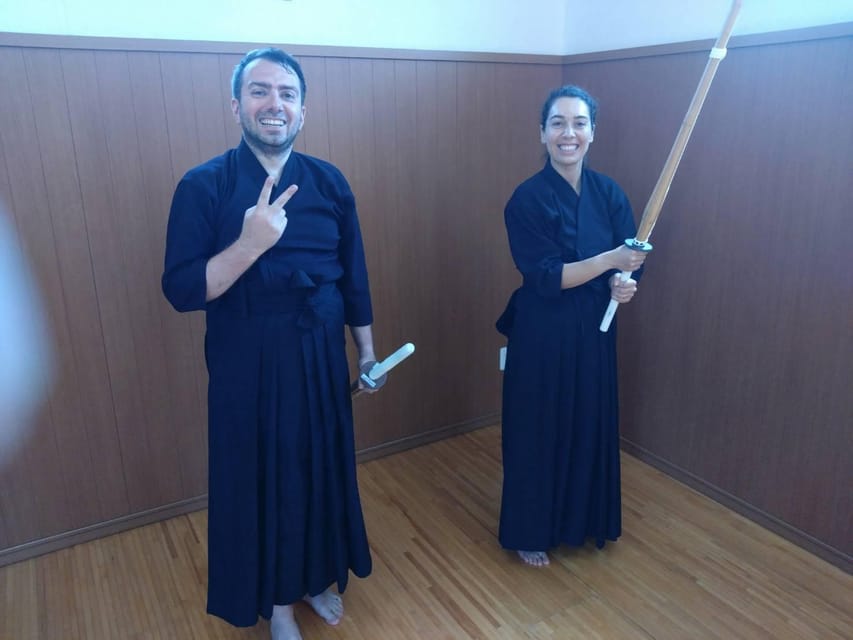
Plan your rail journey to Hanazono before leaving your hotel. The north exit is the stated meeting point, and arriving at the wrong side of the station could create unnecessary stress.
Send the requested height and gender information for every participant when you book. The dojo needs it to prepare the right sizes, and this is especially important for children or anyone outside standard adult sizing.
Bring a willingness to listen and repeat. Kendo rewards careful form, and trying to overpower the shinai will not replace good footwork or timing. You will get more from the class if you treat the etiquette seriously rather than viewing it as a costume activity.
The package includes free mineral water, but food is not included. Eat according to your own needs before the session, while avoiding anything that would make physical activity uncomfortable.
The activity has a 4.7 rating from 33 reviews, with strong praise focused on the instructors, clear demonstrations, clean equipment, patient teaching, and the final match. Those are the parts I would use to judge the experience, rather than expecting a large amount of historical sightseeing.
Should you book the Kyoto Kendo Samurai Experience?
Book it if you want a hands-on lesson with real structure, professional instruction, and a chance to wear full kendo armor before facing a safe beginner match. Hayashi-sensei’s clear demonstrations and patient approach are a strong fit for first-timers, even if your Japanese is limited.
Think twice if you dislike physical activities, need a central Kyoto location, or mainly want a polished samurai show. The train ride to Hanazono is easy, but the class itself asks you to work.
For active families, martial arts fans, and curious visitors who want to understand Japanese etiquette through practice, $116 can be fair value. Reserve early enough to provide everyone’s sizes, and remember that free cancellation is available up to 24 hours before the activity for a full refund. You can also reserve now and pay later, which helps if your Kyoto schedule is still shifting.
FAQ
Where does the kendo experience meet?
Meet at the north exit of JR Hanazono Station, written as JR 花園駅北口.
How far is JR Hanazono Station from Kyoto Station?
The station is about 15 minutes from Kyoto Station by the JR Sagano Line.
How long does the activity last?
The kendo experience lasts two hours.
Is the class suitable for complete beginners?
Yes. The training is designed to guide beginners through basic exercises, movement, rules, and practice.
Do I wear full kendo armor?
Yes. Rental kendo armor and equipment are included, and the class includes practice in full armor.
What languages are available?
The instructors can teach in English and Japanese.
What should I provide before booking?
Provide the gender and height of every participant so the provider can prepare suitable equipment and sizes.
Is food included?
No. Food is not included, though free mineral water is provided.
Can I cancel for a refund?
You can cancel up to 24 hours in advance for a full refund. Reservation with payment later is also available.
Just added around Kyoto
- Taste of Nishiki Market Walking Food Tour with Local guide★ 5.0 · 17 reviews
- Kyoto: Sushi Making Class with Sushi Chef★ 4.8 · 64 reviews
- Kyoto: City Secrets eBike Tour★ 4.9 · 196 reviews
- Sacred Pathways: Discover the Philosopher’s Path of Kyoto★ 4.9 · 20 reviews
- Private Tour to Monkey Park and Arashiyama Highlights★ 5.0 · 22 reviews
- Private Nara Tour from Osaka – Meet at Your Hotel★ 5.0 · 22 reviews
- Private Sake Tasting in Central Kyoto with Sake Sommelier★ 5.0 · 13 reviews
- Kyoto : Private Custom Walking Tour With A Local Guide★ 4.6 · 144 reviews
Kimono & Culture Experiences, compared.
Kyoto Geisha Walking Tour: Gion District & Hidden Gems
Read our review →
Gion Magical Night Walking Tour with Geisha Trivia
Read our review →
Gion Geisha District Walking Tour – Stories of Geisha
Read our review →
Best of Kyoto: Gion, Geisha, Pagodas & Cobblestones
Read our review →
Kyoto Gion Geisha District Walking Tour – The Stories of Geisha
Read our review →
Browse the lists this tour appears in