
REVIEW · WALKING TOURS
Kyoto Highlights & Hidden Gems in Nature (Private Van Eng-Guide)
Kyoto’s best surprise may be how quickly the city gives way to forest, mountains, and old village roads. This six-hour private van tour links the Golden Pavilion, Arashiyama, Fushimi Inari, and several quieter places that are hard to reach by bus.
I like the private van, which saves you from stitching Kyoto together by crowded buses. I also like the mix of famous sights and rural stops, especially the old cedar trees near Nakagawa Hachimangu Shrine and the Kitayama giant platform cedars. The main drawback is time: with many stops packed into six hours, most visits are short.
I like the guide’s flexibility, too. Daiki Fukashi drives, walks with you at the sights, and can adjust the day around your interests and physical needs. The afternoon start is useful for catching Fushimi Inari later in the day, but some temples or roads may have seasonal limits.
In This Review
- Key points at a glance
- Why a private van changes Kyoto
- 1:00 pm start and the value of the route
- Kinkakuji, Kyoto’s Golden Pavilion
- Gioji and the mossy side of Arashiyama
- The Arashiyama Bamboo Forest
- Otagi Nenbutsuji and northern Arashiyama
- The mountain road to Arashiyama-Takao
- Mount Ogura and Hozukyo views
- Nakagawa Hachimangu and the old cedar
- The Kitayama giant platform cedars
- A drive through Kyoto’s geisha street
- Heian Jingu’s enormous torii
- Fushimi Inari after the main circuit
- Guide style, comfort, and flexibility
- Who should book this Kyoto tour?
- Should you book it?
- FAQ
- What is included in the tour price?
- What is not included?
- How long does the tour last?
- What time does the tour start?
- Is the tour private?
- How many people can join?
- Does the tour provide hotel pickup?
- Is the guide fluent in English?
- Are the temple admission tickets included?
- Is the tour suitable for people who avoid stairs?
- Can the route change?
- What is the cancellation policy?
Key points at a glance
- A private Kyoto-wide route: Cover northern Kyoto, Arashiyama, the mountain roads, central landmarks, and Fushimi Inari without changing trains or buses.
- Quiet mountain stops: Visit Nakagawa Hachimangu Shrine and the Kitayama giant cedars, places far beyond the usual first-time Kyoto circuit.
- A practical English-speaking guide: Daiki Fukashi provides history, Buddhist context, local customs, and driving between each stop.
- Strong value for a small group: The advertised price is $230.61 per group up to one, with pickup, fuel, tolls, parking, and drop-off included.
- A late-day Fushimi Inari visit: The famous red gates can feel more manageable later in the day, though timing depends on traffic and earlier stops.
- Short visits by design: You see a lot, but this is a sampler rather than a slow temple-and-garden tour.
Why a private van changes Kyoto
Kyoto looks compact on a map, but its sights are spread across the city. Kinkakuji is in the north, Arashiyama is in the west, Fushimi Inari is in the southeast, and the cedar country roads lie well beyond the central districts. Public transport can handle each area, but connecting all of them in one afternoon is another matter.
The van makes this broad route possible. You can cross the city while Daiki explains Japanese Buddhism, Kyoto’s past, and the places outside the standard sightseeing circuit. You also avoid repeatedly finding the right bus, waiting in line, and hauling yourself through transfers.
The vehicle is described as comfortable and air-conditioned. That matters in Kyoto’s humid summer, during rainy weather, and after a day of temple steps. Pickup and drop-off are offered anywhere in Kyoto City, so the day starts and ends with less fuss.
Still, do not expect a leisurely six hours at three or four major sites. The plan includes many brief stops, often 5 to 15 minutes. You gain variety and reach, but you trade away the long garden visit or extended time at one temple.
More Walking Tours in Kyoto
- Kyoto Geisha Walking Tour: Gion District & Hidden Gems
★ 4.7 · 3,273 reviews - Kyoto: Gion Magical Night Walking Tour with Geisha Trivia
★ 4.9 · 2,393 reviews - Kyoto: Gion Geisha District Walking Tour – Stories of Geisha
★ 4.7 · 2,187 reviews
1:00 pm start and the value of the route
The tour starts at 1:00 pm and lasts about six hours. That places the final part of the experience in the evening, which can work especially well at Fushimi Inari. One important practical point: the route is ambitious. Traffic, weather, seasonal road conditions, and your pace at earlier stops can affect what fits.
The listed admission costs are not included. Budget about ¥1,400 per person for total entry fees, though the exact amount can depend on which sites you enter. The Arashiyama-Takao Parkway, fuel, tolls, and parking are included.
At $230.61 per group up to one, the price needs a careful look. If you are alone, it is a premium way to see Kyoto. If the booking system applies the private-vehicle price to your whole party, the cost becomes more attractive when divided among family or friends. The provided booking information labels the rate as per group up to one, so confirm the final price for your party before paying.
This tour suits you best if you have only one open afternoon, want a private vehicle, or care more about seeing a broad range of Kyoto than spending an hour at one garden. It is less suited to you if you prefer unhurried photography, long meditation, or a strict temple-by-temple schedule.
Kinkakuji, Kyoto’s Golden Pavilion
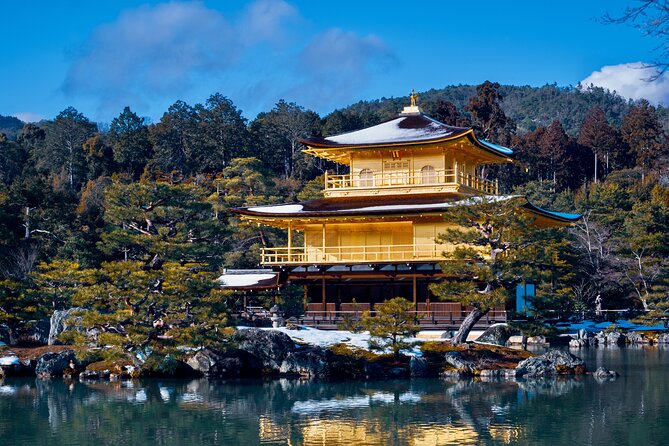
The first major stop is Kinkakuji, better known as the Golden Pavilion. Its gold-covered upper stories reflect in the pond, making it one of Kyoto’s most instantly recognizable views.
You get about 45 minutes here. That is enough to follow the viewing route and take photographs, but it is not a full afternoon. Admission is extra, and the ticket price is not included in the tour cost.
The private vehicle helps with access to northern Kyoto. A public bus from the central area can take about an hour, so reaching Kinkakuji by van saves useful time. Expect this to be one of the busier stops, even on a carefully planned day. If crowds bother you, keep your expectations realistic: the convenience of the stop does not make the pavilion private.
Daiki can add context about the temple’s Buddhist setting and its place in Kyoto’s history. That background helps turn a famous photograph into a more meaningful visit.
Gioji and the mossy side of Arashiyama
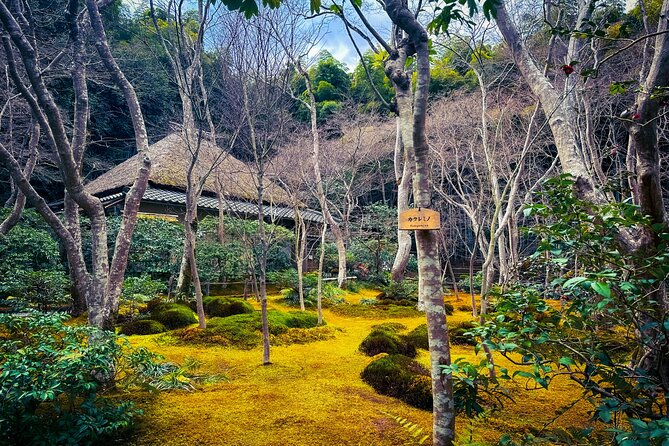
Gioji is small, quiet, and very different from the broad crowds around central Arashiyama. Its moss-covered garden, thatched hut, and surrounding bamboo create a concentrated picture of old Japanese scenery.
The planned visit is about 15 minutes, with admission extra. That is brief, but the temple itself is compact. You can get a clear sense of its mood without needing a long circuit.
This is one of the places where the tour’s title makes sense without needing any sales language. You are still in a well-known district, but the setting feels removed from the main pedestrian flow. Go slowly during the short visit, because the moss and small details are the point.
Same city, a completely different kind of day:
- PERFECT KYOTO 1-Day Bus Tour
★ 5.0 · 13,518 reviews - Kyoto: Fushimi Inari, Kinkakuji, Bamboo Grove 1 Day Bus Tour
★ 4.8 · 4,316 reviews - Kyoto: Tea Ceremony in a Traditional Tea House in Kiyomizu
★ 4.9 · 3,519 reviews - Kyoto: Tea Ceremony Ju-An at Jotokuji Temple
★ 4.9 · 3,207 reviews
The Arashiyama Bamboo Forest
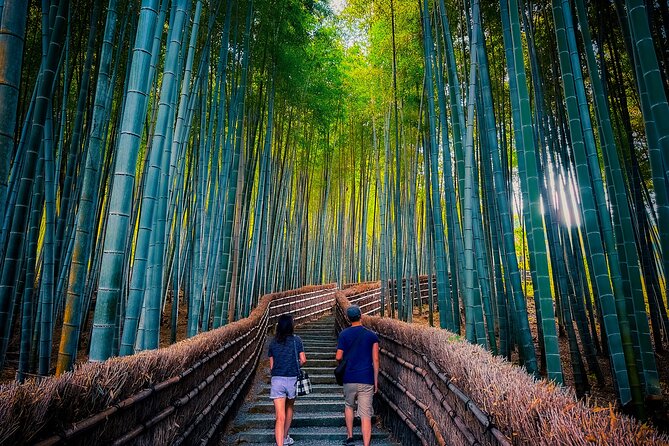
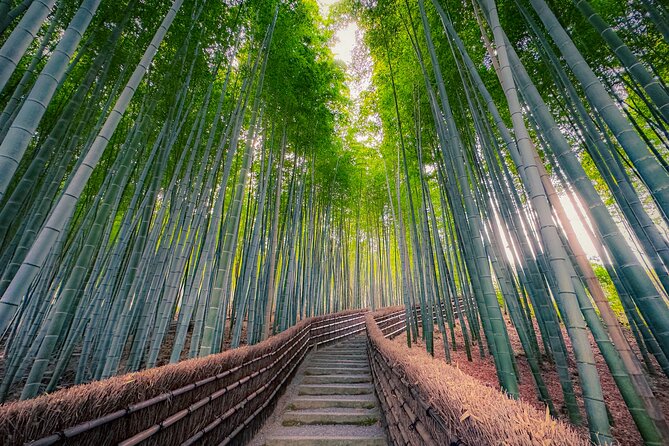
The bamboo path is one of Kyoto’s signature walks. You will hear the stalks creak and sway above the path, and Daiki explains the origin of Japanese bamboo and its connection to Edison’s invention of the electric light.
The scheduled walk is only 15 minutes. That gives you a taste of the famous route, not a long exploration of Arashiyama. The path can be crowded, and one account of the experience indicates that the bamboo walk may be skipped when conditions are especially congested.
That flexibility is useful, but it also means you should not book this tour solely for a quiet bamboo-forest walk. The strength of the day is the larger route, with several other nature stops available if the main path is too crowded.
Otagi Nenbutsuji and northern Arashiyama
Otagi Nenbutsuji is another short visit, about 15 minutes, with admission extra. It sits in the northern part of the Arashiyama historic district, an area known for an older Kyoto feel and fewer people than the central bamboo route.
The temple is especially appealing if you like places with character rather than grand scale. Its setting gives you a more local, tucked-away side of Arashiyama, and the short stop works well as part of a driving route.
You will need to ask about stairs if mobility is a concern. Several temples on the route involve walking or steps, and the guide can help you avoid sections when needed.
The mountain road to Arashiyama-Takao
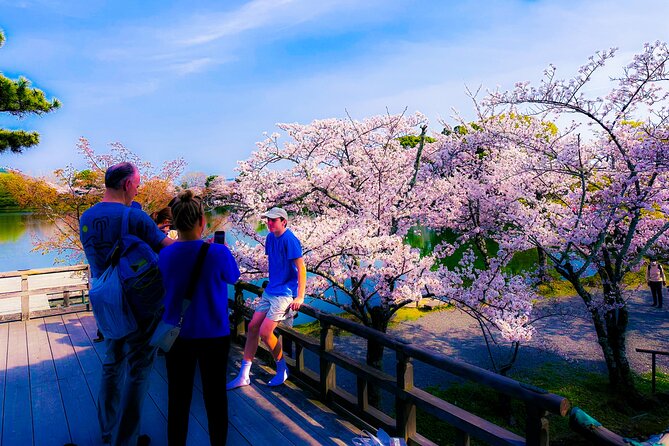
The Arashiyama-Takao Parkway changes the tone of the afternoon. Instead of moving from temple gate to temple gate, you drive through mountain scenery on a toll road included in the tour price.
The road is lined with about 2,000 cherry trees in April and maple trees in November. Seasonal timing matters here. Spring and autumn can bring especially attractive color, while other months offer a greener, quieter drive without the same display.
The planned time is about 45 minutes, including the road and its viewpoints. This is valuable because Kyoto’s mountain areas are awkward to reach without a car. You are not simply passing between city attractions. You are seeing how quickly Kyoto opens into wooded hills and rural communities.
Mount Ogura and Hozukyo views
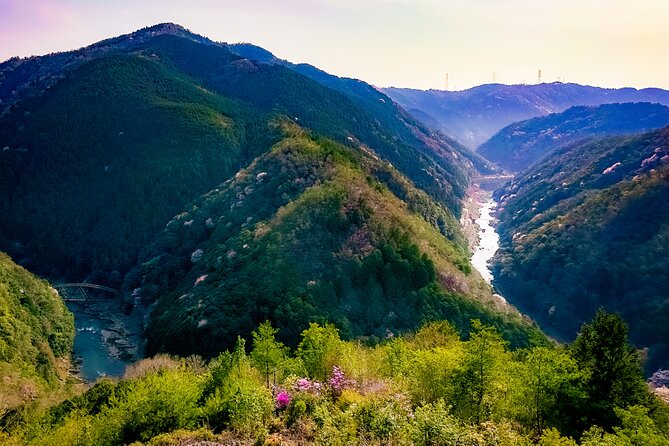
Mount Ogura Observatory takes only about five minutes, but it gives you a broad view over Kyoto from above. A short stop like this works well after the city’s close-up temples. You get perspective on the scale of the urban area and the mountains around it.
Hozukyo Observatory is another five-minute stop. It looks over the Hozu Gorge, known for its traditional fast-water boat rafting. The visit is brief, so treat it as a viewpoint rather than a full gorge excursion.
These stops show why a private van is useful. You can pull into scenic points that would be difficult to combine on foot, then continue before the schedule loses momentum. The tradeoff is obvious: five minutes gives you a photograph and a first impression, not time for a long trail or extended contemplation.
Nakagawa Hachimangu and the old cedar
At Nakagawa Hachimangu Shrine, the focus shifts from scenery to local belief. The shrine guards the area, and its oldest Japanese cedar is treated as a sacred lord by local Shinto worshippers.
You have about five minutes here. The stop is simple, but it offers a useful glimpse of how sacred trees function in Japanese religious life. You can touch the tree and reflect on the spirit associated with it, following local custom as explained by your guide.
This is the type of stop that can be missed when you stick to a standard city route. It does not have the scale of Fushimi Inari or Kinkakuji, but it gives the day a more personal connection to rural Kyoto.
The Kitayama giant platform cedars
The Kitayama Big Daisugi stop takes about ten minutes and requires the van to travel farther into northern Kyoto along a narrow cliff road. The giant platform cedars are an unusual sight, shaped by a local forestry tradition that produces tall, dramatic trunks and elevated crowns.
The road itself is part of the experience. It is not a casual detour from central Kyoto, and this is precisely why a private vehicle matters. A bus-based itinerary would make this kind of short rural stop much harder to manage.
Conditions may vary by season or circumstance, and the route can change. If you have a strong interest in trees, forestry, or rural Japan, tell Daiki early. He can explain what you are seeing and help give this brief visit the attention it deserves.
A drive through Kyoto’s geisha street
The tour also passes through a 600-year-old street associated with geishas. You see it from the vehicle, avoiding another crowded walk and gaining a quick look at one of Kyoto’s historic entertainment districts.
There is an important etiquette rule here. You must ask permission before photographing geishas. Treat the drive as a chance to observe the street and architecture, not as permission to photograph people at close range.
Seeing this area by car is efficient, but it will not replace a walking visit if you want to study shop fronts, lanes, or traditional houses. It is a quick orientation stop within a packed day.
Heian Jingu’s enormous torii
The red torii gate for Heian Jingu rises 24.4 meters, or about 80 feet. The tour allows about five minutes here, enough to appreciate its size and take a photograph.
The gate is not the same as a full visit to the shrine grounds. Think of it as a central Kyoto landmark viewed from the route. It adds a bold architectural contrast after the mountain roads and cedars.
Because the stop is short, you will want your camera ready before leaving the van. The value comes from fitting a major city landmark into a day that also reaches remote northern roads.
Fushimi Inari after the main circuit
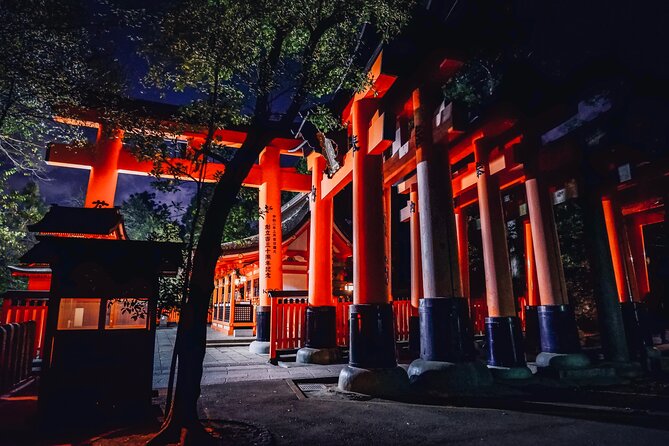
Fushimi Inari Taisha is the final major stop, with about 40 minutes. Its famous Senbon Torii path winds through thousands of red gates, now numbering more than 10,000 dedicated gates.
Forty minutes is enough to enter the shrine area and walk beneath a section of the gates. It is not enough to complete the full mountain route, so do not confuse this visit with a complete hike up Inariyama.
The late timing may work in your favor. The route can be extremely busy earlier in the day, while evening conditions may offer more breathing room. The precise arrival time depends on traffic and how long you spend at each earlier stop, so keep your plans afterward flexible.
Fushimi Inari is free to enter. Like the other stops, it includes some walking and possible stairs. If you want the most time here, say so at the beginning and ask Daiki how the route can be adjusted.
Guide style, comfort, and flexibility
Daiki Fukashi is the guide named in the booking information. He drives, guides in fluent English, and explains Buddhist and Japanese historical points along the way. The personal format means you are not sharing the day with a large group.
The strongest practical feature is the ability to adjust. One account describes the guide changing the day around specific interests and needs, including rainy conditions. Another points to his safe driving, friendly manner, and willingness to walk around the sights with the group.
The van is air-conditioned and described as comfortable. That matters because Kyoto’s temple districts can require repeated walking, while the mountain roads may be narrow and winding. If you need to reduce stairs or avoid difficult sections, ask the guide rather than quietly struggling through the planned route.
The tour allows service animals, is near public transportation, and is suitable for most people. That said, the activity still includes temple walks, stairs, and short roadside viewing stops, so comfort levels vary.
Who should book this Kyoto tour?
Book it if you want to cover a lot of ground in one afternoon and value door-to-door transport. It is a strong fit for families, small groups, first-time visitors with limited time, and anyone who wants both famous Kyoto and rural scenery.
It also suits you if you enjoy asking questions. Daiki’s role is not limited to driving. The Buddhist, Shinto, historical, and local explanations help connect the Golden Pavilion, sacred cedar, torii gates, and mountain temples.
Think twice if you want a slow photographic study of Arashiyama, a full visit to every temple, or a long hike through Fushimi Inari. The schedule favors range over depth, and five-minute viewpoints are useful only if you are happy with a quick look.
Should you book it?
I would choose this tour when convenience and variety matter most. For one private group, a six-hour route that combines Kinkakuji, Arashiyama, northern mountain roads, rural shrines, city landmarks, and Fushimi Inari is hard to reproduce by public transport.
Before booking, confirm the final group price, remember the approximately ¥1,400 per-person entry budget, and accept that the route may shift with weather, crowds, or seasonal conditions. If that sounds fair, this is a practical way to see Kyoto’s famous sights while also reaching places you would probably miss on your own.
FAQ
What is included in the tour price?
The private van, pickup and drop-off anywhere in Kyoto City, an English-speaking guide, fuel, toll fees, and parking fees are included.
What is not included?
Temple and site admission fees are not included. The total entry cost is approximately ¥1,400 per person.
How long does the tour last?
The experience lasts about six hours.
What time does the tour start?
The listed start time is 1:00 pm.
Is the tour private?
Yes. Only your group participates in the activity.
How many people can join?
The price information lists the tour as $230.61 per group up to one. Because the experience uses a private van and booking information also refers to families and groups, confirm the applicable final price for your party.
Does the tour provide hotel pickup?
Pickup and drop-off are offered anywhere in Kyoto City.
Is the guide fluent in English?
Yes. The tour includes a guide with fluent English, and Daiki Fukashi is identified as the guide.
Are the temple admission tickets included?
No. Admission tickets for the temples are paid separately.
Is the tour suitable for people who avoid stairs?
Some temples require walking and climbing stairs. You can ask the guide to avoid those sections if needed.
Can the route change?
Yes. Parts of the route may change because of the season or other circumstances.
What is the cancellation policy?
You can cancel for a full refund up to 24 hours before the experience start time. Changes or cancellations made less than 24 hours before departure are not accepted for a refund.
Just added around Kyoto
- Private Guided Traditional Buddhist Cooking in Japan★ 5.0 · 16 reviews
- Kyoto: Gion Geisha District & Sake-in-Hand Walking Tour★ 5.0 · 37 reviews
- Your Private Vacation Photography Session In Kyoto★ 5.0 · 110 reviews
- Kyoto: Zen Meditation at a Private Temple with a Monk★ 5.0 · 25 reviews
- Traditional Japanese Washi Papermaking- Kyoto morning★ 5.0 · 77 reviews
- Kyoto Wagashi(Japanese sweets) Cooking Class near Fushimiinari★ 5.0 · 60 reviews
- Private Pewter Sake Cup Experience with a Kyoto Artisan★ 5.0 · 31 reviews
- Kyoto Private 6 hour Tour: English Speaking Driver Only, No Guide★ 5.0 · 88 reviews
Walking Tours, compared.

Kyoto Geisha Walking Tour: Gion District & Hidden Gems
Read our review →
Tokyo Tsukiji Fish Market Food and Culture Walking Tour
Read our review →
Gion Magical Night Walking Tour with Geisha Trivia
Read our review →
Imperial Palace and Shogun Historical Walking Tour
Read our review →
Gion Geisha District Walking Tour – Stories of Geisha
Read our review →
Asakusa Walking Tour with Sensoji Temple Visit
Read our review →
Kyoto Gion Geisha District Walking Tour – The Stories of Geisha
Read our review →Browse the lists this tour appears in