
REVIEW · WALKING TOURS
Kyoto: Gion Walking Tour
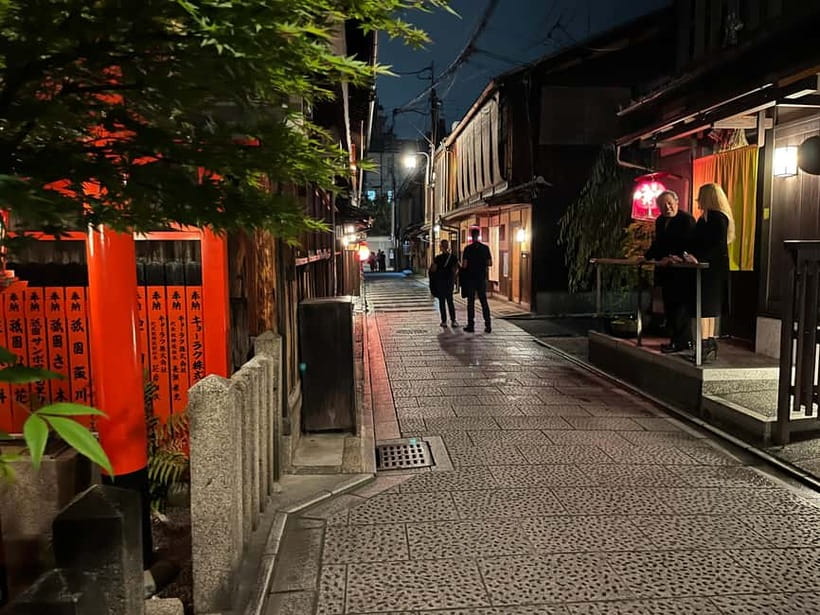
Gion is far more than a pretty street lined with wooden houses and the hope of spotting a Maiko. This two-hour walk connects Pontocho, Gion-Kobu, and Gion-Higashi, showing you the old neighborhoods and overlooked details that are easy to miss on your own.
I like the six-person limit, which keeps the walk conversational and makes it easy to ask about anything from shrine customs to daily life in Japan. I also like the guides’ personal approach. Jose and Saskia are praised for their warmth, humor, clear explanations, and willingness to adapt the walk to your interests.
The main consideration is that Hanamikoji-Dori is not included, and a Maiko or Geiko sighting is never promised. You’ll walk about 3.3 kilometers, often stopping for short explanations, so wear good shoes and expect a history-and-culture tour rather than a simple photo walk.
In This Review
- Key Points
- Why This Gion Walk Feels Different
- From Pontocho Alley to the Kamo River
- Yamato Dori and the Wooden Streets of Gion-Kobu
- Gion-Higashi and the Working Side of Tradition
- Yasaka Shrine and the Origin of Gion
- What You Will Not See
- How the Small Group Affects the Experience
- Price, Pace, and Practical Value
- Which Guide and Language Should You Choose?
- Best Time to Take This Walk in Kyoto
- Who Should Book This Gion Tour?
- Should You Book It?
- FAQ
- How long is the Gion walking tour?
- How far do you walk?
- How many people can join the tour?
- Which areas does the tour visit?
- Is Hanamikoji-Dori included?
- Will I definitely see a Maiko or Geiko?
- Which languages are available?
Key Points
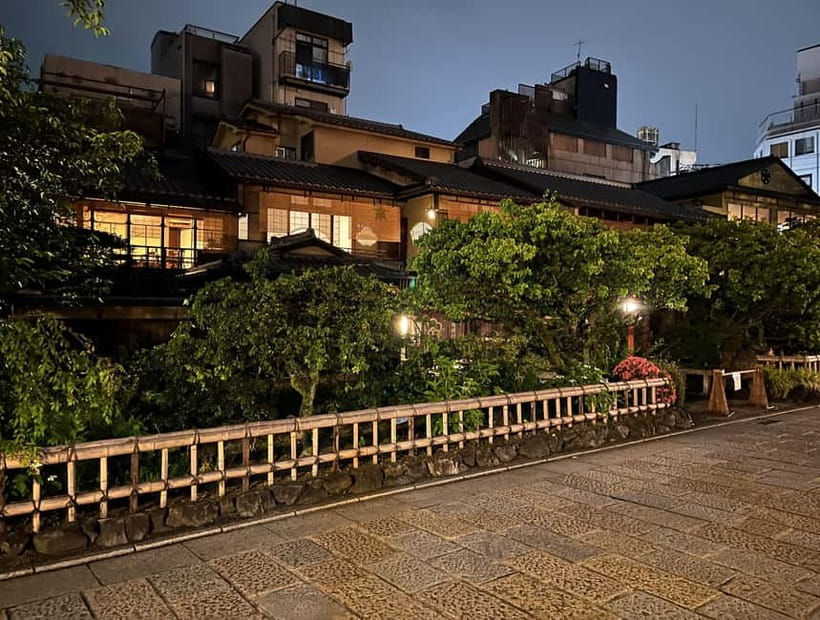
- Three hanamachi in two hours: Visit Pontocho, Gion-Kobu, and Gion-Higashi, three of Kyoto’s five traditional entertainment districts.
- Small group format: No more than six participants makes this feel close to a private walk when numbers are low.
- More than geisha spotting: Learn about Maiko and Geiko routines, traditional houses, Kyoto’s past, and ordinary life in modern Japan.
- Useful visual aids: Guides may use an iPad with old photographs, maps, and other images to show how Kyoto has changed.
- A manageable route: The 3.3-kilometer walk has a sensible pace and frequent stops, but it still involves steady walking.
- Seasonal adjustment: During cherry blossom season, usually late March to early April, the route changes slightly to include attractive blossom areas.
Why This Gion Walk Feels Different
Many visitors come to Gion expecting one famous lane and a glimpse of a Geisha. That can leave you with attractive photographs but little sense of how the district works. This walk takes a broader view, moving through three hanamachi, the traditional entertainment neighborhoods associated with Maiko and Geiko.
The guides explain the difference between the districts, the role of the streets, and the daily routines connected with the traditional arts. You are not simply pointed toward an old building. You are given a reason to notice its shape, location, or connection to Kyoto’s past.
That approach is the tour’s strongest feature. Guides such as Jose and Saskia are especially good at turning questions into conversation. You can ask about Japanese history, local customs, food, shrines, architecture, or everyday life in Japan. Several guides have lived in Japan for years, and their personal experience adds a useful modern perspective.
The group limit matters here. With six people or fewer, you can hear the guide in busy areas, stay together without repeated pauses, and ask questions without holding up a large crowd. If only two or three people book, the experience can feel almost like a private walk.
More Walking Tours in Kyoto
- Kyoto Geisha Walking Tour: Gion District & Hidden Gems
★ 4.7 · 3,273 reviews - Kyoto: Gion Magical Night Walking Tour with Geisha Trivia
★ 4.9 · 2,393 reviews - Kyoto: Gion Geisha District Walking Tour – Stories of Geisha
★ 4.7 · 2,187 reviews
From Pontocho Alley to the Kamo River
The walk begins near the Disney Store at Kyoto Shijo-Kawaramachi. Your guide waits seated outside, holding an iPad marked with the Get Your Guide image and the tour time. Kyoto has only one Disney Store, but still allow a few minutes to find the exact meeting spot in the busy downtown area.
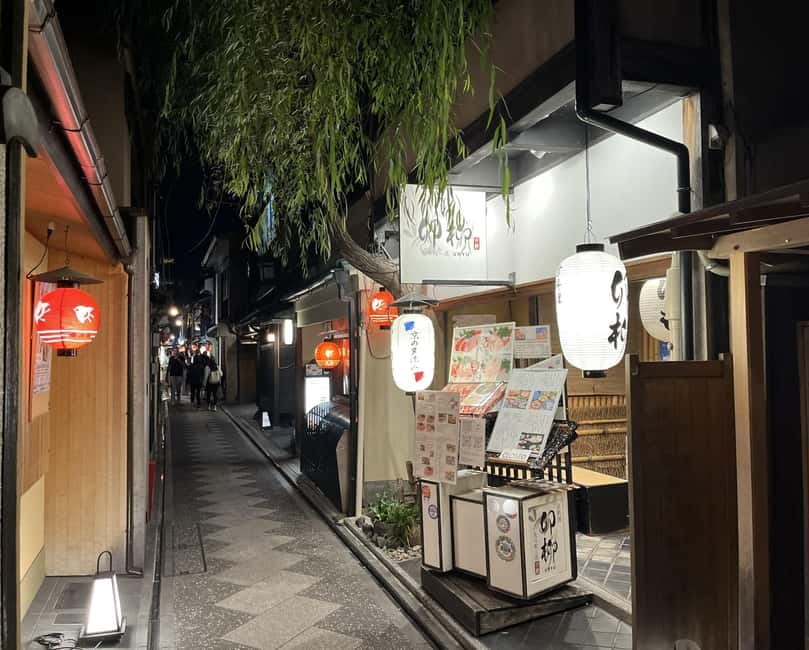
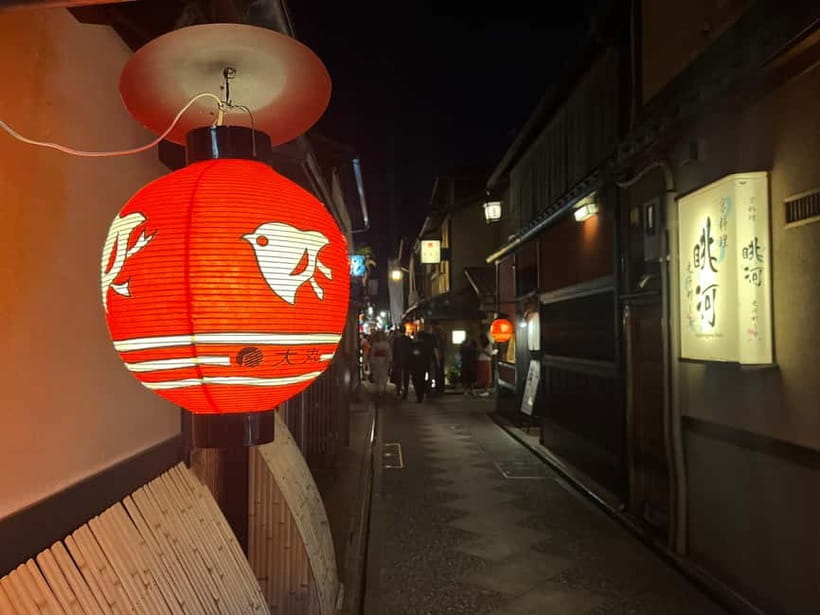
From there, the route heads toward Pontocho Alley, one of Kyoto’s best-known traditional entertainment areas. The narrow passage is famous for its atmosphere, but the tour gives you more than a quick stroll through it. You learn how Pontocho fits into Kyoto’s network of hanamachi and how the district relates to the life and work of Maiko and Geiko.
The route continues to Pontocho Kaburenjo, an important stop for understanding the cultural side of the neighborhood. The explanations here help connect the buildings and streets with performances, training, and traditional activities. You may find the discussion more useful than simply walking through the alley at night and wondering what happens behind the closed doors.
The Kamo River follows, with stops near the Yagi-san and Kita-san statues and Sanjo Ohashi Bridge. These points give the walk a change of pace. Instead of staying among narrow lanes, you get open views and a clearer sense of how central Kyoto’s river crossings are to the city’s layout.
The bridge also helps place the old districts within modern Kyoto. Shops, restaurants, and busy downtown streets are close by, yet the traditional neighborhoods begin only a short walk away. That contrast is one of the more useful lessons of the tour: old Kyoto is not a museum set apart from daily life. It sits directly inside the working city.
Yamato Dori and the Wooden Streets of Gion-Kobu
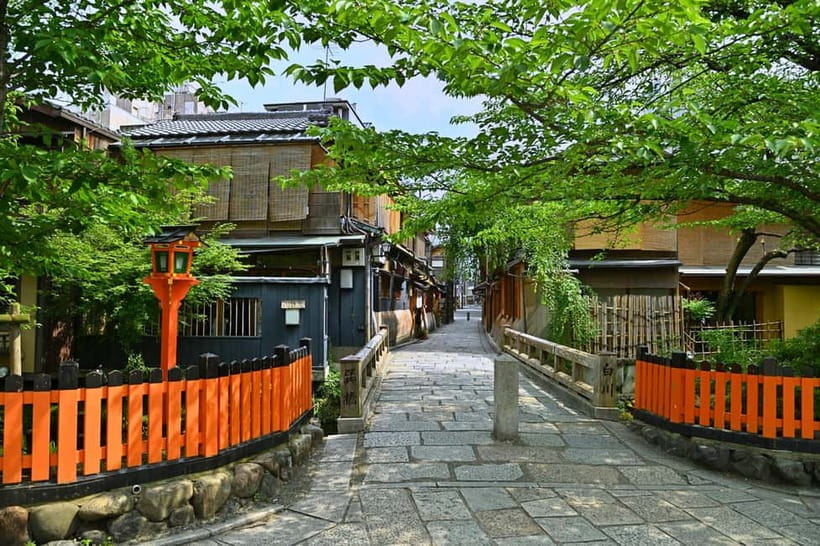
After Sanjo Ohashi, the route continues along Yamato Dori toward Gion-Kobu. This section brings you into the streets most people picture when they think of Gion, with wooden machiya houses, quiet lanes, and carefully maintained facades.
The tour visits Gion-Shinbashi Dori and Gion Shirakawa, both in the Gion-Kobu area. The preserved streets are attractive, but the guide’s commentary gives them purpose. You learn what makes a machiya different, how the neighborhood developed, and how the hanamachi system shaped the area.
This is where a guide can make the largest difference. On your own, you might notice a lattice, doorway, or narrow frontage without knowing why it matters. Jose and Saskia have been praised for pointing out small features, showing older photographs, and explaining details that would otherwise pass unnoticed.
The stop at Tatsumi Jinja adds another layer. It is a small shrine within the traditional district, and the walk shows how religious sites and entertainment neighborhoods sit side by side. The nearby Tatsumi Bridge offers another recognizable Gion view, but the value lies in learning how these locations fit into the old street plan.
The pace is intentionally broken into frequent short talks. That works well for a small group because you are not listening to one long lecture while walking. You stop, look, ask questions, and then continue. If you prefer a fast walk with little commentary, this format may feel slow. If you want context, it is a good rhythm.
Gion-Higashi and the Working Side of Tradition
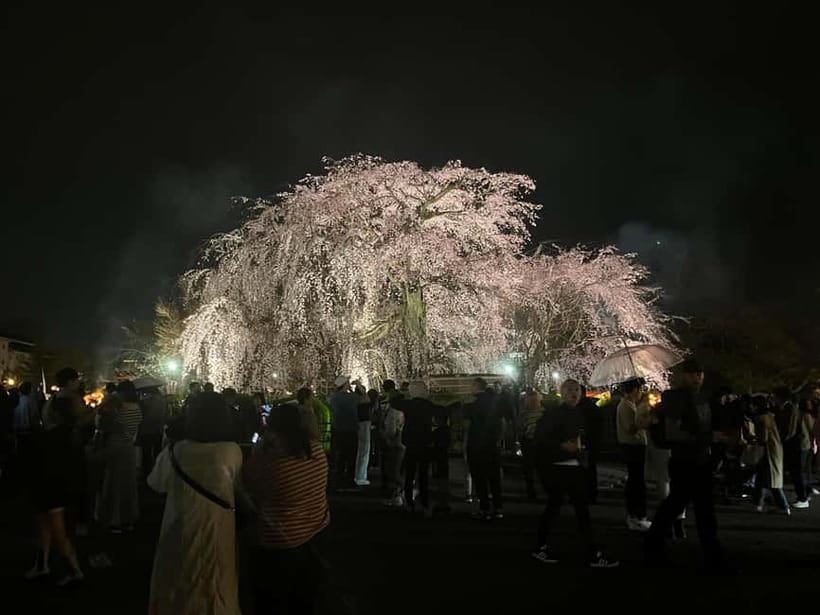
The route then reaches Gion-Higashi, another of Kyoto’s five hanamachi. Seeing more than one district is important because it prevents Gion from becoming a single postcard image. Each area has its own streets and character, and moving between them gives you a broader picture of Kyoto’s traditional entertainment quarters.
The guide explains Maiko and Geiko life, including their practices, activities, and routines. The wording matters here. A Maiko is not simply a young Geisha in a costume for photographs, and the tour aims to give you a fuller view of the training and professional life behind the appearance.
You also learn how popular ideas about Geisha compare with life in Kyoto today. The guides are foreigners who have lived in Japan for years, according to the information provided, and several participants particularly valued their ability to explain Japanese customs in fluent English. Dutch, Spanish, and French tours are also available.
That language choice can be a real advantage. A guide who explains a complicated subject clearly is more useful than one who simply knows the route. Dutch speakers can book with a native Dutch-speaking guide such as Saskia, while English, Spanish, and French are listed as available languages.
Same city, a completely different kind of day:
- PERFECT KYOTO 1-Day Bus Tour
★ 5.0 · 13,518 reviews - Kyoto: Fushimi Inari, Kinkakuji, Bamboo Grove 1 Day Bus Tour
★ 4.8 · 4,316 reviews - Kyoto: Tea Ceremony in a Traditional Tea House in Kiyomizu
★ 4.9 · 3,519 reviews - Kyoto: Tea Ceremony Ju-An at Jotokuji Temple
★ 4.9 · 3,207 reviews
Yasaka Shrine and the Origin of Gion
The final major stop is Yasaka Shrine, formerly called Gion Shrine. The district takes its name from the shrine, whose connection with Gion reaches back more than 1,100 years.
This stop shifts the focus from the hanamachi to religion and public tradition. The guide may explain the Gion Festival, one of Japan’s three most famous and important festivals, if time allows. Since the tour lasts only two hours, the amount of detail here depends on the pace, questions, and exact timing.
Yasaka Shrine can be especially appealing in the evening. The grounds take on a different mood after dark, and the shrine gives you a chance to learn about prayer and local customs. The walk may also include explanations of the shrine’s beauty and love-related worship areas, details that can help you approach the site with more understanding.
Do not expect a full shrine tour with every feature explained. This is a district walk, not a dedicated Yasaka Shrine visit. Still, ending here creates a satisfying link between the name Gion, the festival, and the neighborhood you have just crossed.
What You Will Not See
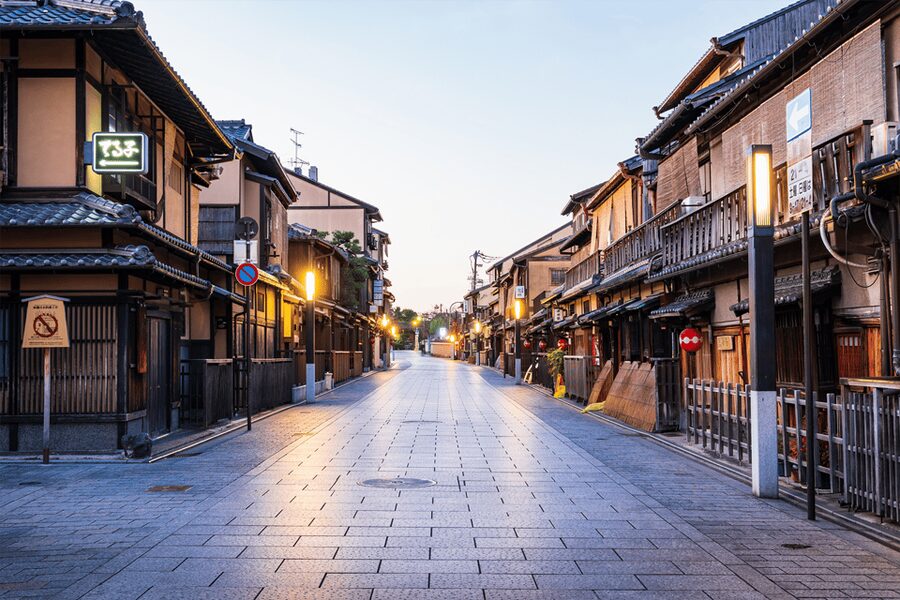
The route does not include Hanamikoji-Dori. That is worth knowing before you book, since many first-time visitors assume any Gion tour will include the street most often shown in photographs.
You may still see traditional lanes, preserved houses, bridges, shrines, and several hanamachi. The route is designed to show parts of Gion that can be overlooked, rather than simply follow the most famous photo stop. If Hanamikoji-Dori is your main goal, plan a separate visit.
A Maiko or Geiko sighting cannot be guaranteed. Even when you see one, you should treat it as a chance encounter, not the purpose of the outing. The tour’s value is the explanation of the culture and neighborhood, not a staged appearance.
This distinction makes the walk a better fit for someone curious about Kyoto than for someone focused mainly on photography. You may be lucky, as some participants have been, but the tour does not promise it.
How the Small Group Affects the Experience
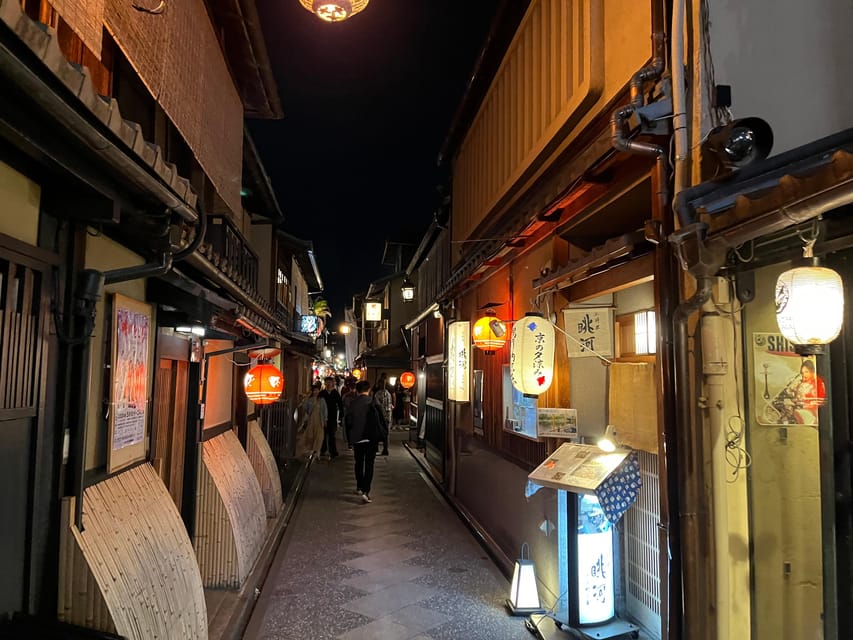
The maximum group size is six. That is unusually helpful in narrow lanes, where a large party can block the pavement or leave people straining to hear.
You can ask many questions without waiting for a formal question period. The guides encourage this, and the experience seems designed around an open conversation. If you are curious about something you notice, ask at once. The tour is strongest when you treat it as a moving discussion rather than a fixed speech.
A small group also lets the guide adjust the emphasis. If you already know a fair amount about Kyoto, you can ask for more detail. If you are new to Japan, you can pause over basic customs and vocabulary. Jose has been especially praised for using maps, photographs, and images on an iPad to show how the city has changed.
The group size does not guarantee a private tour. It simply limits the booking to six participants. Still, a small booking can give you that feeling, with more time for personal questions and recommendations.
Price, Pace, and Practical Value
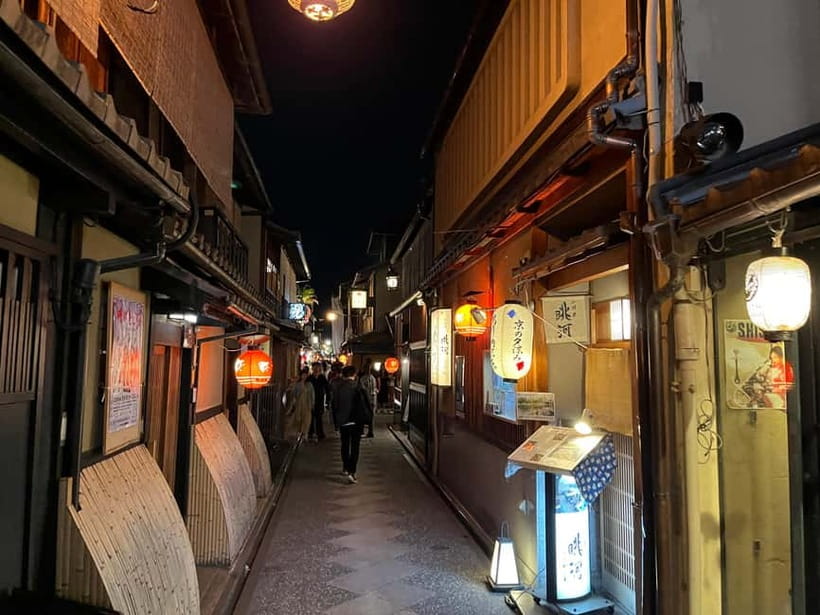
At $35 per person, this is a moderate-priced two-hour walking tour. You receive no food, drinks, transport, or other amenities, so the value rests entirely on the guide and the information.
I think the price makes sense if you want a clear introduction to Gion early in your Kyoto stay. In two hours, you cover about 3.3 kilometers and three hanamachi, learn about the district’s past and present, and get a chance to ask broader questions about Japan. That can save you from wandering through the area without understanding what you are seeing.
The price is less compelling if you only want a short photo walk or if you already have a strong grasp of Kyoto’s history and Geisha culture. You will spend much of the time listening and stopping, not simply sightseeing.
The route is manageable, but it is still a walk. Bring water, wear comfortable shoes, and consider a hat, sunscreen, and an umbrella. Kyoto’s weather can make an otherwise easy route feel harder, and no amenities are provided.
Morning and midday departures are available depending on the date. The 9:45 and 12:30 departures may include a free visit to the Gion Gallery if you want to extend the tour. Ask about this option when booking, since it is an extension rather than a standard part of every departure.
During cherry blossom season, usually late March to early April, the route changes slightly to include blossom views around Gion. That may improve the scenery, but seasonal crowds and weather can affect the pace.
Which Guide and Language Should You Choose?
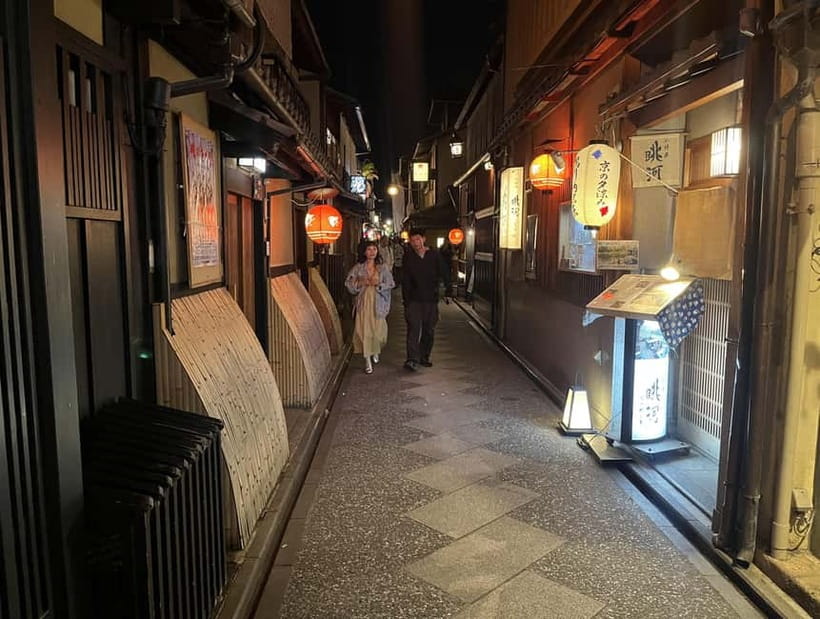
Jose and Saskia receive especially strong praise for their energy, humor, preparation, and ability to answer questions. Their style is personal rather than formal. You may hear stories about life in Japan alongside the historical explanation, which helps connect old Kyoto with the place you are visiting now.
Saskia is a native Dutch speaker, making her a useful choice for Dutch-speaking visitors who want a tour in their own language. English, Spanish, French, and Dutch are listed as tour languages, though you should check the available departure before reserving.
Guide quality can vary slightly because more than one guide may lead the walk. The consistent strengths to look for are clear communication, enthusiasm, and the ability to adapt the discussion. The strongest experiences come when you ask questions and explain what interests you.
Families can also fit well. The walk is only two hours, and the conversational structure can work better for older children and teenagers than a long lecture. Still, young children who dislike steady walking or frequent stops may not find the format ideal.
Best Time to Take This Walk in Kyoto
I would take this tour near the start of a Kyoto visit. It gives you a working map of central Kyoto and teaches you how to read the streets, houses, shrines, and entertainment districts. Afterward, you may notice details you would otherwise walk past.
A later booking can work too, especially if you want to make sense of what you have already seen. Evening visits to Yasaka Shrine can be attractive, while cherry blossom departures offer a route adjusted for seasonal scenery.
The exact start time matters less than your energy and weather plan. Midday heat can make a 3.3-kilometer walk tiring, while an evening outing may offer cooler air. Bring water and check the forecast before setting out.
Cancellation is flexible: you can cancel up to 24 hours ahead for a full refund. You can also reserve and pay later, which is useful when your Kyoto plans are still shifting.
Who Should Book This Gion Tour?
You should book if you want:
- A small, conversational walk rather than a large group lecture
- A clear introduction to Maiko and Geiko life
- More than one Gion area, including Pontocho and Gion-Higashi
- Historical context for streets, bridges, shrines, and machiya houses
- Time to ask detailed questions about Japan
- A guide who can explain in English, Spanish, French, or Dutch
- A manageable first look at Gion before exploring it independently
You may want something else if your priority is Hanamikoji-Dori, guaranteed Geisha sightings, food tasting, or a visit built around photography. Those are not the focus here.
Should You Book It?
Yes, if you want to understand Gion instead of simply photograph it. The small group, frequent stops, visual aids, and personal stories give the walk more substance than a basic neighborhood stroll.
The strongest reason to book is the guide-led interpretation. Jose, Saskia, and the other guides aim to answer your particular questions, explain the details in front of you, and connect Kyoto’s past with present-day life. At $35, that is good value for a first visit.
Just set the right expectations. You will not visit Hanamikoji-Dori, receive amenities, or be promised a Maiko or Geiko sighting. Book this for the streets, stories, shrines, and cultural context, and it should give you a much clearer view of Gion.
FAQ
How long is the Gion walking tour?
The tour lasts two hours.
How far do you walk?
The route covers about 3.3 kilometers, or two miles.
How many people can join the tour?
The small group is limited to six participants.
Which areas does the tour visit?
The route includes Pontocho, Gion-Kobu, and Gion-Higashi, three of Kyoto’s five hanamachi.
Is Hanamikoji-Dori included?
No. Hanamikoji-Dori is not included in the route.
Will I definitely see a Maiko or Geiko?
No. A Maiko or Geiko sighting cannot be guaranteed.
Which languages are available?
Tours are available in English, Spanish, French, and Dutch.
Just added around Kyoto
- Taste of Nishiki Market Walking Food Tour with Local guide★ 5.0 · 17 reviews
- Kyoto: Sushi Making Class with Sushi Chef★ 4.8 · 64 reviews
- Kyoto: City Secrets eBike Tour★ 4.9 · 196 reviews
- Sacred Pathways: Discover the Philosopher’s Path of Kyoto★ 4.9 · 20 reviews
- Private Tour to Monkey Park and Arashiyama Highlights★ 5.0 · 22 reviews
- Private Nara Tour from Osaka – Meet at Your Hotel★ 5.0 · 22 reviews
- Private Sake Tasting in Central Kyoto with Sake Sommelier★ 5.0 · 13 reviews
- Kyoto : Private Custom Walking Tour With A Local Guide★ 4.6 · 144 reviews
Walking Tours, compared.
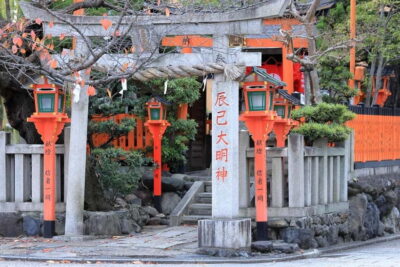
Kyoto Geisha Walking Tour: Gion District & Hidden Gems
Read our review →
Tokyo Tsukiji Fish Market Food and Culture Walking Tour
Read our review →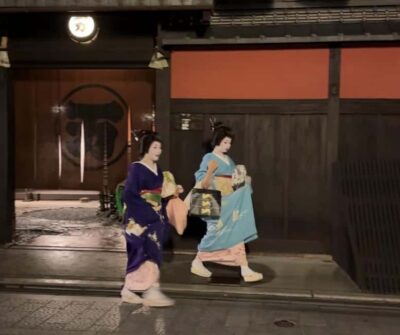
Gion Magical Night Walking Tour with Geisha Trivia
Read our review →
Imperial Palace and Shogun Historical Walking Tour
Read our review →
Gion Geisha District Walking Tour – Stories of Geisha
Read our review →
Asakusa Walking Tour with Sensoji Temple Visit
Read our review →
Kyoto Gion Geisha District Walking Tour – The Stories of Geisha
Read our review →Browse the lists this tour appears in