
REVIEW · KIMONO & CULTURE EXPERIENCES
Kyoto: Gion & Geisha District Night Time Walking Tour
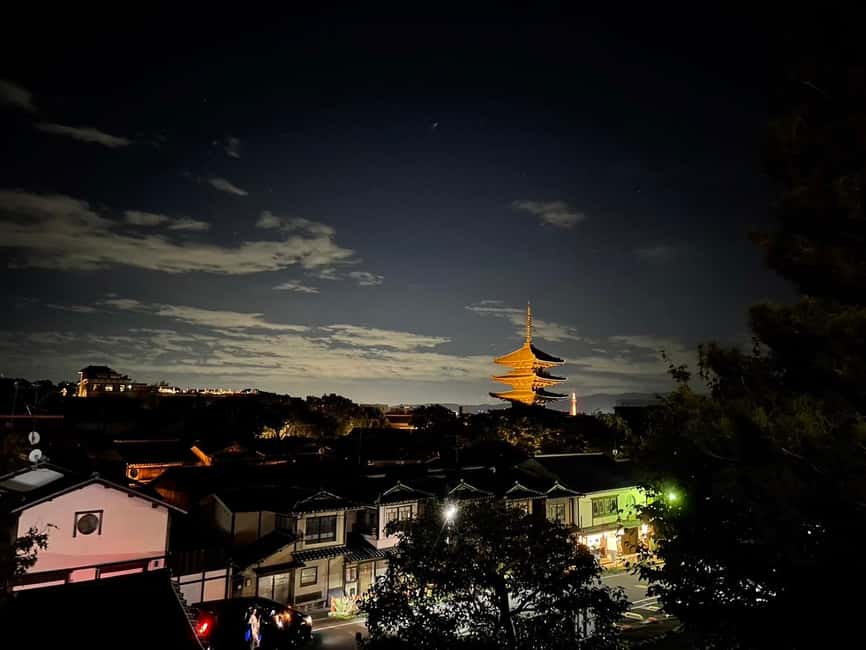
Gion after dark is Kyoto at its most atmospheric: lantern-lit lanes, old wooden teahouses, and shrine grounds that feel far removed from the city’s modern streets. This two-hour walk connects the district’s famous sights with the stories that make them matter, including the training and artistry of geiko and maiko.
I like the route’s excellent mix of shrines, gardens, slopes, and teahouse streets, and I like that the guides, including Majo, Pedro, Yuvia, and Wilber, are praised for clear explanations and friendly help with photos and food suggestions. The main drawback is simple: you walk for two hours on historic lanes and slopes, and the tour is not suitable for wheelchair users.
In This Review
- Key points at a glance
- Why Gion works especially well at night
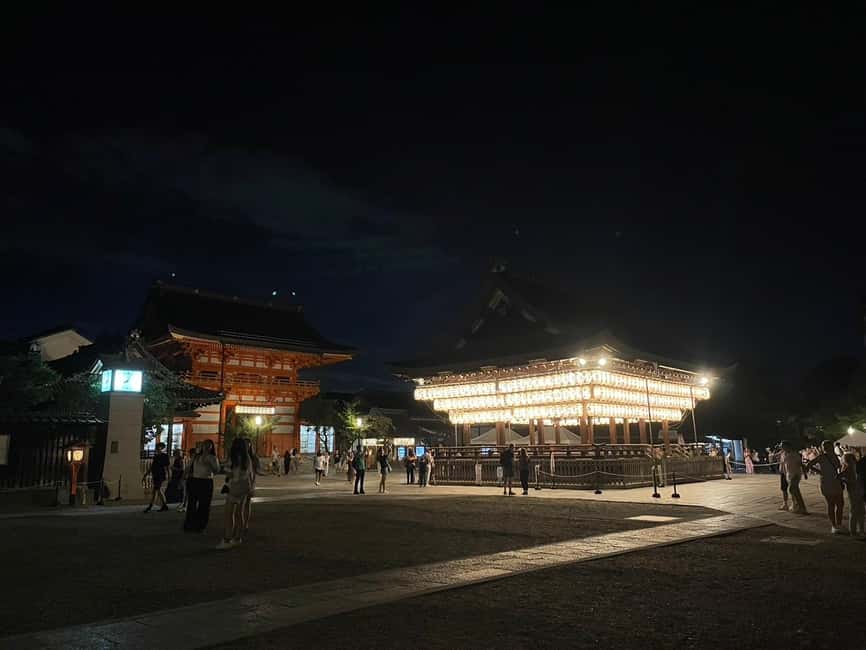
- Yasaka Shrine and the opening look at Gion
- Maruyama Park: a quiet pause in the route
- Nene no Michi and the story behind the name
- Ninenzaka and the old wooden streets
- Yasui-Konpiragu Shrine and the Power Stone
- Hanamikoji Street and the world of geiko
- What the guides add to the evening
- Is two hours enough for Gion?
- The $20 question: is it good value?
- Who should book this Gion night walk?
- Should you book it?
- FAQ
- Where does the Gion night walking tour meet?
- How long does the tour last?
- What is the price?
- What language is the tour conducted in?
- Which places are included in the walk?
- Will I definitely see a geiko or maiko?
- Are photos included?
- Is the tour suitable for wheelchair users?
- Can I cancel for a full refund?
- Do I have to pay when I book?
Key points at a glance
- Gion after dark: See Kyoto’s famous geisha district when daytime crowds have thinned and lanterns give the old lanes a softer mood.
- A well-chosen route: Link Yasaka Shrine, Maruyama Park, Nene no Michi, Ninenzaka, Yasui-Konpiragu Shrine, and Hanamikoji Street in one evening.
- Geiko and maiko context: Learn about Kyoto’s traditional performers, their training, and the private world behind the teahouse doors.
- Small-group feel: Some departures have felt almost like private walks, especially when only two people joined.
- Photos included: The guide can take pictures for you, a useful extra if you are traveling alone.
- Good value at $20: The price is low for two hours of guiding through an area where many important details have no information signs.
Why Gion works especially well at night
Gion is easy to admire and easy to misunderstand. You see handsome wooden buildings, narrow lanes, and women in formal dress, but without context, the district can become little more than a backdrop for photographs. A good guide gives the streets a human story.
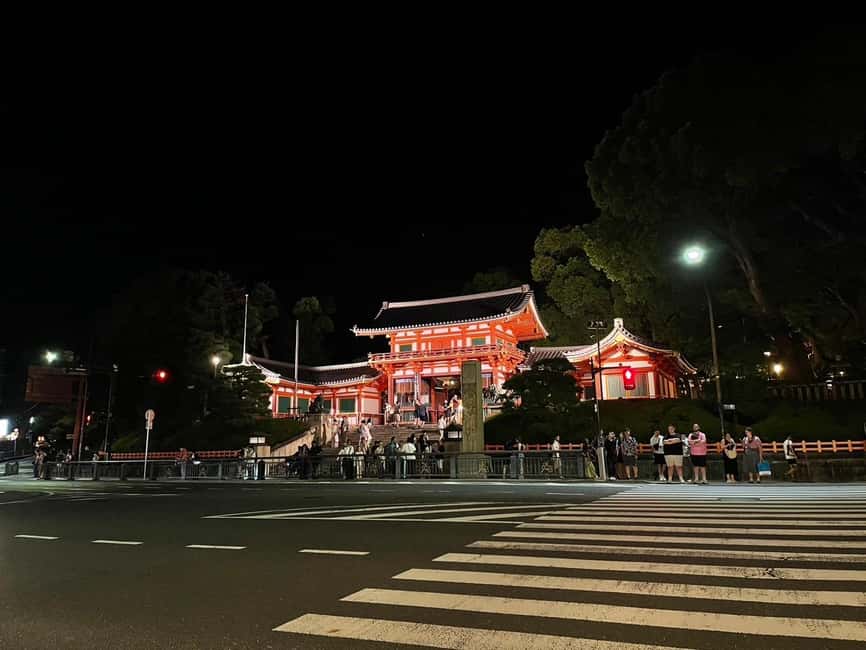
This walk begins near the Starbucks beside Kyoto Gion Hotel, within walking distance of Yasaka Shrine’s Western Tower Gate entrance. That is a practical meeting point because you start near the heart of the route rather than spending part of the tour getting there.
At night, Gion has a different rhythm. The lower light brings out the glow of lanterns and the texture of dark timber. The district can also be quieter than during the day, though popular lanes may still have other visitors. One useful point from the experience is that winter evenings can feel cold, so bring a warm layer. Comfortable shoes matter in every season.
The tour has earned a 4.8 rating from 56 reviews, with especially strong praise for the guides’ clear storytelling, patience, and personal attention. That matters here. You are not paying for entry to a single attraction. You are paying for someone to help you notice what you would likely pass without understanding.
More Kimono & Culture Experiences in Kyoto
- Kyoto Geisha Walking Tour: Gion District & Hidden Gems
★ 4.7 · 3,273 reviews - Kyoto: Gion Magical Night Walking Tour with Geisha Trivia
★ 4.9 · 2,393 reviews - Kyoto: Gion Geisha District Walking Tour – Stories of Geisha
★ 4.7 · 2,187 reviews
Yasaka Shrine and the opening look at Gion
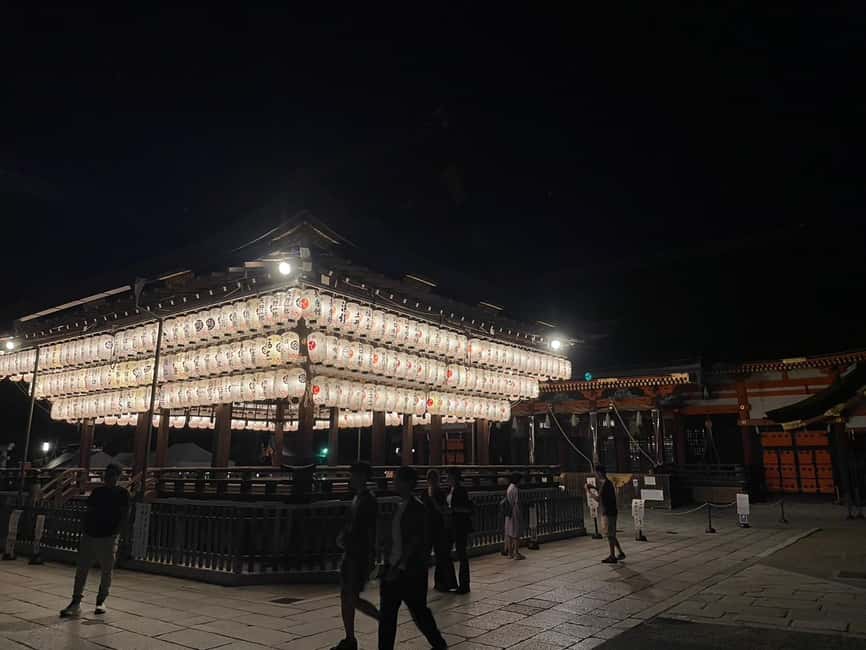
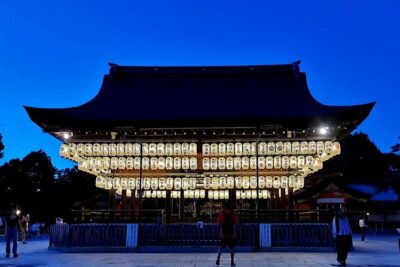
Yasaka Shrine is the first major sight and one of Kyoto’s key spiritual landmarks. The guide explains its connection with local festivals and its place in the traditions surrounding Gion.
The shrine gives you a useful starting point because it links religion, neighborhood life, and seasonal celebration. You are not simply looking at a gate and taking a picture. You begin to see how a sacred site helped shape the district around it.
The planned guided time here is about 20 minutes, while the wider Gion portion lasts about 30 minutes. That is enough for an introduction without turning the evening into a long lecture. Guides such as Majo and Yuvia have been singled out for making Kyoto’s past easy to follow, while Pedro and Wilber have been praised for answering questions in detail.
You should keep your questions ready. This is the part of the walk where a personal guide is most useful, especially if you want to understand shrine customs, festival traditions, or the relationship between Yasaka Shrine and Gion.
Maruyama Park: a quiet pause in the route
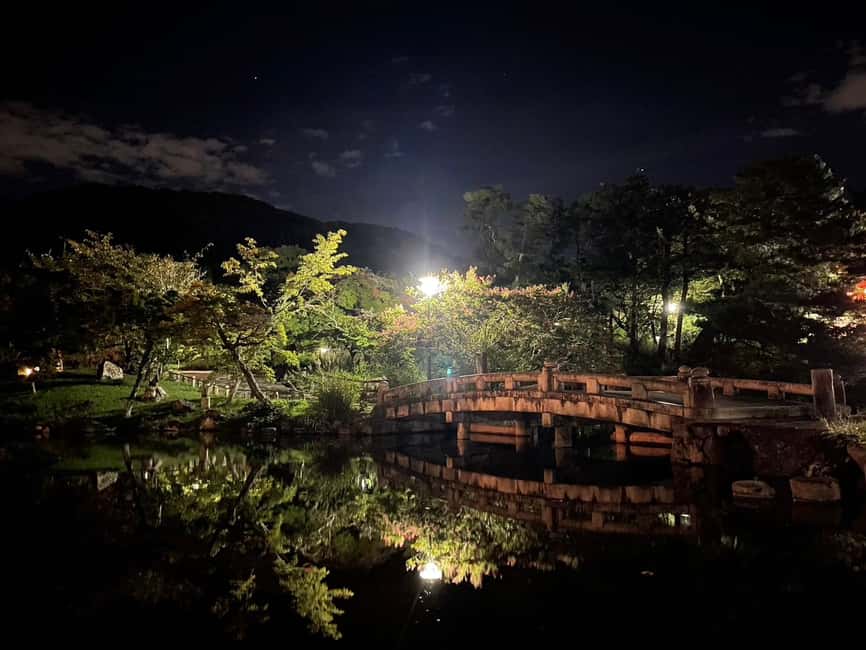
The route continues through Maruyama Park, described as Kyoto’s oldest public garden. It offers a pause between the shrine and the old lanes of Higashiyama.
At night, you will not experience the park in the same way you would during daylight or spring blossom season. The value is less about a wide view and more about a change of pace. The garden gives you a quieter setting before the walk returns to stone paths and traditional buildings.
This stop also helps the route feel balanced. You get sacred architecture, open greenery, and then a gradual move into the older residential and entertainment streets. I like that contrast. It keeps the tour from becoming a string of similar façades.
Because the walk takes place outdoors, the conditions matter. A cold evening can be memorable in a good way, but only if you dress for it. The December experience drew a specific warning to wear warm clothes, and that is sound advice for nighttime walking in Kyoto.
Nene no Michi and the story behind the name
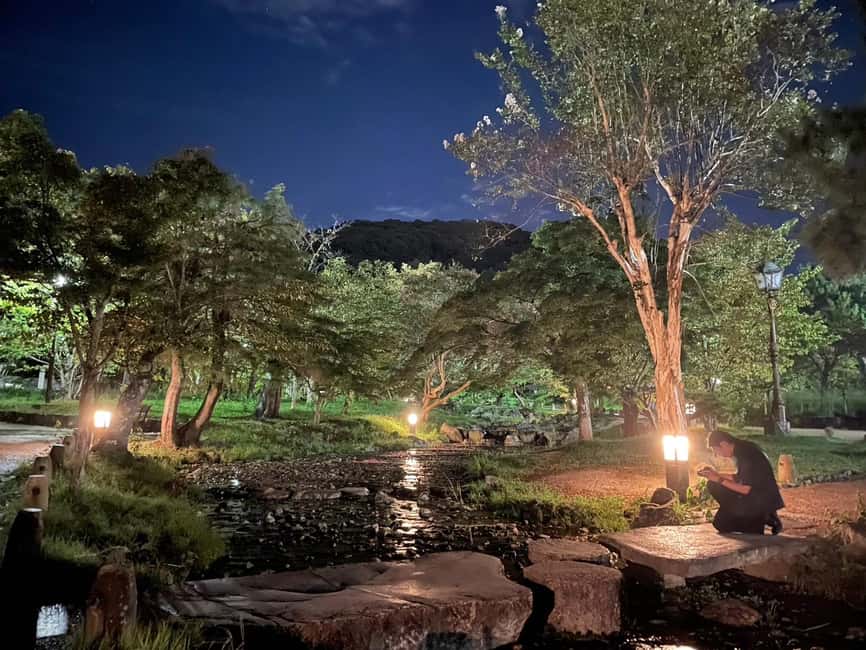
Nene no Michi is one of the most attractive paths in the Higashiyama area. Its name honors Nene, the wife of samurai leader Toyotomi Hideyoshi.
The lane is stone-paved and lined with traditional townhouses, teahouses, and small artisan shops. It gives you the kind of Kyoto scene many people hope to find, but the guide adds meaning to the view. You learn why the path carries its name and how the area reflects the city’s older style of building and street life.
The planned visit lasts about 20 minutes. That is a sensible amount of time for walking, listening, and taking photographs without stopping so often that the group loses its flow.
The stone surface can be uneven, and this is one reason the tour is not suitable for wheelchair users. It is also worth choosing shoes with a firm sole. You do not need hiking gear, but thin sandals or uncomfortable dress shoes would make the route less pleasant.
Nene no Michi is also a good place for photographs. The guide takes pictures during the tour, which can be helpful if you want more than selfies. One solo participant particularly valued this service, and couples can benefit too, since both people can appear in the frame.
More Walking Tours in Kyoto
- Private Kyoto Tour with a Local, Highlights & Hidden Gems, Personalised
★ 5.0 · 1,543 reviews - Kyoto Gion Geisha District Walking Tour – The Stories of Geisha
★ 5.0 · 1,441 reviews - Nishiki Market Brunch Walking Tour (7 Tastings + Brunch)
★ 5.0 · 1,355 reviews - Kyoto Arashiyama Walking Tour: Bamboo, Monkeys, Gardens & Secrets
★ 5.0 · 1,216 reviews
Ninenzaka and the old wooden streets
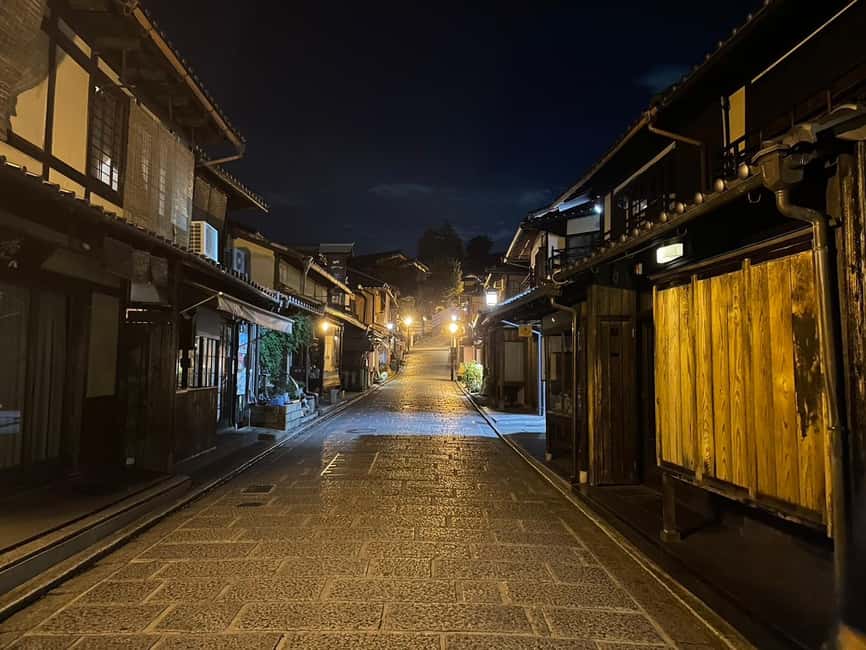
Ninenzaka is a sloping street of historic wooden buildings, shops, and small storefronts. It is one of the most photogenic sections of the route and feels strongly connected to Kyoto’s older image.
The slope is part of the charm, but it is also a practical consideration. You will be walking uphill and downhill on traditional paving, usually among other people. The evening timing can reduce the daytime crush, but do not expect an empty street.
This is a place where the guide’s explanations improve the experience. Many buildings have no large signs explaining their history, use, or design. A guide can point out details and explain how the street fits into Higashiyama’s cultural setting.
I would treat Ninenzaka as a viewing and listening stop rather than a shopping stop. You may have time to notice storefronts, but the tour’s purpose is to understand the district as a whole. If you want to browse every shop or stop for food, plan to return on your own.
Yasui-Konpiragu Shrine and the Power Stone
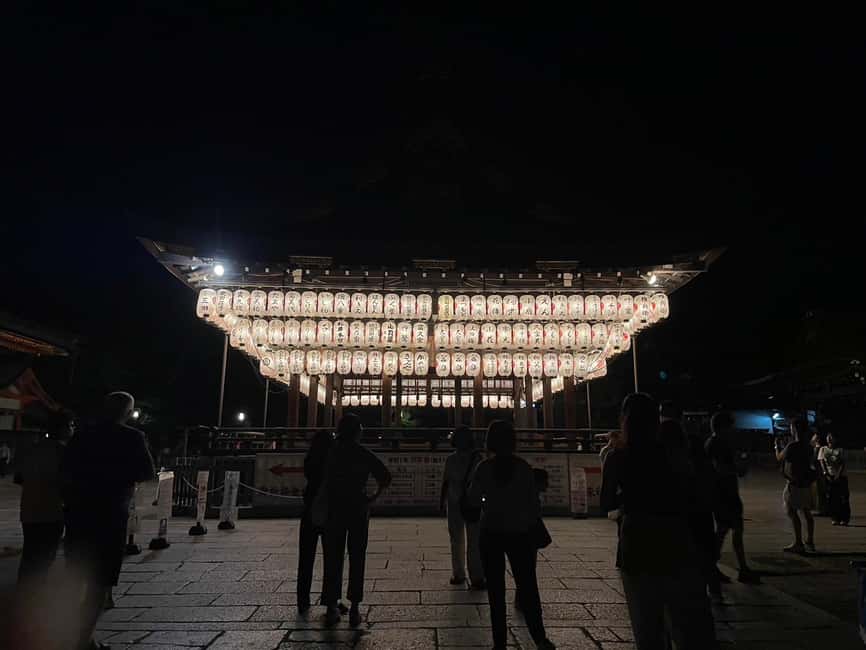
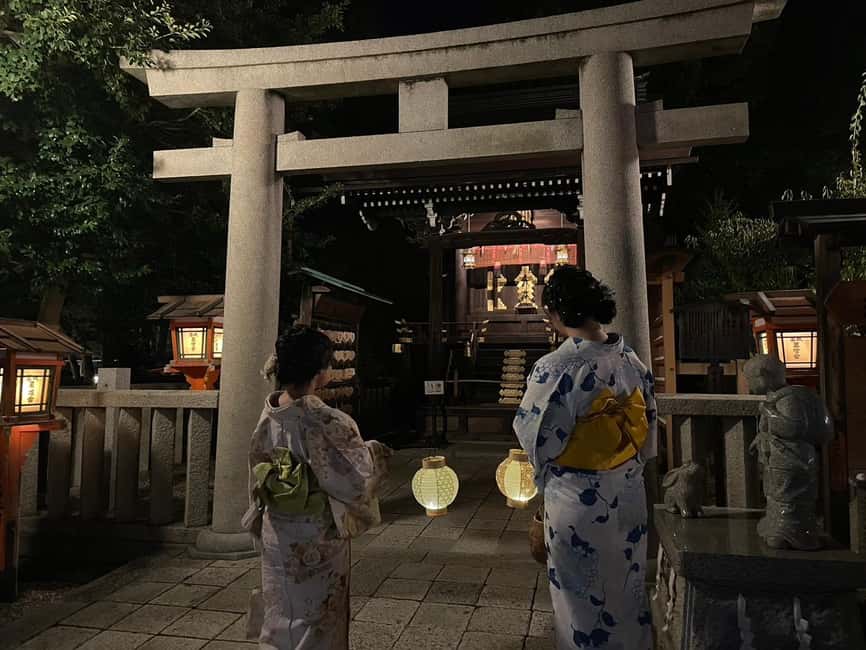
Yasui-Konpiragu Shrine adds one of the tour’s most unusual moments. Its symbolic Power Stone archway is associated with changing personal ties.
The custom is memorable. People crawl through the stone to pray for strong bonds or to leave unwanted relationships behind. It is a physical ritual, not just something you observe from a distance, and the guide explains the tradition so the act does not feel like a random photo opportunity.
This stop brings a more personal side of Japanese religious practice into the walk. Yasaka Shrine introduces large public traditions, while Yasui-Konpiragu offers a smaller ritual centered on private hopes and relationships.
You may find the crawling portion awkward if you have limited mobility or are wearing restrictive clothing. The tour does not provide a separate accessibility option, and the activity is specifically marked as unsuitable for wheelchair users. If you can manage the path and the ritual, it is one of the most distinctive stops of the evening.
Hanamikoji Street and the world of geiko
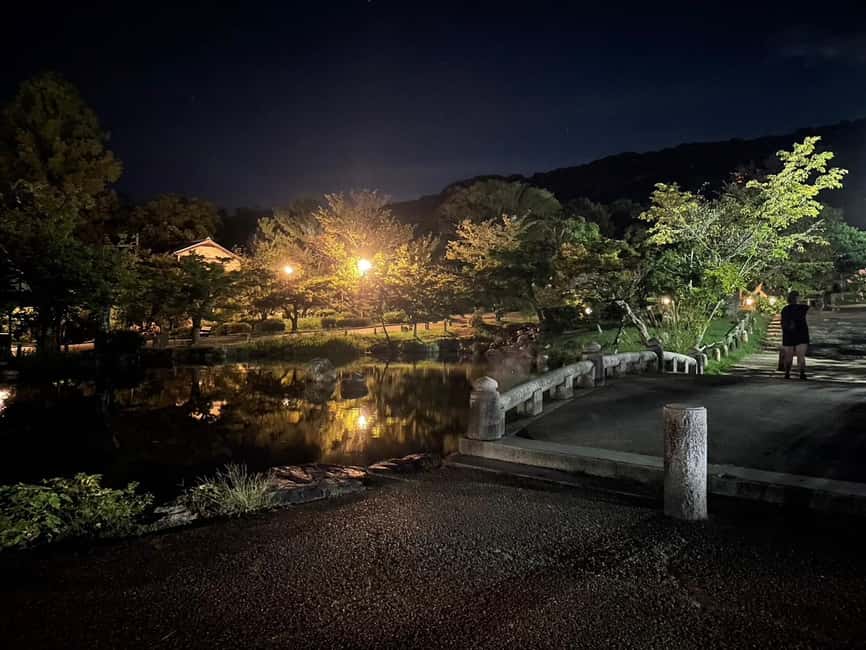
Hanamikoji Street is the heart of Gion and the section most closely tied to geiko and maiko. Preserved wooden teahouses line the street, and some continue to host Kyoto’s traditional performers.
The guide explains the difference between geiko and maiko, along with their training, daily work, artistic skills, and place within Kyoto’s teahouse culture. This is valuable because the district is private by design. You see the exterior of the world more easily than the life inside it.
You might see a geiko or maiko during the walk, but there is no guarantee. One evening group happened to see several, while another saw one briefly. Consider that a lucky addition, not the main reason to book. The real value is learning how to view the district respectfully.
The guide should also help you understand appropriate behavior. Gion is a living neighborhood and workplace, not a stage set. Keep a respectful distance, avoid blocking narrow lanes, and follow local rules about photography. The supplied information does not promise a meeting or photograph with a performer, so book this walk for cultural explanation rather than a guaranteed sighting.
Hanamikoji is a strong final major stop because the earlier shrines, park, and lanes have prepared you to understand it. By this point, Gion looks less like a collection of pretty streets and more like a working cultural district with strict traditions and long training behind its performances.
What the guides add to the evening
The guide is the main reason to choose this tour instead of walking the same streets alone. Several guides have led the experience, including Majo, Pedro, Yuvia, Wilber, Nayeen, Sam, Jason, Amy, Bell, and others.
The strongest pattern in the feedback is not a single personality or scripted style. It is the ability to explain Kyoto in plain English, answer questions, and make the walk feel personal. Majo is repeatedly praised for her cheerful manner and easy-to-follow explanations. Pedro is praised for pairing friendly conversation with detailed answers. Wilber has been appreciated as a native English speaker with strong knowledge of Japanese history and the area.
The guides also help with practical matters. One guide pointed out good places to eat after the walk, and several have taken photographs. That can be especially useful if you are alone or if you want a picture of the whole group.
Group size may vary. Some outings have felt close to private tours when only two people joined, while the activity is also suitable for a normal small walking group. You should not assume a private tour, but the format allows for questions when the group is small.
Is two hours enough for Gion?
Two hours is enough for an introduction, not for every corner of Gion. The route moves through several notable areas, with roughly 20 to 30 minutes at the main sections.
The listed route includes Gion, Yasaka Shrine, Nene no Michi, Ninenzaka, Yasui-Konpiragu Shrine, and Hanamikoji Street, then returns to the Starbucks beside Kyoto Gion Hotel. One additional 30-minute guided portion is listed without a named stop, so the exact pacing may vary by departure.
That flexibility is not necessarily a problem. A guide may spend more time on questions, crowds, or a particularly interesting explanation. Still, if you want long shopping stops, temple interiors, or a sit-down meal, this is not the right format.
Think of it as a well-organized orientation walk. Afterward, you can return to the streets you liked best and explore at your own speed.
The $20 question: is it good value?
At $20 per person, this is an easy tour to justify if Gion is unfamiliar to you. You receive two hours with an English-speaking guide, historical explanation at Yasaka Shrine, cultural context throughout the route, and photographs during the walk.
The value comes from interpretation rather than admission tickets. The tour does not appear to include entry to a paid attraction, a meal, or a geisha performance. If you want those, you will need to arrange them separately.
For a first evening in Kyoto, the price is especially fair. You cover a large section of Higashiyama and Gion without needing to plan the route yourself. You also gain information that is difficult to pick up from street signs, particularly around geiko culture and the meaning of local shrines.
The free cancellation period is up to 24 hours before the start, and you can reserve now and pay later. Those terms are useful if your Kyoto plans are still shifting.
Who should book this Gion night walk?
I would recommend it to first-time visitors who want a clear introduction to Gion without committing to an expensive cultural show. It also suits solo visitors, couples, and anyone who prefers asking questions instead of reading signs on a phone.
History fans will appreciate the connections between Hideyoshi’s family, Yasaka Shrine, Kyoto’s festivals, and geiko culture. Photographers will like the lanes and lantern-lit streets, though the night setting means you should not expect bright, evenly lit photographs everywhere.
It is less suitable for anyone who wants a slow shopping evening, a guaranteed geisha sighting, or a completely flat route. You should also think twice if cold weather or uneven paving will make a two-hour walk uncomfortable.
Should you book it?
Book this tour if you want useful cultural context at a modest price, especially on your first night in Kyoto. The route gives you the major visual pleasures of Gion, but the guide’s stories keep the experience from becoming a simple stroll past old buildings.
Skip it if you already know Gion well or want a private performance-based geisha experience. For most visitors, though, the combination of Yasaka Shrine, Nene no Michi, Ninenzaka, Yasui-Konpiragu, and Hanamikoji makes this a practical and enjoyable way to meet Kyoto after sunset.
FAQ
Where does the Gion night walking tour meet?
You meet in front of the Starbucks located next to Kyoto Gion Hotel. The meeting point is within walking distance of Yasaka Shrine’s Western Tower Gate entrance.
How long does the tour last?
The walking tour lasts two hours.
What is the price?
The listed price is $20 per person.
What language is the tour conducted in?
The tour is conducted in English with a live English-speaking guide.
Which places are included in the walk?
The route includes Gion, Yasaka Shrine, Maruyama Park, Nene no Michi, Ninenzaka, Yasui-Konpiragu Shrine, and Hanamikoji Street.
Will I definitely see a geiko or maiko?
No. A sighting is possible, but it is not guaranteed. Some departures have seen geiko or maiko briefly.
Are photos included?
Yes. Photos during the tour are included, and the guide may help take pictures of you.
Is the tour suitable for wheelchair users?
No. The activity is listed as unsuitable for wheelchair users.
Can I cancel for a full refund?
Yes. You can cancel up to 24 hours in advance for a full refund.
Do I have to pay when I book?
No. The reserve now and pay later option lets you book without paying immediately.
More Evening Experiences in Kyoto
- Night Walk in Gion: Kyoto’s Geisha District
★ 4.5 · 2,003 reviews - Kyoto Night Foodie Tour in Gion (9+ dishes + 6 Sake tastings)
★ 5.0 · 1,762 reviews - Kyoto Gion Night Walk & Geisha District Guided Tour
★ 5.0 · 786 reviews - Kyoto Ghost Tour: Dark Tales, Urban Legends, Bamboo Forest Night
★ 5.0 · 625 reviews
Just added around Kyoto
- Taste of Nishiki Market Walking Food Tour with Local guide★ 5.0 · 17 reviews
- Kyoto: Sushi Making Class with Sushi Chef★ 4.8 · 64 reviews
- Kyoto: City Secrets eBike Tour★ 4.9 · 196 reviews
- Sacred Pathways: Discover the Philosopher’s Path of Kyoto★ 4.9 · 20 reviews
- Private Tour to Monkey Park and Arashiyama Highlights★ 5.0 · 22 reviews
- Private Nara Tour from Osaka – Meet at Your Hotel★ 5.0 · 22 reviews
- Private Sake Tasting in Central Kyoto with Sake Sommelier★ 5.0 · 13 reviews
- Kyoto : Private Custom Walking Tour With A Local Guide★ 4.6 · 144 reviews
Kimono & Culture Experiences, compared.
Kyoto Geisha Walking Tour: Gion District & Hidden Gems
Read our review →
Gion Magical Night Walking Tour with Geisha Trivia
Read our review →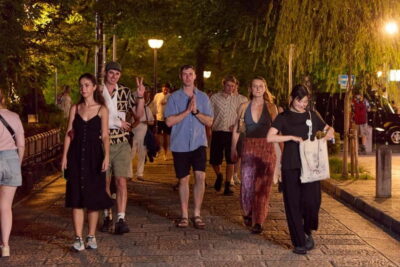
Gion Geisha District Walking Tour – Stories of Geisha
Read our review →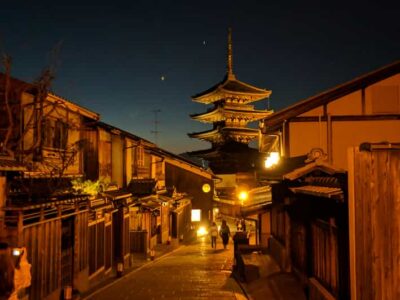
Best of Kyoto: Gion, Geisha, Pagodas & Cobblestones
Read our review →
Kyoto Gion Geisha District Walking Tour – The Stories of Geisha
Read our review →
Browse the lists this tour appears in