
REVIEW · MARKETS
Kyoto: Enjoy Sushi & Market Tour! Best for Family & Couple!
The most memorable part of this Kyoto food experience may be the quick trip to Nishiki Market, where you can watch a skilled vendor cut fresh fish before using it in your own meal. Back at the cooking space, you learn vinegar rice, three types of sushi, dashi, and miso soup in one compact session.
I like the mix of market visit and hands-on cooking, and I like that the guide also shares seasonal Kyoto sightseeing advice. The main caution is value: at $77 per person, this is not a cheap meal, and one participant found the instruction less interactive than expected.
In This Review
- Key points at a glance
- A sushi lesson with a Nishiki Market start
- Making vinegar rice the right way
- Three sushi styles, three different skills
- Dashi tasting and homemade miso soup
- Conversation, Kyoto advice, and the meal afterward
- Is $77 a fair price?
- Location and timing for a central Kyoto day
- Best fit for families, couples, and first-time sushi makers
- Practical details before you book
- Should you book this Kyoto sushi class?
- FAQ
- How long does the sushi and market experience last?
- How much does the activity cost?
- Where is the meeting point?
- How far is the meeting point from Kyoto Station?
- Which languages are available?
- What types of sushi will I make?
- Is miso soup included?
- Are food and drinks included?
- Is the activity wheelchair accessible?
Key points at a glance
- Watch fish preparation at Nishiki Market: The market visit adds a real Kyoto food connection before you begin cooking.
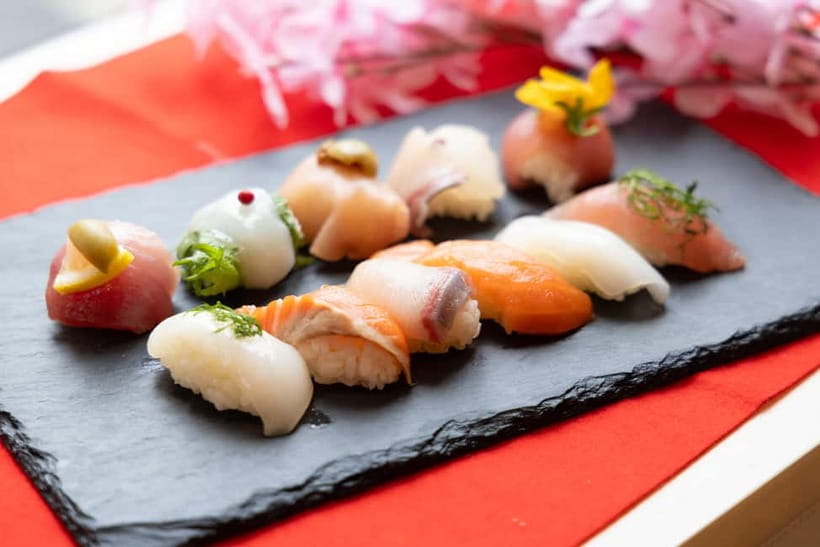
- Make three sushi styles: You prepare nigiri, temari, and temaki, giving you useful skills for cooking at home.
- Learn dashi and miso soup: The class includes tasting and comparing dashi before you make soup.
- Finish with a full sitting-down meal: Sushi, miso soup, dessert, and coffee are included.
- Get seasonal Kyoto advice: Your guide can suggest timely sightseeing ideas during the conversation after cooking.
- Small, central, and accessible: The group is limited to 10, and the meeting point is about 10 minutes from Kyoto Station.
A sushi lesson with a Nishiki Market start
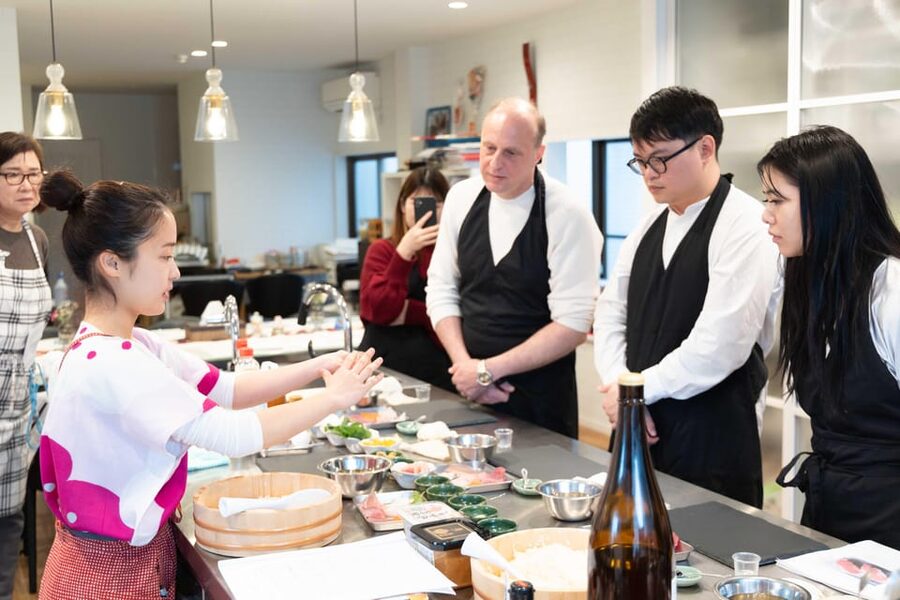
This experience gives you more than a standard cooking demonstration. You begin near Kyoto’s city center and walk with your guide to Nishiki Market, one of the city’s best places to see Japanese food up close.
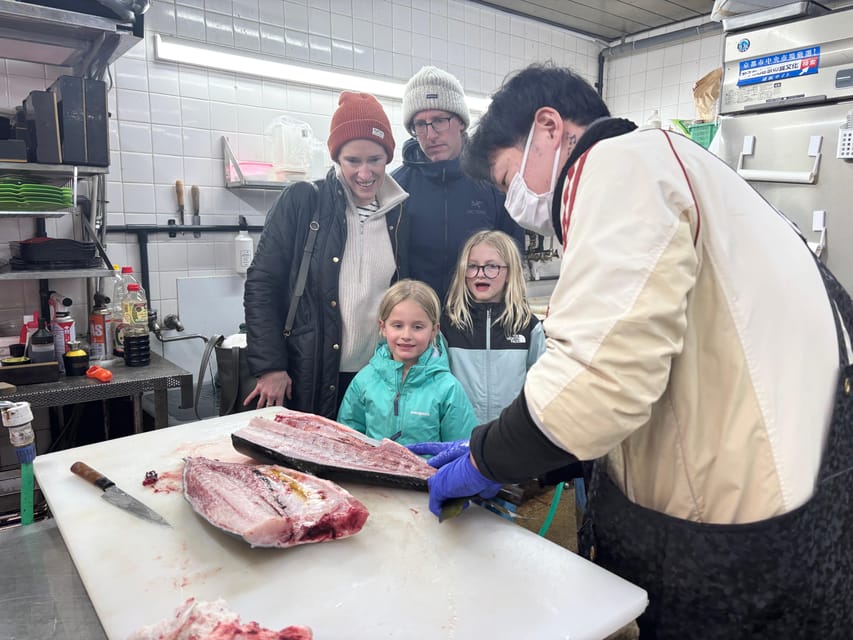
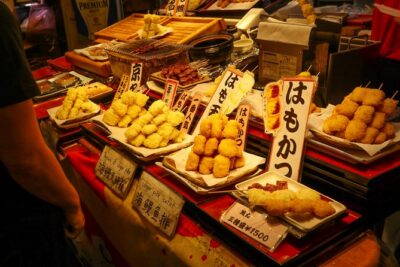
The market visit is short, but it matters. You can see fish being selected and cut, including salmon according to one recent booking experience. That gives you a better sense of the work behind the neat slices placed on a sushi counter. You are not simply handed ingredients in a classroom with no connection to local food life.
The market is also a useful stop if you are already planning to visit Gion or Kiyomizu-dera. The meeting point is about 10 minutes from Kyoto Station and five minutes from Shijo Station, so you can fit the class into a day of central Kyoto sightseeing.
You should not expect a full market tour with every stall explained. The stated focus is selecting fresh fish and watching skilled vendors prepare it. If you want a long food walk through Nishiki Market, this activity may feel brief. If you want a practical introduction before making lunch, the balance works well.
A few more Kyoto trips to weigh up
- Nishiki Market Brunch Walking Tour (7 Tastings + Brunch)
★ 5.0 · 1,355 reviews - Kyoto Nishiki Market Food and Culture Walking Tour
★ 5.0 · 412 reviews - Kyoto: Nishiki Market Tea Ceremony with Koto Performance
★ 4.8 · 294 reviews
Making vinegar rice the right way
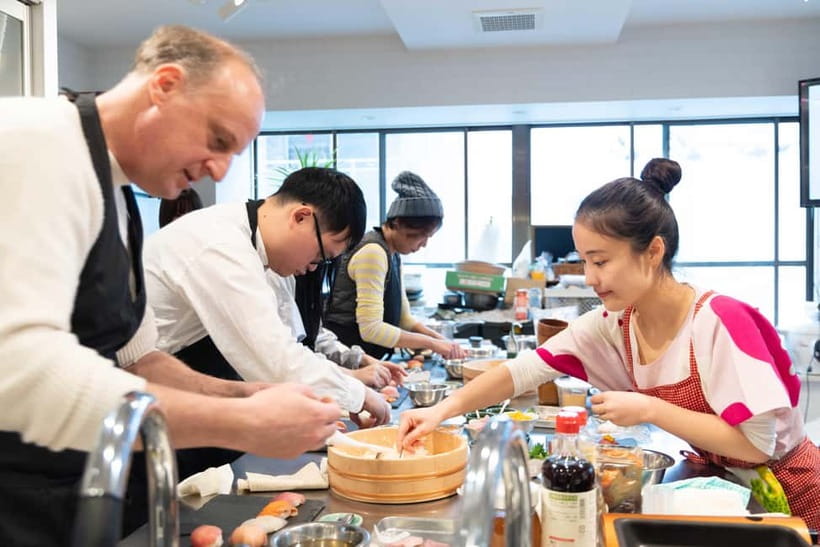
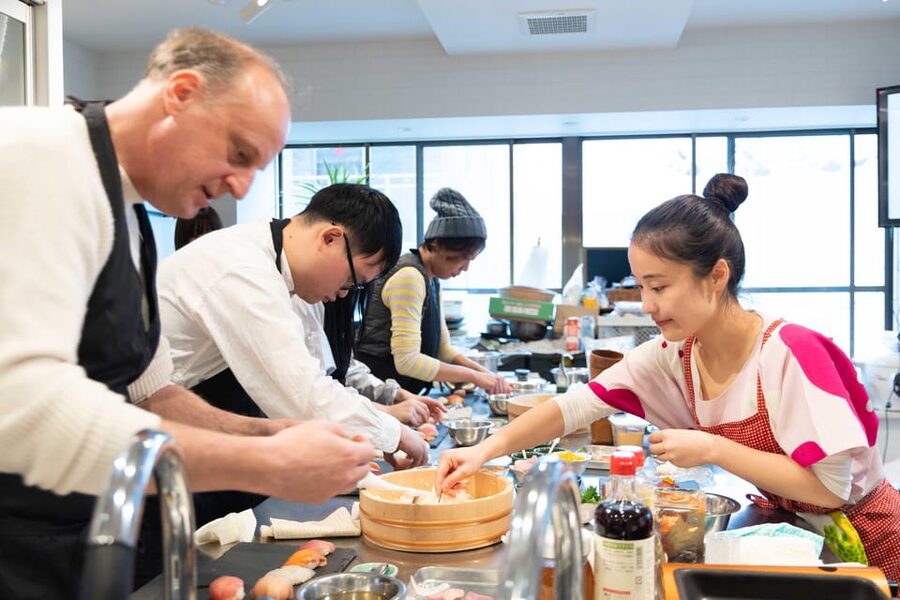
Back at the cooking space, the class begins with Japanese food culture and vinegar rice. This step can look simple, but sushi rice is the foundation of the meal. You learn how the rice is prepared and seasoned before shaping it into different forms.
The lesson is designed to help you repeat the process at home. That is useful for families and couples who want a cooking activity with something to show for it after the trip. You are not only watching a chef build attractive sushi. You are handling the rice and learning the basic method yourself.
The artistic element adds some fun. The goal is to create sushi that looks good as well as tastes good, so you can experiment with presentation while the guide helps with technique. One couple described the instruction as helpful and flexible, allowing room to explore personal flavors while still learning the proper methods.
That flexibility is a strength, especially if your group includes different ages or cooking abilities. Children and beginners can focus on assembling and shaping. More confident cooks can pay attention to form and presentation.
There is one fair warning. Hands-on instruction depends partly on how active the guide is with the group. One participant expected more interaction and found the instructor less engaged. With a maximum of 10 people, the class remains small, but you should not assume that every moment will be one-to-one coaching.
Three sushi styles, three different skills
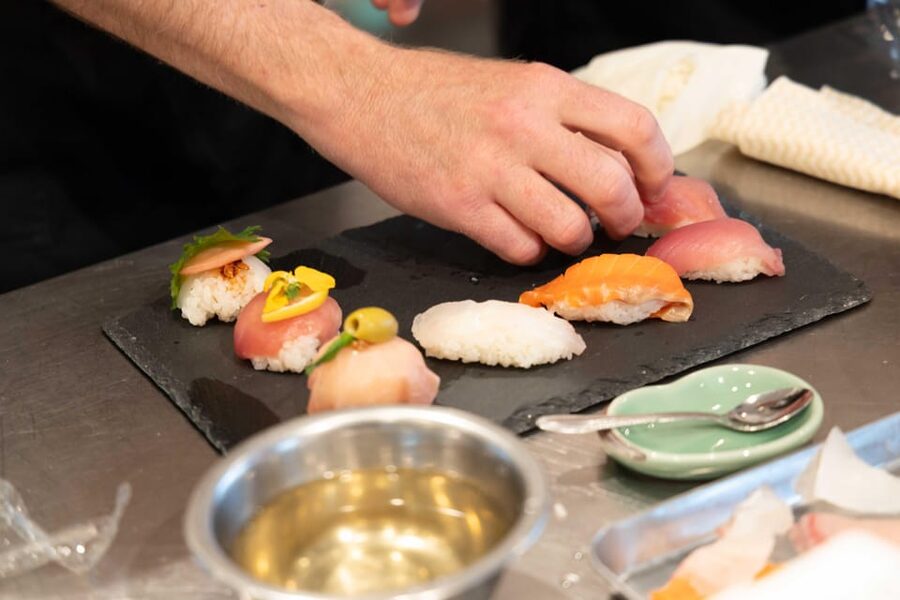
The sushi portion covers nigiri, temari, and temaki, which makes the lesson more useful than a class focused on one basic roll.
Nigiri is the familiar hand-shaped sushi with a piece of fish on top. It teaches control of the rice and a clean way to present the topping. You may find this the most technically demanding style because the shape needs to hold together without becoming too dense.
Temari sushi is round and decorative. It is a good choice if you enjoy the visual side of food, and it gives you a manageable shape to try at home. This style also suits a small gathering because individual pieces can be made to look festive without complicated equipment.
Temaki is hand-rolled sushi, often shaped like a cone. It is generally more relaxed and social than nigiri. You can assemble it at the table and adjust the filling to your taste, which makes it a natural favorite for a family group.
Learning all three helps you see how the same basic ingredients can become different dishes. You leave with several ideas for a home meal rather than one recipe that only works in a special class setting.
Dashi tasting and homemade miso soup
The miso soup lesson adds an important piece of Japanese cooking. You learn how to make dashi, taste and compare it, and then use it to prepare miso soup.
Dashi is easy to overlook because it often works quietly in the background. Here, tasting and comparison help you notice how a soup base affects the final dish. That small lesson gives you a better feel for Japanese cooking than simply mixing miso into hot water.
Miso soup also gives the class a warm, practical counterpoint to sushi. You are working with a cooked dish as well as raw fish and rice. For a family, it keeps the activity varied. For a couple, it makes the meal feel more complete.
The included food covers sushi and miso soup, followed by dessert and coffee. One recent family booking also described sake, green tea, and a homemade matcha dessert at the end. Sake and beer are available for an extra charge, while the included dessert and coffee give you a nonalcoholic finish.
Because the exact dessert may vary, you should not book expecting a particular sweet. The matcha dessert has been part of at least one recent experience, but the core promise is dessert and coffee rather than one fixed recipe.
Same city, a completely different kind of day:
- PERFECT KYOTO 1-Day Bus Tour
★ 5.0 · 13,518 reviews - Kyoto: Fushimi Inari, Kinkakuji, Bamboo Grove 1 Day Bus Tour
★ 4.8 · 4,316 reviews - Kyoto: Tea Ceremony in a Traditional Tea House in Kiyomizu
★ 4.9 · 3,519 reviews - Kyoto Geisha Walking Tour: Gion District & Hidden Gems
★ 4.7 · 3,273 reviews
Conversation, Kyoto advice, and the meal afterward
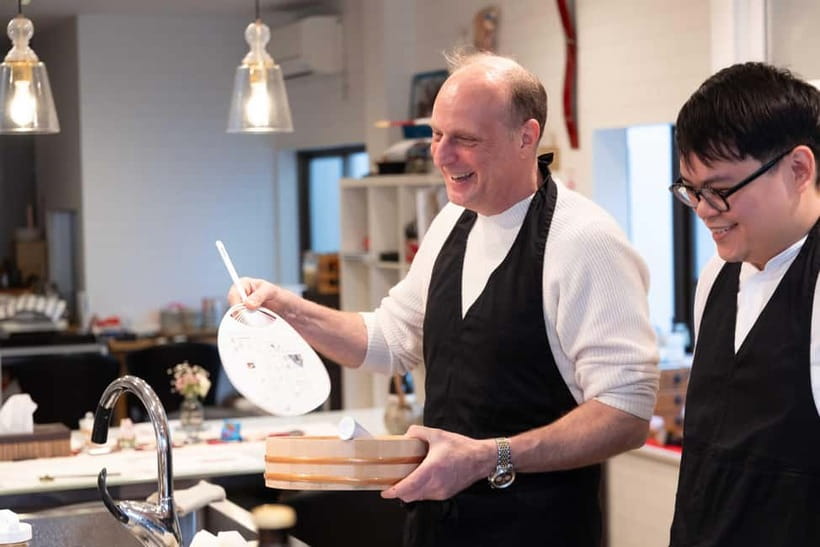
After the cooking, you sit down to eat what you have prepared. This is where the class becomes a shared meal instead of a simple lesson. You can compare shapes, talk with the other participants, and ask questions while eating.
The guide also provides seasonal sightseeing information about Kyoto. This is a useful extra if your schedule is flexible. Advice about what to see in a particular season can help you choose between crowded headline sights and quieter options, although the information is presented as part of the conversation rather than a separate sightseeing tour.
You should see this as practical local guidance, not a replacement for a full itinerary consultation. The strongest value comes from combining the advice with the food activity. You get a chance to ask about Kyoto while you are already discussing local ingredients, markets, and dining customs.
The atmosphere appears best suited to a small, friendly group. Some participants have described their guides as kind, gracious, and excellent teachers. Others found the instruction too hands-off. That difference is worth keeping in mind if personal coaching is the main reason you are booking.
Is $77 a fair price?
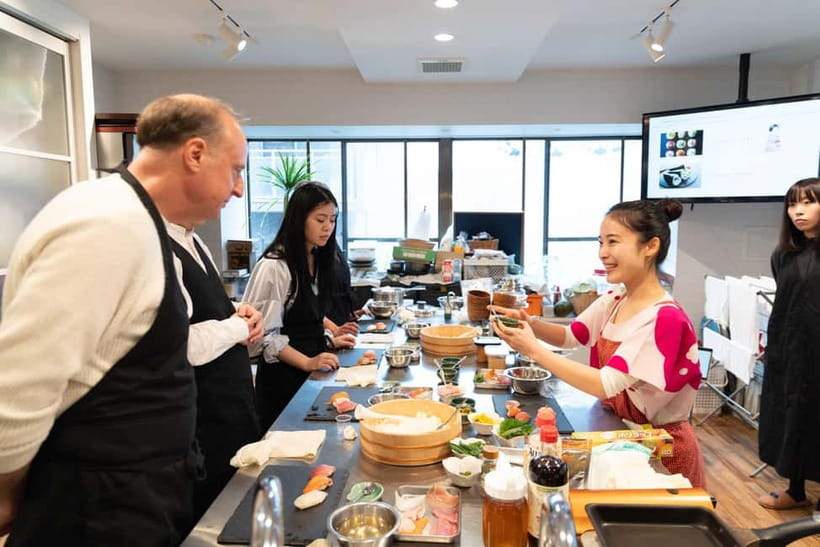
At $77 per person for two hours, the price sits above what you would pay for a casual sushi meal. You are paying for instruction, ingredients, the Nishiki Market visit, a prepared meal, dessert, coffee, and a small-group setting.
The value is strongest if you want an activity, not just lunch. You learn techniques you can repeat at home, and you get a direct look at fish preparation before cooking. A family also gets an organized shared experience that does not depend on everyone speaking the same level of Japanese.
The value is weaker if you mainly want to eat high-end sushi. This is a class, so some of your time goes into preparation, shaping, and listening. The fish from the market can be excellent, but one participant felt it did not justify the price because the instruction was not interactive enough.
I would compare it with the cost of a separate market visit plus a meal and a cooking class. If you would otherwise book all three, the package makes more sense. If your Kyoto plans already include a market walk and a sushi dinner, you may prefer to spend the money elsewhere.
The reserve-now-and-pay-later option also helps if your itinerary is still changing. You can cancel up to 24 hours in advance for a full refund, according to the stated policy. That is useful in Kyoto, where weather and seasonal crowds can change your plans quickly.
Location and timing for a central Kyoto day
The meeting point is in front of a building with a hair salon called Salon Roll on the first floor. You should use that exact landmark rather than relying only on a general map pin.
The location is convenient for a central sightseeing day. It is about 10 minutes from Kyoto Station and five minutes from Shijo Station, with Gion and Kiyomizu-dera nearby. You can schedule the class before or after other central Kyoto stops, but remember that the experience itself lasts two hours.
The activity does not list fixed starting times in the provided details. You need to check availability for the date you want. That matters if you are trying to connect it with temple opening hours, a train, or a dinner reservation.
The group limit is 10 people. That is small enough to keep the class personal in principle, while still allowing a social meal. If you are booking for a family, the format lets everyone take part rather than having one person cook while everyone else watches.
The space is wheelchair accessible. Smoking is not allowed indoors. English and Japanese instruction are available, so you should select the language that best suits your group when booking.
Best fit for families, couples, and first-time sushi makers
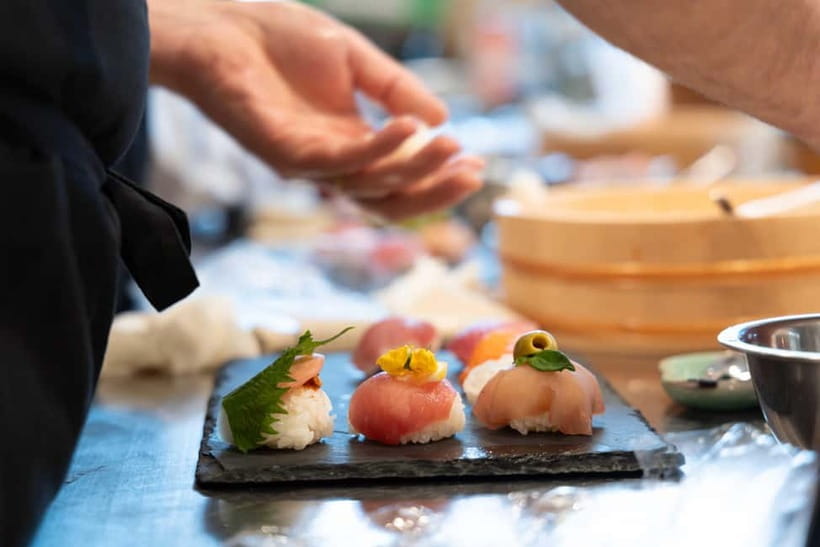
This is a particularly good choice for families. The market visit adds movement, the sushi shapes provide a creative task, and the meal gives everyone a clear finish. A child who is not interested in a long museum visit may enjoy making round temari sushi or hand-rolled temaki.
Couples can use it as a shared activity rather than another restaurant meal. You can work side by side, compare your sushi, and leave with a recipe idea for home. It also fits well into a central Kyoto day without requiring a long trip across the city.
First-time cooks should feel comfortable with the format. The class covers basic steps and offers help with technique. You do not need advanced sushi skills to take part.
It may be less suitable if you want an intensive professional cooking lesson. The experience lasts only two hours and includes a market visit, several recipes, eating time, dessert, and conversation. That leaves limited time for detailed knife work or extended individual coaching.
It is also not the right pick if raw fish is not appealing to anyone in your group. The activity centers on sushi and fresh fish, even though miso soup provides another part of the meal.
Practical details before you book
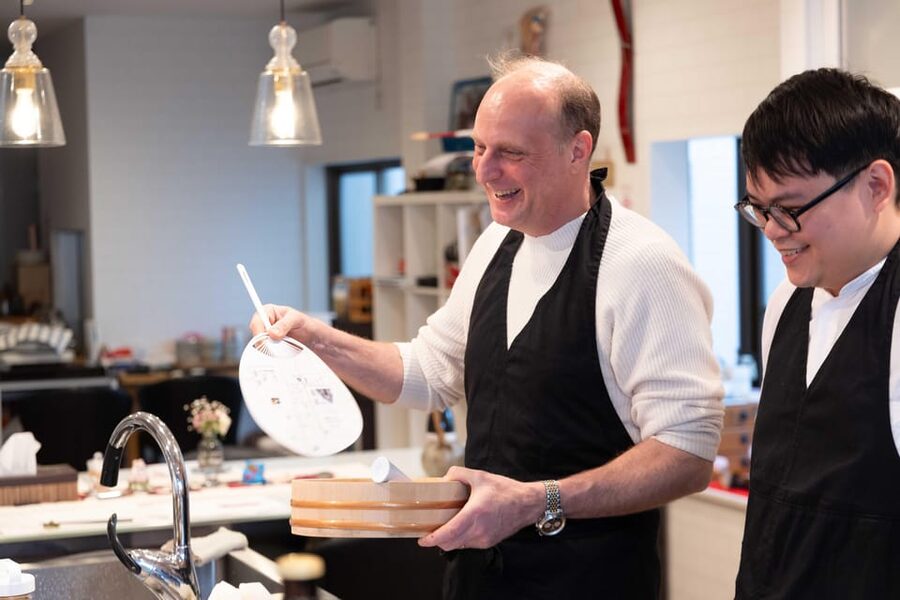
Wear something comfortable for standing and cooking. The class includes a visit to the market and hands-on preparation, so you will be more comfortable if your clothing allows easy movement.
Bring your booking information and allow enough time to find Salon Roll. The central location is convenient, but Kyoto streets around Shijo and the market can be busy and confusing if you arrive at the last minute.
Ask questions during the class. The more you engage with the guide, the more useful the seasonal sightseeing advice and cooking tips are likely to be. If you want help with a particular sushi shape or flavor, say so early.
You can purchase Kyoto sake or beer for an extra charge. Dessert and coffee are included, so you do not need to add alcohol to make the meal feel complete.
Should you book this Kyoto sushi class?
Book it if you want a hands-on food experience with a short Nishiki Market visit, a proper meal, and skills you can use at home. Families and couples are the clearest match, especially if you enjoy creative activities more than a formal restaurant tasting.
Think twice if you expect constant personal attention or premium sushi for the price alone. The experience depends on the guide’s energy, and one participant found the interaction too limited. For most people, the market connection, three sushi styles, dashi lesson, dessert, and central location make the $77 worthwhile, but only if you value the class itself as much as the meal.
FAQ
How long does the sushi and market experience last?
The experience lasts two hours.
How much does the activity cost?
The listed price is $77 per person.
Where is the meeting point?
Meet in front of a building with a hair salon called Salon Roll on the first floor.
How far is the meeting point from Kyoto Station?
The meeting point is about 10 minutes from Kyoto Station.
Which languages are available?
The instructor can provide the activity in English or Japanese.
What types of sushi will I make?
You will learn to prepare nigiri, temari, and temaki sushi.
Is miso soup included?
Yes. The activity includes learning about dashi, tasting and comparing it, and making miso soup.
Are food and drinks included?
Sushi, miso soup, dessert, and coffee are included. Kyoto sake and beer are available for an extra charge.
Is the activity wheelchair accessible?
Yes, the activity is wheelchair accessible. Smoking is not allowed indoors.
Just added around Kyoto
- Taste of Nishiki Market Walking Food Tour with Local guide★ 5.0 · 17 reviews
- Kyoto: Sushi Making Class with Sushi Chef★ 4.8 · 64 reviews
- Kyoto: City Secrets eBike Tour★ 4.9 · 196 reviews
- Sacred Pathways: Discover the Philosopher’s Path of Kyoto★ 4.9 · 20 reviews
- Private Tour to Monkey Park and Arashiyama Highlights★ 5.0 · 22 reviews
- Private Nara Tour from Osaka – Meet at Your Hotel★ 5.0 · 22 reviews
- Private Sake Tasting in Central Kyoto with Sake Sommelier★ 5.0 · 13 reviews
- Kyoto : Private Custom Walking Tour With A Local Guide★ 4.6 · 144 reviews
Markets, compared.
Tokyo Tsukiji Fish Market Food and Culture Walking Tour
Read our review →

Nishiki Market Brunch Walking Tour (7 Tastings + Brunch)
Read our review →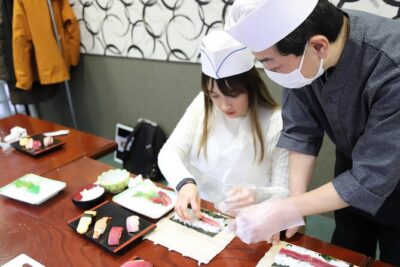
Tsukiji Fish Market Guided Tour and Sushi Making with Pro Chef
Read our review →Tsukiji Fish Market Food and Culture Walking Tour
Read our review →
Tsukiji Fish Market: Street Food & Culture Walking Tour
Read our review →
Tsukiji Fish Market Small-Group Food Walking Tour
Read our review →Browse the lists this tour appears in