
REVIEW · WALKING TOURS
Kyoto Early Riser Platinum One-Day Walking Tour
Kyoto’s most famous sights are easier to enjoy before the crowds arrive, and this early-start private tour makes that its main advantage. You move from the red torii gates of Fushimi Inari to Arashiyama’s bamboo, the Golden Pavilion, an old shrine district, and Nishiki Market in one long day.
I like the one-on-one attention and the way a good guide can adjust the pace to your interests. Guides named Gigi, Fuji-san, Seiya, and Meg have been praised for thoughtful sightseeing, scenic photo stops, useful local details, and help choosing lunch.
The tradeoff is simple: Kyoto is spread out, and fitting all these places into eight hours means plenty of buses, trains, and walking. Public transport can eat into your sightseeing time, so this works best if you want breadth more than a slow look at one neighborhood.
In This Review
- Key points to know before booking
- Why the early start matters in Kyoto
- Fushimi Inari and its thousands of red gates
- Arashiyama’s Bamboo Forest in 70 minutes
- Kinkakuji, Kyoto’s Golden Pavilion
- Kitano Tenmangu and the meaning of Tenjin
- Kamishichiken, a quieter geisha district
- Nishiki Market and a taste of daily Kyoto
- The real cost: $130.79 plus transport and admission
- Public transport, walking, and the pace of the day
- The guide can make or break the experience
- Who should book this Kyoto day tour?
- Final call: a useful first look, not a slow Kyoto day
- FAQ
- How long does the Kyoto Early Riser Platinum One-Day Walking Tour last?
- Where does the tour start?
- Where does the tour end?
- Is this a private tour?
- What is included in the price?
- Are admission fees included?
- Is public transportation included?
- How much walking is involved?
- Can I cancel for a full refund?
Key points to know before booking
- Early access to Fushimi Inari: Begin with Kyoto’s famous torii gates before the day reaches its busiest point.
- Six major stops in one day: The route covers Fushimi Inari, Arashiyama, Kinkakuji, Kitano Tenmangu, Kamishichiken, and Nishiki Market.
- Private format: Only your own group takes part, allowing the guide to answer questions and adjust the day.
- Public transport is part of the experience: Transit costs extra, and connections between districts can be tiring.
- Strong guide-focused feedback: Gigi, Fuji-san, Seiya, and Meg are singled out for personal service, local insight, photos, and lunch suggestions.
- Good value for a first Kyoto visit: The $130.79 price buys a full day of guiding, but you must add about ¥500 for admission and ¥1,700 for public transport.
Why the early start matters in Kyoto
This tour begins at the Kyoto Station Building and runs for about eight hours, ending back at the same meeting point. The early departure is not a minor scheduling detail. It shapes the whole day.
Fushimi Inari and Arashiyama are among Kyoto’s most photographed places. Starting early gives you a better chance to see their most famous sections before the paths become packed. It also helps during warm weather, when a long day of walking can become draining.
You should still expect a full, active day. The schedule includes six stops in districts spread across Kyoto, with public transportation between them. You will walk at each site, move through stations or bus stops, and keep an eye on the clock.
The private format helps soften that pressure. Your guide can spend more time on a question, shorten a stop if you have had enough, or point out a better photo spot. The day is not a private car tour, though. You are using Kyoto’s public transportation, which keeps costs down but can make the route feel less direct.
More Walking Tours in Kyoto
- Kyoto Geisha Walking Tour: Gion District & Hidden Gems
★ 4.7 · 3,273 reviews - Kyoto: Gion Magical Night Walking Tour with Geisha Trivia
★ 4.9 · 2,393 reviews - Kyoto: Gion Geisha District Walking Tour – Stories of Geisha
★ 4.7 · 2,187 reviews
Fushimi Inari and its thousands of red gates
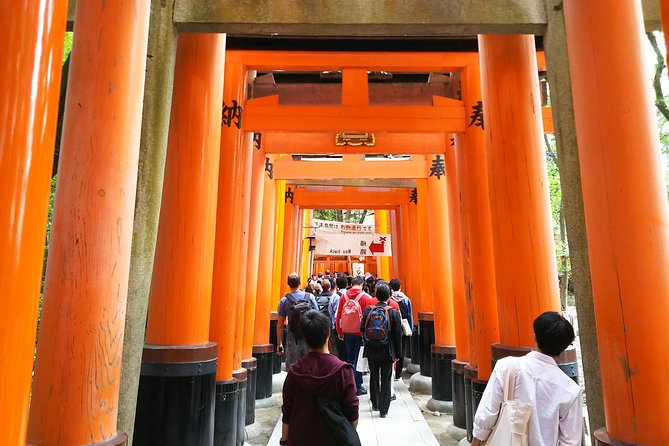
Fushimi Inari-taisha is the natural first stop. Its long tunnel of vermilion torii gates is one of Kyoto’s clearest visual symbols, and the gates were donated by worshippers giving thanks for good fortune.
You have about one hour here. That is enough to enter the shrine grounds, walk through a memorable section of the torii tunnel, and take photographs. It is not enough for a leisurely exploration of every path, so you should treat this as a focused introduction rather than a complete visit.
The color and repeated lines of the gates make this a strong opening stop. Your guide can explain the connection between the shrine, its deity, and the donated torii, giving the scene more meaning than a quick photo stop would provide.
The early timing matters most here. The gates are free to enter, but their popularity means the walk can become crowded later in the day. Wear comfortable shoes, since the route involves a fair amount of walking and includes inclined paths if you go beyond the easiest section.
Arashiyama’s Bamboo Forest in 70 minutes
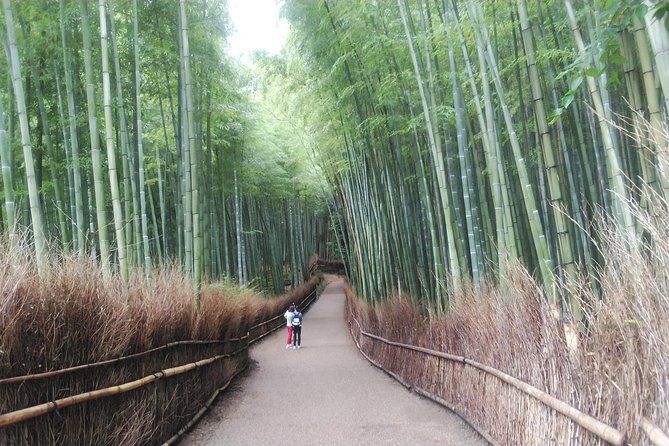
Next comes Bamboo Forest Street, with roughly one hour and 10 minutes allotted. The tall bamboo creates a quiet-looking corridor of green, with light filtering between the trunks and leaves moving in the breeze.
This is another place where timing helps. The famous section is not large, and the experience depends heavily on how crowded it feels. An early visit gives you a better chance to appreciate the sound and height of the bamboo instead of simply following a slow-moving line of people.
The stop is free, and the route is easy to understand. Still, you should know what this portion of the day can and cannot provide. Seventy minutes allows time for the main bamboo walk and nearby orientation, but not an unhurried exploration of all Arashiyama.
One useful point from the tour feedback is that the bamboo area may deserve more time than this schedule allows. If Arashiyama is your main reason for visiting Kyoto, this full-day route may feel too rushed. If it is one part of a first look at the city, the allotted time gives you a worthwhile taste.
Kinkakuji, Kyoto’s Golden Pavilion
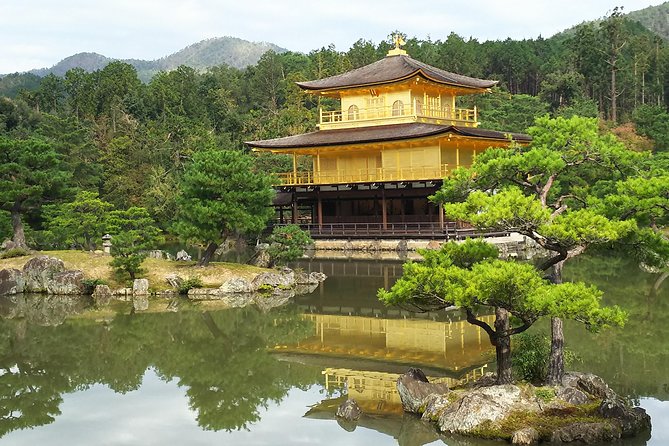
Kinkakuji receives about 50 minutes. The Golden Pavilion is a Zen temple and a powerful symbol of Kyoto’s connection with samurai-era culture. Its gilded exterior reflected in the pond is the image most people come to see.
The admission fee is not included. The listed charge is ¥500 per person, so add that to the tour price when planning your budget.
Kinkakuji is a highly popular site, and the path around the main view can feel tightly managed during busy periods. You will not get a quiet, private temple visit here. What you do get is a striking sight that earns its place on a first Kyoto itinerary.
Fifty minutes is generally suited to seeing the pavilion, walking the marked route, and taking photographs. It is not designed for long contemplation or a detailed study of every garden feature. Your guide’s explanations can make the short visit more useful, especially if you want context about Zen temples and the building’s place in Japanese culture.
Same city, a completely different kind of day:
- PERFECT KYOTO 1-Day Bus Tour
★ 5.0 · 13,518 reviews - Kyoto: Fushimi Inari, Kinkakuji, Bamboo Grove 1 Day Bus Tour
★ 4.8 · 4,316 reviews - Kyoto: Tea Ceremony in a Traditional Tea House in Kiyomizu
★ 4.9 · 3,519 reviews - Kyoto: Tea Ceremony Ju-An at Jotokuji Temple
★ 4.9 · 3,207 reviews
Kitano Tenmangu and the meaning of Tenjin
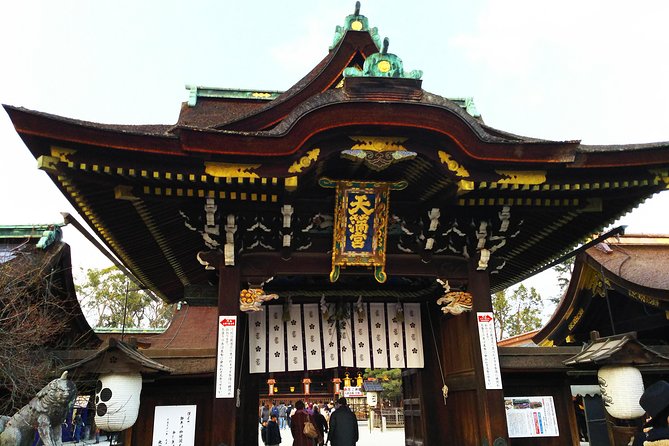
The route then shifts to Kitano Tenmangu Shrine for about 30 minutes. Built in 945, the shrine honors Sugawara no Michizane, who is associated with academic success.
That connection gives the visit a practical, living quality. Students come to pray for successful examinations, so the shrine is not only an old structure to photograph. It remains part of everyday religious life in Kyoto.
Thirty minutes is a short stop, but it can be enough to see the main grounds and understand why the shrine matters. The admission is listed as free. If you are interested in Japanese beliefs, school traditions, and how historic religious sites continue to serve local people, this stop adds useful balance to the better-known sights.
It also sets up the next part of the route. Kitano Tenmangu is next to Kamishichiken, one of Kyoto’s five geisha districts.
Kamishichiken, a quieter geisha district
Kamishichiken Kaburenjo Theatre receives about 25 minutes. Kamishichiken has fewer geisha houses and fewer geiko and maiko than some of Kyoto’s other districts, which gives this section a less crowded feel.
You should not expect a staged geisha performance during this tour. The visit is an exterior look at the district and its theater area, along with an explanation of the neighborhood’s role in Kyoto’s traditional entertainment culture.
This short stop is valuable because it moves beyond the standard postcard sights. The Golden Pavilion and bamboo are easy to recognize, but a historic entertainment district helps you see another side of the city. Keep your expectations measured: 25 minutes offers an introduction, not a full evening of theater or a detailed look inside the district.
A private guide can be especially helpful here. The customs and terms surrounding geiko and maiko are not always obvious, and a good explanation can prevent the area from being reduced to a photo opportunity.
Nishiki Market and a taste of daily Kyoto
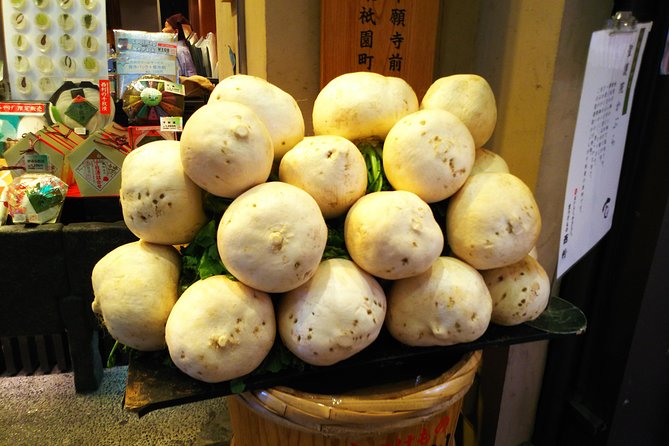
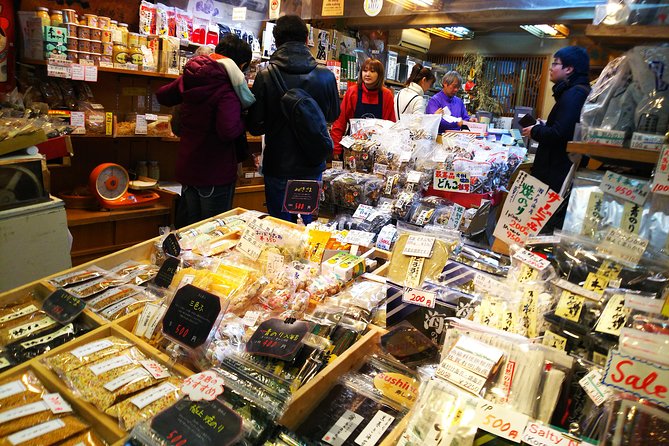
The final listed stop is Nishiki Market Shopping District, with about 40 minutes for browsing and food tasting. The market has served Kyoto residents for roughly 400 years and stretches along a 390-meter street lined with 126 shops.
This is the most food-focused stop of the day. You may see Kyoto vegetables, pickles, and other local specialties, with opportunities to taste some items. The market gives you a chance to shift from temples and shrines to the city’s food culture.
Forty minutes is enough for a guided walk and a few tastes, but it can pass quickly. If you enjoy browsing food stalls or want to buy edible souvenirs, ask your guide early how to use this stop well. A guide who knows your interests can point you toward things that suit you instead of leaving you to scan every shop.
Several strong experiences with this tour have included guides arranging or recommending a good lunch. Gigi was praised for setting up a wonderful lunch and making the day fit the group’s pace. Seiya was also praised for choosing a delicious lunch spot. Lunch is not listed as an included feature, so you should expect to pay for your own meal, but the guide’s local advice can be useful.
The real cost: $130.79 plus transport and admission
The listed price is $130.79 per person. For a private eight-hour tour with a professional guide, that can be fair value, particularly if you are visiting Kyoto for the first time and want help connecting distant sights.
The cost is not all-inclusive. Add the listed ¥500 admission fee per person and about ¥1,700 per person for public transportation. Food is also not included. In practical terms, the guide fee is the main purchase, while transit, the Kinkakuji ticket, and meals are separate expenses.
The value depends on your priorities. If you already understand Kyoto’s rail and bus system, you may prefer visiting fewer sites on your own and spending less. If you want someone to explain what you are seeing, keep the day moving, suggest photo locations, and help with lunch, the private format may justify the price.
Group discounts are available, which can improve the per-person value if you are booking for several people. Since only your group participates, you do not have to match the pace of strangers.
Public transport, walking, and the pace of the day
Transport is both a strength and a weakness here. Moving by bus and subway lets you see ordinary neighborhoods between major sights, and one positive experience specifically appreciated using transit as a way to walk through Kyoto rather than simply being driven from gate to gate.
The downside is that Kyoto’s transport network is not always direct. Buses can be crowded, connections can take time, and several changes during one day can become tedious. One dissatisfied experience found that transport cut into sightseeing time and advised having a Suica card rather than counting coins for each ride.
That is sound practical advice. The tour cost lists public transportation at ¥1,700 per person, but you should still be ready for the mechanics of local transit. A rechargeable IC card can make boarding easier if you have one available. The important point is that this is not a relaxed walking tour confined to one neighborhood. It is a citywide route held together by trains, buses, and a brisk schedule.
The tour involves quite a bit of walking. It is described as suitable for people with limited mobility and limited eyesight, but it is not stroller accessible. The information also says animals or pets are allowed while separately stating that the activity is not suitable for pets, so anyone traveling with an animal should confirm the policy before booking.
The guide can make or break the experience
The strongest part of this tour is the private guide. You are not simply paying for a route. You are paying for someone who can explain the places, help with the city’s transport, and adjust the experience to your interests.
Gigi was praised for making an effort to learn what the group cared about, taking good pictures, arranging lunch, and keeping the day at a comfortable pace. Fuji-san was praised for covering everything the couple wanted and adding more, while explaining the important details and finding scenic locations.
Seiya’s strength was making public transport feel like part of the city experience and recommending an excellent lunch. Meg was praised for answering questions and even bringing hand warmers at the start of a cold day.
Those details point to the kind of service you should expect from a strong guide, but the individual guide matters. Ask questions, explain your interests early, and say if you would rather spend more time at a temple, in the market, or around the bamboo. The private format gives you room to shape the day, but you need to speak up because the schedule is packed.
Who should book this Kyoto day tour?
I would recommend this experience to a first-time Kyoto visitor who wants to see the city’s major cultural sights in one day and prefers explanations over independent navigation. It is also a good fit for a small family or group that values a private guide and wants the day adjusted to its pace.
It suits people who can handle several hours of walking and do not mind public transportation. Starting early is a real advantage, especially if you want a better chance at the most famous photo spots.
I would hesitate if your main goal is a slow visit to Arashiyama, a long meal at Nishiki Market, or quiet time at each temple. The route covers a lot, but the city’s distances and transit connections mean some time is spent getting from one place to the next.
Cancellation is free up to 24 hours before the start time. The tour requires good weather, and if poor weather forces a cancellation, you can choose another date or receive a full refund.
Final call: a useful first look, not a slow Kyoto day
Book this tour if you want a private guide, an early start, and a strong first look at Kyoto’s major cultural sights. The combination of Fushimi Inari, bamboo, Kinkakuji, Kitano Tenmangu, Kamishichiken, and Nishiki Market gives you a broad sense of the city in one day.
Skip it if you dislike transit, want long visits at each stop, or already know Kyoto well. At $130.79 plus transport, admission, and food, it is best viewed as a guiding and orientation service. For the right visitor, that help can turn a difficult citywide day into a well-organized introduction.
FAQ
How long does the Kyoto Early Riser Platinum One-Day Walking Tour last?
The tour lasts approximately eight hours.
Where does the tour start?
It starts at the Kyoto Station Building, 901 Higashishiokōjichō, Shimogyo Ward, Kyoto.
Where does the tour end?
The activity ends back at the meeting point near Kyoto Station.
Is this a private tour?
Yes. Only your own group participates in the private activity.
What is included in the price?
A professional guide is included.
Are admission fees included?
No. The listed admission fee is ¥500 per person. Fushimi Inari-taisha Shrine, Bamboo Forest Street, Kitano Tenmangu Shrine, Kamishichiken, and Nishiki Market are listed with free admission.
Is public transportation included?
No. Public transportation is listed separately at ¥1,700 per person.
How much walking is involved?
Quite a bit of walking is involved, including walking through shrine, temple, market, and bamboo forest areas.
Can I cancel for a full refund?
Yes, if you cancel at least 24 hours before the experience starts. Cancellations or changes made less than 24 hours in advance are not refundable. If poor weather causes the tour to be canceled, you will be offered another date or a full refund.
Just added around Kyoto
- Private Guided Traditional Buddhist Cooking in Japan★ 5.0 · 16 reviews
- Kyoto: Gion Geisha District & Sake-in-Hand Walking Tour★ 5.0 · 37 reviews
- Kyoto: Zen Meditation at a Private Temple with a Monk★ 5.0 · 25 reviews
- Your Private Vacation Photography Session In Kyoto★ 5.0 · 110 reviews
- Traditional Japanese Washi Papermaking- Kyoto morning★ 5.0 · 77 reviews
- Kyoto Wagashi(Japanese sweets) Cooking Class near Fushimiinari★ 5.0 · 60 reviews
- Private Pewter Sake Cup Experience with a Kyoto Artisan★ 5.0 · 31 reviews
- Kyoto Private 6 hour Tour: English Speaking Driver Only, No Guide★ 5.0 · 88 reviews
Walking Tours, compared.

Kyoto Geisha Walking Tour: Gion District & Hidden Gems
Read our review →
Tokyo Tsukiji Fish Market Food and Culture Walking Tour
Read our review →
Gion Magical Night Walking Tour with Geisha Trivia
Read our review →
Imperial Palace and Shogun Historical Walking Tour
Read our review →
Gion Geisha District Walking Tour – Stories of Geisha
Read our review →
Asakusa Walking Tour with Sensoji Temple Visit
Read our review →
Kyoto Gion Geisha District Walking Tour – The Stories of Geisha
Read our review →Browse the lists this tour appears in