
REVIEW · GARDEN & PALACE TOURS
Kyoto: Discover Every Bit of Kyoto Imperial Palace
Kyoto Imperial Palace is not simply an old royal residence. It is the former center of Japan’s imperial court, where emperors lived and major ceremonies took place before the capital moved to Tokyo in 1869. The most rewarding part of this visit is seeing how grand public halls and quiet private spaces fit together.
I like the ceremonial architecture, especially the majestic Shishinden, and I like having a guide connect the buildings to imperial customs instead of leaving you with a string of names. The gardens are another strong point, with one interior garden praised for its striking beauty. The main caution is that the quality of guiding appears uneven, so the experience depends heavily on who leads your group.
In This Review
- Key points to know before you book
- Why Kyoto Imperial Palace matters
- Meeting at Hamaguri Gate
- The ceremonial heart of the palace
- From grand ceremonies to private court life
- The gardens provide a welcome pause
- What the guide adds, and what it may not
- Is $38 a fair price?
- How to fit the visit into a Kyoto day
- Who will enjoy this palace tour most
- Practical details that affect your choice
- Should you book Kyoto Imperial Palace with a guide?
- FAQ
- Where does the Kyoto Imperial Palace tour begin?
- How do I find the guide?
- Where does the tour finish?
- How much does the activity cost?
- Is palace entry included?
- How long does the tour last?
- What language is the tour offered in?
- Can I book a private or small-group tour?
- Can I cancel for a refund?
Key points to know before you book
- See the Shishinden, the main hall used for major imperial ceremonies.
- Walk through the former court grounds, including spaces linked to the Emperor’s daily life.
- Meet at Hamaguri Gate, where your guide waits with a yellow DeepExperience sign.
- Choose a private or small group, useful if you want room for questions.
- Expect an English tour, with the listed route taking about 1 to 1.5 hours.
- Pay $38 for the guide-led experience, while palace entry itself is listed as free.
Why Kyoto Imperial Palace matters
Kyoto was Japan’s imperial capital for centuries. The imperial family lived here until the capital moved to Tokyo in 1869, and the palace complex still gives you a clear sense of the court’s formal world.
That distinction matters. You are not visiting a castle built mainly for military defense. You are walking through a place shaped by ceremony, rank, ritual, and controlled movement. The architecture reflects that purpose, from imposing reception halls to more private residences and gardens.
A self-guided visit can show you the buildings. A good guide can explain why one hall was built for public ritual while another belonged to the private side of court life. That extra layer is the main reason to consider paying for this activity when entry is free.
The complex sits inside Kyoto Gyoen National Garden, so the approach already feels calmer than much of central Kyoto. The palace grounds offer traditional Japanese architecture, open courtyards, and carefully arranged garden spaces. You get a change of pace from Kyoto’s crowded temple lanes.
More Garden & Palace Tours in Kyoto
- Kyoto: Nijo-jo Castle and Ninomaru Palace Guided Tour
★ 4.7 · 1,020 reviews - Kyoto: Nijo Castle, Kiyomizu & Fushimi Inari Guided Tour
★ 4.7 · 700 reviews - Kyoto: Imperial Palace & Nijo Castle Guided Walking Tour
★ 4.7 · 453 reviews
Meeting at Hamaguri Gate
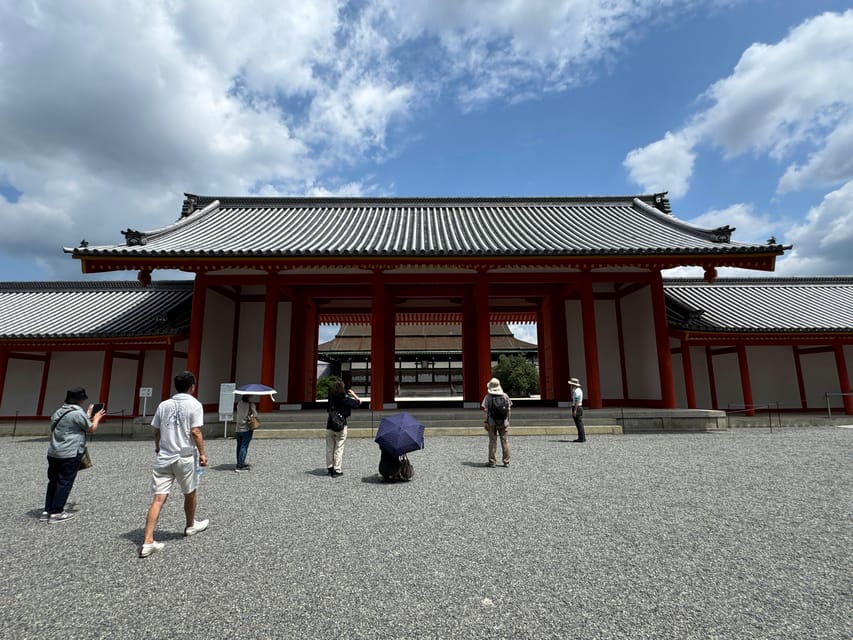
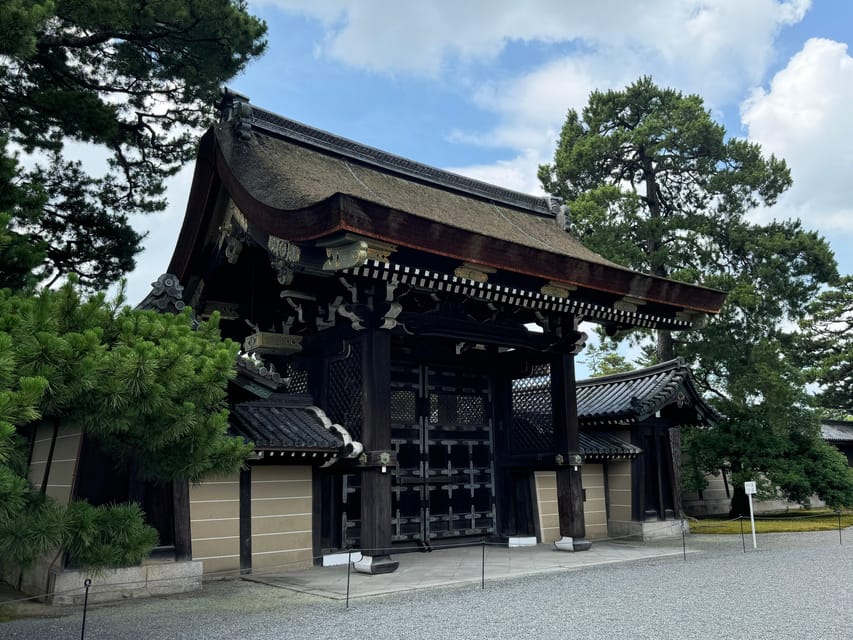
Your tour begins at Hamaguri Gomon, also called Hamaguri Gate. This is a practical meeting point because the gate is a clear landmark on the edge of the palace grounds.
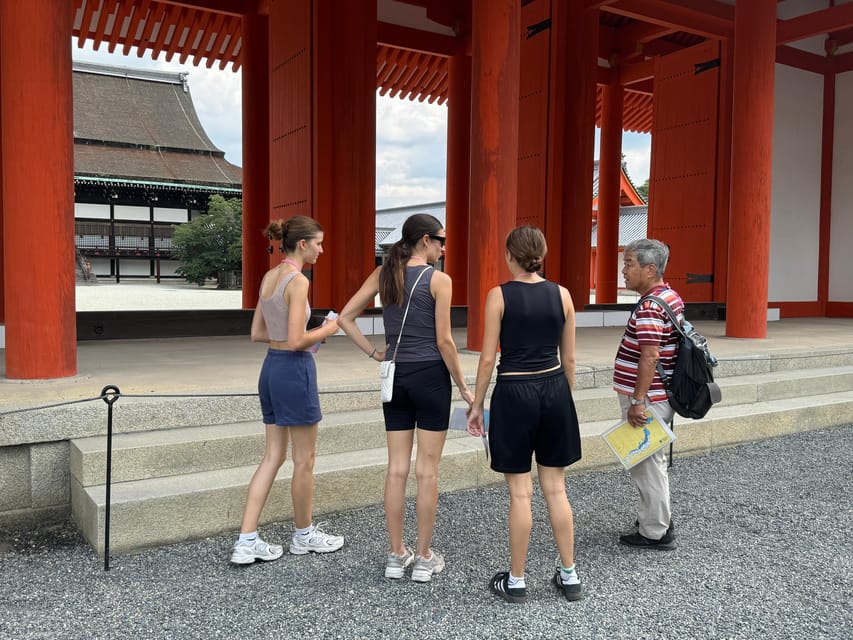
Look for a guide holding a yellow sign marked DeepExperience. That detail is worth remembering, especially if several guided activities are gathering nearby. Arriving with the meeting point and sign in mind should make the start less stressful.
The tour returns to the same gate after the palace visit. That simple out-and-back arrangement helps you plan the rest of your day. You do not need to build your schedule around a distant finish point.
The published information gives the activity a duration of one hour, while the visit itself is also described as lasting 1.5 hours. I would allow at least 90 minutes, and avoid scheduling a tight connection immediately afterward. Tour timing can depend on the pace of the group and the amount of explanation.
The ceremonial heart of the palace
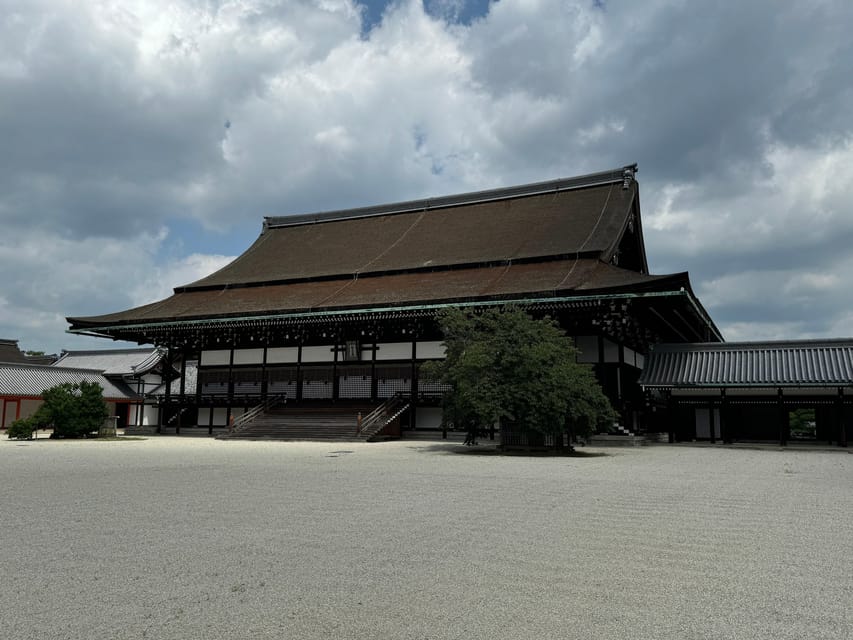
The Shishinden is the architectural centerpiece of the visit. This main hall was used for important imperial ceremonies, making it more than an attractive traditional building. It represents the public face of the court, where ritual and authority were placed on display.
A guide can help you read the building’s scale and position. Without context, you may see a large wooden hall and a broad open space. With context, you begin to understand how the setting supported formal events and separated the Emperor from ordinary daily life.
The palace’s traditional architecture is intentionally restrained. Its appeal comes from proportion, timber construction, rooflines, courtyards, and the relationship between buildings and gardens. You will not find the heavy stone fortifications associated with European royal residences.
I particularly like the contrast between the ceremonial spaces and the quieter parts of the grounds. It shows that imperial life was not only public appearances. There was also a private routine behind the formal halls.
From grand ceremonies to private court life
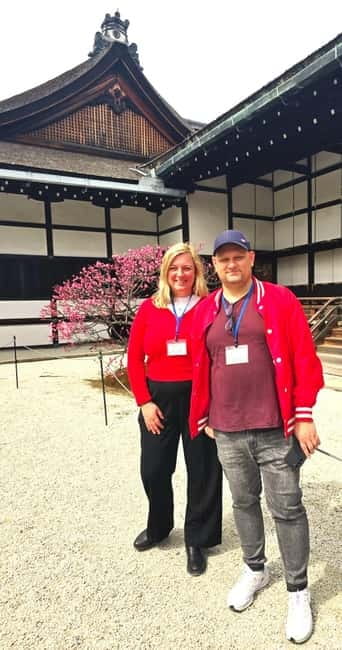
The route includes structures connected with official duties and the Emperor’s personal residence. This is where the visit becomes more human.
Grand halls tell you how the court presented itself. Personal living spaces suggest how the imperial family moved through ordinary days, away from large ceremonies. The experience invites you to compare the two settings: one built for ritual, the other for residence.
Do not expect a tour of every room in the entire palace complex. The information provided describes a guided visit through the palace and its important structures, but it does not promise access to every interior. Much of the value comes from the buildings, grounds, visible details, and the explanation supplied along the route.
That makes the guide especially important. A strong guide can point out details you might otherwise pass without notice. Yoshi received especially warm praise for explaining Japanese history and showing small features within the palace grounds. That kind of close observation can turn a short visit into a useful lesson.
At the same time, one booking received a very poor assessment because the guide reportedly gave little information and mainly walked alongside the group while taking photographs. I would book with the understanding that the guide makes a real difference here.
Same city, a completely different kind of day:
- PERFECT KYOTO 1-Day Bus Tour
★ 5.0 · 13,518 reviews - Kyoto: Fushimi Inari, Kinkakuji, Bamboo Grove 1 Day Bus Tour
★ 4.8 · 4,316 reviews - Kyoto: Tea Ceremony in a Traditional Tea House in Kiyomizu
★ 4.9 · 3,519 reviews - Kyoto Geisha Walking Tour: Gion District & Hidden Gems
★ 4.7 · 3,273 reviews
The gardens provide a welcome pause
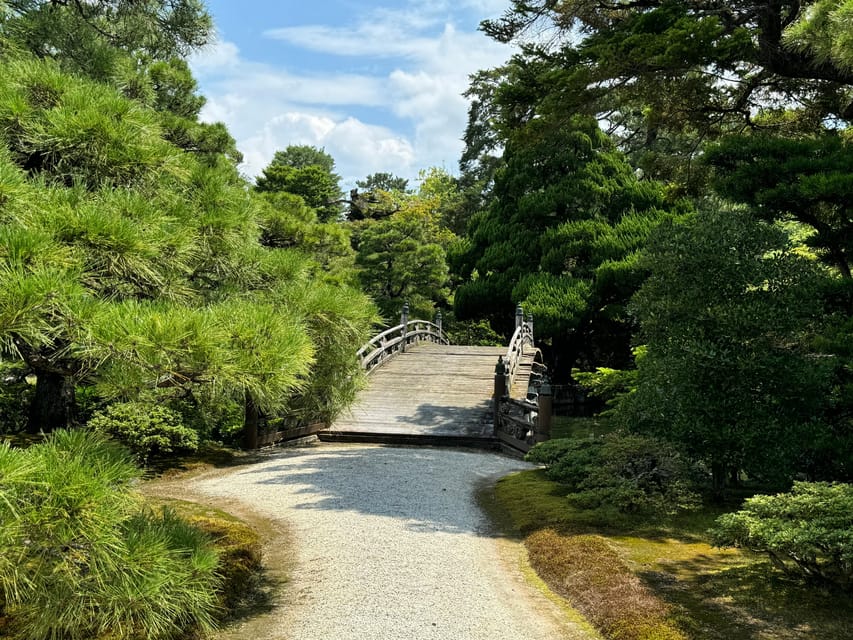
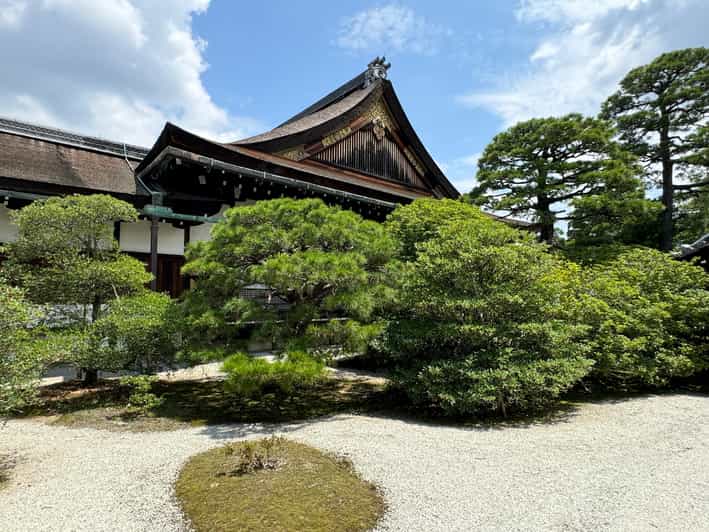
The palace gardens soften the formal character of the buildings. Their design gives you space to slow down and see how Japanese court architecture works with ponds, trees, paths, and open views.
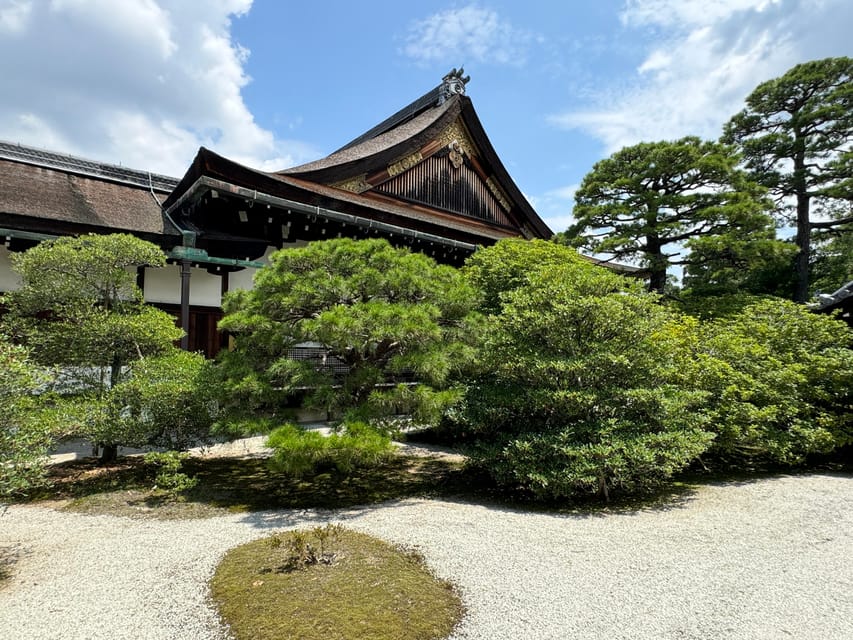
One interior garden was described as jaw-droppingly beautiful. I would not treat that as a guarantee that every season will look the same, but it points to one of the tour’s strongest visual moments. The gardens may be particularly appealing if you enjoy quiet details more than a fast checklist of sights.
You will also notice that the gardens help organize the palace experience. They create transitions between halls and residences, allowing the route to move from public ceremony to more private settings.
This is not a garden-only activity, so do not book it expecting a long botanical walk. The garden time forms part of a history and architecture tour. Its value is in the way it frames the palace buildings and gives the visit room to breathe.
What the guide adds, and what it may not
The tour is offered in English, with private and small-group options available. That format is well suited to a place where context matters, particularly if you want to ask about imperial customs, ceremony, or the role of individual halls.
A small group can also feel more manageable around formal buildings and garden paths. A private tour offers the clearest chance to shape the conversation around your interests, though the provided price is listed as $38 per person and does not explain different rates for private arrangements.
The best outcome is a guide who can explain history in plain language, answer questions, and draw your attention to visual details. The strongest comments describe a dynamic guide who could handle many questions in a friendly and considerate way. Yoshi was also praised for his understanding of Japanese history and his ability to show interesting details around the grounds.
The weak outcome is a guide who provides little explanation. Since palace entry is free, you are paying mainly for interpretation and company. If the guide simply walks beside you, the value drops sharply because you could see the accessible areas without paying for a tour.
That is not a reason to dismiss the activity. It is a reason to choose your booking thoughtfully, ask for a small group or private format if available, and make sure you arrive ready with questions.
Is $38 a fair price?
At $38 per person, this is a moderate price for a short guided cultural visit in Kyoto. The palace entry itself is listed as free, so the charge covers the guide-led experience rather than admission.
That makes the value easy to judge. If you want background on the imperial family, an explanation of ceremonial halls, and help noticing details in the gardens, the fee can be worthwhile. You are buying interpretation in a place where the architecture alone may not explain its purpose.
If you prefer to read signs and move at your own pace, the price may feel unnecessary. One assessment specifically found the accessible sights easy to see without a guide. That is the central value question: do you want a history lesson and conversation, or simply a walk through the palace grounds?
The private or small-group format improves the case for booking, particularly for people who enjoy asking questions. Still, the supplied information does not guarantee a particular guide, so I would not pay the fee expecting a specific person such as Yoshi unless your booking confirms it.
How to fit the visit into a Kyoto day
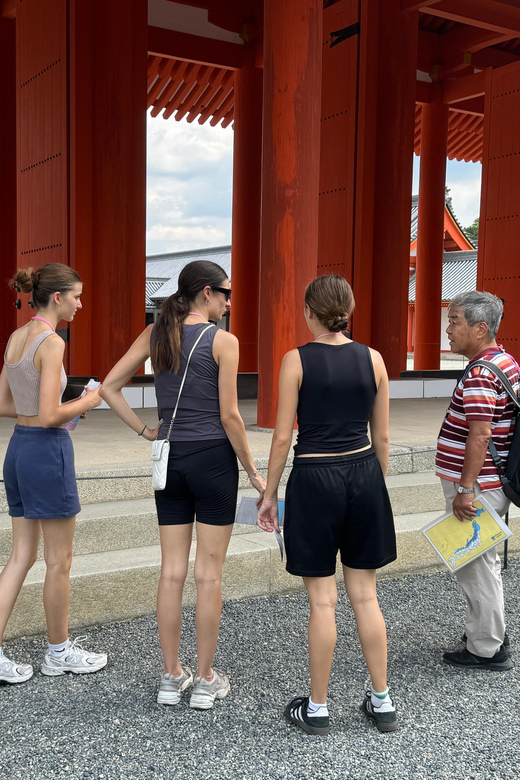
The one-hour listing makes this easy to pair with another Kyoto activity. The longer 1.5-hour description means you should plan with the more generous figure in mind.
Start at Hamaguri Gate, complete the guided palace visit, and finish at the same gate. That leaves you free to continue elsewhere without arranging a separate pickup or transfer.
The palace is in Kyoto Gyoen National Garden, which gives you a spacious setting before and after the tour. You can treat the visit as a focused history stop rather than a full-day outing.
I would choose this experience early in your Kyoto stay if you want a clearer framework for Japan’s imperial traditions. It may also work well later in your trip, once you have already seen temples and shrines and want to compare religious architecture with court architecture.
Do not book it if you need a long, leisurely garden stroll or a broad survey of all Kyoto history. The tour is focused on one palace complex, its buildings, its ceremonies, and the imperial household.
Who will enjoy this palace tour most
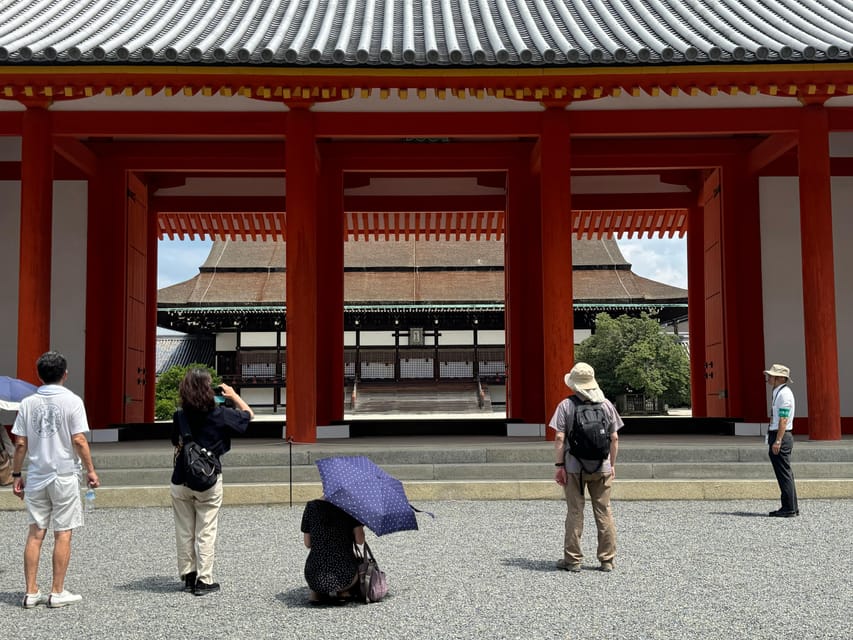
This experience suits you if you enjoy history, architecture, and places where small details carry meaning. It is also a good match if you want an English-speaking guide to explain Japan’s imperial past rather than relying on your own reading.
Families and first-time visitors may appreciate the short length. The palace can be easier to understand when someone explains why the buildings differ in scale and purpose.
It is less suitable if you dislike guided pacing or prefer complete independence. Because the palace entrance is free, independent visitors have a strong alternative.
I would also be cautious if you are booking solely for the gardens. The garden views are an important part of the appeal, but the activity is built around imperial history and architecture. Its best moments come from the combination.
Practical details that affect your choice
The activity includes a guide and entry to Kyoto Imperial Palace, with entry listed as free. The tour language is English.
You can cancel up to 24 hours before the activity for a full refund, and you can reserve now while paying later. Those terms are useful if your Kyoto schedule is still changing.
The meeting point is in front of Hamaguri Gate, not at a general hotel pickup location. Keep the yellow DeepExperience sign in mind when you arrive.
The group may be private or small, depending on the option you choose. The information does not specify a maximum group size, so check the available choice before booking if group size matters to you.
The duration needs careful attention. The summary says one hour, while the detailed visit says 1.5 hours. Check the available starting time and leave a buffer afterward.
Should you book Kyoto Imperial Palace with a guide?
I would book this tour if you want the palace’s ceremonies, residences, and gardens to make historical sense. The Shishinden, the former private residence, and the interior garden give you plenty to look at, while a strong English-speaking guide can explain what the buildings cannot.
I would skip it if you are comfortable exploring independently and mainly want to see the grounds. Since admission is free, that is a sensible choice.
The deciding factor is the guide. The best experience includes clear explanations, friendly answers, and attention to small details, qualities praised in connection with Yoshi and another well-received guide. The poor experience offers little more than company and photographs.
At $38, this is a reasonable short tour when the guiding is strong. Book it for context, not just access, and allow 90 minutes even though the headline duration says one hour.
FAQ
Where does the Kyoto Imperial Palace tour begin?
The meeting point is in front of Hamaguri Gomon, also called Hamaguri Gate, at Kyoto Imperial Palace.
How do I find the guide?
Your guide will be waiting with a yellow sign marked DeepExperience.
Where does the tour finish?
The tour returns to Hamaguri Gate.
How much does the activity cost?
The listed price is $38 per person.
Is palace entry included?
Yes. Entry to Kyoto Imperial Palace is included, and it is listed as free.
How long does the tour last?
The activity summary lists one hour, while the palace visit is described as lasting 1.5 hours. Check the available starting time and allow extra time in your schedule.
What language is the tour offered in?
The live tour guide service is offered in English.
Can I book a private or small-group tour?
Yes. Private or small-group options are available.
Can I cancel for a refund?
Yes. You can cancel up to 24 hours in advance for a full refund.
Just added around Kyoto
- Taste of Nishiki Market Walking Food Tour with Local guide★ 5.0 · 17 reviews
- Kyoto: Sushi Making Class with Sushi Chef★ 4.8 · 64 reviews
- Kyoto: City Secrets eBike Tour★ 4.9 · 196 reviews
- Sacred Pathways: Discover the Philosopher’s Path of Kyoto★ 4.9 · 20 reviews
- Private Tour to Monkey Park and Arashiyama Highlights★ 5.0 · 22 reviews
- Private Nara Tour from Osaka – Meet at Your Hotel★ 5.0 · 22 reviews
- Private Sake Tasting in Central Kyoto with Sake Sommelier★ 5.0 · 13 reviews
- Kyoto : Private Custom Walking Tour With A Local Guide★ 4.6 · 144 reviews
Garden & Palace Tours, compared.

Imperial Palace and Shogun Historical Walking Tour
Read our review →
Tokyo Castle & Imperial PalaceーShogun Walking Tour
Read our review →
Nijo-jo Castle and Ninomaru Palace Guided Tour
Read our review →

Ultimate Osaka Walking Tour: Castle, Dotonbori & Hidden Gems
Read our review →Tokyo Castle & Imperial PalaceーShogun Walking Tour
Read our review →Browse the lists this tour appears in