
REVIEW · WALKING TOURS
KIYOTO’s Kyoto Private Tour: Highlights & Hidden Gems
Kyoto’s best-known sights are spread across the city, and this private Kyoto tour gives you a guide to connect the dots. In one day, you may see torii gates, old geisha streets, food stalls, Zen temples, a bamboo grove, and the Golden Pavilion without spending your time sorting out train routes and temple locations.
I like the personal pace, since you can ask questions, linger at a place that interests you, or swap a standard stop for a quieter corner. I also like the guide’s role as photographer and trip planner, a useful touch for couples and families who want good pictures without handing a phone to strangers.
The main caution is the ambitious route. Fourteen stops cannot all receive equal attention in only four hours, and entrance fees, food, drinks, and transport are extra. You’ll get the most from this experience with a full day, a clear list of priorities, and a willingness to use public transport.
In This Review
- Key things to know before booking
- A private way to get your Kyoto bearings
- Pontocho and the first look at old Kyoto
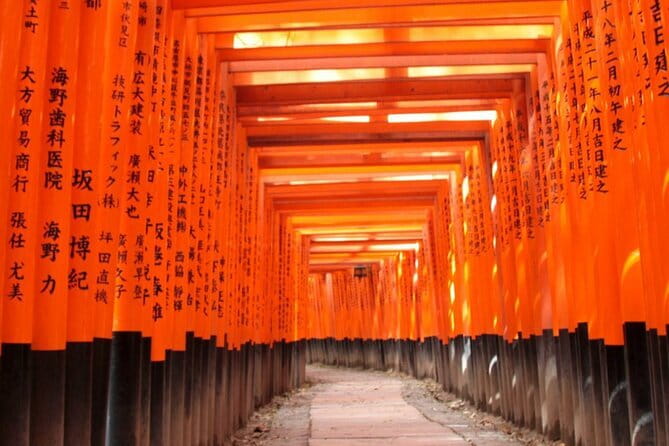
- Fushimi Inari’s long corridor of torii gates
- Kiyomizu-dera and the Higashiyama slopes
- Sannenzaka, Ninenzaka, and a five-minute Starbucks stop
- Yasaka Pagoda and Gion’s old streets
- Tatsumi Bridge and a quieter Gion pause
- Nishiki Market, Kyoto’s food corridor
- Kinkaku-ji, the Golden Pavilion
- Tenryu-ji and the Arashiyama Bamboo Forest
- Kimono Forest and Togetsukyo Bridge
- What the private format really adds
- Price, time, and the real value
- Who should book this Kyoto tour?
- Final call: book it with a clear plan
- FAQ
- How long does the private Kyoto tour last?
- Where does the tour begin?
- Where does the tour end?
- Is transportation included?
- Are entrance tickets included?
- Is this a private tour?
- Can I cancel for a full refund?
Key things to know before booking
- Private attention throughout: Only your group takes part, so the guide can adjust the pace and answer your questions.
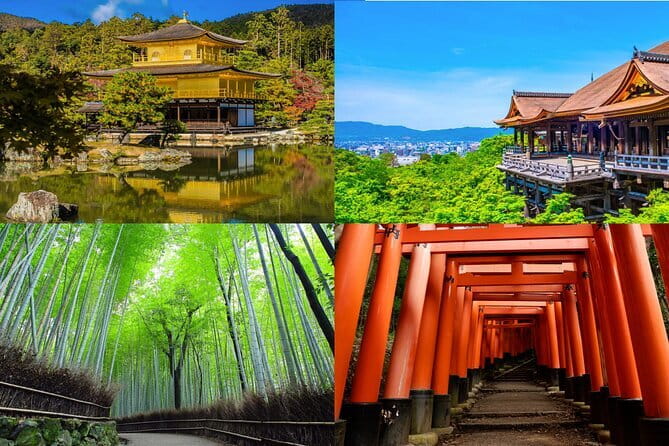
- A broad Kyoto route: The stops cover Fushimi Inari, Higashiyama, Gion, central Kyoto, Kinkaku-ji, and Arashiyama.
- Flexible guide styles: Yuhey, Akiyo, Paren, and Kiyoto are among the named guides associated with warm service, local suggestions, photos, and customized touring.
- Four to eight hours: The time range matters. A shorter outing will require you to choose, rather than fully cover, every listed stop.
- Extra costs add up: Temple admissions, meals, drinks, and public transport are not included. You are also asked to cover those costs for your guide.
- Easy starting point: Meet at the Kyoto Tourist Information Center, Kyo-Navi, on the second floor of Kyoto Station Building.
A private way to get your Kyoto bearings
This is best understood as a flexible city orientation rather than a fixed sightseeing march. Your guide leads the way, explains local customs and places, and helps you make sense of Kyoto’s layout.
That matters because Kyoto’s sights do not form one neat cluster. Fushimi Inari is south of central Kyoto, Kiyomizu-dera is in the eastern hills, Kinkaku-ji is in the northwest, and Arashiyama is farther west. A private guide can help you decide which areas deserve real time and which are better treated as brief photo stops.
The advertised experience lasts about four to eight hours. That is a wide range, so confirm your preferred length and priorities when arranging the outing. If you want Fushimi Inari, Kiyomizu-dera, Nishiki Market, Kinkaku-ji, and Arashiyama all covered, eight hours makes far more sense than four.
The tour begins and ends at Kyoto Station’s tourist information center. Pickup is offered, but the stated meeting point gives you a clear fallback if you are staying elsewhere. Since transport is not included, you should expect some walking and possibly trains or buses at an additional cost.
More Walking Tours in Kyoto
- Kyoto Geisha Walking Tour: Gion District & Hidden Gems
★ 4.7 · 3,273 reviews - Kyoto: Gion Magical Night Walking Tour with Geisha Trivia
★ 4.9 · 2,393 reviews - Kyoto: Gion Geisha District Walking Tour – Stories of Geisha
★ 4.7 · 2,187 reviews
Pontocho and the first look at old Kyoto
The short stop in Pontocho introduces one of Kyoto’s most atmospheric lanes. This narrow passage runs beside the Kamo River between Sanjo and Shijo streets and is one of the city’s five traditional geisha districts.
Ten minutes is enough for orientation and a few photographs, but not for a meal or a long wander. The lane is most useful at the start of a city tour because your guide can point out the relationship between the river, tea houses, restaurants, and the older entertainment quarters.
If Pontocho interests you, ask for advice about returning later. The tour’s brief stop gives you a taste, not a full evening there.
Fushimi Inari’s long corridor of torii gates
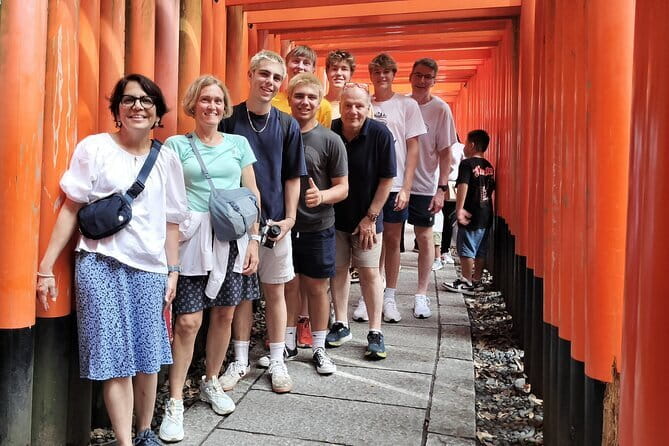
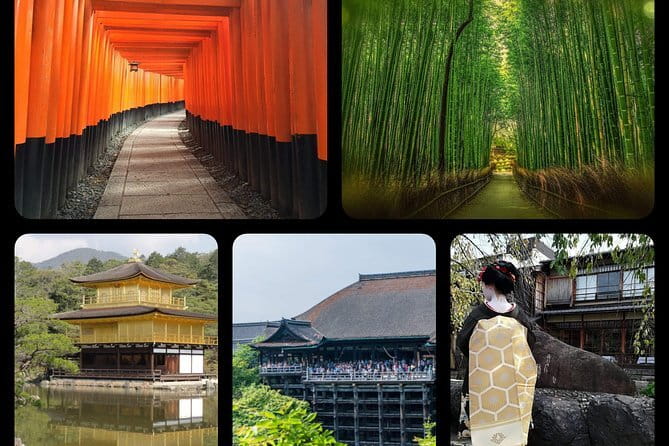
Fushimi Inari-taisha is one of Kyoto’s essential sights, and the famous Senbon Torii makes the reason obvious. Vermilion gates line the path up Mount Inari, creating a striking corridor that changes as you walk higher.
The planned visit lasts about an hour. That gives you time to enter the shrine grounds, pass beneath a section of gates, and learn about the shrine’s role. It does not allow a complete climb through every upper trail, so tell your guide how far you want to go.
This is one place where a private guide helps with pacing. You can focus on the main gate tunnel for photographs, or trade some other stop for a longer walk uphill. Wear comfortable shoes, since the route involves slopes and steps.
Admission is free, which makes Fushimi Inari one of the tour’s strongest value stops. It is also a good early choice if you want the day to begin with Kyoto’s most recognizable religious setting.
Kiyomizu-dera and the Higashiyama slopes
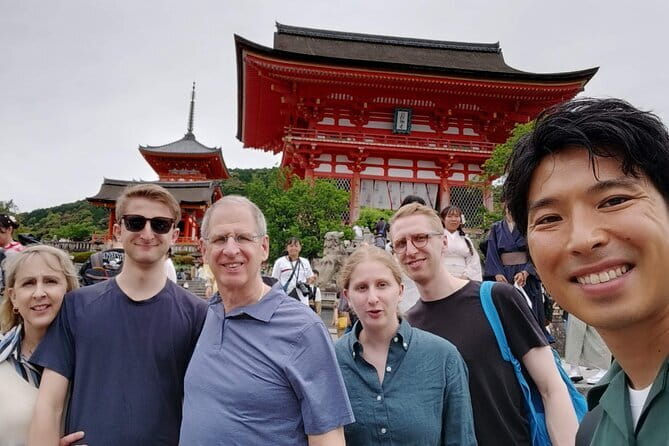
Kiyomizu-dera sits on the wooded slopes of Mount Otowa and gives you a mix of temple architecture, city views, and hillside paths. The temple’s famous wooden stage is the main draw, but the approach is part of the experience.
The visit is planned for about an hour, with admission not included. Budget for the entrance ticket, and remember that you may also pay for your guide’s admission if the temple requires it.
This area can feel demanding because the streets rise toward the temple. The reward is a strong sense of old Kyoto, with traditional buildings and several connected sights nearby. A guide can help you avoid wasting time at the wrong turn and explain what you are seeing instead of leaving you to read signs while moving with the crowd.
Same city, a completely different kind of day:
- PERFECT KYOTO 1-Day Bus Tour
★ 5.0 · 13,518 reviews - Kyoto: Fushimi Inari, Kinkakuji, Bamboo Grove 1 Day Bus Tour
★ 4.8 · 4,316 reviews - Kyoto: Tea Ceremony in a Traditional Tea House in Kiyomizu
★ 4.9 · 3,519 reviews - Kyoto: Tea Ceremony Ju-An at Jotokuji Temple
★ 4.9 · 3,207 reviews
Sannenzaka, Ninenzaka, and a five-minute Starbucks stop
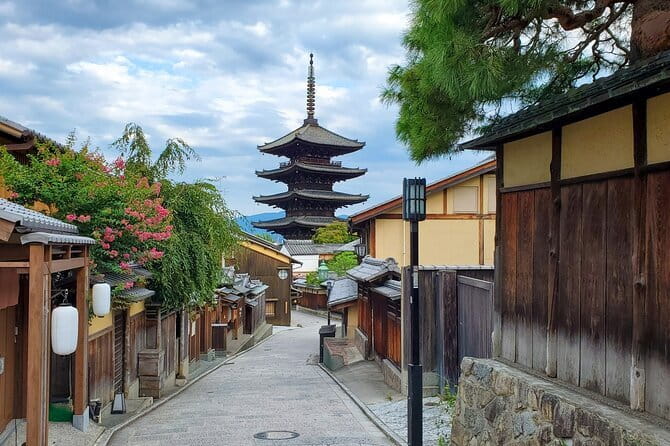
The stone-paved streets of Sannenzaka and Ninenzaka lead toward Kiyomizu-dera and are among the city’s most recognizable old-town walks. Wooden facades, shops, and sloping lanes make this a pleasant place to slow down, though the route can be busy.
The itinerary allows about an hour here, which is much more useful than the five minutes assigned to the nearby machiya-style Starbucks. The café occupies a traditional townhouse and is an interesting architectural stop, but it is not a reason to book the tour. You can leave the group if you want to remain there longer, so treat it as a quick look rather than a coffee break.
The practical advantage of a private guide is flexibility. If your group wants snacks, small shops, or photographs in Higashiyama, you can spend time here instead of rushing onward.
Yasaka Pagoda and Gion’s old streets
The five-story Yasaka Pagoda, part of Hokan-ji Temple, gives you one of Kyoto’s most familiar street views. The pagoda rises above the Higashiyama district and works especially well as a short photo stop.
The stop is listed at five minutes, so you should not expect a lengthy temple visit. It is a visual landmark within a larger walking route, not a full attraction on its own.
Hanamikoji Street provides another brief look at old Kyoto. This narrow, stone-paved street runs through Gion, the city’s best-known geisha district. Five minutes allows a glance and a photograph, but you should not treat it as a chance to search for geisha or interrupt people going about their work.
For a more meaningful experience, ask your guide to explain the district’s customs and suggest where you can return respectfully. The value here is context, not simply checking off another street.
Tatsumi Bridge and a quieter Gion pause
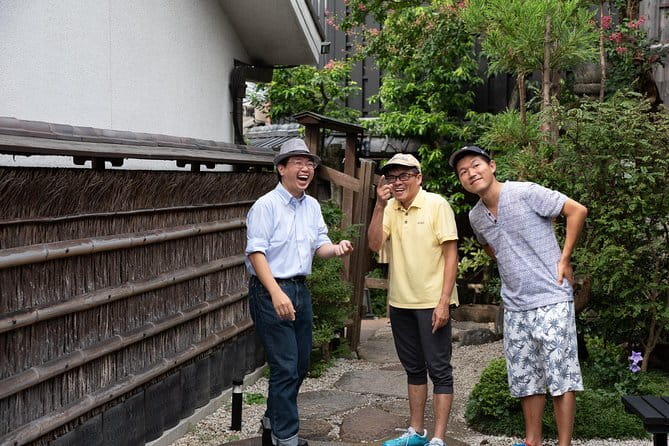
Tatsumi Bridge crosses the Shirakawa River and offers a calmer contrast to the main Gion streets. The wooden bridge and waterway create a compact, photogenic stop with a more peaceful feel.
Ten minutes is enough to see the bridge and nearby lane. If you prefer atmosphere over a long list of monuments, this may be a place to extend. A private tour lets you make that choice without holding up a large group.
This is also where the guide’s photography can help. The setting is small, and a guide who knows how to frame the view can save you time while keeping the stop relaxed.
Nishiki Market, Kyoto’s food corridor
Nishiki Market is known as Kyoto’s Kitchen, and the one-hour visit gives you time to walk through its food stalls and specialty shops. This is the tour’s best chance to shift from temples and streets to everyday food culture.
Food and drinks are not included, so bring a budget for tasting something. A guide can help you understand unfamiliar ingredients and choose a few small items rather than turning the market into a hurried meal.
The market works best when you are willing to look closely. You may find pickled foods, seafood, sweets, and other Japanese ingredients, but the exact stalls and offerings can change. Keep in mind that Nishiki is a working market as well as a sightseeing stop. Walk carefully, avoid blocking narrow passages, and follow shop rules about eating.
One hour is a reasonable amount of time, though shoppers and food lovers may want longer. If the tour is only four hours, this stop will compete directly with the major temples.
Kinkaku-ji, the Golden Pavilion
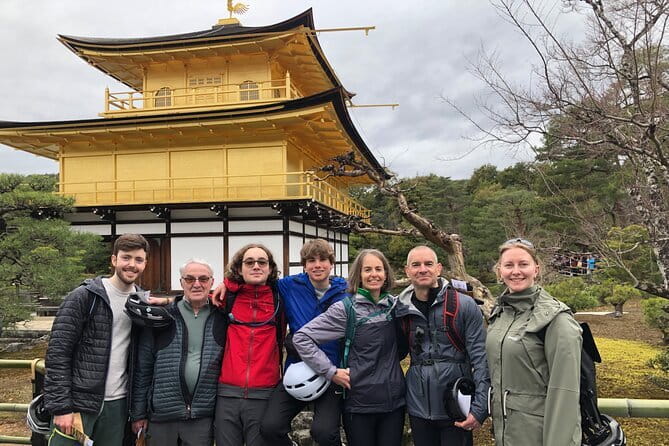
Kinkaku-ji, the Golden Pavilion, is one of Kyoto’s signature sights. Its gold-covered upper stories reflect across the pond, creating the polished image that appears in countless guidebooks.
The planned visit lasts about an hour, and admission is extra. Your guide can explain the temple grounds and help you follow the viewing route, but expect a popular attraction with a set flow rather than a quiet private visit.
The pavilion itself is the main event, so you do not need half a day here. An hour works well if you want photographs and a short walk through the gardens. If you are choosing between several temples, ask your guide to explain how Kinkaku-ji differs from Kiyomizu-dera and Tenryu-ji rather than treating each as another similar stop.
Tenryu-ji and the Arashiyama Bamboo Forest
Tenryu-ji is a major Zen temple in Arashiyama, founded in 1339 by Ashikaga Takauji on the site of a former imperial villa. The visit is set at about 30 minutes, with admission extra.
That half hour lets you see the temple area and begin to appreciate its place in Arashiyama, but it is short if you want a slow garden visit. If temple grounds matter more to you than photographs, make that clear before the day begins.
The nearby Arashiyama Bamboo Forest offers a very different scene. Its path runs for about 400 meters through tall bamboo, and the walk takes around 30 minutes on this schedule. The grove is visually striking, but the route is not an isolated wilderness walk. Go for the unusual setting, then keep expectations realistic about the short, popular path.
The benefit of having a guide here is not just navigation. Your guide can help you decide how much of Arashiyama to cover, since the area also includes the river, bridge, temple, and Kimono Forest.
Kimono Forest and Togetsukyo Bridge
Near Randen Arashiyama Station, the Kimono Forest is an art installation made from about 600 cylindrical pillars, each roughly two meters high. Their patterned surfaces give you a colorful, modern counterpoint to the bamboo and temple grounds.
Ten minutes is plenty for a quick walk and photographs. It is a brief visual stop, so people seeking traditional architecture may rank it below Tenryu-ji or the bridge.
Togetsukyo Bridge crosses the Oi River for 155 meters and provides views toward the surrounding hills. The tour allows ten minutes, enough to cross part of the bridge or pause for photographs. Arashiyama deserves more time if you want a proper walk along the river, so consider dropping a less important stop if nature is your priority.
What the private format really adds
The guide’s undivided attention is the strongest reason to choose this tour over a standard group outing. You can ask about religious customs, local neighborhoods, food, or later plans, and you do not have to keep pace with strangers.
Several guides are specifically associated with this experience. Yuhey is described as easygoing, flexible, good at explaining many subjects, and skilled at making photos and short videos. Akiyo has been praised for balancing major sights with quieter places, including an unexpected meeting with a master pottery maker. Paren has guided families at a relaxed pace, including in rainy weather, while Kiyoto has helped visitors plan more than one day in Kyoto.
The team may not offer one uniform guiding style. One guide was new to Japan, had limited Japanese language ability, and knew less about local culture and history than expected. That is an important point to clarify when booking if detailed historical explanation matters most to you.
Price, time, and the real value
At $177.90 per person, the tour costs more than a group excursion or a self-guided day. The value comes from the private format, the help with a spread-out city, flexible pacing, and the chance to shape the day around your interests.
The price looks better for a couple or small group that wants one guide, especially if you use the full eight hours. For a large family or group, ask about group discounts. For a solo visitor, the private price is harder to justify unless personal planning and photography are especially important.
The extra costs are worth planning carefully. You pay for temple tickets, food, drinks, and transport, and you are asked to cover those expenses for the guide as well as yourself. Since the route crosses much of Kyoto, transport can affect both the budget and the number of stops you can fit in.
I would not try to complete all 14 stops in four hours. Instead, choose one of these approaches:
- Focus on Fushimi Inari, Kiyomizu-dera, Higashiyama, and Nishiki Market.
- Build a western Kyoto day around Kinkaku-ji and Arashiyama.
- Use eight hours for a broad first look, accepting that several stops will be short.
Who should book this Kyoto tour?
I would recommend it to first-time visitors who want help understanding Kyoto quickly, families with mixed interests, couples who value private photos, and anyone who dislikes managing transit between distant sights.
It also suits repeat visitors who want to replace one or two standard attractions with lesser-known neighborhoods or a special interest such as food, crafts, or photography. Tell the guide your priorities early, since the standard route is too wide for detailed visits everywhere.
You may prefer a self-guided plan if you want long temple visits, quiet contemplation, or a low-cost day. You may also prefer a focused neighborhood tour if you already know Kyoto and do not need a citywide overview.
Final call: book it with a clear plan
Book this tour if you want a friendly private guide, flexible scheduling, help with Kyoto’s spread-out sights, and someone to take photographs while you enjoy the day. The strongest parts are the personal service, the mix of famous places and smaller stops, and the ability to adjust the route.
Before booking, request the longest available duration and name your top three priorities. Confirm who will guide you, especially if detailed cultural explanation is important. With those expectations set, this can be a practical and enjoyable introduction to Kyoto. Without them, the long stop list may leave you hurrying from one photograph to the next.
FAQ
How long does the private Kyoto tour last?
The experience lasts approximately four to eight hours. The longer option is more suitable if you want to cover several areas of Kyoto.
Where does the tour begin?
The meeting point is the Kyoto Tourist Information Center, Kyo-Navi, on the second floor of Kyoto Station Building in Shimogyo Ward, Kyoto.
Where does the tour end?
The activity ends back at the meeting point.
Is transportation included?
No. The experience is mainly a walking tour, but public transport may be used at an additional cost. You are asked to cover transportation costs for the guide as well as yourself.
Are entrance tickets included?
No. Food, drinks, and tickets to attractions are not included. Kiyomizu-dera, Kinkaku-ji, and Tenryu-ji list admission as extra.
Is this a private tour?
Yes. Only your group participates, and the guide is reserved for your group.
Can I cancel for a full refund?
Yes, if you cancel at least 24 hours before the experience start time. Cancellations or changes made less than 24 hours before the start time are not accepted for a refund.
Just added around Kyoto
- Private Guided Traditional Buddhist Cooking in Japan★ 5.0 · 16 reviews
- Kyoto: Gion Geisha District & Sake-in-Hand Walking Tour★ 5.0 · 37 reviews
- Your Private Vacation Photography Session In Kyoto★ 5.0 · 110 reviews
- Kyoto: Zen Meditation at a Private Temple with a Monk★ 5.0 · 25 reviews
- Traditional Japanese Washi Papermaking- Kyoto morning★ 5.0 · 77 reviews
- Kyoto Wagashi(Japanese sweets) Cooking Class near Fushimiinari★ 5.0 · 60 reviews
- Private Pewter Sake Cup Experience with a Kyoto Artisan★ 5.0 · 31 reviews
- Kyoto Private 6 hour Tour: English Speaking Driver Only, No Guide★ 5.0 · 88 reviews
Walking Tours, compared.

Kyoto Geisha Walking Tour: Gion District & Hidden Gems
Read our review →
Tokyo Tsukiji Fish Market Food and Culture Walking Tour
Read our review →
Gion Magical Night Walking Tour with Geisha Trivia
Read our review →
Imperial Palace and Shogun Historical Walking Tour
Read our review →
Gion Geisha District Walking Tour – Stories of Geisha
Read our review →
Asakusa Walking Tour with Sensoji Temple Visit
Read our review →
Kyoto Gion Geisha District Walking Tour – The Stories of Geisha
Read our review →Browse the lists this tour appears in