
REVIEW · KIMONO & CULTURE EXPERIENCES
Kimono and Yukata Experience in Kyoto
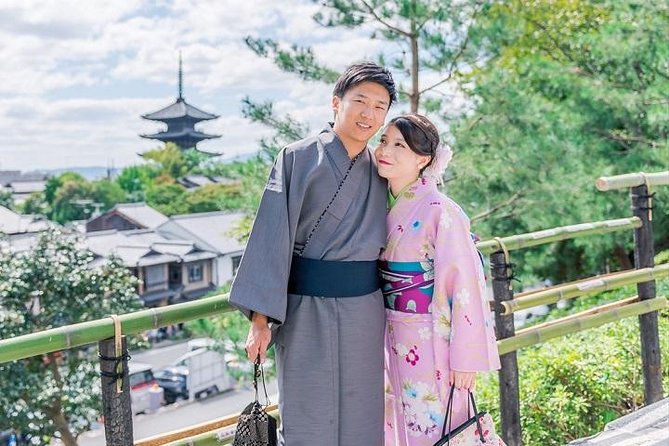
Kyoto Kimono Rental Rei gives you a simple way to spend part of the day dressed in traditional Japanese clothing. You choose from the shop’s available kimono or yukata, then staff handle the fitting, layers, sash, and accessories. Afterward, you can walk through Gion and around Yasaka Shrine, with Kiyomizu-dera and other photogenic sights nearby.
I like two things right away: you have several time slots to choose from, and the outfit is generally yours for most of the day rather than just a quick photo session. Staff can help in English, Chinese, and Japanese. The main caution is that hair, makeup, nicer garments, accessories, and some bags cost extra, so ask about every price before you commit.
In This Review
- Key points to know before booking
- What this Kyoto kimono experience is really like
- Choosing between a kimono and a yukata
- Selecting your outfit at Kyoto Kimono Rental Rei
- The professional fitting takes about 10 minutes
- Hair and makeup are useful, but not included
- Walking through Gion and Yasaka Shrine
- Timing, queues, and the return deadline
- The price looks low, so budget for the real cost
- Weather can change the experience
- Who will enjoy this most
- Finding the shop and communicating clearly
- Cancellation and booking details
- Should you book the Kyoto Kimono Experience?
- FAQ
- Where does the kimono experience begin?
- What is included in the price?
- How much do hair styling and makeup cost?
- How long can I keep the kimono?
- Are children and taller adults able to participate?
- What happens if the weather is poor?
Key points to know before booking
- Your day starts with a professional fitting: Staff select and wrap the layers properly, so you do not need to know how to wear a kimono.
- Gion is your playground: Yasaka Shrine is close, and traditional streets provide easy photo stops.
- Hair styling costs 1,650 yen: Makeup is a separate 5,500 yen option, and accessories may also carry an extra charge.
- The basic booking covers a standard range: More elaborate kimono, samurai-style outfits, bags, and other upgrades may cost considerably more.
- Plan to return before 6 pm: Some departures have required an earlier return, especially on busy days.
- Expect anywhere from 30 minutes to over an hour inside: The process can be quick, but waiting times vary.
What this Kyoto kimono experience is really like
This is less a guided sightseeing tour than a traditional dress-up and neighborhood outing. You make your own way to the shop in Kyoto’s Gion district, select your clothing, get dressed, then head outside on your own. There is no guide accompanying you, and hotel pickup is not included.
That format is useful if you want freedom. You can spend the rest of the day taking pictures, visiting a shrine, stopping for a snack, or simply walking through the old streets at your own pace. It also means you must plan your route and keep an eye on the return time.
The experience is especially appealing for couples, families, and anyone who wants a cultural activity that does not require a full day of formal touring. One particularly nice possibility is a three-generation outing. An older parent, a child, and an adult can all take part together, since most people can participate and children’s sizes are available.
More Kimono & Culture Experiences in Kyoto
- Kyoto Geisha Walking Tour: Gion District & Hidden Gems
★ 4.7 · 3,273 reviews - Kyoto: Gion Magical Night Walking Tour with Geisha Trivia
★ 4.9 · 2,393 reviews - Kyoto: Gion Geisha District Walking Tour – Stories of Geisha
★ 4.7 · 2,187 reviews
Choosing between a kimono and a yukata
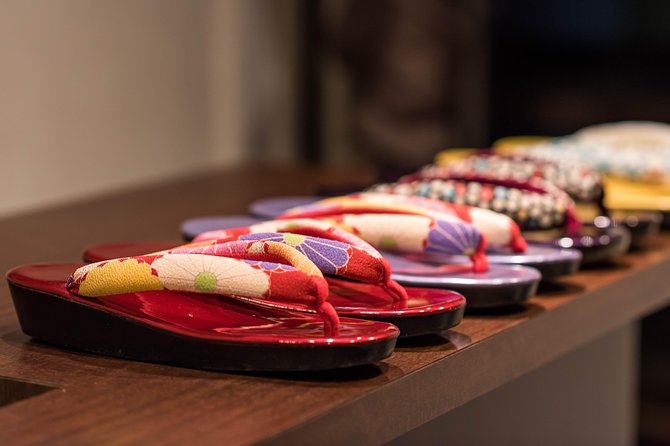
A kimono is the more formal choice. It is made with several layers, which create the polished look you see in many Kyoto photographs. That beauty comes with a practical tradeoff: the outfit can feel warm and restrictive, especially in summer, and the sandals are not ideal for long walks.
A yukata is generally the lighter, more casual option. The supplied information does not specify exactly which garments are available in every season, so ask the shop what is being offered on your date. In either case, staff will fit the clothing for you.
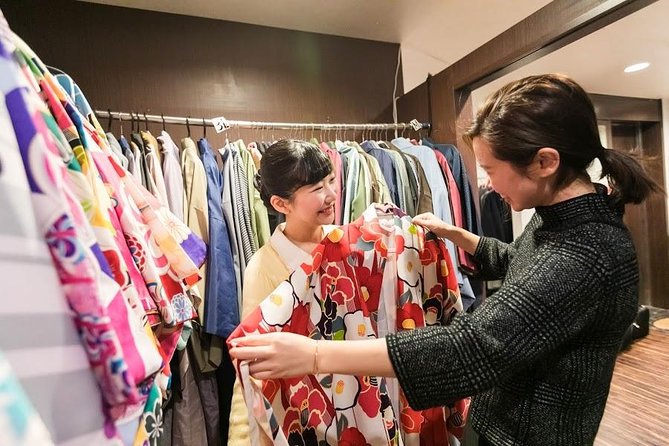
The standard reservation gives you access to a basic selection. The exact number varies in the available descriptions, with some customers choosing from roughly a dozen pieces and others reporting around 25. That tells you to expect a decent starting range, but not unlimited choice.
If you want a more elaborate pattern, a formal garment, or a samurai-style outfit, expect an upgrade fee. One customer reported paying about 150 percent more for a samurai option. That is a large jump from the low online price, so decide at the rack rather than assuming every garment is included.
Selecting your outfit at Kyoto Kimono Rental Rei
The first part takes about 10 minutes. You look through the shop’s selection and choose a kimono or yukata. Staff can help you match the garment with a sash, purse, fan, or other small accessories, although the more attractive items may not be part of the base price.
This is where the experience can feel either easy or confusing. The staff are often described as quick and helpful, but some customers found the shop chaotic or felt that extra charges were not clear enough. I recommend asking three direct questions before changing clothes:
- Which kimono and accessories are included?
- What is the price of each upgrade?
- What time must everything be returned?
Do not rely only on the attractive photographs used to promote the experience. The basic outfit may be plainer than the most elaborate examples on display. That is not necessarily a problem, since many of the standard garments are still colorful and photogenic, but your expectations should match the price you paid.
The professional fitting takes about 10 minutes
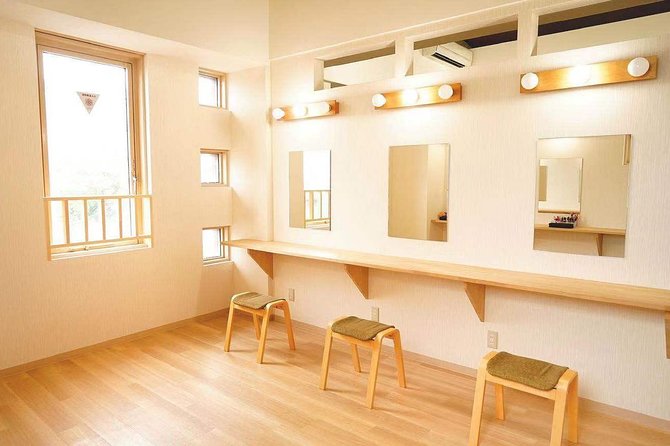
Once you have chosen your outfit, a staff member dresses you. This is the part that makes the experience worthwhile for many people. A kimono is not something you simply pull on like a coat. The layers, ties, sash, and final adjustments need to be arranged correctly.
The fitting itself is listed at about 10 minutes, though the total time inside the shop can be much longer. Some people are ready in about an hour, including styling, while others have waited more than an hour because of queues or a crowded shop.
Wear clothing that makes changing easy. You may need to undress down to your underwear, so shorts underneath can provide extra comfort and privacy. In winter, wear warm layers beneath the outfit. In summer, expect heat, particularly in a formal kimono with several layers.
The shop supplies sandals, but larger sizes can be limited. Men up to about 185 centimeters and women up to about 175 centimeters are listed within the regular size range. Children’s sizes begin around 100 centimeters. Men around European size 45 have reportedly found sandals that fit, but choices for larger feet may be limited.
Same city, a completely different kind of day:
- PERFECT KYOTO 1-Day Bus Tour
★ 5.0 · 13,518 reviews - Kyoto: Fushimi Inari, Kinkakuji, Bamboo Grove 1 Day Bus Tour
★ 4.8 · 4,316 reviews - Kyoto: Tea Ceremony in a Traditional Tea House in Kiyomizu
★ 4.9 · 3,519 reviews - Kyoto: Tea Ceremony Ju-An at Jotokuji Temple
★ 4.9 · 3,207 reviews
Hair and makeup are useful, but not included
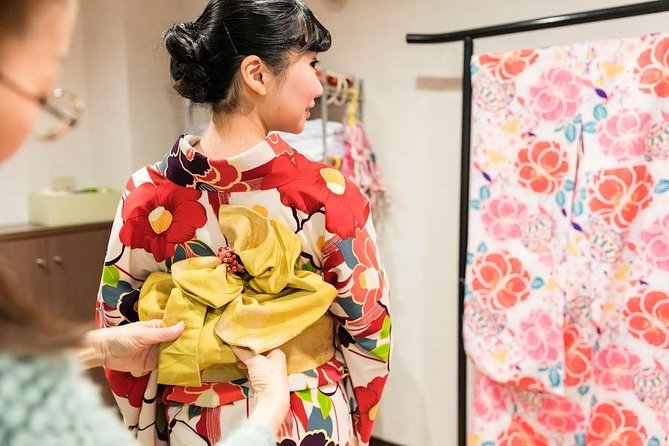
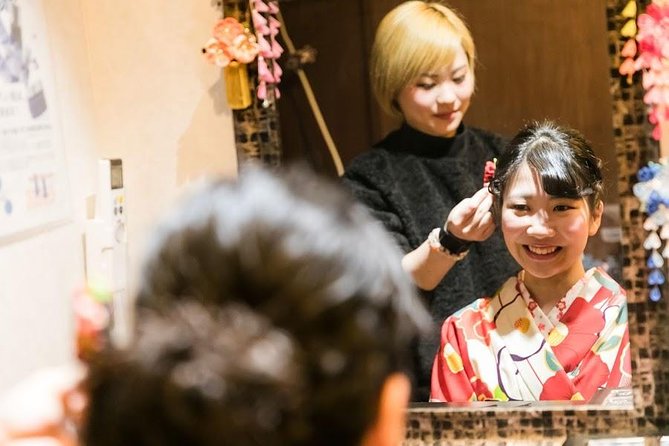
Hair styling takes about 10 minutes and costs 1,650 yen. Makeup is listed separately at 5,500 yen and takes about 20 minutes. Hair accessories, flowers, nicer purses, and other finishing touches can also add to the bill.
I think the hair option is the most useful extra if photographs matter to you. A traditional updo with flowers changes the whole look and saves you from trying to manage your own hair under the outfit. Several people have found the styling worth the additional cost.
Makeup is a different decision. If you want a complete formal look, it may be worthwhile, but do not assume there will be time to add it after you arrive. One customer booked the basic experience, was willing to pay extra for makeup, and found that the staff could not fit it into the available schedule.
The safest approach is to reserve hair or makeup in advance and confirm the timing at check-in. Also ask if accessories are included. The base price is attractive, but the final total depends on how far you go with upgrades.
Walking through Gion and Yasaka Shrine
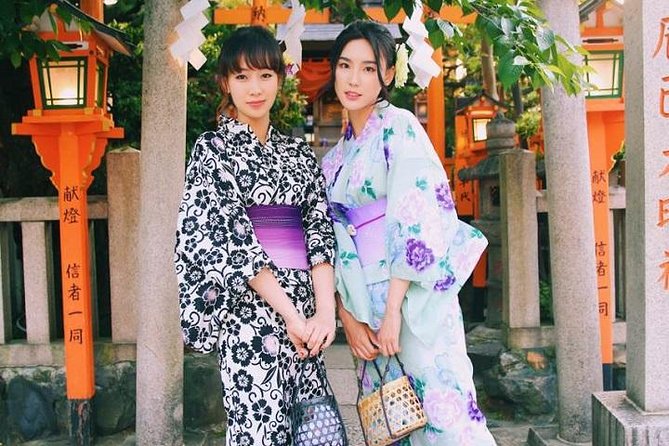
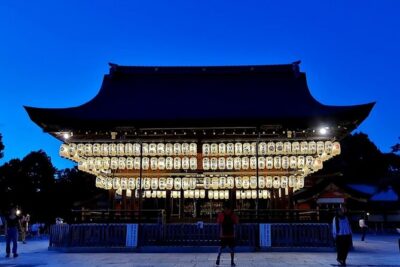
After you are dressed, Kyoto becomes your photo set. Gion’s traditional streets are close to the shop, and Yasaka Shrine, also called Gion Shrine, is an easy nearby destination. The streets around the shrine offer the kind of setting people usually hope for when they book a kimono outing: wooden buildings, shrine gates, stone paths, and old Kyoto details.
Kiyomizu-dera and Heianjingu Shrine are named as nearby cultural sights associated with the experience, but no guide escorts you and no fixed sightseeing route is supplied. You should treat those places as optional places to visit on your own, not as guaranteed guided stops.
Yasaka Shrine is the most practical first stop because it is close. You can also walk toward other traditional streets in Gion and choose your own photo locations. Gion Komori has been recommended as a particularly pretty nearby place for pictures, and the area around it can be reached on foot.
A rickshaw ride can pair nicely with the rental, giving you a seated way to see more of the district while dressed formally. That option is not included, so arrange and pay for it separately.
Remember that comfort changes once you leave the shop. A kimono’s layers can feel hot, and traditional sandals are not made for a long-distance walking day. Keep the outing focused on nearby sights rather than planning an ambitious cross-city route.
Timing, queues, and the return deadline
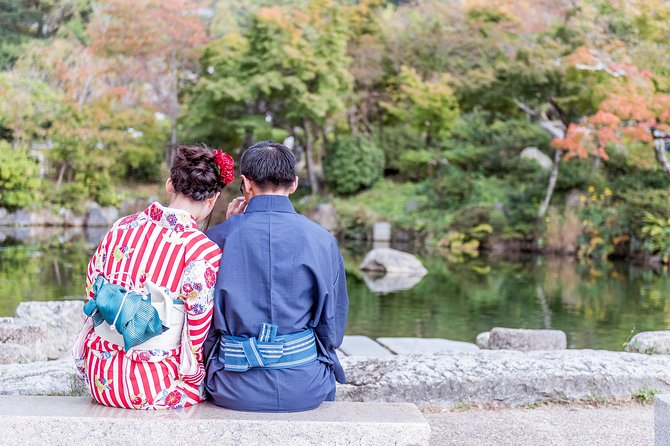
The advertised duration is flexible, from roughly one to nine hours. In practice, the meaningful limit is the shop’s return time. You can often keep the outfit for much of the day, but you must return before the stated closing deadline.
Many people have returned around 5 pm or 5:30 pm, while the general instructions say to come back earlier than 6 pm. The exact time may change by day. One Saturday customer was told to return before 5 pm because the shop was closing at 5:30. Confirm the deadline when you arrive and set a reminder.
Your reserved time slot helps, but it does not guarantee that every step will be immediate. The shop has a maximum group size of 14, and several appointments can overlap. Some people have been dressed in about an hour, while others have waited considerably longer.
If you have a restaurant reservation, train, or major sightseeing ticket afterward, allow extra time. Arriving early may help, since some customers have been checked in before their scheduled time, but this is not guaranteed.
The price looks low, so budget for the real cost
At $25.43 per person, the base experience is inexpensive for a professional fitting and a day with a kimono or yukata. It can be good value if you are happy with the standard clothing selection and do your own hair and makeup.
The cost rises quickly if you want a more formal garment or a complete look. Hair is 1,650 yen, makeup is 5,500 yen, and additional charges may apply to accessories, purses, or upgraded kimono. Some customers have also reported a 10 percent credit-card surcharge at the shop, so carrying cash is sensible.
This is not a bad thing by itself. Extra choices are common in rental shops, and you may prefer having several price levels. The problem comes when the prices are not explained early. Ask before selecting anything beyond the included range.
For the best value, book online, choose a standard outfit you genuinely like, add hair only if photographs are important, and skip upgrades that do not add much to your enjoyment. If you want a premium outfit, compare the final total with other rental shops before booking.
Weather can change the experience
The outing depends on good weather. If poor weather causes cancellation, you can receive a different date or a full refund. For your own comfort, a dry day is easier, but light rain does not have to ruin the plan.
A clear umbrella is a smart purchase in wet weather. It protects the kimono while allowing daylight through for softer photographs. Rain can also mean quieter shrine paths and fewer people in the background.
Hot weather is the bigger concern for many people. The formal layers can become uncomfortable, and an umbrella can provide shade as well as rain protection. If you are visiting in summer, keep the walking route short and plan time indoors.
The shop may be able to reschedule after rain, but do not assume every weather change will receive the same treatment. Check the conditions before leaving and contact the provider if the outing becomes impractical.
Who will enjoy this most
I would recommend this experience to you if you want photographs, a flexible cultural activity, or a gentle introduction to traditional Japanese clothing. It works well for couples and families, and the available children’s sizes make a group outing possible.
It is also a good choice for visitors with a tight schedule. The fitting can sometimes be completed in about an hour, and the shop offers several time slots. Still, leave a buffer because the process can slow down when the shop is busy.
Solo visitors can enjoy the clothing and shrine walk, but arranging photographs is harder. Bring a companion, ask someone to take a picture, or consider pairing the outing with a rickshaw ride. There is no photographer or guide included.
I would be more cautious if you dislike sales pitches, have limited walking comfort, need very large footwear, or want every detail included in one fixed price. The experience is not ideal for anyone who wants a fully guided sightseeing tour.
Finding the shop and communicating clearly
The meeting point is in Gion at 270 Umemotocho, Higashiyama Ward, Kyoto, postal code 605-0064, in the Prestige Gion building. The location can be hard to find, and at least one customer went to the wrong place after a taxi ride.
Use the exact address and follow the provider’s directions carefully. Look for the building and confirm the floor before entering. The supplied information has caused some confusion about the shop location, so a screenshot of the address and booking confirmation is useful.
English-speaking, Chinese-speaking, and Japanese-speaking staff are available. Communication quality may vary by staff member and by how busy the shop is. Keep your questions short and specific, especially about upgrade costs and return time.
The activity ends where it begins. Hotel pickup and drop-off are not included, but the shop is near public transportation.
Cancellation and booking details
You receive confirmation when booking, and free cancellation is available up to 24 hours before the scheduled start time. Changes or cancellations made less than 24 hours before the start are not accepted for a refund.
The experience may be canceled for poor weather. In that case, you can choose another date or receive a full refund. Since the shop can become busy, reserve a time slot in advance rather than simply walking in.
Should you book the Kyoto Kimono Experience?
Book it if you want a memorable Kyoto photo session with real dressing and fitting rather than a quick costume rental. The professional fitting, Gion setting, nearby Yasaka Shrine, and flexible all-day use give the basic package genuine appeal.
Go in with a clear budget. The low starting price covers the kimono or yukata and fitting, not the full styling package shown in every photograph. Ask about upgrades before changing, carry cash, wear suitable underlayers, and confirm the return time.
For most people, the best version is a standard kimono or yukata plus optional hair styling, followed by a short walk around Gion and Yasaka Shrine. That keeps the cost reasonable and gives you the cultural experience without turning a simple outing into an expensive add-on menu.
FAQ
Where does the kimono experience begin?
It begins at Kyoto Kimono Rental Rei in Kyoto’s Gion district, at 270 Umemotocho, Higashiyama Ward, Kyoto 605-0064, in the Prestige Gion building.
What is included in the price?
The price includes a kimono or yukata rental and professional kimono fitting. Hair styling, makeup, upgraded clothing, and some accessories are not included.
How much do hair styling and makeup cost?
Hair styling costs 1,650 yen. Makeup costs 5,500 yen. Accessories and upgraded garments may have additional prices.
How long can I keep the kimono?
You can generally wear it for much of the day, but you must return to the shop before the required closing time. The instructions specify returning earlier than 6 pm, and some dates require a return around 5 pm or 5:30 pm.
Are children and taller adults able to participate?
Children’s sizes begin at about 100 centimeters. Women’s sizes are listed from about 140 to 175 centimeters, and men’s sizes from about 170 to 185 centimeters. Larger shoe sizes may have limited choices.
What happens if the weather is poor?
If the experience is canceled because of poor weather, you can receive a different date or a full refund. You can cancel your own booking for a full refund up to 24 hours before the start time.
Just added around Kyoto
- Private Guided Traditional Buddhist Cooking in Japan★ 5.0 · 16 reviews
- Kyoto: Gion Geisha District & Sake-in-Hand Walking Tour★ 5.0 · 37 reviews
- Your Private Vacation Photography Session In Kyoto★ 5.0 · 110 reviews
- Kyoto: Zen Meditation at a Private Temple with a Monk★ 5.0 · 25 reviews
- Traditional Japanese Washi Papermaking- Kyoto morning★ 5.0 · 77 reviews
- Kyoto Wagashi(Japanese sweets) Cooking Class near Fushimiinari★ 5.0 · 60 reviews
- Private Pewter Sake Cup Experience with a Kyoto Artisan★ 5.0 · 31 reviews
- Kyoto Private 6 hour Tour: English Speaking Driver Only, No Guide★ 5.0 · 88 reviews
Kimono & Culture Experiences, compared.

Kyoto Geisha Walking Tour: Gion District & Hidden Gems
Read our review →
Gion Magical Night Walking Tour with Geisha Trivia
Read our review →
Gion Geisha District Walking Tour – Stories of Geisha
Read our review →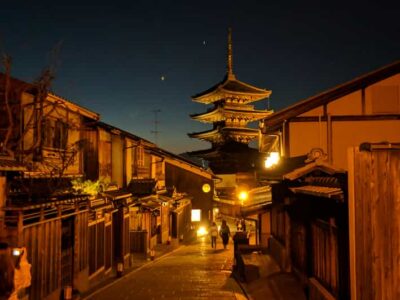
Best of Kyoto: Gion, Geisha, Pagodas & Cobblestones
Read our review →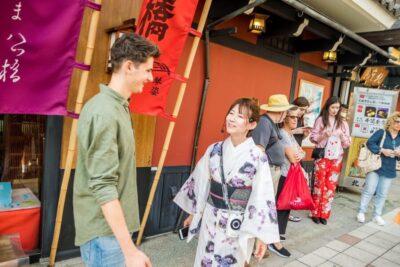
Kyoto Gion Geisha District Walking Tour – The Stories of Geisha
Read our review →
Browse the lists this tour appears in