
REVIEW · WALKING TOURS
Highlights & Hidden Gems With Locals: Best of Kyoto Private Tour
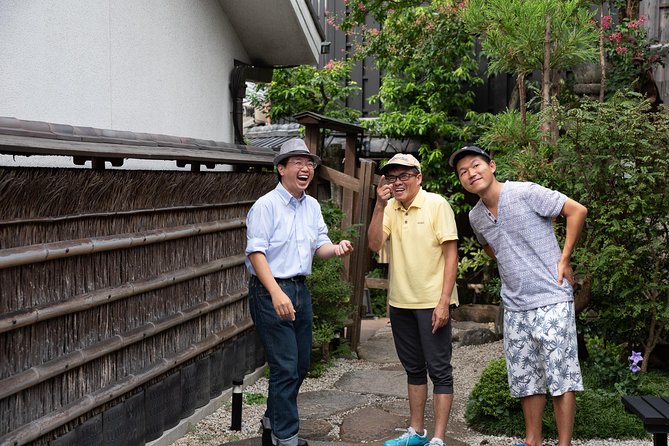
Kyoto’s best moments often happen between the famous sights, and this private walk is built around that idea. You move from Higashiyama lanes and old shrines to Gion, the Kamo River, and Nishiki Market, with a local guide shaping the route for your group. The strongest guides, including Ted, Guia, and Shohei, add stories, food stops, and useful local context.
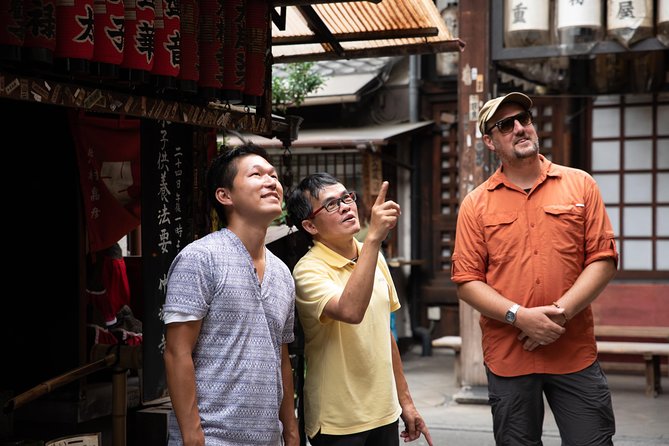
I like the flexible start time and the fact that you can adjust the route around temples, food, family needs, or places you have already seen. I also like the private format: you can ask questions, pause for pictures, and walk at your own pace instead of keeping up with a large group.
The main caution is guide consistency. Some guides have been praised for lively storytelling and strong Kyoto knowledge, while a few visitors found their guide was not Japanese, did not speak Japanese, or offered only brief facts. At $167.92 per person, the quality of your particular guide matters a great deal.
In This Review
- Key points to know before booking
- A fast introduction to Kyoto’s eastern quarters
- Yasaka Shrine and the small temples of Higashiyama
- Kiyomizu-dera, Kyoto’s major temple stop
- Gion’s lanes, tea break, and geisha-area etiquette
- The Kamo River and a change of pace
- Nishiki Market for local tastes and souvenirs
- What the private format is really worth
- The guide makes or breaks the walk
- Timing, walking, and practical details
- Who should book this Kyoto tour?
- Final verdict: a promising private introduction, with one important check
- FAQ
- How long is the Kyoto private tour?
- Is this a private tour?
- What places does the tour visit?
- Is admission to Kiyomizu-dera included?
- Are hotel pickup and drop-off provided?
- Is food included?
- Can I cancel for a full refund?
Key points to know before booking
- Private route through Kyoto’s classic east side: Expect Higashiyama, Kiyomizu-dera, Gion, the Kamo River, and Nishiki Market.
- Guide quality shapes the experience: Ted, Guia, and Shohei have received especially warm praise for history, humor, family care, and flexibility.
- The three-hour schedule is ambitious: You will see many areas, but most stops are short and this is not a slow temple study tour.
- Kiyomizu-dera admission is listed as included: Confirm this clearly before setting out, since one booking involved paying temple admission in cash.
- A private tour can suit families well: Guides have adjusted walks for children and changed plans around interests and previous sightseeing.
- Expect a walking tour, not hotel service: Hotel pickup and drop-off are not included, and the tour ends back at its meeting point.
A fast introduction to Kyoto’s eastern quarters
The tour begins at 198 Nakanochō in Higashiyama, an area well placed for exploring Kyoto on foot. The first portion takes you past the Kyoto Municipal Zoo and into a district known for narrow lanes, wooden buildings, pottery shops, tea houses, and a preserved old-town feel.
That opening is useful because it gives you a sense of Kyoto beyond its headline temples. You are not simply ticking off monuments. You are seeing how the city’s old streets connect shrines, shops, homes, cafés, and tourist routes.
The 30-minute allocation near the zoo is best understood as a neighborhood introduction, not a full zoo visit. Admission is free, but the tour does not promise time inside the zoo. If you want to visit the animals, you would need to arrange that separately.
This is also where a private guide can make a real difference. A good guide can point out why the wooden streets matter, explain how the pottery trade fits the area, and help you notice details that would otherwise blur into a pleasant but unexplained walk.
More Walking Tours in Kyoto
- Kyoto Geisha Walking Tour: Gion District & Hidden Gems
★ 4.7 · 3,273 reviews - Kyoto: Gion Magical Night Walking Tour with Geisha Trivia
★ 4.9 · 2,393 reviews - Kyoto: Gion Geisha District Walking Tour – Stories of Geisha
★ 4.7 · 2,187 reviews
Yasaka Shrine and the small temples of Higashiyama
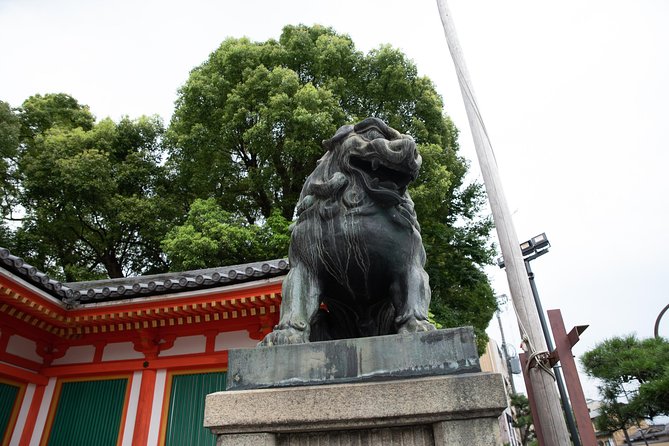
The route then includes Yasaka Shrine, with about 20 minutes set aside. Yasaka is one of Kyoto’s best-known shrines and was founded more than 1,350 years ago, so even a short visit gives you a useful anchor for understanding the age and religious importance of the city.
The itinerary also refers to Hokanji Temple, whose famous pagoda is associated with the Asuka period, from 538 to 710. The supplied route repeats Yasaka Shrine at a later point, so the exact order may change with your guide and the day’s walking conditions. Ask your guide at the start which shrines and lanes you will cover.
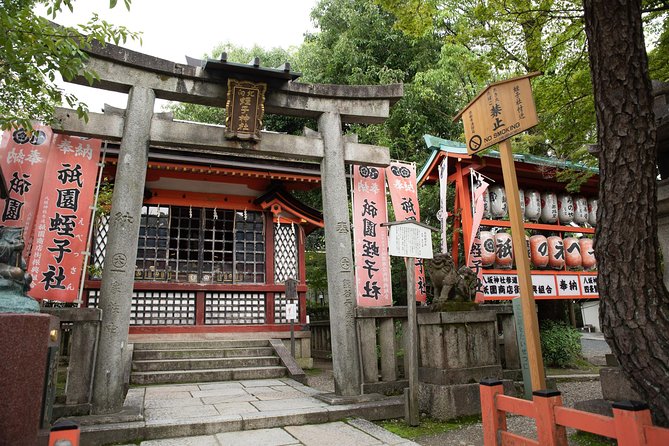
Kongoji Temple brings a different sort of story. Here you learn about a folk belief involving the sacrifice of one desire in order to have another wish granted. It is a small cultural detail, but it shows why Kyoto can be more interesting when a guide explains local beliefs instead of only announcing construction dates.
The route description also refers to a folk faith linked with monkeys and to samurai rule, though one visitor said those subjects were not covered during the walk. If those themes matter to you, raise them before the tour begins. A private format gives you a better chance of getting the kind of explanation you want.
Kiyomizu-dera, Kyoto’s major temple stop
Kiyomizu-dera gets roughly 30 minutes, making it one of the central stops. The temple was founded more than 1,200 years ago and sits partway up Mt. Otowa in Kyoto’s Higashiyama range. Its hillside setting is a key part of the appeal, and the approach gives you some of the area’s classic old Kyoto scenery.
Thirty minutes is enough for an introduction, a few photographs, and a concise explanation of the temple. It is not enough for a relaxed, detailed visit to every feature. If Kiyomizu-dera is high on your list, tell the guide early and consider using your own time to return later.
Admission to Kiyomizu-dera is stated as included. Still, one person reported paying cash for temple admission for both the guest and the guide, while another complaint also questioned the promised drink. That makes a quick confirmation worthwhile: ask exactly which ticket is covered and whether any payment is expected on the day.
This stop also reveals the central tradeoff of the tour. You get a broad look at several Kyoto districts in one outing, but you sacrifice time at each major site. I would choose this format for orientation and local context, not for a deep visit to Kiyomizu-dera alone.
Gion’s lanes, tea break, and geisha-area etiquette
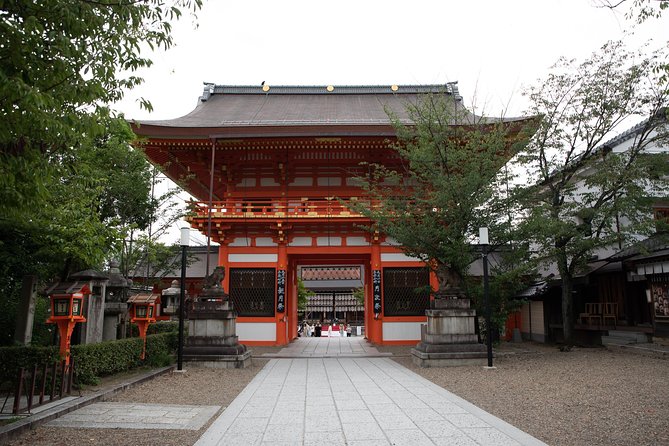
After the temple stops, the walk moves toward Gion, Kyoto’s best-known geisha district. The route gives about 20 minutes to this area, with another short coffee break listed before or around the later Yasaka Shrine stop.
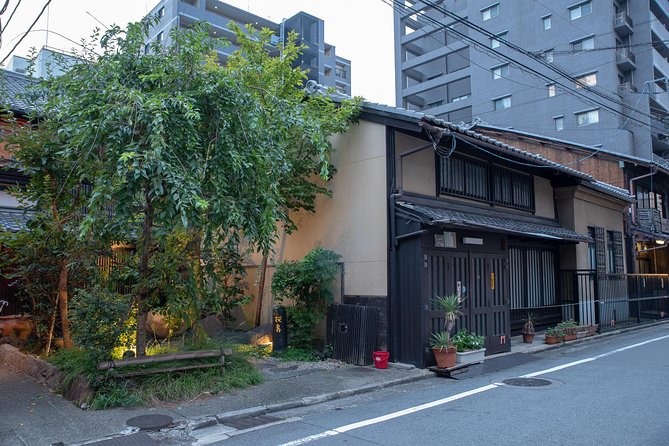
Gion is most rewarding when you slow down and pay attention to the traditional facades, narrow streets, and quiet transitions between commercial lanes and old residences. A guide can also help you behave respectfully around working geisha and maiko. The supplied details do not promise a geisha sighting, and you should not book this tour expecting one.
Several strong guide experiences centered on Gion. David was praised for taking a group through less-visited parts of the district. Another guide, Ted, was credited with making the geisha area meaningful through clear explanations. This is the sort of stop where storytelling matters more than simply pointing out a street.
The coffee or local drink is a modest but welcome feature on a walking route. One local drink or tasting is included, but food and any other beverages are not. Since the tour is short, do not count on a full meal break. If you want a food-focused outing, one guide, Ted, has also been recommended for arranging a separate food tour, but that is not part of this experience.
Same city, a completely different kind of day:
- PERFECT KYOTO 1-Day Bus Tour
★ 5.0 · 13,518 reviews - Kyoto: Fushimi Inari, Kinkakuji, Bamboo Grove 1 Day Bus Tour
★ 4.8 · 4,316 reviews - Kyoto: Tea Ceremony in a Traditional Tea House in Kiyomizu
★ 4.9 · 3,519 reviews - Kyoto: Tea Ceremony Ju-An at Jotokuji Temple
★ 4.9 · 3,207 reviews
The Kamo River and a change of pace
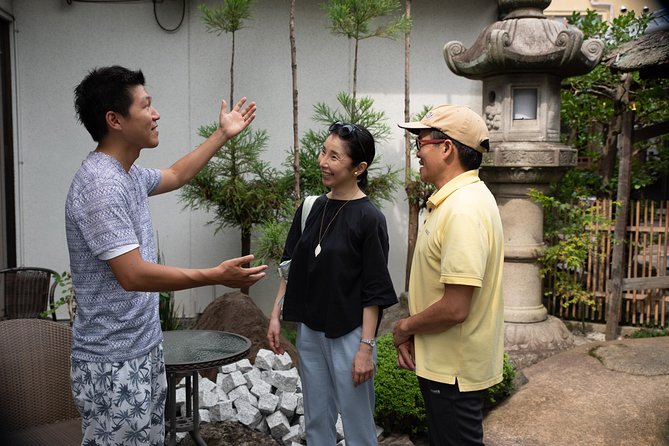
The Kamo River gives the tour a breathing space after the temple and shrine lanes. About 20 minutes are allocated here. The river is one of Kyoto’s best-known public spaces, and even a short stop helps you see how the city opens up beyond its dense historic streets.
I like this part because it adds variety. Kyoto can become a sequence of gates, wooden buildings, and temple courtyards. A river walk changes the rhythm and gives your guide a natural place to explain how different parts of the city relate to one another.
Do not expect a long riverside stroll. The stop is short, and the total route covers a lot of ground. If you have mobility concerns or simply prefer slower walking, tell your guide. Most people can participate, but this is still a walking experience with several districts packed into about three hours.
Nishiki Market for local tastes and souvenirs
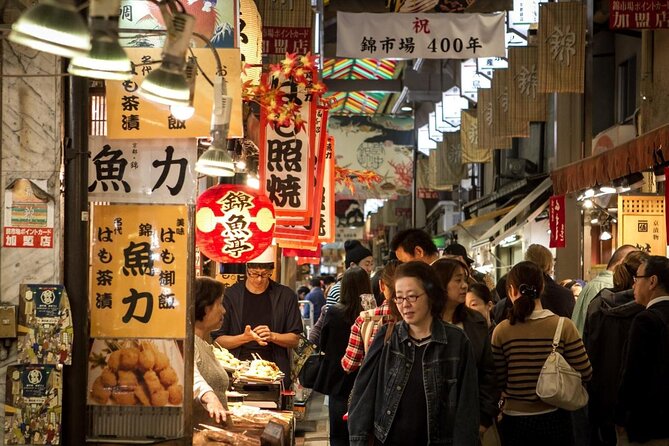
The final listed stop is Nishiki Market, a 400-year-old shopping street where you can sample Japanese foods and look for souvenirs. The planned time is about 20 minutes, so treat this as an introduction rather than a full market crawl.
Nishiki is a good place to ask practical questions. Your guide may help you understand unfamiliar ingredients, identify a small local treat, or point out useful souvenir choices. The included local drink or tasting fits naturally here, though the exact location and item can vary.
The short timing is the chief limitation. You may have time for a sample and a quick look, but not a leisurely meal or serious shopping session. Food and beverages beyond the listed tasting are extra, so bring a payment method if you want to buy something.
The route ends back at the original meeting point. That is convenient if you are continuing nearby, but it means you should not plan on being dropped at your hotel or at another Kyoto attraction.
What the private format is really worth
The price is $167.92 per person, with group discounts available. That is a serious price for a three-hour walk, especially if you are booking for several people. The value comes from the guide’s time and the ability to shape the route, not from the number of admission tickets included.
For a family or small group, the math can make more sense than paying separate per-person rates for several activities. You can ask questions without holding up strangers, change the pace, and focus on interests such as temples, food, photography, religion, or old neighborhoods.
The private setup has worked especially well for families. Guia has been praised for keeping children engaged and adjusting the day to suit a family. Other strong experiences describe guides taking pictures, answering many questions, and changing the plan based on what the group had already seen.
But the private price also makes weak guiding more noticeable. A guide who gives only dates and short facts does not provide enough value at this rate. One person found the tour useful mainly because they did not have to navigate between sites, but felt a map and guidebook would have offered more substance.
I would book this only if you care about conversation and personal attention. If you want the cheapest way to see the landmarks, public transport and a self-guided route will cost much less.
The guide makes or breaks the walk
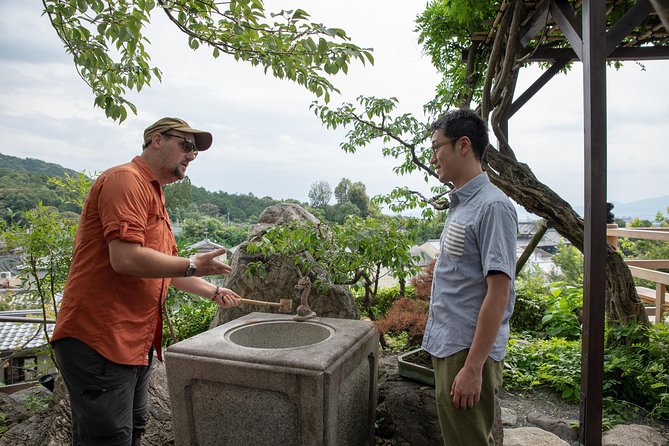
The strongest names associated with this experience are Ted, Guia, and Shohei. Ted has been praised for linking history, religion, culture, and everyday life, as well as for tailoring the route to a group’s previous sightseeing. Guia has received high marks for patience with children, local familiarity, refreshments, and a warm manner. Shohei has been praised for energy, humor, food discoveries, and memorable explanations.
David was also praised for finding quieter parts of Gion, while Tiro was described as thorough and pleasant. These details point to the tour’s best possible shape: a flexible walk led by someone who can connect what you see to the larger story of Kyoto.
The weak experiences raise a fair concern about the word local. At least two people expected a Japanese guide fluent in Japanese but were assigned someone from outside Japan who had lived in Kyoto for several years. An expatriate guide may still offer useful observations, but that is not the same as growing up in Kyoto or speaking Japanese.
You cannot assume every guide will deliver the same depth. Contact the provider before booking if a Japanese-speaking guide or a specifically local background is important to you. Also explain the subjects you want covered. A private tour works best when you make your priorities clear.
Timing, walking, and practical details
The advertised duration is approximately three hours. Some individual accounts describe much longer walks, including a six-hour experience, but you should plan around the stated three-hour duration unless the provider confirms otherwise.
The route includes free admission at most listed stops, with Kiyomizu-dera tickets specifically included. Hotel pickup and drop-off are not provided. The meeting point is in Higashiyama, near public transportation, and the tour ends there.
Choose comfortable shoes. Even without knowing every street used on the day, the itinerary links multiple Kyoto neighborhoods and temple areas. You will get more from the outing if you can walk steadily and handle short stops on your feet.
The tour is private, and only your party and the guide participate. Most people can take part, but the activity data does not provide a detailed accessibility assessment. If you have a specific mobility requirement, ask before booking rather than relying on the general participation note.
Free cancellation is available up to 24 hours before the start time. Changes or cancellations made inside that window are not accepted for a refund.
Who should book this Kyoto tour?
I would recommend it to a first-time visitor who wants a quick orientation before exploring more of Kyoto independently. It also fits families, couples, and friends who value a private pace and want to combine famous sights with quieter streets.
It is a good choice if you want to ask plenty of questions, change the order of stops, or avoid repeating places you have already visited. Food-curious groups may also enjoy the market and tasting, though this is not a full food tour.
I would be cautious if you expect a formal expert lecture, a Japanese-speaking guide, or extended time inside each temple. I would also avoid booking it solely for a geisha sighting or a long Nishiki Market meal.
Final verdict: a promising private introduction, with one important check
This tour offers a smart first look at Kyoto’s Higashiyama and central districts. The route combines Kiyomizu-dera, Yasaka Shrine, Gion, the Kamo River, and Nishiki Market, while the private format lets you set the pace. The best guides turn those stops into a memorable day through stories, humor, family-friendly care, and local food advice.
At $167.92 per person, I would not book blindly. Confirm the guide’s background and language, verify the Kiyomizu-dera admission, and ask how the local drink or tasting will be handled. If you receive a guide like Ted, Guia, or Shohei, the personal attention may justify the cost. If you want only transportation between famous sights, save your money and explore on your own.
FAQ
How long is the Kyoto private tour?
The stated duration is approximately three hours. Some individual experiences have lasted longer, but you should plan on three hours unless a different schedule is confirmed in advance.
Is this a private tour?
Yes. Only your group and the local guide participate, with no other booking group added to your walk.
What places does the tour visit?
The route includes the Kyoto Municipal Zoo area, Yasaka Shrine, Kongoji Temple, Kiyomizu-dera, Gion, the Kamo River, and Nishiki Market. Hokanji Temple is also mentioned in the route information, and the exact order may vary.
Is admission to Kiyomizu-dera included?
Kiyomizu-dera admission is listed as included. Because one person reported paying cash for temple admissions, confirm the ticket arrangements with the provider before the tour.
Are hotel pickup and drop-off provided?
No. Hotel pickup and drop-off are not included. The tour starts and ends at 198 Nakanochō in Kyoto’s Higashiyama Ward.
Is food included?
One local drink or tasting is included. Other food and beverages are not included, including purchases at Nishiki Market.
Can I cancel for a full refund?
Yes, if you cancel at least 24 hours before the experience start time. Cancellations or changes made less than 24 hours before the start are not eligible for a refund.
Just added around Kyoto
- Private Guided Traditional Buddhist Cooking in Japan★ 5.0 · 16 reviews
- Kyoto: Gion Geisha District & Sake-in-Hand Walking Tour★ 5.0 · 37 reviews
- Your Private Vacation Photography Session In Kyoto★ 5.0 · 110 reviews
- Kyoto: Zen Meditation at a Private Temple with a Monk★ 5.0 · 25 reviews
- Private Pewter Sake Cup Experience with a Kyoto Artisan★ 5.0 · 31 reviews
- Traditional Japanese Washi Papermaking- Kyoto morning★ 5.0 · 77 reviews
- Kyoto Wagashi(Japanese sweets) Cooking Class near Fushimiinari★ 5.0 · 60 reviews
- Kyoto Private 6 hour Tour: English Speaking Driver Only, No Guide★ 5.0 · 88 reviews
Walking Tours, compared.
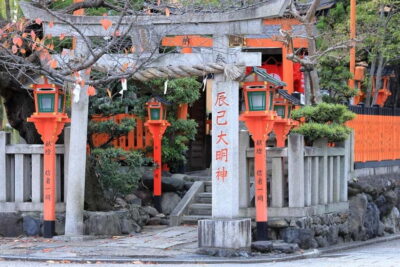
Kyoto Geisha Walking Tour: Gion District & Hidden Gems
Read our review →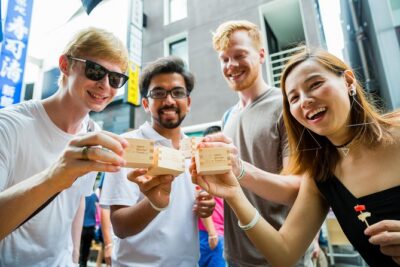
Tokyo Tsukiji Fish Market Food and Culture Walking Tour
Read our review →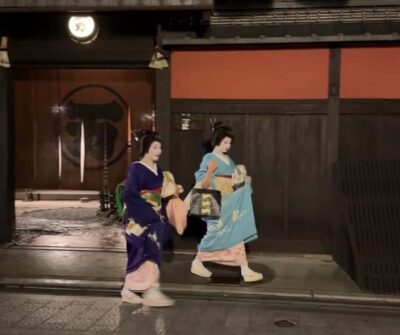
Gion Magical Night Walking Tour with Geisha Trivia
Read our review →
Imperial Palace and Shogun Historical Walking Tour
Read our review →
Gion Geisha District Walking Tour – Stories of Geisha
Read our review →
Asakusa Walking Tour with Sensoji Temple Visit
Read our review →
Kyoto Gion Geisha District Walking Tour – The Stories of Geisha
Read our review →Browse the lists this tour appears in