
REVIEW · KIMONO & CULTURE EXPERIENCES
Calligraphy Workshop at Traditional Folk Craft Shop in Hiroshima
The most appealing part of this Hiroshima activity is its setting: you practice calligraphy inside Takumi, a 50-year-old folk craft shop with a wall of ukiyo-e prints. Sensai Ryosei leads you through the process in a calm, patient way, using handmade brushes from Kumano, Hiroshima’s famous brush-making town.
I like the short 45-minute format, which fits neatly between visits to the Atomic Bomb Dome and Hondori. I also like that you leave with a real piece of your own work, rather than a factory-made souvenir. The main consideration is time: this is a compact introduction, not a long lesson in Japanese calligraphy.
In This Review
- Key points
- Calligraphy in a Hiroshima craft shop
- What happens during the 45-minute session
- Why the Kumano brushes matter
- A calm activity after Hiroshima sightseeing
- Sensai Ryosei’s beginner-friendly instruction
- Choosing between a fan and shikishi
- Price, timing, and what you receive
- Who will enjoy this workshop
- Finding Takumi in Sanmall Mall
- Photos and the finished keepsake
- Cancellation and booking advice
- Should you book this Hiroshima calligraphy class?
- FAQ
- Where does the calligraphy workshop take place?
- How far is Takumi from the Atomic Bomb Dome?
- How long does the activity last?
- Do I need previous calligraphy experience?
- What materials are included?
- What souvenir will I make?
- Can I cancel for a full refund?
Key points
- Handmade Kumano brushes: Use tools from Hiroshima’s top brush-making town.
- A central folk craft shop: Takumi is five minutes from the Atomic Bomb Dome and three minutes from Hiroden Hondori Station.
- Gentle beginner instruction: Sensai Ryosei guides you through strokes, hiragana, kanji, and your final artwork.
- A personal souvenir: Create calligraphy on a traditional fan or shikishi board.
- A quiet artistic setting: Ukiyo-e prints decorate the workshop space.
- Small private format: Only your own group takes part in the activity.
Calligraphy in a Hiroshima craft shop
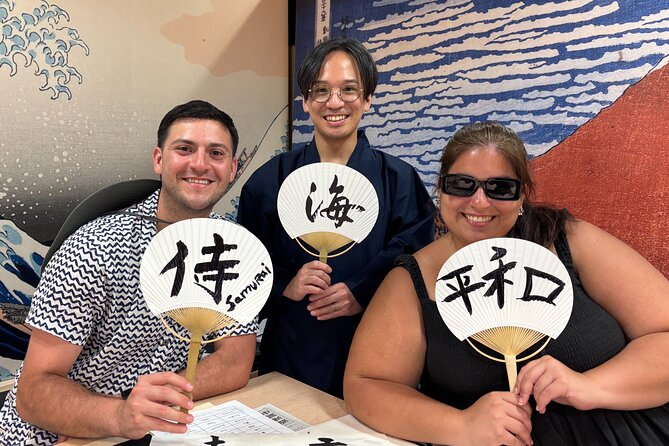
This is not a rushed brush-and-ink demonstration. You sit down and make something yourself, with an instructor showing you how to handle the brush before asking you to create a final piece.
The workshop takes place at Bonkogei Takumi, usually shortened to Takumi, on the fifth floor of Sanmall Mall. The shop has been operating for about 50 years and sells traditional craft items from across Japan. One wall decorated with ukiyo-e prints gives the room a distinctly Japanese art setting without turning the workshop into a museum visit.
That location is useful for a sightseeing day. Takumi is about a five-minute walk from the Atomic Bomb Dome and three minutes from Hiroden Hondori Station. If you are already exploring central Hiroshima, you can reach the workshop without arranging a separate ride or giving up a large part of your day.
The mall setting is practical, though it may surprise you at first. This is not a rural studio or an old temple hall. You enter a modern shopping center, find the fifth floor, and look for Takumi. UNIQLO is on the second floor, which gives you a useful landmark when finding your way through the building.
More kimono & culture experiences in Hiroshima:
- Kimono and Tea Ceremony in Miyajima
★ 5.0 · 73 reviews - An Amazing set of Cultural experience: Kimono, Tea Ceremony and Calligraphy
★ 5.0 · 69 reviews - Cultural Activities :Kimono, tea ceremony, Calligraphy and Amulet
★ 5.0 · 44 reviews
What happens during the 45-minute session
The session begins with an introduction to the basic calligraphy tools. You use a traditional brush, ink, and paper, with all materials supplied at the venue.
You then practice simple brush movements. The early work covers dots, lines, and sweeping strokes. These exercises matter because Japanese calligraphy depends as much on pressure and movement as it does on knowing the characters. A brush can create a thin line, a heavy mark, or a gradual change between the two.
Next, you try hiragana and kanji. The workshop is designed for beginners, so you do not need to arrive knowing Japanese. The instructor offers step-by-step help, and you can focus on the movement of the brush rather than worrying about producing perfect characters right away.
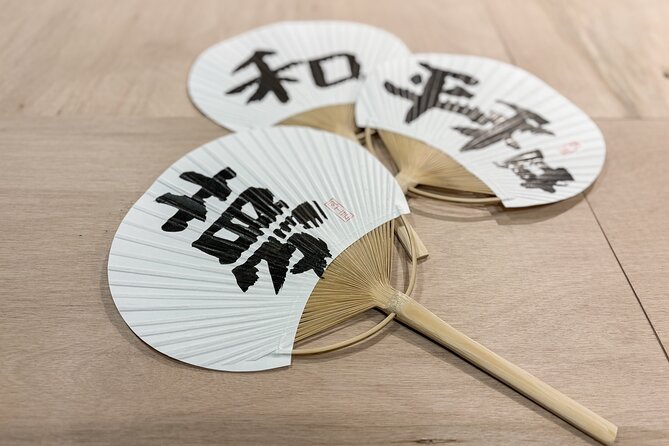
The final stage is your own artwork. You choose a word and write it on either a traditional Japanese hand fan, called an uchiwa, or a shikishi calligraphy board. The supplied information identifies the original calligraphy fan as an included souvenir, while the activity description also presents the shikishi as an available format. If the exact choice matters to you, confirm it when booking or at the start of the session.
The result is personal and easy to carry. A hand fan has a distinctly Japanese look and makes a useful keepsake. A shikishi board gives your writing a more formal display format. Either option has more meaning than a souvenir picked from a shop shelf because you created it during your time in Hiroshima.
Why the Kumano brushes matter
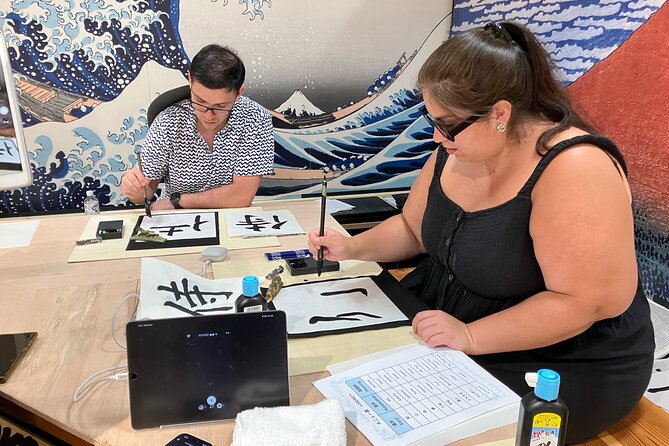
The brushes are not an incidental prop. They come from Kumano, a town in Hiroshima known as Japan’s top brush-making area.
That local connection gives the session a stronger sense of place. You are not simply taking a generic craft class in Japan. You are using a tool made in the same prefecture, in a region known for brush production.
For a first-time student, the brush may feel unfamiliar. The instructor’s opening guidance helps you understand how to hold it and how much pressure to use. You will not be expected to reproduce the work of a professional calligrapher in 45 minutes. The aim is to feel how ink, paper, and brush respond to one another.
I especially like this focus because it turns a short activity into a lesson in material culture. You learn about Japanese writing through the object in your hand, not only through an explanation.
A calm activity after Hiroshima sightseeing
Hiroshima sightseeing can be emotionally demanding, especially after visiting the Atomic Bomb Dome and nearby Peace Memorial sites. Calligraphy offers a quieter change of pace.
The slow brush movements encourage concentration. You watch the tip of the brush, control your breathing, and pay attention to the shape of each mark. The activity is described as a form of meditation, and that makes sense as a practical way to understand it. You are not required to meditate or follow a special routine. You simply have a short period away from sightseeing, screens, and busy streets.
A published experience account describes Sensai Ryosei as very patient and calm, with a teaching method that made the workshop easy to follow. That is an important detail for beginners. Calligraphy can look intimidating when you see an expert produce a bold, fluid character in seconds. A calm teacher helps you treat the process as practice rather than a test.
The setting also helps. The ukiyo-e wall adds visual interest while you work, and the craft shop connects the activity to broader Japanese artistic traditions. You are still in central Hiroshima, but the brushwork gives the visit a slower rhythm.
A few more Hiroshima trips to weigh up
- Private Japanese Cooking Class in Hiroshima with Machiko’s Family
★ 5.0 · 35 reviews - Experience the Soul of Hiroshima: A Peaceful Koto Workshop
★ 5.0 · 32 reviews - Hiroshima:Private lacquer workshop experience tour(gift included)
★ 5.0 · 13 reviews - Sushi Making Tokyo Roll and Authentic Japanese Sushi Class
★ 5.0 · 3,971 reviews
Sensai Ryosei’s beginner-friendly instruction
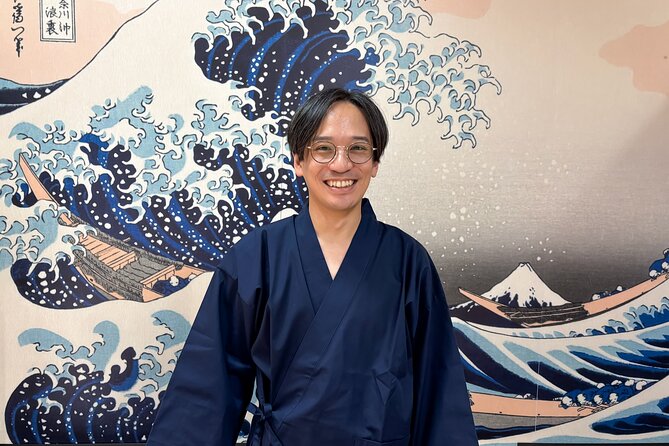
The workshop is led by the award-winning calligrapher Sensai Ryosei. The teaching approach is hands-on and gentle, with attention to the early strokes before the final artwork.
That structure suits people who have never held a calligraphy brush. You first learn the tools, then practice basic forms, then try Japanese characters, and only after that move to your finished piece. Each stage gives you a chance to get comfortable before the souvenir is created.
The activity is private, so only your own group participates. That can make a real difference if you feel shy about making mistakes in front of strangers. It also gives your group a shared activity without the pressure of keeping up with a large class.
The available information does not specify the maximum group size, so I would not assume a one-on-one lesson. Private means the booking is limited to your group, but the exact teaching arrangement may depend on the size of that group.
Choosing between a fan and shikishi
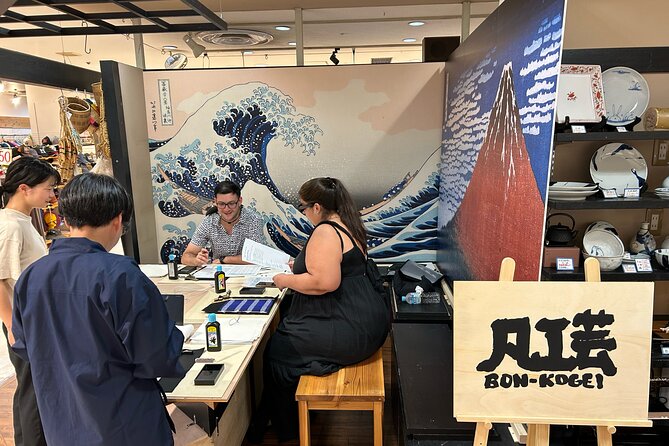
Your final choice shapes the souvenir you take home.
A traditional uchiwa fan feels informal and immediately recognizable as a Japanese object. It is light, flat, and easy to pack. Calligraphy on a fan also makes a good photo subject because the writing becomes part of a practical object rather than a loose sheet of paper.
A shikishi is a square calligraphy board commonly used for artwork and written inscriptions. It has a more formal appearance and may suit you if you want to display the piece at home.
The activity is built around choosing a word that means something to you. You might select a Japanese character or phrase with personal value, but the supplied details do not provide a set list of words or translations. If you want a particular word, prepare it in advance and ask the instructor for help with the correct character and meaning.
Do not expect a museum-quality masterpiece. Your final piece will show that it was made by a beginner, and that is part of its value. The goal is a handmade reminder of your time in Hiroshima, not professional calligraphy for sale.
Price, timing, and what you receive
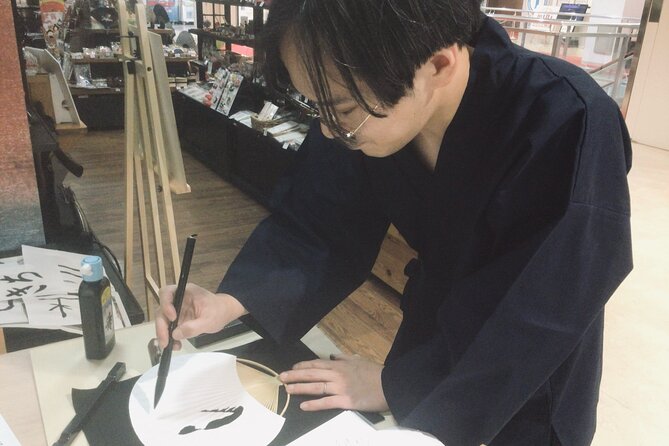
At $32.81 per person, this is reasonably priced for a short, instructor-led activity in central Hiroshima. The fee includes the brush, ink, paper, venue use, instruction, and an original calligraphy fan souvenir. The description also presents the shikishi as a final-artwork option.
The value depends on what you want from a cultural activity. If you only want a quick photo, the price may feel high for 45 minutes. If you want personal instruction and an object you make yourself, the cost is easier to justify.
The short duration is one of the strongest practical features. You can schedule it around the Atomic Bomb Dome, Hondori shopping street, or other central Hiroshima stops. It will not consume half a day, and the meeting point is near public transportation.
The workshop ends back at the same place where it begins. Private transportation and parking are not included, so you will need to make your own way to Takumi. Public transportation is the sensible choice here because the venue is close to Hiroden Hondori Station.
A mobile ticket is provided. Booking confirmation is normally received within 48 hours, subject to availability. The activity had five or more bookings in the previous month, and the current rating is 5 out of 5 from 26 reviews, with 100 percent recommending it. Those numbers suggest strong demand and satisfaction, but you should still judge the format honestly: it is a brief introduction rather than an extended course.
Who will enjoy this workshop
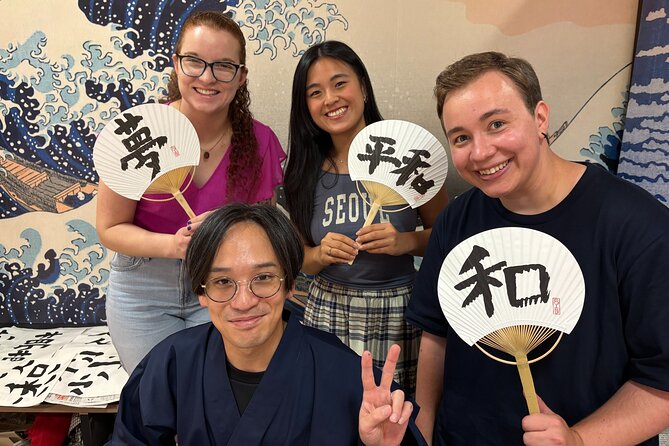
This activity is a good match for first-time visitors who want a hands-on cultural stop without a major time commitment. You do not need previous calligraphy practice, and all tools are supplied.
It also fits well for couples, families, friends, and solo visitors who want to make something rather than only look at historic sites. Since the booking is private, your group can share the session at its own pace.
You may especially like it if you collect handmade souvenirs or prefer experiences that leave you with something personal. The fan or shikishi takes up little luggage space, and the optional digital photos give you another record of the session.
The workshop may be less suitable if you want a long technical lesson, advanced character instruction, or a broad tour of Japanese crafts. Takumi sells traditional items from across Japan, but the activity itself focuses on calligraphy. You will not receive a full tour of the shop or a detailed survey of every craft tradition.
Most people can participate, according to the supplied activity information. No special preparation is required. You simply bring yourself, though you may want to think about a meaningful word before arriving.
Finding Takumi in Sanmall Mall
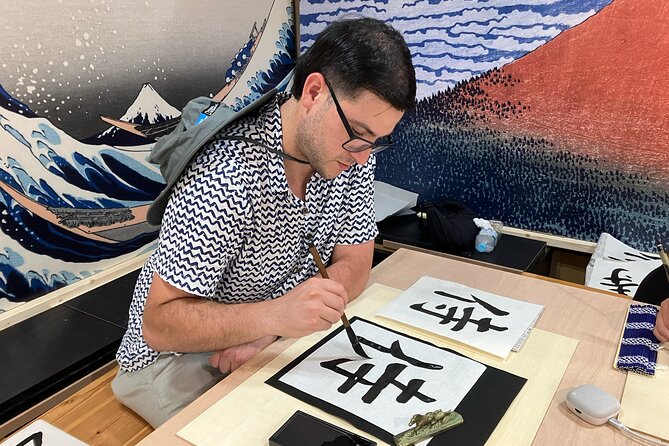
The directions are simple but worth noting. Takumi is on the fifth floor of Sanmall Mall at 2-chome-2-18 Kamiyacho, Naka Ward, Hiroshima, 730-0031.
From the Atomic Bomb Dome, allow about five minutes on foot. From Hiroden Hondori Station, allow about three minutes. Inside the mall, UNIQLO on the second floor is a useful reference point, but you still need to continue to the fifth floor.
This is a central location, not a countryside craft village. That makes it easy to fit into a sightseeing plan, though the mall entrance and upper-floor setting may not feel obvious if you are expecting a standalone workshop. Give yourself a few extra minutes to find the correct floor.
The meeting point and ending point are the same. There is no private pickup, drop-off, or parking included.
Photos and the finished keepsake
You may take photos during the session, and the staff can also take photos for you and send them digitally afterward at no extra charge. This is helpful if you want a picture of the writing process, especially when both hands are occupied with the brush.
The best photo is likely to show the work in progress rather than only the finished piece. The brush, ink, ukiyo-e wall, and craft-shop setting give the souvenir a clear sense of place.
Keep in mind that the digital photo service is optional. The included items are the calligraphy tools, venue use, and original calligraphy fan souvenir. If you choose the shikishi format, confirm the exact inclusion before you begin.
Cancellation and booking advice
You can cancel for a full refund up to 24 hours before the local start time. Cancellations made less than 24 hours ahead are not refunded, and late changes are not accepted.
I would book this once you know your Hiroshima schedule, but not leave it until the last minute if your dates are fixed. Confirmation is subject to availability and may arrive within 48 hours.
Should you book this Hiroshima calligraphy class?
Book it if you want a calm, compact activity that connects you with a local Hiroshima craft tradition. The Kumano brushes, Sensai Ryosei’s patient instruction, central location, private format, and handmade souvenir give the session real value.
Think twice if you want advanced calligraphy, a long cultural lesson, or a workshop lasting several hours. For most first-timers, though, 45 minutes is an advantage. You learn the basic strokes, write hiragana and kanji, make a fan or shikishi, and return to sightseeing with a small piece of Hiroshima in your bag.
FAQ
Where does the calligraphy workshop take place?
The workshop takes place at Bonkogei Takumi, a traditional folk craft shop on the fifth floor of Sanmall Mall at 2-chome-2-18 Kamiyacho, Naka Ward, Hiroshima.
How far is Takumi from the Atomic Bomb Dome?
Takumi is about a five-minute walk from the Atomic Bomb Dome.
How long does the activity last?
The calligraphy session lasts approximately 45 minutes.
Do I need previous calligraphy experience?
No. The workshop is designed for first-timers and includes step-by-step guidance through basic strokes, hiragana, kanji, and the final artwork.
What materials are included?
All calligraphy tools are included, including the brush, ink, and paper. The venue fee is also included.
What souvenir will I make?
You will create your own calligraphy artwork on a traditional Japanese hand fan or a shikishi calligraphy board. The included details specifically identify an original calligraphy fan souvenir.
Can I cancel for a full refund?
Yes. You can cancel at least 24 hours before the local start time for a full refund. Cancellations or changes made less than 24 hours before the activity are not accepted for a refund.
Just added around Hiroshima
- The Peace Memorial to Miyajima : Icons of Peace and Beauty★ 4.5 · 31 reviews
- Private Full Day Hiroshima Tour★ 4.5 · 29 reviews
- Hiroshima & Miyajima All-Inclusive Tour w/Licensed guide Pancho★ 5.0 · 54 reviews
- Okunoshima Rabbit Island Cycling Tour with Local Guide★ 4.5 · 17 reviews
- Shore Excursion from Hiroshima Port : Private Tour in Hiroshima★ 5.0 · 17 reviews
- Hiroshima Saijo Sake Tasting Tour with visit to 7 Breweries★ 5.0 · 104 reviews
- Miyajima Guided Tour and Fresh Oyster Farm Tour★ 5.0 · 20 reviews
- Hiroshima Country Cycling: Explore Rural Life 1 HR from City★ 5.0 · 22 reviews
Kimono & Culture Experiences, compared.

Kyoto Geisha Walking Tour: Gion District & Hidden Gems
Read our review →
Gion Magical Night Walking Tour with Geisha Trivia
Read our review →
Gion Geisha District Walking Tour – Stories of Geisha
Read our review →
Best of Kyoto: Gion, Geisha, Pagodas & Cobblestones
Read our review →

Kyoto Gion Geisha District Walking Tour – The Stories of Geisha
Read our review →
Browse the lists this tour appears in