
REVIEW · WORKSHOPS
Experience the Soul of Hiroshima: A Peaceful Koto Workshop
The most moving part of this Hiroshima activity is that you do not just hear about peace, you help express it through music. You learn the 13-string koto, then play Echo of Serenity, a piece created to honor the victims of the atomic bombing. The music gives the workshop real purpose, rather than making it just another craft lesson.
I like the small groups of up to six, which give you room to ask questions and get help with your hand position. I also like the connection to Fukuyama, the Japanese center of koto making, where more than 70 percent of the country’s kotos are produced. The main limitation is time: 90 minutes is enough to play one complete piece, but not enough to become comfortable with every part of this complex instrument.
In This Review
- Key points at a glance
- Why a koto lesson belongs in your Hiroshima plans
- What happens during the 90-minute class
- The sound, the setting, and the peace theme
- What the small-group format means for you
- How much value do you get for $50?
- Finding the studio near Tatemachi
- Who will get the most from this experience?
- Practical booking advice
- Should you book the Hiroshima koto workshop?
- FAQ
- How long is the Hiroshima koto workshop?
- How much does the experience cost?
- Is the workshop taught in English?
- Do I need musical experience?
- What age is suitable for the activity?
- Where does the class meet?
- How many people are in each group?
- What do I receive after the lesson?
- Can I cancel or pay later?
Key points at a glance
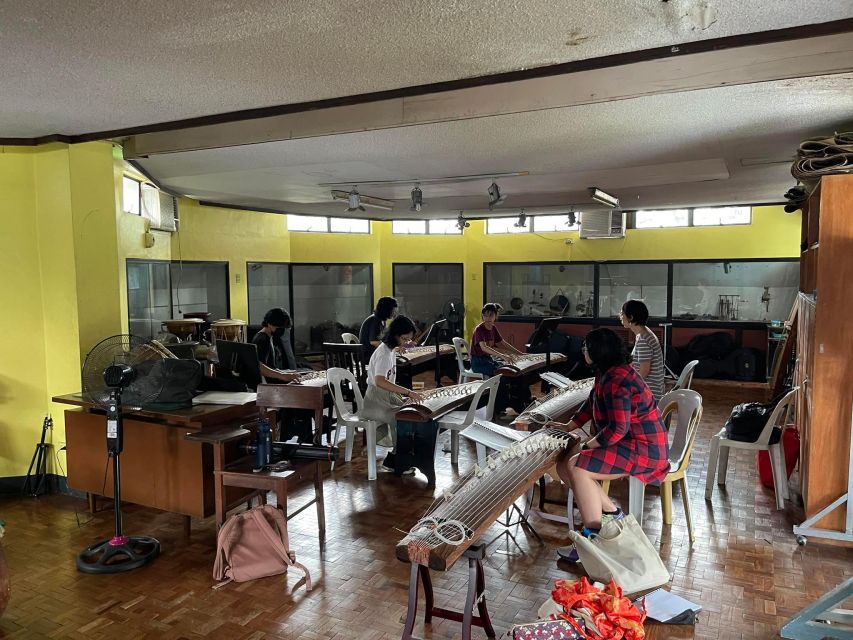
- Play a complete piece in 90 minutes: You start with basic technique and build toward a group performance.
- Use Fukuyama-made kotos: The instruments come from Japan’s leading koto-making region, known for careful construction and sound.
- Connect music with Hiroshima’s peace message: Echo of Serenity gives the session a reflective purpose.
- Learn fully in English: No Japanese ability or musical background is required.
- Leave with meaningful keepsakes: You receive a video of the final performance and a folded origami crane.
- Expect an intimate class: Groups are limited to six people, with a minimum age of 10.
Why a koto lesson belongs in your Hiroshima plans
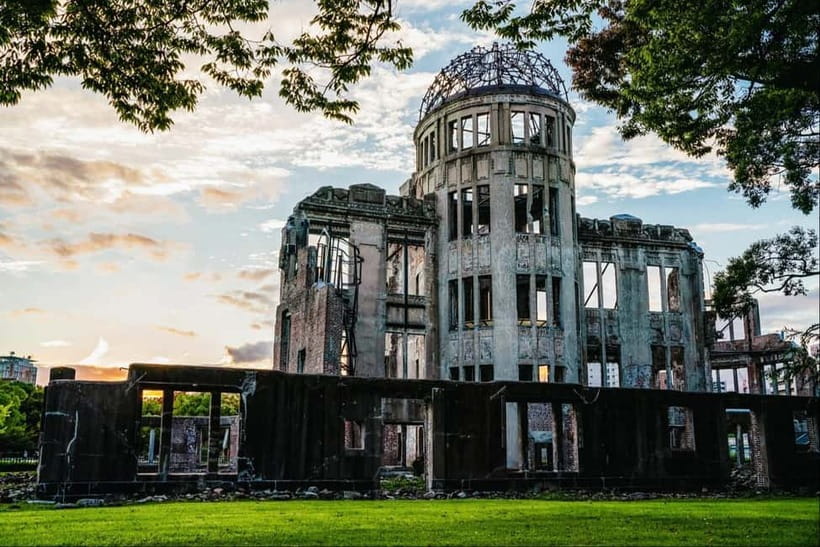
Hiroshima is often approached through its difficult past. A visit to the Peace Memorial Park and museum is essential, but many people also want a quieter way to think about what they have seen. This workshop offers that pause through sound, concentration, and shared effort.
The koto is a long, elegant instrument with 13 strings. It has been part of Japanese musical life for about 1,300 years, and its design carries meaning as well as function. During the introduction, you learn about the instrument’s history, its parts, and the symbolism connected with its form before you begin playing.
That order matters. You are not simply handed an unfamiliar instrument and told to copy a tune. First, you gain a sense of why the koto matters in Japan. Then the practical lesson feels connected to a larger cultural story.
The Hiroshima setting adds another layer. The studio is within walking distance of Peace Memorial Park, so you can pair the lesson with time at the park before or after. I would schedule it after the museum if you want a calm activity for reflection, or before your visit if you prefer to approach the memorial area in a thoughtful frame of mind.
A few more Hiroshima trips to weigh up
- Sushi Making Tokyo Roll and Authentic Japanese Sushi Class
★ 5.0 · 3,971 reviews - Kyoto: 45-Minute Tea Ceremony Lesson Experience
★ 4.3 · 2,378 reviews - Tokyo: Roll and Authentic Sushi Making Class in Asakusa
★ 4.9 · 1,957 reviews
What happens during the 90-minute class
The session begins with an introduction to the koto and to Fukuyama City in Hiroshima Prefecture. Fukuyama is known as the heartland of koto craftsmanship, and more than 70 percent of Japan’s kotos are made there. That local link is one of the strongest reasons to choose this class in Hiroshima rather than a generic Japanese music lesson elsewhere.
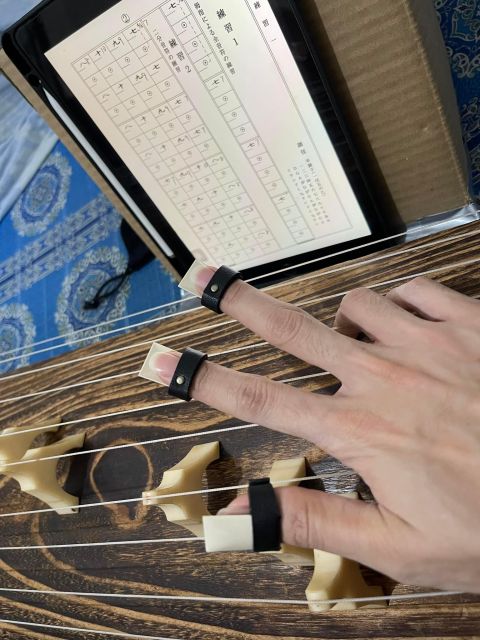
You then learn the basics of sitting and positioning yourself at the instrument. The instructor explains how to pluck the strings and how to follow the simple notation used for the lesson. You do not need to read music beforehand, and no prior experience is expected.
The instructors focus on building a result quickly. Rather than spending the full class on isolated drills, you work through exercises that lead to a complete piece. Previous sessions have been led by instructors including Vincent and Nicholas, and the teaching style described in the supplied material is clear, patient, and encouraging. Elizabeth’s experience also points to a practical strength: participants can learn the basic notation and a song in roughly an hour.
The exact piece can vary. Some sessions have included Sakura, while the featured Hiroshima program centers on Echo of Serenity. If the peace composition is especially important to you, confirm the current program when booking.
The final section brings the group together. You play the piece with the other participants and instructor accompaniment. This is where the earlier posture and plucking practice pays off. You may still be a beginner, but you have something complete to perform, not just a few disconnected notes.
A recording of that performance is provided as a keepsake. It is a useful touch because the sound of a first lesson can disappear quickly once you return to sightseeing. You also receive a hand-folded origami crane, a familiar Hiroshima symbol of hope and peace.
The sound, the setting, and the peace theme
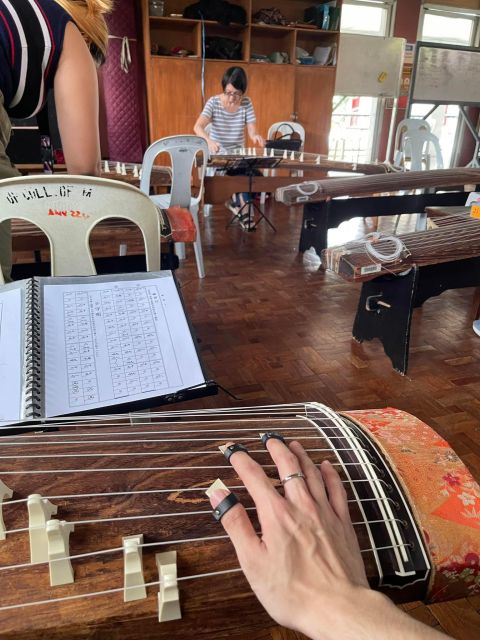
A koto has a bright but gentle tone. Its strings can sound delicate, yet the instrument has enough resonance to fill a small room. That quality suits the workshop’s peace theme. The final performance of Echo of Serenity is intended as a musical prayer for those who died in the atomic bombing.
You should not expect a formal memorial ceremony. This is still a hands-on music class, with practical instruction, mistakes, laughter, and the small triumph of getting a phrase right. Yet the composition gives the activity a sense of care that a standard beginner lesson may not have.
That balance is important. The experience does not ask you to treat Hiroshima’s past as entertainment. Instead, it uses a traditional art form to create a quiet moment of attention. You listen, learn, and contribute to a shared performance.
I also appreciate that the peace message is not separated from Japanese culture. The class connects the local instrument, Fukuyama craftsmanship, Hiroshima’s modern history, and a simple group activity. You come away with more than a few facts about the koto, but the lesson remains accessible and practical.
What the small-group format means for you
The maximum group size is six. That is a good number for an instrument lesson because everyone needs enough room for the koto and enough attention from the instructor. In a larger class, you might spend more time watching other people struggle with hand placement. Here, you should have a better chance to receive direct correction.
Small groups also make the final performance feel personal. You are not performing for a large audience. You are playing alongside a few people who have learned the same piece during the same short session.
The format suits couples, friends, families with older children, and solo participants. A solo visitor can join without needing to assemble a group, while couples and friends have a shared activity that feels more distinctive than taking photos at another major sight.
The minimum age is 10. Younger children are not suitable for this activity according to the stated rules, and the short lesson still requires concentration and careful handling of the instrument. Families should also remember that this is a quiet, seated class rather than a high-energy attraction.
Same city, a completely different kind of day:
- Peaceful Hiroshima & Miyajima UNESCO 1 Day Bus Tour
★ 5.0 · 5,309 reviews - Hiroshima: Hiroshima and Miyajima UNESCO Sites 1-Day Tour
★ 4.9 · 2,330 reviews - Hiroshima / Miyajima Full-day Private Tour with Government Licensed Guide
★ 5.0 · 1,298 reviews - Hiroshima Historical Walking Tour – Why A-Bomb was Dropped
★ 4.8 · 893 reviews
How much value do you get for $50?
At $50 per person, the price is reasonable if you want an active cultural experience rather than a short demonstration. You receive 90 minutes of instruction, use of the koto, a small-group setting, a drink afterward, a performance recording, and an origami crane.
The video is the most useful extra. It records the final piece with instructor accompaniment, so it captures the part of the class you are most likely to remember. The crane is smaller, but it carries a clear connection to Hiroshima and makes a thoughtful item to take home or share.
The value depends on your expectations. If you want a serious course in koto technique, the session will feel brief. One participant specifically wanted a longer class to become more familiar with the instrument. That is a fair criticism. The koto has a long tradition and a precise playing style, and 90 minutes can only introduce the essentials.
If your goal is to try something unusual, play a whole song, and understand the instrument’s place in Japanese culture, the price works well. You can also ask about buying a koto at the studio. For those who want to continue after returning home, online lessons are available.
After the class, free soft drinks are served, with coffee, tea, and juice available. One past session included pineapple juice, a small detail that adds an easy, friendly finish after the concentration of the performance.
Finding the studio near Tatemachi
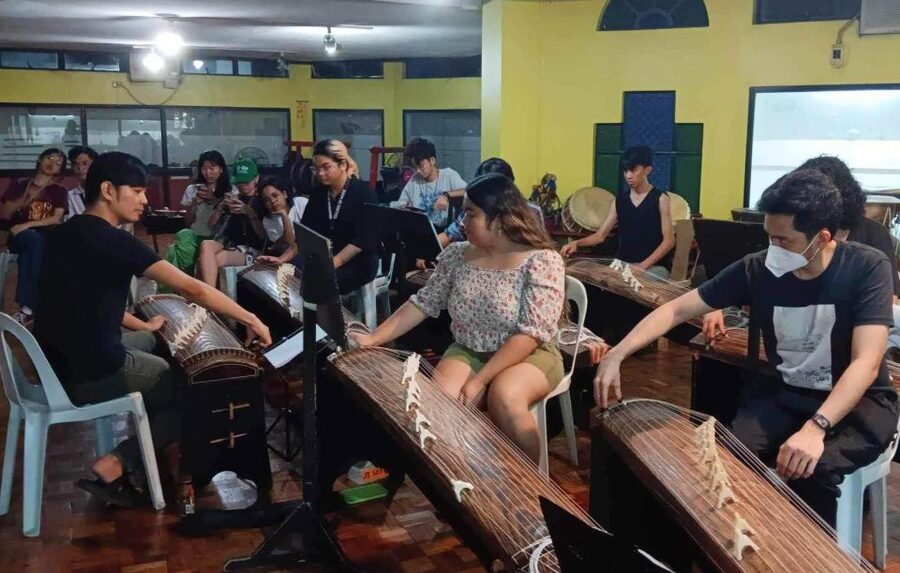
The meeting point is 石田第2ビル, in Hiroshima. If you arrive by streetcar, get off at Tatemachi Station. Walk straight from the corner with Tully’s Coffee, heading toward the YMCA.
When you reach the okonomiyaki restaurant Gokku, written 悟空, turn right. Look for the workshop sign and go to the second floor. Allow a little extra time for this walk, especially if you are carrying luggage or trying to find the entrance during a busy sightseeing day.
The location is useful for planning. Peace Memorial Park is within walking distance, and the streetcar makes Tatemachi easy to reach from other parts of central Hiroshima. I would avoid booking the class too tightly between major attractions. A 90-minute lesson can run on a steady schedule, but you will enjoy it more if you arrive settled rather than rushed.
Who will get the most from this experience?
This class is a strong choice for first-time visitors who want a direct connection with Japanese culture. You handle the instrument yourself, learn basic notation, and produce music by the end. That is more memorable than watching a performance from a seat.
It also suits people who have already visited temples, gardens, and museums and want a different kind of activity. The workshop is not built around sightseeing scenery. Its appeal is concentration and participation.
Music lovers will find plenty to enjoy, but you do not need to identify as a musician. The lesson is designed for beginners, and the instructors guide you from posture through plucking to the final performance. The supplied experiences also show that people with no koto background can learn a complete song during the session.
Solo visitors should feel comfortable booking. The group arrangement gives you an immediate activity with other participants, while the instructor keeps the class moving. Couples and friends may enjoy comparing the sounds of the instruments and helping one another stay on the notation.
I would be more cautious if you dislike seated lessons, symbolic memorial themes, or short introductions to complex subjects. You will not master the koto in one visit, and the emotional tone may feel too serious for someone seeking a purely lighthearted activity.
Practical booking advice
English is used throughout the lesson, so Japanese language ability is not needed. The stated age minimum is 10, and pets are not allowed, apart from assistance dogs. Alcohol and drugs are also prohibited.
The activity offers free cancellation up to 24 hours before the start time, and you can reserve now and pay later. Starting times vary, so check the available slot against your Peace Memorial Park plans.
I would book earlier if the class is central to your Hiroshima visit because only six places are available per session. If your schedule is uncertain, the pay-later option and 24-hour cancellation rule make it easier to hold a place without locking your whole day.
Should you book the Hiroshima koto workshop?
Book it if you want to do something with your hands, learn a real Japanese instrument, and connect Hiroshima’s peace message with music. The small class, English instruction, Fukuyama-made kotos, performance video, and origami crane give the $50 fee clear value.
Skip it if you want an in-depth music course or a longer practice period. Ninety minutes will give you a satisfying first result, but not full command of the instrument. For most people, that is the point: you leave having played a complete piece, with a better understanding of the koto and a quiet memory tied to Hiroshima.
FAQ
How long is the Hiroshima koto workshop?
The class lasts 90 minutes, or one and a half hours.
How much does the experience cost?
The listed price is $50 per person.
Is the workshop taught in English?
Yes. All instruction is conducted in English, and no Japanese language ability is required.
Do I need musical experience?
No. The class is designed for beginners and teaches basic posture, plucking technique, and simple koto music from the start.
What age is suitable for the activity?
Participants must be at least 10 years old. Children under 10 are not suitable for the workshop.
Where does the class meet?
It starts at 石田第2ビル in Hiroshima. From Tatemachi streetcar station, walk toward the YMCA, turn right at the Gokku okonomiyaki restaurant, and go to the second floor when you see the workshop sign.
How many people are in each group?
The class is limited to six participants.
What do I receive after the lesson?
You receive a video recording of the final group performance and a hand-folded origami crane. A free soft drink service is also provided, with coffee, tea, and juice available.
Can I cancel or pay later?
You can cancel up to 24 hours before the activity for a full refund. The reservation option also allows you to book now and pay later.
Just added around Hiroshima
- The Journey of Hiroshima from Tragedy to Peace★ 4.8 · 44 reviews
- Miyajima: Private Rickshaw Tour to Itsukushima Shrine★ 4.9 · 45 reviews
- Hiroshima: Miyajima Half-day Historical Walking Tour★ 4.7 · 100 reviews
- Hiroshima:Guided Virtual Tour/PEACE PARK TOUR VR★ 5.0 · 29 reviews
- Hiroshima/Miyajima Private Custom Tour with Local Guide★ 5.0 · 134 reviews
- Hiroshima: Saijo Sake Tasting at 7 Breweries Guided Tour★ 4.8 · 29 reviews
- Hiroshima: Tour of Atomic Bomb Dome & Peace Memorial Museum★ 5.0 · 20 reviews
- Hiroshima: Private Walking Tour with a Local★ 4.6 · 70 reviews
Workshops, compared.
Sushi Making Tokyo Roll and Authentic Japanese Sushi Class
Read our review →
Roll and Authentic Sushi Making Class in Asakusa
Read our review →
Ramen Cooking Class at Ramen Factory in Kyoto
Read our review →
Sushi Making Class in a Happi Coat near a Famous Spot
Read our review →

Sushi Making Osaka Roll and Authentic Japanese Sushi Class
Read our review →
Tokyo Sushi Making Class in Tsukiji with Professional Chef
Read our review →Browse the lists this tour appears in