
REVIEW · TEA CEREMONY EXPERIENCES
An Amazing set of Cultural experience: Kimono, Tea Ceremony and Calligraphy
The most memorable part of this Miyajima experience is the setting: you learn Japanese arts inside a historic Zen temple, not in a hotel conference room. Okeiko Japan combines kimono dressing, a tea ceremony, and calligraphy in one compact visit, with time for photographs in the temple grounds.
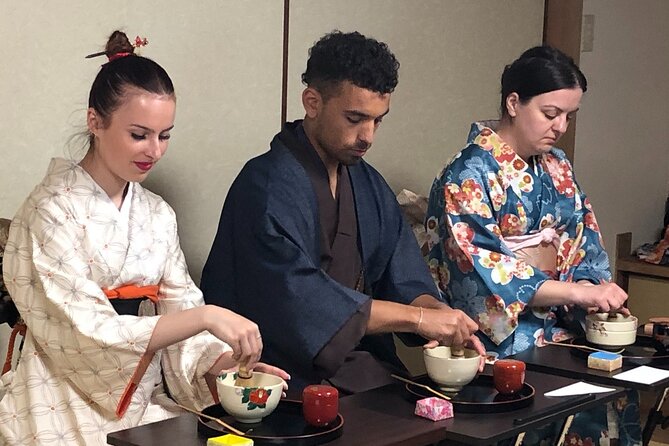
I like the patient help with choosing and putting on the kimono, and I like that you do more than watch the tea ceremony. You whisk your own matcha, practice the proper movements, and try Japanese writing. The small group size, capped at eight people, should help keep the session personal.
The main consideration is time and price. At $132.14 per person, this is not a bargain activity, especially if you are already paying for the ferry and other Miyajima sights. The booking information gives an approximate duration of 1 hour 30 minutes, while the stop details allow about two hours, so leave room in your schedule.
In This Review
- Key points to know before booking
- A temple setting that changes the whole experience
- Choosing a kimono and getting dressed
- Tea ceremony with hands-on matcha
- Calligraphy that becomes a souvenir
- Photos, gardens, and the human side of the visit
- What the price includes in practical terms
- Timing your visit around Miyajima
- Who will enjoy Okeiko Japan Miyajima
- Small details that improve the visit
- Should you book this Miyajima cultural experience?
- FAQ
- Where does the experience meet?
- How long does the activity last?
- What activities are included?
- Can children participate?
- How many people can join the experience?
- Can I cancel for a refund?
Key points to know before booking
- Kimono dressing comes first: You choose from available garments in your size, then receive help with the robe, obi, cords, socks, sandals, and accessories.
- You make your own matcha: The tea portion includes a demonstration, an explanation of the manners, and hands-on whisking.
- Calligraphy is practical and playful: You practice kanji and names, with writing on wooden spoons that can be beautifully wrapped as a keepsake.
- Photographs are part of the experience: Staff take many pictures during the session, including family and group shots around the grounds.
- The location is easy to reach: Okeiko Japan Miyajima is about a five-minute walk from the ferry port toward Tokujuji.
- Small groups suit first-time learners: The maximum group size is eight, and morning or afternoon starts make this easier to fit around Miyajima sightseeing.
A temple setting that changes the whole experience
Miyajima is known for its famous shrine, hillside views, and deer, but this activity gives you a quieter way to experience the island. Okeiko Japan Miyajima is located at 741-1 Miyajimachō, about five minutes on foot from the ferry port in the direction of Tokujuji.
That short walk matters. You can combine the session with a day on Miyajima without arranging a separate excursion across Hiroshima. At the same time, you should not treat this as a quick stop between ferry and shrine. The activity can take around 90 minutes to two hours, and the kimono dressing and photographs need unhurried time.
The temple setting gives the lesson a sense of place. Calligraphy and tea are not presented as random craft projects. You are introduced to practices linked to Japanese manners, visual balance, hospitality, and patience. The setting also makes the kimono photographs feel more natural than pictures taken against a plain studio wall.
The experience has morning and afternoon start times. That flexibility is useful if you want to visit the main shrine area first, eat lunch before the session, or reserve the activity for a calmer part of your Miyajima day.
More tea ceremony experiences in Hiroshima:
- Hiroshima Local guided Hiking Tour&Open-air Tea Ceremony
★ 5.0 · 213 reviews - Kimono and Tea Ceremony in Miyajima
★ 5.0 · 73 reviews - Hiroshima: Morning Hiking Tour with Open-air Tea Ceremony
★ 4.8 · 58 reviews
Choosing a kimono and getting dressed
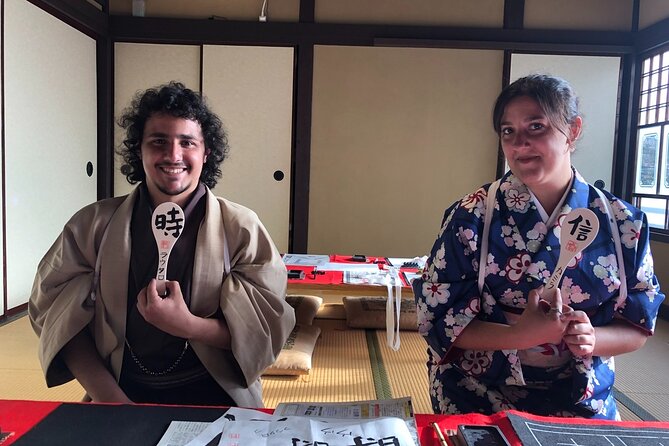
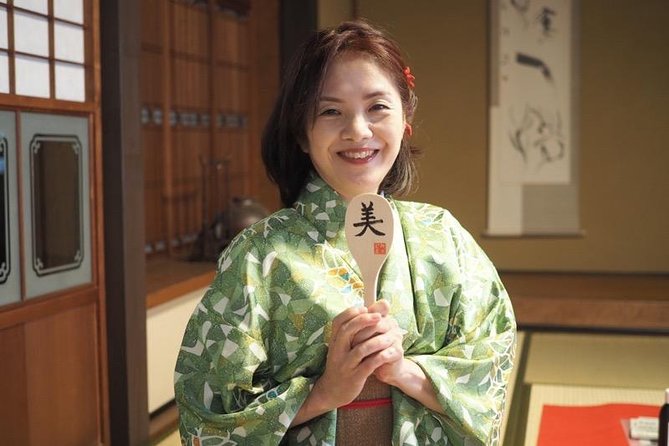
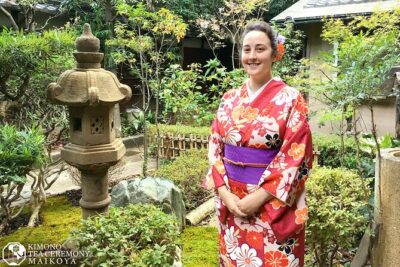
The first major part of the visit is dressing in traditional clothing. Staff help you choose from the available kimono in your size, then assist with the layers and accessories. The process includes the robe, obi, cords, socks, sandals, and an accessory such as a flower.
This is not a self-service costume rack. Proper kimono dressing involves arranging the fabric carefully and securing it so the clothing looks right and stays in place. The staff take care of that part, which lets you focus on the colors, patterns, and finished appearance.
The selection depends on your size and what is available that day. One useful detail is that people concerned about fit have been accommodated, including larger sizes. Still, you should not expect every design to be available in every size, and the information does not promise a custom choice for every participant.
The activity suits men as well as women. The traditional clothing and tea ceremony are not limited to one style of visitor, and mixed groups can take part together. Children can participate from age six, making this a possible choice for families, provided younger children are comfortable sitting, listening, and handling tea equipment with care.
Once dressed, you have time for photographs. Staff take pictures throughout the experience, not just at one quick photo stop. That is a real part of the value here, since the kimono is one of the features you are paying to experience.
Tea ceremony with hands-on matcha
The tea portion begins with an explanation and demonstration. You first watch the ceremony, then learn the small manners and movements involved before preparing your own matcha.
That order is helpful. Japanese tea ceremony can look simple from across the room, but the placement of the bowl, the way you handle the whisk, and the rhythm of serving all carry meaning. You get enough context to understand that the ceremony is about more than making a green drink.
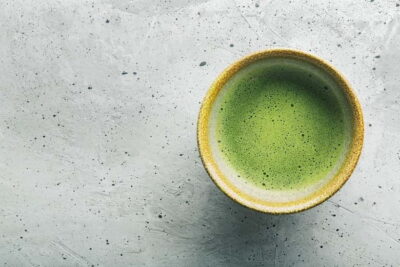
Then you whisk matcha yourself. This turns the activity from a performance into a lesson. You can expect to follow instructions rather than produce a professional bowl on your first attempt, which is part of the fun. The point is to try the method and understand the care involved.
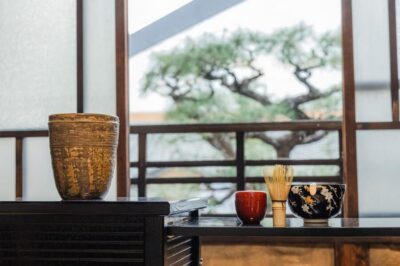
Tea bowls used during the session may be made by local artisans. Their shape and surface become part of the lesson, since Japanese tea culture pays attention to the vessel as well as the tea. You get a closer look at an object that might otherwise pass unnoticed during a formal ceremony.
The ceremony is serious in tone, but the experience is not stiff. The English explanations are designed to help you follow what is happening, and the hands-on section gives you something to do. That balance should work well if you want cultural context without sitting through a long lecture.
One practical note: if you are hoping for a full historical study of tea ceremony, this is too short. It is an introduction, with a demonstration and practice session rather than an advanced lesson. For most visitors, that is the right tradeoff because the activity also includes kimono dressing and calligraphy.
Calligraphy that becomes a souvenir
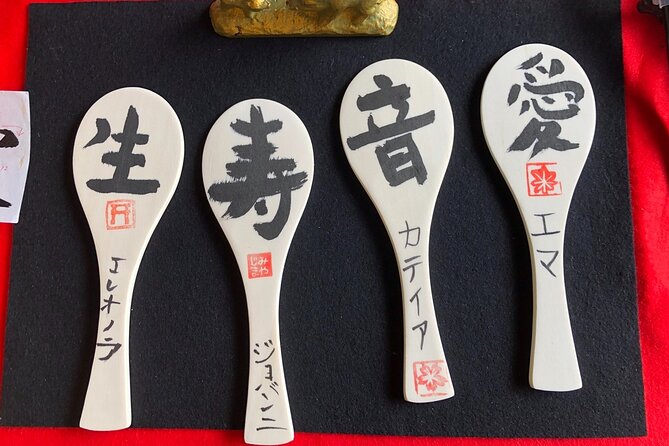
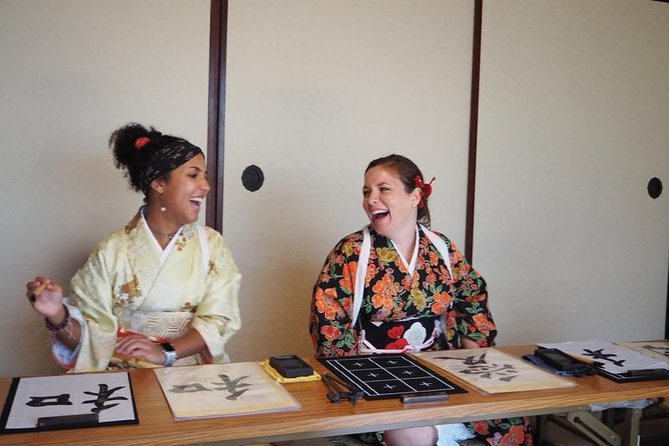
The final art activity gives you a chance to practice Japanese writing. You may work on kanji and on writing your own name, with guidance as you handle the brush and ink.
Calligraphy often looks easier than it is. A few clean strokes can carry a strong visual effect, but the direction, pressure, and order of the strokes require concentration. This activity gives you a friendly way to try without pretending that one short session will make you an expert.
A particularly nice detail is the wooden spoon souvenir. Your writing efforts can be wrapped beautifully for you to take home. It is a more personal reminder than a mass-produced souvenir because it records your own attempt at the art.
The calligraphy portion also gives the experience a different pace. Kimono dressing is visual and social. Tea ceremony asks you to watch and copy. Calligraphy becomes quieter and more focused. Together, the three activities create a good rhythm within a relatively short visit.
You should expect instruction and practice, not a museum-quality finished piece. Your handwriting may be uneven, and that is fine. The value comes from trying a traditional form and learning why the strokes require control.
More kimono & culture experiences in Hiroshima:
- Cultural Activities :Kimono, tea ceremony, Calligraphy and Amulet
★ 5.0 · 44 reviews - Calligraphy Workshop at Traditional Folk Craft Shop in Hiroshima
★ 5.0 · 26 reviews - Kimono and Calligraphy Experience in Miyajima
★ 5.0 · 16 reviews - Private Hiroshima Calligraphy: Create Your Own Kanji Art Souvenir
★ 5.0 · 12 reviews
Photos, gardens, and the human side of the visit
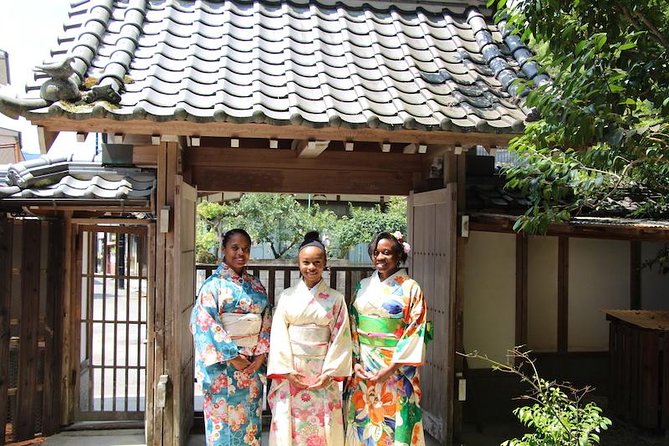
The photographs are one of the most praised parts of the experience. Staff take pictures during the kimono portion, the tea ceremony, the calligraphy lesson, and around the temple grounds. Family groups can use the photographs to record the occasion, rather than relying only on one hurried selfie.
This matters because kimono dressing is difficult to photograph alone. You need someone to capture the full clothing, accessories, posture, and setting. Having staff take many pictures lets you stay involved instead of constantly checking a phone.
The temple gardens provide a more fitting background than an indoor studio. You can expect photographs connected to the setting, though the precise views and seasonal appearance will vary. Miyajima changes throughout the year, and the provider itself encourages returning in another season.
There is also a small shop at the location. It can be useful if you arrive early or want to browse after the session. Do not build your decision around shopping, but it adds a little breathing room before or after the lesson.
The personal welcome is another strength. The staff help with clothing, explain the rituals, take photographs, and respond to questions. That combination creates a relaxed tone, even when the tea ceremony itself calls for quiet attention.
What the price includes in practical terms
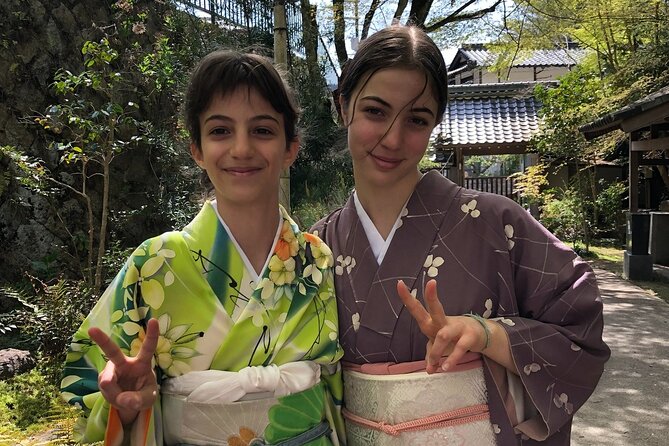
At $132.14 per person, this is a premium short activity. You are paying for more than admission to a temple: the fee covers a kimono experience, assistance with dressing, a tea ceremony lesson, matcha preparation, calligraphy instruction, photographs, and a small-group format.
The value depends on what you want from Miyajima. If your goal is simply to see the famous sights as cheaply as possible, this will feel expensive for a session lasting about 90 minutes to two hours. If you want a structured cultural activity with help, photographs, and several traditions in one place, the price becomes easier to justify.
The group limit of eight helps. You are less likely to feel lost in a crowd, and the staff can give direct attention while you dress, whisk tea, and practice writing. A private booking is not advertised, so do not assume the session will be one-on-one.
You should also count the ferry and your wider Miyajima transport costs when planning the day. The meeting point is on the island, not in central Hiroshima, although the short walk from the ferry port keeps the activity straightforward once you arrive.
The free cancellation policy gives you some useful flexibility. You can cancel for a full refund up to 24 hours before the start time. Changes or cancellations made less than 24 hours ahead are not accepted for a refund, and the cut-off uses local time.
Timing your visit around Miyajima
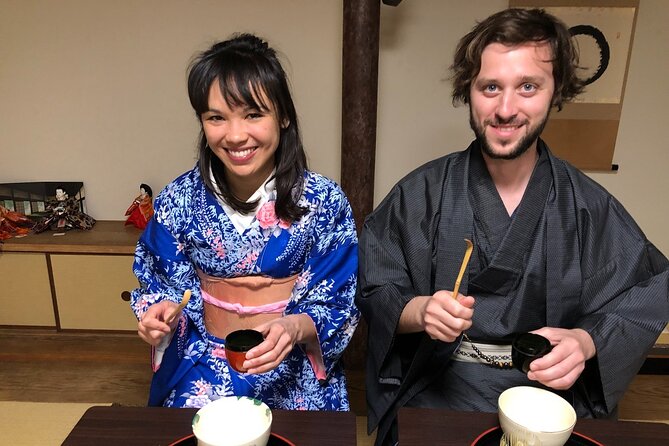
The activity ends back at the same meeting point, so you can continue exploring the island afterward. That makes it easy to combine with the shrine, shops, food stops, or a walk through other parts of Miyajima.
Morning and afternoon starts are offered. A morning booking can leave the rest of your day open, while an afternoon booking may work better if you want to see the ferry area and major sights first. Choose based on your wider plan rather than assuming one time is better.
Allow more time than the stated activity length if you are coming from Hiroshima and need to catch a train afterward. The published information gives both an approximate 1 hour 30 minutes and a two-hour allowance, so I would plan around the longer figure and add ferry and walking time.
Arriving early can be helpful. The staff have allowed early arrivals to wait, and the shop gives you somewhere to look around. Still, the meeting point is specific, so save the address and allow time to walk from the ferry port toward Tokujuji.
The experience operates near public transportation, and most people can participate. The minimum age is six. Specific accessibility details are not provided, so anyone with mobility, dressing, or seating concerns should confirm arrangements before booking.
Who will enjoy Okeiko Japan Miyajima
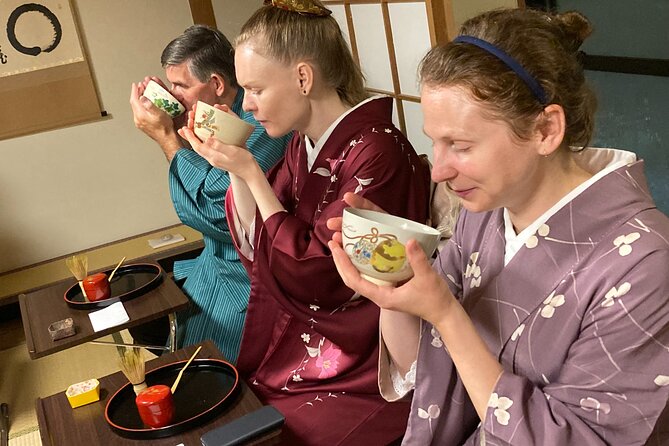
I would recommend this for a first visit to Japan when you want more than sightseeing photographs. The three activities give you a direct introduction to clothing, hospitality, and writing, with enough explanation to make the customs easier to understand.
It is particularly well suited to:
- Couples or friends who want memorable photographs
- Families with children aged six or older
- Visitors interested in Japanese arts but short on time
- People who prefer a small group over a large staged show
- Anyone looking for a quieter activity after visiting Hiroshima
It can also work well after a demanding visit to Hiroshima. One German-speaking participant described the session as a chance for calm and reflection after difficult experiences in the city. You should not confuse the activity with a formal memorial program, but the slower pace can provide a thoughtful change of mood.
Men should not feel out of place. The clothing, tea, and calligraphy are suitable for mixed groups, and the experience is not built only around fashion photographs. The cultural lessons give the session substance.
I would be more cautious if you dislike structured activities, sitting through demonstrations, or wearing formal clothing. The kimono is beautiful, but it can feel restrictive, and the ceremony asks you to follow manners rather than simply wander around taking pictures.
Small details that improve the visit
Wear clothing that is comfortable under a kimono. The exact dressing arrangement is handled by staff, but you will have a better time if you are prepared for a formal outfit and a focused lesson.
Bring a phone or camera if you want extra pictures, but do not assume you must manage the photography yourself. Staff take many images during the visit. One technical issue with sharing photographs through an app has been noted, so check how your pictures will be delivered before leaving if that matters to you.
Do not rush the calligraphy. Your first strokes may look awkward, and that is normal. Ask for help with your name if needed, then keep the wrapped wooden spoon as a record of the attempt.
Approach the tea ceremony with respect, but do not worry about getting every gesture perfect. You are there to learn the basic meaning and movements, not to pass an examination.
Finally, plan the activity as part of your Miyajima day, not as a replacement for the island itself. The temple setting is special, but you will still want time for the rest of Miyajima.
Should you book this Miyajima cultural experience?
Book it if you want a friendly, hands-on introduction to Japanese traditions and value good photographs, personal help, and a small group. The combination of kimono, matcha, tea etiquette, calligraphy, and a temple setting gives you a lot to do in a short period.
Skip it if your Miyajima schedule is already packed, your budget is tight, or you prefer independent sightseeing. At $132.14, the cost is hard to defend as a simple photo stop.
For most visitors who have room in the day, I think the experience earns its place. You do not merely put on a costume and pose. You learn how to prepare tea, try calligraphy, and understand a few of the manners behind both. That makes the photographs more meaningful and gives you something to remember beyond the usual shrine snapshot.
FAQ
Where does the experience meet?
It meets at Okeiko Japan Miyajima, 741-1 Miyajimachō, Hatsukaichi, Hiroshima 739-0588, Japan. The location is about a five-minute walk from the Miyajima ferry port toward Tokujuji.
How long does the activity last?
The experience is advertised as approximately 1 hour 30 minutes. The stop details allow two hours, so you should plan for roughly 90 minutes to two hours.
What activities are included?
You learn to wear a kimono, take part in a tea ceremony, prepare your own matcha, and practice Japanese calligraphy. Staff also take photographs during the experience.
Can children participate?
The minimum age is six. Most participants can take part, according to the available activity information.
How many people can join the experience?
The group has a maximum of eight people. This keeps the session smaller than a large group performance and allows staff to help with dressing and practice.
Can I cancel for a refund?
You can cancel up to 24 hours before the start time for a full refund. Cancellations or changes made less than 24 hours before the local start time are not accepted for a refund.
Just added around Hiroshima
- The Peace Memorial to Miyajima : Icons of Peace and Beauty★ 4.5 · 31 reviews
- Private Full Day Hiroshima Tour★ 4.5 · 29 reviews
- Hiroshima & Miyajima All-Inclusive Tour w/Licensed guide Pancho★ 5.0 · 54 reviews
- Okunoshima Rabbit Island Cycling Tour with Local Guide★ 4.5 · 17 reviews
- Shore Excursion from Hiroshima Port : Private Tour in Hiroshima★ 5.0 · 17 reviews
- Hiroshima Saijo Sake Tasting Tour with visit to 7 Breweries★ 5.0 · 104 reviews
- Miyajima Guided Tour and Fresh Oyster Farm Tour★ 5.0 · 20 reviews
- Hiroshima Country Cycling: Explore Rural Life 1 HR from City★ 5.0 · 22 reviews
Tea Ceremony Experiences, compared.
Tea Ceremony in a Traditional Tea House in Kiyomizu
Read our review →

World Heritage Kyoto & Nara Uji Authentic Matcha Experience
Read our review →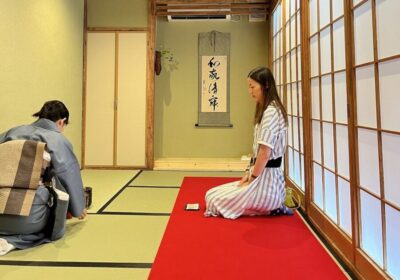
Browse the lists this tour appears in