
REVIEW · TEA CEREMONY EXPERIENCES
Hiroshima Local guided Hiking Tour&Open-air Tea Ceremony
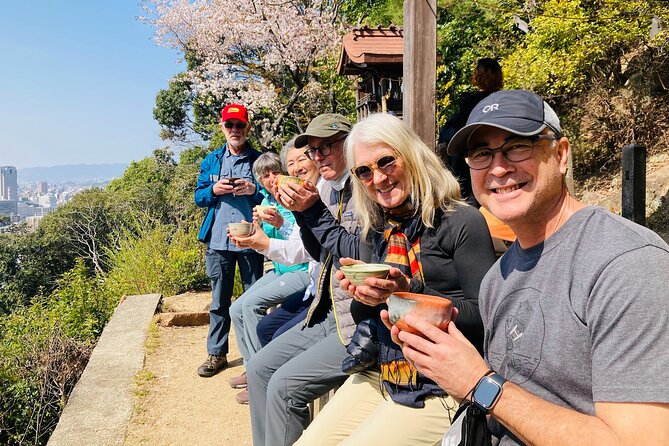
Hiroshima’s Futaba Mountains rise just beyond the station, offering a quiet route through shrines, forest, and mountain paths before most of the city gets moving. The reward is a wide view toward Hiroshima, the Seto Inland Sea, and Miyajima, followed by a simple Nodate tea ceremony outdoors.
I like the personal scale, with a maximum of six people, and the way guides such as Nana, Michi, and Naomi explain Shinto customs rather than simply pointing at buildings. I also like the early start, which leaves the rest of your day open. The catch is clear: you climb about 500 steps, and steep or uneven sections can feel tough in hot weather.
In This Review
- Key points at a glance
- A forested mountain hiding beside Hiroshima Station
- Hiroshima Toshogu Shrine sets the tone
- Kinko Inari Shrine and the 500-step climb
- Futabayama Peace Pagoda and the view over Hiroshima
- Forest bathing is more than a walk in the trees
- Nodate tea at the Okumiya Shrine
- What the three-hour schedule feels like
- Price, group size, and what you receive
- Who should book this experience
- Practical advice before you go
- Should you book the Futaba Mountains hike?
- FAQ
- Where does the tour start?
- Where does the tour finish?
- How long does the experience last?
- What departure times are available?
- How many people can join the tour?
- How many steps are involved?
- Is the tour suitable for most people?
- Can young children join?
- What happens if the weather is poor?
- Can I cancel for a full refund?
Key points at a glance
- A mountain route starts beside Hiroshima Station: You can leave your hotel area and reach the trail without a long transfer.
- About 500 steps lead to the shrines: The climb is manageable for many people, but it is not a flat stroll.
- Futabayama Peace Pagoda gives the big view: You can see Hiroshima, the Seto Inland Sea, and Miyajima from above.
- Nodate tea is served outdoors: This is an informal mountain tea experience, not a formal indoor ceremony.
- Forest bathing adds a quiet pause: The guide uses the woods for a short sensory meditation.
- Five percent supports mountain conservation: Part of your fee goes toward protecting Futaba Mountain.
A forested mountain hiding beside Hiroshima Station
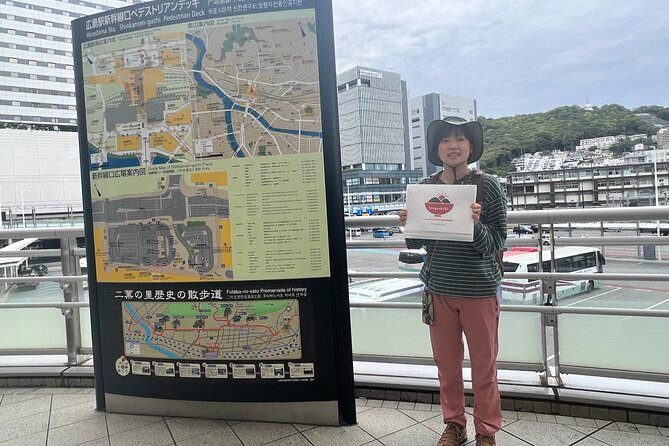
The clever part of this tour is its setting. You begin at the Shinkansen Exit of Hiroshima Station, then move quickly from railway traffic and city streets toward the wooded slopes of Mt. Futaba. You do not need to spend half a day reaching a rural trailhead. The mountain is close, but the mood changes fast.
This makes the outing a useful counterpoint to Hiroshima’s major memorial sites. The Peace Memorial Park is essential, yet it presents Hiroshima through war, loss, and reconstruction. Futaba offers another way to understand the city, through living religious customs, local pilgrimage paths, and the green hills that frame Hiroshima.
Your guide leads the route and pauses often to explain what you are seeing. Nana, Michi, and Naomi are among the guides named for this experience. Their role matters here because the shrines are not just scenic stops. The meaning of gates, offerings, prayers, and ritual gestures is easy to miss if you are walking alone.
The group limit of six keeps the pace more conversational than a large bus tour. You can ask questions, stop for photographs, and take breaks without feeling like you are holding up a crowd.
More tea ceremony experiences in Hiroshima:
- Hiroshima: Morning Hiking Tour with Open-air Tea Ceremony
★ 4.8 · 58 reviews - Kyoto: Tea Ceremony in a Traditional Tea House in Kiyomizu
★ 4.9 · 3,519 reviews - Kyoto: Tea Ceremony Ju-An at Jotokuji Temple
★ 4.9 · 3,207 reviews
Hiroshima Toshogu Shrine sets the tone
The first major stop is Hiroshima Toshogu Shrine. The visit gives you an introduction to the cultural side of the route before the climb begins in earnest.
You have time to look at the shrine and learn about its important cultural assets. Your guide can also explain basic Shinto practices, including how people approach a shrine and make an offering. This early stop is useful even if you have already visited shrines in Kyoto or Tokyo, since the guide places the details in a local Hiroshima setting.
Do not expect a huge shrine complex or a long museum visit. The appeal is the connection between the building, the mountain route, and the rituals that continue here. You are beginning a pilgrimage-style walk rather than checking off a famous monument.
From the shrine, the path leads toward Kinko Inari Shrine and into Mt. Futaba. The first part may include urban or built-up views, but the route becomes more peaceful as you gain height.
Kinko Inari Shrine and the 500-step climb
Kinko Inari Shrine marks the transition from city sightseeing to a forest hike. The path includes about 500 steps, so you should treat the physical effort seriously even though the tour is only around three hours.
The climb is described as easy to moderate by people who have taken it, with frequent pauses and stops. The steps and trails are well maintained, but parts can be steep and uneven. A fit hiker may find the ascent straightforward. If you are new to hiking, you can still enjoy it, provided you accept a slower pace and take the breaks offered.
Hot weather changes the calculation. One outing took place in extreme summer heat, and the guide made regular pauses for hydration. Even with those breaks, the climb left participants ready for a cold shower afterward. If you visit in warm weather, bring water, wear light clothing, and do not assume that a short duration means an effortless walk.
The shrine itself gives the walk spiritual interest. Your guide explains the role of Inari worship and the customs connected with the site. You might have the chance to make an offering or post a wish, depending on how the visit unfolds. The important point is that you are not simply walking past a red gate or temple roof without context.
Futabayama Peace Pagoda and the view over Hiroshima
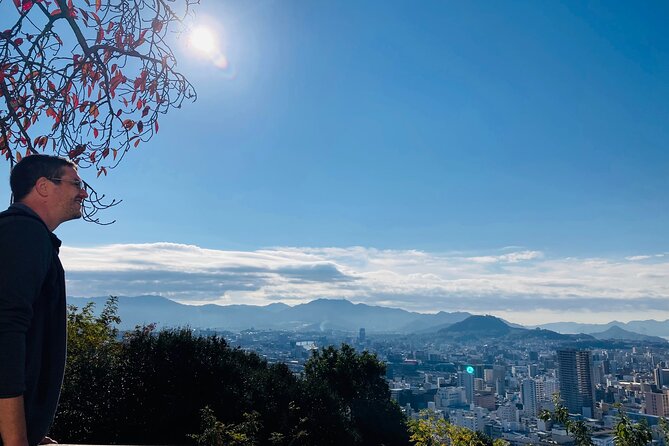
At the top, Futabayama Peace Pagoda provides the tour’s clearest visual payoff. From here, you can look across Hiroshima City toward the Seto Inland Sea and Miyajima.
The view also gives physical meaning to Hiroshima’s recovery. From above, the city appears as a place rebuilt and still growing, surrounded by water and wooded hills. Your guide points out parts of the view and connects them with local history.
This is a good place to pause rather than rush through. The schedule allows time to enjoy the view, and the open setting makes it a natural break after the stairs. Bring your camera, but give yourself a few minutes without it. The value of the stop is not only the photograph. It is the shift in perspective from street level to the broad shape of the city.
The pagoda is also a Buddhist element on a route that includes Shinto shrines. That mixture reflects the layered religious life of Japan. You see different traditions within one short walk, with the guide helping you understand how they fit into the setting.
A few more Hiroshima trips to weigh up
- Fushimi Inari Hidden Hiking Tour (Private Option Available)
★ 5.0 · 1,750 reviews - Kyoto: 3-Hour Fushimi Inari Shrine Hidden Hiking Tour
★ 4.9 · 270 reviews - Hiking the Historic Nakasendo Trail [1 Day Tour from Nagoya]
★ 5.0 · 104 reviews - Kyoto: Hike and Hot Springs in Kurama
★ 5.0 · 49 reviews
Forest bathing is more than a walk in the trees
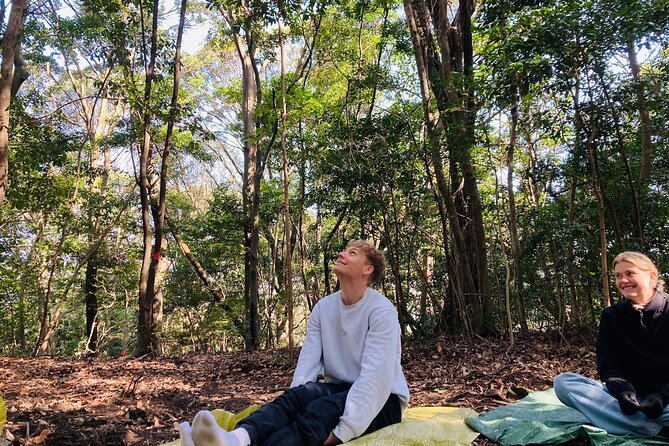
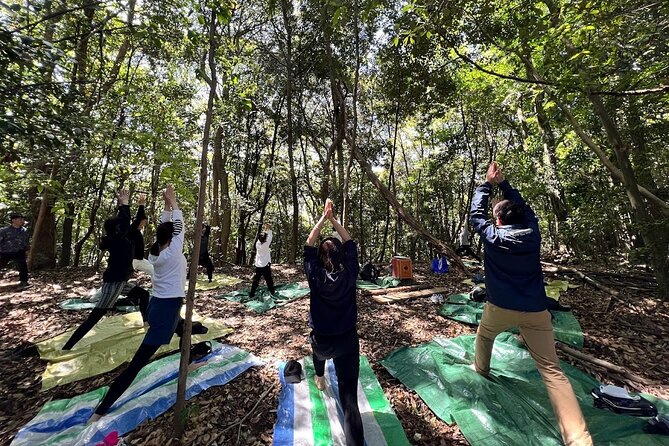
After the mountaintop stop, the tour includes a period of Shinrinyoku, or forest bathing. This is not a strenuous activity or a technical meditation class. It is a guided pause that asks you to slow down and pay attention to the woods through your senses.
The stop usually lasts about 35 minutes. You might focus on sounds, smells, textures, and the feel of being under the trees. That sounds simple, but it changes the rhythm of the tour. Instead of racing from one shrine to the next, you get time to notice the forest itself.
I like this part because it gives the hike a purpose beyond reaching the summit. Hiroshima sightseeing can be emotionally demanding, especially when you spend much of the day at the Peace Memorial Museum and park. A quiet forest interval offers a different kind of concentration.
Still, this section will suit some people more than others. If you prefer constant movement and facts, a sensory pause may feel long. If you enjoy calm outdoor time, it can become one of the most memorable parts of the morning.
Nodate tea at the Okumiya Shrine
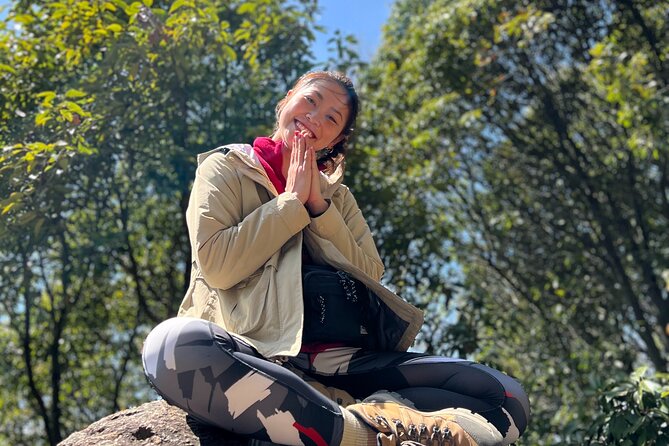
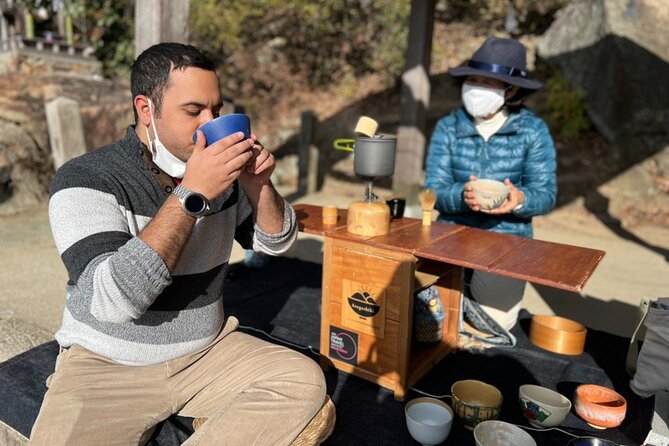
The final special element is Nodate, an open-air tea ceremony performed by your guide at the Okumiya Shrine area of Kinko Inari Shrine. You are not entering a formal tea house with a long set of rules. Instead, tea is prepared outdoors, in the mountain setting, with the city view and the forest around you.
That makes the ceremony approachable. Your guide can explain the basic meaning of the tea service and help you understand the gestures without turning the moment into a stiff performance. Matcha or green tea is served, and on a hot day a cold green tea can be exactly what you want after the climb.
The setting is the real distinction. Many Japanese tea experiences take place indoors and follow a formal arrangement. Here, the tea is tied to the walk, the shrine, and the mountaintop. You have earned the pause with your legs, then sit down with a view.
Do not book this expecting an extensive tea-school lesson. The ceremony is one part of a broader cultural walk, not the entire focus. That is also why it works so well for people who want something personal and local rather than a polished stage show.
What the three-hour schedule feels like
The advertised duration is about three hours, with the tour returning to Hiroshima Station. The stated departures include 7:30, 10:00, and 13:00, with corresponding return times around 10:30, 13:30, and 16:30.
The early departure is the best fit for most sightseeing plans. You can hike before the day becomes hot, then continue to the Peace Memorial Park, museum, or another part of Hiroshima afterward. The morning schedule also gives you a better chance of a quieter walk.
A midday or afternoon departure may work if your schedule requires it, but the climb can feel harder in strong sun. The route is outdoors, and the experience depends on good weather. Rain or poor conditions can lead to a new date or a full refund.
Arrive early at Hiroshima Station. The tour has a strict late-arrival rule: if you are more than ten minutes late without contacting the provider, the booking can be canceled with the full fee charged. Since the meeting point is at the Shinkansen Exit, allow time to find the precise location inside the station.
Price, group size, and what you receive
At about $109.43 per person, this is not the cheapest way to take a walk in Hiroshima. You can visit many shrines independently for little or no admission cost. The fee makes more sense when you consider what the guide adds: route-finding, cultural explanations, the guided forest session, and the open-air tea service.
The small group is an important part of the value. With no more than six people, you get a more direct exchange with the guide. That matters when you want to ask why a ritual is performed, what a shrine represents, or how the mountain relates to Hiroshima’s past.
Five percent of the fee goes to Futaba Mountain conservation activities. This does not transform the price into a bargain, but it gives the purchase a practical local benefit.
Children aged five and under can join free. The tour is open to most people, but the 500 steps remain the key limitation. The experience is best for adults, older children, and families who can handle a sustained uphill walk. It is not a good choice if you need a completely level route or dislike outdoor activity.
Who should book this experience
I would choose this tour if you want to see a less obvious side of Hiroshima without giving up the convenience of staying near the station. It suits you especially well if you enjoy:
- Small-group guiding rather than a large organized tour
- Local religious customs explained in plain language
- Forest walks with regular stops
- City views reached by your own effort
- A casual cultural activity that is different from a standard tea house visit
Families can enjoy it, including older children and teenagers. The route has enough variety to keep the outing from feeling like a history lecture, and the guide can adjust the pace with pauses.
Experienced hikers may find the physical part easy. Beginners should not be embarrassed by the climb, but you should wear proper walking shoes and plan for effort. The trail is maintained, yet this is still a mountain path with stairs.
You may want to skip it if you have limited mobility, are uncomfortable in heat, or want a formal tea ceremony with a highly structured presentation. You should also avoid booking it as your only Hiroshima experience. It complements the city’s memorial sites rather than replacing them.
Practical advice before you go
Wear shoes with a firm sole. Sandals or smooth street shoes will make the steps and uneven sections less comfortable.
Bring water, especially in summer. The guides are attentive about breaks, but you should not depend on the tour to solve every need. A hat and sun protection are sensible on clear days.
Keep your arrival simple and punctual. The meeting point is at the Hiroshima Station Shinkansen Exit, and the tour ends there too. That makes it easy to continue sightseeing or catch a train, but only if you return with enough time for your next plan.
The experience is sold with mobile ticket confirmation, and free cancellation is available up to 24 hours before the start time. Changes or cancellations inside that window are not accepted, and weather-related cancellations offer either another date or a full refund.
Should you book the Futaba Mountains hike?
Book it if you want a quiet, active morning that joins Hiroshima’s shrines, spiritual customs, forest, and city views in one compact outing. The open-air tea ceremony is the most unusual feature, while the small group and local guides make the cultural explanations feel personal.
Skip it if you want a flat city tour, a long formal tea lesson, or a completely flexible schedule. The 500 steps are real, and hot weather can make the route harder than the three-hour duration suggests.
For most visitors who can manage the climb, this is a strong choice for a second Hiroshima day or a morning before the main sights. It shows you the city from above, gives you time away from crowds, and leaves the rest of the day free.
FAQ
Where does the tour start?
It starts at the Hiroshima Station Shinkansen Exit, at 1-2-37 Matsubaracho, Minami Ward, Hiroshima.
Where does the tour finish?
The activity ends back at the Hiroshima Station meeting point.
How long does the experience last?
The tour lasts about three hours.
What departure times are available?
The listed departure times are 7:30, 10:00, and 13:00.
How many people can join the tour?
The group has a maximum of six participants.
How many steps are involved?
The hike includes about 500 steps.
Is the tour suitable for most people?
Most people can participate, but you should be prepared for uphill walking, stairs, and some uneven or steep sections.
Can young children join?
Children aged five and under can participate free of charge.
What happens if the weather is poor?
The experience requires good weather. If it is canceled because of poor weather, you can receive a different date or a full refund.
Can I cancel for a full refund?
Yes. You must cancel at least 24 hours before the local start time to receive a full refund.
Just added around Hiroshima
- The Journey of Hiroshima from Tragedy to Peace★ 4.8 · 44 reviews
- Miyajima: Private Rickshaw Tour to Itsukushima Shrine★ 4.9 · 45 reviews
- Hiroshima: Miyajima Half-day Historical Walking Tour★ 4.7 · 100 reviews
- Hiroshima/Miyajima Private Custom Tour with Local Guide★ 5.0 · 134 reviews
- Hiroshima:Guided Virtual Tour/PEACE PARK TOUR VR★ 5.0 · 29 reviews
- Hiroshima: Saijo Sake Tasting at 7 Breweries Guided Tour★ 4.8 · 29 reviews
- Hiroshima: Tour of Atomic Bomb Dome & Peace Memorial Museum★ 5.0 · 20 reviews
- Hiroshima: Private Walking Tour with a Local★ 4.6 · 70 reviews
Tea Ceremony Experiences, compared.
Tea Ceremony in a Traditional Tea House in Kiyomizu
Read our review →
World Heritage Kyoto & Nara Uji Authentic Matcha Experience
Read our review →

Browse the lists this tour appears in