
REVIEW · TEA CEREMONY EXPERIENCES
Cultural Activities :Kimono, tea ceremony, Calligraphy and Amulet
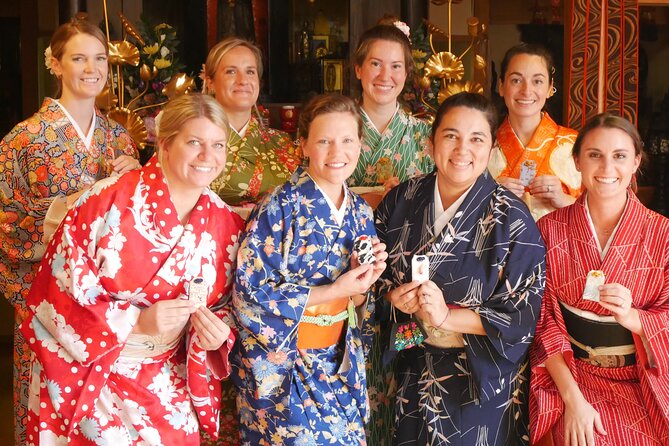
A kimono, a bowl of matcha, Japanese calligraphy, and a handmade amulet: this two-hour Miyajima class packs four memorable cultural moments into one visit. The setting is Tokuju-ji Temple, a roughly 300-year-old Soto Zen temple with gardens and a story tied to the protection of children and pregnancy.
I like the way the activities balance looking, doing, and making. You learn to write your name in Japanese, practice the steps of a tea ceremony, and leave with an amulet you made yourself. I also like the practical touch of wearing a kimono during the lessons and receiving photographs by email afterward.
The main consideration is pace. With about half an hour for each lesson, you get a friendly introduction rather than advanced instruction. The $171.73 price is also a serious outlay for two hours, though the clothing, teaching, temple setting, craft, and photos make it more than a simple demonstration.
In This Review
- Key points about the Miyajima cultural class
- Tokuju-ji Temple gives the class its character
- Putting on a kimono before the lessons
- Japanese calligraphy: a short lesson with a personal result
- Tea ceremony: learning the steps, not just drinking matcha
- Amulet making adds something you can take home
- Why the small group matters
- How the timing works during a Miyajima day
- Is $171.73 a fair price?
- Who will get the most from this experience?
- Practical points before you book
- Should you book the Miyajima kimono and culture class?
- FAQ
- Where does the cultural activity take place?
- How long does the experience last?
- What activities are included?
- Are photographs included?
- Can children participate?
- What is the cancellation policy?
Key points about the Miyajima cultural class
- Three hands-on lessons in about two hours: Calligraphy, tea ceremony, and amulet making give you variety without taking a full day.
- A 300-year-old temple setting: Tokuju-ji adds religious and local context to activities that can otherwise feel like staged demonstrations.
- Kimono for the full program: You wear a provided kimono and traditional apron while taking part in the lessons.
- Photos are included: The teachers take pictures during the activities and send them to you by email.
- Small-group format: The class accepts a maximum of 10 people, with children from age six allowed when accompanied by an adult.
- A rare craft to take home: Amulet making is not offered in many places in Japan, giving this class something beyond the usual tea and calligraphy session.
Tokuju-ji Temple gives the class its character
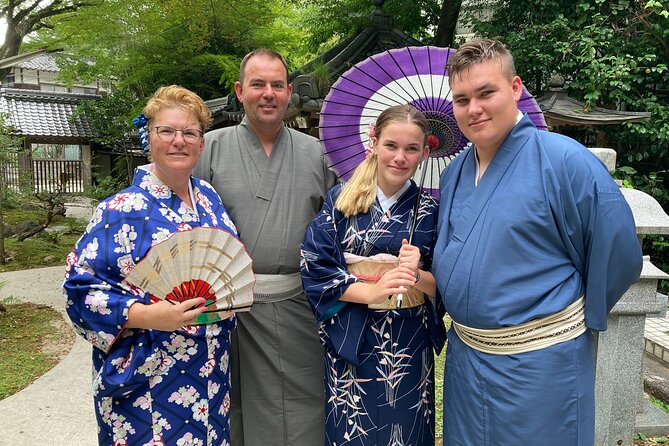
The meeting point is okeiko Japan Miyajima, at 741-1 Miyajimachō, Hatsukaichi, Hiroshima 739-0588. The class takes place at Tokuju-ji Temple, founded about 300 years ago and connected with the Soto school of Buddhism.
The temple’s principal Buddha is Kinseki Jizo. Jizo figures are often linked with protection, and this one has a local story about an older couple who prayed for a child and later had a healthy boy. In gratitude, they built the temple. That story helps explain why the amulet activity fits this particular place rather than feeling like a random souvenir workshop.
Miyajima has a close relationship between Buddhist temples and the better-known Itsukushima Shrine. The temple includes details that you might normally associate with Shinto settings, reflecting the way religious traditions have overlapped on the island. You do not need a background in Japanese religion to enjoy the visit, but the setting rewards a few minutes of attention before the lessons begin.
A short temple visit is listed at about 20 minutes, while the full activity lasts roughly two hours. That means the temple itself is not a long guided sightseeing stop. Think of it as the calm setting and cultural frame for the classes, not a full temple tour.
More tea ceremony experiences in Hiroshima:
- Hiroshima Local guided Hiking Tour&Open-air Tea Ceremony
★ 5.0 · 213 reviews - Kimono and Tea Ceremony in Miyajima
★ 5.0 · 73 reviews - An Amazing set of Cultural experience: Kimono, Tea Ceremony and Calligraphy
★ 5.0 · 69 reviews
Putting on a kimono before the lessons
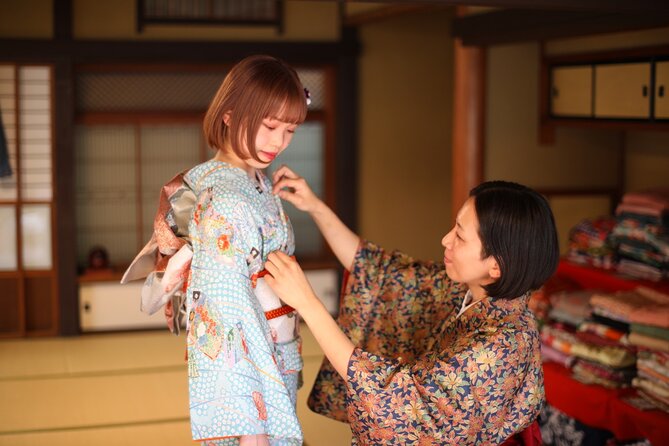
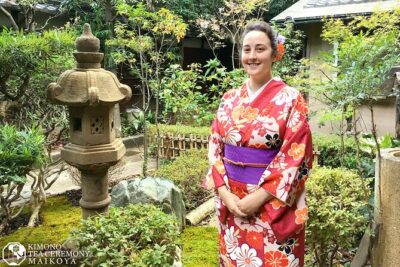
The provided kimono is one of the strongest parts of the program. You wear it during the activities, along with a traditional apron where appropriate, so the clothing becomes part of the lesson rather than a quick costume change for a photograph.
That matters because the class is built around participation. Sitting for calligraphy, handling tea equipment, and making an amulet all feel different when you are dressed for the occasion. The kimono also gives the photographs a sense of place that ordinary tourist snapshots usually lack.
You should allow a little patience for getting dressed and moving comfortably. The schedule is compact, and the clothing is not just a photo prop. You will be wearing it through several activities, so listen carefully to the staff and take your time with each step.
The teachers take photographs during the program and email them to you. This is useful for couples, families, and anyone who wants a record of the experience without asking a stranger to take pictures. It also means you can focus on the lessons rather than keeping your phone in hand.
Japanese calligraphy: a short lesson with a personal result
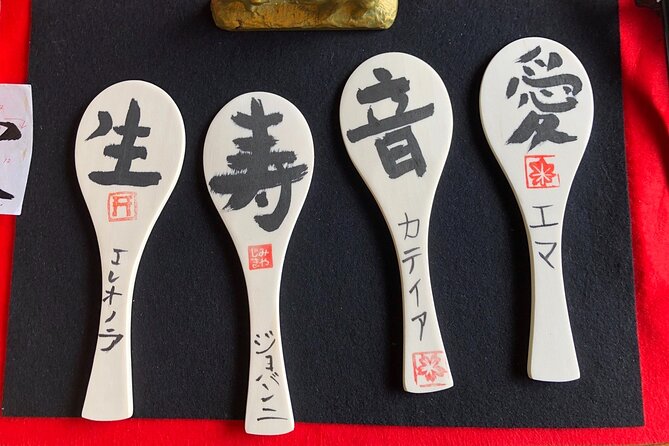
The calligraphy session teaches you how to write your name in Japanese. That is a good choice for a short class because the result is personal and immediately useful. You are not trying to master Japanese brushwork in 30 minutes. You are learning how names can be represented in Japanese writing and getting a first feel for the brush and ink.
Calligraphy can look simple until you try it. The order and shape of each stroke matter, and the finished character depends on control rather than speed. A brief lesson gives you enough time to make something meaningful without turning the activity into a test.
I would treat this as a guided introduction, not a formal art workshop. If you already study Japanese calligraphy, you may want more technical detail. For most visitors, the appeal is seeing your own name take a Japanese form and learning the basic care behind the writing.
This is also one of the easier activities for families. The minimum age is six, and children must be accompanied by an adult. Younger participants may need help staying neat and focused, but the personal nature of writing a name gives them a clear goal.
Tea ceremony: learning the steps, not just drinking matcha
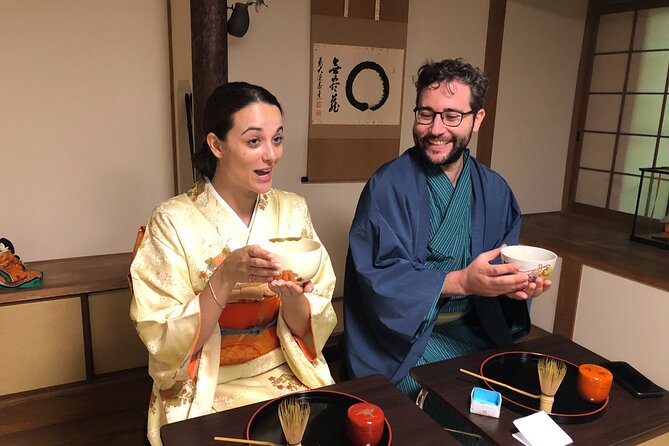
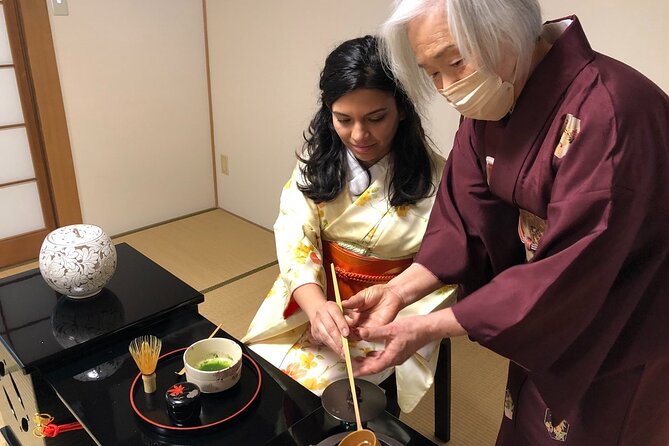
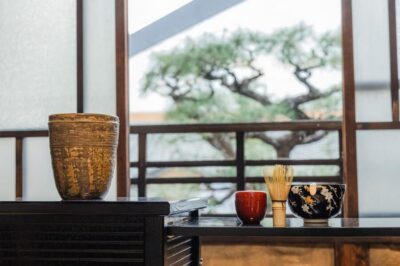
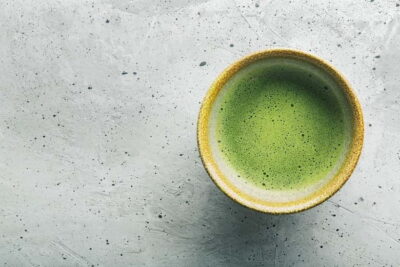
The tea ceremony lesson explains how to prepare matcha and perform the basic ceremony. This is more useful than simply being handed a bowl of tea, since you get to see the order, gestures, and attention involved.
A tea ceremony can seem quiet and formal from the outside. The class gives you a way into that quiet structure. You learn by watching and then taking part, with roughly half an hour available for the lesson.
The short format is both a strength and a limit. It keeps the activity approachable and fits well into a busy day on Miyajima. At the same time, it cannot cover every rule, school, or historical detail connected with tea practice. If you want an extended ceremony with a long explanation, this is not that kind of program.
For many people, the tea portion will be the most recognizable Japanese cultural activity here. The kimono, temple room, garden setting, and careful preparation create a strong sense of occasion. Just remember that the point is learning the basic form, not performing at a professional level.
More kimono & culture experiences in Hiroshima:
- Calligraphy Workshop at Traditional Folk Craft Shop in Hiroshima
★ 5.0 · 26 reviews - Kimono and Calligraphy Experience in Miyajima
★ 5.0 · 16 reviews - Private Hiroshima Calligraphy: Create Your Own Kanji Art Souvenir
★ 5.0 · 12 reviews - Kyoto Geisha Walking Tour: Gion District & Hidden Gems
★ 4.7 · 3,273 reviews
Amulet making adds something you can take home
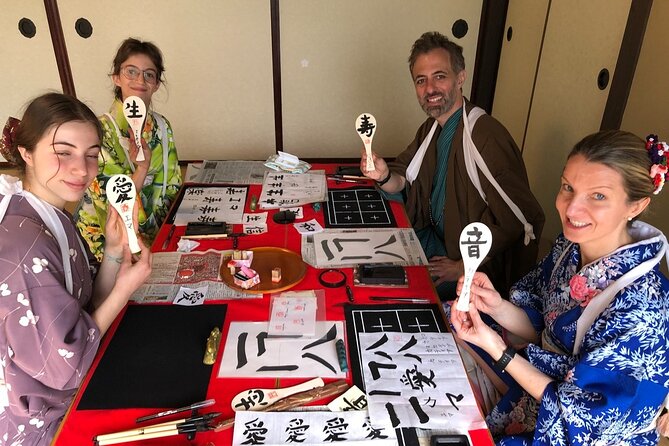
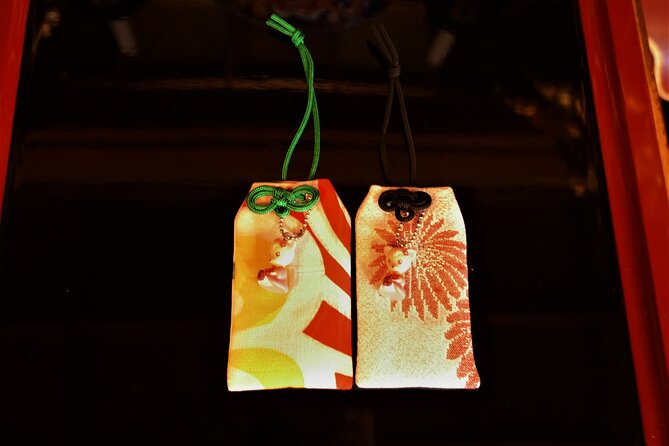
Amulet making is the least common element in this kind of cultural program. The activity connects directly with Tokuju-ji’s Kinseki Jizo and its protective associations, giving the craft a clear link to the temple.
You are not simply buying a charm from a temple shop. You make an amulet as part of the lesson, which gives the object a personal connection to your visit. The class information specifically notes that this activity is not offered in many places in Japan, so it may be the part that sets this experience apart from standard kimono and tea packages.
The details of the finished amulet can depend on the instruction given that day. You should expect a guided craft rather than a large, open-ended workshop. The value comes from understanding the purpose of an amulet and making one in a temple setting.
This activity may be especially meaningful for families. The story of Kinseki Jizo and the temple’s association with children and pregnancy provides context, while the hands-on work gives younger participants something active to do after the quieter tea lesson.
Why the small group matters
The maximum group size is 10 people. That is not a private class by definition, but it is small enough to make personal instruction possible. Calligraphy and tea both benefit from being able to see the teacher clearly and receive help when needed.
One booking ended up as a private experience because of the group arrangements that day. You should not assume that will happen, but a group of 10 or fewer still offers a more attentive setting than a large cultural show.
The teaching style appears friendly and personal. The staff interact with participants during each stage, explain the customs, and take photographs along the way. That combination suits you if you want to ask questions and try each activity rather than sit quietly through a presentation.
The class also works well for couples, parent and child pairs, siblings, and solo visitors who want a structured cultural activity. A group of friends can share the photographs and compare calligraphy results, while a family can split the quiet and active parts of the program.
How the timing works during a Miyajima day
The full activity takes about two hours, with roughly half an hour devoted to each of the three main lessons. The temple stop itself is listed at about 20 minutes, so the remaining time covers changing, explanations, photographs, and movement between activities.
This is a useful length if you are building a day around Miyajima. It gives you a focused cultural break without taking over the entire visit. You can still plan other sightseeing around it, but the exact fit depends on your own schedule and the time you choose.
The meeting point and end point are the same at okeiko Japan Miyajima. The location is near public transportation, and mobile tickets are accepted. Confirmation is sent at booking, which helps when you are organizing several activities during a Japan trip.
Because the class is scheduled tightly, arriving early is sensible. Early arrival may give you more breathing room before dressing and starting the lessons, though the supplied information does not promise an early access period. Follow the directions sent by the provider and allow enough time to locate 741-1 Miyajimachō.
Is $171.73 a fair price?
At $171.73 per person, this is not a bargain-priced cultural demonstration. The cost makes more sense when you count the parts included: a kimono, a traditional apron, three lessons, a temple setting, a handmade amulet, teacher-taken photographs, and a small group capped at 10 people.
You are also paying for convenience. Instead of arranging separate activities, you can sample calligraphy, tea, and amulet making in one appointment. For a short visit to Miyajima, that compact format may be worth more than a cheaper single activity that leaves you to organize the rest.
The value is strongest if you care about participation and a keepsake. If you only want to watch a tea ceremony or rent a kimono for photographs, you may find the price harder to justify. The program asks you to pay for instruction and cultural context, not just clothing.
I would compare it with the cost of other organized activities on your itinerary rather than judge it against a temple visit alone. The experience includes several services that are easy to overlook, especially the dressing, teaching time, amulet craft, and photo follow-up.
The average booking lead time is 52 days. That suggests you should plan ahead, especially if your Miyajima visit falls on a popular date or you need a particular time. Confirmation arrives when you book, and free cancellation is available until 24 hours before the start time.
Who will get the most from this experience?
You are a strong match for this class if you want a hands-on introduction to Japanese customs and have about two hours available. It suits first-time visitors who want more than sightseeing but do not want to commit to a long specialist course.
Families can take part because the minimum age is six. Children must be with an adult, and the mix of dressing, writing, tea, and craft gives the session several different rhythms. Adults should be ready to guide younger children through the quieter portions.
Couples and friends will appreciate the photographs and shared structure. The class creates natural moments for pictures without requiring you to arrange a separate photographer. Solo visitors can also join, though the social side may depend on the group scheduled that day.
You may want to choose another activity if you are looking for advanced calligraphy, a long tea ceremony, or a detailed temple tour. Each part is an introduction, and the strength lies in the range of activities rather than depth in one tradition.
Practical points before you book
The activity starts and ends at okeiko Japan Miyajima, 741-1 Miyajimachō, Hatsukaichi, Hiroshima 739-0588. It is near public transportation, and the ticket can be shown on a mobile device.
Most people can participate, and the minimum age is six. Children need an accompanying adult. The group size is limited to 10 people, and the duration is approximately two hours.
Book early if this is important to your schedule. The average advance booking period is 52 days, and the cancellation rule is simple: cancel at least 24 hours before the local start time for a full refund. Cancellations or changes inside that 24-hour window are not accepted for a refund.
Bring your attention and a willingness to try unfamiliar customs. The class is not designed around rushing from one photo opportunity to the next. The best moments come from following the gestures, asking questions, and accepting that your first calligraphy strokes or tea movements may be imperfect.
Should you book the Miyajima kimono and culture class?
I would book this if you want several Japanese cultural activities in one well-organized session, especially if wearing a kimono and making an amulet appeal to you. The temple setting and personal teaching give the program more substance than a basic dress-up photo stop.
The price is high for two hours, and the lessons are introductory. Still, the package makes a fair case for itself through its variety, small group size, emailed photos, and unusual amulet activity.
Choose it for participation, cultural context, and a keepsake. Skip it if your priority is a long, detailed study of one tradition or the lowest possible cost. For a first visit to Miyajima, it offers a practical way to connect with Japanese customs without giving up most of your day.
FAQ
Where does the cultural activity take place?
The activity takes place at Tokuju-ji Temple through okeiko Japan Miyajima. The meeting point is 741-1 Miyajimachō, Hatsukaichi, Hiroshima 739-0588, Japan.
How long does the experience last?
The full experience lasts approximately two hours. Each of the three main activities takes roughly half an hour, with additional time for dressing, explanations, photographs, and the temple setting.
What activities are included?
You learn Japanese calligraphy, take part in a tea ceremony, and make an amulet. You also wear a provided kimono and traditional apron during the lessons.
Are photographs included?
Yes. The teachers take photographs during the activities and send them to you by email.
Can children participate?
Children from age six can participate. Anyone under the required age must be accompanied by an adult.
What is the cancellation policy?
You can cancel for a full refund if you do so at least 24 hours before the experience begins. Changes or cancellations made less than 24 hours before the local start time are not accepted for a refund.
Just added around Hiroshima
- The Peace Memorial to Miyajima : Icons of Peace and Beauty★ 4.5 · 31 reviews
- Private Full Day Hiroshima Tour★ 4.5 · 29 reviews
- Hiroshima & Miyajima All-Inclusive Tour w/Licensed guide Pancho★ 5.0 · 54 reviews
- Okunoshima Rabbit Island Cycling Tour with Local Guide★ 4.5 · 17 reviews
- Shore Excursion from Hiroshima Port : Private Tour in Hiroshima★ 5.0 · 17 reviews
- Hiroshima Saijo Sake Tasting Tour with visit to 7 Breweries★ 5.0 · 104 reviews
- Miyajima Guided Tour and Fresh Oyster Farm Tour★ 5.0 · 20 reviews
- Hiroshima Country Cycling: Explore Rural Life 1 HR from City★ 5.0 · 22 reviews
Tea Ceremony Experiences, compared.
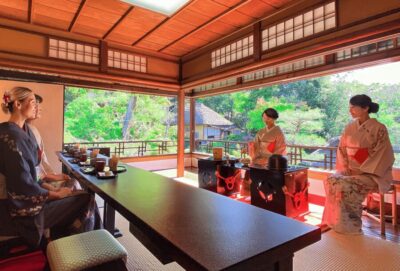
Tea Ceremony in a Traditional Tea House in Kiyomizu
Read our review →

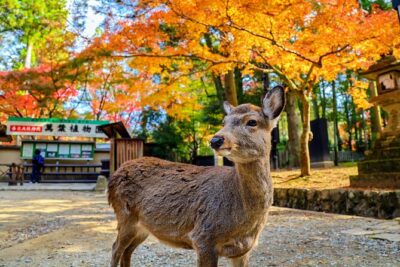
World Heritage Kyoto & Nara Uji Authentic Matcha Experience
Read our review →
Browse the lists this tour appears in