REVIEW · TEA CEREMONY EXPERIENCES
Tokyo Sushi Making Class : Sake Ceremony & Matcha Experience
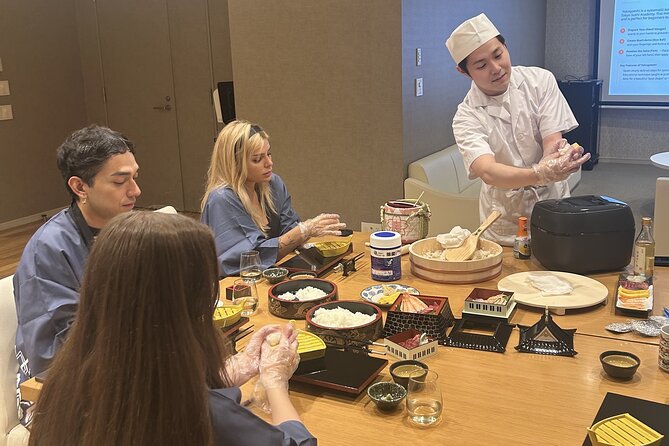
The most memorable part here may be the opening ritual. You help break open a sake barrel, chant Yoisho! with the group, and raise a toast before touching a grain of sushi rice. Later, you get a second burst of theater with torched salmon mayo gunkan and three rounds of Wasshoi!
I love the hands-on format, especially the chance to make 6 to 12 pieces instead of simply watching a demonstration. I also like the matcha finish, which gives the 90-minute session a calm final act after the lively sushi work.
The main consideration is pace. You cover sake, nigiri, rolls, a torch-finished piece, photos, and matcha in about an hour and a half, so this is an energetic introduction rather than a long technical sushi course.
In This Review
- Key points at a glance
- Starting in Asakusa with a sake barrel ceremony
- Learning the basic shape of nigiri
- The WASSHOI salmon gunkan finale
- Finishing with your own bowl of matcha
- What the 90-minute schedule means for you
- Is the $45.77 price good value?
- Who will enjoy this Asakusa activity most?
- Practical details before you book
- Should you book Tokyo Sushi Making Class?
- FAQ
- Where does the sushi and matcha class take place?
- How long does the experience last?
- Where does the class end?
- How many pieces of sushi will I make?
- Is alcohol required during the sake ceremony?
- How many people can join the class?
- Can I cancel for a full refund?
Key points at a glance
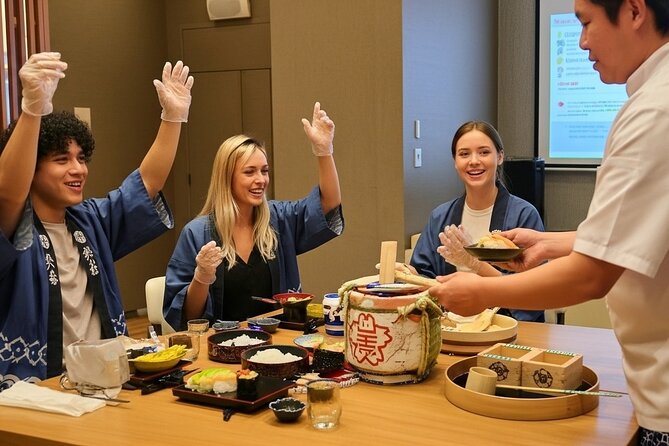
- Kagami-biraki begins the class: Help open a traditional sake barrel and join the Yoisho! chant for a festive start.
- Nigiri skills are taught step by step: Practice rice pressure, topping placement, and clean assembly with friendly guidance.
- Torched salmon mayo gunkan adds a modern touch: Build the piece, zigzag on mayonnaise, then finish it with a quick torch.
- You make 6 to 12 pieces: The exact mix includes nigiri and rolls, giving you a useful taste of more than one sushi style.
- Matcha closes the session: Whisk your own bowl and enjoy it at the end.
- The setting is convenient: Meet at Sushi Meets Matcha, 1-chōme-10-16 Hanakawado in Taito City, with the activity ending back there.
Starting in Asakusa with a sake barrel ceremony
The class begins at Sushi Meets Matcha in Asakusa, one of Tokyo’s most useful areas for combining a food activity with sightseeing. You can reach the meeting point by public transportation, and the tour remains in one location from start to finish. That matters in Tokyo, where a short activity can become tiring if it involves several transfers or a distant return point.
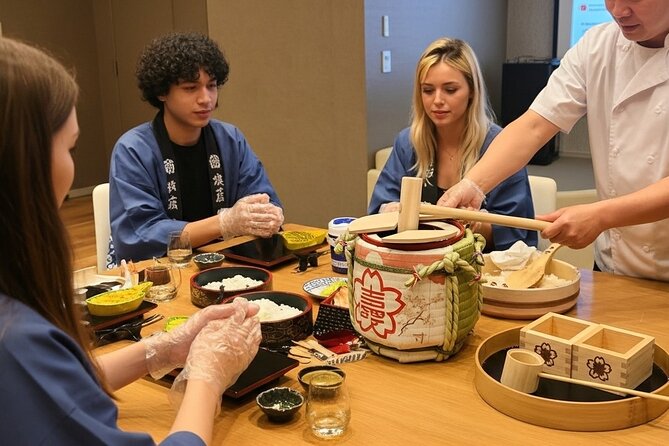
Before the sushi lesson, the group takes part in kagami-biraki. This is the traditional opening of a sake barrel, often linked with new beginnings and good fortune. You do not simply watch someone else perform it. You join in, help with the moment, and chant Yoisho, yoisho, yoisho! before the toast.
The ceremony gives the class a social lift right away. If you drink alcohol, sake is part of the welcome. If you do not, the alternative is water or warm Japanese tea, so you are not pushed into drinking. That small choice makes the opening suitable for a wider range of people.
I see this first ritual as more than decoration. Sushi making can feel technical at first, with rice texture, hand pressure, and topping placement all requiring attention. The ceremony breaks the ice and gives everyone something easy to do together before the careful work begins.
The group can include up to 20 people. That is a moderate-sized class, not a private lesson. You should expect a shared activity with a cheerful group mood, though the actual amount of individual help may depend on how busy the session is.
More Japanese Cooking Classes in Tokyo
- Sushi Making Tokyo Roll and Authentic Japanese Sushi Class
★ 5.0 · 3,971 reviews - Tokyo: Roll and Authentic Sushi Making Class in Asakusa
★ 4.9 · 1,957 reviews - Tokyo: Sushi Making Class in a Happi Coat near a Famous Spot
★ 4.9 · 1,377 reviews
Learning the basic shape of nigiri
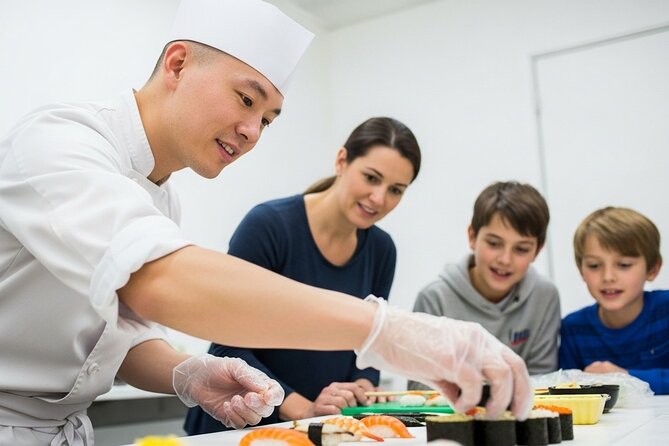
The central lesson focuses on nigiri, the compact style of sushi made with hand-shaped rice and a topping placed on top. You learn how to form the rice with the right pressure, handle the toppings, and put each piece together cleanly.
This is where the class earns its keep. A sushi piece can look simple, but the rice is easy to squeeze too firmly or leave too loose. The goal is to shape it so it holds together while remaining pleasant to eat. You get a practical introduction to that balance instead of just receiving a finished plate.
You will also work on topping placement. Clean assembly is part of the appeal of nigiri, and the instructor guides you through the basic hand movements. The emphasis is on confidence, not perfection. You should expect a few uneven pieces at first. That is part of the fun, especially when you can eat the results soon afterward.
The instruction is designed for beginners. You do not need prior sushi-making experience, and the step-by-step approach makes this a sensible choice if you have never formed sushi rice before. The friendly teaching style is also important here. A strict technical lesson could make a first attempt feel like a test, while this class keeps the mood relaxed and social.
You will make both nigiri and rolls, producing around 6 to 12 pieces in total. The range depends on how the session is arranged, but it gives you more variety than a lesson limited to one sushi form. If you are comparing this with a simple tasting, remember that you are not only eating sushi. You are learning basic assembly and taking part in the preparation.
The WASSHOI salmon gunkan finale
The class then shifts from classic sushi technique to a modern Tokyo-style bite: torched salmon mayo gunkan. Gunkan refers to a sushi shape with a strip of seaweed wrapped around the rice, creating a small vessel for a topping.
Here, you pile salmon on top, add a zigzag of mayonnaise, and finish the piece with a quick torch. The result is meant to bring smoky, creamy umami to the plate. This is not presented as a strict Edomae lesson, and that distinction is useful. Edomae sushi has a more traditional Tokyo identity, while this gunkan is a playful, contemporary flavor combination.
The torching also adds a small piece of showmanship. You get to see the topping change as the heat works over it, and the class pauses for photos at the best moment. The group chants Wasshoi! three times, giving this section a louder, more celebratory feel than the careful nigiri practice.
I like this contrast. The class does not treat sushi as a museum piece that must remain unchanged. You first learn a classic foundation, then try a popular modern combination that feels closer to the kind of fun creation you might see at a current sushi spot.
Still, you should know what you are booking. If your main goal is a serious study of traditional knife work, fish aging, or the full Edomae method, this short class will not go that far. The salmon mayo gunkan is intentionally playful, and the class values enjoyment and participation over advanced culinary training.
Finishing with your own bowl of matcha
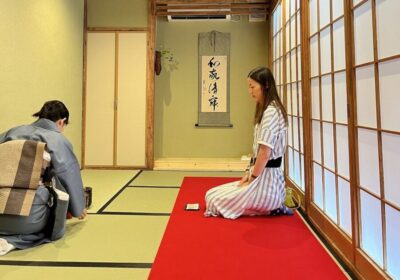
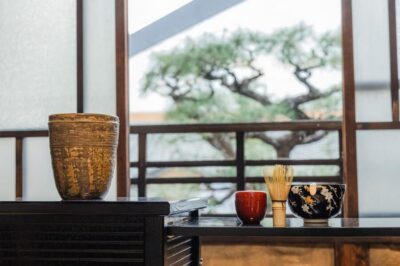
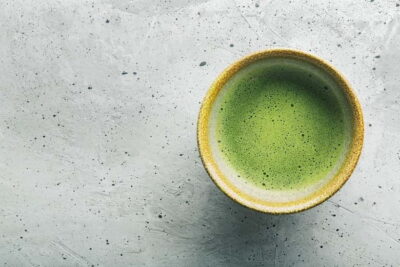
After the lively sushi and torch section, the class slows down with matcha. You learn how to whisk your own bowl, working toward a smooth, foamy drink before enjoying it as the final part of the experience.
This ending gives the activity a useful rhythm. The sake ceremony gets you involved, sushi making keeps your hands busy, and matcha provides a quieter finish. It also lets you experience two well-known parts of Japanese food culture in one compact session without turning the class into a long lecture.
Whisking matcha is a small skill, but it rewards attention. You can feel the difference between simply stirring a drink and using the whisk properly to create the desired foam. For many visitors, this may be their first chance to prepare matcha themselves rather than receiving it already made.
The matcha section also makes the tour appealing to people who are not focused only on sushi. You might enjoy the food lesson but value the cultural element just as much. The combination feels more rounded than a class that ends as soon as the last sushi piece is assembled.
More Sake & Bar Hopping Tours in Tokyo
- Tokyo Bar Hopping Tour in Shinjuku (All-You-Can-Drink + Dinner)
★ 5.0 · 3,587 reviews - Best of Shinjuku: Izakaya Food Tour (4 Stops, 14+ Tastings)
★ 5.0 · 1,863 reviews - Tokyo: Shinjuku Local Bar and Izakaya Guided Walking Tour
★ 4.9 · 1,794 reviews - Shibuya Meltdown Nightlife Tour: All-You-Can-Drink Bar Hopping
★ 5.0 · 1,058 reviews
What the 90-minute schedule means for you
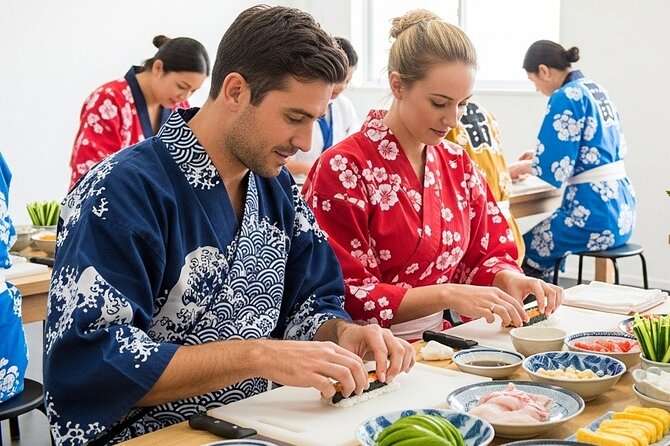
At about 1 hour and 30 minutes, this is easy to fit into a busy Tokyo day. You could place it between sightseeing in Asakusa, shopping, or another activity, though you should allow enough time to arrive at the meeting point without rushing.
The short duration is a benefit if you want a clear introduction. You get a beginning ritual, several sushi tasks, a photo moment, and a matcha lesson without giving up half a day. It also suits families, couples, and first-time visitors who want an activity with a definite start and finish.
The tradeoff is that each topic receives only a limited amount of time. The class cannot cover every sushi style, explain every ingredient in depth, or give you extended practice with advanced techniques. You will leave with a foundation and a memorable set of food-related experiences, not professional-level sushi training.
The class size of up to 20 people reinforces that point. This is a shared workshop with a social atmosphere. If you prefer a private chef lesson with constant one-to-one correction, you may want something smaller. If you like learning alongside other people and joining group chants, the size should add to the occasion.
Is the $45.77 price good value?
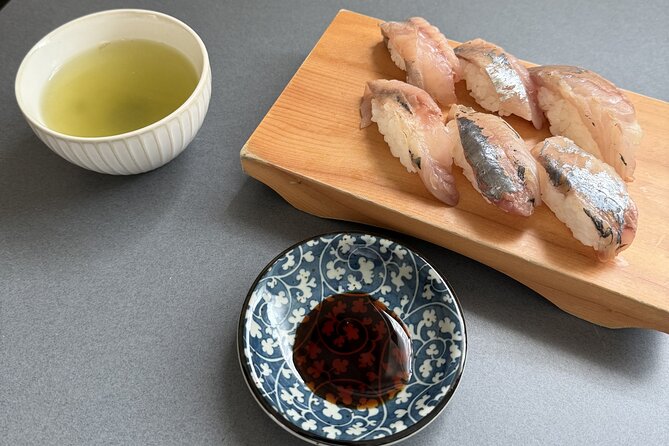
At $45.77 per person, the price is reasonable for a 90-minute activity that combines instruction, food preparation, a sake barrel ceremony, a torch-finished sushi piece, and matcha. You are paying for more than the ingredients. The value comes from the guided process and the cultural elements woven through the lesson.
A simple sushi meal could cost less, especially if you choose an inexpensive restaurant. But that comparison misses the point. Here, you shape the rice yourself, assemble your own pieces, participate in kagami-biraki, and make matcha. You also get a set of techniques you can try again at home.
The value is strongest if you enjoy active experiences. If you only want to eat excellent sushi, a respected sushi counter may be a better use of your money. If you want to understand how the pieces come together and take part in a cheerful group event, the price makes more sense.
The mobile ticket is practical for a city day. You do not need to manage a printed voucher, and confirmation is provided when you book. Free cancellation is available up to 24 hours before the start time, but changes or cancellations inside that window are not accepted for a refund.
Who will enjoy this Asakusa activity most?
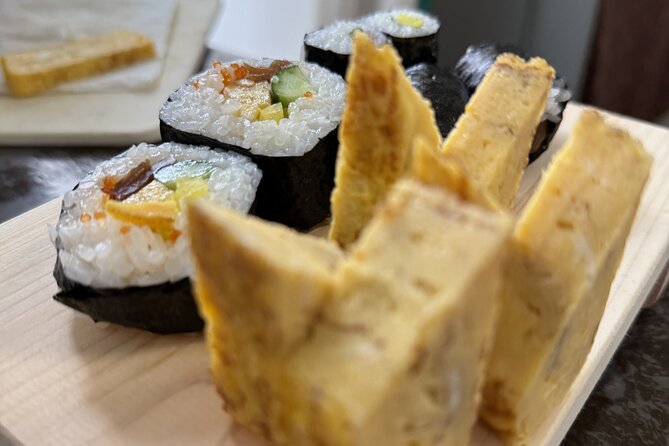
I would point this class toward first-time sushi makers, couples looking for a shared activity, families wanting something more active than sightseeing, and anyone curious about matcha but unsure where to begin. The beginner-friendly teaching removes much of the worry about getting the rice or toppings wrong.
It is also a good fit if you want a cultural activity that does not require a full day. The group toast, the Yoisho! chant, the Wasshoi! moment, and the matcha preparation give you several distinct memories in a short period.
People who enjoy taking photos will have clear opportunities, especially during the torched salmon mayo gunkan section. The activity is designed to include photos at the right moment, rather than leaving you to interrupt the lesson and guess when to take them.
You may want to look elsewhere if you are seeking a quiet, formal tea ceremony, an advanced sushi apprenticeship, or a private class. The mood here is lively and participatory. The chants and group format are central to the experience, not side details.
Practical details before you book
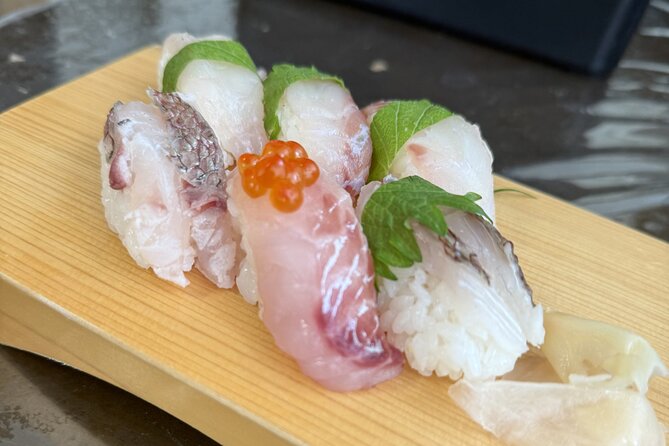
The meeting point is Sushi Meets Matcha, at 1-chōme-10-16 Hanakawado, Taito City, Tokyo 111-0033, Japan. The activity ends at the same location, which makes planning easier and avoids the need to find a second meeting point after the class.
Because the activity takes place near public transportation, you can build it into a day around Asakusa. Check the exact route and allow time to arrive before the start, especially if you are coming from another part of Tokyo.
The maximum group size is 20 people. You should expect a class that balances instructor guidance with group participation. Confirmation arrives at booking, and the mobile ticket keeps the entry process simple.
The published information does not specify dietary substitutions, fish choices, or the exact number of each sushi type. If those details matter to you, ask the provider before booking rather than assuming the menu can be changed.
Should you book Tokyo Sushi Making Class?
Book it if you want a friendly, compact introduction to sushi making with more personality than a standard cooking lesson. The strongest reasons are the hands-on nigiri practice, the festive sake barrel opening, the smoky salmon mayo gunkan, and the chance to whisk matcha yourself.
At $45.77, it offers fair value for a 90-minute experience that combines food, culture, and a group celebration. Just keep your expectations in the right place. You are learning useful beginner skills and enjoying a lively Asakusa activity, not training as a sushi chef.
If that sounds like your kind of Tokyo memory, this is an easy activity to add to your schedule. If you prefer a quiet, highly technical, or private lesson, choose a different format.
FAQ
Where does the sushi and matcha class take place?
The class takes place at Sushi Meets Matcha, 1-chōme-10-16 Hanakawado, Taito City, Tokyo 111-0033, Japan.
How long does the experience last?
The activity lasts approximately 1 hour and 30 minutes.
Where does the class end?
The activity ends back at the meeting point.
How many pieces of sushi will I make?
You will make approximately 6 to 12 pieces, including nigiri and rolls.
Is alcohol required during the sake ceremony?
No. Water or warm Japanese tea is available as a non-alcohol option.
How many people can join the class?
The activity has a maximum of 20 participants.
Can I cancel for a full refund?
Yes. You can cancel at least 24 hours before the experience start time for a full refund. Cancellations or changes made less than 24 hours before the start time are not refunded or accepted.
More Drinking Tours in Tokyo
- Tokyo: Pub Crawl and Bar Tour
★ 4.5 · 951 reviews - Tokyo: Shinjuku Local Bar & Izakaya Crawl Tour
★ 5.0 · 890 reviews - Tokyo: Shinjuku Bar Hopping with All-You-Can-Drink & Dinner
★ 4.9 · 440 reviews - Shibuya: Local Bar & Izakaya Crawl
★ 4.9 · 354 reviews
More Tea Ceremony Experiences in Tokyo
- Matcha Making Class in Tokyo with Authentic Japanese Sweets Set
★ 5.0 · 744 reviews - Tokyo: Traditional Tea Ceremony with a Tea Master
★ 5.0 · 528 reviews - Tokyo: Matcha Making Experience with Mochi Sweets in Asakusa
★ 4.9 · 388 reviews - Tokyo: Matcha and Kimono Experience
★ 4.7 · 219 reviews
Just added around Tokyo
- Private Memorable Tokyo Tour with English Speaking Driver★ 5.0 · 30 reviews
- Private Tokyo Custom Full-Day Tour by Chartered Vehicle★ 5.0 · 16 reviews
- Private Sightseeing to Mt Fuji and Hakone with English Driver★ 5.0 · 51 reviews
- Tokyo Photography Masterclass – Private Photography Lesson★ 5.0 · 25 reviews
- Private Mt. Fuji Day Trip from Tokyo with English-Speaking Driver★ 5.0 · 33 reviews
- 4 Day Tour – Mount. Fuji, Tokyo, Hakone, Kamakura and Yokohama★ 5.0 · 19 reviews
- Private Unforgettable Mt Fuji Tour with English Speaking Driver★ 5.0 · 142 reviews
- Private Tokyo Food Tour – A Journey Through Time Through Food★ 5.0 · 36 reviews
Tea Ceremony Experiences, compared.
Tea Ceremony in a Traditional Tea House in Kiyomizu
Read our review →
World Heritage Kyoto & Nara Uji Authentic Matcha Experience
Read our review →